Tag: Iris Automation

  • VOTIX and Iris Automation partner on safe BVLOS operations

    VOTIX and Iris Automation partner on safe BVLOS operations

    Image: VOTIX
    Image: VOTIX

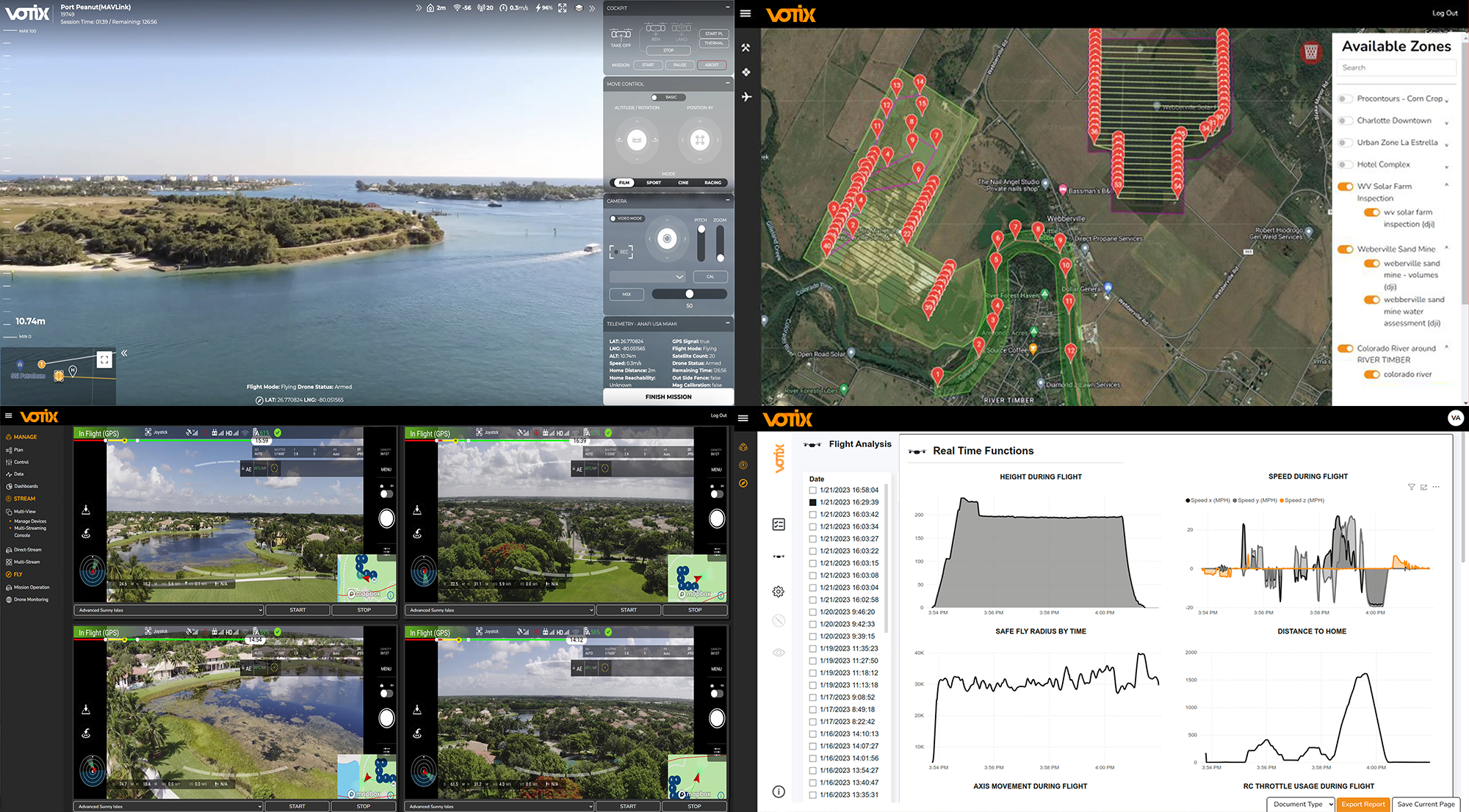
    VOTIX has partnered with Iris Automation to enable safe beyond visual line of sight (BVLOS) flights by integrating Iris Automation’s Casia G ground-based detect and alert system into the VOTIX cloud-based UAV operating system.

    This integration makes remote operations a reality for enterprises that need effective and flexible UAV BVLOS deployments, from routine automated inspections of critical infrastructure to rapid mobilization seen in UAV as first responder programs.

    This hardware-software solution will feed data from the Casia G system into the VOTIX platform to provide a complete picture of the operational airspace in real-time.

    The Casia G system can detect non-cooperative or intruder aircraft at a distance by monitoring the airspace and providing their precise location and classification data. This enabes automated conflict resolution via the VOTIX platform.

    “Our mission is to make BVLOS easy,” said Ed Boucas, VOTIX CEO. “We have integrated every aspect of drone operation in a single pane of glass so that pilots can easily perform safe and secure BVLOS flights.”
  • Iris Automation launches ground-based surveillance system for UAVs

    Iris Automation launches ground-based surveillance system for UAVs

    Photo: Iris Automation
    Photo: Iris Automation

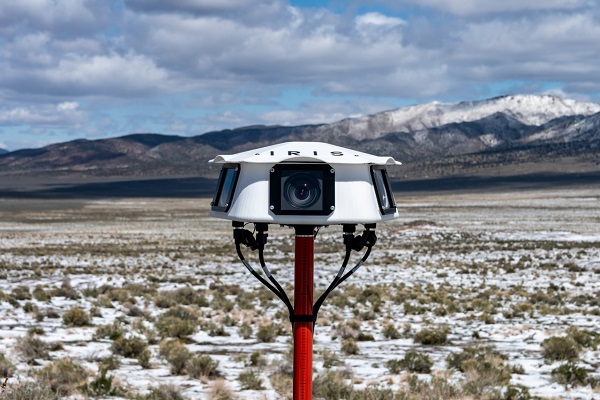
    Iris Automation has announced the commercial availability of Casia G, a ground-based version of its detect-and-avoid surveillance solution.

    Using the same patented artificial intelligence (AI) and computer-vision technology as Iris Automation’s onboard solutions, Casia G provides 360° optical detection with alerts. It enables operators to avoid both cooperative and non-cooperative aircraft for safe beyond-visual-line-of-sight (BVLOS) flight.

    Casia G creates a perimeter of monitored airspace for UAVs to perform work safely, without additional payload. It’s suitable for operations in fixed or temporary locations, supporting drone-in-the-box operations and augmenting or replacing human visual observers. BVLOS flight for unmanned systems has been challenging due to right of way concerns, specifically the inability for unmanned aircraft to successfully see and avoid other aircraft.

    “A human has sufficient visual acuity to see airborne traffic only within a +/-5 degree field of view around our focal point. We have to scan the sky, and are frankly not very good at it,” said Jon Damush, CEO, Iris Automation. “Casia G sees the entire sky, with uniform probability and resolution, 10 times per second — without distractions or breaks. This  solution for airspace awareness covers a large majority of small UAS use cases, but at a price point that is economically viable and without complex integration.”

    Casia G can be expanded by adding additional units in a mesh to create a network of detection nodes for large-area air risk mitigation. The system then provides a single feed of cooperative and non-cooperative air traffic, available to an operator’s traffic management system. This provides a path to approvals for both larger area and one-to-many operations by enabling a holistic view of the airspace, the company said.

    Casia G has already obtained a BVLOS waiver on behalf of the City of Reno. Iris Automation is in the process of proving additional deployment patterns and concepts of operation with the FAA.

  • UAV Navigation integrates avoidance system into autopilots

    UAV Navigation integrates avoidance system into autopilots

    Photo: UAV Navigation
    Photo: UAV Navigation

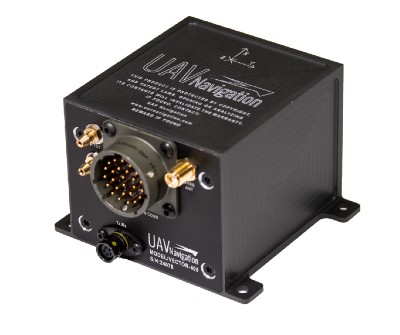
    Autopilot platform developer UAV Navigation is integrating Iris Automation’s detect-and-avoid Casia software into its advanced autopilot solution, Vector. UAVs equipped with Vector and Casia now can detect uncooperative crewed aircraft in their airspace and autonomously or manually take corrective action, avoiding potential collisions.

    The integration comes as Iris Automation releases Casia Software v2.2. The release also includes improvements to performance, track fusion and flight data uploads. Casia Software is embedded in all Casia systems and uses computer vision and artificial intelligence to detect and classify aircraft intruders, similar to human pilots.

    Vector autopilots are specifically designed to execute flight completely autonomously, even if the remote-control datalink becomes unavailable or fails. They are used by a wide range of commercial clients flying rotary wing, target drone, fixed wing, and VTOL uncrewed aerial vehicles, worldwide.

    UAV Navigation specializes in the design of guidance, navigation and control solutions for unmanned aerial vehicles (UAVs). Iris Automation is a safety avionics technology company pioneering detect-and-avoid (DAA) systems and aviation policy services that enable customers to build scalable operations for commercial drones.

  • Iris Automation launches onboard detect-and-avoid system for drones

    Iris Automation launches onboard detect-and-avoid system for drones

    Logo: Iris Automation

    Iris Automation released Casia 360, an onboard detect-and-avoid solution with a 360-degree radial field of view to enable commercial beyond visual line-of-sight (BVLOS) operations for unmanned aircraft systems (UAS).

    According to the company, Casia 360 system has the ability to detect other aircraft in all directions. It then uses computer-vision algorithms to classify them, makes intelligent decisions about the threat they may pose to the drone, then triggers an alert to the pilot in command and automated maneuvers to safely avoid collisions.

    Casia 360, a low size, weight and power system, is composed of two onboard controllers and five long-range optical cameras that provide a 360-degree field of view. The software is packaged in a self-contained embedded supercomputer that works with the machine vision cameras onboard, the company said.

    “Casia 360 allows a drone to have a complete sense of its surroundings so it can avoid potential collisions from any direction,” said Alexander Harmsen, CEO of Iris Automation. “We developed this technology based on feedback from our customers and regulatory bodies around the world. It enables drones to be used for an even greater range of long-distance use cases and saves money, increases safety and unlocks applications across multiple industries: railway, energy sector, utility powerline inspections, package delivery, and life-saving search and rescue operations.”

    Iris Automation, based in San Francisco, is an artificial intelligence and safety avionics company building collision-avoidance systems for autonomous vehicles.

  • Canada approves BVLOS drone flights with Iris

    MVT Geo-solutions, in partnership with Iris Automation, has been granted the first beyond-visual-line-of-sight (BVLOS) Special Flight Operations Certificate (SFOC) by Transport Canada using only onboard detect-and-avoid (DAA) systems.

    The approval was granted based on the utilization of Iris Automation’s DAA system, called Casia, which provides commercial drones with automated collision avoidance maneuvers.

    The waiver permits flights within the Unmanned Aircraft Systems (UAS) Center of Excellence’s controlled airspace Remotely Piloted Aircraft System (RPAS) test range in Alma, Quebec. This is the first BVLOS flight at the location leveraging only onboard DAA for air risk mitigation, and does not require ground-based observers or radar.

    BVLOS flights unlock autonomous drone use for economically beneficial commercial applications including infrastructure inspection, mining, mapping, agriculture, emergency response and package delivery.

    “Achieving the first BVLOS approval in Canada further validates our technology alongside multiple permissions we have already received from regulators in the U.S. and South Africa,” said Iris Automation CEO Alexander Harmsen. ”This technology is critical to safely integrate drones into the airspace along with manned-aircraft, and we look forward to unlocking commercial operations for our customers in Canada.”

    Iris Automation’s onboard computer-vision DAA system is an effective, scalable and cost-effective technology to enable commercial BVLOS operations.

    “The UAS Center of Excellence is looking forward to leveraging Iris Automation’s DAA system and existing flight expertise within our network to conduct BVLOS flights with MVT Geo-solutions,” said UAS Center of Excellence Director William de Keiser. “We will continue to develop our partnership with Iris Automation to provide training to local operators and enable BVLOS flights in Canada.”

    The first BVLOS flights are scheduled to take place within weeks. The resulting data will inform more complex BVLOS operations in the future.