Tag: ISR

  • Milanion products to feature NovAtel inside

    Milanion products to feature NovAtel inside

    At World Defense Show 2026 in Riyadh, Saudi Arabia, Milanion Group signed memorandum of understanding (MOU) with NovAtel to integrate assured positioning, navigation and timing into its unmanned land, maritime and air platforms, reports Global Defense News.

    A second MOU was signed with Elistair to introduce tethered unmanned aerial systems into Milanion’s ground and maritime architecture.

    The agreements focus on maintaining operational capability in environments affected by electronic warfare, GNSS denial, jamming, spoofing and cyber interference, with technical integration work scheduled to begin after the exhibition and demonstrations planned for later in 2026.

    The agreement with NovAtel covers land, maritime and air domains and focuses on operations in contested environments where electronic warfare, GNSS denial and cyber interference are present.

    Milanion linked the partnerships to requirements raised by defense delegations at WDS 2026 for unmanned systems that remain operational without dependence on vulnerable networks and that support sovereign-ready integration.

    Technical integration discussions with both companies are scheduled to begin immediately after the exhibition. Joint development pathways and capability demonstrations are planned later in 2026 as part of a broader connected autonomy architecture.

    Milanion Group was founded in 2020 and is headquartered in the UK, with manufacturing in Abu Dhabi. The company develops autonomous and optionally manned systems for military and security missions across land, sea, and air. 

    The MOU with NovAtel will embed NovAtel assured-PNT and anti-jam technologies into Milanion assets to maintain navigation accuracy and mission integrity during GNSS denial or interference. The integration supports secure routing, guidance stability, and targeting precision even when GPS signals are degraded or disrupted. This capability is relevant for unmanned ground vehicles, maritime conversions, and airborne systems operating in electronically contested theatres. Milanion links the functionality to survivability and operational continuity during electronic warfare and cyber-disruption scenarios.

    By combining assured navigation with persistent ISR and resilient communications, the company aims to maintain autonomous mission performance across multi-domain deployments. The approach integrates sensing, navigation, and communications into a unified architecture to address contested-environment requirements identified at WDS 2026.
  • New mini UAV designed for border patrol

    New mini UAV designed for border patrol

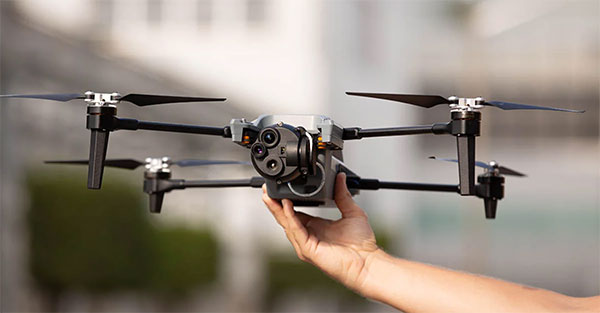
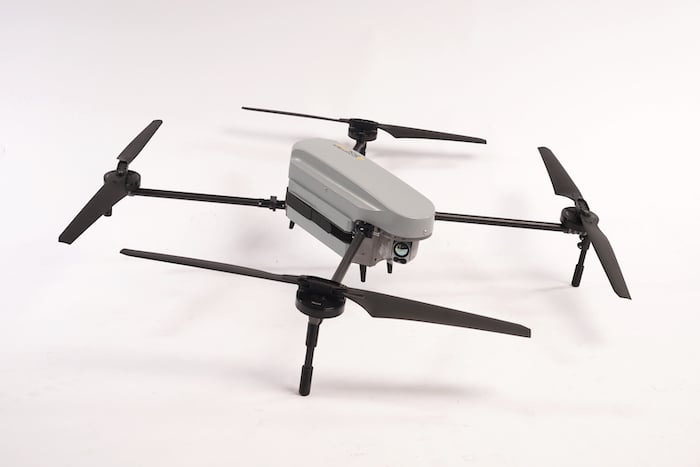
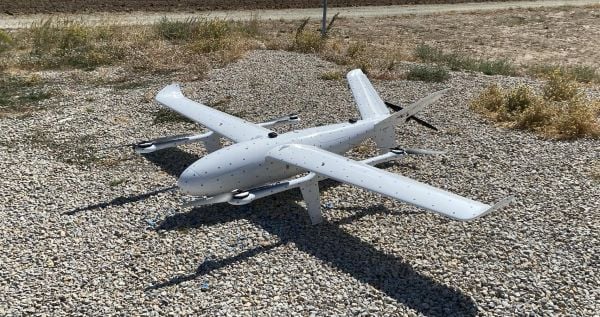
    CopterPIX, an Israeli developer and manufacturer of autonomous multi-rotor UAV solutions, has unveiled its newest platform: the ERE95 Mini.

    CopterPIX made the announement at UVID Dronetech 2025, which took place Nov. 26 at Expo Tel Aviv.

    The ERE95 Mini is designed as an operational platform for border protection, long-range surveillance, and ISR missions. It is fully capable of GNSS-denied missions and integrates a long-range, anti-jamming communication system supporting distances of over 20 km.

    According to the company, the ERE95 Mini has an endurance of 2 hours and can carry up to 5 kg of payload for up to 1 hour. It also has integrated daylight and thermal imaging for advanced surveillance. With a fully foldable frame, the platform collapses into a compact backpack-sized kit, making it suitable for rapid mobility and field operations.

    Its modular “puzzle” architecture allows quick adaptation of SDR modules, optical payloads, and navigation solutions, enabling mission-specific configurations with unprecedented flexibility. To support rapid field deployment, the ERE95 Mini features a mechanical and electrical quick-connect interface, allowing operators to switch payloads in seconds and maintain continuous operational readiness across all missions.

  • TSR unveils tactical drone system with 3-hour flight time

    TSR unveils tactical drone system with 3-hour flight time

    TSR Inc. (Tactical Surveillance Reconnaissance) has launched the AVRIO series autonomous drone systems — cutting-edge European-made unmanned aircraft designed to redefine aerial surveillance, reconnaissance, and precision-strike capabilities.

    The AVRIO family, which includes the Falcox and Nebris platforms, delivers unmatched performance and resilience for defense, security and critical infrastructure missions, according to TSR. The company designed the AVRIO series for a wide range of defense and homeland-security missions, including:

    • Border security and coastal defense
    • Rapid-response reconnaissance and force protection
    • Counter-UAS operations using RF seeker payloads
    • Critical infrastructure protection and disaster-response intelligence.

    “The AVRIO series combines European aerospace engineering with U.S.-based deployment and support, giving governments and security agencies a next-generation toolset for ISR and tactical defense,” said Rick Clarke, CEO of Safe Room Designs/TSR Inc. “This is autonomous aerial defense, reinvented.”

    Specifications of the AVRIO

    • ISR (intelligence, surveillance, reconnaissance). Real-time EO/IR video, day/night operations, target tracking and identification.
    • Quick-launch and versatility. Vertical takeoff and landing, <1-minute preparation, runway-independent operation, and mission abort/return-to-base features.
    • Extended reach. Endurance of up to three hours and a range of up to 30 km, depending on payload and mission configuration.
    • Precision engagement. Options for smart munition payloads with precision super-quick impact fuzes and effective 15 m radius, plus anti-personnel and armor-piercing warheads.
    • Resilient design. Low radar cross section, GNSS-denied operation, MIL-STD-810G-qualified ground control, and operational temperature from –20 °C to +50 °C.
    • Naval and special missions. Capable of surface-mine detection, sweeping operations, and beyond-line-of-sight (BLOS) intelligence gathering.

    TSR is now accepting government and defense-sector inquiries for the AVRIO Falcox and AVRIO Nebris systems. For detailed specifications, demonstrations, or procurement discussions, contact TSR.

  • Sentient vidar sensors successfully integrated on Edge Autonomy UAV

    Sentient vidar sensors successfully integrated on Edge Autonomy UAV

    Image: Sentient
    Image: Sentient

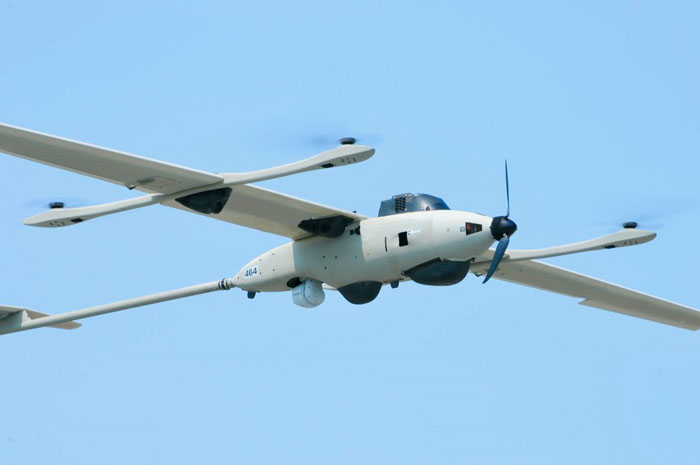
    Sentient Vision Systems has completed live demonstrations of its visual detection and ranging (vidar) payload enabled by artificial intelligence (AI) on Edge Autonomy’s VXE30 unmanned aerial vehicle (UAV).

    The VXE30 is the latest version of the Stalker series of small UAVs from Edge Autonomy. When coupled with vidar, the VXE30 offers a passive, wide-area search capability, enabling it to serve a variety of maritime operations.

    Vidar, developed by Sentient, uses AI, computer vision, and machine learning integrated with electro-optic and infrared (EO/IR) sensors to passively detect objects that are difficult for the human eye to spot or to recognize on a conventional radar.

    This technology has been deployed on intelligence, surveillance, and reconnaissance missions (ISR), maritime patrol and border protection, as well as search and rescue missions since 2015. It is proven in conditions up to Sea State 6, which is defined as very rough with waves of 4m to 6m.

  • APNT/Space team aims to advance navigation capabilities

    APNT/Space team aims to advance navigation capabilities

    APNT/Space modernization gives U.S. Army a clearer view of multi-domain battlefield

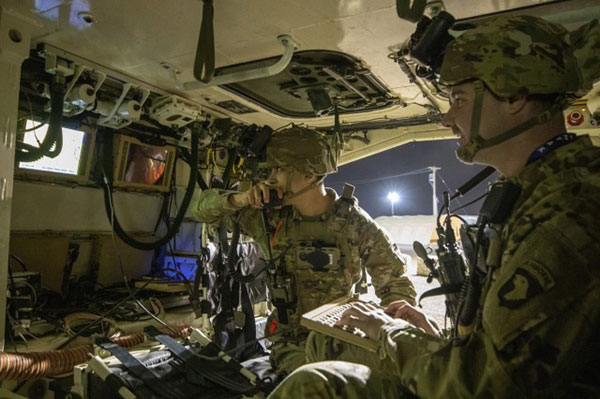
    U.S. Army soldiers experiment with new assured PNTT/space equipment during the 2021 PNT Assessment Exercise at White Sands Missile Range, New Mexico. (Photo: U.S. Army/Austin Thomas, Army Futures Command)
    U.S. Army soldiers experiment with new assured PNTT/space equipment during the 2021 PNT Assessment Exercise at White Sands Missile Range, New Mexico. (Photo: U.S. Army/Austin Thomas, Army Futures Command)

    News from U.S. Army Futures Command

    The Assured Positioning, Navigation and Timing/Space Cross-Functional Team — APNT/Space CFT — takes a multi-dimensional approach to understanding and preparing for future warfare.

    The team — based at Redstone Arsenal, Alabama — is dedicated to advancing the Army’s tactical and navigational capabilities and ensuring tomorrow’s soldiers  have the modern situational tools they need to maneuver with the utmost accuracy, safety and skill.

    The CFT is making significant progress toward this goal by leveraging iterative developments, remaining open to new technologies and committing to continuously evolving PNT equipment and systems to meet changing threats and needs.

    “Our cross-functional team will continue to assess and strengthen the future of our operational environments, emerging threats and technologies to ensure our Army is prepared for 2030 and beyond. We will continue to support the requirement development and delivery of trusted solutions to the soldier,” said Michael C. Monteleone III, director of the APNT/Space CFT, reiterating the team’s focus on nimbly and steadfastly enabling the success of future warfighters.

    According to Army planners, the likelihood of future operations spanning diverse domains — air, land, sea, space, cyberspace and the electromagnetic spectrum — means soldiers will need more flexible and far-ranging resources to inform their movements and operations.

    To facilitate this, the APNT/Space CFT conducts rigorous field experimentation and prototype assessment and drafts detailed requirements for state-of-the-art materiel solutions, which the Army can then further develop and employ to improve information gathering and data precision without disrupting or adding extra burden to soldier operations.

    Experimentation for APNT/Space happens on the ground and in the air, including along the electromagnetic spectrum — sometimes referred to as the “invisible battlefield” — and in the low Earth orbit of space.

    Within these frequently interwoven domains, the APNT/Space CFT investigates alternative GPS capabilities and other navigation resources already in use, while also evaluating how to best integrate new anti-jamming functions, electronic support, inertial navigation systems and vision-based navigation platforms.

    The CFT coordinates regularly with industry, joint partners and other government agencies to identify and explore solutions that are modular, scalable and an excellent fit for multiple platforms, as well as the upgrades and adjustments that occur to equipment and systems over time.

    Modern PNT tools being developed and fielded include mounted, dismounted and alternative navigation systems, situational awareness devices, and next-generation sensors that allow for optimum flexibility and performance against threats.

    Within the realm of space, the CFT is shaping a strategy to provide survivable, responsive and resilient intelligence, surveillance and reconnaissance and communications capabilities in low Earth orbit, complete with the ability to share information rapidly and securely with tactical commanders on the ground.

    The team’s experts are also focused on understanding and preparing for the future of navigation warfare, or NAVWAR, which will require sophisticated offensive and defensive systems to produce tactical advantages and enable overmatch. To encourage synchronization of efforts on this front, the CFT is working closely with Army partners to draft an overarching NAVWAR strategy that aligns with U.S. Department of Defense NAVWAR plans but is also tailored to unique Army needs.

    By studying and preparing for multi-domain operations and experimenting with the newest technologies available, the APNT/Space CFT is playing an integral role in helping the Army to equip soldiers with more mobile, scalable and interoperable navigation devices, in turn strengthening the agility of the future force.

  • UAVOS announces S1-V300 MALE unmanned platform prototype

    UAVOS announces S1-V300 MALE unmanned platform prototype

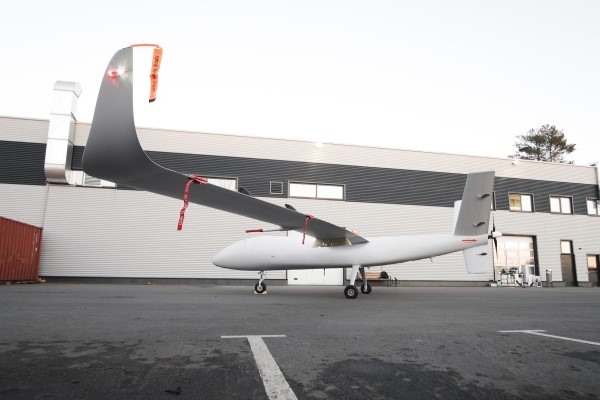
    UAVOS has successfully completed the S1-V300 medium-altitude long-endurance (MALE) unmanned aerial system (UAS) prototype designed to check basic aircraft systems.

    The advanced UAS model is based on the Saker MALE UAS design that achieved operational capability in 2020. The S1-V300 MALE UAS prototype is an upgrade to the unmanned system and features a new design and a more powerful heavy fuel engine with 260 HP offering greater speed, payload, and endurance of 28 hours with a range of 4,020 km.

    Work performed under UAVOS’ MALE UAS program using its proven Saker aircraft capabilities has enabled it to create a new-generation S1-V300 MALE unmanned platform. The aircraft features unique UAVOS avionics solutions and a redundant flight control system that will enable complex missions.

    The S1-V300 UAS will be able to support a variety of overland and maritime intelligence, surveillance and reconnaissance (ISR) missions. The improved S1-V300 prototype is equipped with both line-of-sight (LOS) and beyond-visual-line-of-sight (BVLOS) datalink systems for over-the-horizon operations. Additionally, the aircraft can be integrated with multiple ISR sensors, including electro-optical infrared (EO/IR) cameras and a synthetic aperture radar (SAR) that offers all-weather, day/night performance for a wide-area search capability.

    The S1-V300 MALE UAS next-generation capabilities combined with medium-altitude persistence make it a suitable platform to add with long-range radar, signals intelligence (SIGINT) payloads,  communication-relay payloads, and counter electronic-warfare systems. Additional retrofits include stronger wings and extra hard points for carrying an external payload of 300 kg.

    The S1-V300 has fully autonomous operation capability. It is equipped with automatic taxi-takeoff and landing systems, satellite communication for extended range, and fully redundant avionics. It is designed to operate in harsh environments and is adapted to perform in extremely hostile, dry and dusty ambient air. The aircraft features a 8.7-meters-long fuselage and a 18.7 meters wingspan, is capable of flying at 220 km/h, and has an endurance of more than 28 hours.

    The S1-V300 MALE prototype. (Photo UAVOS)
    The S1-V300 MALE prototype. (Photo UAVOS)

  • FLIR Systems acquires Altavian for defense sUAS

    FLIR Systems acquires Altavian for defense sUAS

    Photo: FLIR Systems
    Photo: FLIR Systems

    FLIR Systems Inc. has acquired Altavian Inc., a privately held manufacturer of small unmanned aerial systems (sUAS) for defense and public-safety customers.

    Altavian’s airframes integrate multiple sensors, including FLIR thermal technology, to provide users with decision support and intelligence, surveillance and reconnaissance (ISR) capability.

    Based in Gainesville, Florida and founded in 2011, Altavian designs and manufacturers Group 1 UAS solutions for long or short range operations. With both quadcopter and fixed-wing UAS designs, Altavian’s expertise includes aeronautics, avionics, and software, and its solutions are engineered around an open system architecture aligned to the needs of government and defense customers.

    Altavian is one of five drone manufacturers approved by the U.S. Department of Defense under the Blue sUAS program to sell to the U.S. military and federal agencies.

    “Altavian’s proven engineering expertise and assets will allow us to offer customers the most comprehensive solution portfolio of any American sUAS provider,” said Roger Wells, general manager of the Unmanned Systems and Integrated Solutions business of FLIR Systems’ Defense Technologies Segment, under which Altavian will be integrated. “With the addition of both a low-cost, rapidly deployable quadcopter and a longer range fixed-wing UAS, FLIR is strengthening its already impressive drone lineup, including our Black Hornet and SkyRaider platforms used extensively by militaries around the globe. We’re excited about the multiple new franchise opportunities FLIR will be able to pursue for defense, public safety, and industrial markets worldwide.”

    For more information about FLIR Systems’ existing sUAS solutions, visit flir.com/defense-uas.

  • VectorNav introduces miniature IMU and GNSS/INS product line

    VectorNav introduces miniature IMU and GNSS/INS product line

    Tactical Embedded series of GNSS/IMUs. (Photo: VectorNav)
    Tactical Embedded series of GNSS/IMUs. (Photo: VectorNav)

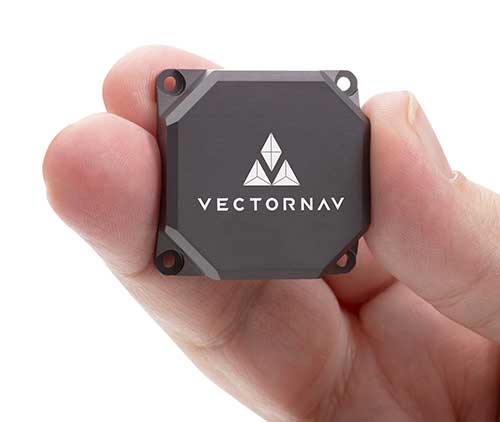
    Embedded navigation company VectorNav Technologies has introduced a new line of inertial products: the VectorNav Tactical Embedded series of GNSS/IMUs.

    Featuring a tactical-grade inertial measurement unit (IMU) and a multi-band GNSS receivers, the Tactical Embedded delivers milliradian attitude accuracy and centimeter-level positioning capability in a miniature 15-gram package.

    VectorNav’s Tactical Embedded line is in a new smaller size, and enables cost reductions for a wide range of autonomous pointing and geo-referencing applications. These include gimballed intelligence, surveillance and reconnaissance (ISR), SATCOM systems, lidar mapping and photogrammetry, among many others.

    The Tactical Embedded line supports external SAASM GPS for defense applications in ISR, electronic warfare, munitions and UAV navigation.

    “The Tactical Embedded is the culmination of years of development to bring milliradian-level attitude performance and robust positioning into a form factor that represents a disruptive step in inertial navigation capability,” said VectorNav President John Brashear. “Systems integrators worldwide can now embed tactical-grade inertial navigation capabilities into their electronics, unlocking a range of new applications and possibilities.”

    Designed and engineered at VectorNav’s AS9100-certified facility in Dallas, Texas, the Tactical Embedded line includes the VN-110E IMU/AHRS, the VN-210E GNSS-aided inertial navigation system (INS), and the VN-310E Dual Antenna GNSS/INS.

    Highlights include:

    • 0.05-0.1° heading; 0.015° pitch and roll
    • 1 m horizontal and 1.5 m vertical position accuracy
    • 1 cm RTK positioning accuracy
    • < 1°/hr gyro in-run bias; < 10 μg accel in-run bias
    • 184 channel, L1/L2/E1/E5b GNSS receiver
    • Support for external RTK, PPK and SAASM GPS
    • High update rates (800 Hz IMU; 400 Hz Nav)
    • Miniature footprint: (< 15 grams; 31 x 31 x 11 mm)
    • Low power: < 480 mA @ 3.3 V

    The Tactical Embedded line is available for purchase now and ships within two weeks.

  • 2-in-1 UAS system ready for US defense and security

    2-in-1 UAS system ready for US defense and security

    The Scorpion. (Photo: Quantum-Systems)
    The Scorpion. (Photo: Quantum-Systems)

    Two new small unmanned aerial systems (sUAS) are available to the U.S. government defense and security markets.

    Auterion Government Solutions Inc. and Quantum-Systems GmbH have partnered to bring the Vector and Scorpion to market. The partnership brings together high-quality sUAS hardware with a secure, scalable, open source, operating system, Auterion OS.

    Auterion OS is employed on sUAS from small multi-rotors to hybrid VTOL Group 2 air vehicles. The open-source operating system aligns with the Defense Department’s Group 1 UAS Architecture.

    2-in-1 UAS

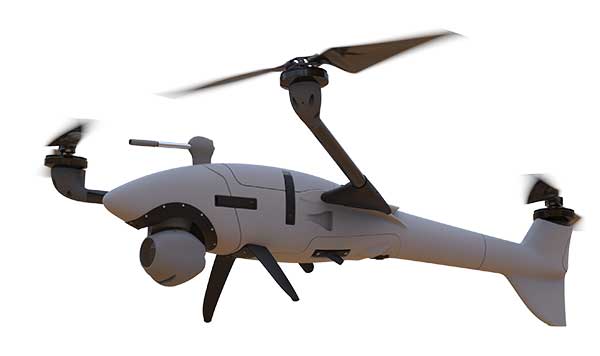
    Vector and Scorpion form a 2-in-1 system kit. Scorpion is a tri-copter that can be used for dynamic urban environments and other mission sets that require a combination of maneuverability and hover to collect intelligence, surveillance and reconnaissance (ISR) data, as well as situation awareness information. If required, it comes with a tethering system to enable 24/7 operations.

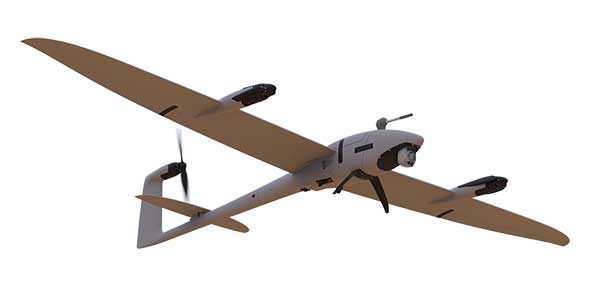
    By configuring the base fuselage with fixed wings and tail section, Scorpion transforms into Vector, an energy-efficient, fixed-wing VTOL for longer range, longer endurance ISR missions.

    The Vector. (Photo: Quantum-Systems)
    The Vector. (Photo: Quantum-Systems)

    Command and control

    Quantum-Systems uses a proprietary flight control stack as well as its qBase command and control software on the two air vehicles.

    When the platforms are integrated with Auterion Enterprise PX4 software, Auterion Ground Station software, and the Auterion Hand-Held Ground Control Station (H-GCS) they form an open ecosystem that is aligned and integrated with DoD’s Group 1 UAS Architecture and requirements for a common Group 1 control system.

    The integration enables these sUAS to be extensible, tailorable and interoperable for customers in both the U.S. defense and security markets.

    “We are excited to be working with Quantum-Systems to bring forth a new, integrated, rucksack portable sUAS that we feel will transform the way our customers collect, process and disseminate ISR and Situation Awareness information, in all environments,” said David Sharpin, CEO of AGS.

    “By setting up a U.S. entity, Quantum-Systems will move closer to the customer while working on setting up a large-scale U.S. production,” said Florian Seibel, CEO of Quantum-Systems.

  • New UAS manufacturer specializes in defense drones

    New UAS manufacturer specializes in defense drones

    CP Aeronautics offers American-built combat-proven unmanned aerial systems for defense, homeland security and civil applications

    CP Technologies has launched a new division, CP Aeronautics, to provide integrated turn-key solutions based on unmanned aerial systems (UAS) platforms, payloads, data links, ground control stations (GCS) and communications for defense and civil applications.

    Designed as leading-edge UAS-based solutions, CP Aeronautics’ systems offer operationally proven solutions for intelligence, surveillance and reconnaissance (ISR) systems requirements. CP Aeronautics’ broad product portfolio has demonstrated excellent performance and operability in demanding environments, the company stated in a press release. Backed by continuous research and development, these systems are built on three decades of technological and operational experience.

    “Through our in-house capability as a UAS manufacturer and integrator with specialist subsidiaries and technology partners, we offer a complete range of subsystems including air vehicles, inertial navigation and avionics, electro-optical payloads (EO), communications, propulsion systems, launch and retrieval systems, command and control units,” said Brad Pilsl, vice president of business development at CP Aeronautics. “We also offer high-end training solutions for our partners and customers.”

    CP Aeronautics will support government and commercial customers with the entire infrastructure necessary for development, production, integration, flight-testing, certification and operational support of UAS throughout their service.

    The combat-proven operational systems include:

    • Orbiter 2 Small-UAS (SUAS)
    • Orbiter 3 Small Tactical UAS (STUAS)
    • Orbiter 4 Small Tactical UAS (STUAS)
    • Aerostar Tactical UAS (TUAS)
    • Dominator XP (MALE UAS)
    • Pegasus 120 high-performance multi-mission vertical takeoff and landing (VTOL) UAS

    The Dominator XP UAS. (Photo: CP Aeronautics)
    The Dominator XP UAS. (Photo: CP Aeronautics)