Tag: laser scanner

  • Trimble MX9 mapping system designed for surveying, engineering, GIS

    Trimble has released its MX9 mobile mapping solution for large-scale scanning and mapping missions.

    The Trimble MX9 combines a vehicle-mounted mobile lidar system, multi-camera imaging and field software for efficient, precise and high-volume data capture for a broad range of mobile mapping applications such as road surveys, topographic mapping, 3D modeling and asset management.

    The Trimble MX9 captures dense point-cloud data along with 360-degree immersive georeferenced imagery using a spherical camera, GNSS/INS technology and dual-head laser scanning sensors.

    Trimbe-MX9-mobilemapper-O

    The system’s innovative and lightweight design facilitates easy installation and setup on a variety of vehicles. Spatial data can be captured at highway speeds from inside the vehicle for safe operation in transportation corridors.

    The intuitive, browser-based field software, accessible via most tablets or any notebook, enables operators to quickly establish and conduct data-acquisition missions, monitor the status of the system, and assess the quality of the acquired data in real time.

    “The Trimble MX9 is our next-generation mobile mapping system, focused on simple operation and integrated workflows for a new generation of users and applications,” said Ron Bisio, vice president of Trimble Geospatial. “We believe there’s a tremendous potential for a system that offers high-quality performance, simple installation and easy operation.

    “Being able to capture high-fidelity and survey-grade data for a whole project site, a complete city or even a statewide road-network allows our customers to use mobile mapping data for a variety of surveying, engineering and mapping applications.”

    The Trimble MX9 is designed for applications including transportation infrastructure planning, as-built surveying, GIS mapping and asset management. Survey and engineering professionals can analyze road cross-sections, perform clearance inspections, conduct topographic mapping, and also use the data for machine control.

    Mapping professionals can utilize the same data for city mapping and planning, inventory mapping and 3D modeling of buildings and linework.

    Complete integration with Trimble office software allows users to seamlessly process the acquired data and generate deliverables for a wide variety of applications. Tools are available for survey and engineering applications as well as deriving and publishing GIS and asset management deliverables.

    Users can also easily export their data for use with third-party software.

    The Trimble MX9 is available for virtual or live demonstrations, depending on customer location, beginning in April. The MX9 system includes a roof rack. Optional accessories such as a GNSS azimuth measurement system (GAMS) or a distance measurement instrument (DMI) are available.

  • 2G Robotics laser systems aid in Norwegian mine countermeasures

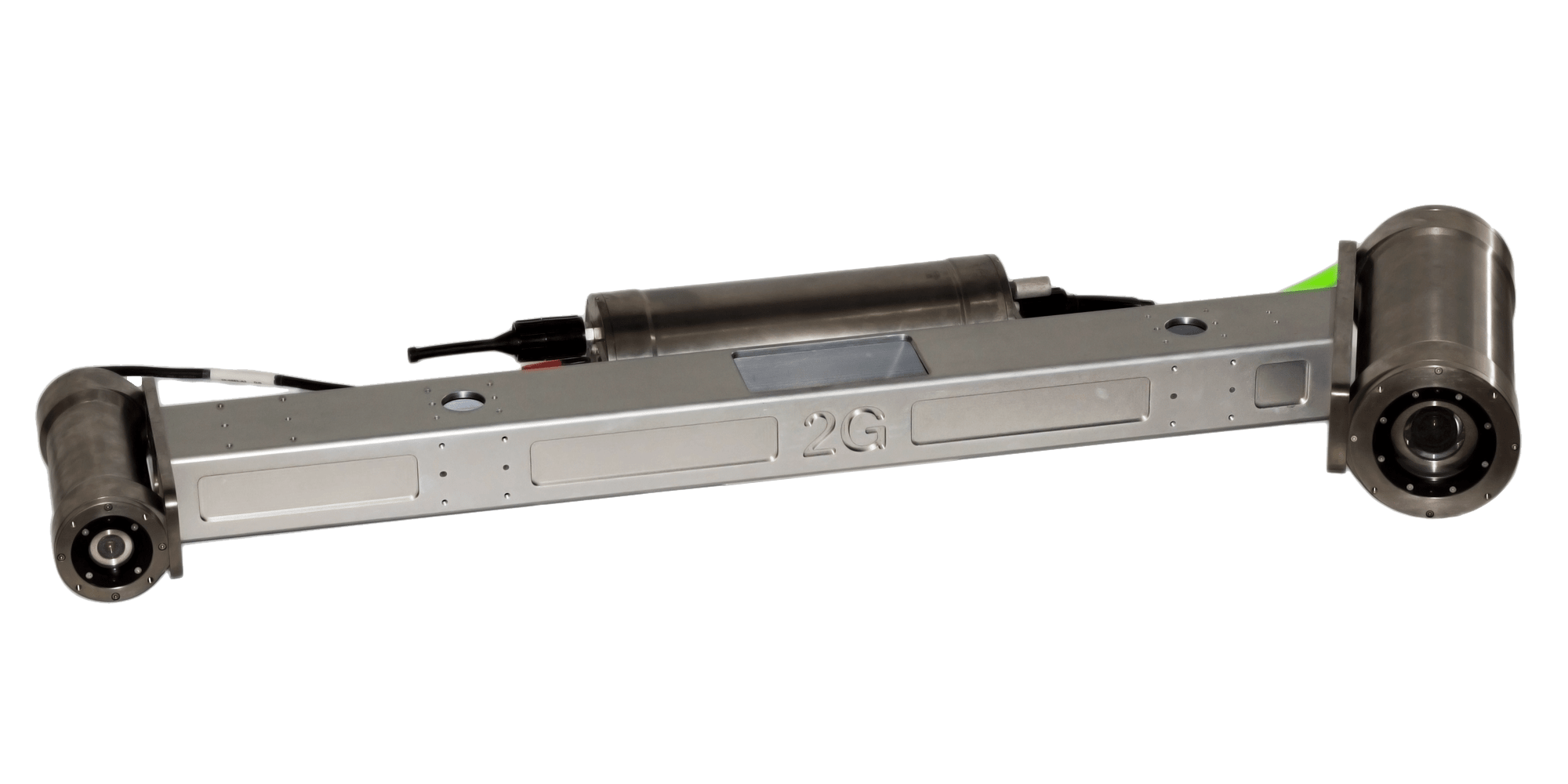
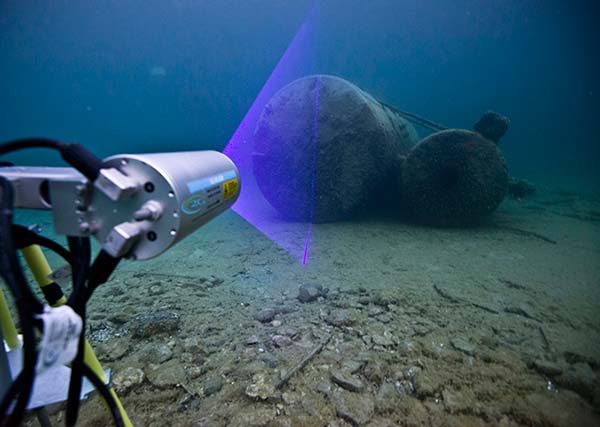
    The first of four ULS-500 PRO laser scanning systems from 2G Robotics has been shipped to Kongsberg Maritime for integration into the Norwegian Defence Materiel Agency’s (NDMA) newly purchased Hugin autonomous underwater vehicles (AUVs).

    The acquisition signifies the Royal Norwegian Navy’s transition to autonomous systems for mine countermeasures. During operations, Hugin AUVs will be used to complete surveys of subsea environments focused specifically on locating and identifying mines.

    The Hugin systems enable users to conduct fast and efficient operations with zero surface visibility while additionally improving safety conditions by allowing personnel to remain outside the minefield. In peacetime, the AUVs contribute to hydrographic operations.

    The ULS-500 PRO dynamic underwater laser scanner system will contribute to the detection, classification and assessment of mines. 2G’s system acquires data in real time and provides users with 3D models of targets and environments accurate to the sub-centimeter.

    The complete laser scanning system also includes the 2G Observer, an ultra-sensitive stills camera able to capture images at 12 fps, and the 2G Nova, an LED panel designed specifically for AUV integration providing almost 1,000,000 lumens.

  • Launchpad: Spoofer detection for surveyors

    OEM

    RF front-end board

    7-channel multi-GNSS multi-band for software-defined receiver
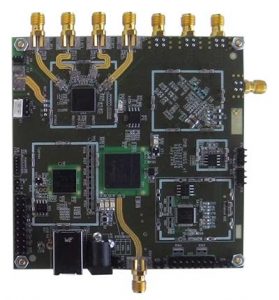
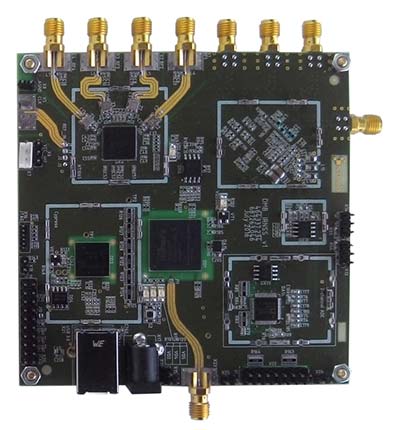
    The NT1065/66_USB3 multi-channel GNSS RF front-end board is based on NTLab’s RF ICs: NT1065 (four channels for GPS / GLONASS / Galileo / BeiDou / IRNSS / QZSS, L1/L2/L3/L5 bands) and new NT1066 (two channels for all previously mentioned GNSS signals, plus one extra-channel for IRNSS S-band). The board supports USB3 connection, allowing users to process captured satellite signals on a PC or DSP platform. The board is accompanied by comprehensive software and manuals. Features include six channels for L1/L2/L3/L5-band signals + one channel for S-band signals simultaneous reception; up to four coherent channels; IF bandwidth up to 32 MHz; acquisition of wideband signals up to 64 MHz (such as Galileo E5) by two coherent channels; USB3 interface (up to 800 Mbit/s); ability to connect four x CRPA. NTLab offers an academic discount program for universities, colleges and institutes, allowing them to purchase this powerful research tool with significant savings.

    NTLab, www.ntlab.com

    GNSS OEM RTK boards

    With rover radio for wireless applications

    Three new Tersus GNSS HRS kits feature high-precision BX305, BX306 and BX316 GNSS RTK boards. The kits consist of RTK receivers, GNSS antennas, RS05R radio station modems, radio station antennas, and related cables and converters. Embedded in the receivers are the Tersus RTK boards. They are compact-design, energy-efficient, centimeter-level accurate GNSS real-time kinematic (RTK) boards that bring high-precision positioning accuracy to the market. Different from the standard BX305/306/316 GNSS kits, the new HRS versions are equipped with the RS05R lightweight and robust UHF rover radio for wireless applications. It provides reliable data communication for demanding conditions that require a combination of stability, high performance and long-range operation. The kits can be used in a variety of applications, such as unmanned aerial vehicles (UAVs), surveying, mapping, precision agriculture, construction engineering and deformation monitoring.

    Tersus GNSS, www.tersus-gnss.com

    SURVEY & MAPPING

    Spoofer detection

    Spoofing alerts for surveyors

    Spoofer detection is now available on all JAVAD GNSS original equipment manufacturer (OEM) boards. When a receiver equipped with a JAVAD board detects more than one correlation peak for any PRN code, it warns the user of the presence of spoofing (false signals) and identifies the spoofed satellites. The receivers then switch to other signals and sensors that are not being spoofed to maintain accurate positioning. The user can also employ the receiver to try to identify the direction from which the spoofing signals are originating.

    JAVAD GNSS, www.javad.com

    Laser scanner

    Scanning range reaches 1 kilometer
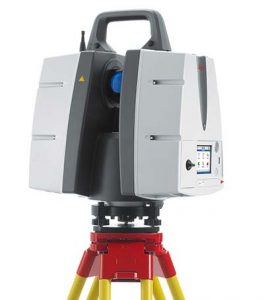
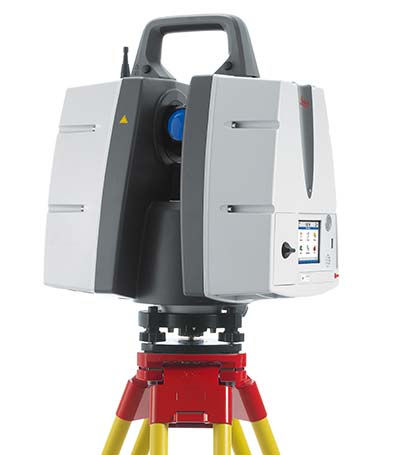
    The ScanStation P50 combines all the features of the P40 plus a longer range scanning capability of more than 1 kilometer. The rugged, versatile laser scanner enables professionals to 3D capture at great distances with angular accuracy paired with low-range noise and survey-grade dual-axis compensation. The ScanStation P50 opens new business opportunities for reality-capture professionals, helping them to scan what was previously unreachable such as big mine pits, long bridges, dams and skyscrapers. With its range, the P50 enables users to scan any tall or wide infrastructure or dangerous sites from a remote and safe position. This newest member of the P-Series provides the highest quality 3D data and high-dynamic range (HDR) imaging at an extremely fast scan rate of up to 1 million points per second and ranges of more than 1 kilometer.

    Leica Geosystems, leica-geosystems.com

    TRANSPORTATION

    Smartphone data analysis

    Integrates gamification and real-time data

    Azuga FleetMobile: Standalone Smartphone Edition (SSE) is a smartphone-based solution for driver behavior monitoring, mobile timecard management and GPS tracking. Azuga FleetMobile SSE leverages data analysis components of the original Azuga FleetMobile application, including driver behavior monitoring, location-based timestamps for timecards, gamification and driver rewards, without requiring separate hardware installation via a vehicle’s OBD port. Azuga’s GPS fleet-tracking offerings feature a driver rewards program to help fleets reduce accidents by up to 70 percent. The standalone application, which works on both Android and iOS smartphones, integrates gamification and real-time data to encourage self-coaching and healthy competition. Azuga’s data science team can then leverage information about driving behaviors and combine them with route patterns, fleets’ vehicle health information and environmental factors to identify opportunities for performance improvements in fleet operations.

    Azuga, azuga.com

    Vehicle tracker

    Able to receive MobileEye ADAS alerts
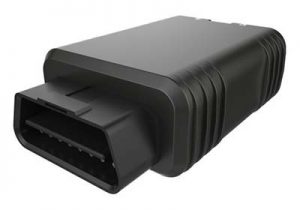
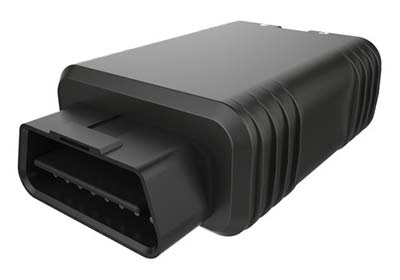
    The RIFA series of full-featured GPS trackers have built-in gyro and G-sensors, and supports OBDII and J1939 protocols. In addition to 4G/3G communication, it provides options to use low-power wide-area networks (LPWAN) such as NB-IOT or LoRa, which can reduce communication costs significantly. The unique CAN-to-ADR (automotive dead reckoning) function provides accurate positioning in situations of weak GPS signals, such as driving in tunnels, indoor parking facilities, urban canyons or when GPS signal obstruction hinders positioning, without additional cabling for wheel speed input.

    Antzer Tech, www.antzer-tech.com

    UAV

    Thermal imaging payloads

    Ethernet/IP-Based connectivity
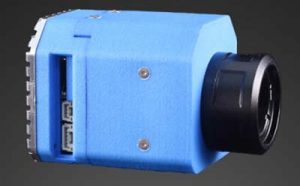
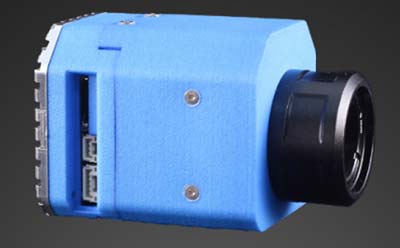
    The ThermalCapture IRnet provides an Ethernet interface for live data streaming to new and existing FLIR Tau 2 drone cores and FLIR Vue Pro/R cores. The market has increased its demand for connectivity by Ethernet, with professional drone manufacturers choosing Ethernet for communication on board UAVs. The ThermalCapture IRnet allows for real-time access via Ethernet while recording radiometric data to microSD, bringing real-time access in drone flight operations to thermal imaging data. It stores the full 14-bit radiometric thermal data on a microSD card. Real-time access remains available while radiometric data are being recorded; operators can also control the camera and settings via Ethernet. Using Ethernet also offers data privacy.

    TeAx, thermalcapture.com

    Airborne lidar mapping

    Centimeter-level accuracy for 3D mapping products
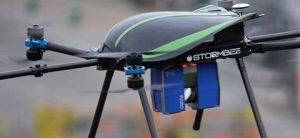
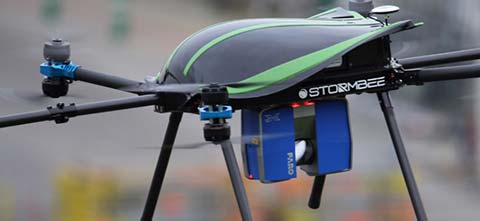
    The Think 3D Stormbee multicopter integrated with Trimble’s AP15 provides efficiency, accuracy and performance for lidar surveys from unmanned vehicles. The Stormbee is a directly georeferenced UAV lidar solution for 3D industrial mapping applications, designed to collect survey-grade spatial data more cost effectively and efficiently than static lidar. Stormbee’s 3D mapping technologies include Faro’s Focus 130 laser scanner, Trimble’s AP15 high-performance GNSS/inertial receiver, Applanix’s POSPac UAV GNSS/inertial post-processing software and Stormbee Beeflex software for lidar point-cloud generation. By using the high-performance Trimble AP15 with two antennas and the Applanix post-processing software (POSPac MMS) for georeferencing the lidar data, Stormbee provides an accurate real-time and post-mission solution for all motion variables.

    Think 3D, think3d.be

    Applanix, applanix.com

  • Leica scanner reaches inaccessible with 1-km range

    Leica Geosystems has released the Leica ScanStation P50 as the newest member of its 3D terrestrial laser scanner P-Series.

    The new ScanStation P50 combines all the features of the P40 plus a longer range scanning capability of more than 1 kilometer. Increasing users’ flexibility to offer services in new markets, the rugged and versatile laser scanner enables professionals to 3D capture even at great distances with angular accuracy paired with low-range noise and survey-grade dual-axis compensation.

    Scanning the inaccessible. The ScanStation P50 opens new business opportunities for reality-capture professionals, helping them to scan what was previously unreachable such as big mine pits, long bridges, dams and skyscrapers, the company said.

    With its range, the P50 enables users to scan any tall or wide infrastructure or dangerous sites from a remote and safe position. The newest member of the P-Series provides the highest quality 3D data and high-dynamic range (HDR) imaging at an extremely fast scan rate of up to 1 mio points per second and ranges of more than 1 kilometer.

    “Our customers have requested increased range so that they can capture tall structures and/or far away features without sacrificing the safety of their field crews,” said Mike Harvey, Leica Geosystems NAFTA HDS product and applications manager. “During a recent deployment of the Leica P50 in an urban setting, the extended range allowed us to capture more of a city skyline in less setups. Due to the extended range, the additional data made scan registration very easy and much faster.”

  • GeoSLAM launches ZEB-REVO RT at fall exhibits

    The ZEB-REVO RT is the next generation of the ZEB-REVO, GeoSLAM’s lightweight handheld laser scanner that allows the rapid and simple mapping of complex, indoor and multi-level spaces.

    The ZEB-REVO RT uses technology to seamlessly connect the scanner to a mobile phone or tablet, allowing for real-time data visualization as you walk and scan, the company said.

    GeoSLAM launched its new offering in Europe at Intergeo in Berlin, Germany. This month, GeoSLAM will be premiering its new products to American audiences at the Fall BIM Forum, held Nov. 6-8 in Dallas. BIM stands for building information modeling.

    The simultaneous scanning and processing of 3D data removes any need for post-processing, effectively slashing project survey times in half. The technology is so rapid, users can scan and process a three-story building in just 30 minutes, the company added.

    The successor to GeoSLAM Desktop, GeoSLAM Hub is the latest version of the award-winning SLAM registration software. Enabling end-to-end data capture, the tool allows users to process, view, merge, edit and output 2D and 3D deliverables all from within the one software package.

    The mission statement of the BIM Forum is to explore technological and delivery innovation and performance improvement through BIM and new means of collaboration. This mission dovetails with GeoSLAM’s technologies.

    To find out more about GeoSLAM’s activities at Fall BIM Forum 2017, visit the events page or visit GeoSLAM in person at Booth 627.

  • Leica Geosystems offers complete imaging solution

    Leica Geosystems offers complete imaging solution

    Leica Geosystems’ BLK360 is a miniaturized black 3D imaging laser scanner. The BLK360 captures the world with full-color panoramic images overlaid on a high-accuracy point cloud.

    The one-button Leica BLK360 is easy to use, Leica said. Anyone who can operate an iPad can now capture the world around them with high-resolution 3D panoramic images.

    The Leica BLK360 imaging laser scanner is so small and light that it fits in a typical messenger bag. It features a 60-meter measurement range for full dome scans. A complete full-dome laser scan, 3D panoramic image capture and transfer to the iPad Pro takes only 3 minutes.

    Using the ReCap Pro 360 mobile app, the BLK360 streams image and point cloud data to iPad. The app filters and registers scan data in real time. After capture, ReCap 360 Pro enables for point cloud data transfer to a number of computer-aided design, building information modeling, virtual reality and augmented reality applications. The integration of BLK360 and Autodesk software streamlines the reality-capture process, opening the technology to non-surveying individuals.

  • Leica Geosystems’ 3D imaging laser scanner comes to Europe

    The BLK360 is now available for reservation in Europe.
    The BLK360 is now available for reservation in Europe.

    Leica Geosystems’ BLK360 miniaturized 3D imaging laser scanner is now available for reservation within Europe, for delivery in summer. The laser scanner simplifies the collection of as-built reality capture data for work in architecture, design, construction and engineering among other vertical markets.

    The Leica BLK360 is an easy-to-use and powerful reality-capture solution that enables professionals to capture 360-degree HDR spherical imagery within minutes. Users place the lightweight BLK360 on a level surface or tripod and, with the push of a button, it captures 360-degree HDR spherical imagery and takes a 360,000 point per second laser scan.

    The BLK360 features +-4 mm accuracy at 10 meters and an overall 0.6–60-meter range. Within three minutes, the spherical image and laser scan is completed and ready to view in the Autodesk ReCap Pro for mobile app, which runs on an iPad Pro. From there, users can take measurements, add markup and annotations or share onsite data with their colleagues back in the office.

    “If you’ve ever relied on pencil and paper, tape measures, or other laser measuring devices to capture a room’s dimensions and images, you know that there’s always redundancy and missed measurements,” said Steven Gross, architectural engineer, Valley Home Improvement. “With the BLK360 those issues disappear. Everything is captured on the first visit, which streamlines the process, saving us enormous amounts of time. Not to mention that it makes us look that much more professional to our clients.”

    “The BLK360 brings together exclusive technologies to deliver outstanding performance, all while simplifying the process of 3D image scanning and reality capture through the touch of a single button,” said Burkhard Boeckem, CTO, Leica Geosystems. “This has enabled us to create new opportunities for scanning experts and introduce entirely new audiences to laser scanning while uncovering possibilities that were previously unimaginable.”

    The BLK360 has already earned several prestigious industry awards including the PRISM Award for Photonics, iF Design Award, the Red Dot Design Award, and the Geospatial World Innovation Award, and was also a CES Innovation Award nominee.

  • Polaris scanner uses GNSS to go indoors, outdoors

    Polaris scanner uses GNSS to go indoors, outdoors

    Teledyne-Optech-Polaris-TLS-W
    Photo: Polaris

    Teledyne Optech has released its Polaris terrestrial laser scanner, which automatically detects its location with a built-in GNSS receiver and selects the planned survey parameters for the site. Alternatively, operators can set up surveys in the field and resection/backsight the system using the menu-driven graphical user interface (GUI) on its touchscreen.

    The announcement was made at the SPAR 3D Conference and Expo, being held April 3-5, in Houston, Texas. Visitors to SPAR 3D will be able to see the Polaris’ streamlined user interface in action at booth #400 along with the Optech Maverick, Eclipse and award-winning Galaxy.

    Bridging the gap between indoor and outdoor scanners, the Polaris can survey targets up to 1600 meters away in long-range mode or collect up to 500,000 measurements per second in short-range mode. Its 360 × 120-degree field of view captures indoor panoramas from a single site, while its rugged design, light weight and swappable batteries let it travel deep into the field, the company said.

    Also on display at SPAR is the Galaxy airborne lidar, which was awarded the MAPPS Grand Award for Innovation, and Teledyne Optech staff will be on hand to explain the SwathTRAK technology that earned it the prize. By dynamically adjusting the Galaxy’s scanner field of view in response to changes in the ground’s elevation, SwathTRAK keeps the swath width and point density on the ground consistent, even in hilly terrain. This technology saves clients time and money by reducing the number of flightlines required and ensuring homogeneous point density.

    Finally, visitors to the Teledyne Optech booth can also get hands-on time with the Maverick, Teledyne Optech’s first backpack-mountable mobile mapping system, and see the autonomous Eclipse airborne data-collection system and learn how a pilot can operate it alone, saving the cost of a dedicated operator.

  • Patent awarded to PDF3D for 3D point cloud processing

    pdf3d-main-logo_214x73Visual Technology Services, owner of the PDF3D brand, has received a patent for point cloud simplification, supporting large point cloud reduction and report generation implementations in the PDF3D software systems, the company announced in a news release. The Grant of Patent GB2521452 for Point Cloud Simplification was awarded by the United Kingdom’s Intellectual Property Office, and the technology is used for geospatial environmental survey, laser scanning and civil engineering.

    “With the expanding use of terrestrial, UAV and airborne lidar, the volume of acquired 3D point cloud data is expanding rapidly,” said Ian Curington, CEO and co-author of the new patent. “Encoding point clouds into 3D PDF requires simplification to allow collaborative communication and email distribution. The granting of this critical patent strengthens our position as leader in 3D technical publishing technology using the 3D PDF standard.”

    The patent covers methods used to reduce the number of samples in a large 3D point cloud, which results in optimum sample selection, minimizing distortions and preserving most feature relevant subsets of the original samples or by representative new point locations and attributes. The method achieves accuracy with computational expense compared to previous methods, the company said. The software implementation of this method is currently licensed to laser scanner manufacturers, 3D point cloud processing system vendors and to commercial survey companies.

    “The company’s intellectual property strategy is very well aligned with commercial software license activities,” said Ian Bingham and Vicki Salmon, the founding partners of IP Asset LLP. “The IP strategy is closely following agile and responsive R&D as the 3D PDF use cases expand into new vertical markets. We look forward to further news of the growing PDF3D patent portfolio.”

  • Hi-Target Introduces Laser Scanner at INTERGEO 2015

    Stefan Wei of Hi-Target Surveying Instrument Co. Ltd. discusses the company’s latest laser scanner at INTERGEO 2015, which was held Sept. 15-17 in Stuttgart, Germany.

  • INTERGEO 2015: Laser Technology Unveils TruPoint 300

    Eric Miller, president and COO of Laser Technology Inc., introduces the company’s new TruPoint 300 laser measurement product at INTERGEO 2015, which was held Sept. 15-17 in Stuttgart, Germany.

    The TruPoint 300 acts as a compact total station. It offers onboard data storage and calculations and includes a small tripod that allows for horizontal and vertical angle measurements. The TruPoint 300 will be available in February 2016, according to Laser Technology.

  • Topcon Releases Three New GLS Laser Scanners

    GLS-2000_Series_Models-W

    Topcon Positioning Group is releasing three new models to the GLS line of laser scanners — the GLS-2000S, GLS-2000M and GLS-2000L. The scanners are designed to capture data based on the measurement range needs of specific applications.

    “These new GLS-2000 scanners offer purposeful solutions and versatility that comes from the multiple measurement modes with each model,” said Charles Rihner, vice president for the Topcon GeoPositioning Solutions Group. “The S model is optimized for short-range applications, while the M and L models are perfect for medium and long-range measurement fields, respectively.”

    Using Topcon Precise Scan Technology II, the GLS-2000 models are designed to emit pulse signals three times faster than earlier GLS systems. “Using faster pulse signals enables timing to be detected more precisely, which results in reduced noise and higher-accuracy data,” Rihner said.

    Additionally, the systems feature dual 5MP cameras, including one with a 170-degree wide-angle lens for high-speed imaging, as well as an 8.9-degree telephoto camera that is coaxial with the measuring axis.

    When paired with Topcon ScanMaster software, the models provide complete systems for capturing and processing 3D point cloud data.

    Topcon is exhibiting this week at the INTERGEO trade show, in Hall 6, Booth A6.002.