Tag: Launchpad

  • Launchpad: New modules, UAVs take flight

    Launchpad: New modules, UAVs take flight

    A roundup of recent products in the GNSS and inertial positioning industry from the March 2020 issue of GPS World magazine.


    OEM

    NavIC modules

    Support both L1 and L5 bands
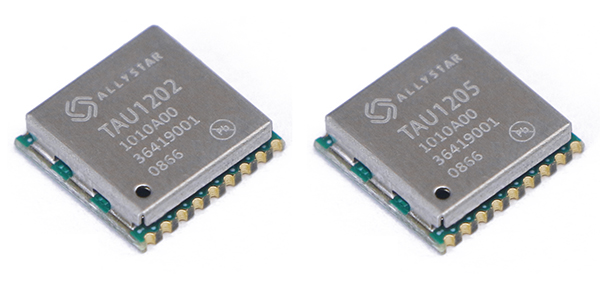
    Photo: Allystar
    Photo: Allystar

    The dual-band multi-GNSS modules TAU1202 and TAU1205 support both the L1 and L5 bands to enhance sub-meter positioning accuracy. Constellations received include GPS, Galileo, GLONASS, BeiDou, QZSS and NavIC. Besides the L1 band, TAU1202 and TAU1205 also support L5/B2a/E5a, which are expected to have lower noise and significantly reduced multipath mitigation because of the higher chipping rate of L5 signals relative to L1 C/A code. TAU1205 supports NavIC (IRNSS), improving navigation in India and the Middle East. Powered by the Cynosure III GNSS chipset and with built-in low-noise amplifier and surface acoustic wave (SAW) filter, TAU1202 and TAU1205 provide higher sensitivity, ensuring exceptional acquisition and tracking performance even in weak signal areas.

    Allystar Technology, allystar.com

    L5 mass-market module

    Dual-Frequency chip uses new signals
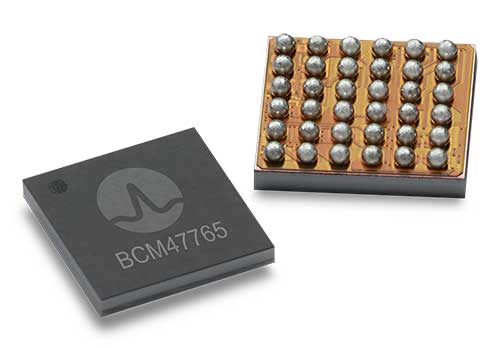
    Photo: Broadcom
    Photo: Broadcom

    The BCM47765 dual-frequency GNSS module is capable of using the BeiDou-3 constellation’s B2a signals (the Chinese indicator for L5). It can track 30 new L5 signals (60% more) with a significant impact on accuracy. End users will experience much higher reliability of the submeter accuracy inherent to dual-frequency L1/L5. The enhanced L5 signal improves the accuracy of GNSS in an urban scenario by mitigating reflections from nearby buildings (multipath). It also improves GNSS in an open-sky scenario, allowing for submeter accuracy. Second generation dual-frequency GNSS will enable lane-level driving navigation, allowing applications to know in which highway lane a vehicle travels.

    Broadcom, broadcom.com

    Atomic clock

    Next-gen timing in a tiny package
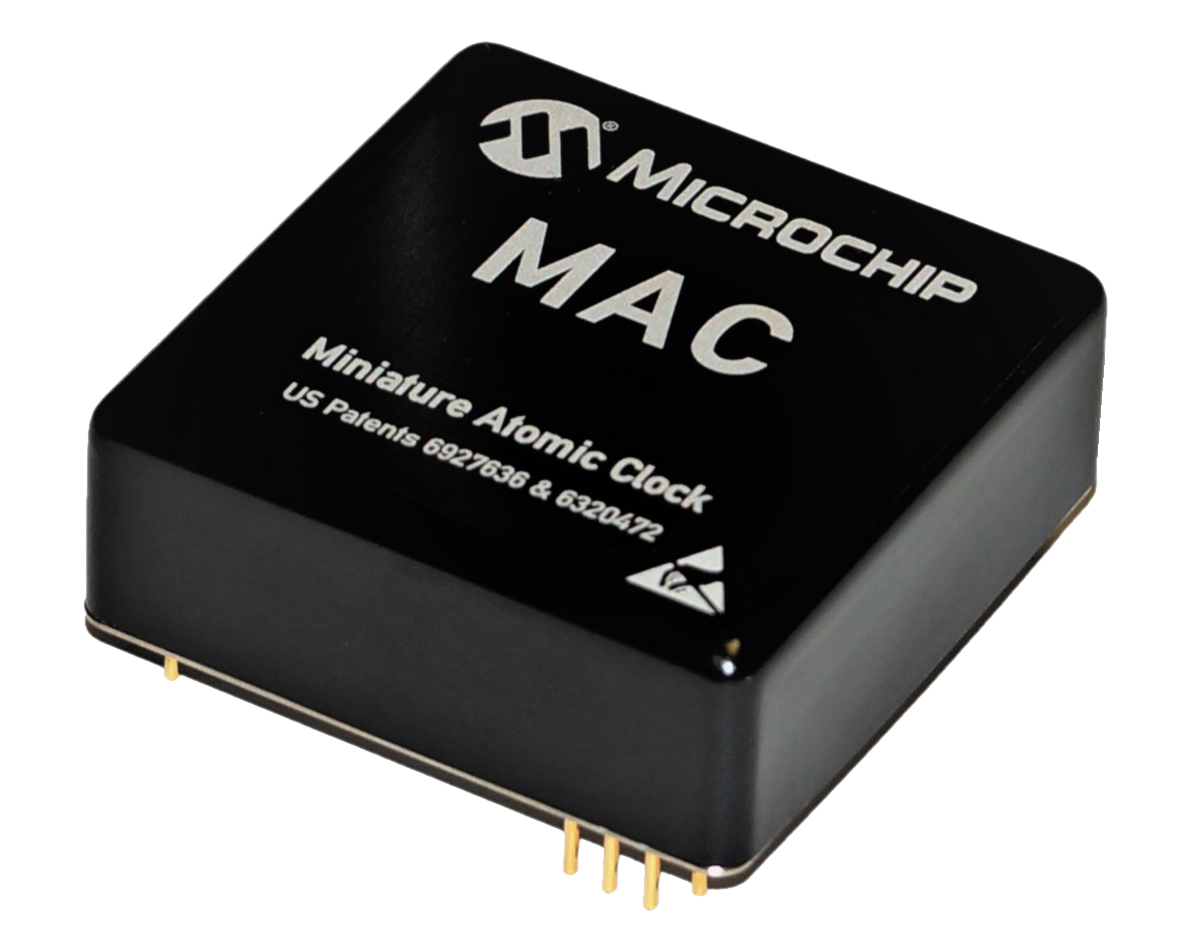
    Photo: Microchip
    Photo: Microchip

    The MAC-SA5X miniaturized rubidium atomic clock is a high-performance atomic clock that delivers a wide thermal range, critical performance improvements and other enhancements over previous clocks. The MAC-SA5X produces a stable time and frequency reference that maintains a high degree of synchronization to a reference clock, such as a GNSS-derived signal. Its low monthly drift rate, short-term stability and stability during temperature changes allows the device to maintain precise frequency and timing during extended periods of holdover during GNSS outages or for applications where large rack-mounted clocks are not possible. Operating over a temperature range of –40 to +75 Celsius, the MAC-SA5X is designed to quickly achieve atomic stability performance with a fast lock.

    Microchip Technology, microchip.com

    Correction receiver

    Centimeter-level accuracy for consumer devices
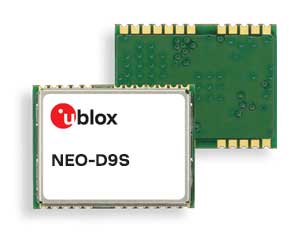
    Photo: u-blox
    Photo: u-blox

    The NEO-D9S GNSS correction data receiver module provides an affordable approach to bringing centimeter-level accuracy to GNSS receivers. The NEO-D9S receives corrections from correction service providers broadcast on the L-band (1525–1559 MHz). A host processor can then decrypt this correction data and provide it to a high-precision GNSS receiver, combining corrections directly with readings from the satellite constellations to enable much more accurate position readings than those offered by GNSS signals alone. Use of the NEO-D9S will also increase the availability of high-precision GNSS positioning data in areas with limited connectivity and reduce the amount of cellular data consumed by positioning receivers. Expected customers are Tier 1 and OEM carmakers, industrial system integrators, and any other applications that rely on very accurate positioning at low cost. The NEO-D9S module is a correction-only receiver. Based on the latest u-blox ninth-generation (D9) platform, it will integrate easily with the u-blox F9 RTK GNSS receivers from u-blox, or can be used as part of a modular product roadmap.

    u-blox, u-blox.com

    Mobile platforms

    Dual-frequency systems on chip

    Image: Qualcomm
    Image: Qualcomm

    The Qualcomm Snapdragon 720G, 662 and 460 enable enhanced user experiences across connectivity, gaming and entertainment. The new mobile platforms support dual-frequency (L1 and L5) GNSS to improve location positioning accuracy and robustness. The system-on-chip solutions also support NavIC. For the first time on mobile, the Qualcomm Location Suite supports up to seven satellite constellations concurrently, including NavIC.

    Qualcomm Technologies, qualcomm.com


    UAV

    Survey drone

    VTOL option available
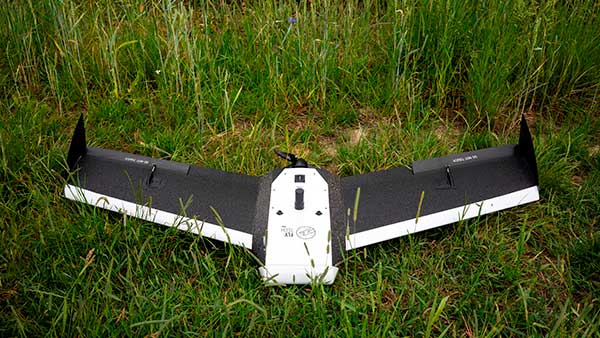
    Photo: FlyTech UAV
    Photo: FlyTech UAV

    Dedicated to surveying and agriculture, the UAV Birdie is tailor-made, combining intuitive use and high-quality data through precise sensors and GPS RTK L1/L2 onboard. Features include a 24-megapixel camera or optional full-frame 42-megapixel camera; flight time up to 60 minutes; and coverage up to 8 square kilometers in one flight. A vertical-takeoff-and-landing (VTOL) upgrade is available.

    FlyTech UAV, flytechuav.com

    Inspection drone

    Five-hour flight time
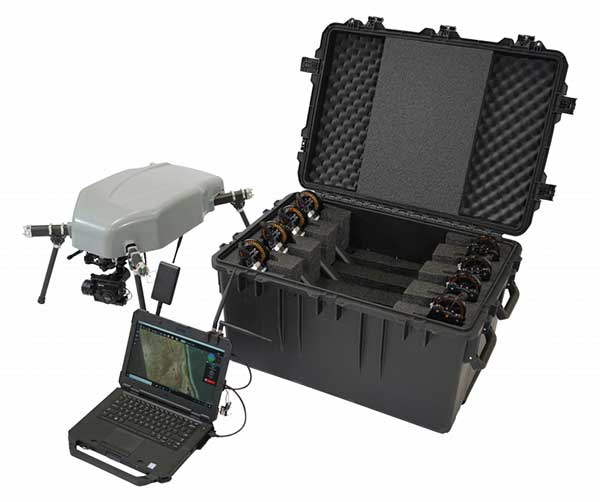
    Photo: Skyfront
    Photo: Skyfront

    Skyfront’s Perimeter 8 drone is equipped with Silvus Technologies’ SteamCaster Radio system, a powerful user-customizable radio system for the military, police and broadcast. The new long-range drone will allow operators to inspect pipelines and other assets as well as conduct long-range surveillance missions. The octocopter can fly for five hours and travel up to 100 kilometers without losing connection from the ground station. Currently, five models are available to suit uses including mapping, lidar and medium, long, or extra-long surveillance. SteamCaster radio system uses the latest beam-forming technology, spatial multiplexing, and space-time coding to ensure the drone can be controlled in environments in which other radio systems are likely to fail. The combination of the technologies allows the range to be increased from 40% to 100%. SteamCaster comes with SteamScape, a network management interface to allow for key metrics and statistics to be viewed and collected in real time. The system also allows the drone to be overlayed onto a map showing the current location and path of the drone.

    Skyfront, skyfront.com
    Silvus Technologies, silvustechnologies.com

    Transformable drone

    Delivers critical tools on the ground or in the air
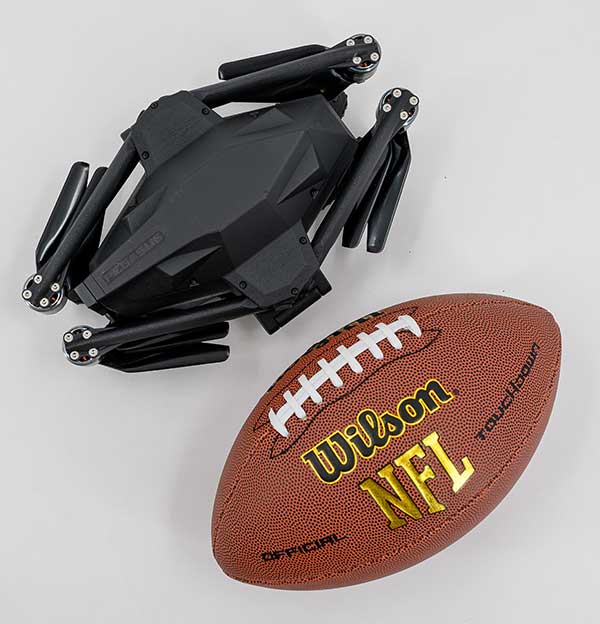
    Photo: Robotic Research
    Photo: Robotic Research

    The Pegasus Mini is a smaller version of the Pegasus, a hybrid unmanned aircraft system/unmanned ground vehicle. The Pegasus hybrid UAS/UGV configuration delivers advanced GPS-denied mapping with fully autonomous high-speed flying and driving capabilities. Pegasus Mini is designed to provide the extra reach that a UAV or UGV alone cannot provide. Uses include inspection, rescue, rapid response, and applications that strongly benefit organizations in oil and gas, public transportation, law enforcement, public safety, and more.

    Robotic Research, roboticresearch.com

    Electric drone

    ISR UAV designed for long flight

    Photo: Silent Falcon UAS Technologies
    Photo: Silent Falcon UAS Technologies

    The Silent Falcon E1 UAV has completed 500 hours of successful flight testing and operations. It’s maker, Silent Falcon UAS Technologies (SFUAS), is based in Albuquerque, New Mexico. The E1 solar-electric, fixed-wing UAV is noise free, emission free, and provides long-range, low-cost intelligence, surveillance and reconnaissance (ISR) capability. It has a payload capacity of 20 pounds and a ceiling of 20,000 feet above ground level. SFUAS has an application pending before the FAA for type certification of the E1. The 500-hour milestone confirms for federal regulators that it is safe and durable. Silent Falcon aircraft have operated in eight foreign countries and are not ITAR restricted.

    Silent Falcon UAS Technologies, silentfalconuas.com


    High-definition GNSS

    Enables submeter positioning
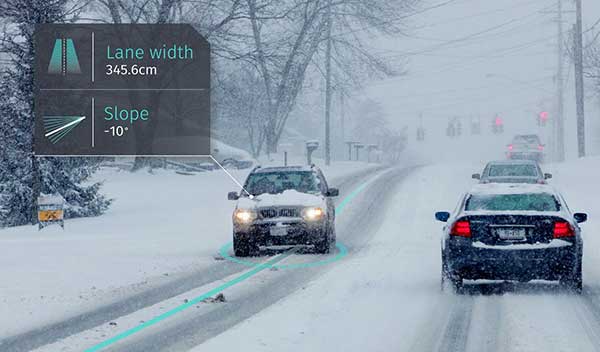
    Image: HERE Technologies
    Image: HERE Technologies

    The High Definition (HD) GNSS cloud-based solution enables mass-market devices to achieve sub-meter accuracy across the globe. HD GNSS enables lane-level navigation, augmented reality and virtual reality. It combines precise point positioning (PPP) and real-time kinematic (RTK) positioning methods, allowing for fast convergence time, high availability and global coverage. It also supports off-the-shelf mobile devices and internet of things (IoT) trackers equipped with dual-frequency chipsets.

    HERE Technologies, here.com

    GNSS/INS module

    Open design for developers
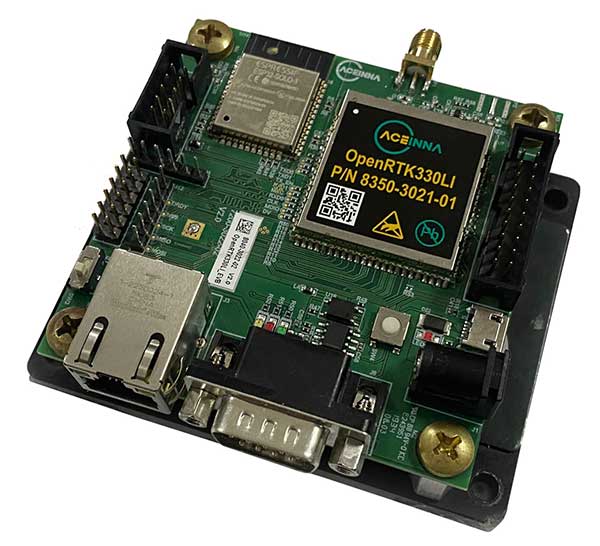
    Photo: Aceinna
    Photo: Aceinna

    The OpenRTK330L GNSS/INS module is designed for developers creating guidance and navigation systems for autonomous vehicles, robots, drones, industrial, construction and agricultural machinery. OpenRTK330L is a low-cost, high-performance triple-band RTK/GNSS receiver coupled with redundant inertial sensor arrays to provide cm-level accuracy, enhanced reliability, and superior performance during GNSS outages. The module is aimed at automotive, robot, drone, construction and agriculture systems. The multi-band GNSS receiver can monitor all global constellations (GPS, GLONASS, BeiDou, Galileo, QZSS, NavIC, SBAS) and simultaneously track up to 80 channels. The module has RF and baseband support for the L1, L2 and L5 GPS bands and their international constellation signal equivalents.

    Aceinna, aceinna.com
  • Launchpad: Anti-spoofing, GNSS receivers, mobile kit

    Launchpad: Anti-spoofing, GNSS receivers, mobile kit

    A roundup of recent products in the GNSS and inertial positioning industry from the October 2018 issue of GPS World magazine.

    OEM

    Anti-spoofing

    Provides mitigation and reporting

    Photo: Regulus
    Photo: Regulus

    The Pyramid GNSS allows detection, mitigation and reporting of spoofing of the GNSS system, while still providing accurate positioning (jamming protection will be available in a future version). Version 2 of the Pyramid GNSS adds a software-only version, making it available to numerous applications and enabling GNSS to perform seamlessly under spoofing and jamming conditions. The device is designed for any system depending on GNSS navigation or precise timing, including cars, drones, ships, robots, financial institutions and stationary infrastructure, such as power plants and power grids. The Pyramid GNSS connects externally and integrates seamlessly with existing GNSS receivers, adding reliability and protection to the system. It offers full GNSS support including for BeiDou, Galileo and GLONASS.

    Regulus, www.regulus.com

    Firmware Upgrade

    GNSS receiver now has BeiDou and Galileo support

    Photo: Swift Navigation
    Photo: Swift Navigation

    Swift Navigation has upgraded the firmware of its flagship product — the Piksi Multi GNSS receiver. This marks the sixth major release to Piksi Multi since it was launched in February 2017. The upgrade is available free of charge to Swift customers. The firmware release also enhances Duro, the ruggedized version of the Piksi Multi receiver housed in a military-grade, weatherproof enclosure for long-term outdoor deployments. Firmware Release 2.0 for Piksi Multi and Duro supports two additional major satellite constellations — Chinese BeiDou (B1/B2) which, once completed, will contain 37 satellites, and Europe’s Galileo (E1/E5b), which will eventually consist of 30 satellites. Piksi Multi’s performance will further improve for future satellites. The addition of BeiDou and Galileo creates more robust positioning in a variety of challenging sky-view environments.

    Swift Navigation, www.swiftnav.com

    Three-axis gyro

    Suitable for image stabilization

    Photo: Gladiator Technologies
    Photo: Gladiator Technologies

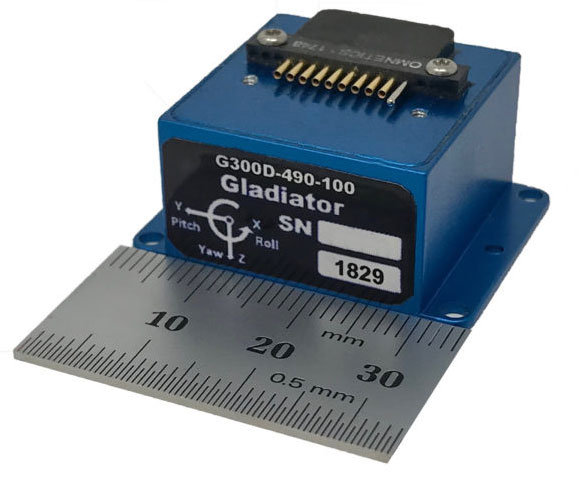
    The G300D gyro is a three-axis, inertial rate system gyroscope. Measuring 0.67 cubic inches, it features low power and high speed, making it suitable for image stabilization applications. The G300D has message timing under 150 microseconds and output data rates up to 8 kHz with external sync. A micro-electro-mechanical gyroscope, it has an ARW of <0.0028 degrees/sec/√Hz and an option for both 24 and 32-bit LSB for exceptional resolution. Users can configure the G300D using a software development kit or through software protocols to simplify the integration process. The G300D gyro is non-ITAR.

    Gladiator Technologies, www.gladiatortechnologies.com

    Front-end modules

    Ready for internet of things applications

    Image: Skyworks
    Image: Skyworks

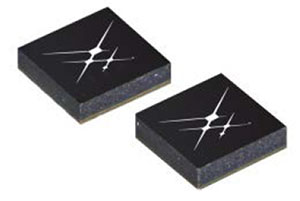
    Two new GNSS low-noise amplifier (LNA) front-end modules, the SKY65933-11 and SKY65943-11, integrate Skyworks’ proprietary TC-SAW filters. The modules are designed specifically for internet of things (IoT) applications including smartwatches, action cameras, drones, asset trackers and personal navigation devices. They are designed for wireless module and IoT device manufacturers, providing a turnkey GNSS connectivity solution in a compact form factor. Both solutions offer integrated pre- and post-filter LNA and matching to reduce printed circuit board (PCB) area versus a discrete implementation; single DC supply for design flexibility and simplicity; multi-GNSS compatibility to cover GPS, GLONASS, Galileo, BeiDou and QZSS receiver applications in the 1559–1606 MHz frequency range; extremely low leakage current (1 uA max) benefitting battery-powered IoT devices; and highly manufacturable and low-cost surface-mount technology in a 2.5 x 2.5-millimeter multi-chip module package.

    Skyworks, www.skyworksinc.com


    SURVEY

    Reference receiver

    Robust system for CORS networks

    Net20 Pro. (Photo: Geneq)
    Net20 Pro. (Photo: Geneq)

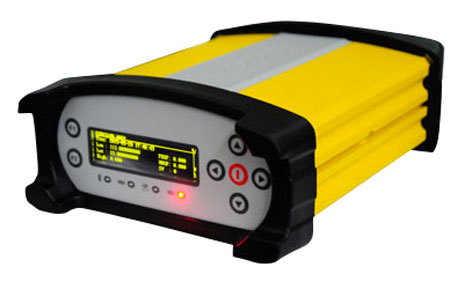
    The Net20 Pro provides high-quality data for users interested in the proximity and reliability of a reference station while eliminating real-time kinematic (RTK) corrections service charges. It uses multi-frequency, 555-channel technologies in a rugged casing to deliver accurate and effective positioning data even in harsh environments. It can be configured for correction data reception in client mode to calculate a fixed RTK position and to monitor the antenna position while continuing to work as a GNSS reference server. With NTRIP Caster software, the Net20 Pro provides superior connectivity with an unlimited number of mount points. Users can have permanent transmission of RTK corrections with a local internet connection. Its 32-GB internal and 32-GB external memory is enough for permanent recording even at a 100-Hz high data sampling rate. Its web user interface features upgrade, status and settings management as well as data downloading via smartphone, tablet or other internet-enabled device.

    Geneq, geneq.com

    Measurement module

    Combines GNSS/terrestrial for accuracy

    J-Mate (Photo: Javad GNSS)
    J-Mate (Photo: Javad GNSS)

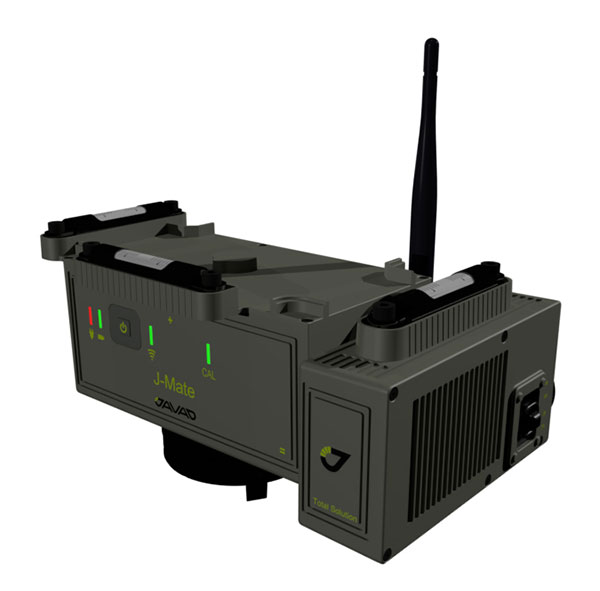
    The J-Mate measurement module combines conventional measurement via laser scanning and photographic imagery with the multi-constellation location accuracy of the Triumph-LS receiver. It utilizes precision horizontal and vertical encoders for angular measurement, while the high-definition camera and laser module combine to locate the USB-powered target for accurate measurements. The target rests on top of the receiver and lights up for better visibility to the camera and sensor. The lighting power comes through the USB cord connected to the receiver. Coupled with the onboard data collector screen of the Triumph-LS, operation of the module is done visually with the LS mounted on top of the module or remotely on the J-Pod pole used for GNSS data collection. The module and software is also designed to be an efficient staking application.

    Javad GNSS, www.javad.com

    GNSS system

    New model for land surveyors

    Photo: Trimble
    Photo: Trimble

    The Trimble R10 Model 2 GNSS System is designed to help surveyors work more effectively by enabling reliable, fast and accurate data collection in the field. Enhancements in Model 2 include a custom Trimble survey GNSS ASIC with 672 GNSS channels including GPS, GLONASS, BeiDou, Galileo, QZSS and IRNSS as well as the full range of SBAS. It also will support planned GNSS signals. It has improved reliability against interference and spoofed signals, improved power management by 33 percent, and increased internal memory (6 GB) to store more than 10 years of raw observations. Support for Android and iOS platforms allow field crews to use their own mobile devices. The Trimble R10 Model 2 supports the recently released Trimble TSC7 controller and Trimble Access 2018 field software.

    Trimble, www.trimble.com

    Correction Service

    Provides 2.5-centimeter accuracy

    Image: NovAtel
    Image: NovAtel

    The TerraStar-C PRO correction service provides multi-constellation support, including GPS, GLONASS, Galileo and BeiDou. Combined with NovAtel’s OEM7 positioning technology, TerraStar-C PRO cuts initial convergence times by nearly 60 percent and offers 40 percent better horizontal accuracy than the current TerraStar-C service. In challenging signal conditions, it offers multipath, shading, interference and scintillation. High-rate TerraStar-C PRO corrections provide reconvergence in less than 60 seconds following brief GNSS signal interruptions. Corrections are generated using TerraStar’s proprietary global network of more than 100 GNSS reference stations. The data is delivered worldwide through overlapping geostationary satellites directly to a NovAtel receiver or via cellular IP network.

    NovAtel, www.novatel.com


    MAPPING

    Unmanned inspections

    Command center for BVLOS

    Photo: AviSight
    Photo: AviSight

    The C3UBE Command Center enables unmanned beyond-visual-line-of-sight (BVLOS) data collection and near real-time data streaming from almost any point within any critical infrastructure network. The mobile command and distribution center allows for the flight of unmanned aerial systems and is designed to not only allow AviSight to reach the maximum BVLOS distances permitted today, but also to expand its range for UAS operations as limits increase in the national airspace. In addition, it enables near-real-time transmission of data and imagery, which can be disseminated live to anywhere in the world via its proprietary distribution network located at Switch’s Tier 4 data center. It is aimed at the oil, gas, power, transportation and telecommunications sectors.

    AviSight, www.AviSight.com

    Mining support

    Correlator3D photogrammetry

    Photo: SimActive
    Photo: SimActive

    SimActive has updated its Correlator3D end-to-end photogrammetry software to include tools for users to generate precise statistics on mining activities, with improved volumetric calculation. The integrated tools allow users to generate precise statistics on mining activities. The Correlator3D software performs aerial triangulation and produces dense digital surface models, digital terrain models, point clouds, orthomosaics and vectorized 3D features. Applications like mineral extraction monitoring can be done seamlessly within the software. Users can process raw drone data, produce point clouds and DSMs, and perform volumetric calculations in the same Correlator3D workflow.

    SimActive, www.simactive.com

    Laser rangefinder

    Increased distance accuracy

    Photo: LTI
    Photo: LTI

    The improved TruPulse 360 laser features LTI’s TruVector 360° Compass Technology. The rangefinder measures slope distance, inclination and azimuth; instantly calculates horizontal and vertical distances; and calculates 3D missing line values. The enhanced device offers 33 percent increased distance accuracy, 25 percent better target acquisition and a higher azimuth accuracy of 0.5° root mean squared (RMS). Other features include reflectorless technology that enables data capture to any surface type; advanced targeting modes to achieve accurate, repeatable results of the intended target; seven-power superior optics technology that displays all measured and calculated solutions; and smart technology that recognizes adverse measurement conditions and prompts recalibration. Uses include forestry, utilities, construction and GIS mapping.

    Laser Technology Inc., www.lasertech.com

    Satellite imagery

    MDA RADARSAT-2 data now in SecureWatch for GEOINT

    Synthetic aperture radar imagery from Maxar’s MDA RADARSAT-2 satellite is now available to SecureWatch subscribers. SecureWatch is DigitalGlobe’s powerful, cloud-based geospatial intelligence platform. The service has added the radar imagery to its high-resolution optical imagery, enabling defense and intelligence analysts to deliver actionable insights to decision makers regardless of weather and light conditions. The satellite will refresh hundreds of global sites on a weekly basis using a wide-ultra-fine format (3-meter resolution, 50-kilometer scene width). RADARSAT-2 imagery allows users to observe features and changes that go undetected using other imaging techniques, and provides day and night coverage regardless of weather. SecureWatch users can access timely RADARSAT-2 imagery using current subscription plans. When combined with 30-cm optical imagery, analysts will have a powerful and reliable toolset to make decisions with confidence.

    DigitalGlobe, www.digitalglobe.com


    TRANSPORTATION

    Trackers with toolset

    Software and application board

    Photo: u-blox
    Photo: u-blox

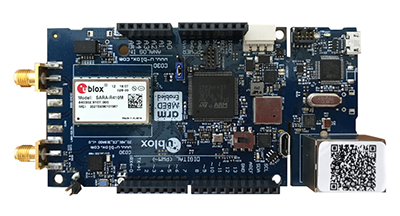
    U-blox has introduced a toolset comprising the u-track software and the C030-R410M application board. The toolset is a rapid-prototyping platform that lets product designers test and optimize the position accuracy and power consumption of wireless location tracking applications that use LTE-M and NB-IoT cellular networks, as well as GNSS technology. The toolset targets product engineers working on battery-powered applications such as sport, people and asset trackers. An increasing number of battery-powered consumer and industrial products feature integrated GNSS receivers. These products include virtual reality headsets, smartwatches and devices to track elderly people, containers or parcels. With the ongoing roll-out of low power wide-area cellular networks (LPWAN) such as LTE-M and NB-IoT technologies around the world and the extremely low power consumption they enable, the range of use cases for wireless location trackers is expected to expand further. The u-track software runs from embedded firmware on the new u-blox C030-R410M application board. The board, specifically designed to rapidly prototype applications for the internet of things (IoT), includes an ultra-small, low-power u-blox ZOE-M8B GNSS receiver and a size-optimized SARA-R410M LTE-M/NB-IoT cellular communication module, and u-track includes a PC software application that lets users log, retrieve, and visualize power consumption, accuracy, and other important values, such as the GNSS time to first fix.

    u-blox, www.u-blox.com

    Asset tracker

    Add-on to AT&T Fleet Complete platform or for separate use

    Photo: AT&T
    Photo: AT&T

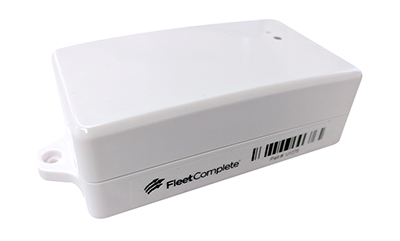
    The new GPS Asset Tracker One (AT1) from AT&T and Fleet Complete can track transportation as well as agriculture, food services, pharmaceuticals and emergency services. Users can monitor their assets through the Fleet Complete mobile app. Besides tracking location in near real-time, it also captures humidity, temperature, light exposure and more. AT&T’s nationwide LTE-M network is designed for devices that require low-cost, extended battery life, coverage underground and inside buildings, and carrier-grade security. Two high-capacity Lithium AA batteries power the AT1. They can last up to five years with a once-a-day use.

    Photo: Quectel Wireless Solutions
    Photo: Quectel Wireless Solutions

    AT&T, att.fleetcomplete.com

    Quad-band module

    Indoor and outdoor positioning

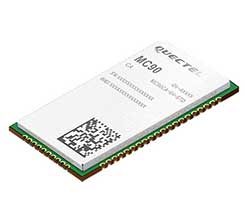
    The MC90 is a quad-band GSM/GPRS/GNSS/Wi-Fi module that supports hybrid positioning technologies including GNSS, Cell ID and Wi-Fi aided positioning. It integrates the multi-GNSS system, including GPS, GLONASS, Galileo and QZSS, which makes it suitable for urban areas with high-rise buildings and complex environments. The MC90 also adopts Wi-Fi hotspot positioning technology for blind spots and satellite coverage. It integrates multi-aiding positioning technologies to offer customers with optimized GNSS performance. It also supports EPO technology, which provides predicted Extended Prediction Orbit to speed up TTFF without the need of an extra server. The MC90 features a compact design and lower power consumption, and supports dual SIM single standby function.

    Quectel Wireless Solutions, www.quectel.com

    Maps and traffic SDK

    For mobile and internet of things

    Photo: TomTom
    Photo: TomTom

    TomTom will offer free maps and traffic tiles on its mobile software developer kit (SDK) in both Android and iOS. With global coverage, the Mobile Maps SDKs and its free map tiles will guide developers of mobility and ride-sharing apps. The TomTom Maps APIs (application programming interfaces) also play a role in the internet of things, where traffic data is needed to enable self-driving cars and smart city planning.

    TomTom, www.developer.tomtom.com


    Inspection Software

    Increases safety and speed of data collection

    MAGNET Inspect is designed for UAV data collection. (Photo: Topcon)
    MAGNET Inspect is designed for UAV data collection. (Photo: Topcon)

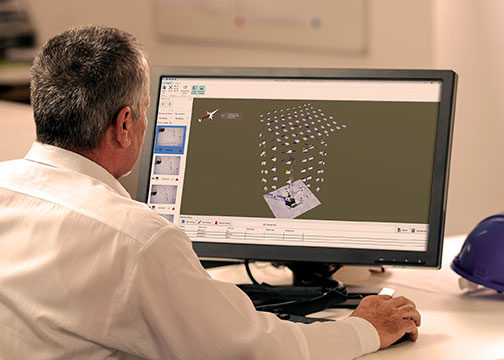
    MAGNET Inspect software is designed to facilitate the data-processing workflow for UAV (unmanned aerial vehicle) infrastructure inspection by efficiently managing large UAV data sets to create inspection reports. It allows operators to visually navigate UAV photos, aligning 3D reality meshes with raw georeferenced images in one location and filtering them based on selected criteria including field of view. When combined with Intel Falcon 8+ Drone – Topcon Edition and Topcon ContextCapture, powered by Bentley Systems, the software enables operators to navigate, annotate and create reports with inspection photos, creating a strong end-to-end inspection workflow.

    Topcon Positioning Group, Topcon.com

    Drone software

    Flight planning and data capture tools

    Photo: Esri
    Photo: Esri

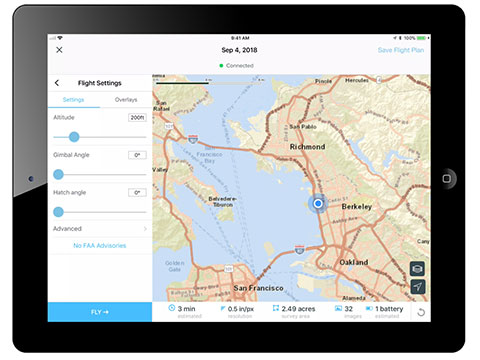
    Site Scan Esri Edition is a custom version of the Site Scan iOS app for drone flight planning and data capture that works seamlessly with Esri’s ArcGIS Online and Drone2Map for ArcGIS. The Site Scan Esri Edition app complements Esri’s Drone2Map for ArcGIS software by providing full drone project mission planning and a simple workflow for transferring drone captured data into Esri ArcGIS. Users will be able to connect to ArcGIS Online with an Esri sign-in. The app will allow users to directly use Esri data layers from ArcGIS Online as base and reference data for their drone flight planning mission. Esri customers can use any drone supported by Site Scan, including a variety of DJI drones. Site Scan also supports a custom version of the new Yuneec H520 commercial drone by 3D, which is based on the Dronecode PX4 software and designed to be an open and secure drone option for use on U.S. government projects.

    3DR, 3dr.com; Esri, www.esri.com

    Search-pattern software

    Helps rescue response

    Image: Airborne Response
    Image: Airborne Response

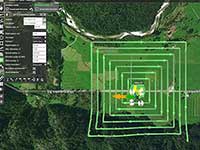
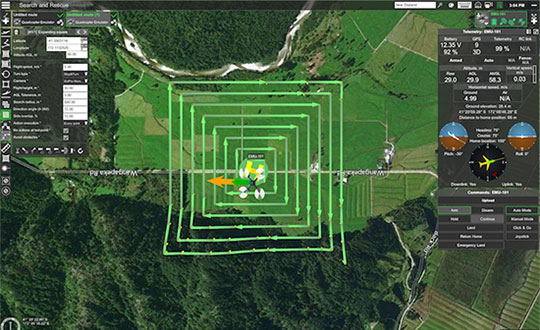
    UAS mission-planning software company UgCS has joined with disaster response expert Airborne Response to develop a comprehensive search capability for drones. The search-pattern software, a new feature of the UgCS platform, allows remote pilots to more effectively conduct search-and-rescue operations. Customizable search patterns such as the “expanding square” and “creeping line” can be deployed. Based on the flight altitude input by the operator, the UgCS software will automatically calculate the course heading and track spacing necessary to provide the prescribed coverage area for a search target. UgCS software allows central management of all types and manufacturers of unmanned vehicles, enabling a user to control one or a fleet of drones on a single mission in multi-operator mode and multi-platform environments. Airborne Response will offer the UgCS mission planning software and associated training to public safety and emergency response professionals throughout the U.S.

    UgCS, www.ugcs.com
    Airborne Response, www.airborneresponse.com

    Camera drone

    Integrates a Hasselblad camera

    Photo: DJI
    Photo: DJI

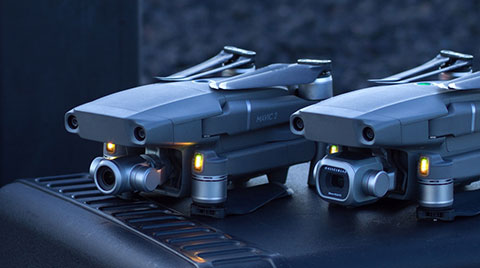
    The Mavic 2 Pro is designed for professionals, aerial photographers and content creators. With a folding design, the Mavic 2 is a powerful platform with new gimbal-stabilized cameras and advanced intelligent features like Hyperlapse and ActiveTrack for easier and more dynamic storytelling. Flight time is 31 minutes. Co-engineered in partnership with Hasselblad, the Mavic 2 Pro houses a 1-inch CMOS sensor with a 10-bit Dlog-M color profile. It can capture 20-megapixel aerial shots with utmost color accuracy using the Hasselblad Natural Color Solution (HNCS) technology, while an adjustable aperture from f/2.8-f/11 provides control across a wide variety of lighting conditions.

    DJI, www.dji.com 

  • Launchpad: Antennas, autonomous vehicle platform

    SURVEY & MAPPING

    Mobile surveying app

    Increases RTCM 3.1 support

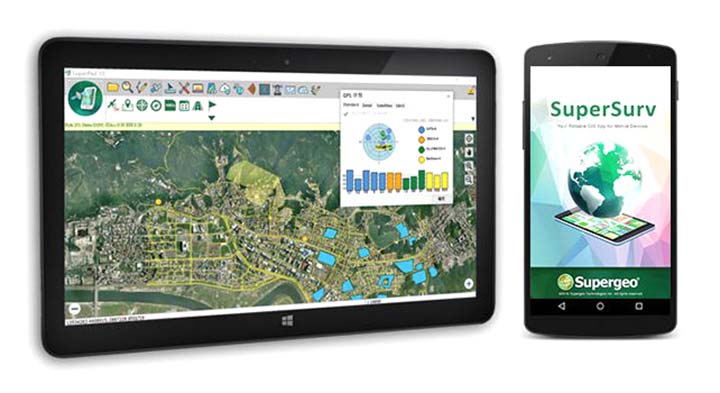
    SuperSurv’s NTRIP solution is being enhanced to adopt more RTCM versions and provide a better GNSS positioning service. NTRIP (Networked Transport of RTCM via internet protocol) is a protocol to send GNSS-related data through the internet, which enables users of differential GPS or network real-time kinematic (RTK) to get correction parameters after connecting to the internet. The correction parameters can be used to calculate a more accurate GNSS location. Supergeo’s product team is developing the support for RTCM 3.1, including Types 1021 and 1023.

    Supergeo Technologies, www.supergeotek.com

    Smart antenna

    For harsh outdoor applications

    The scalable A222 GNSS smart antenna is designed for both agriculture and basic indicate systems markets, as well as other markets requiring flexible positioning. The smart antenna has the flexibility to scale and grow as business expands and can be configured from L1-only to multi-GNSS, multi-frequency and real-time kinematic (RTK). It adds a system component so that tractor and farm equipment manufacturers can deliver their own guidance and control solutions to their customers. Designed to excel in challenging environments, the A222 uses Hemisphere’s Athena RTK engine and is Atlas L-band capable. It is easy to mount and customizable. Its dual-serial, CAN and pulse output options are compatible with almost any industry-standard interface. Because the A222 is Atlas-capable, it has the ability to use the new Atlas AutoSeed technology. Atlas AutoSeed allows users to suspend Atlas use for any period, and upon returning to their last location, AutoSeed rapidly re-converges to a high-accuracy converged position. A222 comes pre-configured with Atlas Basic activated.

    Hemisphere GNSS, hemispheregnss.com


    OEM

    Location architecture

    Locates mobile devices moving indoors and outdoors

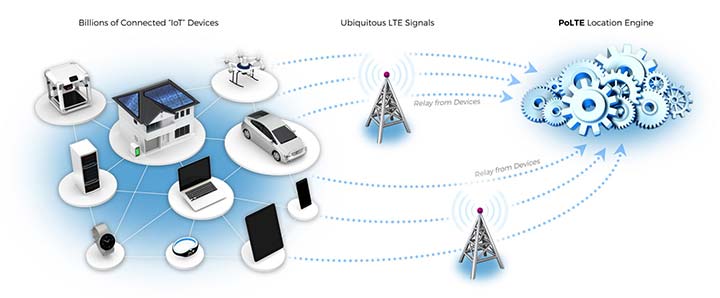
    Leveraging ubiquitous LTE signals, the Lite-Touch Architecture calculates positioning in the cloud to efficiently locate devices between indoor and outdoor environments. By offloading computation-heavy location calculations from the device to the cloud, the PoLTE positioning solution makes location positioning available to a wider variety of devices, including those constrained by battery life, memory, processing power, size and cost. This includes IoT-based applications that historically relied on GPS, with its high rate of power consumption, as well as Wi-Fi and Bluetooth with their added size, cost and network complexity.

    PoLTE, www.PoLTE.com

    Time server

    Enhanced for Ethernet networks, satellite uplinks

    Enhancements to the SyncServer S600 series of time servers and instruments improve time synchronization over enterprise Ethernet networks and supply timing signals for improved military radar operations and satellite uplink communications. The SyncServer S600 series also meets the timing and synchronization needs of the rapidly evolving networks of enterprise and financial customers, particularly for compliance purposes such as the European MiFID II directive, which specifies highly stringent time accuracy requirements for stock trading systems. The latest release includes support for the IEEE 1588 multiport, multi-profile Precision Time Protocol (PTP), which allows the S600 to operate as an independent grandmaster clock on each Ethernet port — delivering cost savings and network deployment flexibility to customers. This is coupled with a new 10-GbE interface to easily interoperate with a wider variety of network and stock trading topologies.

    Microsemi Corporation, microsemi.com

    Defense-developed IMU

    Available to customers worldwide

    The HG4930 inertial measurement unit (IMU) is tailored for “straight-out-of-the-factory” integration and use in various non-defense and non-aerospace industrial applications including surveying and mapping, autonomous vehicles and gimbal stabilization. The HG4930 IMU is not classified under an International Traffic in Arms Regulation category; it is free from the burden of an export license for all but a few military-related use cases. The micro-electro-mechanical system (MEMS)-based IMU has been tailored to provide significantly improved gyroscope and accelerometer performance for the environments and use cases experienced by non-aerospace and non-defense users.

    Honeywell, honeywell.com

    Frequency-hopping modem

    With anti-jamming

    The HX-DU2017D is a frequency-hopping OEM modem designed to provide strong anti-jamming and signal receiving capability for complex data-intensive applications. HX-DU2017D is a miniature, dual-frequency, software-selectable 840-MHz and 900-MHz data link modem. It provides power switching of 0.5 W, 1 W and 2 W; 20 ms/30 ms/40 ms/50 ms/ frequency-hopping intervals; and supports point-to-point, point-to-multipoint network. Its full duplex mode ensures secure data transferring and stable long-range communication. The HX-DU2017D also provides short latency of data transmission and communication recovery in millisecond level. It allows fast and secure simultaneous data communication for mission-critical applications, especially in the fields of precision agriculture and UAVs, including unmanned plant surveys, UAV plant protection and automatic mowers. It could be placed on a UAV with its extremely small footprint for tight OEM integration and design flexibility. Meanwhile, its frequency-hopping transmission ensures UAV data security and flight stability.

    Harxon, en.harxon.com


    UAV

    Thermal imaging

    For small construction, thermal inspections and public safety

    The Parrot Bebop-Pro Thermal is a compact quadcopter with two embedded cameras: a stabilized 14-megapixel high-definition front-facing video camera and a FLIR ONE Pro thermal camera. The thermal-imaging camera is positioned in a dedicated module at the back of the drone. Three thermal-imaging setting modes are available: Standard, Dynamic and Hotspot. The Parrot FreeFlight Thermal app innovatively transmits and analyzes images captured by the quadcopter’s cameras. Included is a long-range Parrot Skycontroller 2 remote control.

    Parrot, www.parrot.com

    Methane detector

    Pergam gas sensor integrated with carbon-fiber UAV

    Pergam gas sensor aboard the Microdrones md4-1000 UAV.

    The aerial methane detector mdTector1000 CH4 detects methane gas via a fully integrated aerial package. It has a Pergam gas sensor, mounted and integrated with the Microdrones md4-1000 UAV. In real time users can see aerial shots of detection with the laser sensor. The carbon-fiber-built UAV goes into dangerous areas unsuitable for workers. The mdTector1000 CH4 can be used for natural gas line surveys, tank inspections, gas well testing, plant safety and landfill emission monitoring. The mdCockpit Android app allows users to maintain visualization in flight. A special mdTector app allows users to visualize and present all post-flight data on one map.
    Microdrones, www.microdrones.com

    UAV tracking antenna

    Portable antenna for unmanned or manned aircraft

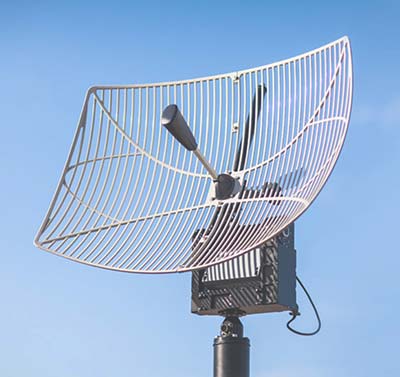
    The Octopus UAV portable tracking antenna enables long-range data transmission and is suitable for unmanned and manned aircraft applications. It has a range of more than 100 kilometers and an integrated pointing algorithm. The GPS location of the aircraft is sent over the Airlink IP datalink and received directly by the tracking antenna, making it operational with any existing unmanned aircraft autopilot system. For a manned aircraft, an existing GPS receiver or dedicated GPS receiver can be used.

    Octopus ISR Systems, octopus.uavfactory.com

    GNSS Engine

    Brings high-precision positioning and attitude to small UAVs

    AsteRx-m2 UAS receiver.

    The AsteRx-m2a UAS GNSS OEM engines provides precise and reliable multi-frequency, all-in-view real-time kinematic (RTK) positioning and heading — along with interference technology — with low power consumption. It features Septentrio’s AIM+ interference mitigation and monitoring system, which can suppress a wide variety of interferers. It is designed to bring high-precision positioning and attitude to any space-constrained application, offering a high update rate and low latency output. The AsteRx-m2a UAS provides plug-and-play compatibility for autopilot systems such as ArduPilot and Pixhawk. Event markers accurately synchronize camera shutter events with GNSS time. The board can be powered directly from the vehicle power bus via its wide-range input. It works seamlessly with GeoTagZ software, providing offline re-processed RTK accuracy without the need for either ground control points or a real-time datalink.

    Septentrio, septentrio.com


    TRANSPORTATION

    Railroad antenna

    Designed for use in congested sites

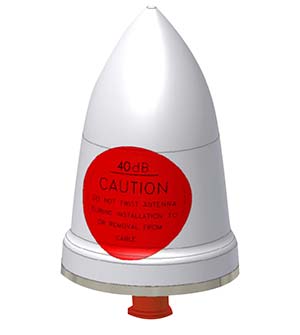
    The GPS-TMG-HR timing antennas are designed for Positive Train Control and railroad management, among other markets. They are equipped with high-rejection narrowband filtering to mitigate interference and provide 65-dB rejection of frequencies adjacent to L1 GPS. The GPS-TMG-HR maintains all features of PCTEL’s GPS timing reference platform. The antennas feature a 26-dB amplifier (GPS-TMG-HR-26N) and 40-dB amplifier (GPS-TMG-HR-40N ) and narrowband high rejection filtering to support long-lasting, trouble-free deployments in congested cell-site applications with severe interference around the GPS L1 frequency. The proprietary quadrifilar helix design, coupled with multi-stage filtering, provides superior out-of-band rejection and lower elevation pattern performance than traditional patch antennas.

    PCTEL, pctel.com

    Patch antenna

    Embedded stack passive patch

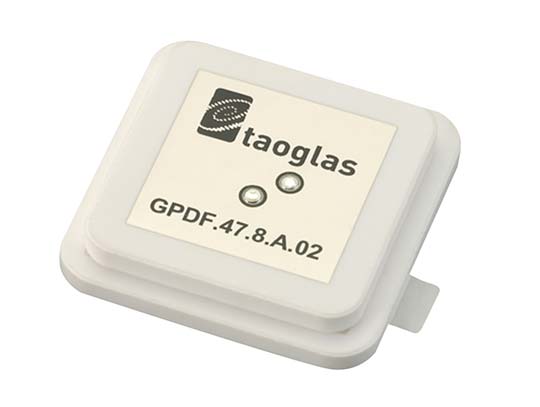
    The GPDF.47.8.A.02 is a ceramic GPS L1/L2 / Galileo low-profile, low-axial ratio, embedded stacked passive patch antenna. It is 47.5 x 47.5 millimeters wide and 8 millimeters thick. It is designed for the highest accuracy centimeter-level tracking in telematics applications for positioning technologies. Typical applicable industries are transportation, defense, marine, agriculture and navigation.

    Taoglas, taoglas.com

    Autonomy Platform

    For development of autonomous vehicles

    The Autonomy Development Platform provides automakers, truck makers and Tier 1 vehicle suppliers the hardware, software, engineering and integration services they need to accelerate development programs for on-road and off-road autonomous vehicles. By combining customized integration and engineering services with GNSS-inertial positioning technologies, the Autonomy Development Platform advances driverless vehicle development projects at every stage of development and commercialization. The platform delivers a navigation solution that is fully customizable and includes integration and engineering services, field-tested hardware and proprietary software for highly accurate positioning. The solution is capable of working with all sensors, including multiple cameras, lidar, radar and ultrasonic sensors, and with all vehicle types at all stages in the development and commercialization cycle. Also, the technology enables highly accurate assessments of the full 360-degree environment around a vehicle to produce a robust representation, including static and dynamic objects, which is critical for successful vehicle autonomy.

    Applanix, applanix.com

    Map delivery service

    Offers a customizable data stream

    TomTom AutoStream is a map delivery service for autonomous driving and advanced driver assistance systems. The service enables vehicles to build a horizon for the road ahead by streaming the latest map data from the TomTom cloud. TomTom AutoStream ensures that the TomTom map data used to power advanced driving functions is the latest, most accurate available, enabling a safer and more comfortable experience. The map-data stream can be customized based on criteria such as sensor configuration and horizon length. It can stream a wide variety of map data including advanced driver assistance systems (ADAS), attributes such as gradient and curvature, and the TomTom HD Map with RoadDNA. This flexibility allows customers to use AutoStream to power a wide range of driving automation functions.

    TomTom, tomtom.com

  • Launchpad: Survey, UAV, Transportation

    Launchpad: Survey, UAV, Transportation

    Survey & Mapping

    GNSS RTK System

    High performance and stable signal reception

    The NeoRTK System is a high-performing GNSS RTK system. It includes a multi-constellation and multi-frequency GNSS engine and various communication protocols. With a high-end GNSS antenna inside, NeoRTK can speed the time to first fix (TTFF) and improve the capability of anti-jamming. The 16G internal storage and up to 32G external SD card, along with the built-in large-capacity battery for 10-hour field work, improves surveyors’ productivity, while the radio module makes long distance operation more convenient. A smart personal digital assistant offers high readability and fast access to essential functions and modes. The NeoRTK system also has an adjustable measurement rod with automatic tilt compensation.

    Tersus GNSS, www.tersus-gnss.com

    GNSS Receiver

    Real-time professional-grade positioning information

    The SXblue Platinum is a high-accuracy GNSS receiver compatible with iOS, Windows and Android Bluetooth. Powered by 394 channels, the SXblue Platinum uses all constellations (GPS, GLONASS, Galileo, BeiDou and QZSS) with triple frequency, and provides the ability to use global or local coverage for corrections (SBAS, L-band and RTK). With the scalable SXblue Platinum Basic, users can activate any frequency or constellation at any time following initial purchase. The receiver is also field-upgradable, which means that these options can be remotely activated when convenient. It also has an L-band signal correction via Hemisphere’s Atlas service. With its new Tracer technology, the receiver can sustain its level of accuracy when the Atlas signal is interrupted.

    Geneq, www.sxbluegps.com

    Smartphone antenna, location service

    Turns Android devices into data-collection systems

    Trimble Catalyst DA1 antenna attaches to a smartphone running a Catalyst-enabled app.

    The Catalyst software-defined GNSS receiver for Android devices is now available through Trimble’s global distribution network. Through Catalyst and a special antenna, customers can access positioning-as-a-service to collect geolocation data with Trimble or third-party apps on smartphones, tablets and mobile handhelds. When combined with a plug-and-play digital antenna and subscription to the Catalyst service, the receiver provides on-demand GNSS positioning capabilities to turn consumer Android devices into centimeter-accurate data-collection systems. Catalyst requires a Catalyst-enabled location app for Android; a Catalyst subscription, with accuracy options ranging from 1 meter to centimeter level, and the small, lightweight DA1 antenna, which plugs directly into Android smartphones and tablets. A range of Catalyst-enabled applications have been developed for geographic information system (GIS) data acquisition, cadastral land management, topographic mapping and ground control for unmanned aircraft systems (UAVs).

    Trimble, catalyst.trimble.com

    Desktop GIS

    Updated with improved workflows and innovative features

    ArcGIS Pro 2.0 is Esri’s next-generation desktop geographic information system (GIS). It is tightly integrated with the rest of the ArcGIS platform, so that users can complete more of their workflows solely in ArcGIS Pro, such as map creation and data management. Getting started with new projects has vastly improved with Favorites. In ArcGIS Pro, users can modify topology properties directly. An enhanced traverse tool improves COGO workflows. Highly requested context menu options for importing and exporting data included in the Catalog pane. 3D navigation controls enable exploration of 3D landscapes, and views of 3D and 2D maps can be synced. Layouts are more useful and powerful with embeddable dynamic interactive charts. Improvements to 3D drawing including feature drawing by camera distance. Enhanced lighting of 3D objects make 3D visualizations even better. Analytics improvements include fill-missing-values tools and enhanced spacetime cubes.

    Esri, www.esri.com


    Transportation

    Flight management

    For pilots to use GPS as primary means of navigation

    The GPS-4000S sensor provides GPS-based navigation and enables GPS-based approaches for aircraft equipped with flight management systems. The sensor’s Space-Based Augmentation System (SBAS) capabilities enable use of GPS as the primary means of navigation in areas of SBAS coverage. The GPS-4000S uses up to 10 GPS satellites and two geostationary SBAS satellites. However, users can calculate navigation with a minimum of four GPS satellites with acceptable geometry or three satellites plus calibrated barometric altitude. With additional satellites, the system’s Receiver Autonomous Integrity Monitoring (RAIM) detects and isolates defective satellites while improving navigation accuracy. Predictive RAIM capability determines if the future satellite geometry at the destination airport will support planned arrival procedures.

    Rockwell Collins, www.rockwellcollins.com

    Smart ADAS camera

    Efficient image recognition engine and functional safety

    Renasas autonomy is an advanced driving assistance system (ADAS) and automated driving platform. The first rollout under the new platform is the R-Car V3M high-performance image recognition system-on-chip (SoC), optimized for use in smart camera applications, surround view systems and lidars. For smart camera applications, the R-Car V3M focuses on enabling NCAP (New Car Assessment Program) features. It is equipped with an integrated ISP and delivers high performance for computer vision, while supporting low power consumption and a high level of functional safety. The R-Car V3M SoC complies with the ISO26262 safety standard, delivers low-power hardware acceleration for vision processing and is equipped with a built-in image signal processor, freeing up board space and reducing system manufacturers’ costs.

    Renesas Electronics, www.renesas.com

    Aircraft navigation

    Touchscreen GPS/Nav/Comm for pilots

    GTN 650 is a fully integrated solution in a small package ready and approved for installation in hundreds of makes and models of aircraft, including helicopters, by the U.S. FAA, Europe EASA, Canada TCCA and Brazil ANAC. It combines GPS, communication and navigation functions with powerful multifunction display capabilities such as high-resolution terrain mapping, graphical flight planning, advanced navigation, multiple weather options, connectivity and traffic display. The SBAS/WAAS-certified, 15-channel GPS receiver generates five position updates per second, letting pilots fly GPS-guided localizer performance with vertical guidance (LPV) glidepath instrument approaches down to as low as 200 feet. The system includes a complete package of very high frequency (VHF) navigation capabilities, with a 200-channel VHF omni-directional radio range (VOR)/instrument landing system (ILS) with localizer and glideslope.

    Garmin, www.garmin.com

    Truck-specific navigation

    Device includes critical driving and business tools

    The OverDryve 7 Pro is part of Rand McNally’s OverDryve OS Connected Vehicle platform. It is E-Log ready and has a high-resolution 7-inch screen. Designed for truck drivers, the OverDryve 7 Pro has truck-specific navigation and routing with points of interest, advanced lane guidance, toll costs, warnings and fuel logs. Other features include hands-free calling and texting, voice assistance and in-cab entertainment. The powered magnetic mount includes a commercial-grade GPS boost. The unit comes pre-loaded with the Rand McNally DriverConnect2 logbook app, which can be paired with a compatible Rand McNally electronic logging device (ELD) to provide a fully compliant electronic logging solution.

    Rand McNally, randmcnally.com


    UAV

    Drone navigation kit

    Open-Source kit integrates GNSS module

    The Here+ RTK GNSS kit, is built around the u‑blox NEO‑M8P high-precision real-time kinematic (RTK) GNSS module. HEX offers an open-source drone autopilot, the Ardupilot, which the kit supports. The kit consists of a round rover designed to be mounted on the drone. It is connected to the flight controller using the supplied 8‑pin CLIK-Mate connector (for the autopilot Pixhawk2) or an optional 4 pin + 6 pin DF13 connector (for the Pixhawk1). The base station with its smaller GNSS receiver and an external antenna complete the equipment. HEX’s goal is to promote open source drone technology to a larger community and assist drone companies with affordable accessories for a wealth of applications, such as agricultural drone, powerline inspection, precision farming, logistics or 3D mapping.

    HEX Technology Limited, www.hex.aero;
    u-blox, www.u‑blox.com

    Long-endurance UAV

    Hybrid electric propulsion provides longer operating time

    The Hercules is a long-endurance multi-rotor UAS with a hybrid electric propulsion system and patent-pending aerodynamic design improvements. These two technologies enable the aircraft to fly up to 3.5 hours or carry a 4-pound payload for 2 hours. The aircraft has a 36-pound gross weight and is intended for FAA Part 107 operations. Hercules is useful for applications that benefit from long endurance such as precision agriculture, mapping, first responders and infrastructure inspection. The increased flight time enables up to 45% reduction in cost per acre for the operator to acquire data, while the increased payload capacity avoids repeat overflights with swapped out payloads.Three gallons of fuel is enough energy to fly the aircraft for the whole day. The battery contains enough energy to fly the aircraft for an additional 2 minutes following failure of the combustion engine, enabling the aircraft to make a safe landing.

    Advanced Aircraft Company, www.AdvancedAircraftCompany.com

    GNSS kit

    Survey-level accuracy for small unmanned aerial systems

    The Loki GNSS positioning system allows users of DJI Phantom 4 Pros and Inspire 2 drones, as well as most drones using higher end cameras, to achieve survey-level accuracy with minimum ground control. For positioning accuracy, Loki uses the Septentrio AsteRx-m2 GNSS engine with 448 hardware channels. A patent-pending method by GeoCue detects camera events from the UAV and synchronizes them to GNSS positioning. Loki is a self-contained kit that provides the hardware and software needed to equip a drone with a post-processed kinematic (PPK) multi-frequency, multi-constellation, differential, carrier-phase GNSS. The adapter cable is splug and play. Using a local base station (not included), Loki provides centimeter-level positioning with minimal, and in some cases, no ground-control points (though GCPs are always recommended for quality assurance).

    GeoCue Group, www.geocuellc.com

    Large-area lidar

    For advanced mapping, law enforcement

    The Phoenix Ranger RL1-UAV produces photorealistic 3D point-cloud data collected efficiently over extensive regions. For law enforcement, the data can provide greater context, awareness and tactical accuracy. Agencies typically use ground-based lidar as a forensic crime-scene mapping technology. Aerial lidar is efficient for larger, outdoor scenes because line-of-sight issues can restrict ground lidar scans from capturing the entire area. Benefits for law enforcement include exposing unmapped trails hidden in remote backwoods; determining width, elevation and length of roads; detecting micro topography hidden by vegetation; and gathering ground-surface information affected by human activities. The Phoenix Ranger RL1-UAV provides survey-grade (cm-level) accuracy with 920-meter laser range and outstanding intensity calibration. Options include IMU and dual-GPS upgrade for increased accuracy.

    Phoenix Lidar Systems, www.phoenixlidar.com

  • Launchpad: OEM simulators, receivers

    Launchpad: OEM simulators, receivers

    OEM

    Time & Frequency Reference

    GNSS master clock and NTP/PTP time server

    VersaSync is a high-performance GPS master clock and network time server that delivers accurate, software configurable time and frequency signals under all circumstances, including GNSS-denied environments. Its compact size and high level of ruggedization make VersaSync suitable for mobile applications in harsh environments. Its small footprint allows for easy integration of the time and frequency functionality into systems architecture.

    VersaSync accommodates an OCXO, a high-performance OCXO or a CSAC oscillator, allowing it to maintain frequency and time accuracy for long periods of GPS/GNSS outage. It can be re-synchronized by an external reference. VersaSync is available with a C/A L1 GPS receiver or with an L1/L2 SAASM receiver. An extension slot accommodates additional timing interfaces.

    VersaSync physical inputs and outputs are software configurable and can adapt to various application requirements. I/O pins can be configured as TTL, 10 V pulse, RS232, RS485. This allows VersaSync to provide a high number of outputs of the same type, while still fitting into a small form factor. If the combination of software configurable outputs is not enough, VersaSync can accommodate an option board (within the same form factor), designed to customer requirements.

    Because of its high level of ruggedization, VersaSync provides exceptional intrinsic reliability. Strong status monitoring capability, either locally or remotely, allows quick fault diagnoses. An internal, exportable log can be accessed.

    Verasync Attributes

    • Low size, weight and power
    • Ruggedized (MIL-STD-810G)
    • High versatility with software configurable inputs/outputs
    • Design can be efficiently customized to match specific customer requirements
    • Easy integration due to small footprint and low power consumption
    • NTP/PTP precise time transfer over Ethernet, including security protocols that prevent network vulnerabilities
    • Low phase noise 10-MHz frequency distribution
    • Configurable pulse signals, including IRIG or HaveQuick timecodes
    • Serial link Time Of Day (ToD) messages

    Spectracom, spectracom.com


    GNSS Simulator

    for advanced research and development

    The Simceiver by IP Solutions now features Beidou as a simulated signal with access to full parameters rather than the record and playback function used previously.

    The Simceiver is part of the Replicator system, a multi-frequency, multi-system GNSS simulator for advanced research and development, equipment testing and education. It can also function as a recording, playback and signal analysis instrument.

    The Replicator is the result of a collaboration with the Japan Aerospace Exploration Agency (JAXA).

    Besides the Simceiver hardware unit, components include the ReGen control software for real-time simulation, Streamer control software for recording and playback and ARAMIS software receiver for signal analysis.

    The 24-channel Replicator provides real-time generation of GNSS signals, recording and playback of dual-frequency GNSS RF signals, and GNSS RF signal analysis with JAXA COSMODE ionospheric scintillation monitor.

    The Replicator offers real-time simulation of dual-frequency GPS, GLONASS, BeiDou or GPS+GLONASS, GPS+BeiDou, GPS+Galileo signals. Comprehensive simulation models include atmosphere, multipath, and more. Also available is signal analysis based on JAXA COSMODE ionospheric scintillation monitor.

    Two or more units can be used to simulate, record and playback more signals at the same time. Simulated and recorded signals can be stored in digitized format, analyzed by a MATLAB software receiver and played back as RF at any time.

    Replicator Advantages

    • User defined models with ANSI C API
    • Real-time simulation
    • Record and playback
    • GNSS signal analysis
    • Upgradable to more features , signals and frequencies for the difference in price.

    IP-Solutions, www.ip-solutions.jp


    Multi-System RF Front-Ends

    4- and 7-channel boards for software GNSS receivers

    The NT1065_USB3 and NT1065/66_USB3 multi-channel GNSS RF front-end boards are based on NTLab’s RF ICs: NT1065 (4 channels for GPS/GLONASS/Galileo/Beidou/IRNSS/QZSS, L1/L2/L3/L5 bands) and new NT1066 (2 channels for GPS/GLONASS/Galileo/Beidou/IRNSS/QZSS, L1/L2/L3/L5 bands and 1 channel for IRNSS S-band). Both boards support USB3 connection, thus allowing users to process captured satellite signals on a PC or DSP platform.

    NT1065_USB3 BOARD

    Multi-system multi-band 4-channel GNSS RF front end based on NT1065.

    Features

    • IF bandwidth up to 32MHz for each channel
    • Acquisition of wideband signals up to 64-MHz (such as Galileo E5) with 2 coherent channels
    • Built-in 2-bit ADC
    • USB3 interface (up to 800-Mbit/s)
    • Ability to connect 4x CRPA

    NT1065/66_USB3 BOARD

    Multi-system multi-band 7-channel GNSS RF front end based on NT1065 plus new NT1066.

    Features

    All NT1065_USB3 features, plus:

    • 2 additional L1/L2 GNSS channels
    • IRNSS S-band channel

    Product Support

    Both boards are accompanied by comprehensive software and manuals:

    • GUI for NT1065/66 registers access and USB3 data capture (Windows 7/8/8.1/10 and Linux Ubuntu 16.04 compatible)
    • Complete NT1065 and NT1066 datasheets
    • Configuration examples
    • PCBs reference design

    NTLab, www.ntlab.com


    Multi-Constellation Simulator

    Designed to test receivers against current and future signals

    Constellator features top-end processing performance and RF quality and offers flexibility in simulation control. It performs fair-weather tests, but also is designed to subject receivers to suboptimal conditions, extreme situations and combinations of errors difficult to access in real-world tests — all of it finely controlled and indefinitely repeatable.

    At constellator’s core is software, ensuring that all future constellations, satellites and codes can be handled. Most functional upgrades will then be software-only.

    Constellator is used in aerospace and defense (among others) for multi-antenna receiver testing for spacecraft launchers, satellite onboard receiver testing (telecom and observation) and defense UAV receiver testing.

    Constellator includes four spatial reference frames and trajectory editors for ground, marine, aerial and spatial motion and import facility. With hardware-in-the-loop, it receives position updates from test rigs in real time and generates corresponding GNSS signals and messages.

    Propagation issues can be simulated at individual signal level with different models provided for ionosphere and troposphere.

    Satellite error modeling options include orbital errors, onboard clock errors, satellite electronics (front-end) defects, satellite dysfunctions and signal fade, disappearance and “evil waveform” incidents.

    Constellator Features

    • 128 channels (extensible) delivering high-quality satellite signals on six distinct frequencies (L and S band)
    • Hardware-in-the-loop testing at 10- to 100-Hz refresh rates
    • Extensive simulation options:
    • Full-time and location control
    • Receiver trajectories with extreme dynamics
    • Background noise, interference and jamming/spoofing (two units)
    • Atmospheric propagation errors
    • Satellite errors
    • Multipath and obscuration
    • On-the-fly scenario modifications
    • Receiver attitude control
    • Very accurate spaceborne trajectories

    Syntony GNSS, www.syntony-gnss.com


    GNSS+INS Technology

    Delivers NovAtel SPAN GNSS inertial navigation

    The PwrPak7-E1 contains an Epson G320N micro-electro-mechanical system (MEMS) inertial measurement unit (IMU) to deliver NovAtel SPAN technology in an integrated, single-box solution. It has a powerful OEM7 GNSS engine, integrated MEMS IMU, built in Wi-Fi, onboard NTRIP client and server support and onboard internal storage. The PwrPak7-E1 also has enhanced connection options including serial, USB, CAN and Ethernet.

    SPAN Technology

    Synchronous Position, Attitude and Navigation (SPAN) technology brings together two different but complementary technologies: GNSS positioning and inertial navigation. The absolute accuracy of GNSS positioning and the stability of IMU gyro and accelerometer measurements are tightly coupled to provide an exceptional 3D navigation solution that is stable and continuously available, even through periods when satellite signals are blocked.

    PwrPak7-E1 Features

    • SPAN-enabled enclosure featuring NovAtel’s tightly coupled GNSS+INS engine
    • 555 channel, all-constellation, multi-frequency positioning solution
    • Multi-channel L-Band supports TerraStar correction services
    • Commercially exportable IMU
    • Multiple communication interfaces for easy integration and installation
    • Built-in Wi-Fi support
    • Onboard internal storage
    • Can be paired with an external receiver to support ALIGN GNSS azimuth aiding for low dynamic applications

    NovAtel, www.novatel.com


    GPS Wavefront Generator

    CRPA and Attitude Determination Receiver Testing

    The CAST-5000 produces a single coherent wavefront of GPS RF signals to provide repeatable testing in the laboratory environment or anechoic chamber. The system generates up to seven independent, coherent simulations that reference a single point.With an intercard carrier-phase error of less than one centimeter, the CAST-5000 is extremely accurate.

    The system generates a wavefront of GPS when its GPS RF generator cards are operated in a ganged configuration. Each generator card provides a set of GPS satellites coherent with the overall configuration. Several RF generator cards may be utilized together, ensuring phase coherence among the bank of signal generator cards.

    The CAST-5000 is the only Controlled Reception Pattern Antenna (CRPA) tester that allows a full end-to-end test of the antenna system. The CRPA antenna, antenna electronics and the GPS receiver can be tested as a unit with or without radiating signals.

    CAST-5000 Features

    • Generates single coherent wavefront of GPS
    • 6 degrees of freedom (DOF) motion generation capability
    • Complete SV constellation editing
    • Post-mission processing via ICD-GPS-150/153
    • Differential/relative navigation
    • Antenna pattern modeling
    • Waypoint navigation
    • RAIM events
    • Multipath modeling
    • Spoofer simulation
    • Satellite clock errors
    • External trajectory input
    • External ephemeris and almanac
    • Several iono and tropo models
    • Modifiable navigation messag
    • Modeled selective availability
    • Time-tagged satellite events
    • Selectable host vehicle parameters

    CAST Navigation, www.castnav.com


    GNSS Receiver

    A next-generation high-precision module for robots, drones

    The UM482 is an all-system multi- frequency high-precision heading module with a small footprint. It supports the satellite signals GPS L1/L2, BDS B1/ B2, GLONASS L1/L2, GALI LEO E1/ E5b and SBAS. It is designed for applications such as robot, drone, intelligent drive and mechanical control.

    The UM482 GNSS RTK module adopts Unicore’s new-generation Nebulas II chip and UGypsophila real-time kinematic (RTK) algorithm. Based on high-performance data-sharing technology and super-simplified operation system of the Nebulas II chip, the UGypsophila RTK algorithm dramatically optimizes matrix processing. It can involve all satellites from GPS, BDS, GLONASS and Galileo in RTK and heading processing, shorten RTK and heading initialization time to 5 seconds and significantly improve the reliability and accuracy of RTK and heading.

    Furthermore, the UM482 integrates the onboard micro-electro-mechanical (MEMS) chip and U-Fusion integrated navigation algorithm, resulting in optimized continuity and reliability of accurate heading and positioning output in tough environments such as city canyons, tunnels and overpasses. Inputs of odometer and external higher performance inertial components are supported.

    UM482 Features

    • 30 × 40-millimeter all-system multi-frequency high-precision heading module (SMD packaging)
    • Supports GPS L1/L2, BDS B1/B2, GLONASS L1/ L2, Galileo E1/E5b
    • 1-cm RTK positioning accuracy and 0.2-degree heading accuracy with 1-m baseline
    • Dual-antenna input with support of antenna signal detection
    • Supporting simultaneous output of heading and RTK positioning, 20-Hz data output rate
    • Adaptive recognition of RTCM input data format
    • Onboard MEMS integrated navigation

    Unicore Communications Inc., www.unicorecomm.com


    Inertial Measurement Unit

    Non-ITAR micro-electro-mechanical system IMU

    The HG4930 is a very high-performance micro-electro-mechanical system (MEMS) based inertial measurement unit (IMU) designed to meet the needs of applications across various markets including agriculture, industrial equipment, robotics, survey/mapping, stabilized platforms, transportation, UAVs and UGVs.

    With industry-standard communication interfaces, the HG4930 is easily integrated into a variety of architectures. The extremely small size, light weight and low power make the HG4930 ideal for most applications.

    The HG4930 includes MEMS gyroscopes and accelerometers. It employs an internal environmental isolation system to attenuate unwanted inputs commonly encountered in real-world applications.

    The internal isolation and other proprietary design features ensure the HG4930 is rugged enough to meet the needs of demanding users.

    The HG4930 is not ITAR controlled. Its Export Control Classification Number (ECCN) is 7A994.

    Example Applications

    • Aiding a camera pod to track a desired object: For example, a television viewing enhancement systems used in sports broadcasting.
    • Integration with GPS/GNSS to navigate an object from point A to point B: IMU performance is key; errors grow quickly without GPS/GNSS (such as in forested areas, underwater, dense urban).
    • Dynamic antenna platform stabilization: IMU measures small perturbations of a platform under motion (including vibration and shock) and feeds those measurements into a control system that then corrects and stabilizes the platform; without an IMU, communication can be degraded or lost.
    • Robots: Enables robots to navigate indoors with other aiding sources (such as radar or lidar); similar concept to GPS/GNSS aiding.

    Honeywell, aerospace.honeywell.com​​


    GNSS RF Simulator

    Supports restricted and classified signals from GPS, Galileo

    The Spirent GSS9000 multi-frequency, multi-GNSS RF constellation simulator can simulate signals from all GNSS and regional navigation. The GSS9000 offers a four-fold increase in RF signal iteration rate (SIR) over Spirent’s GSS8000 simulator. The GSS9000 SIR is 1000 Hz (1ms), enabling higher dynamic simulations with more accuracy and fidelity. It includes support for restricted and classified signals from the GPS and Galileo systems as well as advanced capabilities for ultra-high dynamics. It can evaluate resilience of navigation systems to interference and spoofing attacks, and has the flexibility to reconfigure constellations, channels and frequencies between test runs or test cases.

    Spirent Federal Systems, www.spirentfederal.com


    GNSS Simulator

    Captures and replays GNSS signals at high resolution

    The LabSat 3 Wideband record-and replay-device is small and battery-powered with a removable solid-state disk. It allows users to gather detailed, real-world satellite data and replay the signals on the bench.

    Its recording bandwidth of 56 MHz allows for the capture of a wide range of live-sky satellite signals. Depending on the desired bandwidth, recording resolution can be set to 2, 4 or 6 bit. The GNSS frequency guide on the LabSat website shows exactly which signals can be recorded and at which resolution. It also has spare capacity for future planned signals.

    Even with this increased capacity over the original LabSat 3, the new simulator remains easy to use: one-touch recording, no connection to PC required, battery powered for up to two hours, and with a removable 1-TB solid-state hard drive that can be replaced in no time, the LabSat 3 Wideband is convenient to use. It measures a compact 167 x 128 x 46 millimeters and weighs 1.2 kilograms.

    Live-sky Signals Captured

    LabSat 3 Wideband can record and replay the following signals:

    • GPS: L1 / L2 / L5
    • GLONASS: L1 / L2 / L3
    • BeiDou: B1 / B2 / B3
    • QZSS: L1 / L2 / L5
    • Galileo: E1 / E1a / E5a / E5b / E6
    • IRNSS: L5
    • SBAS: WAAS / EGNOS / GAGAN / MSAS / SDCM

    Racelogic, www.labsat.co.uk


    Rubidium Frequency Standard

    For any application requiring precision frequency

    Stanford Research Systems (SRS) rubidium frequency standards have excellent aging characteristics, extremely low phase noise and outstanding reliability.

    The FS725 benchtop instrument is designed for calibration and research and development (R&D) laboratories, or any application requiring a precision frequency standard, such as metrology laboratories.

    The FS725 unit integrates a rubidium oscillator (SRS model PRS10), a low-noise universal AC power supply, and distribution amplifiers in a compact half-width 2U chassis. It provides stable and reliable performance, with an estimated 20-year aging of less than 5 x 10⁻⁹ and a demonstrated rubidium oscillator MTBF (mean time between failures) of more than 200,000 hours.

    It has two 10-MHz outputs and one 5-MHz output with exceptionally low phase noise (–130 dBc/Hz at 10-Hz offset) and 1 second Allan Variance (<2 x 10-11). The FS725 can be phase-locked to an external 1-pps reference (like GPS) providing Stratum 1 performance. A 1-pps output is also provided that has less than 1 nanosecond of jitter, and can be set with 1-nanosecond resolution.

    FS725 Features

    • 10-MHz and 5-MHz outputs
    • 20-year aging less than 0.005 ppm
    • Ultra-low phase noise (<–130 dBc/Hz at 10 Hz)
    • Built-in distribution amplifiers
    • 1 pps input and output
    • RS-232 computer interface

    Stanford Research Systems, www.thinkSRS.com

  • Launchpad: OEM, transportation and survey/mapping products

    OEM

    Grandmaster Clock

    All-in-one time-and-frequency master time and clock server

    Spectracom's VelaSync time server and grandmaster clock.
    Spectracom’s VelaSync time server and grandmaster clock.

    When the VelaSync time server platform was introduced in 2014, it met the needs of financial trading networks’ move to 10 gigabit-per-second networking. Now available with 40-GbE network interfaces, it offers high-performance synchronization for time-sensitive networks. Matching network speeds between timing and data on a single low-latency high-throughput network enhances synchronization accuracy and eliminates queuing delays and hidden time errors caused by slower connections. The availability of a network timing appliance with 40-GbE interfaces benefits any deployment of critical network infrastructure at high data rates.

    Spectracom, www.spectracom.com


    Multi-Band Antenna

    Triple band plus L-Band correction services

    TW3000 flat grey trans

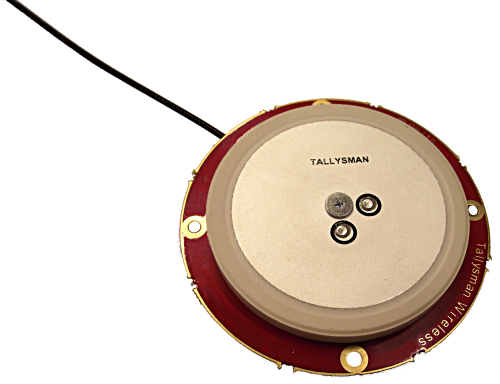
    The TW3970 / TW3965 antennas have superior cross polarization rejection to enhance multi path signal rejection, tight phase center variation and an excellent axial ratio. The TW3970 is a pole mount or through-hole mount antenna; the TW3965 is an embeddable form. Bothemploy Tallysman’s Accutenna technology and are capable of receiving GPS L1/L2/L5, GLONASS G1/G2/G5, BeiDou B1/B2, Galileo E1/E5a+b plus L-band correction services (1164 MHz to 1254 MHz + 1525MHz to 1606 MHz). The antennas are designed for precision agriculture, autonomous vehicles and other precision applications. The ability of the antennas to access L-band correction services extends its utility to a wider range of applications.

    Tallysman, www.Tallysman.com


    Inertial Navigation

    Systems for a variety of unmanned applications

    VectorNav's new Tactical Series
    VectorNav’s new Tactical Series

    The Tactical Series of inertial navigation systems (INS) is a next-generation family for high performance. Built on a common tactical-grade proprietary micro-electro-mechanical (MEMS) inertial sensing core, the Tactical Series includes the VN-110 inertial measurement unit and attitude heading reference system (IMU/AHRS), the VN-210 GPS-aided INS (GPS/INS), and the VN-310 dual-antenna GPS/INS. The Tactical Series offers the same functionality and features as the Industrial Series for integrators of SWaP-C (size, weight, power and cost) constrained manned and unmanned systems. The Tactical Series takes advantage of the latest developments in solid-state MEMS technology to incorporate a three-axis gyro with <1°/hour in-run bias stability, leading to an attitude accuracy of 1 to 2 milliradian. In addition to the improved IMU core, the Tactical Series enclosure is designed to DO-160G airborne standards and rated IP68 for deployment in harsh and extreme environments.

    VectorNav Technologies, www.vectornav.com


    Autopilot Sensors

    Plug n’ fly control system for UAV, UAS, USV and UGV systems

    VelaSync by Spectracom

    Veronte Autopilot is a miniaturized fail-safe avionics system with an embedded suite of sensors and processors for advanced control of unmanned systems. The OEM version weighs 90 grams, and the version with an aluminum enclosure weighs 200 grams. Both versions include a datalink radio. The control system is fully configurable — payload, platform layout, control phases, control channels and the user interface layout can be user defined, making it cost effective for a wide range of professional applications. The embedded GPS module offers RTK-like positioning with centimeter precision. It meets DO-178C / ED-12, DO-254 and DO-160G aircract regulations.

    Embention, www.embention.com


    Transportation

    Digital Maps

    Critical coverage for autonomous driving development

    HX-DU1603-ROVER-RADIO

    TomTom’s HD (high-definition) Map and RoadDNA are highly accurate digital map products helping automated vehicles precisely locate themselves on the road and plan maneuvers, even when traveling at high speeds. These technologies are being rolled out in strategic geographies and are the subject of key partnerships with other automotive suppliers. TomTom now offers more than 122,000 kilometers of HD Map coverage globally, including Interstates in Connecticut, Delaware, District of Columbia, Georgia, Idaho, Kansas, Louisiana, New Hampshire, New Mexico, North Carolina, Ohio, Pennsylvania, Rhode Island, South Dakota, Tennessee, Texas, and Vermont; Interstates and highways in California, Michigan and Nevada; and the Autobahn network in Germany.

    TomTom, www.TomTom.com


    V2X GNSS Antenna

    Applications range from infrastructure to infotainment

    3D-Model-of-small-object-with-eyesMap3D-O

    Smart Antennas by Laird Technologies combine antenna elements and radio receivers in the same robust package. Compared to traditional architectures, the Smart Antenna provides signifcant performance improvement and system-wide cost savings. Custom solutions are available, including 4G LTE cellular, GNSS, Wi-Fi and Bluetooth, as well as the emerging dedicated short-range communications (DSRC) technology with a 1,000-meter range for V2X. Applications include navigation systems, vehicle-to-vehicle communication,vehicle to infrastructure communication and infotainment. Operating temperature range is –40 C to 85° C.

    Laird Technologies, www.lairdtech.com


    SURVEY & MAPPING

    USV Echo Sounder

    Single-beam system for shallow water surveys 

    HX-DU1603-ROVER-RADIO

    The CEESCOPE-USV is a waterproof one-box echo sounder, GNSS and broadband radio telemetry package that can be installed on practically any remotely operated unmanned surface vehicle (USV). The self-contained unit requires no interface with the USV, eliminating challenges of instrument data integration on the vehicle. Using real-time broadband radio telemetry, detailed 20-Hz dual-frequency soundings, up to 20-Hz RTK GNSS and a 3200-sample-per-ping digital echogram are available to the USV operator on shore via the CEE-LINK radio base station. Data from the CEESCOPE-USV telemetry link allows the operator to steer the USV along the survey line like in any manned boat survey. The CEESCOPE-USV offers users a range to their vehicle of more than 1,000 meters.

    Cee HydroSystems, www.ceehydrosystems.com


    Airborne Sensor

    Expanded functionality

    3D-Model-of-small-object-with-eyesMap3D-O

    The new ALS80-UP airborne sensor enables even more flexible data acquisition with extended range measurement capability. It takes advantage of the dual-output optical system pioneered in the ALS70 and enhanced in the originl ALS80. The AL80-UP has higher Multiple Pulse in Air (MPiA) operation settings, enabling data collection in extreme terrains with minimal variation in swath width due to terrain elevation variations. The ALS80-UP works perfectly in a wide variety of scenarios, including wide-area mapping, detail mapping from high-flying heights and detail mapping over mountainous terrain. With its expanded maximum range, the system has demonstrated good results at up to 6,000 meters above terrain and with terrain relief of up to 2,300 meters.

    Leica Geosystems, www.leica-geosystems.com


    Repeater

    Receive RTK corrections via radio 

    3D-Model-of-small-object-with-eyesMap3D-O

    The Settop Repeater allows rover-RTK network users in areas of low or no GSM coverage to receive differential corrections via radio. It can connect to any external radio model on the market for precision agriculture systems or machine control. Repeater field application versatility is managed by an intuitive software controlled using a touchscreen. It can also be used for land surveying and marine work. It reduces the need for an RTK base station and offers flexible field configuration.

    Setup Survey, www.settopsurvey.com


    Graphics-Based Data Collection

    Expanded toolsets and capabilities for speed and accuracy 

    3D-Model-of-small-object-with-eyesMap3D-O

    FieldGenius 8 software takes advantage of the high-power processors, high-definition displays and larger memory in modern Windows Mobile powered data collectors and Windows 7 powered tablets. It provides tight control through expanded toolsets. Features include easy GNSS local transformation with the ability to export and import localization files; enhanced DXF support; advanced point averaging, which allows users to take multiple GNSS measurements and calculate an averaged position; support for integrated inertial sensors; native unicode support;and simplified GIS mapping. FieldGenius 8 also has improved road alignments, an onboard basic measurement mode, dynamic screen rotation and expanded ASCII export options. Supported coordinate systems, geoids, instruments and data collectors have been expanded, making it easier to integrate into existing survey operations.

    MicroSurvey Software, www.microsurvey.com


    UAV

    Imaging Camera

    Thermal and radiometric functionality

    VelaSync by Spectracom

    The FLIR Vue Pro R adds radiometric functionality to the Vue Pro camera, giving drone operators the ability to save pictures for post-flight image analysis and accurately measure the temperatures of individual image pixels. Calibrated radiometric imaging allows it to capture the temperature data of every pixel in an image. When saved in Radiometric JPEG format, still images can be imported into FLIR Tools software for detailed analysis and reporting. FLIR Tools, a free download on FLIR.com, lets drone operators adjust settings including object emissivity, background temperature, target distance, relative humidity and thermal sensitivity, as well as assigning various color palettes for each image. The Vue Pro R records digital thermal video, along with radiometric thermal still images, to an on-board micro-SD card. For applications such as electrical inspection, infrastructure assessment and precision mapping, the onboard recording allows operators to capture high-quality thermal data for post processing and analysis.

    Flir Systems, www.flir.com


    Real-Time Reconnaissance

    Reconnaissance for disaster relief, time sensitive situations 

    3D-Model-of-small-object-with-eyesMap3D-O

    The Digital Mapping Reconnaissance Toolkit (DMRT) creates up-to-date orthomosaic maps and 3D models. Users can fly a drone to survey the landscape for real-time solutions, and geotag reference points in impacted areas without a time lag. Seeing what the drone sees, pilots can create search patterns and map with situational awareness. Modular aerial and land-based solutions are available.

     Red Hen Systems, www.redhensystems.com

  • Launchpad: New receiver module, UAV developments

    Launchpad: New receiver module, UAV developments

    OEM

    The K528G GNSS board.
    The K528G GNSS board.

    GNSS OEM board

    Positioning and heading for mission-critical applications

    The K528G dual-frequency, multi-constellation GNSS board provides the highest accuracy in differential positioning. It benefits from numerous constellation signals because of its advanced tracking performance of both GPS and GLONASS. The K528G can provide positioning and heading information generated by two antennas. It is designed for guiding and positioning construction engines, dredges, barges, shipping container cranes, mining equipment and intelligent transportation systems.

    ComNav Technology, 
www.comnavtech.com


    GPS/GNSS splitters

    GPS/GNSS splitters

    Designed for small-cell and distributed antenna systems

    GPS Source has released of a line of GPS/GNSS splitters created for the small-cell wireless and distributed antenna system markets. Specifically designed for the L-band frequency, they can eliminate the cost of multiple antennas and long cable runs in wireless installations. With four or eight outputs, the new line of splitters make it possible to use a single GPS referencing antenna and cable arrangement for multiple synchronized systems. The splitters include features such as DC bias select and amplification. GPS Source RF signal splitters typically operate in conjunction with an active GPS antenna; consequently, a GPS RF signal splitter must have provisions for managing the DC voltage to the active GPS antenna. The S14GT and S18GT splitters will power an external GPS antenna from any of the RF outputs. A “hunt-and-pick” circuit is used to select only one DC input for power should more than one source be connected. Designed for redundancy, if the selected DC bias input should fail, the DC bias will automatically switch to another DC input to ensure an uninterrupted power supply to the active antenna.

    GPS Source, www.gpssource.com


    Tallysman-TW2XOX-antenna

    Wideband Antennas

    For precision industrial, agricultural and military OEM applications

    A new series of L1 band wideband antennas for OEM applications is offered in three formats:
    ▪ TW2106/TW2108 — GPS L1
    ▪ TW2406/TW2408 — GPS + GLONASS
    ▪ TW2706/TW2708 — Galileo, BeiDou, GPS + GLONASS
    Each antenna type features Tallysman’s Accutenna technology, which provides high rejection of multipath signals, with low axial ratios and tight phase center variations (PCV). Each is available with a brickwall pre-filter option to protect against saturation by high level subharmonic and L-band signals. The antenna printed circuit boards (PCBs) are 56 millimeters in diameter with four plated holes for secure mounting. They are available with a variety of connectors and custom cable lengths, and can be custom-tuned. All of them are REACH and ROHS compliant.

    Tallysman, www.tallysman.com


    NVS_Tech_NV08C-CSM-W

    L1 RTK receiver

    Heading guidance 
for precision applications

    The NV08C-RTK-A is fully integrated multi-constellation L1 heading receiver with embedded real-tiime kinematic (RTK) functionality and compatibility with GPS, GLONASS, Galileo and BeiDou. The NV08C-RTK-A is designed for use in high-accuracy applications that demand low-cost, low-power consumption, a small form factor and high performance, such as construction, mining and industrial; environmental and structural monitoring; machine control; parallel driving systems; precision agriculture; UAVs; and robotics and intelligent machines.

    NVS Technologies, www.nvs-gnss.com


     Survey

    Satlab_SLD_100-O

    Hydrographic rover accessory

    Hydrographic Echo Sounder designed for GNSS rover

    The SLD-100 GNSS Rover accessory facilitates hydrographic measurement in bodies of water up to 100 meters in depth. it is designed for anyone who finds themselves needing to survey into bodies of water, streams and rivers. With survey-grade accuracy, the SLD-100 can be added to any brand GNSS RTK rover to allow for position and depth measurements to be made simultaneously. With a built-in 10-hour lithium battery and transmitter unit with Bluetooth connectivity, the SLD-100 provides standard-depth data streams in several industry-standard NMEA formats at 1 Hz, 4800 bps, providing compatibility with any hydrographic surveying software package. Position and depth information is externally logged on a computer or controller. Included transom mounting hardware enables easy installation.

    Satlab Geosolutions, www.satlabgps.com


    TriAnt-W

    Rugged GNSS antenna

    Provides protection 
in harsh environments

    TriAnt is small, thin and rugged high-performance GNSS antenna. It measures 128 x 128 millimeters (mm) square and 39 mm thick. It can be mounted with three screws to flat surfaces. It is designed for applications such as machine control and surround anennas of the TRIUMPH-4X. The antenna cable is routed through the center of the antenna (TNC connector) for protection in harsh environments. The TriAnt can also be mounted on poles (1–14 inches thread) using its mount-pole attachment, which increases the thickness to 54.5 mm.

    JAVAD GNSS, www.javad.com


    CHC-NAV-X20i_2-W

    iOS-ready L1 receiver

    Turns iPad or iphone 
into mobile mapper

    The X20i L1 GPS receiver by CHC Navigation is powered by a high-precision L1 GPS engine. Its integrated Bluetooth chip enables it to wirelessly collect submeter positions in real- time or centimeter post-processed on an iPhone or iPad. All location-aware apps on the iPhone and iPad are compatible with the X20i. Immediately after pairing and answering the security question allowing the X20i to take control of location services on the iOS device, 1 million iOS applications are capable of utilizing the high-accuracy data of the X20i, and become accurate to either 1 foot or 1 centimeter. Apps that can make use of the high accuracy include TerraGo Edge, ESRI’s ArcView Connector and those by CarteGraph Systems.

    CHC Navigation, www.chcnav.com


    Mapping

    BlueStar_receiver-W

    Mapping with Bluetooth

    Sub-meter precision 
for android devices

    BlueStarGPS offers both GPS and GNSS options in a rugged, lightweight package. The BlueStarGPS device was designed to meet sub-meter mapping and data-collection needs in the pipeline and utility industries. It provides sub-meter precision without post-processing, and maintains accurate positioning when the SBAS signal is obstructed. This means it can function under trees, around buildings and in rugged terrain where other receivers can fail. The BlueStarGPS is designed specifically for use with Android mobile devices, such as smartphones, tablets or notebook computers, as well as cable and pipe “locating” tools with a connectivity range 
of up to 1 kilometer.

    BlueStarGPS, www.bluestargps.com


    UAV

    RIEGL_BathyCopter_in_action-W

    Bathycopter

    UAV measures through water surfaces of rivers, lakes

    The RIEGL BathyCopter is a small-UAV-based surveying system capable of measuring through the water surface. It’s suitable for generating profiles of rivers or water reservoirs. The platform design integrates a topo-bathymetric green laser depth meter, an APX 15 inertial measurement unit (IMU)/GNSS with antenna, a control unit and a digital camera. Applications include generation of river profiles, survey of reservoirs and canals, landscaping, support of construction projects, and surveys for planning and carrying out hydraulic engineering work.

    REIGL, www.riegl.com


    Zenmuse-X5-4-W

    Professional camera

    Full wireless aperture 
and focus control

    The Zenmuse X5 is a micro four-thirds (M4/3) camera designed specifically for aerial use. With a large sensor, aerial image makers will be able to capture up to 13 stops of dynamic range, enabling capture of high-resolution 16-megapixel photos or 4 k, 24 fps and 30 fps videos in complex lighting environments. It supports four interchangeable lenses. The Zenmuse X5 is designed for creation of high-quality aerial maps and 3D models, industrial and utility inspection, and professional video capture.

    DJI, dji.com


    92229_Jetson_TX1_Nvidia-W

    Smart module

    Module harnesses 
the power of machine learning

    The NVIDIA Jetson TX1 module is designed to power smart devices — including drones that don’t just fly by remote control, but navigate their way through a forest for search and rescue. It is an embedded computer designed to learn to recognize objects or interpret information, incorporating capabilities such as machine learning, computer vision and navigation into a single system. This technology expands the ability of machines to operate on their own and adapt to their surroundings by recognizing images, processing conversational speech, or analyzing a room full of furniture and finding a path to navigate across it.

    Nvidia, nvidia.com