Tag: LEO-PNT

  • u-blox explores how Celeste LEO PNT complements GNSS for mass market

    u-blox explores how Celeste LEO PNT complements GNSS for mass market

    Low-Earth-orbit signals add increased signal strength, geometry diversity and robustness to GNSS.

    U-blox, a global leader in positioning and short-range communication technologies for automotive, industrial and consumer markets, is exploring how the introduction of low-Earth-orbit (LEO) signals can complement and integrate with existing GNSS to support mass-market positioning solutions.

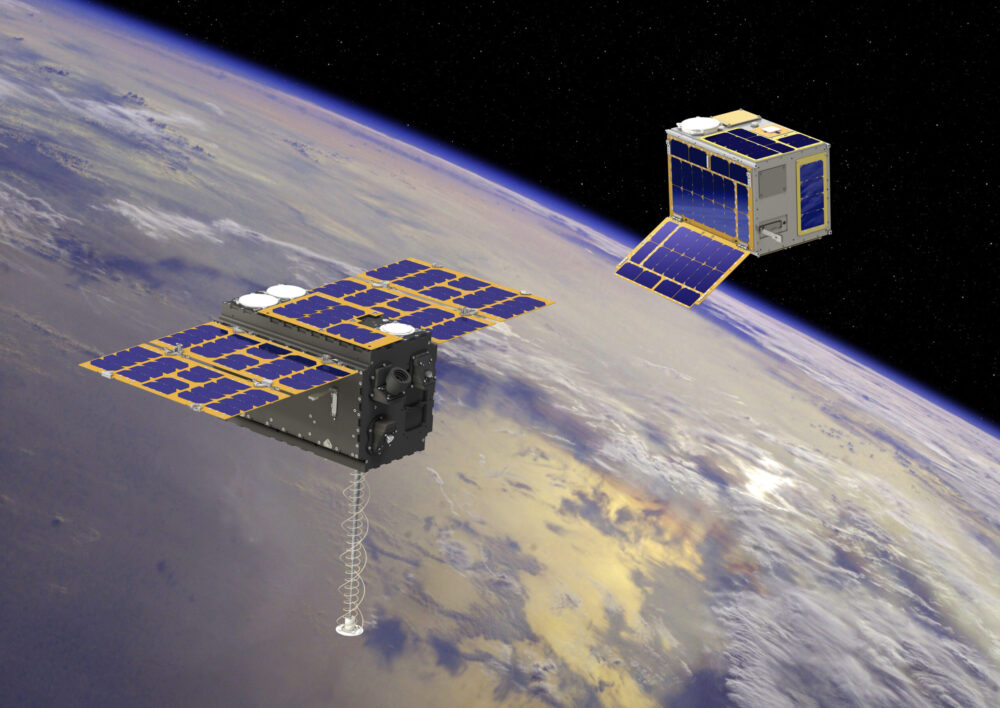
    The announcement comes following the launch of the European Space Agency’s (ESA) first Celeste LEO-PNT demonstration satellites (IOD-1 and IOD-2) on 28 March 2026, marking a key milestone in bringing LEO-based signals into the operational positioning environment and ESA’s first step toward extending satellite navigation into low Earth orbit.

    As the positioning ecosystem evolves, LEO-based signals are emerging as a complementary layer to established GNSS. Designed to augment systems such as Galileo, LEO satellites introduce a new building block characterized by lower orbital altitude, increased signal strength, and rapidly changing satellite geometry. GNSS remains the foundation of global positioning, delivering proven coverage and consistency at scale.

    This evolution is not only about additional signals, but about how positioning systems behave over time. The dynamic geometry of LEO satellites introduces new system characteristics that influence convergence speed, robustness, and performance in challenging signal conditions.

    Under its Navigation Innovation and Support Program (NAVISP) Element 2 (EL2) project, co-funded by ESA, u-blox is conducting a technical assessment of the role of LEO signals in multi-layer positioning architectures. This work forms part of a broader effort to bring LEO-PNT capabilities to mass-market GNSS receivers, combining emerging LEO signals with established GNSS systems.

    This includes early integration work on u-blox’s X20 GNSS platform, exploring how different signal types and frequency bands can be optimally incorporated into u-blox’s positioning systems. The scope of work includes:

    • Observation and characterization of emerging LEO signal transmissions
    • Analysis of interactions between LEO signals and GNSS measurements
    • Evaluation of the impact of dynamic satellite geometry on positioning performance
    • Exploring different system-level approaches for integrating LEO signals into future platforms 

    “U-blox is committed to advancing positioning technologies through focused research and collaboration,” said Jani Käppi, head of technology positioning at u-blox. “Our work within the ESA NAVISP framework allows us to better understand how emerging signal sources can complement GNSS and contribute to robust and reliable positioning performance.”

    U-blox expects to contribute to the development of the new LEO satellite ecosystem with significant innovation in the positioning solution, collaborating with key partners like ESA.

    The Celeste initiative

    The Celeste mission is ESA’s initiative for LEO-PNT (Low Earth Orbit Positioning Navigation and Timing) and is in its in-orbit demonstration phase. This first phase features a demonstration constellation of 11 satellites that will fly in low Earth orbit to test innovative signals across various frequency bands. Its goal is to advance satellite navigation concepts for resilient positioning and timing services.

    The Celeste in-orbit demonstration phase was approved at ESA’s Council at Ministerial Level of 2022. The fleet is being developed through two parallel contracts respectively led by GMV in Spain with OHB in Germany as core partner, and by Thales Alenia France as prime and Thales Alenia Italy as space segment responsible and involving over 50 entities from more than 14 countries.

    Celeste was further supported in ESA’s Council at Ministerial Level of 2025 (CM25), towards the implementation of the next phase: the LEO-PNT In-Orbit Preparatory phase.

    Celeste also contributes to one of the three core pillars of ESA’s new European Resilience from Space (ERS) initiative, endorsed at CM25. ERS addresses critical security and resilience needs for Member States while laying the groundwork for future European strategic space capabilities.
  • Beyond Gravity delivers key payload components for ESA’s Celeste

    Beyond Gravity delivers key payload components for ESA’s Celeste

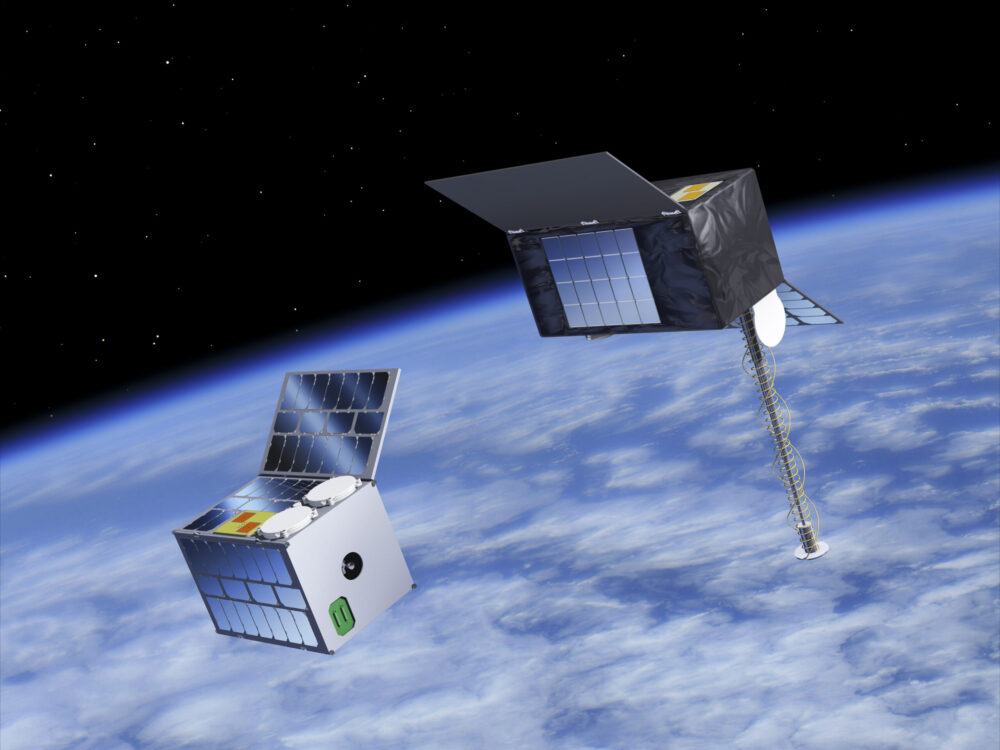
    Beyond Gravity has delivered key payload components for the ESA’s Celeste project aimed at making existing satellite navigation systems more accurate and resilient. The first demo satellites were launched into space on March 28. Beyond Gravity wants to further extend its payload offerings.

    The European Space Agency (ESA) is embarking on a demonstration mission of 11 satellites in orbit to test and demonstrate the benefits of an additional layer of PNT (positioning, navigation and timing) in low Earth orbit. This will further improve the accuracy and responsiveness of Europe’s satellite navigation system, even during jamming and spoofing attacks. Celeste demonstrates how this additional layer can complement the resilience, security and precision of the European navigation system Galileo.

    The first two demonstration satellites of the new Celeste navigation mission were launched into space on March 28.

    “Key electronics for the Celeste satellite payload are provided by Beyond Gravity,” said Oliver Grassmann, chief operating officer at Beyond Gravity. “Expanding our payload capabilities is a top priority, as we continue to deliver high‑performance solutions for diverse missions — including radio occultation, reflectometry, electronic signal intelligence, and positioning, navigation, and timing.”

    Kurt Kober, vice president, Electronic Solutions at Beyond Gravity, highlights the company’s key contributions to Celeste. “We play an important role in this mission and supply cutting-edge technology for digital signal generation and the clock for the satellite instruments,” Kober said. “These components ensure high reliability of the navigation signals as well as time accuracy and stability.”

    Apart from the payload components, the company also supplied highly sensitive antennas. ESA has chosen Beyond Gravity as a key payload partner for Celeste alongside the Spanish space company GMV (prime contractor) and OHB in Germany.

    Making Galileo more secure

    The new Celeste navigation satellites in low Earth orbit will demonstrate how an additional layer in a low-earth orbit around 500 km could complement the larger Galileo navigation satellites at an altitude of around 23,000 kilometers and make them more secure. This new satellite mission is known as Celeste, ESA’s first initiative in Low Earth Orbit PNT (LEO-PNT).

    The in-orbit demonstrator phase for Celeste is being executed by two European consortiums in parallel and will comprise a total of 11 satellites plus one spare. GMV, as one of the prime contractors, is responsible for the complete end-to-end mission, including system definition and design, the space and ground segments, the user segment and operations, for 6 of the demonstrator satellites.

    Importance of satellite payloads

    The payload comprises those elements of a satellite that perform its actual task, in the case of Celeste the creation and transmission of navigation signals. “We have already delivered important satellite instruments, like our radio occultation weather instruments, and a reflectometer payload,” Kober said. “We also supplied payload elements in the field of signal generation for the European satellite navigation system Galileo. This expertise has been incorporated into the Celeste project.”

    Kober sees satellite payloads as an important area for future business. “We want to play a greater role in this core area of satellites, the payload.”

    Modular payload solution

    With its FoX electronics platform, Beyond Gravity offers a flexible and modular solution that can host different payloads. Examples for such possible payloads include electronic signal intelligence (ELINT), which can be used for detecting and characterizing radar signals, or a PNT (positioning, navigation, timing) payload.

    Other possible payloads from Beyond Gravity are its radio occultation and reflectometry instruments as well as high-resolution earth observation images (optical payload from a third-party supplier).

    The FoX electronics platform, together with the payloads selected for the customer, can be easily integrated into Beyond Gravity’s satellite platform (multi-purpose platform), which successfully passed its Preliminary Design Review and is now undergoing intensive tests.

  • LEO satellites show promise in boosting navigation accuracy where GPS struggles

    LEO satellites show promise in boosting navigation accuracy where GPS struggles

    Low-Earth orbit (LEO) systems have emerged as a promising complement to GNSS, offering higher received power, better satellite geometry and broader spectrum options. Researchers aim to evaluate whether LEO-PNT can complement or enhance GNSS performance through large-scale simulations and design comparisons.

    Researchers from Tampere University and Universitat Autònoma de Barcelona published (DOI: 10.1186/s43020-025-00186-5) a comparative analysis in the December 2025 issue of Satellite Navigation. The study investigates how different LEO constellation configurations perform in positioning accuracy and interference robustness when operating alone or jointly with GNSS.

    Using semi-analytical modeling and 192,000 Monte Carlo simulations, the team evaluated 400 users across European regions in five outdoor scenarios. Key variables included carrier bands (1.5/5/10 GHz), effective isotropic radiated power (EIRP) levels and constellation geometry design.

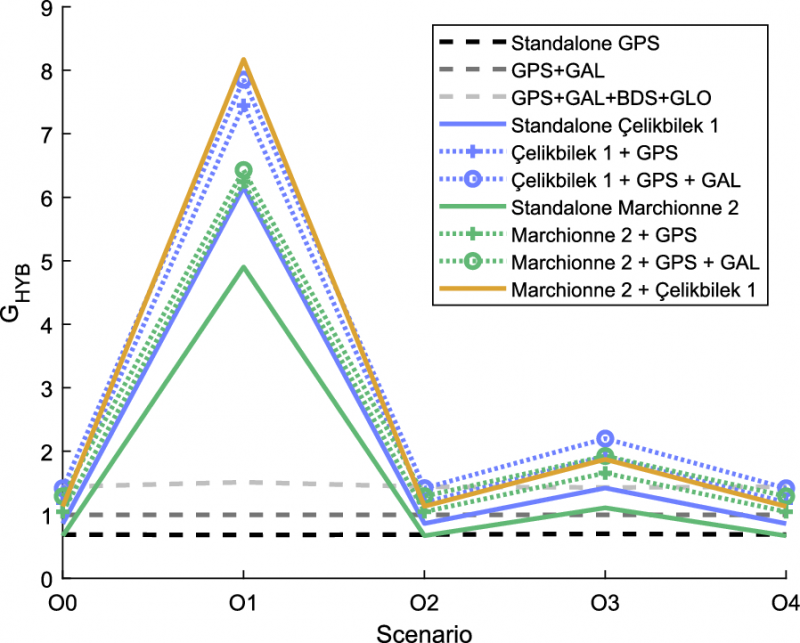
    The team simulated multiple standalone and hybrid constellation architectures, analysing carrier-to-noise ratio (C/N0), geometric dilution of precision (GDOP), position dilution of precision (PDOP) and lower bound 3D accuracy.

    Results indicate that an EIRP of 50 dBm is sufficient for high-quality outdoor positioning when operating in L- and C-bands. While 10 GHz platforms require higher power to compensate for path loss, hybrid LEO + GNSS modes show markedly improved stability and reliability.

    Multi-shell constellations such as Çelikbilek-1 and Marchionne-2 delivered a favorable balance between satellite count and global geometry, outperforming single-shell layouts. In harsh urban canyon conditions, GNSS accuracy degraded up to seven-fold, whereas LEO-PNT maintained stable ranging performance with limited loss.

    Interference resistance also improved. Stronger LEO signal power means jammers require far greater intensity to cause equal degradation. Hybrid designs provided the most significant gains. Combinations such as Çelikbilek-1 + GPS/Galileo, or CentiSpace + BeiDou, yielded better PDOP distributions, faster fix availability and broader user coverage.

    The authors conclude that LEO systems are not aimed at replacing GNSS, but rather to enhance availability and resilience under signal-challenged environments.

    “Our results show that moderate-power LEO constellations can substantially strengthen outdoor positioning without requiring expensive satellite hardware,” the authors noted. “Geometry plays a major role — carefully designed multi-shell constellations achieve strong accuracy even with fewer satellites. As LEO-PNT develops, hybrid integration with GNSS offers the most cost-effective path toward secure, robust PNT solutions. This work provides guidance for future system designers evaluating frequency, transmission power and constellation configuration trade-offs.”

    The findings suggest a realistic rollout pathway for resilient satellite navigation. LEO-enhanced PNT could benefit autonomous vehicles, UAV routing, emergency response, precision farming and critical infrastructure monitoring — especially where GNSS falters in interference-dense or high-rise environments.

    Lower-power LEO transmission also reduces deployment cost, opening access for commercial operators.

    Future work may assess indoor positioning potential, bandwidth expansion, and real-orbit testing to refine simulation assumptions. As global demand for secure PNT grows, the integration of LEO and GNSS could become a cornerstone for next-generation navigation technology.