Tag: mobile apps

  • Magellan Debuts SmartGPS Apps for Apple and Android Mobile Devices

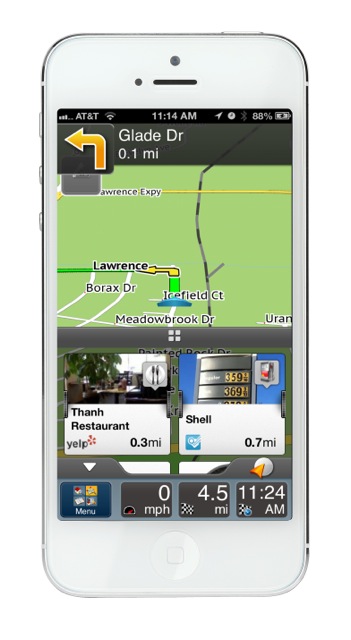
    Magellan SmartGPS App_iPhone
    screenshot: Magellan SmartGPS App

    Magellan has announced Magellan SmartGPS Apps for iOS and Android mobile devices.

    Following the recent announcement of Magellan’s SmartGPS device, the free Magellan SmartGPS Apps for iOS and Android devices are the next key elements in Magellan’s Smart Ecosystem, a cloud platform that integrates social media and navigation content directly onto a navigation map, the company said. The SmartGPS Apps automatically deliver continually updating reviews and tips for local businesses from social media including Yelp, Foursquare, and other partners to create current, local and personalized driving and pedestrian experiences.

    The Magellan SmartGPS mobile apps display location-relevant information “squares” that graphically flip to show reviews, tips and offers from Yelp and Foursquare for nearby restaurants, stores and services. Users can then navigate to those locations directly from the SmartGPS App without needing to open an additional application or device. The cloud architecture enables new monetization of end users’ mobile search and navigation, and additional social media and content partners.

    “We architected the Smart Ecosystem to integrate with automotive infotainment and mobile network service platforms so users can enjoy a truly mobile, connected car experience now,” said Peggy Fong, president of MiTAC Digital Corporation. “SmartGPS mobile apps connect to the vehicle dash, allowing users to easily search social media and points-of-interest for destinations, and send the locations via Bluetooth or Wi-Fi to SmartGPS-enabled vehicle navigation systems.”

    Magellan’s free iOS and Android SmartGPS apps create a total-solution SmartGPS experience that is truly mobile. Magellan connects the smartphone to the vehicle dashboard, enabling location sync and sharing, hands-free operation and data connectivity. Users can pair their Magellan SmartGPS app with SmartGPS-enabled navigation systems. Using their SmartGPS App, SmartGPS enabled navigation system, or PC, users can search for a location, save the location in Magellan’s Smart Ecosystem cloud, and sync and share the location to any SmartGPS enabled device via Wi-Fi or Bluetooth.

    The free Magellan SmartGPS Apps will be available in North America this Spring, and in Europe this Summer, from iTunes and Google Play. Premium versions of both apps featuring spoken turn-by-turn navigation will also be available.
  • BlackBerry Launches Z10 and Q10, Maps App Questionable

    BlackBerry Launches Z10 and Q10, Maps App Questionable

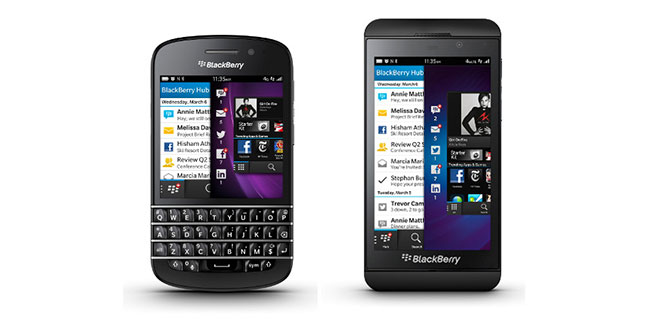
    BlackBerry (formerly RIM) has announced the release of its highly anticipated BlackBerry 10 operating system, as well as its first BlackBerry 10 smartphones, the Z10 and Q10, which come outfitted with assisted, autonomous and simultaneous GPS and with a Blackberry Maps application preloaded. One reviewer, however, has said the Blackberry Maps application is “worse than Apple Maps.”

    Issues listed include lack of street view or satellite view, lack of public transit directions, and no way to look up news and reviews of venues based on Yelp, Zagat, or a similar service. Another reviewer said, “Although full details of BB10’s map app have yet to be revealed, early reports are mixed. Although it now includes turn-by-turn directions, those who have had an opportunity to try it describe it as basic and underwhelming.”

    A TIME magazine review said, “The consensus among BlackBerry Z10 reviews is that its Maps app is subpar. The Verge complained about inaccurate data, and said the software couldn’t reliably find local businesses. CNet bemoaned a lack of features, such as walking directions, transit maps and street views. Apparently the software doesn’t even let you jump into the Maps app by tapping on an address or map in the web browser. That’s just basic stuff. At least the Maps app includes voice-guided turn-by-turn directions.”

    The Z10 is equipped with a 4.2-inch touchscreen and the Q10 has a 3.2-inch handset with a Blackberry’s physical keyboard. Besides GPS, the phones have 4G connectivity, Bluetooth Smart and NFC connectivity. The use of Bluetooth Smart in the BlackBerry 10 platform will open it up developers who will be able to take advantage of a growing market of connectable devices such as health and wellness monitors and sports and fitness monitoring equipment, in addition to other devices such as home automation equipment that also uses Bluetooth Smart. According to the IHS study “Wireless Opportunities in Health and Wellness Monitoring – 2012 Edition,” more than 69 million Bluetooth low energy health and sports monitors will ship between 2012 and 2017.

    Phillip Maddocks, market analyst at IHS, states, “By incorporating Bluetooth Smart into the BlackBerry 10 platform, BlackBerry will be able to provide a platform that is renowned for its enterprise use, in addition to meeting casual users needs who might want to use their device to monitor their health or sports performance, or in some instances, turn a light off inside their house using their phone. Several sports and fitness vendors such as Nike, Polar, Garmin and Wahoo Fitness have already either released or announced products that utilize Bluetooth Smart.”

    BlackBerry has followed a trend set by other smartphone manufacturers on the hardware side by providing up-to-date connectivity, in addition to providing 4G support and support for future mobile payment platforms. Near Field Communication was previously included within the BlackBerry Bold 9900/9930 and enabled users to make payments using their smart phone. Other platforms such as Android have also been offering the same functionality, utilizing Google Wallet on NFC enabled phones. According to IHS, more than 75 million NFC enabled cellular handsets were shipped in 2012, and with today’s announcement, and the expectation that other major phone manufacturers incorporate the technology, this will continue to grow.

    BlackBerry’s announcement brings its handsets in line with where the industry is heading, despite being delayed, and later to the market than expected.

  • Connectivity and In-Vehicle Apps Highlights of CES

    Consumer Electronics Show 2013 (CES) was all about the hot pursuit of the in-vehicle dashboard by mobile advertising, content, and electronic providers. In the race to distinguish their models by adding more apps and connectivity, automakers are making it easier for apps to talk to cars. Automakers also showcased autonomous vehicles, including a self-driving car; and Inrix has made finding parking spaces easier. But CES isn’t the only place making news. The mapping battles, of course, continue, and the European Parliament is considering privacy measures that would make it difficult for digital content and service providers to subsist on ad revenue.

    CES wasn’t about the wireless carriers or the handset makers. Not wanting to be left in the dust of the Google driverless car, Audi jumped on the bandwagon and is focusing on piloted driving and parking technology. Audi introduced self-driving car technology that it claims will enable a car to seek out a parking space in a garage and park, all without a driver. Audi received the second license from the State of Nevada to test autonomous vehicles on the state’s public roads. Google was the first company to obtain a license, and Audi has acquired the first license by a car maker. Toyota is taking a different tack and is focused on providing intelligent pre-collision systems, and not a car that drives itself, but may eventually do so.

    Park your car? INRIX, known for traffic data, announced a parking service that provides real-time information on the number of available spaces at off-street parking locations, as well as current parking fees. The parking database includes more than 18,000 parking facilities in North America and 42,000 in Europe (36 countries). The data are sourced from ParkMe (formerly Parking in Motion) and Parkopedia.  Kenwood will include INRIX parking in new in-dash DVD entertainment receivers, along with INRIX real-time traffic information, fuel and weather services.

    Have you programmed a Ford Lately? Ford continues to lead in-vehicle mobile connectivity. The company has further opened up APIs to make it easier for developers to access in-car controls and the vehicle display. Those that want to share from the road are in luck. Ford has also added a location-sharing app from Glympse. With the Glympse smartphone app and Ford SYNC AppLInk, drivers can share their whereabouts or estimated time of arrival via a real-time dynamic map. Glympse also has a partnership with Mercedes Benz.

    Bump in the road for contextual advertising? Companies that depend on mobile and online advertising in the European Union (EU) may be in for a tailspin. EU Europeans may have the strongest control of their online identities if a bill is passed by the European Parliament to overhaul data protection laws. Web tracking and profiling would not be allowed without consumer consent. With app and content providers depending on personalized advertising to provide revenue, alternate means of revenue would be needed as many consumers will be reticent. We’d see a return to a more subscription-based world and a smaller industry. The proposal, if approved, would create a European Union agency charged with enforcing a full series of privacy measures to give Internet users greater control of online information. The agency would be empowered to levy fines of up to two percent of a company’s revenue.

    Update on the patent wars.  Industry is falling over itself in pursuit of intellectual property. Although it is about the quality and not size, patent numbers are revealing. IBM was granted more patents in 2012 than any other company, the 20th year the company has taken first place.  Archenemies Google and Apple posted the biggest increases in 2012, but were trounced by another rival, Samsung, who was second to IBM with more than 5,000 patents granted last year. Apple was awarded 1,236 patents in 2012, 68 percent more than the preceding year. Google posted a 170 percent jump in patents granted in 2012, with 1,151 patents. Google and Apple will continue to rocket fuel their intellectual property collection with acquisitions.

    Turn at which Starbucks?  Garmin unveiled a range of new personal navigation devices (PNDs).  The new products include Natural Guidance from Navteq, re-branded as “Real Directions.” Directions include recognized landmarks, buildings, traffic lights and stop signs. On some models, traffic information and alternate routes are provided by voice.

    Mapping skirmish. Google has been reportedly blocking Windows phones from using Google Maps from Microsoft’s Internet Explorer (IE) browser in a ploy to convert IE users to Google Chrome. Microsoft cried foul and Google provided a flimsy excuse of compatibility issues and reversed course.

  • GPS Plotter iPhone App Enables Quick Plotting

    GPS Plotter makes it easy to plot longitude and latitude coordinates using iPhone, according to app developer Make It Digital. Using the mobile phone’s in-built GPS system, users can plot their current location at the touch of a button. Multiple sessions can be used to create maps plotting anything, and easy export of longitude and latitude coordinates is made possible by utilizing the universal CSV data format.

    GPS Plotter is designed for:

    • Orienteering
    • Outdoor wayfinding
    • Tracking unmarked trails
    • Detailing longitude and latitude on the move

    The app is available for 69p ($0.99 US) in the App Store and is compatible with iPhone 4, 4S and 5 running iOS 5 or later.

  • Researchers Use Traffic App Data to Identify Accident Hotspots

    Researchers at Israel’s Ben-Gurion University of the Negev (BGU) say reveal that data culled from geosocial networks like the GPS traffic app Waze can help prevent traffic incidents with better deployment of police resources at the most accident prone areas.

    “Only now are we beginning to discover the potential in the huge amount of data collected daily,” explains BGU researcher and Ph.D. student Michael Fire. “Studies of this kind, which monitor events such as traffic accidents over time, can help the police identify dangerous sections of roads in real time, or alternatively, locations where few police are needed.”

    The paper, “Data Mining Opportunities in Geosocial Networks for Improving Road Safety,” was presented at the IEEE 27th Convention of Electrical and Electronics Engineers in Israel.

    Waze records location data and enables users to upload and share comments on any detail, including traffic alerts, accidents or police presence. According to its website, Waze has 30 million worldwide users and describes itself as “a community-based traffic and navigation app whose users share real-time traffic and road info, saving time and gas money.”

    Using Waze data and Google Earth, the BGU researchers determined that three-quarters (75 percent) of the locations in Israel with the highest number of accidents were intersections. They then analyzed references to a police presence to determine if the police were present at the spots that had the worst traffic accidents.

    “There were numerous instances where the police were manning quieter intersections, while busier intersections went unmonitored,” Fire explains.  “According to the data, police response time varied from 20 minutes to 40 minutes in some situations.”

    Using Waze, data from May and June 2012 was collected and analyzed on accident reports, police presence, traffic jams, and speed traps. BGU researchers identified 579 different locations in Israel that had at least five reoccurring accidents during this time where 5,156 reported accidents occurred. Police were reported at least 15 times at more than 3,500 locations.

    Other researchers involved with the study from BGU’s Department of Information Systems Engineering and BGU’s Telekom Innovation Laboratories include Prof. Yuval Elovici, head of the lab, as well as Dr. Rami Puzis, Prof. Lior Rokach as well as student Dima Kagan.

  • Sygic Launches Location Sharing and Family Safety App

    Family,” a new app by GPS navigation software company Sygic, is designed to help parents keep their children safe and simplify the way families stay in touch. The app is now live on the Apple App Store and Google Play Store.

    The app shows the real-time location of all the family members on the map. It allows parents to set up Safe / Unsafe zones and sends automatic notifications when kids enter or leave a zone. Geofence is useful for one-time notification when users enter certain areas. Augmented reality shows family members in the real surroundings — for example, if kids are running around in a park. Navigation to the family member’s location can be launched from within the app. The app also features free family messaging.

    “We wanted to create an app that will help its users in their everyday life,” said Sygic’s CEO Michal Stencl. “As parents we want to raise our children to be self-reliant but we also need to have confidence that they are safe. Family by Sygic gives parents this peace of mind, while kids will appreciate that parents don’t feel the need to call them all the time to check where they are.”

    The app is free until January 31st on Google Play and App Store. Afterward, the price will be 2.99 Euro per year/family.

  • Mobile Application Storefronts Distributed 81 Billion Apps through September

    Mobile application storefronts had collectively distributed a cumulative total of 81 billion smartphone and tablet apps as of the end of September 2012, according to a recent market study from ABI Research. Of these, 89 percent were downloaded from native storefronts that come with the device’s operating system.

    “The current status quo is based on storefronts that the operating system vendors provide as part of the OS experience, and there is no evidence that this would change in the future,” said ABI Research senior analyst Aapo Markkanen. “A year ago it still looked like that, for example, mobile operators could find a viable business case in the curation of Android apps, but that opportunity evaporated once Google got its storefront act together. Today, it makes sense for operators to distribute apps only under special circumstances, such as the ones that we’re seeing in China.”

    Similarly, it’s unlikely that the universal, catch-all nature of app distribution would start breaking up into smaller niche storefronts. There is a certain demand for specialist stores, but even then the niche players should position themselves as recommendation channels driving traffic to native storefronts and not actual distributors. Markkanen explains, “Running a user-friendly app distribution channel is expensive. Besides the adequate hosting and billing systems it takes quite a lot of human labor, since successful app discovery requires some form of editorial approach. The opportunity for smaller storefronts built around selected categories is therefore limited.”

    Practically the only exceptions are B2B apps and the consumer categories that the universal storefronts don’t want to be associated with — most notably adult content. Mikandi is a real-life storefront example that has built a business out of the distribution of such outcast apps and content.

    These findings are from ABI Research’s Mobile Application Markets Research Service which focuses on the distribution and the economics of mobile apps, providing data-driven insights on areas such as download volumes, revenues and business models, plus trends within different applications categories.

  • SINA, AutoNavi Launch Social Networking Platform for China

    SINA Corporation, an online media company serving China and the global Chinese communities, and AutoNavi Holdings Limited, provider of digital map content and navigation and location-based solutions in China, have jointly announced a strategic partnership to integrate and enhance each other’s social, location and mobile offerings.

    As a result of this partnership, AMAP, AutoNavi’s mobile map application, users will be able to sign on using Weibo Connect and access content directly from SINA Weibo. SINA Weibo users will also have access to the content and functionality of AMAP. The companies expect such content and product integration will enhance the social networking and navigational aspects of each other’s mobile offerings.

    “Over 70% of SINA Weibo users access the social media platform at least partially via mobile devices,” said Gaofei Wang, vice president and general manager of SINA Mobile. “LBS (location-based services) and mapping services will play a key role in Weibo’s mobile strategy, and we are excited to be partnering with AutoNavi to leverage their expertise in these areas.”

    “In teaming up with Sina, we are proud to provide our mapping and location-based services to more than 400 million Sina Weibo users, while at the same time integrating Sina Weibo’s social content and SNS features into AMAP,” said Congwu Cheng, chief executive officer of AutoNavi. “We believe our collaboration with Sina Weibo will benefit both of our users and we look forward to future cooperation between our two companies as we continue to bring new features and functionalities to our users.”

  • Snap Secure App Arrives in UK

    Snap Secure, Snap MyLife, Inc.’s cloud-service mobile and personal security application for consumers and families, is now available in the United Kingdom via an automatic carrier billing option provided by mobile payment and analytics leader Bango. The agreement allows Snap MyLife, Inc. to deliver convenience and peace of mind to consumers and their families throughout the UK.

    With thousands of mobile devices lost or stolen in the UK each year, mobile security is a concern. The issue is compounded by the fact that new technological capabilities mean people are increasingly relying on their mobile devices to conduct daily activities involving sensitive information, such as banking and personal communications. This leaves them vulnerable if that information falls into the wrong hands when a device is lost or stolen.

    Snap Secure addresses these issues and more by providing a broad range of protection for smartphones, including backing up and restoring data; preventing viruses, spyware and spam; protecting and managing privacy; tracking and locating family members in real-time; locating and remotely controlling lost or stolen phones and tablets; and wiping data remotely.

    To illustrate just some of Snap Secure’s comprehensive security features, the application enables users to remotely control a lost or stolen smartphone by locking the device to protect important data and contact information or wiping all data contained in the phone to prevent unauthorized access. Snap Secure leverages smartphone GPS technology to help parents keep tabs on their child’s whereabouts by tracking their mobile device location on a map via their web dashboard. Parents can also use the Snap Secure Geo-fence to establish virtual geographic boundaries for their children and receive alerts when a child leaves the area or does not arrive at a specified location within a designated time period.

    The Snap MyLife, Inc.-Bango partnership gives UK mobile device users a quick, convenient way to access this critical protection. UK customers can purchase Snap Secure for Android phones and tablets and BlackBerry phones. Fees for the service are added to the users’ monthly mobile phone bill.

    “Protecting personal data and securing mobile devices is a concern everywhere as people become more dependent on their technology assets,” said Jiren Parikh, President and CEO of Snap MyLife, Inc. “We’re excited to work with Bango to offer consumers in the UK a complete family and data security solution.”

    “Snap Secure offers UK consumers the peace of mind they need to confidently use their mobile devices without concerns about theft, loss or viruses,” noted Ray Anderson, CEO and Founder of Bango. “We’re looking forward to working with Snap MyLife, Inc. to provide customers with a frictionless payment experience, via their mobile operator.”

    Snap Secure has been downloaded more than 2 million times. In addition to the UK, Snap Secure is currently available in Italy, Spain, and the U.S. with additional global market launches in process.

  • Juniper: Augmented Reality Apps Could Mean $300M in 2013

    A new report from Juniper Research has found that with brands and retailers increasingly keen to deploy augmented reality (AR) capabilities within their apps and marketing materials, AR applications will generate close to $300 million in revenues globally in 2013.

    The report found that while the traditional pay-per-download payment model would continue to account for the largest share of revenues in the medium term, the scale of retailer engagement with AR suggested that ad spend had upscaled dramatically in 2012 and was poised for further strong growth next year.

    Crucially, it also found that many retailers now perceived AR as a key means of increasing engagement with consumers, both as a means of providing additional product information or in the form of branded virtual games and activities.

    Consumer Expectations Not Yet Met. The report cautioned that while lack of consumer awareness of AR remained a key hurdle which needed to be overcome, it was by no means the only barrier to growth. It argued that technological limitations of AR-enablers such as the phone camera, GPS, digital compasses and marker-less tracking meant that in many cases, the AR experience was failing to live up to consumer expectations.

    The report claimed that even some higher-end smartphone cameras lacked sufficient sensitivity to trigger an AR experience unless light conditions were optimal. Furthermore, the need to recalibrate digital compasses — allied to poor in-building functionality of GPS – means that under certain circumstances the level of location accuracy would not be sufficient for many potential corporate applications. As a result, the report stated that enterprise adoption would be limited in the medium term.

    Other key findings from the report include:

    • More than 2.5 billion AR apps to be downloaded to smartphones and tablets each year by 2017, with games accounting for the largest share of downloads.
    • AR is increasingly being deployed in prototype wearable devices, with Google Glass the most high-profile innovation.

    The “Augmenting Reality: Enhancing Mobile” white paper is available to download from the Juniper website together with further details of the full study, “Mobile Augmented Reality: Entertainment, LBS & Retail Strategies 2012-2017.” Juniper Research provides research and analytical services to the global hi-tech communications sector, providing consultancy, analyst reports and industry commentary.

  • Taxi Booking App Comes to U.S.

    myTaxi, a taxi booking smartphone application, today launched in Washington, D.C., its first introduction into the U.S. marketplace. The announcement was made during a live-streaming press conference given directly in a moving taxi.

    myTaxi was first launched in Germany in June 2009. It connects 2.3 million users to more than 18,000 taxis worldwide. Today marked the first time consumers in the U.S. will have access to the app. myTaxi’s services offer consumers a personal, transparent and convenient way to travel with features such as:

    • Peer-to-peer connection between driver and passenger, including driver photos, information and phone numbers.
    • A ratings system for selecting and reviewing your taxi driver and a favorites list to save your favorite drivers for future pickups.
    • Live tracking of taxi approach on display including arrival time, fare calculator, distance and automatic positioning via GPS.
    • View of every myTaxi in the area on the taxi radar.
    • myTaxi Payment – a direct billing process in the taxi via smartphone.

    “Americans took more than 10 billion trips on public transportation last year,” said Niclaus Mewes, co-founder and CEO, myTaxi. “Smartphones can have an immense impact on urban mobility. At myTaxi we want to rethink and reshape how taxi trips are taken. Passengers and drivers want something convenient, transparent and tailored to their needs. We want to deliver on that.”

    Every driver using myTaxi has the ability to become a contractor and build their own client base by consistently providing passengers with good service and earning high customer ratings. myTaxi offers a driver-side version of its app allowing taxi drivers to efficiently monitor the locations of customers and receive basic information on each customer once an order is placed.

    “The DC Taxicab Commission welcomes any electronic reservation company such as myTaxi, bringing technological advancements to the District of Columbia,” said Ron Linton, DC Taxicab Commission Chairperson. “We are delighted that passengers using DC public vehicles-for-hire will enjoy the enhanced quality of service.”

    During its press conference, myTaxi outlined a voucher system that will be provided to the app’s early adopters. The voucher campaign is one of the many programs and features myTaxi will continue to roll out in the D.C. marketplace. myTaxi will also bring new payment facility into the D.C. taxi market. The implemented feature “myTaxi Payment” provides users with the ability for cashless, card-less payments on all myTaxi rides by registering a credit card to their account. The myTaxi application is available in stores for free download to iOS and Android devices.

  • Duntsu Releases Food Finding LBS App

    Dentsu has released a social app for location-based food search for iOS devices. FoodKing enables searching for a particular food item of interest, such as an omelet or pasta, based on the user’s location. Users can also “like” and “comment” on reviews and gather points to become a King of an individual food ranking.

    This app was released globally enabling users to communicate internationally through food reviews. Dentsu says it will be adding new food categories every month. Currently the app supports English and Japanese in the interface, and reviews in all languages. More languages are planned.