Tag: Pakistan

  • Pakistan demonstrates advanced Pak-SBAS navigation system in desert rally

    Pakistan demonstrates advanced Pak-SBAS navigation system in desert rally

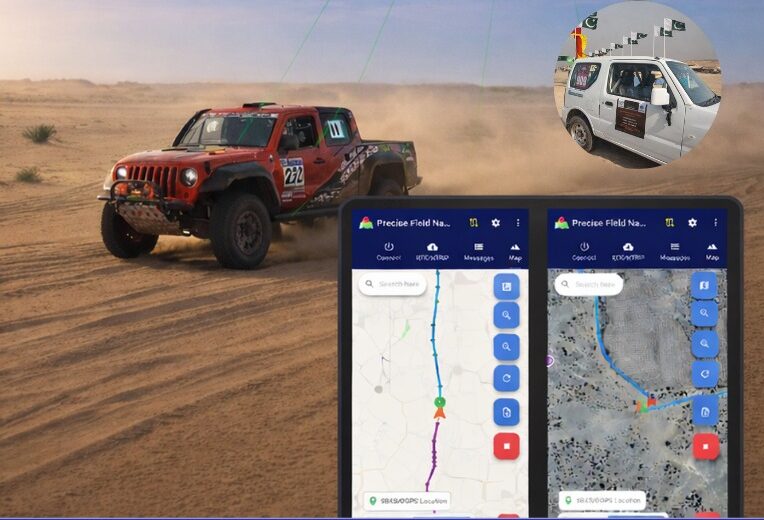
    Pakistan’s national space agency SUPARCO (Space and Upper Atmosphere Research Commission) has achieved a major milestone in navigation technology with the successful launch of its Pak-SBAS satellite-based augmentation system (SBAS) device and service.

    The Pak-SBAS navigation service was rigorously tested in the extreme desert conditions of Cholistan during Cholistan Desert Rally 2026. The Cholistan desert experinces high speeds, unpredictable routes, and the absence of visual landmarks that demand exceptional positioning accuracy and signal reliability for autos and motorcycles.

    Throughout the rally, Pak-SBAS demonstrated remarkable performance by delivering highly precise location data, stable signal continuity, and integrated route tracking.

    By applying SBAS corrections, the system significantly reduced positioning errors compared to conventional GNSS technologies, offering rally drivers and navigation teams a new level of confidence essential for competitive desert racing.

    According to a SUPARCO spokesperson, the Pak-SBAS technology holds vast potential beyond motorsports. It is expected to enhance disaster response operations through accurate tracking of rescue teams and affected areas, improve transport efficiency via real-time vehicle positioning, and strengthen aviation safety with more reliable navigation support.

    The system also will benefit the surveying and mapping sectors by minimizing positional inaccuracies and reducing project costs.
  • Indrajaal unveils Indian anti-drone patrol vehicle

    Indrajaal unveils Indian anti-drone patrol vehicle

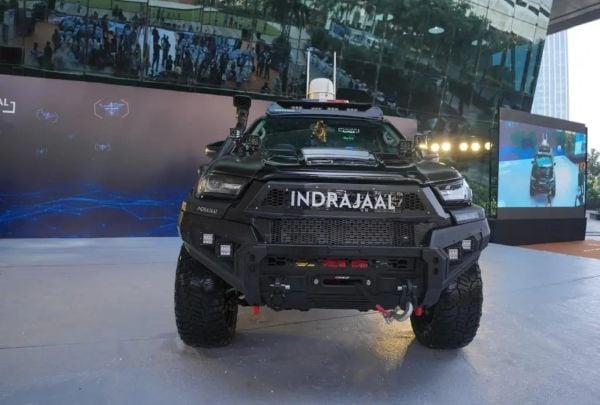
    Indrajaal Drone Defence has launched the Anti-Drone Patrol Vehicle (ADPV) — a fully mobile AI-enabled counter-drone system designed to redefine how India responds to drone-led threats.

    The Ranger has both soft- and hard-kill options. A GNSS spoofer can hijack drones remotely, while its Zombee interceptor drone provides a kinetic strike capability. Together, the sensors and weapons deliver a 10-kilometer (6.2-mile) detection range and a combat radius exceeding 4 kilometers (2.5 miles).

    The urgency to build the ADPV (Indrajaal Ranger) was reinforced when two recent national security incidents demonstrated how drones have become a critical link in breaching India’s border security.

    First was a drone-trafficking incident, where weapons were smuggled deep into Indian territory from Pakistan. Second, the Border Security Force neutralized 255 Pakistani drones in 2025, underscoring how drones have become the primary transport channel for drug trafficking.

    Indrajaal Ranger Patrol Vehicle

    Breaking away from traditional vehicle-mounted anti-drone solutions that work only when parked, Indrajaal engineered the ADPV ( Indrajaal Ranger) as a purpose-built combat vehicle that delivers:

    • On-the-move drone detection
    • Real-time patroling and surveillance
    • Autonomous threat assessment through AI
    • Instant interception and neutralization
    • Seamless coverage across border roads, canals, agricultural belts, critical infrastructure and dense urban pockets.

    By intercepting hostile drones, the Indrajaal Ranger prevents narcotics from entering and endangering Indian lives, blocks the inflow of illicit weapons into urban centers, and protects farmers living along sensitive border zones, the company said. Its automated interception framework is designed to reduce the operational load on police units, enabling smarter, data-driven deployment of manpower.

  • GNSS Winter School set to take place in Islamabad

    GNSS Winter School 2021 is planned for Feb. 22-26 in Islamabad, Pakistan. The Institute of Space Technology is hosting the event, in collaboration with the Space Education Research Lab of the National Center of GIS and Space Applications.

    GNSS Winter School will be held on the institute’s campus; however, in case of severe circumstances (such as COVID-19), it will take place virtually online either partially or entirely.

    GNSS Winter School will focus on GNSS positioning, coordinate and time reference systems, satellite orbit and position determination, signals, receivers, and specialized areas of inertial and integrated navigation systems.

    A special session is planned on GNSS applications and opportunities in the current GNSS market.

    The school is intended for engineers, researchers and students working in aeronautics and astronautics; guidance, navigation and controls; satellite or radio navigation; inertial and integrated navigation systems; space systems; constellation designs; interplanetary navigation; remote sensing; geoinformation science; and similar allied areas.

    Registration is open through Feb. 15.