Tag: point perfect

  • Tallysman, u-blox partner on GNSS antennas and receivers

    Tallysman, u-blox partner on GNSS antennas and receivers


    Image: Tallysman Wireless
    Image: Tallysman Wireless

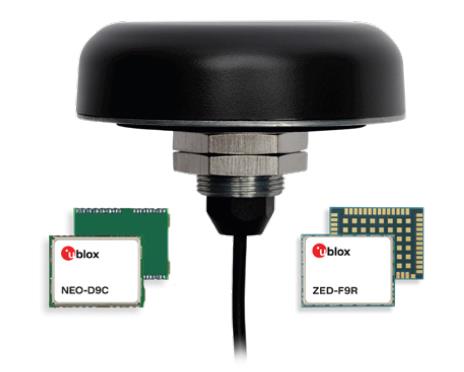
    Tallysman Wireless and u-blox have partnered to develop PointPerfect precise point positioning real-time kinematic augmented smart antennas.

    The ZED-F9R high precision GNSS and the NEO-D9S L-band receivers from u-blox have been integrated with Tallysman’s technology. The product integration will provide accuracy and precision.

    The multi-band (L1/L2 or L1/L5) architecture removes ionospheric errors, and the multi-stage enhanced XF filtering improves noise immunity while relying on the dual-feed Tallysman Accutenna element to mitigate multi-path signal interference rejection. Some versions of the new smart antenna solutions include an inertial measurement unit (dead reckoning) and an integrated L-band corrections receiver to ensure operation beyond terrestrial network reach.

    The PointPerfect GNSS augmentation service is now available in North America, Europe and parts of Asia Pacific.

  • Septentrio launches agnostic corrections program

    Septentrio launches agnostic corrections program


    Image: Septentrio
    Image: Septentrio

    Septentrio, a leader in high-precision GNSS positioning solutions, has launched the Agnostic Corrections Partner Program.

    The program facilitates the use of Septentrio receivers with high-accuracy services that provide varying levels of accuracy, coverage and delivery methods. This also allows users to select the service that suits specific applications and business models.

    The Agnostic Correction Partner Program, which includes Polaris from Point One, Skylark from Swift Navigation, and PointPerfect from u-blox, provides documentation for the use of Septentrio receivers with these high-accuracy services.

    Agnostic GNSS corrections refer to correction services that are not specific to a particular GNSS receiver or device. It provides correction data that can be used by any receiver that can process the correction signal. Agnostic corrections are useful in situations where multiple types of GNSS receivers are being used, such as in a large-scale surveying project or in a fleet of vehicles that use different types of navigation systems.