
Tag: precision GNSS

  • Low-Elevation-Angle Tracking Antenna Improves Field Mapping

    Low-Elevation-Angle Tracking Antenna Improves Field Mapping

    Photo:
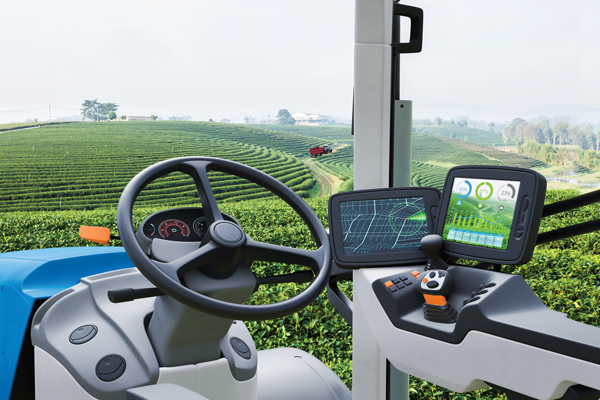
    Tallysman antennas provide a critical link in the field for autonomous and semi-autonomous farm equipment. (Image: Kinwun/iStock/Getty Images Plus/Getty Images)

    Answers from Ken MacLeod, Product Manager, Tallysman Wireless


    How do you define precision agriculture?
    Precision agriculture includes all such modern technological advances as precise GNSS, robotics (autonomous vehicles, UAVs), sensors, and GIS that enable improved crop production by soil/field management and minimize the use of energy, seed, herbicides, pesticides and fertilizer.

    What have been the key turning points in the development of precision agriculture?
    There have been four key precision agriculture developments over the past 25 years. First, field mapping, which enables yield monitoring and the directed application of seed, fertilizer, herbicide and pesticide. Second, precision GNSS, which enables the same plus crop row offset from year to year. This offset, in turn, makes it possible to distribute the plant root system and utilize nutrients in different locations in the field, as well as to minimize soil compaction by ensuring that wheels do not travel over the same row from year to year. Third, autonomy, including UAVs and autonomous vehicles. Fourth, sensors to monitor moisture and water levels, and to identify weeds and plants.

    What are the specific requirements and challenges of precision agriculture for GNSS, and how do they differ from those of other kinds of mapping and machine control?
    Many precision agriculture applications require L-band corrections, which are typically broadcast from a geostationary satellite 35,800 km above the equator. The distance from the broadcast satellite to the user increases as the user travels either north or south of the equator. At the same time, the elevation angle decreases and at ~70° north or south of the equator the geostationary satellite will be seen at the horizon. As a result, at northern and southern latitudes, the L-band correction signal is seen at a low elevation angle and it is very weak because it has travelled a long distance. Tallysman has designed the VSS6037L antenna to receive L-band signals seen at low elevation angles.

    When did Tallysman Wireless begin to focus on precision agriculture and why?
    In September 2019, Tallysman Wireless released the VSS6037L agriculture and machine control GNSS antenna. Most GNSS/L-band antennas on the market have significantly lower gain at low elevation angles. Common GNSS antennas will provide good geostationary L-band reception from the equator to approximately 55° north or south latitude. However, as the arrival angle gets lower, a common GNSS antenna will have less gain and it will be challenged to receive the L-band signal at higher latitudes. Tallysman designed the VSS6037L specifically to provide support for all latitudes and specifically low elevation angle L-band signals received by users north or south 55° latitude.

    What are your relevant products/product lines?
    Tallysman Wireless has several GNSS antennas and smart GNSS antenna product lines that are designed for precision agriculture. The TW3972XF (triple-band plus L-band) and VSS6037L (full-band plus L-band) are ideal precision agriculture antennas. Tallysman has recently released the TW5390, which is a smart GNSS antenna that uses the u-blox F9P chipset and supports its PointPerfect L-band augmentation service.

  • SiTime offers MEMS timing solutions for rugged GNSS

    SiTime offers MEMS timing solutions for rugged GNSS

    Endura MEMS timing products. (Photo: SiTime)
    Endura MEMS timing products. (Photo: SiTime)

    SiTime Corp. has unveiled its Endura micro-electro-mechanical system (MEMS) timing solutions for aerospace and defense applications including precision GNSS, as well as field and satellite communications, avionics and space.

    The Endura products are engineered to provide high performance in harsh conditions — severe shock, vibration and extreme temperature — that are routinely experienced in these applications.

    SiTime offers customers 5 million possible part numbers that can be created from 17 programmable products.

    “When exposed to high levels of shock, vibration, and extreme temperatures, legacy timing components have been prone to failure, degrading system performance and reliability,” said Piyush Sevalia, executive vice president of marketing. “To solve these problems, SiTime created an oscillator system of silicon MEMS, analog circuits, compensation algorithms, and advanced packaging, which is designed to outperform any other available timing solution in harsh environments.

    “For example, Endura precision TCXOs deliver 4 parts per trillion per g (ppt/g) of acceleration sensitivity, which is 50 times better than legacy quartz-based solutions. With such performance, we believe that Endura will transform the oscillator landscape in aerospace and defense.”

    Highlights of the company’s solutions include:

    • 4 parts per trillion per g force of acceleration (50 times better than quartz)
    • Supports –55 degreesCelsius and +125 degrees Celsius operation
    • Key timing specifications conform to MIL-PRF-55310
    • Five million possible part numbers

    Endura Super-TCXOs (temperature compensated oscillators) for use in high-speed communications and GNSS applications include:

    • SiT5146/SiT5147 – 1 to 220 MHz, ±0.5 to ±2.5 ppm, -40 degrees Celsius to +105 degrees Celsius
    • SiT5346/SiT5347 – 1 to 220 MHz, precision ±0.1 to ±0.25 ppm, -40 degrees Celsius to +105 degrees Celsius
    • SiT5348/SiT5349 – 1 to 220 MHz, ultra-precision ±0.05 ppm

    SiTime’s portfolio of commercial off-the-shelf (COTS) Endura products spans six oscillator types and 17 products. All devices offer programmable options such as frequency, operating voltage and stability.

    In addition, some devices offer specialized programmable features such as spread spectrum, pull-range, and differential output type.

    Endura products are available with up to two grades of acceleration sensitivity, as low as 4 ppt/g (typical). This breadth of products provides customers with a large selection and the ability to configure each device for their application requirements.

    Endura products are also designed for continuity of supply for long-life programs.

  • Precision GNSS in phones, drones and cars forecast by 2021

    UAV-opening-O

    Low-cost, precision GNSS receivers will become a reality in the driverless car, drone and even smartphone markets by 2021, finds ABI Research. The automotive industry will be the main driver behind precision GNSS receiver adoption, in which centimeter-level accuracy is essential to complete driver safety systems with the redundancy necessary for autonomous vehicles.

    “There is a variety of competing technologies currently under investigation by the automotive industry, but ABI Research forecasts it will move to a hybridized approach, combining LIDAR, HD maps, sensor fusion, machine vision and precision GNSS,” says Patrick Connolly, principal analyst. “As the receivers’ average selling price drops below $50, we expect to see a more immediate market for location technology services, such as AR Heads Up Displays (HUDs), in high-end vehicles. Vehicle-to-Vehicle, or V2V, communication might constitute another use case for high-precision GNSS.”

    In addition to autonomous vehicles, the report also identifies opportunities for low-cost, precision GNSS receivers in autonomous unmanned vehicles (AUVs), as well as commercial and consumer devices. Though the average selling prices of such GNSS receivers is $1,000 and higher, ABI Research finds the cost to be one of the most addressable inhibitors to market growth today.

    “Precision GNSS achieves sub-meter accuracy through a variety of methods, including a network of reference stations,” Connolly says. “The biggest question mark today is not cost-related, but instead how to achieve reliable, worldwide satellite navigation coverage to support correction techniques, such as real time kinematic, or RTK, and precise point positioning, or PPP. This is an extremely expensive undertaking, with currently no guarantee of a return on investment.”

    Competition in the location technologies market ranges from crowdfunded startups to Internet giants, reflecting the scale of the opportunity. Traditional precision GNSS receiver vendors like NovAtel have the intellectual property, engineering experience and ownership of correction networks.

    In the consumer GNSS receiver market, u-Blox and Skytraq lead the way, according to the report. Each developed low-cost single frequency PPP and RTK receivers, with a clear roadmap toward dual-frequency. Other consumer GNSS providers, like ST Microelectronics, Broadcom and Qualcomm, also appear active in this space.

    Start-ups like North Surveying, NVS Technologies, REACH, and Swift Navigation continue to disrupt the industry, bringing low-cost precision receivers to market, said ABI Research.  Their goal is to hit an ASP below $100 in the near future. And Radiosense is a startup that received a lot of attention for its previous work concerning precision GNSS on smartphones. It is now working on automotive solutions in a pilot in Austin, Texas.

    Locata has the potential to be the wildcard in the deck, working on a powerful synchronization and location technology that may find its way into consumer technologies by 2021.

    “Most interesting in the location technology competitive landscape is the involvement of Internet giants Google and Alibaba,” concludes Connolly. “Google recently announced it will make GPS pseudoranges available to developers, which, although extremely nascent, could open up the door for a lot of innovation. And in China, Alibaba is a major partner in the roll-out of Continuous Operating Reference Stations, or CORS, networks in the region.”

    These findings are from ABI Research’s Precision GNSS in Automotive and GNSS IC Design Trends: Modules, Standalone, Combo, and Embedded reports.