Tag: robots

  • Smart infrastructure depends on GIS

    Get ready! Here comes the boom.

    The physical and digital world are integrating. We are nearing the edge of the analog universe. Physical immersion is giving way to virtual immersion. It is the virtualization of products and services in the evolution of technology. Michael Saylor calls it the sixth wave of software engineering. We are moving away from externally experiencing data and are moving towards actively interfacing with data directly in virtual space.


    “You can Zoom anywhere at the speed of light and bend time and space.” — Michael Saylor


    The world of tomorrow is already here. We are waking up to it. The blips of information at the fringes are coming nearer. The horizons of time are as far as one can see into the future and the past. How far can you see? From wherever you are there are others who can see a little further. Look forward. Look back. Others are ahead and behind. They exist where time is most comfortable for them. Some take up positions living in the past. Some stake their place as far into the future as they are able. Look towards those early adopters. Ask them what they think. They see more clearly the blips of information out on the horizon.

    What are those blips? How will they impact the geospatial community? How can you position yourself to take advantage of the coming trends?

    America needs to go back to work and America’s infrastructure is old and in disrepair. In 2019, Congress introduced H.R.4687, the SMART Infrastructure Act, a $2 trillion bill but it never made it out of the House. However, that bill is being reintroduced. This time it will become a bill putting America back to work and its price tag will likely eclipse the previous bill. It will address infrastructure — all types of infrastructure: physical, data, cybersecurity, health, financial, transportation, energy, and communications. It will be a primary theme for the next two decades. Get ready! Change can happen fast and it’s about to accelerate.


    “The future happens slowly and then all at once.” — Kevin Kelly


    Rebuilding this infrastructure will require geospatial technologies. STEM has been the siren call for the past 30 years and for good reason. Those who heeded the call and invested their education into coding, engineering, data science, geospatial technologies, mathematics, artificial intelligence, and other STEM related fields are going to lead the coming workforce. Now is the time to get certified and establish your credentials.

    Take the case of architectural design and construction. It used to be blueprints drawn on light tables. That is how I learned to do it back in the 1970s. Then it all moved to computer aided design (CAD) drawings. Now, urban planners and architects create immersive 3D virtual reality (VR) visualizations. That is becoming standard practice.

    Image: teekid/iStock / Getty Images Plus/Getty Images
    Image: teekid/iStock / Getty Images Plus/Getty Images

    Project managers used to spend their day making their rounds walking the site ensuring the project was being built to specifications. However, that is changing. Soon, each worker’s safety glasses will have built-in augmented reality (AR). They will build their portion of a project exactly to plan. Project managers will connect with workers in the field and see the project they are working on progress in real-time while in their office on 3D models.

    When the project manager does walk the site he or she will be wearing augmented reality (AR) head-up displays and able to compare the physical construction to the digital model in real-time. Backhoe and excavator operators will grade to exact precision. Robots will be common at construction sites assisting operations and enhancing current capabilities. Unmanned aerial vehicles (UAV) will fly regular patterns over construction sites. Heavy-lift UAVs will supplement cranes for some operations. Subsurface structures, whether buried beneath the ground or behind a wall will be digitized with precise location data making future replacements and repairs swift and easy. The uses of geospatially dependent technologies will continue to grow. The construction worker of tomorrow will be very different than the one of today.

    Photo: Trimble
    Photo: Trimble

    The new infrastructure will be built with smart technologies and incorporate renewables and “green energy” initiatives with a responsible approach to sustainability; for example, roadways will have embedded peizo-electric crystals in the asphalt to generate electricity from passing vehicles. The electricity will charge batteries that will power smart sensors embedded in the street and provide power to street lights with sensors and 5G networks along the roadways. Excess power will transfer to other microgrids for use elsewhere. Energy will also come from capturing wind on top and along the sides of buildings, along roadways, and at tunnel exits and entrances. Thermocouples will capture heat and generate electricity.

    Solar power will be generated from panels, windows, films, and even paint surfaces. All of these sources together will feed into microgrids. Some of this renewable energy will convert water to hydrogen for fuel cells, and some will power carbon dioxide (CO2) converters to extract CO2 from the atmosphere and create synthetic fuels. In 2010, Sunexus submitted a geospatial study of the solar reforming process to the Office of Scientific & Technical Information (OSTI). The study showed that nearly 58% of industrial CO2 waste from power plants, cement plants, ethanol production, and natural gas processing could be converted to synthetic diesel fuel.

    Image: U.S. Office of Energy Efficiency and Renewable Energy
    Image: U.S. Office of Energy Efficiency and Renewable Energy

    Besides energy, other smart materials will be used such as small sensors that are geospatially sensitive nanodevices embedded in roads, bridges, tunnels, buildings and other structures. They are wirelessly connected to one another creating a 3D mesh network. These nanodevices continuously report their structural health. This 3D mesh network can detect vibrations passing through it that cause distortions in the mesh framework.

    Geospatial artificial intelligence (GeoAI) will profile devices based on their normal statistical ranges. If any data such as location, temperature, humidity, pressure, acoustics or health status exceed the device’s standard deviation the GeoAI will analyze surrounding nodes in the mesh network to depict patterns. Suspect events will immediately come to the attention of emergency services. These microdevices can provide early detection of cracks in a structure or deterioration of a surface protection layer.

    The use of these devices extends beyond structural monitoring. More broadly, they have societal applications too, such as for security purposes. When fitted with acoustic sensors they can detect sounds, and by geospatially analyzing the data from many thousands of devices the epic center of a noise event can immediately be located. Take for example a gun shot, fireworks, an explosion, or a vehicle accident. The increased acoustic signal would trigger the GeoAI monitoring the devices to plot a spatial analysis of the acoustic report. The map would alert area would flash red on the monitor at the control center and nearby cameras would zoom in on the location providing images and live video feeds all within moments of the triggering event. The analysts at the control center could immediately assess the situation and dispatch the proper response units.

    Embedded devices also serve as seismic sensors blanketing broad areas and are able to record surface vibrations moving through the mesh network. An earthquake would appear as a moving wave field along the network.

    Additionally, data from the mesh network can integrate with other devices. It can provide smartphones with precise location data. Imagine no longer standing on a street corner turning in circles trying to figure out which way to go. When connected with the mesh network and looking through AR glasses or the smartphone view screen the path will be illuminated. Autonomous vehicles will connect with the mesh network and have absolute positional accuracy and have awareness of other vehicles, bikes, and pedestrians ensuring a more safe and efficient experience for everyone.

    The mesh network can be used as a base layer for georeferencing the world. Notifications, warnings and requests for information can be sent to smartphones within an exact georeferenced location. Imagine being in your third-floor apartment sitting in your chair, listening to music on your headphones and reading an ebook. You are oblivious to the noise outside. An audible alert is sent to your phone and calls your attention. You look at your phone and a message is requesting information related to a possible gunshot at DD°MM’SS.sss N, DD°MM’SS.sss W. You click on the notification and a map opens up. You see it is right outside your window. You go to the window, look outside and see two people duck into a car. You watch as red tail lights drive away. You look back at the location on the street where the vehicle had been and a person is slumped over leaning against a stairwell.

    On your phone you press the red alert button on the map application triggering a distress signal and confirming the incident may have been a gunshot and someone has possibly been injured. Emergency services immediately dispatch. Others nearby received the same alert message because it was automatically generated and sent out to all phone numbers within the area defined by the geospatial acoustic solution. Surveillance cameras on the corner of buildings were also triggered by the alert and automatically focused on the origin of the noise. Images of the assailants were captured along with the license plate of the vehicle. As the vehicle drove away a network of surveillance cameras continued following it turn by turn until it was finally intercepted and the occupants apprehended.

    This world is nearer than it seems. The technologies are already here. Once the infrastructure bill is passed construction projects will begin and our physical world will begin to integrate with the digital world. The engineers design it. The construction workers and robots will build it. And it will be geospatial technologies holding it all together.


    William Tewelow works for the Federal Aviation Administration. He is a graduate of the FAA management fellowship program. He served on special assignment to the U.S. Department of Transportation leading a national strategic geospatial initiative for the White House Open Data Partnership. He is a Geographic Information Systems Professional (GISP) and a speaker for the Maryland STEMnet Scholar program. He was among the first in the nation to earn a Geospatial Specialist Certification from the U.S. Department of Labor while working at NASA Stennis Space Center. He has degrees in Geographic Information Technology, Intelligence Studies, and is completing a masters degree in Organizational Management. William is a 23 year veteran for the U.S. Navy serving as a Geospatial Specialist, Imagery Intelligence Specialist, a Naval Aviator, a Meteorologist, and a Tactical Oceanographer. He is married, enjoys writing and traveling. His favorite quote is, “A man’s mind changed by a new idea can never go back to its original dimension.” — Oliver Wendell Holmes

  • Vision-RTK sensor debuts at Intergeo Digital 2020

    Vision-RTK sensor debuts at Intergeo Digital 2020

    Vision-RTK enables applications in previously unreachable areas and unlocks new possibilities for autonomous ground robots and drones

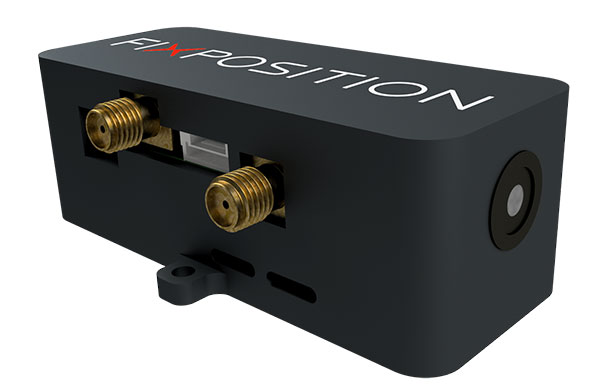
    At this year’s Intergeo Digital event, taking place Oct. 13-15, Fixposition is debuting the Vision-RTK positioning sensor, a compact centimeter-accurate solution with high reliability and availability in environments that are challenging for traditional GNSS.

    Photo: FixPosition
    Photo: FixPosition

    The Vision-RTK’s sensor-fusion algorithm is based on the deep integration of satellite, camera and inertial sensors, and enables unprecedented reliability and availability in diverse and challenging applications, the company stated.

    “The highly integrated nature of our Vision-RTK sensor and our deep expertise in computer vision and real-time kinematic (RTK) GNSS enabled us to implement completely new approaches in sensor fusion, resulting in previously unseen performance,” said Lukas Meier, CTO and co-founder of Fixposition.

    Traditional GNSS sensors suffer from limited reliability in GNSS-challenging and denied areas. On the other hand, standalone computer vision is sensitive to light conditions (such as snow, strong sunlight and rain) and struggles in situations where there is a lack of features such as cornfields and grass. Errors accumulate over time with standalone inertial technology, causing large drifts.

    As a result, devices using either sensor are limited in their range of operation and are likely to fail in certain conditions. Fixposition’s solution increases the potential of these sensors with its unique sensor-fusion technology by increasing the trustworthiness of the positioning accuracy and the range of operation in different environments.

    The real-time sensor fusion provides centimeter-accurate absolute positioning at any time, in any outdoor environment. This small module  integrates two RTK-GNSS receivers and visual inertial navigation, and is suitable for applications where size and accuracy are of paramount importance.

    The dual-receiver configuration, together with Fixposition’s advanced algorithms, provides a true-heading output and increased resistance to electromagnetic radiation.

    The sensor provides USB and Wi-Fi connectivity and a web interface. It enables straightforward integration in state-of-the-art autopilot control systems for drones and robots. It’s also plug-and-play compatible with platforms such as PX4, ROS and Apollo.

    For ground robotics and drones applications, Vision-RTK increases the device uptime and efficiency while enabling new market segments in areas previously inaccessible. For end-device manufacturers, this technology eliminates the need for an in-house development of advanced localization solutions, shortening their sales cycle and reducing costs and investments.

    Visit the Fixposition booth and meet the team at Intergeo Digital 2020 to learn more about the Vision-RTK sensor.

  • Using GPS as a weapon against coronavirus

    Using GPS as a weapon against coronavirus

    By Roi Mit, CMO, Regulus Cyber

    Roi Mit, CMO, Regulus Cyber
    Roi Mit, CMO, Regulus Cyber

    GPS technology is doing far more than helping us navigate or receive accurate time. It is now being used to fight the spread of the global COVID-19 pandemic.

    Global navigation satellite systems are being used to collect big data on travel and contact, but they are also being used in more unconventional ways: for example, quarantine enforcement and sanitation technology.

    Read on to learn about a few recent developments in the world of GNSS/GPS that are bolstering the battle against the novel coronavirus.

    Electronic monitoring enforces quarantine

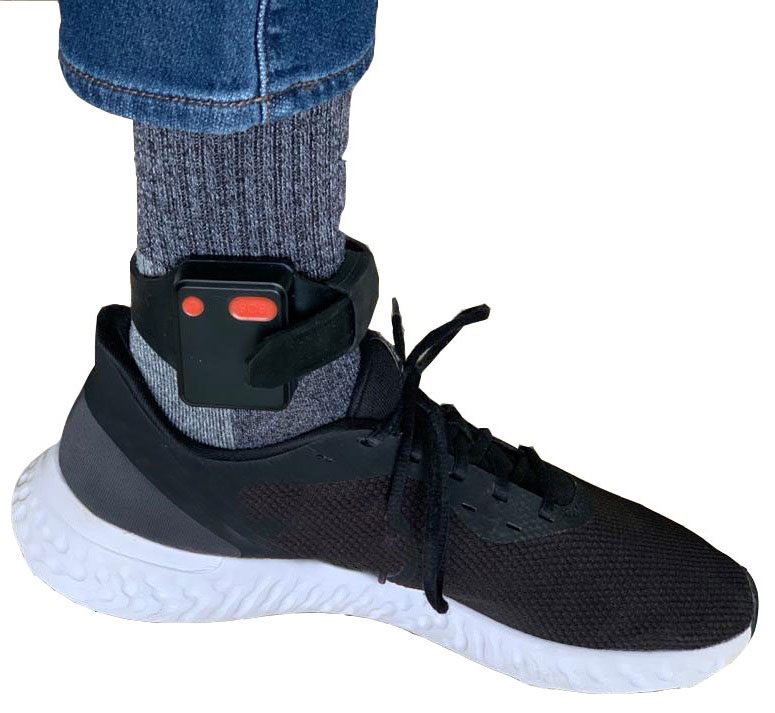
    There is a surge of applying ankle monitors to track sick individuals and deter them from spreading the virus further. According to Bloomberg Businessweek, one business is thriving because of it: providers of electronic ankle monitors.

    Kentucky courts are requiring GPS ankle monitors for people who test positive for COVID-19 and refuse to self-quarantine. Kentucky couple Elizabeth and Isaiah Linscott were two of a growing number of people placed under house arrest after Elizabeth tested positive for COVID-19 and denied signing the Self-isolation and Controlled Movement Agreed Order, a health department document promising she would stay home.

    Photo: Regulus Cyber
    Photo: Regulus Cyber

    Elizabeth told Louisville television station WAVE 3 News that she did not sign because she disagreed with the wording of the document. She said that she was concerned about having to contact the health department before traveling, even in the case of an emergency.

    “My part was if I have to go to the ER, if I have to go to the hospital, I’m not going to wait to get the approval to go,” she said.

    A few days after Elizabeth refused to sign the paperwork, her husband opened their door to an entourage of law enforcement officers serving them with a Health Department order to wear ankle monitors.

    “I open up the door, and there’s like eight different people, five different cars, and I’m like ‘what the heck’s going on?’ This guy’s in a suit with a mask. It’s the Health Department guy, and they have three papers for us. For me, her and my daughter,” Isaiah said.

    The Linville family is now confined to a 200-foot radius. If they leave their designated quarantine area, their ankle monitors will alert law enforcement.

    Alternative to prison

    The number of people on house arrest in the United States and across the world has surged as corrections departments struggle to slow the spread of the coronavirus within prisons. An estimated 25 to 30 percent more people are wearing ankle monitors in comparison with a few months ago, according to Bloomberg Businessweek. The U.S. Federal Bureau of Prisons reported a 160 percent increase in home confinement from late March to July. European corrections departments have similarly put thousands of inmates on house arrest in the last few months.

    “Demand has spiked everywhere,” BI Inc. monitoring equipment executive Robert Murnock said to Bloomberg. “We’re getting calls from different jurisdictions and other countries we’ve never worked with.”

    Efforts to reduce crowding in prisons mean that the electronic monitoring industry is one of very few industries benefiting financially from the coronavirus pandemic.

    “Coronavirus gives electronic monitoring companies an opportunity like they’ve never had before to expand,” parole reform expert James Kilgore said.

    On Aug. 3, Singapore announced the rollout of electronic tracking devices to enforce quarantine. Travelers will be required to wear GPS and Bluetooth-powered tracking devices that notify authorities if quarantine is broken or the device is tampered with. The rule went into effect on Aug. 11 and applies to all incoming travelers — resident or nonresident — over the age of 12.

    On Aug. 20, the premier of Western Australia, Mark McGowan , said his government could soon force people in hotel quarantine to wear electronic monitoring equipment if they are deemed a risk. “If we identify people who are potential flight risks or who might have a criminal history, we are looking at applying monitoring bracelets to them,” he said.

    An estimated 25 percent to 30 percent more prisoners are wearing bracelets now compared to the pre-outbreak period. In the U.S., the Federal Bureau of Prisons has placed about 4,600 inmates in home confinement, a 160 percent increase since the end of March.

    “Demand has spiked everywhere,” said Robert Murnock, vice president for partnership development at BI Inc., a provider of EM technology.

    The emergency shift to electronic monitoring spurred by COVID-19 may foretell a long-term shift toward use as an alternative to prison time, reducing clutter and the risk of the virus spreading among inmates.

    Photo: LeoPatrizi/E+/Getty Images
    Photo: LeoPatrizi/E+/Getty Images

    Contact tracing via mobile phones

    Israel is using covert mobile phone data to track the spread of COVID-19. On July 1, the Knesset approved a bill temporarily reauthorizing mass surveillance of coronavirus-infected citizens by the Shin Bet, Israel’s internal security service. The original program lasted from mid-March to June 9.

    The contact-tracing program works like this. When a patient is diagnosed with COVID-19, the Israeli Health Ministry provides their personal information — including their mobile number — to the Shin Bet. The Shin Bet then consults a classified database of every person who uses Israeli telecom services to determine who came into contact with the infected individual for more than 15 minutes at a time. After the Shin Bet sends information back to the Health Ministry, the Health Ministry notifies those people via text and tells them to self-quarantine.

    The Shin Bet’s newfound role in public health enforcement is quite different from its usual focus. Former Shin Bet agents say the COVID-19 mobile phone tracking technology was originally developed as a counterterrorism measure, and the tracking system being used on Israeli civilians is almost identical to that used for suspected terrorists.

    “It’s the same system, the same methods,” retired Shin Bet agent Arik Brabbing said to BBC. “We know that someone was here in the park. We can get from the [mobile phone] company all the details about the hour, the place, exactly the place… and we can understand who else was around.”

    Supporters of the mass surveillance program, including Prime Minister Benjamin Netanyahu, argue that reduced privacy is necessary to curb the spread of the virus. However, the Israeli government has come under fire by opponents who claim that the program is intrusive and undemocratic.

    Israel’s contact tracing procedures are more secretive than those of South Korea and Taiwan, other countries that mandate central mass surveillance. South Korea and Taiwan both enforce quarantines with mobile-phone tracking, and both have built publicly available COVID-19 data platforms.

    The South Korean government has disseminated detailed — but anonymized — information about COVID-19 carriers, including their travel routes and treatment facilities. Citizens broadly support these measures — a testament to collectivism in Korean culture.

    Civic engagement and enthusiasm for fighting the pandemic is also remarkable in Taiwan, where the public has been collaborating with the government on a town hall-style website called vTaiwan. Citizen-led initiatives, like a GPS-powered tool for tracking face mask supplies, have been applied nationwide.

    Meanwhile in Europe, eight major telecom companies, including Vodafone and Orange, have been supplying anonymized metadata to the European Commission to model and predict the spread of the virus. In the United States, the Centers for Disease Control and Prevention is soliciting GPS data from mobile advertising companies rather than carriers themselves.

    The two tech giants, Apple and Google, made it easier for health agencies to join its coronavirus exposure notification system, creating a new built-in app within iOS and Android. The app provides real-time notification to users when they are exposed to a sick person.

    Virus-killing robots may roam the streets

    GPS-based robots, drones and autonomous cars are being deployed to sanitize outdoor spaces, transport medical equipment, and announce safety information to the public.

    Robots began rolling around the streets of Wuhan, the original epicenter of the coronavirus outbreak, as early as January. China was the first to deploy robots of this type, but India, Spain, France and other countries have followed in their footsteps. In addition to the chemical-spray approach, some companies are pioneering mobile disinfection robots armed with large ultraviolet-C germicidal lights.

    Apollo, the autonomous vehicle company of multinational internet giant Baidu, has partnered with Chinese self-driving startup Neolix to transport food and supplies to Beijing Haidian Hospital. Every morning at 10:30 a.m, an unmanned car delivers meals to about 100 frontline workers. The process eliminates direct contact, protecting the safety of food service workers, hospital staff, and patients.

    Zhangjiang Artificial Intelligence Island

    A fleet of Apollo and Neolix’s unmanned cars is also responsible for disinfecting all roads on Zhangjiang Artificial Intelligence Island, an 100,000-square-meter industrial complex in Shanghai. The vehicles are loaded with up to 160 liters of spray disinfectant and can cover the island’s entire road system in about half an hour.

    The vehicles at Zhangjiang AI double as nighttime surveillance bots. They patrol the island and make sure that guests are adhering to coronavirus protocols, alerting security personnel if they note suspicious activity.

    In addition to using drones to spray disinfectant, South Korea’s government has leveraged the technology for public announcements. On July 4, 300 drones lit the sky above Seoul in a show of appreciation for frontline workers. The drones executed a 10-minute synchronized show that included images of face masks, hand washing, and social distancing.

    Summary

    As COVID-19 continues to ravage the globe, governments rely on GPS to track the virus, contain it, and fight against it. The battle against coronavirus is still being waged on a global scale, utilizing GPS as a weapon along with many other existing technologies.

    The pandemic changed the world forever, and it also highlighted the power of tracking and monitoring location of people and machines. It is another testament to the immense reliance on GPS technology in our modern world.

    The increased deployment of these technologies necessitates increased security measures, especially when public health is on the line. Regulus Cyber offers GPS Cybersecurity software. To read more about it, visit www.regulus.com.

    Sources

    Altshuler, Tehilla Shwartz, and Rachel Aridor Hershkowitz. “How Israel’s COVID-19 Mass Surveillance Operation Works.” Brookings, Brookings, 6 July 2020.

    Aravindan, A., & Geddie, J. (2020, August 03). Singapore to make travellers wear electronic tags to enforce quarantine (E. Davies, Ed.). Retrieved August 10, 2020.

    Bateman, Tom. “Coronavirus: Israel Turns Surveillance Tools on Itself.” BBC News, BBC, 12 May 2020.

    Chee, Foo Yun. “Vodafone, Deutsche Telekom, 6 Other Telcos to Help EU Track Virus.” Reuters, Thomson Reuters, 25 Mar. 2020.

    Couple under House Arrest Says They’re Getting Hateful Comments.” ABC13 Houston, 22 July 2020.

    Eligon, John. “’It’s a Slap in the Face’: Victims Are Angered as Jails Free Inmates.” The New York Times, 24 April 2020.

    Gelb, Michael, et al. “COVID-19 Boosts Fortunes of Electronic Monitoring Firms.” The Crime Report, 16 July 2020.

    Kim, Max S. “Seoul’s Radical Experiment in Digital Contact Tracing.” The New Yorker, 17 Apr. 2020.

    King, Faith. “Ky. Couple on House Arrest after Not Signing Positive COVID-19 Self-Isolation Order.” wave3.com, 19 July 2020.

    Kluth, Andreas. “Taiwan Offers the Best Model for Coronavirus Data Tracking.” Bloomberg, 22 April 2020.

    Mobile Location Data and Covid-19: Q&A.” Human Rights Watch, 3 Aug. 2020.

    School Uses Virus-Killing Robot to Keep Classrooms Clean amid COVID-19 Pandemic.” ABC7 San Francisco, 2 Aug. 2020.

    Tabachnick, Cara. “Coronavirus Creates Big Market for Electronic Ankle Monitors.” Bloomberg, 14 July 2020.

    Tau, Byron. “Government Tracking How People Move Around in Coronavirus Pandemic.” The Wall Street Journal, Dow Jones & Company, 28 March 2020.

    COVID-19 pandemic prompts more robot usage worldwide

    https://www.cnn.com/2020/07/08/asia/south-korea-drones-trnd/index.html

    https://www.technologyreview.com/2020/05/18/1001760/how-coronavirus-is-accelerating-autonomous-vehicles/

    https://www.travelpulse.com/news/destinations/singapore-to-require-electronic-monitoring-device-for-incoming-travelers.html

    https://www.straitstimes.com/asia/se-asia/quarantine-monitoring-devices-also-being-used-by-others-worldwide

    https://lostcoastoutpost.com/2020/aug/31/looking-relieve-jail-overcrowding-sheriffs-office/

    https://thecrimereport.org/2020/07/15/covid-19-boosts-fortunes-of-electronic-monitoring-firms/

  • Construction robot market grows with 9.5% CAGR for 2020-2026

    Construction robot market grows with 9.5% CAGR for 2020-2026

    Photo: ThossapholiStock/Getty Images Plus
    Photo: ThossapholiStock/Getty Images Plus

    The global construction robot market was valued at USD 231.5 million in 2018 and is expected to reach USD 464.8 million by 2026, growing at a compound annual growth rate (CAGR) of 9.5% during the forecast period, according to an InForGrowth market report.

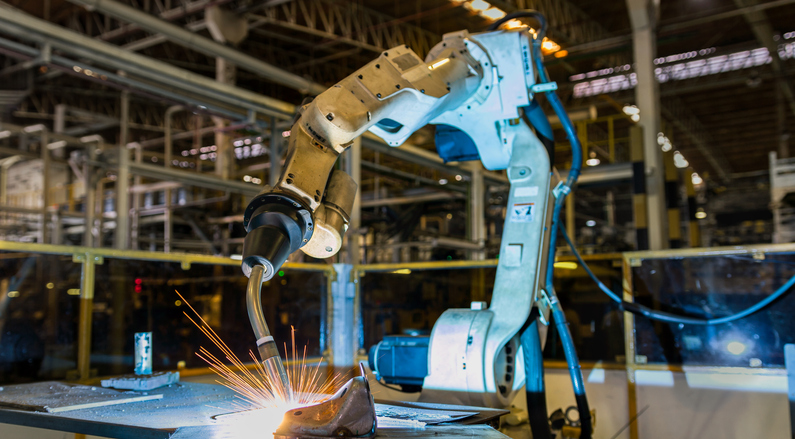
    The construction industry is one of the least automated industries that features manual-intensive labor as a primary source of productivity. However, with the advancement in technology, the construction industry is utilizing robots to excel at repetitive tasks in a controlled environment.

    Construction robots have a major impact on the construction industry. The construction industry is looking to automate more and more tasks for the sake of productivity and efficiency, which in turn is increasing the demand for construction robots.

    The use of robots has grown considerably with increasing speed, efficiency, safety and profit concerns. Construction robots have provided a transformative experience for the entire industry and have helped in replacing or improving existing processes, making them more proficient as well as more precise.

    Companies are deploying these new commercially viable robots in various applications such as 3D printing of large structures, disaster relief situations, construction of tall structures, and for assisting workers performing laborious tasks. These robots have helped in automating laborious and dangerous tasks to keep laborers away from hazardous activities and enable them to focus on more productive work.

    3D printing. Moreover, the evolution of 3D printing in the construction industry is expected to create opportunities in the market. This will further enhance the market size of the global construction robot market. An increase in research and development activities to minimize the cost of robots will also enhance the market size over the forecast period.

    However, the high cost associated with the deployment of robotic solutions is expected to hamper the growth of the global construction robot market during the forecast period.

    Key findings. Based on the product type, the traditional robot segment accounted for the largest market size in the global construction robot market in 2018.

    Based on automation, the semi-autonomous robot segment accounted for the largest market size in the global construction robot market in 2018.

    Based on function, the demolition robot segment held the largest share in the global market in 2018.

    Based on applications, the public infrastructure segment is expected to dominate the market during the forecast period. Europe accounted for nearly 30% share of the global market in 2018.

    Recent industry news. In September 2019, Built Robotics closed a US$ 33 million Series B funding round, led by Next47, the global venture fund backed by Siemens, for autonomous construction equipment.

    In August 2019, John Sisk & Son used MULE at Sisk’s residential Wembley Park E05 site in London to reduce fatigue and injuries among workers and increase productivity.

    In June 2019, Boston Dynamics launched an inspection robot named SPOT, which is mounted with 3D cameras to inspect and map construction sites and identify hazards and work progress.

    Browse the full report with TOC.

  • Aceinna launches open-source GNSS+IMU development kit for drones, robots

    Aceinna launches open-source GNSS+IMU development kit for drones, robots

    Photo: Aceinna
    Photo: Aceinna

    MEMS-based sensing solutions company Acienna released OpenIMU, a professionally supported, open-source GPS/GNSS-aided inertial navigation software stack for low-cost precise navigation applications.

    Integrating an inertial measurement unit (IMU)-based sensor network will greatly improve its navigation and self-location capabilities, Acienna said.

    It is aimed at developing autonomously guided vehicles for industrial applications, autonomous cars, factory or industrial robots, drones, remotely operated underwater vehicle or any kind of smart machine that needs to move fast or slow, on land, in the air or in water.

    “Our breakthrough open-source software for INS/GPS algorithm development is the first professional grade open-source navigation stack running on a low-cost IMU,” said Mike Horton, CTO of Aceinna. “Not only will this kit save developers time and money, it is simple to use and does not require a Ph.D.”

    OpenIMU enables advanced, easy-to-deploy localization and navigation algorithm solutions for a fraction of the time and cost of traditional methods, Aceinna said.

    OpenIMU’s combination of open-source software and low-cost hardware enables rapid development of advanced solutions for drones, robotics, and autonomous applications. Its extensible software-infrastructure provides all the code needed for algorithm development.

    The freely downloadable stack includes:

    • FreeRTOS-based data collection and sampling engine
    • Performance-tuned, real-time, navigation-grade GPS/INS Kalman filter library
    • Free IDE/compiler tool chain based on Visual Studio Code
    • JTAG debugging for debugging code loaded on IMU
    • Data logging, graphing, Allen Variance plots and maps
    • Extensive documentation
    • Robust simulation environment with advanced sensor error models

    To install OpenIMU stack now, follow the directions. Several ready-to-install free GPS/INS and IMU applications are available at Aceinna’s Navigation app store.

    The OpenIMU Development hardware development kit includes JTAG-pod, precision mount fixture, EVB and an OpenIMU300 module.

    The OpenIMU module features Aceinna’s 5 deg/Hr, 9-Axis gyro, accelerometer, and magnetometer sensor suite with an onboard 180-MHz ARM Coretex floating-point CPU.

    The IMU is delivered in a 24 x 37 x 9.5 millimeter module that operates at 2.7-5.5 VDC.

    The OpenIMU Development kit is available for immediate delivery.

  • Agricultural robot market impacted by urbanization, less land


    Robots are way cool. Anyone three or older knows that. And agricultural robots were among the first envisioned civilian applications of GPS. When Brad Parkinson went to Stanford in 1984, one of the earliest demonstrations he and his bright new students conducted was fully automatic GPS control of farm tractors on a rough field to an accuracy of 2 inches. Now it’s a bazillion global industry. See “Agriculture robots market projected to reach US$5.7 billion by 2024” for a few figures on that.

    The market report underpinning that story contained a couple unquantified yet provocative assertions. Here’s one: Rural flight to the cities is a big force in this market’s growth.

    “Progress . . . has primarily driven a growing number of people towards the urban areas and the suburbs. . . . This, in turn, has caused a twofold need for the incorporation of agriculture robots in several countries. Firstly, the growing global population — a lot of it being urban — is pressuring countries to increase food production while steadily reducing the hands available for the agriculture industry. Secondly, the overall land slotted for agriculture in nearly all countries is reducing, thanks to the burgeoning industrial sector and residential construction projects.”

    I find this a bit chilling, a bit 1984-ish, and goodness knows we’ve got enough of that going on already. Will our future trips through the countryside, the shrinking countryside, take us through landscapes populated by nothing by smoothly chuffing engines? Will the term “bucolic” lose all meaning?

    A second factor driving the agricultural robots market is “the increasingly accepted modes of corporate farming.” Now, I know that multitudes must be fed. Still, personally, I buy my food from small, local farmers as much as possible. It simply tastes better. That is indisputable. Arguments rage about whether it’s better for you; I believe that it is.

    I hope the small farmers that my family and neighbors depend on benefit from GPS even though they don’t have huge expensive pieces of equipment. I’ll have to ask them next time I go on a visit. Meanwhile if any GPS and/or robotics manufacturers supply products to the artisanal, shall we say, as opposed to the corporate side of farming, I’d like to hear from you.

  • Agriculture robots market projected to reach US$5.7 billion by 2024

    Agriculture robots market projected to reach US$5.7 billion by 2024

    The agriculture robots market is projected to reach US$5.7 billion by 2024, according to a report by Transparency Market Research (TMR).

    The diverse nature of the competitive landscape in the global agriculture robots market presents a number of prominent players for each of its key regions, TMR analysts said.

    PrecisionHawk Inc., Clearpath Robotics and Harvest Automations Inc. were the leaders of the agriculture robots market in North America, while SenseFly SA and Naio Technologies led the market in Europe for 2015. At the time, Shibuya Seiki was the leading player in the agriculture robots market for Asia Pacific.

    Also, a diverse array of names is appearing as emergent players in the global agriculture robots market within each region, denoting a strong scope of entry for advanced innovations and increased player competition.

    Agriculture robots include UAVs, driverless tractors, automated harvesting machines and more.

    According to the report, the global agriculture robots market was led by North America until 2015. It was considered to be the base for several of the stronger players in the market and the leading region in terms of technological development and rate of implementation.

    In 2015, the global agriculture robots market was dominated by driverless tractors. This segment is likely to hold the leading share in the market in the immediate future, followed by automated harvesting machine. Driverless tractors are currently in very high demand due to factors such as their ability to automatically plough the field, and pick and place articles from one place to another at an extremely consistent rate.

    By revenue, the global agriculture robots market is likely to reach US$1.01 billion by the end of 2016. Its revenue generation is expected to continue expanding at a CAGR of 24.1% within a forecast period from 2016 to 2024, and is expected to reach US$5.7 billion by the end of 2024.

    agriculture-robots-market
    Source TMR Analysis, 2016

    Urban Migration Pushes Need for Agriculture Robots Globally

    “The progress of regions and cultures has primarily driven a growing number of people towards the urban areas and the suburbs. The chance of industrial progress and growth in personal income are key factors attracting more and more people to the city life. This, in turn, has caused a twofold need for the incorporation of agriculture robots in several countries,” said a TMR analyst.

    “Firstly, the growing global population — a lot of it being urban — is pressuring countries to increase food production while steadily reducing the hands available for the agriculture industry. Secondly, the overall land slotted for agriculture in nearly all countries is reducing, thanks to the burgeoning industrial sector and residential construction projects. This is creating an additional layer of demand for agriculture robots as they are as close as the industry can get to precision farming,” said the analyst.

    Other factors driving the global agriculture robots market include the reduction in the use of chemicals through the efficient performance of jobs such as weeding, spraying, and pick-and-place, and the increasingly accepted modes of corporate farming.

    Functionality Still Limited for Multiple Robotic Farming Aspects

    It is currently not feasible to aim for constructing robots that are capable of performing multiple functions that constitute running a farm. Between crop management, irrigation, and even livestock rearing, the design of robotic programs and functions can be utterly difficult to accomplish.

    This results in the requirement of multiple robot types in a single farm in order to completely automate the process, which is a serious financial burden to consider. The scope of utility in the global agriculture robots market is thus limiting the overall customer pool, which is already thinned out by the heavy investments required in installation and maintenance of single function robots.

    “Future opportunities in the global agriculture robots market lie in the adoption of telematics sensors to reduce the complications that are caused by tractor failure and other functions, the use of crop sensors to increase the precision of pesticide use and gauge overall crop health, and the use of robotic farm swarms,” said the analyst.

    The information presented in this review is based on a Transparency Market Research report, titled, “Agriculture Robots Market (Products — UAV, Driverless Tractors, Milking Robots and Automated Harvesting Machines; Applications — Field Farming, Dairy Management, Indoor Farming and Horticulture) — Global Industry Analysis, Size, Share, Growth, Trends and Forecast, 2016-2024.”

    A PDF research brochure of this report is available.