Tag: rover

  • Bad Elf unveils base/rover feature for survey-grade GNSS accuracy anywhere

    Bad Elf unveils base/rover feature for survey-grade GNSS accuracy anywhere

    Photo: Bad Elf
    Photo: Bad Elf

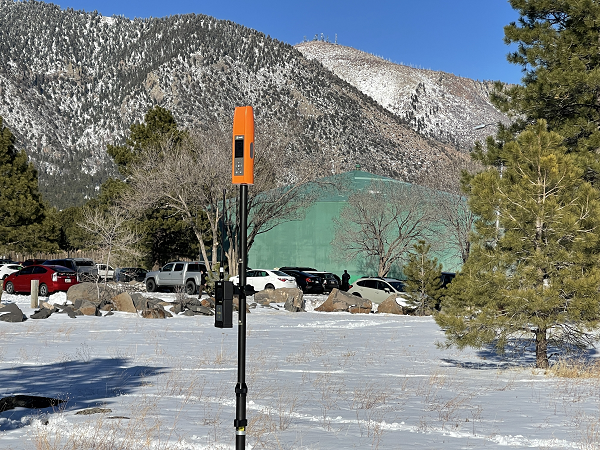
    Bad Elf has introduced a base/rover feature built upon its Bad Elf Flex GNSS receiver. The new base/rover feature brings affordable centimeter-level accuracy to surveyors and geospatial professionals working anywhere in the world.

    The solution consists of two Flex GNSS receivers and two UHF radios, allowing customers to perform high-accuracy field data collection in areas where traditional real-time kinematic (RTK) corrections or cellular coverage is not available. Existing Flex customers can upgrade by adding Flex radio kits.

    Bad Elf designed the base/rover feature with emphasis on accuracy, affordability and versatility. The Bad Elf Flex enables reliable data collection either as a standalone receiver or paired with apps on iOS or Android phones and tablets. A checklist-based workflow ensures consistent results and eliminates many common issues associated with setup and deployment of a base/rover solution.
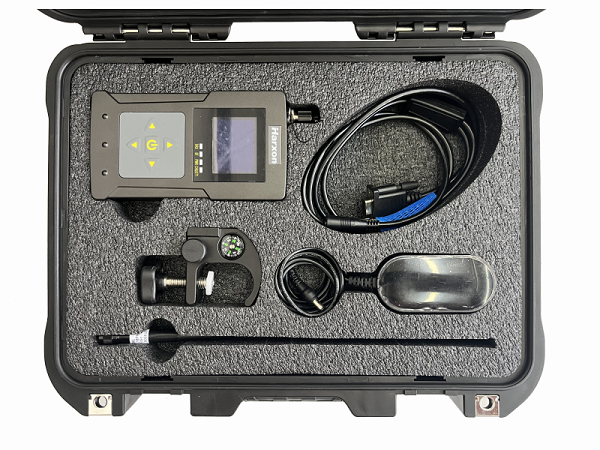
    Photo: Bad Elf
    Photo: Bad Elf

    “The Bad Elf app walks the user through these steps and more, and it doesn’t let the project proceed until each checklist is complete,” said Larry Fox, vice president of Marketing and Business Development at Bad Elf. “The automated checklists simplify every process, so that geospatial professionals and surveyors of every experience level get reliable results.”

    The base feature requires only one Flex Extreme and a radio kit. Customers may choose to use either Standard or Extreme Flex with a radio kit for rovers. Using Flex Standard and one daily token provides access to the rover feature.

    Bad Elf’s flexible hardware-as-a-service model provides a mechanism for customers to further reduce the capital cost of a complete base/rover system. In addition, customers can deploy multiple rovers in either configuration for larger projects.

    “For about one-third of the purchase price of competing products available today, our base/rover feature makes survey-grade one-centimeter accuracy a reality worldwide,” said Fox. “And our pay-as-you-go Flex Token model dramatically reduces operating expenses by allowing users to activate — and pay for — just the service levels needed on a given day.”

    Complete base/rover kits are available immediately, along with à la carte options for existing Flex customers. The Flex base/rover solution is compliant with FCC operating standards in the United States. Bad Elf provides customers with complete instructions for acquiring a radio operator license and call-sign designation.
  • Septentrio unveils AsteRx-m3, its next generation of high-precision GNSS receivers

    Septentrio unveils AsteRx-m3, its next generation of high-precision GNSS receivers

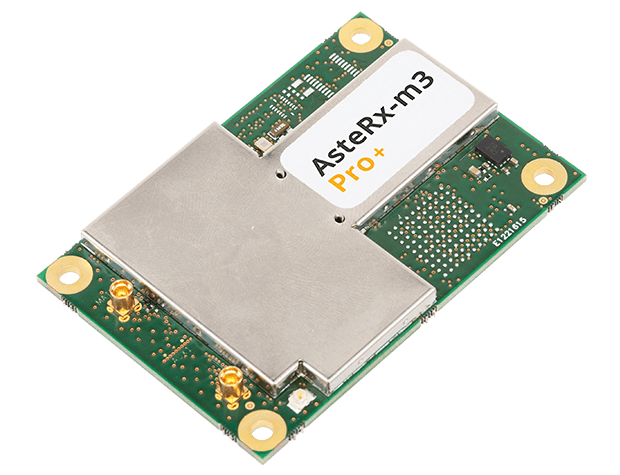
    The new AsteRx-m3 family features state-of-the-art GPS/GNSS OEM boards optimized for power consumption and ease of integration.

    Photo: Septentrio
    Photo: Septentrio

    Septentrio has expanded its GPS/GNSS OEM portfolio with the AsteRx-m3 product family. AsteRx-m3 receivers target various use cases and offer flexibility and affordability with no compromises of performance.

    The AsteRx-m3 family features very low power consumption, allowing longer operation times. Its easy-to-integrate design enables short set-up times and faster time-to-market.

    “With the AsteRx-m3 product family, Septentrio redefines state-of-the-art GNSS positioning performance,” said Danilo Sabbatini, product manager at Septentrio. “It was a challenge to design a product that delivers multi-frequency and multi-constellation positioning, combined with Septentrio’s renowned GNSS+ technology while optimizing power. The AsteRx-m3 product not only excels in this but does so at a reduced cost.”

    All AsteRx-m3 products represent the next generation of technology in the GNSS OEM market, delivering centimeter-level accuracy, availability and reliability in a credit-card sized board, Septentrio said.

    The new product family includes three types of GNSS OEM boards.

    • The AsteRx-m3 Pro rover receiver tracks signals from all available GNSS constellations on three frequencies. Simple and powerful, it operates both in single- and dual-antenna modes.
    • The AsteRx-m3 ProBase is designed to operate as a reference station for RTK and PPP-RTK networks. It can be used as a base station or for network densification.
    • The AsteRx-m3 Pro+, a full-feature OEM receiver board flexible enough to fit into any application and to be used either as a rover or a base station in a single- or dual-antenna mode.

    By offering its next-generation GNSS technology in a diversity of products Septentrio aims to improve customer experience while optimizing prices.

  • Harxon releases rover radio for RTK surveying and GNSS positioning

    Harxon releases rover radio for RTK surveying and GNSS positioning

    Harxon has introduced an advanced, high-speed, Bluetooth-enabled wireless rover radio.

    The HX-DU1603D, designed for GNSS/RTK surveying and precise positioning, will be showcased this September at the Intergeo trade show in Berlin, Germany.

    The HX-DU1603D is a lightweight, ruggedized UHF receiver designed for data communications between 410 MHz and 470 MHz in either 12.5 KHz or 25 KHz channels, which can be widely used in GNSS/RTK surveying and GNSS precise positioning fields.

    It is equipped with a Bluetooth transceiver for wireless communications with external devices. It features a 6800 mAh rechargeable internal battery and configurable transmit power between 0.5W and 2W. Its IP67 waterproof capability allows long operating hours outdoors, the company said.

    The HX-DU1603D rover radio is easy to operate and use. It is equipped with a 1.9-inch display screen that supports frequency, protocols, power display, serial port baud rate and air baud rate. By deploying these technologies, users can instantly communicate with GNSS precise positioning receivers with the same protocols throughout the world.

    The rover radio HX-DU1603D has joint Harxon product lines, including 25W base radio HX-DU8602T with simplex and 35W base radio HX-DU8608D with duplex.

  • Harxon releases rover radio for GNSS/RTK and precise positioning

    Harxon releases rover radio for GNSS/RTK and precise positioning

    Harxon has introduced an advanced, high-speed, Bluetooth-enabled wireless data link designed for GNSS/RTK (real-time kinematic) surveying and precise positioning.

    Photo: HarxonThe HX-DU1603D is a lightweight, ruggedized UHF receiver designed for digital radio communications between 410 and 470 MHz in either 12.5 or 25 kHz channels, which can be widely used in GNSS/RTK surveying and GNSS precise positioning systems.

    ThevHX-DU1603D is equipped with a Bluetooth transceiver for cable-free communications with external devices. It features an internal, rechargeable battery for ease of use and portability that allows long operational hours.

    The HX-DU1603D rover radio easy to operate and use. It is equipped with a display screen, and its buttons can be used to configuration all parameters, such as frequency, protocols, power display, serial port baud rate and air baud rate. By deploying the technology, users can instantly communicate with GNSS precise positioning receivers that share the same protocols throughout the world.

    The rover radio HX-DU1603D joins the line of Harxon products that include 25W base radio HX-DU8602T with simplex and 35W base radio HX-DU8608D with Duplex.