Tag: Royal Institute of Navigation

  • Registration for INC2018 open until Nov. 15

    Registration for INC2018 open until Nov. 15

    Registration for the International Navigation Conference 2018 (INC2018), taking place Nov. 12-15 at the Mercure Bristol Grand Hotel in Bristol, England, will be open until Nov. 15.

    The conference, sponsored by the Royal Institute of Navigation (RIN), is a premier forum for the presentation of research and advances in navigation. The theme of INC2018 is Navigation Challenges and Societal Benefits.”

    According to RIN, INC2018 will offer a unique format of multiple keynotes throughout the three days. The sessions and themes will address key navigation topics, including cognition in navigation; human factors in navigation systems; connected autonomous vehicles; innovations in accuracy and indoor navigation, innovations in resilient positioning, navigation and timing; mapping, imaging and augmented reality; and progress in quantum.

    This year’s INC will also feature a one-day symposium covering topics related to cognitive navigation. According to RIN, cognitive navigation is distinguished from other kinds of navigation methods/technology by the dependence on some type of representation of the to-be-navigated space. The goal of the symposium is to bring academics and industry experts together to facilitate the development of our understanding of and design for cognitive navigators, so that buildings and technology can work in a seamless way with human psychology.


    Photo: stocker1970/Shutterstock.com

  • INC 2018 to focus on navigation challenges, societal benefits

    INC 2018 to focus on navigation challenges, societal benefits

    The 2018 International Navigation Conference (INC), which will take place Nov. 12-15 at the Mercure Bristol Grand Hotel in Bristol, United Kingdom, will focus on navigation challenges and societal benefits.

    According to event organizers, the keynote speakers at the event will focus on developments in resilient positioning, navigation and timing (PNT) innovations; PNT for connected autonomy; human factors and cognition in navigation; mapping and imaging; and progress in quantum technology.

    In addition, sessions and themes at INC 2018 will address key navigation topics topics from technical, regulatory, ethical, cognitive and human perspectives.

    The conference is organized by the Royal Institute of Navigation. Get more information about the conference here.

  • Chronos Technology receives RIN Duke of Edinburgh’s Navigation Award

    Chronos Technology receives RIN Duke of Edinburgh’s Navigation Award

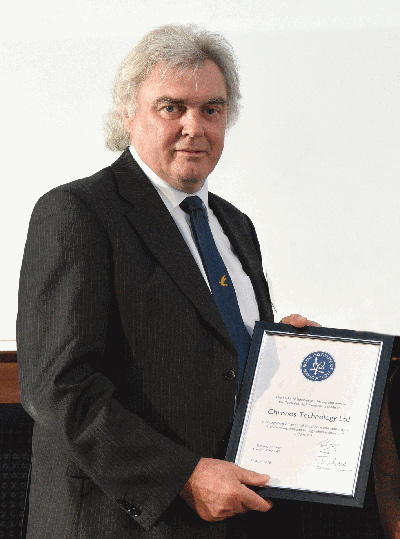
    Charles Curry, founder of Chronos Technology, with the RIN award. (Photo: Chronos)
    Charles Curry, founder of Chronos Technology, with the RIN award. (Photo: Chronos)

    Chronos Technology has been recognized by the Royal Institute of Navigation (RIN) with its 2018 Duke of Edinburgh’s Navigation Award for Outstanding Technical Achievement in “recognition of technical excellence and authority in satellite navigation and timing vulnerabilities and mitigations.”

    Charles Curry, founder and managing director of Chronos Technology, accepted the award at the RIN Annual General Meeting held June 10 in London.

    Chronos has worked with the RIN and others since 2008 to raise awareness of GNSS vulnerabilities, and in collaboration with the University of Bath has developed a family of GNSS interference detection products.

    Chronos first started researching this phenomenon with the University of Bath in the Innovate U.K. project GAARDIAN in 2008, closely followed by the SENTINEL and AJR projects. The projects have focused on detecting and locating commercial off-the-shelf jammers mostly sourced from Chinese websites.

    The first success was seizing the so called “Girvan Jammer” in 2011, when a jammer was recovered from a commercial van driver through collaboration with the serious and organized crime group of the local police.

    This exercise took about two weeks from initial detection to recovery of the jammer and should be compared to the six months it took U.S. enforcement agencies to identify the so called “Newark Jammer.”

    SENTINEL sensors were originally rolled out in 2010 continue to provide real evidence of jamming at various locations around the U.K. The project assists police work by collating jamming events by day and time of day using a cloud-based portal.

    The GPS interference detection portfolio includes low-cost, handheld GNSS interference detectors with features such as data logging and direction finding capabilities to precisely pinpoint a jammer.

    The latest product to emerge is known as “JammerCam,” and is the first GPS jamming detector in the world to be able to take photographs of a moving vehicle, which is carrying a GPS jammer. This is now in trials with various local police forces and is photographing vehicles with jammers on a daily basis, providing real-time actionable intelligence to the law enforcement officers’ smartphones identifying vehicle type, color and number plate.

    Early trials with this research are leading to the seizing of at least one jammer per week by U.K. law enforcement agencies.

    Chronos has demonstrated the ability to work with universities and potential users to develop new, affordable products to meet a genuine need. Customers include U.K. and international law enforcement agencies and military users.

    “This is a very prestigious award, as a look at the previous winners will attest,” said John Pottle, director of the Royal Institute of Navigation. “Chronos is very well respected and has continued to innovate, achieving global influence from their U.K. base. Many congratulations to all at Chronos for this well-deserved recognition.”

    Curry was awarded Fellowship of the Royal Institute of Navigation in 2016 in recognition of his significant and continuing contribution to the practical aspects of time measurement and dissemination, including research into GNSS vulnerabilities and the use of eLoran for precise time.

    “Chronos is honored to be the recipient of the RIN’s 2018 Duke of Edinburgh’s Navigation Award for Outstanding Technical Achievement,” Curry said. “We could not have done this without our close association with the University of Bath, in particular Dr. Robert Watson and Professor Cathryn Mitchell and their colleagues in the Electrical & Electronic Faculty.

    Over the years, this association has enabled Chronos to undertake research and bring to the market GPS jamming detection products which have been thoroughly field tested at locations such as Sennybridge in the Brecon Beacons, and other international jamming trials in Norway and the U.S.

    “In particular, Chronos was the only British company to be invited to JamX17 in Idaho Falls, U.S., by the U.S. Department of Homeland Security to showcase the detectors’ technology,” Curry said.

  • RIN’s 2018 International Navigation Conference set for November

    The International Navigation Conference, sponsored by the Royal Institute of Navigation (RIN), is a premier forum for the presentation of research and advances in navigation.

    The 2018 conference — the RIN’s fourth — will take place Nov. 12-15 in Bristol, England, United Kingdom.

    INC2018 brings together industry, academia and governments from around the world. The theme for INC2018 is “Navigation Challenges and Societal Benefits.”

    Conference topics include

    • Developments in resilient PNT
    • Innovations
    • PNT for connected autonomy
    • Human factors and cognition in navigation
    • Mapping and imaging
    • Progress in quantum technology

    Download the call for papers here. Abstracts can be submitted using the form at the bottom of this page.

  • Double trouble: GNSS over-reliance and its costs

    Double trouble: GNSS over-reliance and its costs

    This month’s column deals with two troublesome topics: the U.S. government’s over-reliance on GPS, and the potential costs of GPS disruption toward which such a policy may be leading us.

    First things first.

    When someone utters the words “I’m nearly perfect,” get on your toes. Such self-appraisal usually masks something. It could be insecurity, denial, ignorance or simply fear. At the very least, some level of illusion, if not delusion, is involved.

    With that precept in mind, let’s examine a June 16 press release from the U.S. Air Force, under the headline “New reports confirm near-perfect performance record for civil GPS service.”

    The press release actually says, “The U.S. Air Force released two technical reports demonstrating that the Global Positioning System (GPS) continues to deliver exceptional performance to civilian users around the world….The 2014 and 2015 performance reports confirm that the GPS Standard Positioning Service (SPS) satisfied nearly all measurable performance commitments documented in the GPS SPS Performance Standard.”

    Fair enough. Those are demonstrable facts. Nowhere does the release — other than in its headline — employ the words “perfect” or “near-perfect.”

    The problem is, as current events repeatedly show, people remember only the headline. That may be all that they read or register in the first place.

    Affixing the label “near-perfect” to GPS is “potentially dangerous,” points out Dana Goward of the Resilient PNT Foundation, “because it could exacerbate the public’s growing over-reliance on, and often blind faith in, GPS.  Even if GPS did always perform perfectly, all kinds of things can happen to signals after they leave the satellites and before they get to receivers. Personal privacy devices, other jammers, spoofers, solar activity, other electromagnetic interference, even the local geography can significantly degrade or disable a receiver’s performance. That’s why in the GPS System Performance Standard the Air Force specifically says its responsibility ends once signals are in space.”

    Perfection might exist in space, but it doesn’t down here.

    Even in space, accidents sure will happen. The Air Force release documents GPS performance for 2014 and 2015. This conveniently draws up short of January 2016, when several GPS satellites broadcast a timing error that triggered equipment faults and failures globally for nearly 12 hours. Thus demonstrating something far from perfection.

    Issuing a statement in the manner done on June 16 perpetuates a dangerous myth, keeps users in the dark about the actual state of affairs, cultivates a What-Me-Worry? approach to positioning, navigation and timing, and abets the lack of political will and understanding of GNSS vulnerabilities.

    We have expanded the focus of this magazine to cover other technologies relevant and applicable to the field precisely because GPS, and by extension GNSS, great though they may be, are not perfect. Not even nearly.

    At What Cost Ignorance?

    A report recently compiled and released in the UK attempts to quantify the cost of a GNSS disruption, should one occur.  The figure the authors came up with? 1 billion pounds sterling per day.  That’s approximately $1,273,710,000.

    Per day.

    The report, available in either 11-page or 133-page versions, and titled The economic impact to the UK of a disruption to GNSS, looks at what would happen to the UK economy if GNSS were unavailable for five days. Five days is, indeed, a long time. One hopes that a fix could be obtained in less than that amount of time. But one never knows, does one?

    “The economic impact to the UK of a five-day disruption to GNSS has been estimated at £5.2bn.” Thus the per diem figure above.

    The report was commissioned by Innovate UK, the UK Space Agency and the Royal Institute of Navigation. It followed from the January 2016 accident referenced earlier, in which an error in the GPS signal from certain satellites, triggered by the decommissioning of one of those satellites, brought a number of key industrial servers to their knees. The episode lasted 12 hours.

    This report hypothesizes a more fleshed-out disaster and estimates the likely impact of a disruption to GNSS availability for up to five days across ten application domains in the UK: Road, Rail, Aviation, Maritime, Food, Emergency and Justice Services, Surveying, Location-Based Services (LBS), Other Infrastructure, and Other Applications.

    The report is worth reading, not only for its figures, methodology, and discussion of mitigation, but also for two salient pages: “A day in the UK with GNSS” and “A day in the UK without GNSS.” At home, on the move, with others, at work, at the shops, when things go wrong, back at home. A post-modern (or post-Beatles) “Day in the Life.”

    Even if the hypothetical disruption were not to last 5 days, but a much shorter period, perusing the two chronologies of with and without can serve to remind us how many of our daily activities are keyed to and thus dependent on GPS/GNSS.

    Having no viable, working back-up — not even on the visible horizon — to such an essential system makes sense how?


  • SatNav expert Terry Moore decorated by RIN

    SatNav expert Terry Moore decorated by RIN

    Terry Moore
    Terry Moore

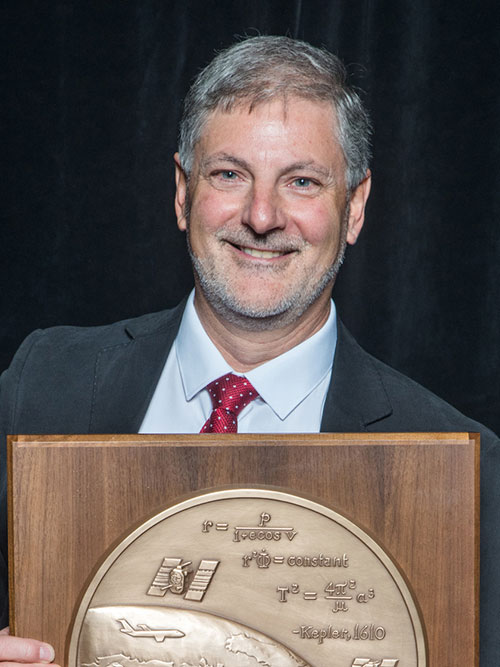
    Terry Moore, satellite navigation professor at The University of Nottingham, has been honored with the J E D Williams Medal for his contributions to the Royal Institute of Navigation (RIN), in particular his leading role in staging its major conferences.

    Moore is a longtime member of GPS World’s Editorial Advisory Board.  

    His Royal Highness, The Prince Philip, Duke of Edinburgh, who is patron of the Royal Institute of Navigation, will present the award to Professor Moore at the RIN Annual General Meeting on July 19 at the Royal Geographical Society in London.

    “I am really surprised and delighted,” said Moore, director of the University’s Nottingham Geospatial Institute, on the news of his award. “I have been proud to serve the RIN for many years, and it is a great honor for my small contributions to be recognized in this way.”

    According to the university, Moore has now received more honors from RIN in its near 70-year history than anyone else.

    In 2013, Moore earned the Harold Spencer-Jones Gold Medal — the highest honor the RIN bestows — for outstanding contributions to navigation. He was also one of the youngest recipients of the esteemed award.

    Moore has also won the Richey Medal for best paper to be published each year in the Journal of Navigation in 1999 and again in 2008.

    RINlogoIn 2013, Moore was awarded Fellowship of the U.S. Institute of Navigation (ION) for his outstanding leadership of the navigation community, the establishment of GRACE (GNSS Research and Applications Centre of Excellence), the establishment of the Nottingham Geospatial Institute (NGI) and sustained contributions to the advancement of navigation and GNSS. He was the third Briton to receive ION Fellowship.

    With a long and distinguished career devoted to teaching and research, Moore started at The University of Nottingham with a B.Sc. in civil engineering followed by a Ph.D. in space geodesy. He is now a leading researcher on positioning and navigation technologies and their numerous and varied applications.

    He was promoted to the UK’s first chair of Satellite Navigation in 2001; he has completed numerous research projects funded by industry, research councils, the European Space Agency and the European Commission, and has supervised more than 25 Ph.D. students.

    He has authored, or been a leading contributor to, more than 200 technical research papers published in top journals. This is in addition to being a major supporter of national and international GNSS conferences and both national and international professional and scientific bodies.

    Moore is a Fellow of the Chartered Institution of Civil Engineering Surveyors, the Royal Astronomical Society and an Associate Fellow of the Remote Sensing and Photogrammetry Society.

    Moore is a longstanding Fellow of the RIN, and currently its vice president.

    The RIN is a learned society with charitable status formed in 1947. Its aims are to unite all those with an interest in any aspect of navigation in one unique body, to further the development of navigation in every sphere, and to increase public awareness of the art and science of navigation.

  • Is reliance on GPS making us lose our mapping minds?

    cozzens_tracy_4_130By Tracy Cozzens
    Managing Editor

    I love maps. As a child, I was my family’s designated navigator on car trips (or my parents indulged me!).

    I studied our roadmaps, searching out each legend icon on the map and finding icons to look up on the legend. I would use the map’s indicators to determine the distance between points and interesting landmarks. I was such a map fanatic, that I spent time one summer recreating in a large size a map of the Ancient Roman Empire. My father asked why. I had no real answer, except that I love history and maps.

    Today, some experts are warning that our ability to read and interpret maps might be in jeopardy because of our reliance on GPS devices. Some GPS-reliant drivers make massive blunders, such as a Syrian truck driver who ended up in Gibraltar Point, England, rather than Gibraltar on the south coast of Spain.

    Former president of the Royal Institute of Navigation Roger McKinlay told Vox reporter Brad Plumer that our reliance on GPS might be causing our innate navigational capabilities to atrophy over time, which is a problem when our smartphones will only ever be as “smart” as the humans using them.

    “Neuroscientists have discovered that our brains have two different specialized systems for navigation,” Plumer writes. “In one system, located in our hippocampus, we create spatial maps of the world around us, understanding how different streets and routes fit together. In the second, located in the caudate nucleus, we make a mental list of the different landmarks we encounter every day.”

    By not figuring out routes using maps, and relying solely on turn-by-turn directions, our ability to work out spatial maps and determine our place in the natural world seems to worsen.

    “McKinlay argues that schools should teach students map-reading and navigation as a critical life skill,” writes Plumer. “He also suggests that researchers start looking at whether there are ways to design GPS systems so that they help us learn about our environment rather than making us unaware of the world around us. (It’s unclear what exactly this would look like, but what if, as a default, these systems always walked us through the spatial map of where we were going?)”

    This map lover is all for it.

  • International Navigation Conference seeks papers for 2 tracks

    The Royal Institute of Navigation is seeking papers for International Navigation Conference 2016 (INC 16), which will be held Nov. 8-10 in Glasgow, Scotland.

    INC 16 will address cutting-edge issues in positioning, navigation and timing. Of global importance, INC 16 will feature the latest developments in topics such as GNSS, indoor positioning, autonomous transport, security against cyber attack, resilience and quantum technology. Booking for the conference is now open.

    The conference will include both peer-reviewed and non peer-reviewed tracks, and will cater to academic, industrial and end-user interests. The conference proceedings will be made available online in a digital repository in the weeks following the conference.

    The abstract submission process varies depending on whether the paper is for the peer-reviewed or non peer-reviewed track:

    • Those wishing to submit a non-peer-reviewed paper for the conference should submit an abstract through the “Submit abstract” option on the conference home page, and can submit a paper for publication in the proceedings of any length. Non peer-reviewed submissions are due March 14.
    • Those wishing to submit a peer-reviewed paper should submit by March 14 a four-page short paper first, using the “submit short paper option” on the website’s home page. Following a selection process by the conference committee, successful authors will be invited to submit a longer paper (up to 10 pages) by June 15 for further peer review.

    Themes at the conference are:

    • Emerging Science
    • Modern Markets
    • Modern Threats
    • Multisensor PNT
    • Navigation Now
  • Royal Institute of Navigation Elects New Council

    Royal Institute of Navigation Elects New Council

    HRH The Duke of Edinburgh.
    HRH The Duke of Edinburgh.

    A new president and council were elected at the annual meeting of the Royal Institute of Navigation (RIN), held at the Royal Geographical Society in London on July 15.

    The meeting, which included presentations on the Mary Rose Trust and quantum technology, concluded with the declaration of ballot results for the new president, officers and council members.

    The RIN’s Patron, HRH The Duke of Edinburgh Prince Philip, divested outgoing President R. A. McKinlay and placed the Presidential Medal on the new incumbent, Captain James B. Taylor. James Taylor paid tribute to McKinlay and his outgoing officers and council members for their impressive leadership while in office.

    GPS World magazine founding editor Glen Gibbons received the Harold Spencer Jones Gold Medal from the duke in recognition of his “outstanding contribution to navigation as the founder and editor of various world-leading GNSS publications for more than 25 years, thus fulfilling a vital role in raising awareness and understanding of Global Navigation Satellite Systems.”

    Two President’s Invitation Addresses were given. Rear Admiral John Lippiett, chief executive of the Mary Rose Trust, gave a talk entitled “Insights into Tudor navigation from the Mary Rose,” and Prof. David Delpy, chair of the Strategic Advisory Board of the Engineering and Physical Sciences Research Council Quantum Technologies Programme, and chair of the MOD’s Scientific Advisory Council, gave a talk entitled “The UK National Quantum Technologies Programme and its relevance to Navigation.”

    Council members for 2015-16 are:

    President: Capt. J. B. Taylor, Order of the British Empire (OBE, Officer), Royal Navy (RN)

    Vice Presidents: Prof. T. Moore and Wg. Cdr. J. W. Lindsay, Royal Air Force (RAF)

    Treasurer: D. Cockburn

    Chairman of the Technical Committee: Dr. Sally Basker

    Chairman of the Membership & Fellowship Committee: D. Rydlard

    Chairman of the Audit & Risk Committee: D. Goddard, Order of the British Empire, Member (MBE)

    Other members of the Council:
    R. Angel
    D. Barrie (Order of the British Empire, Commander)
    Sqn. Ldr. J. Cairns, RAF (Retired)
    Lt. Cdr .F. A. Egeland-Jensen, RN
    Lt. Cdr. S. E. Gaskin, RN
    Dr. M. A. Hadley
    P. K. Hope-Lang
    Prof. S. Kos
    Ms. M. M. G. M. von Wendland

    Ex Officio Members:
    P. J. Brook, OBE, CAA
    Wg. Cdr. S. Gilbert, RAF
    John Pottle (Corporate), Spirent
    To be named, RN

    Director: Capt. P. Chapman-Andrews, LVO, MBE, RN

  • Navigation Scientist Reddy Named to Top Position in India

    Navigation Scientist Reddy Named to Top Position in India

    G. Satheesh Reddy
    G. Satheesh Reddy

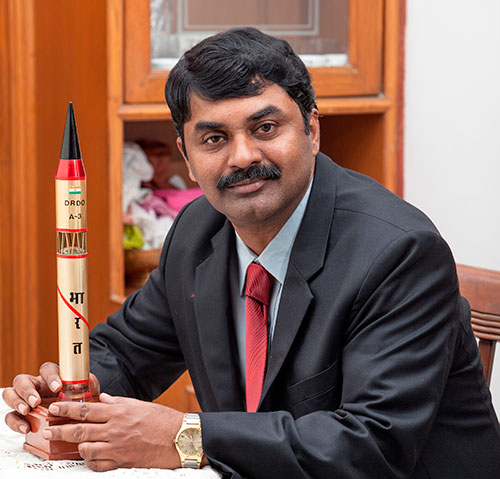
    G. Satheesh Reddy, a scientist with the Defence Research and Development Organisation (DRDO) of India, has been appointed as the scientific advisor to the defense minister of India, a secretary-level appointment with the government of India. The DRDO is an agency of the Republic of India responsible for the development of technology for use by the military, headquartered in New Delhi.

    Reddy is an expert in navigation technologies. He joined DRDO in 1986 and led the conceptualization, design, development and production of inertial sensors, navigation schemes, algorithms and systems, calibration methodologies, sensor models and simulation, along with development of satellite navigation receivers and hybrid navigation systems. Under his leadership, advanced products and varieties of avionics systems have been produced and successfully flight tested in strategic programs of India.

    As project director, Reddy led the design and development of ring laser gyro-based INS System, MEMS-based INS systems, the sea-guard reference system and the ship navigation system, strengthening the country’s self reliance in high-accuracy and long-range navigation. He also helped develop a 1000-kg class guided bomb.

    Reddy graduated in electronics and communication engineering from JNTU, Anantapur, and received his master of science and doctorate from Jawaharlal Nehru Technological University, Hyderabad. He is a Fellow of Indian National Academy of Engineering (FNAE), the Royal Institute of Navigation London (FRIN), and the Royal Aeronautical Society London (FRAeS). He has been awarded Full Member Diploma and inducted as a Foreign Member of the Academy of Navigation & Motion Control, Russia, and is an Associate Fellow of the American Institute of Aeronautics & Astronautics (AFAIAA) of the United States.

  • Expert Advice: Taking Up Positions — Galileo and E112

    Expert Advice: Taking Up Positions — Galileo and E112

    By Andy Proctor

    Sessions on indoor navigation and a keynote from Google at February’s International Navigation Conference (INC15), organised by the Royal Institute of Navigation, addressed the revised E911 positioning requirements in the United States, and flowed over into speculation about E112 emergency calling parameters in Europe’s near future.

    According to the 2014 U.S. Federal Communications Commission report, 75 percent of 911 calls now come from mobile phones, more than half of those originate indoors, and around 1 percent of emergency calls contain no location information from the caller (due to distress, confusion, language issues, illness, and so on). The report estimates 10,000 deaths per year in the United States might have been avoided if a landline had been used instead, since location information for landlines can be provided confidently.

    Discussion in the breaks of INC highlighted a misunderstanding amongst some parties that E911 mandates the use of GPS for position location determination. In fact,  E911 does not mandate any specific technology; it specifies performance criteria in terms of accuracy that must be met. The recently revised performance criteria include indoor performance, and some of the technology discussed at the INC is able to meet these requirements without using GNSS at all.

    This could be troublesome for Europe, which is looking at the imposition of Galileo as part of an A-GNSS technology push for the E112 application. The real problems, discussed during INC and in European consultation processes with safety of life services such as E112, are:

    • the accuracy of the position derived by the device and/or network, and
    • the timeliness of the delivery of that position to the Public Service Answering Point (PSAP).

    The E911 directives address these points directly, and the infrastructure in the cellular networks is in place. Does simply implementing a Galileo capability into a European mobile device solve these problems?

    In many outdoor cases, implementing Galileo can bring benefits, including signal diversity. And of course the E112 proposal is greater than just “adding Galileo.” It does address the second problem of timeliness of delivery and data transfer, but there are significant infrastructure upgrades required across Europe for the provision of this location data to the PSAPs.

    What the E112 processes do not currently do is specify performance criteria for the position location accuracy. This means that the position estimate provided under E112 is likely to be a cell-ID fix, with an accuracy ranging from hundreds of meters to dozens of kilometers.

    Galileo on Mobiles. Further discussion during the conference delved into the realms of the specifics of implementing A-GNSS, including Galileo, onto a mobile device. Conversations centered around if any future E911 or E112 positioning capability would be aligned around a single-chip solution as generally currently deployed on a device, or if some of the functions will be moved up the stack into the operating system (OS) of the device, into software.

    Most opinions were against this latter concept, and a panel at the ION GNSS+ last year in Florida concluded the same thing. However, questions were asked about some ideas relating to identifying the emergency number at the time of dialing and then starting the position location determination functions in readiness for the need to provide the device location. This addresses the first bullet point earlier, the accuracy of the position derived by the device and/or network. If this is carried out in the OS or software layers, vulnerability of the system will be increased overall as the OS of a mobile device is a target for the cyber criminal community.

    A robust software-based solution is, however, being rolled out in the United Kingdom in the form of eSMS, bringing mobile operators, government and handset vendors together to provide location data via SMS to the PSAP. The advantage of this approach is that no new standards or major infrastructure changes are required, and the time to implement is small.

    Further discussions established that future chipsets are likely to use whatever GNSS signals are available, regardless of whether they are GPS, Galileo, GLONASS, Beidou and so on. This, coupled with new signal processing techniques (single-frequency observable for example), increasing sensor clustering on devices, and user demand for services, may make the use of a specific GNSS system above others somewhat redundant. Certainly picking up on a point made by Chandu Thota from Google, GNSS is “not relevant” for their indoor positioning solutions, and technologies they are working on, in both hardware and mapping improvements, are looking at meeting indoor accuracy requirements down to a target requirement of 1 meter, without GNSS.

    Taking these points into account, questions were asked from the floor of the conference about the legal position of the EC mandating Galileo as a positioning method as well as the willingness of the global mobile chipset and device industry to be told what to do. Perhaps specifying strong performance criteria, as in the United States, is the way forward to “reboot” the European E112 system. No one disputes that a properly functioning E112 is a life saver and a good thing to do; however, the points discussed here detail some of the concerns expressed during and after hours at INC15.


    In February 2015, the Royal Institute of Navigation hosted the International Navigation Conference in Manchester, UK. Keynotes at this well-attended conference included Harold Martin, director of the GPS Coordination Office; Gian Gherardo Calini, the head of market development at the European GNSS Agency; Todd Humphreys from the University of Texas; Chandu Thota from Google; and others. The conference covered multiple technology tracks including indoor navigation, autonomy, quantum technology and the resilience of GNSS systems.


    Andy Proctor is lead technologist for satellite navigation at InnovateUK, the UK’s innovation agency. He acknowledges Ramsey Faragher, Cambridge University, for help in the preparation of this article.

  • Royal Institute Hosts New Navigation Conference

    Royal Institute Hosts New Navigation Conference

    INC_2015_logoThe Royal Institute of Navigation is launching a new international conference series, tackling some of the biggest issues across the domains of modern navigation: land, sea, air and space.

    The RIN is now accepting abstracts for the conference.

    The International Navigation Conference 2015, set for February 24-26, 2-15, is planned as a first event in a new series of world-class conferences. The first conference will highlight the state of the art in fields such as GNSS and Galileo, indoor positioning, autonomous transport, security and resilience of navigation in the world of cyber attacks, and new quantum technologies. The event will be of special interest to the maritime, aviation, PNT, transport, research and development and security communities.

    Speakers, and the topics they will discuss, include:

    • Privacy In Tracking (smartphones and indoor navigation) – Google
    • Security and resilience — Dana Goward, president and executive director, U.S .Resilient Navigation and Timing Foundation
    • Multi-Constellation GNSS — Gian Gherado Calini, GSA
    • Multi-Sensor Integration — Professor Dorota Grejner-Brzezinska, The Ohio State University
    • Quantum Technologies — Sir Peter Knight, professor of Quantum Optics and Senior Research Investigator, Imperial College London
    • Emerging Trends and Current Challenges — Colin Beatty FRIN, CBiL
    • Autonomy in transport — BAE, ASTREA
    • Legal Aspects of Navigation — Professor Frans von der Dunk, Institute of Space Law, Leiden University

    To learn more, visit the conference website.