Tag: technology

  • Fugro bathymetric maps support global initiative Seabed 2030

    Fugro is supporting NF-GEBCO Seabed 2030, a global initiative to produce a definitive, high-resolution bathymetric map of the entire world’s ocean floor by the year 2030.

    The initiative is being facilitated by the General Bathymetric Chart of the Oceans (GEBCO) project in partnership with The Nippon Foundation as a means to inform global policy, improve sustainable use and advance scientific research.

    Less than 20 percent of the world’s oceans are mapped using modern survey techniques. Accurate seabed measurements (bathymetry) are important for numerous government, scientific and industry applications, according to Fugro.

    “As the world’s largest offshore survey company, Fugro is in a position to help close this data gap, and we are committed to doing our part through the Seabed 2030 project,” said David Millar, Fugro’s government accounts director in the Americas.

    One of the primary ways Fugro is supporting Seabed 2030 is through crowdsourced bathymetry data contributions.

    In 2017 the company devised a methodology for collecting valuable high-resolution bathymetry datasets while its vessels are transiting between survey projects. The approach is made possible through Fugro’s Office Assisted Remote Services (OARS), its proprietary technology that enables safe and efficient data acquisition without the need for dedicated survey staff on board.

    In this way, valuable data can be collected from transiting vessels with minimal effect on Fugro’s standard operating procedures.

    In 2017, Fugro deployed its in-transit data collection methodology on two survey vessels, delivering approximately 65,000 square kilometers of crowdsourced bathymetry data to GEBCO.

    The company has recently expanded that collection capacity to include four survey vessels and intends eventually to incorporate the approach across its entire global survey fleet to make an increasingly significant impact on the Seabed 2030 program.

    “Fugro has displayed exemplary corporate leadership by sharing transit data from two of its survey vessels,” acknowledged Seabed 2030 Project Director Satinder Bindra. “In the coming months we look forward to receiving more transit data from all its survey vessels, which we believe will serve as a shining example to others in the industry and play an important role in helping us map the entire ocean floor for the benefit of humanity by 2030.”

    Along with its own data contributions, Fugro is working with its clients to investigate how their datasets (existing and planned) may be incorporated into the Seabed 2030 program. In some instances, data sharing is straightforward, but in many others, datasets contain sensitive information.

    Reducing the data resolution to a suitable degree and delaying the release of datasets until an acceptable amount of time has passed can mitigate these sensitivities and ensure the integrity of client-owned data.

    The company is also helping to establish a workflow for integrating third-party datasets into the overall Seabed 2030 project database. The workflow will address such things as data formats and metadata standards, with the goal of simplifying and accelerating the rate of crowdsourced contributions and data sharing arrangements.

    “We are proud to continue our support of the Seabed 2030 programme and to lead industry participation in this way,” Millar said. “As an appreciable portion of our work is ocean related, Seabed 2030 provides a perfect opportunity for us to contribute to global society and practice good ocean stewardship.”
  • Lidar and UAV reveal Mayan "megalopolis" below Guatemalan jungle

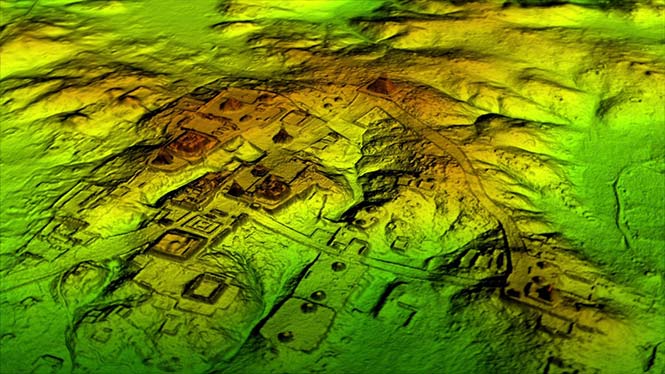
    Lidar and UAV technology has revealed hundreds of previously unknown Mayan ruins in the Guatemalan rainforest.

    The Optech Titan stripped away overlying vegetation to reveal extensive Mayan ruins in Guatemala’s rainforest. (Image:
    Teledyne Optech)

    In what is considered biggest aerial lidar survey in the history of archaeology, a vast and complex civilization has been discovered.

    The University of Houston’s National Center for Airborne Laser Mapping (NCALM) used Teledyne Optech’s Titan sensor to identify raised highways, and complex irrigation and terracing systems.

    The jungle of Central America is one of the last great frontiers of archaeology, according to National Geographic, which covered the new finds in a recent documentary, Lost Treasures of The Maya Snake Kings.

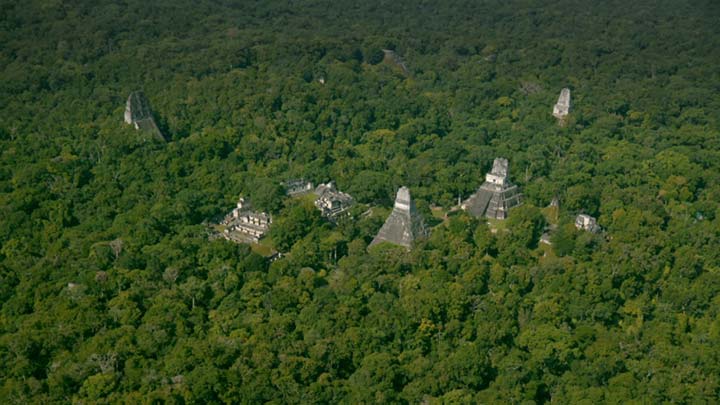
    After the collapse of the Mayan civilization, its cities and monuments were quickly covered by thick rainforest, hiding it from airborne observation and making it very difficult to survey on foot. Over decades of work, the ancient civilization has gradually been revealed. But now technology is set to change everything.

    Lidar digitally removes the forest canopy to reveal ancient ruins below, showing that Maya cities such as Tikal were much larger than ground-based research had suggested. (Photo: National Geographic)

    Flying high above the rainforest, the Titan’s lasers penetrated the canopy to collect almost a million data points per second from the forest floor, giving archaeologists a “bare earth” view of the structures underneath.

    Having covered 2,100 square kilometers, the Titan’s data revealed massive amounts of ruins hidden below the forest, showing that their urban centers were significantly larger than archaeologists had previously thought.

    “Lidar is revolutionising archaeology the way the Hubble Space Telescope revolutionised astronomy,” Francisco Estrada-Belli, a Tulane University archaeologist, told National Geographic. “We’ll need 100 years to go through all [the data] and really understand what we’re seeing.”

    (Image:
    Teledyne Optech)

    “We are incredibly proud and excited that our award winning Titan multispectral lidar sensor has contributed to this spectacular discovery,” said Michel Stanier, EVP and general manager of Teledyne Optech. “The Titan’s ability to strip away overlying vegetation and map wide areas very quickly and accurately makes it an important tool for archaeologists, and we expect to see many more discoveries coming from it and our other airborne laser terrain mappers.”

    The Optech Titan multi-spectral lidar sensor incorporates three independent laser wavelengths into a single sensor design, with beams at 532, 1064 and 1550 nanometers (0.5/1.0/1.5 microns) and a ground sampling rate of 300 kHz per beam.

    Because Titan uses both green and infrared channels, it is capable of simultaneous water-depth mapping and high-precision 900-kHz topography.

    Titan can also be used for purposes such as vegetative and forestry applications, which require multiple wavelengths for improved classification accuracy and carbon credit counting initiatives.

  • Esri releases Operations Dashboard for ArcGIS to manage events in real time

    Esri has released a new web browser application, allowing users to create reporting dashboards that use charts, gauges, maps and other visual elements to reflect the status and performance of people, services, assets and events in real time.

    Using dynamic dashboards through Operations Dashboard for ArcGIS, organizations of all types — from emergency operations centers to public utilities — can view crucial activities and key performance indicators that are vital to meeting their objectives.

    “The Chicago Office of Emergency Management and Communication [OEMC] GIS team has been using Operations Dashboard to support various events with access to real-time information,” said Joe Kezon, GIS manager for the Chicago OEMC. “We are looking forward to the enhancements that will further increase our ability to ensure the safety and security of the City of Chicago.”

    With an easily accessible web app, executives can monitor their organizations’ activities to assess what is working well and what needs attention.

    Esri-Operations-Dashboard-ArcGIS-W

    “The Emergency Management division of the Chicago Office of Emergency Management and Communications works very closely with our public safety partners and the city’s infrastructure departments in our comprehensive approach to event and incident management,” said Thomas Sivak, deputy director, Emergency Management, Chicago OEMC. “The Operation Dashboard allows us to effectively coordinate among agencies and adjust resources to make Chicago a safe place to live, work, and play.”

    Having this type of authoritative data allows decision-makers to reduce the risk of costly errors due to inaccurate or outdated information, better control the allocation of resources, maintain real-time awareness of where assets and human resources are located, monitor conditions live such as weather and traffic, and achieve real-time insight to respond to changing conditions.

    “The new Operations Dashboard web app enables, at a glance, decision-making better than ever,” said Jeff Shaner, Esri product manager. “Not only can dashboards be authored online — anywhere, at any time — but the common platform allows greater collaboration among personnel.”

    Operations Dashboard also provides a common interface to monitor progress and identify vulnerabilities that could compromise the success of an organization’s mission. Dashboards can be authored completely in a web browser. There is no need to download and install an app anymore.

    Users can launch Operations Dashboard by using their ArcGIS organizational account. They can also browse and manage dashboards within their ArcGIS organizational content or on the dashboard home page.

    Photo: Esri

  • Trimble MX9 mapping system designed for surveying, engineering, GIS

    Trimble has released its MX9 mobile mapping solution for large-scale scanning and mapping missions.

    The Trimble MX9 combines a vehicle-mounted mobile lidar system, multi-camera imaging and field software for efficient, precise and high-volume data capture for a broad range of mobile mapping applications such as road surveys, topographic mapping, 3D modeling and asset management.

    The Trimble MX9 captures dense point-cloud data along with 360-degree immersive georeferenced imagery using a spherical camera, GNSS/INS technology and dual-head laser scanning sensors.

    Trimbe-MX9-mobilemapper-O

    The system’s innovative and lightweight design facilitates easy installation and setup on a variety of vehicles. Spatial data can be captured at highway speeds from inside the vehicle for safe operation in transportation corridors.

    The intuitive, browser-based field software, accessible via most tablets or any notebook, enables operators to quickly establish and conduct data-acquisition missions, monitor the status of the system, and assess the quality of the acquired data in real time.

    “The Trimble MX9 is our next-generation mobile mapping system, focused on simple operation and integrated workflows for a new generation of users and applications,” said Ron Bisio, vice president of Trimble Geospatial. “We believe there’s a tremendous potential for a system that offers high-quality performance, simple installation and easy operation.

    “Being able to capture high-fidelity and survey-grade data for a whole project site, a complete city or even a statewide road-network allows our customers to use mobile mapping data for a variety of surveying, engineering and mapping applications.”

    The Trimble MX9 is designed for applications including transportation infrastructure planning, as-built surveying, GIS mapping and asset management. Survey and engineering professionals can analyze road cross-sections, perform clearance inspections, conduct topographic mapping, and also use the data for machine control.

    Mapping professionals can utilize the same data for city mapping and planning, inventory mapping and 3D modeling of buildings and linework.

    Complete integration with Trimble office software allows users to seamlessly process the acquired data and generate deliverables for a wide variety of applications. Tools are available for survey and engineering applications as well as deriving and publishing GIS and asset management deliverables.

    Users can also easily export their data for use with third-party software.

    The Trimble MX9 is available for virtual or live demonstrations, depending on customer location, beginning in April. The MX9 system includes a roof rack. Optional accessories such as a GNSS azimuth measurement system (GAMS) or a distance measurement instrument (DMI) are available.

  • Esri releases complete utility GIS platform

    New utility network management extension combines advanced system of record with location-based analytics.

    Esri, the geographic information system (GIS) technology and spatial analytics company, is releasing advanced network capabilities for utilities as part of the company’s ArcGIS platform.

    The ArcGIS Utility Network ManagementEsri-utilities_Analytics extension, which delivers the new utility network, lets users create, manage and share complete data about networks from source to demand, such as residential meters for electric, water, wastewater, gas, district heating and telecommunications companies.

    These network management capabilities enhance Esri’s current utility platform for handling billions of data elements while providing access to the utility network on any device, anytime, anywhere. For the first time, workers will be able to edit and trace the path of a network from a smart device while in the field and share information securely and more easily with those who need it. Previously, each utility subnetwork — like transmission lines, substations, and distribution and low-voltage networks — had its own separate GIS database.

    The utility network provides a holistic system for every component of the utility supply chain right down to the customer, as well as the ability to store unprecedented detail on each of these components, which will be very important as utilities evolve to provide higher fidelity information to operational systems.

    “We are very excited about the release of our next-generation utility platform,” said Jeff Rashid, Esri global director for utilities and communications. “These advanced capabilities will help utilities and telecoms provide greater details about their networks across their organization, at a rate of speed not seen in the past.”

    The ArcGIS Utility Network Management extension allows the utility network to be completely cross-platform capable, meaning it is not confined to users of desktop GIS software. Before this innovation, location data was not easily accessible for fieldworkers or executives, managers, service technicians, and accountants who needed to have accurate, real-time understanding of utility assets.

    In addition, Esri partners in the utility field will be able to use this network to add greater value to their workflow, create new solutions allowing personnel to be more efficient, and to better satisfy the needs of their customers.

    “We are excited about the new capabilities in Esri’s utility network management platform and look forward to evolving the ArcFM Solution XI Series to offer utilities unprecedented value,” said Jay Stinson, general manager, Schneider Electric Geospatial Business. “This next generation platform enables us to build a world class ecosystem for managing the design and construction workflow. The continued strength of the historic Esri and SE partnership will help utilities realize the full potential of their GIS investment, equipping them to address the challenges facing today’s digital utility.”

  • Book on open source GIS coming in May

    Open-source-GIS-bookcoverA new book on open-source geospatial information systems (GIS) will be published in May.

    Information on the book is available on Emerging Trends in Open Source Geographic Information Systems, by Naveenchandra N. Srivastava  of the Bhaskaracharya Institute for Space Applications and Geo-Informatics, India.

    Open access to information of geographic places and spatial relationships provides an essential part of the analytical processing of spatial data. Access to connected geospatial programs allows for improvement in teaching and understanding science, technology, engineering and mathematics.

    Emerging Trends in Open Source Geographic Information Systems provides emerging research on the applications of free and open software in GIS in various fields of study. While highlighting topics such as data warehousing, hydrological modeling and software packages, the book explores the assessment and techniques of open software functionality and interfaces.

    It will serve as a resource for professionals, researchers, academicians, and students seeking current research on the different types and uses of data and data analysis in GIS.

    Topics covered include:

    • Data Warehousing
    • Geo-Crowdsourcing
    • Geospatial Databases
    • Geospatial Facilities
    • Hydrological Modeling
    • Multimedia Codes
    • Search Mechanisms
    • Software Packages
    • Spatial Data Mining

    270 pages, ISBN13: 9781522550396/ISBN10: 1522550399, publisher: IGI Global

  • South Korea defense agency selects SimActive's Correlator3D

    The Republic of Korea Agency for Defense Development (ADD) has selected SimActive’s Correlator3D software. The agency’s use of the software will include processing UAV and satellite imagery.

    SimActie-Correlator3DThe transaction was facilitated through a SimActive partner in the region, GeoFocus Inc.

    “The software was originally developed for military clients, which is reflected in the processing speed and rigorous mapping standards the technology adheres to,” said Philippe Simard, president of SimActive. “We are proud to welcome ADD as they join governments worldwide using Correlator3D.”

  • USGIF, Hexagon Geospatial grant software to 14 colleges

    The United States Geospatial Intelligence Foundation (USGIF) has partnered with Hexagon Geospatial, a USGIF organizational member, to offer software licenses to 14 colleges and universities under USGIF’s Collegiate Accreditation Program.

    Hexagon Geospatial will provide students and faculty at each of USGIF’s 14 accredited programs with three-year licenses for its desktop and cloud-based Smart M.App software.

    The software is designed to benefit and assist students, professors, and scientists in building geospatial cloud applications.

    Smart M.apps are interactive map applications that combine content, analytics, workflow, and presentation to solve a specific business problem.

    “As a company with roots in universities across the world, Hexagon Geospatial has always valued students and academia as an investment in the future,” said Jason Sims, Hexagon Geospatial’s chief channel and marketing officer. “This is why we are so happy to announce our partnership with USGIF, providing access to our software and platforms. We look forward to seeing the way instructors, researchers, and students influence how location information will be used to innovate and shape smart change.”

    USGIF’s Collegiate Accreditation Program prepares students with the necessary knowledge and skills upon entering the professional geospatial intelligence (GEOINT) workforce. USGIF-accredited GEOINT programs include Fayetteville State University, George Mason University, James Madison University, Universidade Nova de Lisboa, Northeastern University, Pennsylvania State University, the University of Texas at Dallas, the University of Utah, the U.S. Air Force Academy, the University of Missouri, the University of Redlands, the University of South Carolina, the University of Southern California, and the U.S. Military Academy.

    “We’re excited about this partnership to collaboratively issue license grants to faculty and students teaching at and attending USGIF accredited institutions,” said USGIF Director of Academic Programs Dr. Camelia Kantor. “USGIF’s accredited programs have a track record consistent with excellence in preparing students for work in the GEOINT profession. Such partnerships bring academia and industry together to ensure the preservation of standards, to encourage innovation, and to enable faculty and students to teach, learn, and conduct research using software from industry.”

  • Avenza Maps 3.4 adds custom US National Park Service symbols

    Avenza-Maps-34release-WAvenza Maps 3.4 for iOS and Android is now available. It contains new features and performance improvements, including the ability to add and manage new symbols to aid users in customizing their Avenza Maps experience with a built-in collection of U.S. National Park Service recreational symbols.

    Release highlights include enhanced support for point symbology. Also, users can package their own PNG symbols as (KMZ) files, import and use them in the app.

    Add and manage symbols. Avenza Maps Pro users can import and manage readily available collections of industry specific sets of symbols. such as the EMSINA Australasian All Hazards Symbology Set and the U.S. National Wildfire Coordinating Group GIS Standard Operating Procedures (GSTOP) Incidents Point Symbols. These symbol sets can be downloaded directly from the Avenza Support Centre.

    Add placemark workflow improvements. Improved add placemark workflow and screen to accommodate symbol selection and make it easier to add photos. The Add Placemark screen now appears every time the Add Placemark icon is tapped from the map view screen.

    This allows the user to conveniently change the symbol (or use the default one) as well as add any necessary information such as photos or collect data in a schema. Several of the most recently used symbols are listed for quick selection. A default symbol can still be set for the layer so one symbol can always be chosen.

    Learn more on the release blog.

    Screenshot: Avenza Maps

  • A look at LocationTech open source geospatial solutions

    LocationTech open source project provides core technology for geospatial big-data analytic solutions.

    LocationTech has released five open source projects that provide core technology used to build geospatial big data analytics solutions.

    A working group of the not-for-profit Eclipse Foundation, the LocationTech community builds software for geospatial technology. The Eclipse Foundation enables collaboration on open source software. Besides geospatial technology, the foundation’s 300-plus open source projects include tools for software developers, system engineers and scientific research.

    LocationTech provides technology for the $500 billion in worldwide geospatial industry. Its projects can be used to efficiently process satellite images, analyze maps for the agriculture industry, visualize smart-city sensor data, and in many other geospatial use cases.

    The LocationTech community has grown to include nine open source projects, 18 member organizations and more than 100 developers.Collaborating geospatial organizations include Boundless, Red Hat, Radiant Solutions, IBM and Oracle.

    “Geospatial big data analytics technology is becoming more and more important across all industries, such as agriculture, transportation, and government,” said Mike Milinkovich, executive director of the Eclipse Foundation. “LocationTech is delivering on the promise of providing key technology for companies that enable large-scale analytics of geospatial data. Having an open source community, like LocationTech, that accelerates adoption and innovation of geospatial technology will have a significant impact on the entire industry.”

    The new project releases include the following:

    GeoWave is a software library that connects the scalability of distributed computing frameworks and key-value stores with modern geospatial software to store, retrieve, and analyze massive geospatial datasets. GeoWave takes multidimensional data, such as spatial or spatial-temporal, and indexes it into a key-value store such as Apache Accumulo or Apache HBase. These distributed storage technologies, in addition to complementary distributing processing frameworks such as Apache Hadoop and Apache Spark, have proven capabilities to unlock the potential of massive datasets across a variety of domains.

    GeoGig 1.2 is a tool for geospatial data versioning. It enables users to leverage versioning of their geospatial data and to enable replication and synchronization workflows, in addition to supporting end-to-end data management workflows. The new GeoGig 1.2 release improves the collaborative version workflow by improving cloning and push/pull performance and provides an updated Web API to align with the latest version of GeoServer.

    GeoGig-sample-W

    GeoTrellis 1.2 is a geographic data processing Scala library designed to work with large geospatial raster datasets. The tool provides developers with a set of utilities to help create useful, high performing web services that load and manipulate raster data (data normally used to represent satellite or aerial images). The new release includes a number of optimizations and new features including distributed computation support for viewshed and Euclidean distance through Apache Spark.

    GeoTrellis-example-W

    GeoMesa 1.3.5 is a distributed, spatio-temporal database built on a number of distributed cloud data storage systems, including Apache Accumulo, Apache HBase, Apache Cassandra, and Apache Kafka. The suite of tools brings spatial-temporal data, real-time IoT, and sensor workloads to the cloud. GeoMesa’s novel indexing schema enables efficient queries resulting in rapid access to large data stores for any client application.

    GeoMesa-taxi-casestudy

    Java Topology Suite (JTS) 1.15 is a Java library for vector geometry providing spatial data types, spatial relationships and spatial operations. JTS is an established open source project that recently moved to the LocationTech community. New technical features for JTS 1.15 include K-Nearest Neighbor search for STR-Tree, improved handling of Quadtree queries, support for GeometryCollection, and a new JTSTestRunner command-line application. This initial LocationTech release the project is changing from LGPL to a dual license of Eclipse Distribution License (EDL) / Eclipse Public License (EPL) . This license change opens up JTS to a wider range of organizations and applications.

    “LocationTech is becoming the critical nexus for organizations looking to develop and deploy geospatial Big Data solutions,” says Eddie Pickle, Managing Director of Open Source Programs at Radiant Solutions.

    “The latest release of GeoGig to LocationTech represents a huge leap forward. Not only does it support versioning workflows for traditional geospatial data, but it is now optimized for spatio-temporal analysis of big data and streaming datasets from IoT sensors,” says Anthony Calamito, Chief Geospatial Officer and Vice President of Products

    The LocationTech Working Group is also organizing the annual FOSS4G NA conference May 14-16, 2018, in St. Louis, Missouri, followed by a Community Day on May 17. Members of the LocationTech community will be speaking and showcasing their open source projects at this conference.

    The vision of the LocationTech community is to be the leading provider of core technology for geospatial big data analytics. The five projects being released reflect the growing investment towards achieving this vision.

  • Aeronyde to develop infrastructure for autonomous flying cars

    Aeronyde has received $4.7 million in seed financing to develop its end-to-end infrastructure for self-flying vehicles.

    Aeronyde is an aerial systems company aimed at enabling safe autonomous urban flight. The company is working to integrate artificial intelligence and augmented reality into a full-service system for the safe and secure operation of commercial drones.

    The investment was led by Korean electronics manufacturing giant JASTech Co. Ltd, best known for flexible OLED/QLED display. Aeronyde is applying the strategic investment to the development of hardware and systems software for autonomous fleet management.

    “In the 21st century, drones will shape global transportation and distribution and redefine the urban landscape, however we’re not there yet,” said Edgar Muñoz, CEO of Aeronyde. “Adoption of unmanned aerial vehicles (UAV) platforms depends wholeheartedly on the public’s acceptance of the technology. As an industry, we must ensure public safety is addressed prior to the commercial unmanned aerial system (UAS) industry boom. This is what Aeronyde is working on.”

    Through data collection and partnerships with national, state and private stakeholders, Aeronyde aims to deliver a turnkey UAV service for emergency responders, disaster relief and commercial transportation and logistics in urban areas.

    “The market is growing rapidly as more countries are looking at developing UAS regulations,” said Jason Chung, Chairman of JASTech. “We are excited to invest in Aeronyde, a leader in this revolution, as they innovate UAS technology. Aeronyde is helping to build the future of Autonomous Aerial Systems with software and hardware that ensure the responsible management of drones in urban environments.”

    Other Partnerships

    The Aeronyde team is also working with U.S. regulators and international associations to define standards and protocols for the safe implementation of commercial drone technology. Key partnerships include:

    • IBM Watson: Aeronyde is conducting rigorous testing, working with IBM Watson to run millions of flight simulations, and collecting data on the security of the system.
    • Leading technology, systems and regulatory partners: Unifly, the Police Foundation, iSENSYS and the Global UTM Association (GUTMA), a consortium of public and private entities working on unmanned traffic management (UTM) technology.

    The Aeronyde system provides flexible infrastructure for aerial logistics, transportation and data collection including:

    • real-time data analysis to contextually apply sequencing, tasking, local environment, and weather.
    • machine learning to build situational awareness.
    • live flight and testing in Aeronyde research and development centers.

    The end-to-end Aeronyde hardware and software system includes:

    • autonomous flying vehicles and processors
    • airspace and flight path management
    • unmanned traffic management (UTM)
    • user interface and training programs
  • Bentley publishes 'Plain Language BIM' book

    Plain_Language_BIM_coverPlain Language BIM is now available as both a print publication and as an eBook for Kindle and iOS devices from Bentley Institute Press.

    Bentley Institute Press is the publisher of a broad array of textbooks and professional reference works dedicated to building information management (BIM) advancements in the architectural, engineering, construction, operations, geospatial and educational communities.

    Plain Language BIM is by Iain Miskimmin, a BIM Advancement Academy expert.

    “Current industry thinking in the digital world moves at a fast-changing pace,” Miskimmin said,. “But the lessons we have learned in the BIM Advancement Academy and that we share with you in this book, are an excellent starting point for any individual or organization wishing to grasp both the high-level reasoning and the details of BIM.”

    Because BIM improves the ability to manage, produce and consume asset information throughout the lifecycle (design, construction, operations, and maintenance) of infrastructure assets, an increasing number of governments around the world are mandating BIM Level 2 standards and deliverables for publicly funded projects.

    Successfully implementing a BIM strategy can result in considerable cost savings, improved performance and better project outcomes. Plain Language BIM is beneficial for beginners and for those with experience with BIM strategies to ensure all professionals are thoroughly prepared to be part of industry efforts focused on advancing BIM.

    Plain Language BIM condenses years of experience and lessons learned from Bentley Institute’s BIM Advancement Academy. It guides the reader through the many complexities of BIM methodology by providing a plain language understanding of the concepts and building blocks required to deliver an effective strategy.

    It demonstrates why gathering data about the asset is vital to the BIM process, and why trustworthy and reliable information, delivered in an understandable and consumable manner, is essential for effective decision making— upgrading, augmenting, replacing, decommissioning, or leaving assets as they are.

    Plain Language BIM also explores three elements in creating good BIM practices: people, process and technology. It explains how the combination of these elements plays a crucial role in the lifecycle of an asset and in delivering better outcomes.

    The book also examines the Eight Pillars of BIM Wisdom that ensure best practices and world-class BIM vision.

    Like all the titles in the Bentley Institute Press portfolio, Plain Language BIM aims to deliver continuous learning to help both students and practitioners in infrastructure professions increase their expertise and improve their workflow efficiencies.

    Plain Language BIM is available as a printed book, and also as an eBook from Amazon and from iTunes.

    Miskimmin has spent the better part of two decades working in support of the infrastructure and construction industries, helping to deliver the first BIM projects in the UK. Since 2012, he has run the Crossrail/Bentley Information Academy and the BIM Advancement Academy in London. This position has allowed him to interact with more than 4,000 industry people from all over the globe to capture their thoughts and experiences about BIM technology, including some about the biggest infrastructure projects in the world. He was worked closely with the UK BIM Task Group and leads the Infrastructure Asset Data Dictionary for the UK (IADD4UK) initiative.