Tag: telematics

  • 2018 Connected Car Buyers Guide

    Globarstar Automotive

    Globalstar has launched an automotive division to support connectivity solutions for the next generation of connected and autonomous vehicles and intelligent transport. With Globalstar’s two-way global and broadcast-capable network, automakers will be able to comply with the newest safety regulations, deliver over-the-air (OTA) software updates, increase location accuracy, and improve the reliability for autonomous vehicle operation.

    Globalstar’s next-generation global, hybrid network service is designed to leverage both satellite and terrestrial technologies to connect cars. The highly scalable broadcast/multi-cast network delivers common content to multiple users with virtually unlimited scalability.

    The network has enhanced GNSS accuracy and integrity with protection levels to increase the safety and reliability of autonomous driving systems.

    It is an efficient and secure broadcast service for critical security patches and OTA updates to software and firmware in Telematics Control Units (TCUs), Electronics Control Units (ECUs), and Head Units (HUs), as well as map tile and map layer data. It also provides datacasting of traffic, weather, hazards, and other alerts.

    Global connectivity provides optimized routing of content and services.

    • Telematics. Increased coverage and reliability for ACN/eCall, roadside assistance, vehicle tracking and telemetry. Data can be pulled from vehicles for remote diagnostics, condition-based maintenance, and preventative analytics.
    • Managed Security. Secure link for global certifcate and key management, audits and compliance monitoring, that aslo enables service to patch vulnerabilities, and update firewalls and intrusion detection systems (IDS).

    www.globalstar.com
    phone: 877-452-5782


    Cohda Wireless

    The vehicle-based system V2X-Locate can identify vehicle position to sub-meter accuracy in environments that degrade GPS accuracy, such as tunnels and underground carparks, and between high-rise buildings.

    As well as enhancing current connected vehicles, V2X-Locate delivers a critical component for connected autonomous vehicles (CAV), which will require uninterrupted positioning data to safely navigate on roads. V2X-Locate enables equipped vehicles to identify their location using existing Smart City V2X (vehicle-to-everything) roadside infrastructure from any standards-based manufacturer.

    V2X-Locate positions the vehicle with sub-meter accuracy by using existing communications signals produced by V2X Smart City infrastructure deployments. The result is that V2X-Locate can eliminate positioning black spots in city centers.

    www.cohdawireless.com


    Telenav

    The In-Car Advertising Platform enables automotive OEMs to generate revenue by delivering ads to cars in a safe, user-friendly and contextually relevant way. The end-to-end offering for OEM partners is powered by Telenav’s In-Car Ads SDK (software development kit) and cloud-based intelligent targeting platform.

    To ensure driver safety, ads only appear when the vehicle is stopped, such as at car startup, traffic lights and upon arrival. The ads automatically disappear whenever the car is in motion or when users interact with other in-dash functions such as music or phone calls.

    Relevant ads such as coupons and recommendations are delivered to customers based on information from the vehicle, including frequently traveled routes, destinations and time of the day. For instance, when the vehicle is low on gas, the platform points out nearby stations along the driver’s route, potentially with discount offers.

    www.telenav.com


    Danlaw

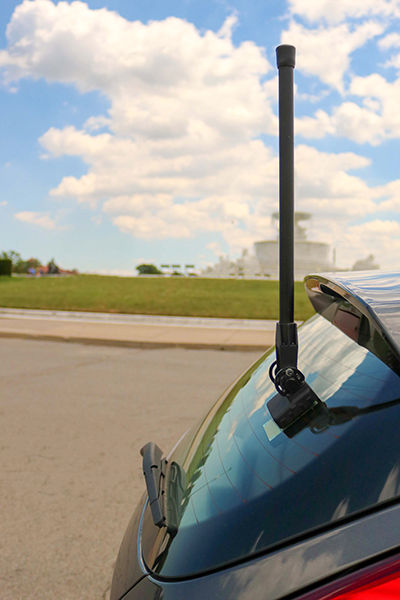
    The Through Glass Integrated V2X Antenna is designed for vehicle-to-vehicle and vehicle-to-everything (V2X) communications. The design incorporates an integrated GNSS antenna on the interior coupler. The antenna pairs with dedicated short-range communications (DSRC) devices.

    The dual-radio, glass-mounted antenna eliminates the risk of damaging the vehicle by using a coupling pair to pass DSRC signals between the vehicle’s interior and exterior, eliminating the need to pass RF cables through the roof or window opening. It antenna can be mounted on the rear, front or side windows using automotive-grade glass adhesive. Flexible installation allows the shortest cable route to the V2X device, reducing signal losses due to cable length.
    www.danlawinc.com

  • u-blox offers automotive dead reckoning firmware

    Positioning chip company u-blox is making available its latest automotive dead reckoning (ADR) firmware for navigation, Telematics, eCall and V2X applications for both OEM and after-market applications.

    Firmware ADR4.10 offers real-time, low latency positioning at up to 30 Hz using a combination of multi-GNSS, inertial sensor and vehicle speed data. The release also offers simplified installation, improved accuracy in dense urban environments and new messages for eCall.

    ADR4.10 is available now to OEMs using u-blox M8030-Kx-DR professional and automotive-grade chips. By the end of May, it will also be available on NEO-M8L ADR modules, including the new automotive-grade NEO-M8L-02A.

    u-blox ADR products are backed by specialist support at local and regional centers.

  • Sierra Wireless acquires GlobalTop’s GNSS embedded module business

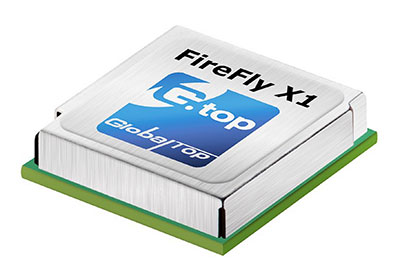
    The GlobalTop Firefly X1 GNSS module.
    The GlobalTop Firefly X1 GNSS module.

    Sierra Wireless, a provider of fully integrated device-to-cloud solutions for the Internet of Things, has completed the acquisition of GlobalTop Technology’s GNSS embedded module business for $3.2 million.

    GlobalTop’s GNSS embedded module portfolio will become part of the Sierra Wireless OEM Solutions product line, and the GNSS staff from GlobalTop will join Sierra Wireless.

    GlobalTop’s GNSS products generated $5 million in revenue in the last 12 months, and the business is break-even, Sierra Wireless said.

    “Building on our portfolio of cellular, Wi-Fi and Bluetooth modules, we will have additional products to offer to our customers in markets where positioning data is critical, including high-value asset tracking, telematics, drones and automotive,” said Dan Schieler, senior vice president and general manager of OEM Solutions for Sierra Wireless.

    The TitanX1 GNSS antenna.
    The TitanX1 GNSS antenna.

    GlobalTop GNSS modules include the Firefly, Ivory and Hummingbird series (GNSS standalone), and the Titan and Ladybird (GNSS with antenna). GlobalTop launched the Titan X1 module in February.

    “With a wide array of modules and established sales channels, as well as a proven engineering team, we believe that the GlobalTop GNSS business is an important addition to Sierra Wireless,” Schieler said.

  • 2016 fleet management technology report now available

    2016 fleet management technology report now available

    A new report that explores technologies for U.S. commercial fleets is now available.

    The 2016 Fleet Management Technology Report, sponsored by GPS Insight, includes results of a survey conducted by Bobit Business Media, publisher of Automotive Fleet Magazine, Fleet Financials Magazine, Business Fleet Magazine, and Work Truck Magazine.

    Cover: 2016 Fleet Management Technology ReportGPS Insights asked a series of questions pertaining to fleet management and telematics to examine the current state and experiences of the marketplace.

    Commercial fleets across the U.S. are finding that telematics is providing insight they never had before which helps to reduce costs, reduce risk, and increase revenue. Most industry reports state that the adoption rate is somewhere between 30-40 percent. The findings in this report are similar, and includes additional data broken down by region, fleet size, and industry.

    “We put this report together for business owners and fleet managers to get a clear understanding of what their peers are saying about their experience with telematics,” said Ryan Driscoll, marketing director of GPS Insight. “We also want it to serve as a guide for those looking to implement a better telematics solution or for those looking for the first time.”

    Topics covered in the report include:

    • Adoption: Who is and isn’t using telematics
    • Choosing a provider: What fleets say is important to consider
    • Benefits: How it’s helping commercial businesses
    • Return on investment: What fleets should expect from the investment

    The report can be downloaded from the GPS Insight website.

  • Aeris, Isotrak Collaborate on Improved Connectivity, Data for Fleets

    Aeris is partnering with Isotrak Ltd. to provide improved cellular connectivity and data analytics for Isotrak’s global customers.

    By leveraging Aeris’ machine-optimized and patented AerCore IoT and M2M network, AerPort connectivity platform and AerVoyance IoT and M2M analytics platform, Isotrak has added advanced capabilities to its 3iS FleetVision solution, part of its real-time ATMSi (Active Transport Management System) fleet management system. Isotrak can now provide business intelligence data to provide retailers and manufacturers with a full view of their transportation ecosystem — including their own fleets as well as those of third-party suppliers.

    The collaboration between Aeris and Isotrak will provide customers with a reliable mobile network optimized to meet the demands that IoT/M2M solutions for fleet management creates, while providing actionable visibility and measurement into the performance of vehicles and drivers through data analytics. Isotrak’s integrated supply-chain solutions depend on accessing near real-time data with robust alerting and reporting capabilities, which Aeris is able to deliver through its carrier-agnostic network.

    “Our fleet management system provides data for a total vision of a fleet manager’s transportation ecosystem. We wanted to ensure reliable connectivity services and data insights no matter where our customers are located,” said Jason Price, sales and marketing director with Isotrak. “By leveraging Aeris’ expertise in IoT network solutions, we are able to quickly provide a robust, global solution that goes well beyond improved connectivity and competitive rate plans to offer customers real-time, useful information at their fingertips to help improve their cost structure.”

    Aeris’ global support of major cellular technology standards, such as GSM, CDMA and LTE, enables partners like Isotrak to offer customers flexibility and the potential for growth throughout the globe, the companies said.

    “The inherent security built into the Aeris system gives companies like Isotrak peace of mind, and the speed of onboarding, even with a private virtual network, provides a competitive advantage,” said Mohsen Mohseninia, vice president for international market development at Aeris. “We can deliver technology that can be quickly deployed and will show immediate value while also helping to reduce the time to market for new products and services.”

  • Antenova Shows GNSS Antenna Integration for Telematics at CTIA

    Antenova Shows GNSS Antenna Integration for Telematics at CTIA

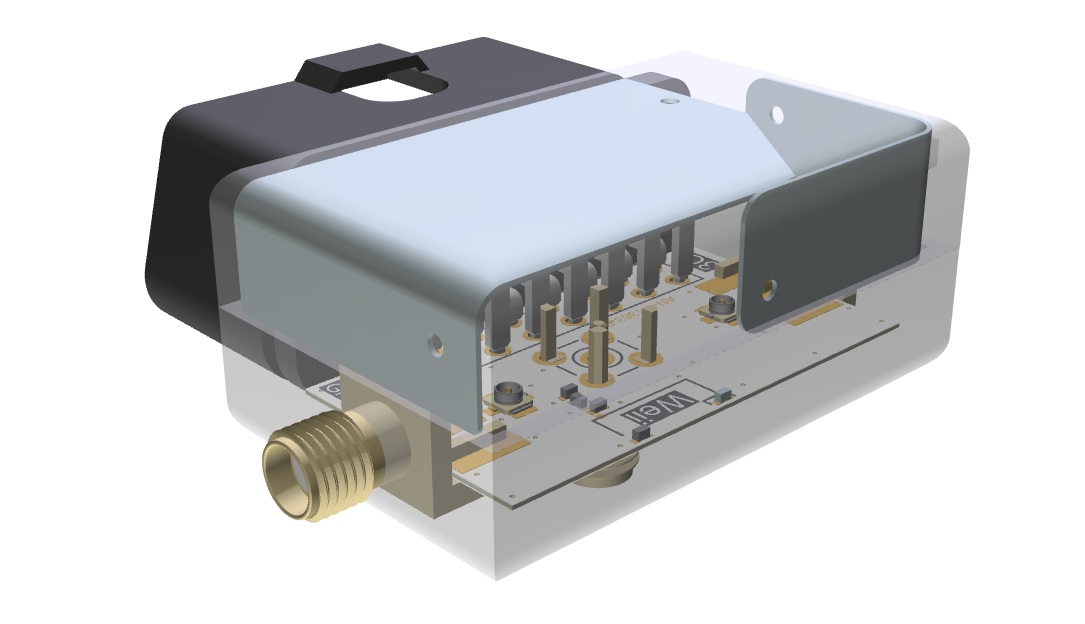
    The Antenova ODB fully assembled.
    The Antenova ODB (on-board devices) design fully assembled.

    Antenova Ltd., manufacturer of antennas and RF antenna modules for M2M and the Internet of Things, has built a model design for on-board devices (OBD) and vehicle telematics, which the company will be showing at CTIA Supermobility 2015.

    The OBD design uses three new antennas inside an OBD housing to link to GNSS satellite, Bluetooth and a terrestrial network, while obtaining optimum performance from all three antennas simultaneously. The design also features a new small GNSS RF module to fix location, which Antenova is showing for the first time.

    Antenova is using the latest antennas from it product ranges in the OBD design:

    • the Armata 3G FPC antenna for penta-band frequencies which operates at 824-960 MHz and 1710-2170 MHz
    • a new GNSS antenna named Bentoni operating at 1559-1609 MHZ,
    • the tiny Weii PCB-mounted antenna, which provides a Bluetooth connection at 2.4GHZ.

    All three are new antennas Antenova released this year.

    The new GPS/GNSS module (Antenova part number M10578) is a complete receiver that provides accurate location tracking for OBDs. It uses the latest MediaTek chipset with an additional LNA to give added performance when mounted under dashboards and out of line of sight with the sky.

    Antenova’s product designers recently introduced the concept of “Design For Integration” (DFI), which considers how the RF antenna will operate when it is embedded with a manufacturer’s product. Antenova’s antennas are always used within a customer’s design, so they are designed to provide superior RF performance from within the device, and to make the integration of the RF elements easier for the designer. In addition to this, Antenova provides its customers with technical support during the design, integration and testing phases.

    “We are demonstrating how a design for an OBD can give great performance, even when new antennas are added to an existing design,” explained Colin Newman, Antenova’s managing director. “OBD devices are growing fast in popularity, and the design of the RF components is critical to the overall performance of a device. In particular, Antenova’s engineers have invested many years in designing antennas that work effectively in very small spaces, whilst maintaining the efficiency of the antenna.”

    Antenova offers a range of antennas for Bluetooth, ZigBee, Wi-Fi, ISM, 802.11, 3G, GSM, GPRS, Edge, UMTS, WCDMA, LTE, GLONASS, BeiDou and Gallileo.

  • Ford, Telogis Expand Partnership to Commercial UK Customers

    Ford Motor Company and Telogis have expanded their exclusive partnership to bring Ford Telematics powered by Telogis to Ford’s commercial customers in the United Kingdom first, with other European markets to follow later this summer. Ford Telematics uses real-time information from Ford vehicles to enable businesses with workers in the field to have insight into vehicle location, driver behavior and fuel consumption.

    The telematics can save companies up to 20 percent on fuel, according to a 2012 Frost & Sullivan report.

    Since 2011, Telogis has been the exclusive technology provider to power Ford Telematics (formerly Ford Crew Chief) in the U.S. and Canada, with comprehensive and scalable telematics for commercial customers. The UK expansion of the Telogis-Ford partnership leverages the success of Ford Telematics in the U.S. and Canada and will meet the demand from current and new Ford customers in the UK for in the visibility into day-to-day operations including Ford vehicle diagnostics.

    “Ford Telematics is an innovative system that can deliver reductions in cost of ownership for businesses that operate Ford’s Transit commercial vehicles,” said Paul McDermott, manager, CV aftersales, Ford of Britain. “Real-time vehicle location and diagnostic data provides fleet customers with a powerful tool to manage their vehicles more effectively and also encourage safer driving.”

    Making its debut at the 2015 Commercial Vehicle Show, Ford Telematics will be available to fleet customers in May as a dealer-installed option, offered through Ford’s network of specialist Transit Centres.

    Ford Telematics functions by securely transmitting vehicle data and metrics from the vehicle to a dedicated Telogis website via an embedded cellular connection. The telematics system’s ability to access proprietary Ford vehicle data enables operators to track details such as oil change warnings, water contamination in diesel fuel, tire pressure, safety belt usage and airbag status.

    “The reality of being able to visualize field staff and the performance of each Ford vehicle — all on one screen — is here,” said Paul Reynolds, automotive director at Telogis. “This visibility enables Ford commercial customers to provide better service for their own customers and run their businesses more productively and efficiently — it’s no longer a ‘nice to have’ but a ‘have to have’ solution.”

    Based on the real-time data, the Ford Telematics powered by Telogis software platform delivers a comprehensive range of actionable business information that enables fleet managers to operate their vehicles in the most efficient way and to help ensure drivers are following safe and economical driving practices.

    Advances include a suite of more than 80 pre-loaded reports, integration with established business operating systems and fuel card services. Ford Telematics and the Telogis platform also allow for a BYOD (Bring Your Own Device) approach, helping to further reduce hardware costs and increase productivity.

    Ford Telematics is compatible with Ford’s latest range of Transit commercial vehicles — including the all-new Transit, Transit Custom, Transit Connect and Transit Courier — as well as the Ford Ranger pickup. Additionally, the same Telogis hardware can be fitted to any other vehicles on the fleet, regardless of manufacturer, allowing informed fleet managers to view the whole fleet in one place, with all the usual driver performance and vehicle tracking information that they expect.

    Ford Telematics also provides a gateway to the broader cloud-based Telogis platform that includes a suite of connected vehicle technologies including route optimisation and planning, commercial-grade navigation, work order management and mobile applications to drive additional efficiencies and productivity for mobile enterprises.

    “Ford Telematics is another example of Ford facilitating the delivery of smart technology to help our customers enjoy the highest quality, safest and most sustainable operation of commercial vehicles available today,” said Nick Themistocleous, director, Fleet Operations, Ford of Britain.


  • Traqueur Unveils Autonomous Mobile Beacon Nano

    Traqueur Unveils Autonomous Mobile Beacon Nano

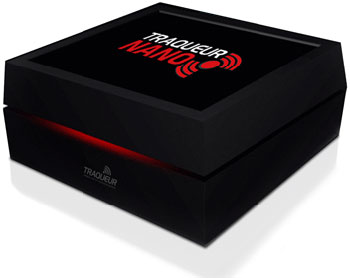
    Photo: TraqueurTraqueur, a French-based company in the field of advanced telematics, has introduced Nano, an autonomous mobile beacon for the protection of property and objects designed to optimize the potential of the Sigfox network.

    Nano uses radio and GPS to track indoor and outdoor location, has a battery life of three to five years and is named Nano for its compactness.

    In June 2014, Traqueur formed a strategic technical partnership with Sigfox, the sole operator of the global cellular network for the Internet of Things (IoT) and machine-to-machine communications.

    Nano displays functionalities of UHF direction finding, providing the ability to locate buried and hidden objects. It also has a high-sensitivity GPS module and an integrated antenna to transmit its position through the Sigfox network when the beacon moves.

    Nano’s roaming features open up prospects for international marketing.

    The development of Nano has received support from BPI Ile-de-France (Paris region).

    “Certified Sigfox Ready and provided with mixed UHF/GPS technology, the Nano beacon means that we can offer the widest range of technology solutions of the track and trace type on the market and can address new segments including merchandise and logistics, for example,” said Marc Verdet, CEO of Traqueur. “We are also accelerating our international development through distribution partnerships in every country with a SIGFOX network infrastructure.”

    “The development of this new beacon by Tracker, based on our network, is extremely innovative and shows the limitless scope for innovation that SIGFOX technology allows, “Stuart Lodge, Executive Vice President Global Sales at SIGFOX. “This technology gives by far the longest battery life on the market, a decisive advantage for applications such as the location of property. The solution developed byTraqueur, because it is very demanding, confirms the legitimacy of our technology wherever the SIGFOX network is deployed.”

    DiscoverTraqueur in forthcoming trade shows in France:

    · Flotte Auto meeting, March 19, 2015 – Palais Brongniart – Paris Stand B07

    · DLR Congress, March 26 & 27, 2015 – CNIT Paris – Stand 44

    · MtoM & Connected Objects show on April 1 & 2 – CNIT Paris – Stand E7 Conference: Innovation in value-added services around the IoT. Tracker Nano presentation workshop.

    · Intermat from April 20 to 25, 2015 – Paris -Nord Villepinte – Booth 6B022

  • Telematics Detroit Changes Name to Reflect Shift to Autonomous Cars

    Telematics Detroit, the connected car event, has officially changed its name to TU-Automotive Detroit to reflect the paradigm shift in auto mobility. The event will take place June 3-4 at The Suburban Collection Showplace in Detroit.

    The name change to TU-Automotive Detroit is intended to reflect how “automakers are evolving from heavy manufacturers into nimble technology companies and the self-driving car is moving from the realms of science fiction onto the reality of our highways. The car as we know it is rapidly changing,” organizers said in a statement.

    Experts will provide overviews in three core areas of telematics, mobility and autonomous cars.

    “Anticipating the future trends of the automotive industry is exactly what this conference has always been about,” said Justin Parker, project director. “Accordingly, the new angle of the show addresses the headline topics of mobility and autonomous vehicles.”

    Key topics:

    • Telematics – the here and now: Consider the building blocks of the connected car that continue to present challenges and opportunities such as the ultimate user experience, the connected society and the aftermarket. It is these foundations that are paving the way for the future of auto-mobility.
    • Auto-mobility: The role of the car is changing. From new ownership models to sustainable transportation and smart cities, get to grips with the technology and societal changes that are fundamentally reshaping mobility.
    • The autonomous car: Sensors, lasers, ADAS and regulators. The end-goal of the self-driving car is an exciting amalgamation of regulatory and technological developments. We’re deep into the journey of the autonomous car and now is the time for the industry to come together to collectively take the next step.

    Get the latest updates and information and register for the brochure with full speaker line-up and agenda.


  • BeiDou, Dead Reckoning Added to SiRFstarV 5ea Auto Platform

    CSR plc has released significant upgrades for the SiRFstarV 5ea automotive-grade quad-GNSS location platform. Support has been added for concurrent use of GPS and BeiDou (BDS) satellite constellations, along with major updates to the SiRFDRive software dead-reckoning algorithms. Together, these upgrades ensure that SiRFstarV 5ea offers improved automotive positioning performance meeting the requirements of OEMs across the globe.

    CSR is being acquired by Qualcomm, with the transaction expected to close by the end of the summer of 2015.

    By adding support for China’s BDS constellation to SiRFstarV 5ea’s existing GPS and GLONASS capabilities, the new software offers automotive OEMs the flexibility to perform concurrent GPS and GLONASS or GPS and BDS operations. The new BDS capability provides OEMs the opportunity to market their products to regions where BDS support is mandated and also exploit the benefits of the BDS satellite constellation which is now fully operational over China and surrounding countries. The SiRFstarV 5ea platform, which is optimized and certified for the strict requirements and life cycles of the automotive industry, is also Galileo-ready through future software upgrades.

    “Automotive OEMs from around the globe all have something to gain from the new additions to our cutting-edge SiRFstarV 5ea automotive location platform,” Anthony Murray, senior vice president, Business Group, at CSR, said. “Tier Ones and OEMs are looking to develop global platforms that can be easily configured to meet regional requirements and preferences, while Asian car manufacturers in particular have been calling for simultaneous GPS and BDS support to meet regional market needs for BDS support.”

    SiRFDRive for SiRFstarV 5ea now also includes CSR’s latest dead reckoning algorithms that work alongside concurrent GPS and GLONASS operations. The combination of increased satellite visibility and the latest dead-reckoning algorithms improves the overall performance in challenging environments such as Chicago and Tokyo by a factor of two.

    “Many Tier Ones are looking for more complete dead reckoning solutions to simplify the design process and accelerate time to market. SiRFDRive is a state-of-the-art plug-and-play solution that covers a range of end products spanning from low to high end telematics and navigation systems,” continued Murray.

    SiRFstarV 5ea is designed for automotive market AEC-Q100 qualification requirements as a standalone location engine platform. The platform provides automotive Tier One suppliers and OEMs around the world with continuous, highly accurate positioning capabilities for the next generation of in-dash navigation and telematics applications in cars, trucks and other moveable assets requiring automotive-qualified devices.

    Updated SiRFstarV 5ea evaluation kits are available now, and the SiRFstarV 5ea platform is ready for immediate integration into next generation infotainment and telematics products.

    CSR provides the following video describing SiRFDrive.

  • Farmers Edge Closes Investment for Precision Farming

    Farmers Edge, a precision agriculture and independent data management solutions company, has received an investment from Kleiner Perkins Caufield & Byers’ Green Growth Fund. With operations around the world, Farmers Edge provides a plug-and-play technology solution that helps farmers optimize crop inputs and maximize yield. The investment from Kleiner Perkins will fund expansion of Farmers Edge’s technology platform and support the company’s continued growth in international markets, Farmers Edge said.

    “We see a huge market opportunity for Farmer’s Edge approach to precision agriculture. They uniquely integrate real-time satellite imagery and in-field telematics to maximize yield and minimize environmental footprint,” said Kleiner Perkins Partner, Brook Porter. Farmer’s Edge is leading the current disruption around how crops are grown, and ultimately how crops are valued as traceability becomes an increasingly important factor in the food supply chain.”

    On the heels of a recent acquisition, Farmers Edge has introduced FarmCommand, a comprehensive solution that provides farmers plug-and-play real-time equipment diagnostics and logistics telematics to any brand of equipment. FarmCommand will become part of the Precision Solutions product line that incorporates field-centric data such as drone and satellite imagery, soil testing, weather stations and precision agronomy. By coupling cloud-based software, Precision Solutions and FarmCommand, with an agnostic hardware solution, growers gain the ability to make comprehensive precision farm management decisions.

    “We rely on Farmers Edge to function as an independent advisor, providing us with a no-hassle, turnkey solution to increase our profitability,” said Jerry Machacek, grower at Canora, SK. “They bring a level of hands-on service that is unique in the industry which is the reason we trust them with the management of our acres.”

    “From seed selection to yield data analytics, we bring all the information together to make a meaningful impact on production and we stick by our customers to ensure the job gets done right,” said Wade Barnes, president and CEO of Farmers Edge. “We have an established history of partnering with both farmers and leading distributors to deliver products which will benefit the farmer and his trusted advisors.”

  • Geotab Offers Future-Proof Commercial Telematics Solution

    Geotab-GO7-Side-W
    Photo: Geotab

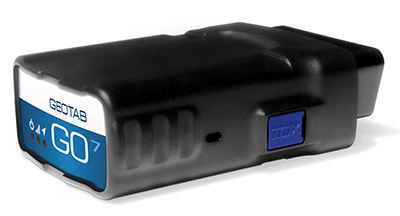
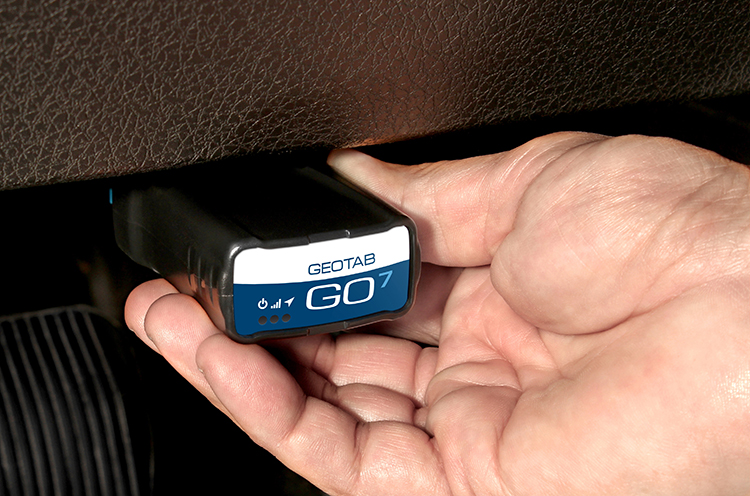
    Geotab, a telematics engineering company, has launched its new GO7 telematics device. The GO7 allows fleet management applications to receive vehicle data communications from the engine, drive train, instrument cluster and other subsystems.

    The Geotab GO7 is the newest device in Geotab’s line of telematics solutions and has added a number of new features such as programmable CANBUS, OBD, J1708 connection pins, enhanced auto-protocol detection and higher sensitivity accelerometer — making the solution future-proof and cost effective for any fleet to install and maintain, the company said.

    The GO7 is an plug-and-play device with internal antennas that eliminates installation and out-of service vehicle time, which significantly lowers installation costs and improves fleet productivity, according to Geotab. The latest edition of Geotab’s GO devices caters to more than one vehicle protocol at a time, allowing the device to collect data simultaneously for all possible datasets, such as RPM, VIN, fuel level, seat-belt detection and odometer. The secondary protocol support provides detailed engine data for a variety of vehicles, including Ford, GM, Chrysler, Volvo and Mazda. The technology is scalable, from light duty, medium duty, to heavy commercial trucks in addition to supporting all major vehicle manufacturers globally, Geotab said.

    GO7-Installation2-W Photo: Geotab
    Photo: Geotab

    “Our goal is to provide the most advanced and efficient telematics solution in the industry,” said Neil Cawse, CEO, Geotab. “Together with our MyGeotab software, the all-new GO7 device allows us to provide our customers with the most sophisticated end-to-end fleet management solution on an industry leading platform — providing great productivity enhancements, safety features and cost-savings to our fleet customers.”

    Top features of the GO7 include:

    • Easy plug-and-play installation
    • External device expandability via IOX Technology
    • Intelligent in-vehicle driver coaching
    • Small form factor device
    • Breakthrough accident detection and notification
    • Accurate engine diagnostics, DTC, and proprietary engine data
    • Real-time vehicle data
    • Fast GPS acquisition time using Almanac OTA support
    • Built-in auto-calibrating accelerometer.