Tag: timing receivers

  • Authentication added to GNSS timing receivers

    Authentication added to GNSS timing receivers

    Furuno will begin providing new firmware for its GNSS receivers for time synchronization, including models GT-100, GT-90 and GT-9001, which adds authentication features (OSNMA/QZNMA) and significantly strengthens anti-jamming and anti-spoofing measures.

    In fields that support critical infrastructure such as telecommunications, finance and power, GNSS vulnerabilities have become a major issue. The Furuno team participated in Jammertest 2025, the world’s largest GNSS resilience testing event. Jammertest 2025 took place in Norway, and verified robustness and reliability under real attack conditions to meet the requirements of critical infrastructure.

    Features of the new firmware

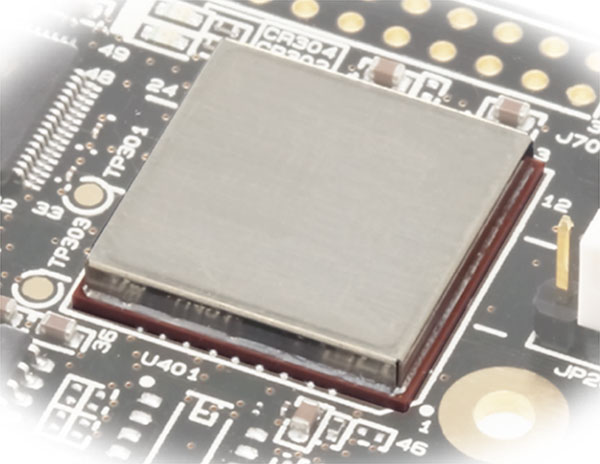
    The GT-100, GT-9001 and GT-90 modules. (Photo: Furuno)
    The GT-100, GT-9001 and GT-90 modules. (Photo: Furuno)
    • Addition of authentication functions (OSNMA/QZNMA): Authentication messages from Galileo (European GNSS) and QZSS (Japan’s Quasi-Zenith Satellite System) confirm the authenticity of navigation messages, strengthening resistance to spoofing attacks.
    • Enhanced anti-jamming and anti-spoofing measures: Detect and eliminate various interference signals with high precision, ensuring stable time synchronization.
    • Removal of altitude restrictions, enabling use in the stratosphere and similar environments
    • Addition of TAI (International Atomic Time) output function
    • Support for multiple data formats (RTCM10403.3, RINEX4.1, binary)

    Availability
    For existing users: Provided as a firmware update.

    For new shipments: GT-100, GT-90 and GT-9001 with the new firmware are scheduled to ship beginning in March 2026.

    Related product information
    Furuno has also launched the GNSS Surge Protector, TVA-05V for GNSS antennas.
    This product protects GNSS receivers from surges caused by lightning, further enhancing the stable operation of critical infrastructure.

    In Jammertest 2024, challenges were identified using GT-100; in Jammertest 2025, improvements were validated with the upgraded version, confirming the effectiveness of the resilience algorithms under operational conditions.

  • Furuno’s latest global timing solutions support L1 and L5 GNSS signals

    Furuno’s latest global timing solutions support L1 and L5 GNSS signals

    Image: Furuno
    Image: Furuno

    Furuno Electric Co. has released a new generation of time-synchronization GNSS receiver modules compatible with all GNSS systems. The modules deliver nanosecond precision for 5G mobile systems, radio communications systems, smart power grids and grand master clocks.

    GNSS receivers for time synchronization are used extensively in critical infrastructure such as mobile base stations and RAN equipment, commercial and defense radio communications, broadcasting, financial trading and smart power grids, where there are increasing needs for robustness, reliability and security.

    Furuno is releasing three new products: GT-100, GT-9001 and GT-90. They are designed to suit different applications based on the frequency bands and output signals supported. All models have the world’s highest level of time stability of 4.5 ns (1 sigma).

    The GT-100 is the company’s first timing multi-GNSS receiver module supporting concurrent L1 and L5 reception. This mitigates the effects of solar flares, which can lead to time errors, and strengthens measures against GNSS vulnerabilities such as jamming and spoofing.

    • The GT-100 delivers three outputs including 1 pulse per second (1 PPS) synchronized with UTC as well as user-programmable frequencies. The outputs can be set as required to 10 MHz, 2.048 MHz and 19.2 MHz, commonly used in a variety of wireless communications systems. This drastically reduces the time from development to market launch for these systems, as well as cost savings through reduced component needs. GT-100 is a full-featured highly robust model, supporting dual-frequency band reception (L1 and L5).
    • GT-9001 supports L1 and delivers high stability 1PPS and programmable clocks on three channels.
    • GT-90 supports L1 and provides a 1 PPS high stability output.

    All models are equipped with the leading Dynamic Satellite Selection (DSS) multipath mitigation technology developed by Nippon Telegraph and Telephone Corporation (NTT) that minimizes degradation of time performance even when the antenna is installed in urban areas or near a window.

    Furuno will showcase the new modules at EuMW’s European Microwave Exhibition, a trade and technology exhibition providing access to initiatives in the RF and microwave sector.

    Evaluation kits for all three products are available now.

  • ADVA software now protects third-party GNSS receivers from cyberattacks

    ADVA software now protects third-party GNSS receivers from cyberattacks

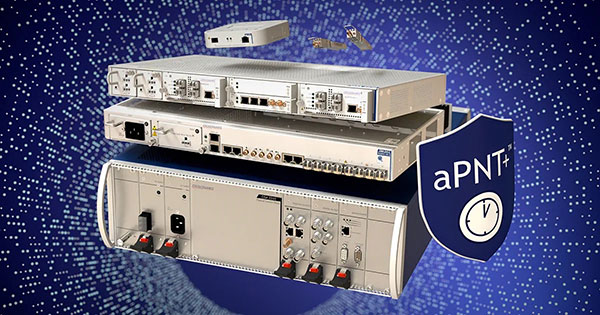
    Photo: ADVA
    Photo: ADVA

    GNSS assurance software Ensemble Sync Director now detects jamming and spoofing cyberattacks on third-party GNSS receivers

    ADVA has extended its Ensemble Sync Director GNSS assurance software to integrate any third-party vendor’s GNSS receiver observables at scale.

    A key pillar of ADVA’s aPNT+ technology, Ensemble Sync Director is now vendor-agnostic, providing resilient and assured positioning, navigation and timing (PNT) for more customers than before.

    Ensemble Sync Director can now transparently show and analyze GNSS observables from third-party receivers in large deployments.

    Synchronization based on satellite signals is vulnerable to failure, interference and cyberthreats, meaning network operators need to protect their critical timing with continuous monitoring and assurance. With the Adva software, network operators can remotely detect issues with GNSS receivers from any vendor, helping to maintain high-quality timing performance, avoid disruptions and reduce operating costs.

    “By extending our GNSS assurance application capabilities beyond our own timing equipment, we’re empowering many more customers to protect their mission-critical synchronization in new or deployed infrastructure,” said Gil Biran, GM of Oscilloquartz, ADVA. “Our Ensemble Sync Director, with comprehensive GNSS assurance for both resilient and assured PNT, provides a simple, scalable and highly cost-efficient way to harness our unique experience and expertise in managing a huge number of GNSS-dependent network elements.”

    ADVA’s Oscilloquartz GNSS assurance solution for integrating third-party receiver data is an extension of its Sync Director application, part of the Ensemble Controller network management platform. It offers centralized in-service monitoring and analysis of GNSS status and reliability as well as artificial-intelligence and machine-learning-based prediction and prevention of obstruction, jamming and spoofing.

    Using topology and timing chain mapping, Ensemble Sync Director displays the entire timing network infrastructure in a user-intuitive graphical format.

    ADVA’s GNSS assurance capabilities are aligned with the goals of the DHS Resilient PNT Conformance Framework and future IEEE P1952 Resilient PNT Standard to protect critical infrastructure.

    Available from ADVA Professional Services, the new solution is suitable for network operators in telecoms, power utilities, financial trading, data centers and more, who need to ensure robust, reliable and resilient GNSS timing. It also offers  value to system-integrator vendors looking to add vital GNSS protection capabilities to their synchronization portfolios.

    Further information is available in an ADVA presentation.

  • Recommendations: RTCM on BeiDou use, DHS on critical timing receivers

    Two documents of interest and importance to GNSS designers and manufacturers have been published, one from the Radio Technical Commission for Maritime Services (RTCM) and one from the U.S. Department of Homeland Security (DHS).
    Improving_the_Operation_and_Development_of_Global_Positioning_System_(GPS)_Equipment_Used_by_Critical_Infrastructure_S508C-cover

    The latter document is the subject of a news story concerning receivers used in critical infrastructure, with an emphasis on timing receivers. It provides owners, operators, researchers, designers and manufacturers with information to improve the security and resilience of PNT equipment across the spectrum of equipment development, deployment and use. It makes specific recommendations.

    The first-mentioned document is a white paper issued by the RTCM. It follows here, largely verbatim. It is titled “GNSS Community Benefit from Strong International Coordination and Cooperation,” and it addresses an important issue for GNSS receiver manufacturers and others concerning use of BeiDou signals. The authors believe that early publication and dissemination of the recommendation is needed to prevent possible confusion down the line.


    GNSS Community Benefit from Strong International Coordination and Cooperation

    Introduction

    The ephemeris broadcast by China’s BeiDou Navigation Satellites do not directly provide unique identifiers that are similar to the GPS’s “Issue of Data, Ephemeris” (IODE) and “Issue of Data, Clock” (IODC) values. Special Committee #104 (SC-104) of the Radio Technical Commission for Maritime Services (RTCM) has been working with the China Satellite Navigation Office (CSNO) to ensure that equivalent BeiDou IODE and IODC values can be generated.

    This paper presents the BeiDou IODE and IODC calculation algorithms that were developed by RTCM’s SC-104 and are being shared with the GNSS community in an effort to promote consistent BeiDou IODE and IODC computational approaches within the community.

    Background

    Most GNSS position and timing related algorithms need to know exactly where the satellite was at the moment the signal component of interest was transmitted. The signal sent from these satellites also contain messages, which contain parameters used to calculate the position and clock errors of that satellite for a moment of interest within the validity period of those orbital parameters. Because this validity period is relatively short (e.g., +/-4 hours of the current time), the satellites are periodically broadcasting new orbital parameters. These orbital parameters are often referred to as the satellite broadcast ephemeris. Plots from the different broadcast ephemeris for the same satellite do not directly overlay each other because there are forces acting on those satellites (such as solar wind, ionospheric drag, and gravitational anomalies) that do not permit long term exact prediction of orbits and clocks.

    Many differential correction services require both the correction generator system (e.g., reference station and reference networks) and the correction consumer (e.g., GNSS rover receivers) know and use the exact same orbital parameters. That is, the consumer of the corrections needs to apply those corrections using the exact same orbital parameters as those used to create the corrections. Failure to do so results in errors and biases for reasons earlier described. In such correction services, the correction message contains information enabling the consumer to uniquely identify the orbital parameters used by the generator.

    Correction services need a mechanism to uniquely identify the orbit parameters used by the correction generator system. The GPS Broadcast ephemeris messages are uniquely identified for a certain period of time by what are known as the “Issue Of Data, Ephemeris” (IODE) and the “Issue of Data, Clock” (IODC). Other GNSS constellations have similar concepts, or at least other parameters that can be used for similar purposes. Unfortunately, the 2011, 2012 and 2013 BeiDou Signal-In-Space Interface Control Documents (BDS-SIS-ICD) have offered no information enabling one to develop some mechanism for such a unique identification.

    In 2013 RTCM SC-104 created the BeiDou Working Group (BDS WG). Since then, the BDS WG has worked closely with the China Satellite Navigation Office (CSNO) to ensure proper inclusion of BeiDou in RTCM standards and recommendations. As part of this effort, RTCM SC-104 and the CSNO explored several avenues concerning equivalent BeiDou values of IODE and IODC. Ultimately an approach was selected by the CSNO. The selected approach stems from a ground-segment based approach which does not require a change to the BeiDou broadcast message format. However, it does then require that the users of BeiDou needing IODE and/or IODC values ensure that they employ the exact same algorithm to compute those values from the data available in the broadcast ephemeris.

    In May 2016, Kendall Ferguson (RTCM SC-104 Chair), Shaowei Han (Wuhan Navigation and LBS, Ltd. and Chair of the RTCM SC-104 BDS WG), and Dr. Hui Liu (Wuhan University /Wuhan Navigation and LBS, Ltd. and co-Chair of the RTCM SC-104 BDS WG) met with the Deputy Director of the CSNO. In that meeting, the CSNO Deputy Director indicated that a soon to be release BDS-SIS-ICD would provide information that would enable calculation of equivalent BeiDou IODE and IODC values. In November 2016, the CSNO released the BDS-SIS-ICD, Version 2.1, and that ICD contains the needed information.

    The language in the new BDS-SIS-ICD indicates that the normal ephemeris update (i.e., with new ephemeris parameters) will occur every hour on the hour when everything is normal.  If new parameters are needed for whatever reason, they will occur on 12 minute slots within the hour.  Any parameter that is changed in a broadcast ephemeris that is related to toc will result in a new toc (coincident with the 12-minute slot of the hour).  Likewise, any parameter that is changed in a broadcast ephemeris that is related to toe will result in a new toe (coincident with the 12-minute slot of the hour).  Whenever toc changes so will toe.  There will be no repeated toc or toe values within a week.

    On February 3, 2017, RTCM SC-104 formally approved algorithms for BeiDou ephemeris unique identifiers that can be computed by both message generators and message consumers. The reason for announcing this approval is to proactively prevent a wide variety of BeiDou IODE/IODC algorithms from emerging throughout the GNSS community.

    These RTCM BeiDou IODE and IODC algorithms are:

    BDS IODC=mod (toc / 720, 240)

    BDS IODE=mod (toe / 720, 240)

    The modulo 240 gives an 8-bit IODE (and an 8-bit IODC) that provides 2 days of uniqueness and which offers the smaller bit size needed for correction messages.   The values from 240 to 255 thus offer some future expansion should additional cases be needed.

    Unlike the relationship between the GPS IODE and GPS IODC, the BDS IODC may not be equal to the BDS IODE. The BDS IODC may be updated much more often than BDS IODE. However, whenever the BDS IODE is changed, the BDS IODC is also changed at the same time. Thus, RTCM will be using the BDS IODC as the unique ephemeris identifier in its messages.

    Conclusions

    Special Committee #104 (SC-104) of the Radio Technical Commission for Maritime Services (RTCM) has been working with the China Satellite Navigation Office (CSNO) seeking methods where by BeiDou equivalents of the GPS IODE and IODC might become available. The BDS-SIS-ICD, Version 2.1, released November 2016, provides information about the constellation allowing computation of IODE and IODC values from its broadcast ephemeris. In February 2017, RTCM SC-104 approved the algorithms it will use to compute unique ephemeris identifiers that will be contained in its messages, thus allowing the recipients of RTCM BeiDou related messages to identify the ephemeris used by the sender of such messages. RTCM is announcing these algorithms in an effort to prevent a variety of such algorithms from emerging and thus causing community confusion.


     

  • Homeland Security spells out receiver improvements

    In early January, a new U.S. Department of Homeland Security (DHS) document appeared: “Improving the Operation and Development of Global Positioning System (GPS) Equipment Used by Critical Infrastructure.”

    Improving_the_Operation_and_Development_of_Global_Positioning_System_(GPS)_Equipment_Used_by_Critical_Infrastructure_S508C-coverThe document focuses on receivers used in critical infrastructure, with an emphasis on timing receivers. It provides owners, operators, researchers, designers and manufacturers with information to improve the security and resilience of PNT equipment across the spectrum of equipment development, deployment and use.

    Specifically, its recommendations address:

    • installation and operation strategies that can be implemented for current equipment,
    • strategies that can result in more robust and resilient new and/or improved products based on existing technology and knowledge,
    • research and development that can lead to improved future capabilities.

    It introduces clear definitions of different categories of threats and hazards, including the new term “data spoofing.” It recommends some creative ways to install receive antennas, such as using decoy antennas and obscuring the location of the actual antennas being used, presumably to foil some spoofing attacks. It also points out that modern GNSS receivers are computers, and need to be operated and maintained with good cyber hygiene, just like other computers.

    The extensive list of recommended development strategies will challenge manufacturers while informing purchasers about the features they can seek in new equipment.

    Implementing these recommendations will lead to increased competence — that is, equipment that is better able to accommodate imperfect or faulty inputs, intentional or not.

    The document reflects the recognition that many reported problems or difficulties with GPS could be prevented or mitigated by improvements in GPS user equipment and how it is installed and operated. It is encouraging to see DHS taking steps to remedy this situation, and important that manufacturers of timing receivers, as well as critical infrastructure owners and operators that use timing receivers, follow through on these recommendations.

    The document is posted on the website for DHS’ National Cybersecurity & Communications Integration Center, National Coordinating Center for Communications-Computer Emergency Readiness Team.