Tag: Triumph-1

  • Cluster Averaging with ease for the surveyor

    Cluster Averaging with ease for the surveyor

    Javad GNSS, makers of the Triumph-LS Rover receiver and the Triumph-1 and -2 base units, is offering a software procedure called Cluster Averaging, which takes advantage of its six different RTK engines and the J-Field receiver firmware.

    While a typical survey point collected by RTK methods requires multiple occupations to verify the integrity of the location and elevation, Javad GNSS’ J-Field program significantly reduces survey by collecting multiple sets of survey data through each RTK engine, the company said. During the data acquisition process, the receiver automatically forces a loss of satellite lock and restart to ensure multiple sets of independent data are collected for redundancy and quality assurance.
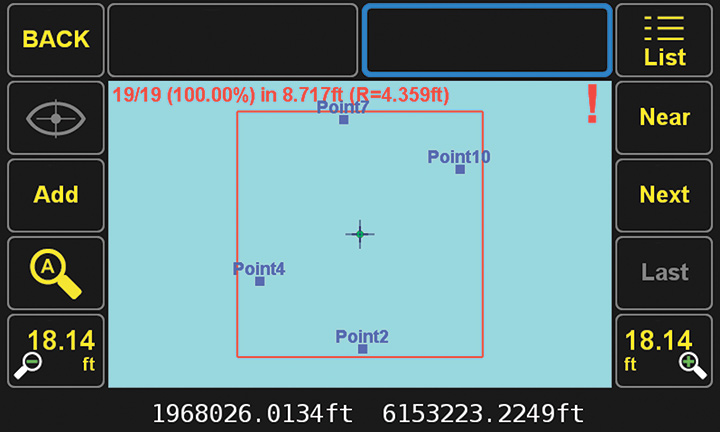
    Four groups of surveyed points. (Image: Javad GNSS)
    Four groups of surveyed points. (Image: Javad GNSS)

    As the surveyor returns for another set of redundant data, Cluster Averaging will recognize the previous surveyed points to provide error analysis using their chosen parameters for quality assurance. The surveyor may allow the J-Field software to average all of the data points or pick and choose those needing specific verifications. Also, the surveyor can specific different precisions for varying types of data collection (for example, control points vs. topographic data).
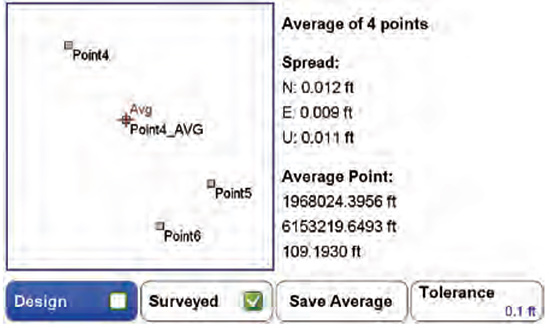
    (Image: Javad GNSS)
    (Image: Javad GNSS)

    Point numbering and data attributes are also automated during the cluster averaging processes. Once the operator has designated both number and field code, this information is reused each time to eliminate potential conflicts.

    Reports from the J-Field program documenting the locations with multiple occupations are easy to generate and informative, Javad GNSS said. By reviewing the results of the clusters, data integrity can be decided at the time of the survey and save time by later office verification. The surveyor can confidently complete the survey task knowing proof of accurate data for the project is at his/her fingertips.
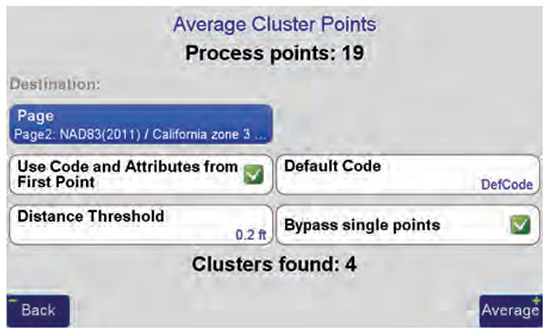
    (Image: Javad GNSS)
    (Image: Javad GNSS)

    Cluster averaging within the J-Field program simplifies the redundant task of point verification, with a user-friendly interface and report, the company added.
  • Virtual base RTK from JAVAD automates for greater ease

    Virtual base RTK from JAVAD automates for greater ease

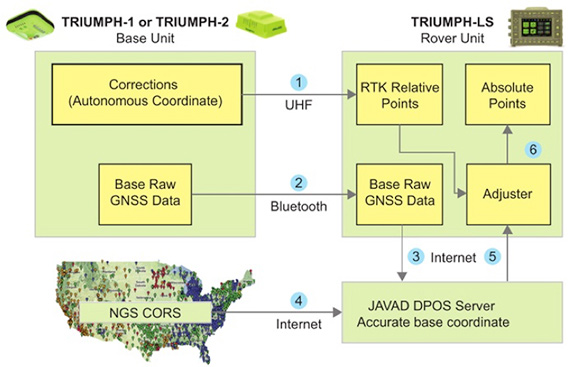
    JAVAD GNSS has integrated its Justin software suite, including Verify Base-RTK (VB-RTK) with its Triumph-LS Rover receiver, carrying six different RTK engines, and Triumph-1 or Triumph-2 base units, to make GNSS data collection easier yet more reliable.

    The combination of the J-Field onboard data collection of the Triumph-LS working with the Justin reduction software establishes the project coordinate system with little effort and good confidence in the user’s field data, the company said.


    The Javad Data Processing Online Service (DPOS), built in the Justin software system, works directly with the National Geodetic Survey’s Continuously Operating Reference Station (NGS CORS) system to calculate and establish the project base station within a known coordinate system.

    This system can be based upon the National Spatial Reference System (NSRS) or a localized system. Either way, the user can begin data collection immediately using an autonomous base point, with relative corrections being established to the RTK receiver.

    Before VB-RTK, an extra step (and time) was required to occupy the base point, collect a sufficient amount of data, and upload to the NGS Online Positioning Service (OPUS) for data calculations and positional determination. VB-RTK now automates this process, increasing efficiency and reducing errors.

    Among the main benefits of the software are the vector data check-verification routines and the ability for the user to easily identify random errors (receiver height input, description codes, and so on).

    Justin software enables thorough review of preset parameters and templates to help the user establish a consistent workflow pattern.Additionally, the receiver and software system do not rely on a third-party real-time network (RTN).

    Besides knowing exactly where the base station is broadcasting from, there are no data charges from the RTN nor cellular fees. By having the base station within the project area, the system will also provide the user with faster fixes and more accurate information.