Tag: tunnels

  • TU Graz develops navigation system for underground rescue teams

    TU Graz develops navigation system for underground rescue teams

    Using a wide range of sensors and an ultra-broadband network created by team members, emergency services can orientate themselves and coordinate effectively even without GNSS, light or external communication.

    In the NIKE MATE project, the focus is on navigating tunnels in difficult circumstances — collapse of infrastructure, GNSS outages, presence of smoke and debris, all of which make orientation challenging.

    NIKE MATE is funded by the Austrian Research Promotion Agency (FFG), a research team consisting of Graz University of Technology (TU Graz), the University of Leoben, the Federal Ministry of Defence, OHB Austria and the Laabmayr Engineering Office.

    The NIKE MATE team has developed a system for tough tunnel missions that combines sensor data from robots and rescue teams with a self-built UWB (ultra-wideband) network. The result is a dynamic map of the environment in which the team can locate and coordinate itself.

    A human/robot team

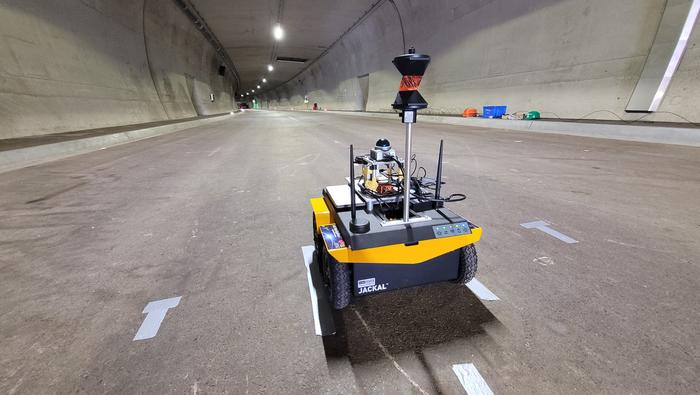
    The central innovation of the project is “teaming”. A robot with highly developed sensor technology first explores the surroundings and creates the dynamic map. The position information obtained is exchanged via a UWB transmitter with emergency personnel following behind or working in parallel, who are themselves equipped with UWB tags and who place UWB anchors along their route.

    In addition to stable data transmission, the anchors also enable distance measurements between all participants even without a direct line of sight. This creates a network of distance measurements in which the positions of robots and people can be determined with an accuracy of closer than one meter.

    “This precise localization is a decisive safety factor, for example if there is an open lift door or a precipice in front of a person,” said project manager Philipp Berglez, Institute of Geodesy, TU Graz.

    Sensor technology plays an important role in localization. The robot uses a laser scanner, a camera, and wheel sensors to create a map of its surroundings. This means emergency services do not have to rely on plans that may be outdated or no longer correct due to damage.

    The rescue workers who follow have inertial sensors (accelerometers and angular rate sensors) on their shoes. Using AI-based analysis, the system recognizes various movement patterns such as walking, crawling on all fours, or belly crawling. 

    Drone data to be included

    To ensure that the position calculations are not only accurate but also reliable, the project team uses factor graph optimization methods. These originate from robotics and make it possible to take past measurements into account again, and thus better determine the current position. If robots or people pass the same place at different times, their data can be linked and the map continuously improved.

    “The prototype we developed proved its suitability for use during our tests at Zentrum am Berg at the University of Leoben,” Berglez said. “For real-life use, we now need to make the individual components even more robust so that they can withstand real-life conditions and function reliably.

    “We would also like to expand the system to include mini-drones in order to obtain additional data from a slightly higher position in the event of an emergency, which could significantly help emergency services in their work.”
  • Making possible robotics, rails and tunnels

    Making possible robotics, rails and tunnels

    Advances in GNSS technology constantly expand the range of projects that benefit from them.

    ComNav Technology

    A telecom company adopted its CORS station to build China’s national CORS service for public companies. It is increasingly used for field robotics, including the development of self-driving cars.

    Leica Geosystems

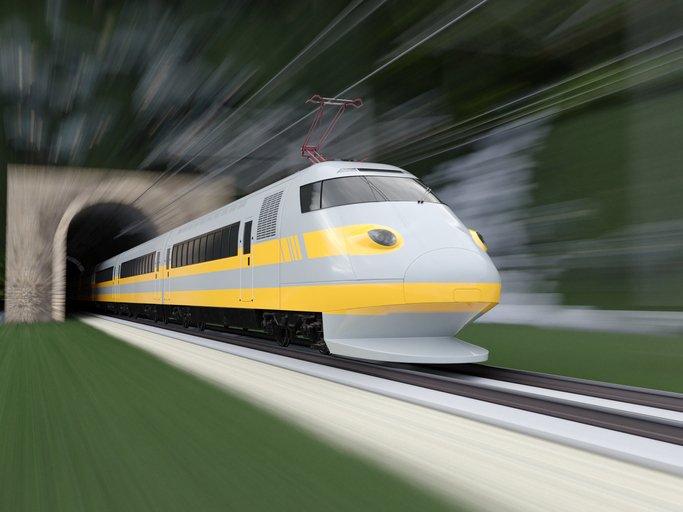
    Bernhard Richter, vice president of Geomatics, Leica Geosystems AG, pointed to one of the biggest infrastructure projects in Europe, which aims to connect London to Birmingham, Manchester and Leeds with a high-speed railway system, avoiding the need to fly between those cities. This will have great environmental benefits because high-speed trains are much more efficient than planes.

    However, high-speed rail requires tremendous precision. “First comes the prep work, moving dirt,” said Richter. “Then you must install the railroad ties with tenths of a millimeter precision relative to each other to avoid side accelerations. For a surveyor, it really has everything in one project. You need to constantly work with civil engineers. You then try to build as much as possible with machine-control-guided systems to make the leveling as automated as possible.” The project will include building bridges over whole valleys and monitoring them, particularly during the construction phase, to ensure that they are not moving.

    “Even the factory they are building is huge, so just to build the factory you need a lot of surveying,” Richter said. The project is generating 25,000 jobs at 300 construction sites, all of which must be managed on very tight schedules. In this context, the quality of the survey gear is critical. “On a construction site, the surveyor should be an invisible person,” Richter said. “When they come with the big machines and want to get stuff done, they don’t want a surveyor on the site. So, he has to work off hours, then remain on alert and trust that what comes out of an instrument is correct.” Leica Geosystems is one of the main suppliers for this project. “They chose us because of our focus on reliability, trust and quality.”

    Trimble

    Software is increasingly driving sales, pointed out Boris Skopljak, vice president, Surveying & Mapping Strategy and Product Marketing at Trimble Inc. As an example, he cited Trimble’s SX12 scanning total station, which uses Trimble Access software to leverage scanning, imaging and traditional total station capabilities in the field. “We have provided more inspection tools to enable people to decide whether something is meeting the tolerance.” The Trimble Connect cloud-based collaboration platform, coupled with the continuous field and office connectivity, has driven productivity increases and moved customers toward choosing the company’s solutions, he said.

    As an example of Trimble solutions, Skopljak cited City Rail Link, New Zealand’s first underground rail network and the largest transportation infrastructure project ever undertaken there. “The Trimble R10 was integral to acquiring static observations above the work site, while the Trimble S9, DiNi and Trimble Business Center network adjustment were game changers for the survey control network,” he said. To expedite mine tunneling the surveyors used the SX12’s combined total station and scanning functionality with Trimble Access field software infield inspection tools. “Fewer customers are choosing solutions on a spec. It’s not about how many satellites you can track, for how many days, or how many points you can scan. They are choosing solutions based on the ecosystem and productivity.”

  • DARPA puts navigation for deep dives to the test

    DARPA puts navigation for deep dives to the test

    Robots, UAVs go head-to-head in DARPA subterranean challenge

    The U.S. Defense Advanced Research Projects Agency (DARPA) is looking for novel approaches to rapidly map, navigate and search underground environments during time-sensitive combat operations or disaster-response scenarios.

    Eight teams have qualified for the DARPA Subterranean (SubT) Challenge Systems Competition Final Event. On Sept. 21–23, the teams’ robots will have to quickly navigate unfamiliar underground environments at the Louisville Mega Cavern in search of common items including backpacks, cell phones, trapped survivors and even invisible gas.

    Those who find and identify the most items will win prizes of $2 million for first place, $1 million for second place and $500,000 for third place. DARPA-funded and self-funded teams have an equal chance to win prize money in the final event, DARPA states.

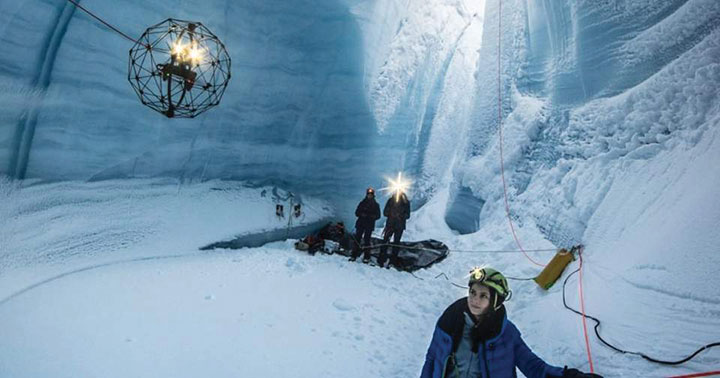
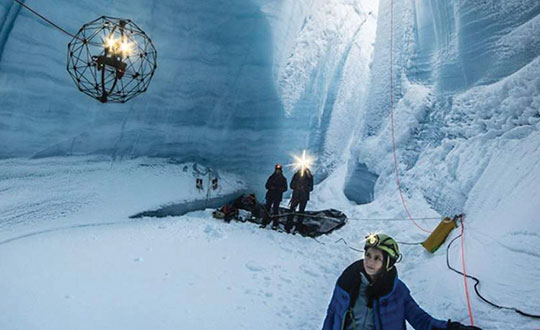
    An Elios drone from team CERBERUS roams a moulin in an earlier challenge. (Photo: DARPA)
    An Elios drone from team CERBERUS roams a moulin in an earlier challenge. (Photo: DARPA)

    The SubT Challenge has held three preliminary events over the past two years — tunnel, urban and cave circuits. The final event will include elements of all three subdomains.

    • Tunnel systems can extend many kilometers in length with constrained passages, vertical shafts and multiple levels.
    • Urban underground environments can have complex layouts with multiple stories and span several city blocks.
    • Natural cave networks often have irregular geological structures, with both constrained passages and large caverns.

    The SubT Challenge is run by DARPA’s Tactical Technology Office (TTO) to uncover innovative solutions to life-threatening, real-world impediments. “Complex underground settings present significant challenges for military and civilian first responders,” explained DARPA Program Manager Timothy Chung.

    Chung added that the project has already achieved success. “Multimodal sensing developed through collaboration of robots during this project has increased the probability of correctly identifying important targets in real life,” he said. “The SubT Challenge is pushing researchers and startups to move to greater autonomy and has led to huge leaps in capability within subterranean environments while allowing learning from failure in non-critical situations.”

    In addition to the Systems Competition involving physical robots, a Virtual Competition is being held. The teams that qualify for the final virtual competition will be announced later this summer. Teams in the Virtual final event will compete for up to $1.5 million, with additional prizes for self-funded teams in each of the Virtual Circuit events.

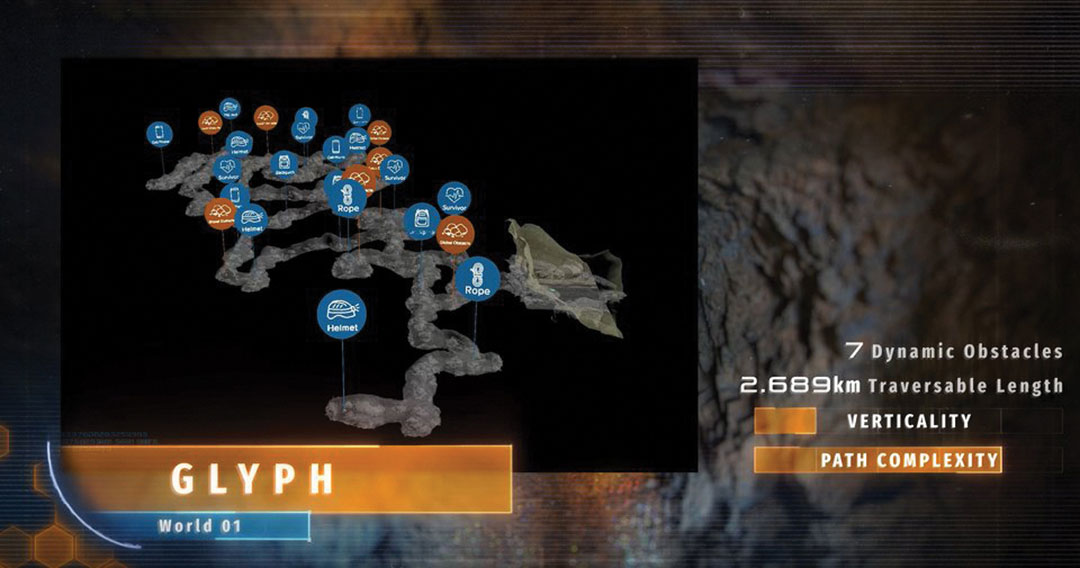
    In the final competition, helmets, rope and even gas must be located. (Photo: DARPA)
    In the final competition, helmets, rope and even gas must be located. (Photo: DARPA)

    FINAL EVENT TEAMS

    DARPA-Funded

    • CERBERUS: CollaborativE walking and flying RoBots for autonomous ExploRation in Underground Settings
    • CoSTAR: Collaborative SubTerranean Autonomous Resilient Robots
    • CSIRO Data61
    • CTU-CRAS-NORLAB: Czech Technical University – Center for Robotics and Autonomous Systems – Northern Robotics Laboratory
    • Explorer
    • MARBLE: Multi-agent Autonomy with Radar-Based Localization for Exploration

    Self-Funded

    • Coordinated Robotics
    • Robotika International (Czech Republic, United States and partners)FINAL EVENT TEAMS
  • Beacons by Waze counter tunnel blackout

    Beacons by Waze counter tunnel blackout

    fort-pit-tunnel

    To assist drivers losing their navigation assistance in tunnels such as those in New York, Baltimore, Boston and Pittsburgh, app maker Waze has begun pilot projects installing electronic beacons. Each about the size of an E-ZPass, the beacons are installed within tunnels to guide the way via Bluetooth. No GPS signal in the tunnel means no directions upon emerging into daylight. That can cause a missed exit — or worse.

    Waze spokesperson Meghan Kelleher said one beacon is placed every 40 feet or so to provide seamless smartphone navigation throughout the tube and to allow people to note traffic troubles on the crowdsourcing app. But even non-Waze users can benefit.

    “It’s actually an open technology,” Kelleher says. “We’re making it available free of charge to other navigation services.”

    Each mile of beacons costs about $300 per year. The hardware is made by Bluvision with batteries are designed to last about six years.

    Waze has just switched them on in the Fort Pitt and Liberty tunnels in Pittsburgh with an eye on getting governments and other agencies to foot the bill in the rest of the world’s tunnels.

    Photo: the justified sinner via Foter.com / CC BY-NC-SA