Tag: u-blox F9

  • u-blox: Disruption leads to wide adoption

    u-blox: Disruption leads to wide adoption

    An interview with Markus Uster, head of product center positioning at u-blox about recent GNSS receiver innovations.


    Uster
    Uster

    What was the most significant technical innovation in your GNSS receivers in the past five years?

    The u-blox F9, launched in 2018, is our robust and versatile high-precision positioning technology platform. It was the first receiver to enable multi-band high-precision positioning solutions for mass-market industrial and automotive applications — and remains the benchmark for the industry today.

    The platform combines multi-constellation (continuous reception of four satellite constellations) GNSS technology with dead reckoning and high-precision algorithms. It is also compatible with a variety of GNSS correction data services to achieve positioning accuracy down to the centimeter level.

    The u-blox F9 platform is leading the next generation of high-precision navigation with its augmented reality, unmanned vehicles and various machine automation applications. It has since been integrated into a selection of modules catering to a wide range of applications.

    What has it enabled users to do that they could not do before?
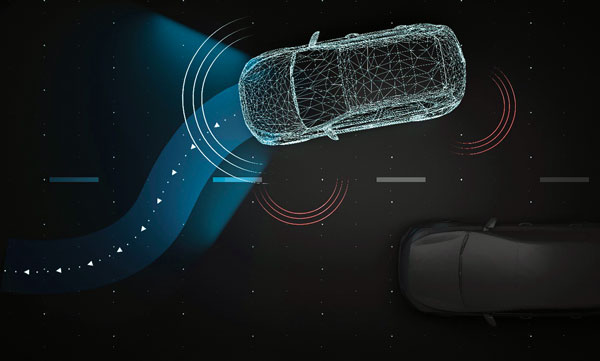
    The u-blox F9 is a widely adopted multi-band GNSS platform for automotive and industrial applications. (Photo: u-blox)
    The u-blox F9 is a widely adopted multi-band GNSS platform for automotive and industrial applications. (Photo: u-blox)

    In a nutshell, the u-blox F9 brought high-precision positioning to the mass market. The demand for scalable high-precision technology is growing rapidly, as evident in the automotive world with next-generation advanced driver-assistance systems (ADAS) and in robotics with applications such as UAVs and robotic lawnmowers. However, due to the complexity, size, power and cost restrictions of existing high-precision solutions, until now it has been difficult to meet the demands of these markets.

    u-blox developed the u-blox F9 platform by building on the success of our NEO-M8P high-precision GNSS module series and drawing on our extensive experience in GNSS positioning technologies, including dead reckoning, multi-band, real-time kinematic (RTK) and GNSS correction services. The platform delivers the next level of scalable GNSS high-precision technology and shows how u-blox is consistently addressing challenges and driving the GNSS technology evolution.

    What is a good example of this?

    Integration of the u-blox F9 platform into various applications has proven quite successful in a diverse range of use cases. In the industrial realm, u-blox F9 technology enables mass adoption of commercial unmanned vehicle applications. One example is precision agriculture, where high-precision positioning cost-effectively enables vehicle guidance solutions to improve pass-to-pass accuracy resulting in improved crop yield and reduced consumption of pesticides, fertilizer and seeds. The u-blox F9 modules also paved the way for autonomous driving, including lane-level navigation for heads-up displays and vehicular infotainment systems, a prerequisite for highly automated and fully autonomous vehicles.
  • Inertial Labs launches new GNSS-aided inertial nav system

    Inertial Labs launches new GNSS-aided inertial nav system

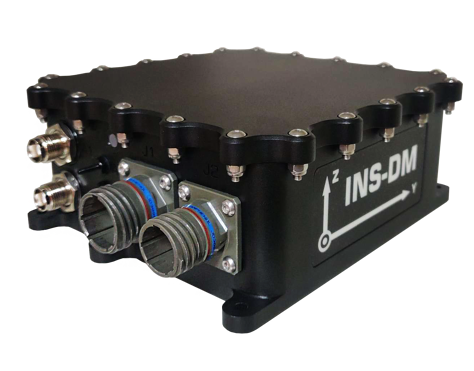
    Photo: Inertial Labs
    Photo: Inertial Labs

    Inertial Labs has launched a new GNSS-aided inertial navigation system. INS-DM is an IP68-rated version of the company’s new generation of super ruggedized units, shielded from electromagnetic interference. The fully integrated device combines the inertial navigation system (INS) with an attitude and heading reference system (AHRS) and air data computer (ADC).

    The high-performance strapdown system determines position, velocity and absolute orientation (heading, pitch and roll) for any device on which it is mounted. Horizontal and vertical position, velocity and orientation are determined with high accuracy for both motionless and dynamic applications.

    The INS-DM can support multiple types of micro-electromechanical (MEMS) inertial measurement units (IMU) developed by Inertial Labs. The INS-DM also supports other IMUs like the Honeywell HG4930.

    The INS-DM uses different multi-constellation (GPS, GLONASS, Galileo, BeiDou and QZSS) GNSS receivers such as the NovAtel OEM7 series or the u-blox F9 series.

    The optional ADC is supported by two Honeywell barometric sensors and the ability to support an internal fluxgate or external stand-alone magnetic compass. The INS-DM contains Inertial Labs’ new onboard sensor-fusion filter, state-of-the-art navigation and guidance algorithms, and calibration software.

    Key Features

    • Commercially exportable GNSS-aided INS
    • 3-in-1 strapdown system: INS + AHRS + ADC
    • Embedded industrial, tactical or navigation-grade Honeywell or Inertial Labs MEMS IMU
    • Novatel OEM7 or u-blox ZED-F9P high-precision GNSS receiver
    • GPS, GLONASS, Galileo, BeiDou, QZSS and real-time kinematic signals supported
    • Total and static pressure sensors for calculating indicated airspeed
    • SBAS, DGPS, RTK and PPP corrections supported for precise real-time operation
    • GNSS measurements and IMU raw data for post processing
    • Advanced, extendable (based on application) embedded Kalman-filter-based sensor fusion algorithms
    • State-of-the-art algorithms for different dynamic motions of helicopters, UAVs, marine vessels and ground vehicles
    • Full temperature calibration of all sensing elements
    • EMC, EMI and ERD protection (MIL-STD-1275)
    • Environmentally sealed (IP68)
    • Aiding data: wind sensor, air-speed sensor, Doppler shift from locator (for long-term GPS-denied environments), external position and external heading.

    The INS-DM is the result of more than 20 years of Inertial Labs’ experience developing and supplying INS solutions to land, marine and aerial platforms around the world.