Tag: UAE

  • Dubai Municipality joins International GNSS Services

    Dubai Municipality joins International GNSS Services

    First UAE government entity to join global geospatial organization

    Dubai Municipality has become the first government entity in the United Arab Emirates to join the International GNSS Services (IGS), a global organization specializing in satellite-based geospatial systems, precision surveying, and global reference frameworks.

    The IGS supports optimization of GNSS, plate tectonics monitoring, and the calculation of International Terrestrial Reference Frames (ITRFs).

    This recognition reflects Dubai Municipality’s continued efforts to strengthen its surveying infrastructure and geospatial capabilities to support urban development, infrastructure planning, and construction. It also underscores the municipality’s commitment to advancing research in geodesy and hydrographic mapping, developing digital navigation maps, and contributing to global knowledge-sharing in the geospatial field.

    By joining IGS, Dubai Municipality gains access to the GNSS service and the international reference framework used in scientific, commercial and educational applications. The IGS brings together more than 200 research institutions, universities and agencies from more than 100 countries, offering precise satellite orbit data and enabling high-accuracy positioning and mapping.

    “Dubai Municipality’s accession to the International GNSS Services represents a major milestone that reinforces the position of Dubai and the UAE as global hubs for scientific innovation and geospatial excellence,” said Maryam Al Muhairi, CEO of the Buildings Regulation and Permits Agency at Dubai Municipality. “This membership enables collaboration with more than 350 members worldwide, including major scientific organizations and international institutions specializing in navigation, climate studies, Earth dynamics, and advanced surveying applications.”

    She added that the membership would contribute to the implementation of Dubai Municipality’s strategic goals by enhancing surveying operations and 3D mapping, integrating research insights into infrastructure and urban planning projects, and promoting a smarter, more sustainable construction sector. It also supports Dubai’s digital twin ecosystem and the emirate’s vision for a globally leading, high-quality urban environment.

    Membership will also facilitate collaboration in a range of specialized research fields, including coordinate system referencing, tectonic plate monitoring, Earth rotation studies, navigation systems development, and climate impact modeling.

  • RUAG Space partners with UAE’s MBRSC on satnav services

    RUAG Space partners with UAE’s MBRSC on satnav services

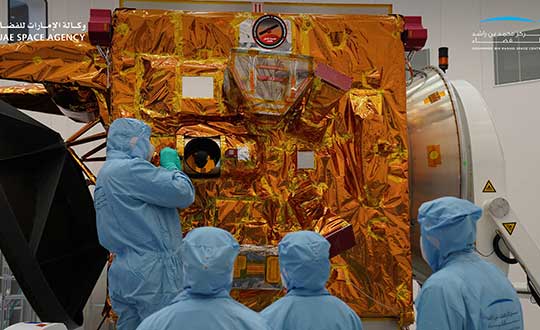
    The Mohammed Bin Rashid Space Center builds and operates earth observation satellites. (Photo: MBRSC)
    The Mohammed Bin Rashid Space Center builds and operates Earth observation satellites. (Photo: MBRSC)

    The Mohammed Bin Rashid Space Center (MBRSC) in the United Arab Emirates (UAE) will use a RUAG Space GNSS navigation receiver to determine the position of its new satellite. Founded in 2006, MBRSC is home to the UAE National Space Program.

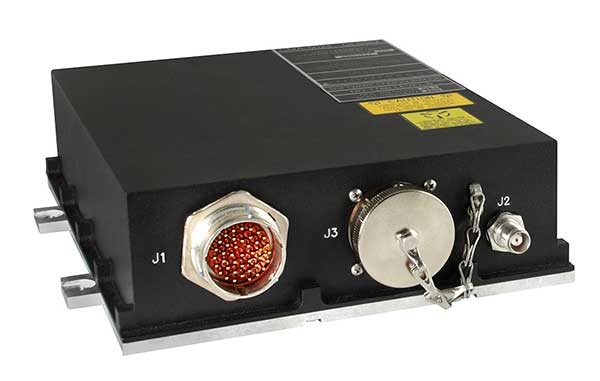
    RUAG Space’s LEORIX receiver will precisely determine the satellite’s position in orbit, with an accuracy of about 1 meter. The high accuracy is achieved through simultaneously processing of multi-frequency signals from GPS and Galileo satellites.

    The LEORIX receiver from RUAG Space. (Photo: RUAG Space)
    The LEORIX receiver from RUAG Space. (Photo: RUAG Space)

    Based in Switzerland, RUAG Space offers three types of space-hardened navigation receivers. The LEORIX for low Earth orbit, the GEORIX for geostationary Earth orbit and the PODRIX for precise orbit determination are all based on the European Space Agency’s latest GNSS processing technology.

    The PODRIX receiver had its maiden flight to space in November 2020 and precisely determines the position of the European environmental satellite Sentinel-6. The LEORIX receiver flew for the first time in space in March 2021. In total, more than 80 receivers of the latest receiver generation (LEORIX, GEORIX and PODRIX) have been ordered by customers in Asia, Europe, the Middle East and the United States. They will be launched for different low-Earth and geostationary orbit missions within the next months and years.

    The MBRSC builds and operates Earth observation satellites, offering imaging and data analysis services to clients around the world. The center launched the first Emirati-made satellite, KhalifaSat, in 2018, and the DubaiSat-1 and DubaiSat-2 satellites in 2009 and 2013 respectively. MBRSC is also responsible for the Emirates Mars Mission Hope probe, the first Arab interplanetary mission, which is collecting data from the Red Planet.

  • Following Mars probe, UAE to launch two navigation satellites

    Following Mars probe, UAE to launch two navigation satellites

    The United Arab Emirates (UAE) will launch the first of two navigation satellites in 2021, according to the Emirates News Agency (WAM), spurred by the successful launch of a Mars probe on July 19.

    The satellite is designed to demonstrate the country’s technological capabilities. A second, further enhanced satellite will be launched in 2022, said Khaled Al Hashmi, director of the National Space Science and Technology Center (NSSTC) at UAE University, Al Ain.

    The satellites are the first project of Satellite Assembly, Integration and Testing Center, a collaboration formed by Tawazun Economic Council with Airbus and the NSSTC.

    Funded by the UAE Space Agency, the satellites are not intended to add a navigation system — at least not right away. “We try to select a certain technology, design and develop the satellite and payload here, and will own the intellectual property rights,” Hashmi told WAM, the state news agency.

    The UAE’s navigation satellite project is part of the Science and Technology Roadmap created by the UAE Space Agency and the NSSTC on developing new technologies. The NSSTC was jointly established by UAE University, UAE Space Agency and the Telecommunications Regulatory Authority (ICT-Fund).

    Decision on the program came following the successful launch of the Hope Probe, which opened collaboration opportunities between the UAE and global space agencies and companies. In the first Arab interplanetary mission, the probe will reach Mars in 2021 to provide a complete picture of the planet’s atmosphere.

    Engineers and technicians at the Mohammed bin Rashid Space Center prepare the Hope Probe for its trip to Mars. (Photo: UAE Space Agency)
    Engineers and technicians at the Mohammed bin Rashid Space Center prepare the Hope Probe for its trip to Mars. (Photo: UAE Space Agency)

  • FAA grants CMC Electronics approval for ADS-B Out compliance solutions

    FAA grants CMC Electronics approval for ADS-B Out compliance solutions

    The U.S. Federal Aviation Administration (FAA) has approved two Supplemental Type Certificates (STCs) for CMC Electronics, to help airplanes comply with automatic dependent surveillance-broadcast out (ADS-B Out) requirements.

    Boeing 737 Next-Generation Aircraft

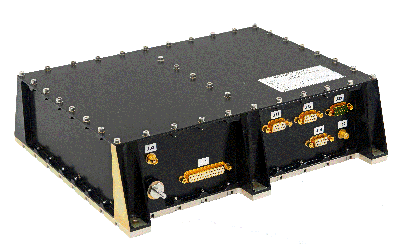
    CMA-5024. (Photo: CMC Electronics)
    CMA-5024. (Photo: CMC Electronics)

    The FAA has approved an STC to install the SBAS-capable CMA-5024 GPS on Boeing 737 Next-Generation aircraft to comply with worldwide ADS-B Out mandates as well as SBAS/GPS navigation enabling the first localizer performance with vertical guidance (LPV) approaches for B737NGs.

    CMC’s solution, developed in collaboration with the FAA’s Navigation Programs office, offers operators the advantage of a cost-effective alternative to replacing their current multi-mode receiver (MMR).

    The CMA-5024 is an approved DO-260B ADS-B Out positioning source that may be paired with any DO-260B compliant transponder, allowing operators to meet FAA and EASA ADS-B Out requirements, the UAE’s ADS-B Out and RNP requirements mandated by GCAA as well as India’s GAGAN requirements.

    The CMA-5024 is the only solution available that is approved to introduce LPV on B737NG aircraft. With the CMA-5024, the B737NG aircraft can take advantage of satellite-based augmentation system (SBAS) navigation throughout all phases of flight.

    An LPV approach is the highest precision GPS instrument approach available not requiring specialized crew training. It aims to reduce costs associated with flight delays or cancellations and provides airlines with a safe approach into airports when ILS is unavailable.

    The CMA-5024 meets the requirements for an IFR civil certified GNSS and is compatible with all SBAS systems operating around the world such as WAAS, EGNOS, GAGAN and MSAS. SBAS augments GPS to provide an extremely accurate navigation solution throughout all phases of flight, from departure to en-route, through LPV CAT-l equivalent approach. The CMA-5024 complies with published Communication Navigation Surveillance/Air Traffic Management (CNS/ATM) navigational mandates.

    EASA approval of the STC is in progress. Future growth to GBAS GLS precision approach capability can be obtained by upgrading to CMC’s new CMA-6024 GPS/SBAS/GBAS receiver system.

    For Business Jets

    CMC Electronics and DAC International received an FAA STC (ST00934DE) for aircraft equipped with Honeywell’s Primus II avionics suite.

    The new STC provides a low-cost alternative to upgrading the existing onboard Honeywell equipment while meeting the DO-260B ADS-B Out worldwide mandate. This is achieved by replacing the existing non-compliant Primus II transponder with the Becker BXT6553 Diversity Transponder, paired with CMC Electronics’ CMA-3024 GPS/SBAS (GNSSU) receiver.

    The STC extends the operating life of a broad range of aircraft such as Bombardier’s Challenger 600 series, Hawker 800/800XP, Learjet 45, Gulfstream G-IV and GIV-X, Cessna Citation II and V, and many more.

    This is the latest addition to already existing STCs (ST03424CH and ST04159CH), which pair CMC’s CMA-3024 with the Rockwell Collins TDR-94/94D or Honeywell RCZ-8XX Primus II Com/Transponder to meet the DO-260B ADS-B Out standards mandated by the UAE’s GCAA, FAA and EASA for 2020.

    Claude Chidiac, Vice President, Sales and Marketing, at CMC Electronics said: “These STCs bring together the best that CMC and DAC have to offer to economically support business jet operators. They combine the respective technological strengths of both companies, namely the most advanced GPS receiver with DAC’s worldwide distribution channels and FAA approved kits. Our joint ADS-B Out solutions deliver high integrity and the cost-effectiveness that business aviation has been waiting for.”

    The CMA-3024 aviation sensor provides fully ADS-B compliant SBAS/GPS primary means navigation for business, regional, commercial air transport and helicopter aircraft. It is fully compatible and operational with all SBAS signals worldwide.

    With SBAS coverage, differential corrections are incorporated to further improve RNP capability, providing RNP0.1 with outstanding navigation system availability.

    Full installation kits, including the CMA-3024 and STC package, are provided by DAC International.