Tag: UAV

  • GeoCue’s GNSS kit for drones provides survey-level accuracy

    GeoCue’s GNSS kit for drones provides survey-level accuracy

    GeoCue Group has released a GNSS positioning system that will allow users of DJI Phantom 4 Pros and Inspire 2 drones, as well as most drones using higher end cameras, to achieve survey-level accuracy with minimum ground control.

    Loki, GeoCue’s new direct geopositioning system for small unmanned aerial systems, solves the two fundamental problems associated with this technology:

    • Positioning Accuracy. Loki uses the new AsteRx-m2 multi-frequency, multi-constellation GNSS engine from Septentrio, which has 448 hardware channels.
    • Camera Events. GeoCue has invented a patent-pending method of detecting camera events from Phantoms/Inspires and synchronizing those events to GNSS positioning. No modifications to the drone are necessary; the adapter cable is “plug and play.”
    GeoCue’s Loki positioning kit uses the Septentrio AsteRx-m2 GNSS engine.

    Loki is a self-contained kit that provides all of the hardware and software needed to equip a drone with a post-processed kinematic (PPK) multifrequency, multi-constellation, differential, carrier-phase GNSS.

    Using a local base station (not included), Loki provides centimeter-level positioning with minimal, and in some cases, no ground-control points (though GCPs are always recommended for quality assurance).

    “GeoCue has been a long-time Septentrio OEM development partner,” said Neil Vancans, vice president of Septentrio Americas. “They have offered our previous generation sUAS board on their high-end AV-900, achieving remarkable results in both accuracy and reliability. By solving the problem of connecting the virtual camera trigger on DJI drones to our AsteRx-m2 GNSS engine, they can achieve professional mapping accuracies with consumer-grade UAVs.”

    DroneDeploy of San Francisco has become a leader in cloud-based processing for DJI, as well as other drones. DroneDeploy has enabled users of Phantom and Inspire drones to easily upload drone images, work online with analytics, and download point clouds and orthophotos to desktops for advanced processing.

    Without Loki, achieving acceptable network accuracy requires the time-consuming placement of ground-control targets throughout the mapping site.

    GeoCue and DroneDeploy have been working together to ensure a smooth Loki-DroneDeploy workflow from field to finish.

    “The GeoCue Loki system is an exciting product for anyone using drones to make maps with high accuracy,” said Mike Winn, CEO and co-founder of DroneDeploy. “The Loki’s combination of high-end GNSS positioning and DJI camera synchronization enables survey-grade accuracy with the simplest workflow that we’ve seen — making the Loki a great fit for the DroneDeploy platform.”

    “I am very excited to be working with industry leaders such as DroneDeploy on our Loki project,” said Lewis Graham, president and CTO of GeoCue Group. “Loki provides high accuracy positional data to downstream processing solutions. More significantly, it does this for DJI Phantom 4 Pro and Inspire 2 drones. Combining DJI, Loki and cloud processing solutions such as DroneDeploy provides a very streamlined and cost effective solution for high accuracy site surveys.”

    The Loki kit includes:

    • Loki PPK Controller using the Septentrio AsteRx-m2 GNSS engine (GPS L1, L2, L5 and GLONASS L1, L2, L3, 448 hardware channels).
    • Maxtena M1227HCT-A2-SMA high performance, active, multiband GNSS antenna
    • Antenna ground plane with mounting kit
    • Antenna to controller cable
    • USB cable for data transfer and Loki controller charging
    • Personality cable (user selects either DJI or DSLR)
    • AirGon ASP software suite
    • Mounting kits for DJI Inspire 2 and Phantom 4 Pro
    • 1 year of maintenance and technical support

    Loki requires a local multifrequency base station (not included but available from GeoCue). Loki is shipping to early adopter customers in August 2017. It will be available for the general market in September 2017.

    It will release with direct support for DroneDeploy and AirGon’s Bring Your Own Drone (BYOD) Mapping Kit. Loki’s introductory price will be USD $4,995. GeoCue is currently accepting preorders.

    Loki will be on display September 6-8 at the InterDrone 2017 conference in Las Vegas and at Commercial UAV Expo, also in Las Vegas, October 24-26. A workshop dedicated to high accuracy mapping with DJI drones using Loki is being held in conjunction with the Commercial UAV Expo. Register at www.expouav.com.

  • Israeli companies defeat drones with new technology

    Drones have become a serious threat, able to penetrate airspace for surveillance or with an explosive payload.

    The Islamic State has used weaponized drones against both Syrian and Iraqi forces; groups like Hezbollah and Hamas have sent drones into Israel and are said to be working on upgrading their UAVs for use in both intelligence gathering and offensive operations.

    On April 27, Israel used a Patriot missile to take down a drone entering Israeli Airspace from Syria. At $3 million per missile, the Patriot system is an expensive way to down a device that may only be worth $200. Israel has also intercepted drones with fighter jets.

    Systems developed by two Israeli companies provide less expensive — and quickly reactive — solutions.

    The Drone Dome system uses Laser, RF and Radar. (Photo: Rafael)
    The Drone Dome system uses Laser, RF and Radar. (Photo: Rafael)

    Drone Dome. Rafael Advanced Defense Systems Ltd. has developed a radar and laser-beam system for detecting and destroying drones, with the company adapting its existing laser systems to handle the threat.

    Once the system’s radar identifies targets, its laser system destroys them.

    Drone Dome also features a jamming system for disrupting communications between the drone and its operator. Drone Dome’s range reaches several miles, but causes minimal interruptions to other systems in nearby urban areas.

    The standard Drone Dome system comprises a RADA RPS-42 S-band multi-mission hemispheric radar, a Controp MEOS electro-optical (EO)/infrared surveillance suite, a communications package, and the C-Guard RD jamming and NetSense Wideband detection sensor systems developed by Netline. The UAV threat is neutralized by activation of directional GPS/GNSS and radio-frequency inhibitor/jammer devices.

    The RPS-42 is a four-panel tactical air surveillance system delivering 360-degree coverage in azimuth and 90 degrees in elevation, with a detection range of 30 kilometers — including the detection of a minimum target size of 0.002 meters square at a range of 3.2 kilometers — at altitudes from 30 to 30,000 feet. The RPS-42 is designed to detect, track and classify all classes of UAV.

    DROM Defense. ORAD’s DROM Drone Defense System can detect an approaching drone at more than 3.5 kilometers away and take command, neutralizing it and landing it far from the operator.

    With a weight of 38 kilograms, ORAD’s DROM system comes pre-engineered and pre-assembled. It is mobile and easily deployed on land or at sea in any weather conditions and has an effective coverage range of 3.5 kilometers. It has a 2-kilometer neutralization capability.

    Once intercepted, the system can land a hostile a UAV in a pre-defined location, keeping any intelligence it gathered out of enemy hands. It can also identify the location of the operator.

    The system’s RF detection unit analyzes signal channels and radio transmissions to spot drones. Once detected, an alarm alerts the system operator.

    ORAD has sold the system to clients in several countries including Portugal, Spain and Thailand. The company is in talks with Israeli agencies interested in purchasing the system.

  • Launchpad: OEM, survey and mapping, transportation, UAVs

    Launchpad: OEM, survey and mapping, transportation, UAVs

    OEM

    Narrowband cellular chipset

    With integrated GNSS

    The ALT1250 narrowband CAT-M1 and NB1 (NB-IoT) chipset includes GNSS functionality. Its extreme level of integration eliminates the need for most external components required to design a cellular Internet of Things (IoT) module. Less than 100 x 100 square millimeters, the ALT1250 module features support for both Release 13 standards — CAT-M1 and NB1. It includes a wideband RF front end supporting unlimited combinations of LTE bands within a single hardware design; a multi-layered and hardware-based security framework; an internal application MCU subsystem; and packaging that enables standard, low-cost printed circuit board (PCB) manufacturing.

    Altair Semiconductor, www.altair-semi.com

    Grandmaster clock

    Carrier-grade, packet-based timing and synchronization

    Hardware on the TimeProvider 5000 IEEE 1588 Precision Time Protocol (PTP) grandmaster clock has been updated to support Internet Protocol version 6 (IPv6) and multi-GNSS constellations to ensure better reception and higher security in a wide variety of telecommunications network applications. Looking forward to mobile infrastructure with LTE-Advanced (LTE-A) and 5G services, support for IPv6 and alternate GNSS constellations is rising in importance for deploying a robust, secure and future-proof synchronization network. The device offers multiple constellations in accordance with the directives in certain countries to remove sole dependency on GPS. Support for GLONASS and Galileo also makes systems more robust and secure to certain GNSS vulnerabilities. The TimeProvider 5000 provides redundant hardware, user-configurable PTP profiles and Synchronous Ethernet (SyncE) support with optical small form-factor pluggable (SFP) modules.

    Microsemi Corporation, www.microsemi.com

    Post-processing board

    Designed for effective data collection, management

    The Precis-BX316R is a GNSS Post-Processing Kinematic (PPK) board for accurate positioning. It supports raw measurement output from two antennas: GPS L1/L2, GLONASS G1/G2 and BeiDou B1/B2 from the primary antenna and GPS L1/L2 from the second antenna. The SD card on board (up to 32 GB) makes it convenient for users to collect data for post processing. Working with GNSS antennas, it can output stable measurement in challenging conditions. Integrated with versatile interfaces and connectors, Precis-BX316R aims to facilitate applications such as precision navigation, precision agriculture, surveying and UAV, and enforcing effective GNSS data management.

    Tersus GNSS, www.tersus-gnss.com

    GNSS module

    Integrated module eases embedded designs

    The u-blox SAM-M8Q GNSS receiver with integrated antenna is housed in a 15.5 x 15.5 x 6.3 millimeter package. It can be embedded in small devices that require location information, such as asset tracking and telematics systems, and generic automotive after-market applications. The module offers simultaneous reception of GPS, GLONASS and Galileo. The combination of an integrated wide-band antenna along with the module’s SAW filter and low-noise amplifier (LNA) architecture ensures that the SAM-M8Q receiver delivers robust performance in the presence of high-frequency signals from other electronic equipment that can cause interference, such as cellular modems.

    u-blox, www.u-blox.com

    Dual-band antenna

    Tight pre-filter protects against high-level cell signals

    The TW3892 is a through-hole mount dual-band plus L-band GNSS antenna. It employs Tallysman’s Accutenna technology and is capable of receiving GPS L1/L2, GLONASS G1/G2, BeiDou B1, Galileo E1 plus L-band correction services (1213MHz to 1261MHz + 1525MHz to 1610MHz). The TW3892 is a precisely tuned antenna with a tight pre-filter to protect against intermodulation and saturation caused by high-level cellular 700 MHz and other signals.

    Tallysman, www.tallysman.com

    Multi-constellation board

    Protection against jamming interference

    The credit-card sized AsteRx-m2 offers all-in-view multi-frequency, multi-constellation tracking and centimeter-level real-time kinematic (RTK) position accuracy for low power. It can receive TerraStar satellite-based correction signals for precise point positioning (PPP). The board features Septentrio’s AIM+ interference mitigation system that can suppress a wide variety of interferers, from simple continuous narrowband signals to complex wideband and pulsed jammers. The RF spectrum can be viewed in real time in both time and frequency domains.

    Septentrio, www.septentrio.com

    Test suite

    For in-vehicle and V2V connectivity

    Spirent’s TTsuite-WAVE-DSRC (Wireless Access in Vehicular Environments – Dedicated Short-Range Communications) conformance test solution includes a set of tests required for U.S. Department of Transportation (USDOT) certification. TTsuite-WAVE-DSRC consists of four different protocol conformance test suites as per the USDOT Certification Operating Council (COC) conformance test specifications. It enables full test automation, includes frameworks for individual adaptation, and it is extensible with many plug-ins to meet constantly changing development requirements. TTsuite-WAVE-DSRC is targeted at companies supplying or testing WAVE-DSRC ITS technology.

    Spirent Communications, www.spirent.com

    Survey & Mapping

    GNSS receiver

    Multi-frequency, multi-application and multi-use

    The SP90m GNSS receiver is a powerful, highly versatile, ultra-rugged and reliable GNSS positioning solution for a wide variety of real-time and post-processing applications. Integrated communications options include Bluetooth, Wi-Fi, UHF radio and cellular modem as well as two MSS L-band channels to receive Trimble RTX correction services. The SP90m can be used as a base station, campaign receiver, continuously operating reference station (CORS), real-time kinematic (RTK) or Trimble RTX rover, or be integrated on-board a machine. The receiver uses all available GNSS signals to deliver fast and reliable positions in real time, and allows the connection of two GNSS antennas for precise heading or relative positioning determination without a secondary GNSS receiver. It features an internal removable battery, internal memory and optional accessory kits for specific applications.

    Spectra Precision, www.spectraprecision.com

    Field-to-office software

    For total stations, robotics and GNSS rover systems

    GeoPro Field provides a graphical user interface designed to collect field measurements for land surveying and construction activities. GeoPro Field is a tool to collect and import measurement data into design and drafting software, increasing productivity with CAD functionality in the field. It is compatible with various software workflows, and point files are easily exported to third-party software. Sokkia GeoPro Office is the office-processing complement to the field software — designed to clean, process, and analyze field data into its easiest-to-use form. The office software can also be expanded with an optional 3D and road design module, for further versatility to design roads with the processed field measurements.

    Sokkia, www.sokkia.com

    RTK base and rover

    Ready for highway and site construction

    Hemisphere GNSS’ C321 GNSS Smart Antenna is designed for heavy highway and site construction. When paired with SiteMetrix Site Management software, the multi-frequency, multi-GNSS C321 antenna can be used as an all-in-one construction base and rover site controller. The C321 combines the Athena GNSS engine and Atlas L-band correction technologies. The ruggedized antenna is designed for the most challenging environments and meets IP67-standard requirements. Powered by Athena GNSS engine, the C321 provides best-in-class, centimeter-level RTK. Athena excels in virtually every environment where high-accuracy GNSS receivers can be used. Tested and proven, Athena performs with long baselines in open-sky environments, under heavy canopy, and in geographic locations experiencing significant scintillation. The C321 ships pre-configured to test-drive corrections from Hemisphere’s Atlas L-band corrections service. C321 also uses Hemisphere’s aRTK technology, powered by Atlas. This feature allows the receiver to operate with RTK accuracies when RTK corrections fail. If the C321 is Atlas-subscribed, it will continue to operate at the subscribed service level until RTK is restored.

    Hemisphere GNSS, www.hemispheregnss.com

    RTK GNSS tablet

    Centimeter-level positioning

    Toughpad is Panasonic’s newest professional-grade notebook, specifically designed for precision agriculture, machine control and robotic guidance applications in harsh environments and conditions. Embedded in the tablet is a u-blox NEO-M8 GNSS receiver module delivering high integrity and precision in demanding applications worldwide. First tested for collecting snow in Hokkaido, Japan, the Toughpad tablet uses Panasonic’s own satellite positioning technology combining a satellite radio receiver module, wireless WAN, and a single-band real-time kinematic (RTK) GNSS receiver connected to an external antenna. The system enables high-precision positioning down to centimeter level in open-sky conditions.

    Panasonic, www.panasonic.com
    u-blox, www.u-blox.com

    Mobile app

    Aids in understanding the oceans

    Esri has released an Ecological Marine Units (EMU) app for mobile devices. The app provides a new way to measure marine environments on a 3D interactive map for more cost-effective fishery planning and informed conservation. It is a resource for scientists, educators, governments and industries seeking accessible information and imagery about the ocean’s long-term physical and nutrient properties. The EMU app puts data such as temperature, salinity and dissolved oxygen from 52 million locations throughout the world’s oceans at any user’s fingertips. This data informs how livable marine environments are for ocean-dwelling species as well as the overall health of the ecosystem. The app is free from the App Store and Google Play.

    Esri, www.esri.com

    Post-processing software

    Delivers CAD drawings from ground-penetrating radar data

    DX Office Vision is a utility post-processing software for mapping ground-penetrating radar (GPR) data from the field into a CAD drawing. It allows even non-experienced users to obtain professional 3D CAD drawings and visualize the detected underground utilities in a simple way. The intuitive interface enables users to filter, select, identify and make annotations of the located targets. With DX Office Vision, post-processing for all ground-penetrating data requires no add-on or third-party software.

    Leica Geosystems, www.leica-geosystems.com

    Transportation

    Infotainment testing

    For the connected-car market

    Averna has entered a strategic partnership with M3 Systems to distribute their StellaNGC GNSS Simulator on VST NI platforms for the infotainment segment of the automotive market. M3 Systems’ GNSS simulator, based on National Instruments’ Vector Signal Transceiver (NI VST), will now be available as part of Averna’s AST-1000 platform, extending its capability to navigation and GNSS testing. Launched in July 2016, the AST-1000 is an RF solution designed for radio, navigation, video and connectivity testing. Also based on the NI VST, the software-defined AST-1000 supports infotainment RF signals, including AM/FM, DAB, RDS, HD Radio and Sirius/XM as well as GNSS navigation. The combination provides a comprehensive solution and enables applications for testing infotainment systems.

    Averna, www.averna.com

    LTE automotive-grade module

    Optimized for connected cars

    The LE940A9 automotive-grade module is designed to support LTE Advanced Category 9 (Cat 9) networks. The series offers three multi-band, multi-mode variants — including voice-over-LTE (VoLTE) — and is optimized for automobile manufacturers to deploy next-generation connected-car technology in world markets. The LE940A9 delivers 450 Mbps download and 50 Mbps upload speeds with extremely low latency and advanced security. The xE940A9 40×40 mm LGA form factor nests with the 34x40mm Telit xE920 automotive module family, offering flexibility for the OEM or tier-one integrator. It powers the entire connected-car platform, supporting current needs while including advanced features that enable future integration of upcoming services. The module can run in-vehicle applications inside a secure processing environment from the built-in application processor, storage and memory. Automotive application programs can run entirely and securely on the module itself, protected by advanced cyber-security capabilities.

    Telit, www.telit.com

    Reference design

    Nine antennas including four LTE, two Wi-Fi, GNSS, SDARS and DSRC

    The Axiom is a reference design for a low-profile, compact multiple-antenna solution for the next generation of connected cars. The Axiom reference design helps automobile manufacturers more quickly advance antenna configurations that work for their particular make and model. As many as 18 antennas are needed to power the next-generation connected car, including multiple cellular antennas for network connectivity; Wi-Fi for hotspot connectivity; GNSS for navigation, emergency call systems and other location-based technologies; satellite radio (SDARS); AM/FM antennas; radar antennas for object detection; Bluetooth antennas for smartphones and other devices, and dedicated short-range communications (DSRC) antennas for vehicle-to-vehicle/infrastructure applications.

    Taoglas, www.taoglas.com

    Ground robotics

    Ruggedized module based on military design principles

    The Duro is a ruggedized version of Swift Navigation’s Piksi Multi dual-frequency RTK GNSS receiver. Built for outdoor operations, Duro combines a rugged enclosure with centimeter-accurate positioning. Leveraging design principles typically used in military hardware, the GNSS sensor is protected against weather, moisture, vibration, dust, water immersion and unexpected circumstances that can occur in outdoor long-term deployments. It is ready to connect out of the box. Primary industries for this product include robotics, precision agriculture, mapping, military, outdoor industrial and maritime.

    Swift Navigation, www.swiftnav.com
    Carnegie Robotics, www.carnegierobotics.com

    UAV

    GPS-INS for drones

    Now in beta mode for summer release

    The μINS is a precision miniature GPS-aided inertial navigation system (GPS-INS) designed to provide high-quality direction, position and velocity data for drones and robotic applications. It uses a u-blox L1 GPS receiver. Advanced algorithms fuse output from micro-electro-mechanical system (MEMS) inertial sensors, magnetometers, barometric pressure, and a high-sensitivity GPS (GNSS) receiver to deliver fast, accurate and reliable attitude, velocity and position even in the most dynamic environments. Sensor calibration, standard on all units, minimizes undesirable effects of manufactured variation and maximizes sensor performance. Features include GPS UTC time synchronization; an inertial measurement unit with comprehensive calibration for bias, scale factor and cross-axis alignment; –40°C to 85°C temperature compensation; a measurement of 15.6 x 12.5 x 6.3 millimeters; and a weight of 2 grams.

    Inertial Sense, www.inertialsense.com

    UAV helicopter

    Designed for high-altitude flight

    The Scout B-330 UAV helicopter is built with a payload capacity of up to 50 kg. (110 pounds), flight endurance of at least three hours, and the capability of flying at high altitudes (up to 3,000 meters above sea level) in a typical mission scenario. This includes a full autonomous take-off sequence, a mission flight at variable speed, and a landing sequence. The Scout B-330 is specifically designed for lidar-based powerline mapping missions. It pairs with Riegl airborne and unmanned lidar sensors such as the Riegl VP-1 Helicopter Pod, the Riegl VUX-1UAV lightweight UAV laser scanner, and the Riegl VUX-1LR lightweight, long-range airborne laser scanner.

    Aeroscout, www.aeroscout.ch

    Situational awareness

    Certifiable application for unmanned traffic management

    The IRIS UAS Airspace Situational Awareness application meets the requirements of the DO-278A Assurance standard for Air Traffic Management systems, providing a certifiable option to monitor drones and airspace. By anticipating the regulatory requirements for airspace visualization with Unmanned Traffic Management or UTM, the IRIS display will be a regulatory-approved component increasing the safety of commercial drone flight operations — especially when operating beyond visual line of sight (BVLOS). The application had its genesis in supporting military UAV flight operations and was developed to help operators safely pilot UAVs in BVLOS operations. It was also used by regional airspace UTM managers to monitor the operations of multiple drones simultaneously. The DO-278A standard is used by certification authorities such as FAA, EASA and Transport Canada.

    Kongsberg Geospatial, www.kongsberggeospatial.com

    Precision pointing gimbal

    Better than 0.3-degree accuracy, plug-and-play

    The miniature Epsilon series of gyro-stabilized gimbals now have a precision geo-pointing feature. The feature, Precision Geo-Lock, combines a GPS-aided inertial navigation system (GPS/INS) with dedicated software algorithms and payload operator software. Precision Geo-Lock provides the user with highly accurate target geo-location, range-to-target, as well as Geo-Lock functionality and moving map user interface. It incorporates VectorNav’s VN-200, which offers a high-level of performance in a form factor small enough to be integrated directly into the optical bench of the gimbal. Precision Geo-Lock provides better than 0.3-degree accuracy and is plug-and-play, so the customer can install the Epsilon gimbal and get accurate results on any platform and in a high-vibration environment.

    Octopus ISR Systems, www.octopus.uavfactory.com
    VectorNav Technologies, www.vectornav.com

  • NOAA picks Black Swift sUAS for fire observation

    NOAA picks Black Swift sUAS for fire observation

    Aircraft to Provide Wildfire Measurements in Support of NOAA Fire Weather Forecasting

    The U.S. National Oceanic and Atmospheric Administration (NOAA) has selected a small unmanned aircraft system (sUAS) for wildfire measurements and observations in support of its FIREX field mission and the fire weather forecasting initiative.

    Black Swift Technologies will deliver to NOAA a tightly integrated system consisting of an airframe, avionics and multiple sensors capable of research-quality measurements of CO2, CO, aerosol, RH, p and T in wildfire plumes, as well as multispectral high-resolution maps of wildfires.

    The SuperSwift sUAS will be operated by the University of Colorado’s Integrated Remote & In Situ Sensing Program (IRISS) in close collaboration with NOAA.

    “One of the purposes of IRISS is to work with the science community to develop and deploy platforms which make primarily in situ measurements,” said Brian Argrow, IRISS director. “This naturally lead us to partnerships with NOAA on the science perspective, and to Black Swift Technologies for their sUAS technology and expertise. It’s a partnership that looks like a three-legged stool with the science interest of NOAA, the technology and engineering expertise of IRISS, and the unique sUAS platform designed by Black Swift Technologies, as the corresponding legs.”

    The FireFOX sUAS is based on Black Swift’s commercially available SuperSwift airframe and SwiftCore Flight Management System — designed to be cost-effective, powerful and easy to operate in the field.

    The SuperSwift is specifically engineered to meet the demands of high-altitude flights through strong winds and damaging airborne particulates typical of nomadic scientific field campaigns in harsh environments.

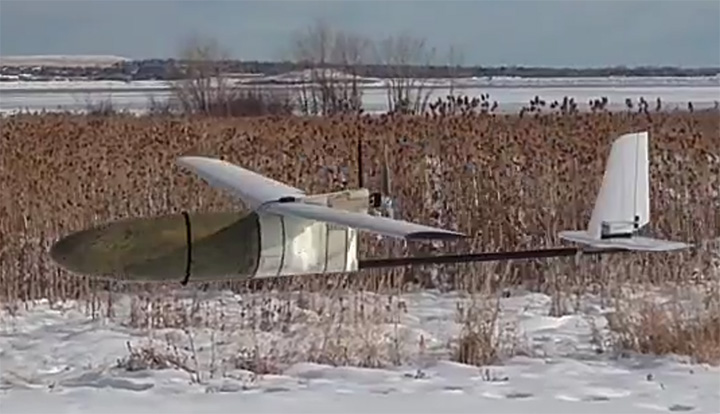
    The SuperSwift sUAS has a forward-located, spacious, interchangeable nose-cone payload bay. (Photo: Black Swift)

    “While there are many sUAS manufacturers for agencies like NOAA to consider, most are simply not suitable for scientific atmospheric measurements,” said Jack Elston, CEO of Black Swift Technologies.

    The SuperSwift addresses NOAA’s requirements for endurance and operational radius (> 2 hours and between 30 to 60 km) sufficient for fire observations, its payload capability (up to 5 pounds), and its unique forward-facing payload bay, “ideal for atmospheric sampling and for easy instrument package swapping,” Elston said.

    The ultimate goal of NightFOX is to perform nighttime in situ measurements of wildfire plumes and remote measurements of wildfire properties, with the measurement data used to improve fire weather forecasting.

    Because of safety concerns and dangers associated with nighttime operations, manned aircraft flights are limited to daytime operations. Ground observations using a mobile laboratory provide detailed chemical information on fire plumes, but lack information on plume spatial distribution to put the point measurements in context.

    UAS observations are the only technology capable of this task. sUAS observations can provide useful information for firefighting efforts by accurately detecting fire perimeter and identifying fire hotspots, but have not attempted to make measurements relevant to studying fire emissions or incorporate observations into fire forecast models.

    “Our proposed work, if successful, will significantly advance the integration of UAS-based observations of wildfires into fire-weather modeling and forecasting,” said Ru-Shan Gao, principal investigator, Chemical Sciences Division, Earth Systems Research Laboratory, NOAA.

    The collected data will also provide otherwise missing data for studying the impact of North American wildfires on the atmosphere and human health. It will ultimately support better land-management decisions and practices, contributing to NOAA’s core mission to advance understanding and prediction of the Earth system to enhance society’s ability to make effective decisions.

    IRISS, a pillar of the CU Boulder Grand Challenge, is a multi-disciplinary team that leads the design, development and deployment of novel remote and in-situ sensing systems to exploit mobility enabled by aerospace systems to enhance data collection from the ground, in the atmosphere and from
    space.

    With its partners, IRISS explores commercial opportunities and fosters discussions on the ethical, legal, and social policy implications of new technologies and big-data collection.

    The existence of a sUAS capable of carrying the necessary instruments routinely through harsh environments adds an invaluable contribution to the calibration and validation of data collected from ground- and satellite-based methods.

    The innovations of the SuperSwift, including the total sensor suite, can be used for scientific research by federal and state public agencies and other state-funded laboratories to collect data on coherent atmospheric structures such as smog, volcano plumes, wildfire smoke, chemical fires, forest humidity, and studying oil and gas field flares for calibration/validation of satellite measurements.

    “NOAA is interested in a UAS observational system (UASOS) that can use be used for fire-related measurements, and so in a sense what we want to know is when and where does the fire flow and ultimately what kind of fire and air quality will result regionally,” Gao said. “We want to monitor the fire and incorporate the remote and in situ measurements into a fire forecast model so ultimately we’ll be able to do better fire forecasts that will help firefighters better fight the fire and keep human and property losses to a minimum.”

  • Martek deploys Centrik aviation management for BVLOS UAVs

    Martek Marine has deployed the Centrik system to manage its UAS operation, the same system used by major airlines.

    Centrik is a cloud-based aviation management software solution specifically tailored for RPAS/UAS operations. It encompasses all aspects of operations: safety, quality, compliance and risk management, while providing comprehensive reporting functions, the company said.

    Centrik gives visibility of every single electronic flight bag and enables sharing of audit information direct with the Civil Aviation Authority or any interested third parties.

    It maintains a complete training record for every single member of staff, allowing us to see instantly who has which qualification and who needs to renew their training.

    It also compiles all assessment results, delivers alerts management when training certificates are about to expire and provides handy checklists of core competencies.

    Martek UAS.

    Pushing UAS capabilities to enable a multitude of compelling use cases can only happen with the approval of the relevant Aviation Authorities who are requiring us to demonstrate the highest level of operational standards and business oversight.

    “Thinking that you can manage a major UAS operation with old fashioned spreadsheets, folders and emails is fundamentally flawed — akin to putting cartwheels on a Tesla,” said Paul Forster, head of UAS Operations. “Investing in Centrik is another statement of our intent to be the world-leader in UAS operations, to compliment our well documented $multi-million investments so far in the world’s best maritime UAS/RPAS.”

  • Indoor drone inspections made safer and faster

    A manufacturer of refinery infrastructure was about to finish the assembly of a radiant box when a thumbnail-size notch was noticed in one of the pipes just before it was to be installed. The radiant box facility is used in the process of refining hydrogen under very high temperature (1,300 to 2,000°F) and pressure (45 to 360 psi).

    The Elios by Flyability is a collision tolerant drone.

    The notch was noticed near the end of the assembly process of the 144 40-foot-high vertical pipes composing the radiant box. The refinery owner insisted that each of the installed pipes be inspected thoroughly before moving to the final stages of testing and firing up the radiant box.

    The refinery manufacturer faced a difficult problem. Made of a particular heat-resistant alloy containing 30 percent chrome, the pipes need careful treatment — contact with another alloy could damage them, which made use of scaffolding impractical. Instead, the customer turned to Industrial SkyWorks and its indoor inspection drone, Elios by Flyability.

    The complexity of the location, the large number of pipes, and the fact that they could easily be mixed up required a meticulous work approach by Industrial SkyWorks. The two-man UAV crew set up a charging station just outside the building. Four flights were needed per pipe to ensure complete coverage. Using the onboard lights of the Elios, the UAV flew to the top of each pipe and descended slowly, recording video.

    The Elios drone flew continuously for nearly five days in a dry and dusty environment, imaging both sides of each pipe. Once finished, the crew presented high-resolution video of each pipe to the satisfied client.
    Resulting savings are estimated at 75 percent for cost and 85 percent for time, the company said. For instance, using a UAV avoided the need for workers to work at height with the associated safety procedures.

    Photo courtesy of Flyability.
  • Orbit GT releases UAS Mapping v17.1 with cloud feature

    OrbitGT_UAS-Mapping-v17.1-W

    Orbit GT has released v17.1 of its UAS Mapping desktop product including the all-new Upload to the Cloud feature. It is available for download from the company website.

    “This upgrade includes the capability to upload any UAS Mapping content directly to www.3dmapping.cloud, our SaaS based sharing and collaboration platform,” said Peter Bonne, CEO of Orbit GT. “It adds a great new feature for everyone collecting and creating drone based content.”

    Upload to the Cloud allows for users to instantly bring their drone/UAS/UAV data online. The upload process is fluently integrated in the known workflows of the product, with the required checks and validations. Upload time depends on the internet connection.

    Once uploaded, the data is immediately available for sharing on www.3dmapping.cloud. The new Catalog tool adds insight and overview of all data collection jobs done, indisspensible to manage large jobs.

    The update is free for holders of a license with maintenance.

  • BVLOS UAVs tested in flight

    BVLOS UAVs tested in flight

    A Delair drone inspects powerlines in France.

    NASA’s UTM. On May 25, the Federal Aviation Administration (FAA)-designated Nevada UAS Test Site and its NASA partners flew five different unmanned aerial vehicles (UAVs) to test NASA’s Unmanned Aircraft System Traffic Management (UTM).

    The flights demonstrated multiple operational scenarios, including parachute-initiated emergency supply deliveries and aerial survey operations.

    The UAVs were flown beyond the pilot’s visual line of sight (BVLOS) using strategically placed visual observers and sophisticated command and control, communication and detect-and-avoid technologies.

    The test is part of a three-week national campaign, which NASA is leading in close collaboration with the FAA and industry partners on a more complex version of its UTM technologies at six different UAS Test Sites around the nation.

    Demonstration in France. In France, Delair-Tech flew a UAV for 30 miles, simulating powerline inspection. Delair used a regular, commercial 3G cellphone network to control the drone for the test — an innovative demonstration that long-distance drone operations can be safe and simple to achieve.

    Canadian Deliveries. Drone Delivery Canada Corp. (DDC) hit a pivotal milestone toward commercializing its drone logistics platform after achieving BVLOS in test flights. Systems tested include DDC’s FLYTE management system, avoidance technology and communications platform.

    During flights in Alberta, DDC’s Mission Control Centre in Toronto, 2,500 kilometers away, successfully monitored and record telemetry in real time. DDC could become the first drone logistics-compliant operator approved by Transport Canada.

  • GIS users come from every field

    I just returned from the 38th Annual Esri International User Conference (Esri UC), which is the largest gathering of GIS (geographic information systems) professionals in the U.S. No GIS event in the U.S. is close to its scale.

    Every year for the past 38 years (I presume, as I’ve only attended the last 11), Esri President Jack Dangermond begins by spending time during the kick-off plenary session painting his GIS vision. I appreciate that he doesn’t just dive into Esri-product-specific information. Granted, I know he’s setting the stage for that, but why wouldn’t he? He has a vision, and the products Esri develops will naturally follow that vision. Every year during his plenary presentation, I look for striking statements he makes. This year, a statement that struck me was:

    “GIS users come from nearly every field of human endeavor.”

    Remember this slide from the Esri UC Plenary in 2015?

    Plenary-Dangermond-Esri

    The concept was that historically, geospatial technology has been a technology for scientists, but as geospatial awareness builds with business consumers and then mainstream consumers, the users of geospatial technology will count in the millions and, eventually, billions of users. One could argue that location-based services (LBS) have already reached more than one billion as consumers use geospatial technology in their mobile phones for navigating.

    Without geospatial technology, the mobile phone would just display latitude/longitude, offering no situational awareness. That’s not what the above slide is referring to. Geospatial awareness for the business consumer (and mainstream consumer) is becoming more about analytics. A communication tool, a decision-making tool. … not only for the scientist, but for a much wider audience.

    Of course, some will say I’m just “drinking the Esri Kool-Aid.” I would agree, except for one point: It’s actually happening. Think about it.

    Clearly, geospatial technology has reached thousands of users. (Reference the above slide.) Also, it’s clear that geospatial technology has already reached hundreds of thousands of users. We know this from market research, and even Esri has stated in the past it has about 350,000 customers of its enterprise, desktop and mobile products.

    How about millions of users? Check out the following slide Mr. Dangermond presented at this year’s plenary session…

    Esri-plenary-2017-W

    4.4 million!

    That’s more people that live in the State of Oregon (where I live). That’s more than one percent of the entire U.S. population. That’s the number of ArcGIS Online users.

    If you’re still not convinced about the direction of the trend, then consider the number to the right of 4.4 million on the slide above: “+30%.” That means a 30 percent increase in ArcGIS Online users (presumably from this time last year). If you look closely at the slide, you’ll see that 30 percent is the lowest number. Map tiles served increased 95 percent to 3 billion. Open data downloads were more than 40 million, an increase of 200 percent.

    Esri is a fascinating business case. With any other business model, it would be very difficult to accomplish what Esri has. Three points stand out to me:

    1. Esri has remained a privately held company. In other words, they didn’t “go public” and risk polluting its culture. Also, being a privately held company held means Esri can make major strategic decisions (such as shifting to web GIS) very quickly without having to worry about Wall Street or the next quarter’s financial report. This is very rare, and makes it very difficult for other companies to compete with Esri. Esri says it spends 28 percent of its revenue on R&D (research and development). In comparison, Microsoft spends 13 percent.
    2. The key management team has stayed intact. Senior management turnover is a killer in the technology world. Every time a key strategic manager changes, a company, or portion of it, is paralyzed until the next senior manager gears up. Six to 12 months can be lost during this transition. That’s an eternity in tech.
    3. Focus. This is a function of leadership and a stable management team. Esri isn’t perfect, but they’ve done a solid job for being a billion-dollar organization.

    Ok, enough of my armchair quarterbacking. Following are some quick observations.

    Mobile GIS is king

     
    The Collector and Survey123 user base is expanding, fueled by the rapid adoption of iOS and Android devices as field data-collection tools. Add to that the growth of high-accuracy GNSS receivers for the GIS professional.

    This is a perfect storm of technology convergence that’s resulting in a paradigm shift in high-accuracy GIS data collection. In other words, there’s a ton of demand for iOS/Android mobile devices running hardware-agnostic data collection software (such as Collector or Survey123) connected to a high-accuracy Bluetooth GNSS receiver.

    UAVs

     
    The UAV technical sessions were jammed with people. If you’ve kept up with my GSS Monthly newsletter the past couple of years, you can see why. You can use an inexpensive UAV (~$1,500) to generate centimeter-level orthophotos, 3D models, volume calculations and elevation contours.

    UAVs are another tool in the box, and one that I think most GIS users will eventually have access to. UAVs will continue to get cheaper and better. The challenge will continue to be how to consume UAV data efficiently into your GIS workflow.

    Structure from motion

     
    I see this technique being implemented with many technologies like UAVs and other devices. If you haven’t looked at the GeoSLAM device, the Zeb Revo, it looks incredible. With it, the GeoSLAM team scanned the San Diego Convention Center in 2 hours at 1.5-centimeter resolution.

    GeoSLAM-Esri-W
    The handheld Zeb Revo by GeoSLAM.
    GeoSLAM-art-scan-W
    Using the Zeb Revo, the GeoSLAM team scanned the San Diego Convention Center to 1.5-centimeter resolution in two hours.

    The user simply walks around with it as it scans an area. No tripods, no setups. Just walk. It’s expensive, but so were GPS, UAVs and 3D scanners when they first entered the market. The beauty of the GeoSLAM product is its simplicity. Check out this three-minute YouTube video:

    BYOD GNSS receivers

    The transformation is here. Trimble is finally on board with the Catalyst, in a big way. No more proprietary GNSS handhelds. You pick the device you want to use (an Android smartphone or tablet) and the software you want to use, then select the BYOD GNSS receiver (submeter, decimeter, centimeter) you want to use. This is the way it is supposed to be. If you think about it, it was backwards for so many years!

    Oh, and I forgot to mention. At nearly 18,000 attendees (that’s the high number I heard), this was the largest Esri UC in history. As someone who has attended the past 11 Esri UCs, this was the best one yet because I could feel the technology (hardware and software) really starting to come together to form practical solutions that can be deployed in a large scale.

    Thanks, and see you next time.
    Follow me on Twitter.

  • UAV solutions to be showcased at Intergeo

    UAV solutions to be showcased at Intergeo

    Contributing Editor Tony Murfin is on vacation this month. In place of his column, we bring you an advance look at an important UAV show as applied to surveying and mapping, and a story about drone use in surveillance.

    In the zone

    Legal issues, international market analyses and best practices will take center stage at the Interaerial Solutions Expo (IASEXPO), which will take place Sept. 26–28 in conjunction with Intergeo 2017 in Berlin, Germany.

    At IASEXPO, the international UAV sector will be demonstrating the potential for civil and commercial UAV applications. IASEXPO will consist of an exhibition, forum and the FlightZone for UAV demonstrations. About 150 providers from 25 countries are expected to represent the young drone market at the IASEXPO.

    IASEXPO’s practical forum will cover the latest topics with renowned experts. Visitors don’t have to walk far to switch between market overviews and expert presentations. The aim is to efficiently combine the trade fair and talks.

    IASEXPO Forum 2016.

    Regulations. As Germany’s drone regulations come into force this year, the legal aspects of using and operating UAVs is a key focus of the practical forum. Multicopters and drones weighing more than two kilograms can now only be flown in Germany by someone who holds a “drone driving license.” Pilots will be able to take the drone license test at the trade fair.

    Frank Wichert from project management company procow will detail the requirements and reveal the precise procedure that pilots must follow. Speaker Ulrich Dieckert is a lawyer and expert on the approval process; he specializes in exceptions to operating bans that hinder drone work.

    Market prospects. Kay Wackwitz, CEO of Drone Industry Insights, will present economic analyses of application opportunities and limits for UAVs, and discuss market developments and collaborations.
    UAV Issue Manager Ralf Heidger from German traffic control (DFS) will discuss how DFS tackles the challenge of drones in the air space and tracking them within the air-traffic-management system.

    Best practices.
    First-hand reports will provid examples of best practices in using drones for surveying and inspecting buildings and industrial complexes. Friedrich Wilhelm Bauer from Hannover University of Applied Sciences and Arts will highlight use of thermal-imaging technology for inspections. Benjamin Federmann from Aibotix-Leica will discuss the economic benefits of using drones in surveying and construction.

    The German Association of Copter Pilots will weigh the question of whether to “make or buy” needed drones and services. Answers come from success stories in niche segments such as 3D modeling and smart framing. Maik Neuser from Westnetz and Carlo Zgraggen from Aeroscout will discuss inspections in the energy sector.

    Other topics will be the use of drones in agriculture, forestry and disaster relief. Antoine Cottin from Carbomap and Bobby Vick from Precisionmapper will speak to the practical forum on drones used for surveying forests.


    Drones on patrol

    UAVs will soon be a common sight over border zones, crime hotspots and city streets in South Africa, as public safety and security officials and police departments discover the cost saving and efficiencies offered by drone patrol “armies,” according to Airborne Drones, a South African-based manufacturer of enterprise-grade drones.

    Airborne Drones Vanguard 35-km long range surveillance drone ready to take flight. (PRNewsfoto/Airborne Drones)

    Drones provide a solution to the limitations of other surveillance methods such as GPS tracking, CCTV camera observation, biometric surveillance and ground patrols. Aerial surveillance is increasingly being harnessed for security monitoring — traditionally, with costly helicopters. Drone surveillance present an faster and cheaper method of data collection.

    Specialized security drones can enter narrow and confined spaces, produce minimal noise, and can be equipped with night-vision cameras and thermal sensors, allowing them to provide imagery that the human eye is unable to detect. In addition, UAVs can quickly cover large and difficult-to-reach areas, reducing staff numbers and costs, and don’t require much space for operators.

    Autonomous, long-range security drones are at the vanguard of new policing methods, accoring to Airborne Drones. “Offering live video feeds to ground control stations, these drones can range autonomously over pre-programmed flight paths for extended periods of time, allowing for ongoing routine patrols across wide areas such as borders, maritime regions and high security installations.

    Should an incident be detected, ground crews can then follow objects or intruders from a safe distance, providing visual support to safety and security teams. UAVs can provide detailed visual documentation of sites, enabling effective analysis, risk management and security planning.”

    Around the world. Numerous countries are rolling out security drones to support public safety and defense initiatives”, says Airborne Drones. Israel has long harnessed advanced drones for military surveillance, and recently sold a fleet of “spy drones” to the Irish army.

    The U.S. FBI has used drones for surveillance and tracking for several years. In Australia, the new $50 million Defence Cooperative Research Centre will develop long-range drones, automated vehicles and robots to help Australian soldiers fight the wars of the future. India is looking to military-grade UAVs for maritime and other surveillance and intelligence gathering.

    In June, Brazil’s São Paulo became the first Latin American city to use drones for public security surveillance, and in July, Hamburg, Germany, deployed surveillance drones for the estimated 100,000 demonstrators at the G20 summit. In Australia’s New South Wales, the authorities are using helicopter and drone surveillance along the coast to protect holiday-goers from rip currents and sharks.

    UAVs are also instrumental in managing transport infrastructure safety and security and event security, from event security infrastructure to spectator and crowd control and safety, to overall health and safety planning.

  • senseFly brings drone education to Esri User Conference

    senseFly will showcase how to integrate drone imagery into current workflows at the Esri User Conference, which takes place July 10-14 in San Diego. senseFly is hosting a series of workshops designed for surveying, mapping and GIS professionals.

    As a producer of mapping drones and an Esri Silver Partner, senseFly will present the innovative ways in which its drones are being used with Esri’s Drone2Map for ArcGIS software to deliver on-demand high-resolution imagery and robust GIS projects.

    Drone Surveying 101 – Wednesday, July 12

    This workshop will be led by Francois Gervaix, surveying project manager, and is aimed at visitors wanting to know more about drone mapping and surveying. He will explain how senseFly solutions can be used as a surveyor’s own imagery sourceanytime, anywhere — as well as how Esri’s Drone2Map for ArcGIS makes the creation and integration of drone imagery into workflows even easier.

    The session takes place 12-1 p.m. in room 30 B of the San Diego Convention Center. Refreshments will be provided. To register, go to https://dronesurveying101.eventbrite.com.

    senseFly User Meeting – Thursday, July 13

    With the geospatial market needing specific and integrated solutions, Briton Voorhees, sales engineer, will give existing senseFly customers an in-depth look at its latest features. This includes senseFly Corridor, a new platform enhancement that vastly simplifies the drone mapping of linear sites, for applications such as utilities monitoring, as well as the newest release of eMotion 3.

    The user meeting takes place 12-1 p.m. in room 30 B – SDCC, where refreshments will be provided. Register at https://senseflyusermeeting.eventbrite.com.

    Briton will also speak at the pre-conference Imaging and Mapping Forum on the various sensors available to senseFly users and detail how they can apply to imaging applications.

    senseFly’s drones offer full compatibility with Esri’s Drone2Map for ArcGIS mapping and spatial analysis software.

    senseFly is also exhibiting at the UC Expo and encourages visitors to stop by booth 2126 to speak to its team of experts.

  • UAVs, high-accuracy GNSS: Red-hot, right-now tech

    By Eric Gakstatter

    It’s been a few months since I’ve published a GSS Monthly newsletter column. What a busy few months it has been. It’s been all about UAVs, high-precision GNSS projects and GIS, with some conferences and workshops sprinkled in between. High-accuracy GNSS technology and UAV technology are hot trends— red hot.

    UAVs: Prosumer and mapping on a slope

    Obviously, consumer UAVs have exploded in the mainstream consumer electronics market during the past five years. Since the FAA began requiring UAVs to be registered in late 2015, far more UAVs have been registered (~700,000 to date) with the FAA than manned aircraft (~320,000).

    In fact, the number of registered UAVs aircraft eclipsed registered manned aircraft more than a year ago! The FAA reported that at any one point during the day, there are ~7,000 manned aircraft flying in the U.S. airspace. That begs the question, how many UAVs are flying above our heads at any one point in time? No one can answer that question.

    On the coattails of consumer UAVs in mainstream America is the use of UAVs in the USA’s commercial world. Since the FAA opened the floodgates in August 2016 to allow almost anyone to fly UAVs for business ($150 and answer 42 out of 60 questions correctly), lots and lots of companies are buying inexpensive “prosumer” UAVs and extracting tremendous value from them.

    Prosumer electronics is equipment and software targeted at the consumer market but also good enough to be used for business. The UAV market is a perfect example of this. DJI, by far the biggest UAV manufacturer in the world at $1B+ in annual revenue, targets the mainstream consumer market and sells a huge number of low-, medium- and high-end UAVs to businesses. Think about it: You can buy a DJI Phantom 4 Pro at your local Apple Store and the next day be generating one-foot elevation contours on a project site!

    Following is an example of a papermill I flew a few weeks ago. I flew it in less than one hour (50 acres), generated an orthophoto with 2.4-cm/pixel resolution and a digital elevation model (DEM) with 4.79-cm/pixel resolution.

    Figure 1 - 2.4cm/pixel resolution orthophoto - 50 acres
    Figure 1.  2.4-cm/pixel resolution orthophoto, 50 acres.
    Figure 2 -DEM with 4.79cm/pixel resolution of the same flight
    Figure 2.  DEM with 4.79-cm/pixel resolution of the same flight.
    Figure 3- Zoomed in image of the same DEM
    Figure 3.  Zoomed-in image of the same DEM.

    The detailed data above, generated from a $1,500 UAV, is clearly outstanding. By the way, the purpose of the project was to determine the volume of the various stockpiles, which I’ve not computed yet. But if the volume calcs are close enough to the traditional terrestrial-based measuring methods, the UAV return on investment (ROI) argument will be hard to beat.

    It takes ~14 hours each month to measure all the stockpiles on this site using traditional terrestrial measurement tools. Also, the measurements must be taken on the weekend when the site activity is minimal. It took less than one hour to fly the entire site, and I flew it twice (one time west-east direction at 80/80 overlap and one time north-south at 70/70 overlap) to make sure I had enough data. I mean, seriously, I drove 1.5 hours to the site. Why not spend another 20 minutes to fly it in a perpendicular direction?

    To date, I’ve only flown relatively flat sites such as construction sites, agricultural fields, and industrial sites. That was until a couple of weeks ago. While I’ve become pretty comfortable at flying open and relatively flat sites over the past 18 months, I’ve not ventured into flying a site with a lot of elevation changes and tree canopy. I finally did that earlier this month, and it was both challenging and rewarding. There are a few problems on sites with major elevation changes and tall tree canopy:

    A. Maintaining visual line of sight (VLOS) as required by the FAA.

    B. Flying in such a manner that the image-processing software has good quality data to work with so you can generate the products you need.

    The mission planning/control software plays a very important roll in this process. Well, it always does, but it really does in this case. Typically, the mission planning/control folks want you to fly at a consistent height above the ground so your overlap is consistent. This is very difficult to accomplish if you’re flying a site with a lot of elevation change. In that case, they typically tell you to launch from the highest (or nearly the highest) elevation point and fly at that elevation.

    The problem this causes is that you could end up flying 500, 600 or 700 feet above ground level (AGL). For example, if you are flying a site with 500 feet of elevation change and you instruct the mission planning/control software to fly at 350 feet AGL, at some point in the project the UAV will be at 850 feet AGL. That can be a problem from both a regulatory standpoint (FAA allows UAV flights up to 400 feet AGL) and an image-processing standpoint.

    Fortunately, the mission planning/control software I use just introduced a Terrain Awareness feature. It uses SRTM (Shuttle Radar Topography Mission) elevation data. Granted, it’s 30-meter pixel elevation data, so each elevation block is 30 meters x 30 meters, so I really wondered if the resolution was high enough. The site I was going to fly was only 60 acres in size and had 550 feet of elevation change. Note that the trees on the site had already been harvested, so the land was relatively clear. There’s about a 550-foot difference from the projected launch point (purple dot) to the northern and western end of the site. Following is the mission plan for the site I was planning to fly.

    Figure 4- 60-acre site with ~550 feet of elevation change
    Figure 4. 60-acre site with ~550 feet of elevation change.

    To give you an idea of the slope, the solid red lines in the following image are 100-foot elevation contour lines. The green triangle is the projected UAV launch point. This was a great launch point because I could see the entire site and maintain VLOS.

    Figure 5- Site topo with projected UAV launch point
    Figure 5.  Site topo with projected UAV launch point.

    I chose to fly the mission at 300 feet AGL. I figured it would be high enough if there was some “slop” in the SRTM elevation model. Still, I was concerned about the resolution of the SRTM data because at 300 feet AGL, my UAV would be flying below the launch elevation due to the extreme elevation slope on the site. Remember, the Terrain Awareness feature of the mission planning/control software is based on the SRTM elevation data, and not based on any sensors in the UAV itself — if the SRTM elevation data was incorrect, my UAV might crash into the ground.

    Following is the SRTM elevation data along with the flight path data displayed in the mission planning/control software.

    Figure 6 - The projected UAV flight path based on the SRTM elevation data
    Figure 6.  The projected UAV flight path based on the SRTM elevation data.

    The moment of truth came when I launched the UAV from the start point (purple dot) and watched it rise to 300 feet AGL to start its mission. The first few swaths were uneventful. After that, it started to fly into the canyon, following the terrain as programmed, then rise up from the canyon during each pass. It was a thing of beauty to watch.

    Unfortunately, about 70% of the way through the mission, it started raining, so we called it quits. However, we proved that at least on the four sites I flew that day, the SRTM data and Terrain Awareness feature were effective in collecting data in steep-slope environments. Following is the 2.69-cm/pixel orthophoto generated from the flight. Note the tracks where the logging rigs pulled the logs up the steep slope.

    Figure 7 - 2.69cm/pixel resolution orthophoto
    Figure 7.  2.69-cm/pixel resolution orthophoto.

    Following is a zoomed-in view of the UAV launch site.

    Figure 8 - Zoomed in view of the orthophoto
    Figure 8.  Zoomed-in view of the orthophoto.

    Following is an image of the 5.37-cm/pixel DEM generated from the flight data. Notice the logging tracks.

    Figure 9 - 5.7cm/pixel image of the DEM generated from the flight data
    Figure 9.   5.7-cm/pixel image of the DEM generated from the flight data.

    Following is a zoomed in view of the 5.37-cm/pixel DEM image.

    Figure 10 - Zoomed in 5.37cm DEM image of UAV launch point
    Figure 10.  Zoomed-in 5.37-cm DEM image of UAV launch point.

    The mission was successful in proving that SRTM elevation data was sufficient enough to fly a mission with a dynamic AGL. It handled the steep slopes by maintaining a sufficient AGL elevation as I hoped it would despite only having 30-meter x 30-meter block elevation resolution. The image processing software seemed to like the UAV data, as you can see from the results above. I didn’t have to spend any additional processing time over and above what I usually spend in order to generate these products.

    I did experience a hiccup with the mission planning/control software running on my iPad Mini 2. It turns out that the Terrain Awareness feature in my mission planning/control software requires some extra CPU horsepower — the software overpowered my iPad Mini and crashed once during a mission. The UAV kept flying its intended course as instructed, but it stopped taking photos when the software crashed, so I brought it back to the launch point.

    After visiting the software vendor’s website, it became clear to me that it’s probably time to upgrade my iPad Mini to the latest model to keep up with the new features being implemented in the software.

    A Quick Note on High-Accuracy GNSS

    In March, I attended the Hawaii GIS conference and decided to perform some benchmark testing on a survey mark using WAAS and a high-accuracy GNSS receiver.

    My goal was two-fold.

    1. See how WAAS is behaving in Hawaii. WAAS in Hawaii is an anomaly because it’s far away from the Continental U.S. (CONUS) where all the WAAS reference stations are located (there’s one in Honolulu, but that’s it). In other words, Hawaii is the most challenging place for WAAS accuracy in North America.
    2. See how many GNSS satellites I could track and use in Hawaii.

    Holy moly, was I surprised at how good it was. I’ve tested WAAS in Hawaii several times in the past many years. The last time I tested it was in 2013 and the GNSS receiver I used (GPS + GLONASS) achieved a steady 80-cm accuracy. That was pretty darned good for WAAS in Hawaii at that time.

    I packed up some receivers and hiked about 4 miles to a survey mark I could find in Honolulu. I was a great survey mark for testing because it was on the sidewalk of a quiet residential street. Following is a photo of the survey mark.

    Figure 11 - PID DK4162 survey mark in Honolulu
    Figure 11. PID DK4162 survey mark in Honolulu.

    I set up on the survey mark and then looked at the satellites the receiver was tracking. I wanted to know how many GPS, GLONASS, Galileo and BeiDou satellites were being used. Following is a screen shot.

    Figure 12 - Total number of GNSS satellites being used – 23
    Figure 12.  Total number of GNSS satellites being used – 23.

    Twenty-three GNSS satellites being used! Are you kidding me? This is more than double the number of GPS satellites being used. This illustrates the power of four-constellation GNSS that is only going to continue to get better over the next several years.

    What surprised me the most was the number of Galileo satellites being used, and this was before two Galileo satellites were declared healthy in late May.

    My next test was to evaluate WAAS accuracy. Who cares how many satellites the receiver is using if the accuracy isn’t improved? I plumbed the receiver antenna on the survey mark and plotted ~7 minutes of data.

    Figure 13- Accuracy plot compared to the DK4162 survey mark coordinates
    Figure 13. Accuracy plot compared to the DK4162 survey mark coordinates.

    Yep, that’s about 30-cm accuracy over a 7-minute period. That’s better by a factor of two compared to the accuracy I saw in 2013. Sure, WAAS has improved somewhat, and maybe the ionosphere was particularly happy that day, but I have to believe that the additional GNSS satellites contributed the most to the improvement in accuracy. In the next few months, I’m going to be performing more tests with WAAS and RTK on my GNSS test course near my office. I’ll keep you posted on the results of those tests.

    The Esri International User Conference – July 10-14

    As usual, I’ll be attending the largest gathering of GIS professionals in the U.S. next month, the Esri International User Conference. 16,000 of our colleagues will descend upon San Diego to share, network and enjoy the spatialness that we have for one another.

    If you’re interested, I’m giving a couple of presentations at the Esri UC:

    • Tuesday (July 11), 08:30 a.m., Room 28B (subject to change)

    Paper Title: An Efficient, Accuracy Mobile GIS Workflow using RTK GNSS

    Session Title: Mobile Data Collection

    This is cool project I worked on with WaterOne, a large water utility, to design a real-time, high-accuracy GNSS workflow in the Esri environment. They are collecting data at the centimeter level for mapping their above-ground assets as well as new construction using tablet computers and RTK GNSS receivers.

    • Thursday (July 13), 8:30 a.m., Room 29C (subject to change)

    Paper Title: UAV (drone) applications for water utilities

    Session Title: Applied GIS: Three Unique Examples

    This is some groundbreaking work I’ve done with American Water on using UAV technology for mapping and inspection. We did a lot of experimenting during the proof-of-concept phase to figure out what applications are practical and which aren’t.

    Thanks, and see you next time.

    Follow me on Twitter at https://twitter.com/GPSGIS_Eric

    All Provided by Eric Gakstatter