Tag: UNB

  • UNB GAPS for Precise Point Positioning Gets Update

    The next version of the UNB GPS Analysis and Positioning Software (GAPS), version 5.9.1, is now available.

    The new version of the precise point positioning software includes several updates and new features, including creation of GAPS Basic and Advanced user submission pages.

    The GAPS Basic user submission page allows for quick and easy submission of observation files for users who frequently use GAPS’ default processing options.

    The GAPS Advanced user submission page includes:
    •    User-selection of the orbit and clock products to be used.
    •    User-selection of the carrier-phase and pseudorange observables to be used.
    •    Optional use of GPS L2C in place of P2 for all satellites currently transmitting L2C.
    •    Optional use of GPS L5 in place of L2 for all satellites currently transmitting L5.
    •    Optional use of static-mode satellite clock interpolation (if 30s clock product is used and logging interval < 30s).
    •    User-selection of GDOP cut-off threshold.
    •    User-selection of positional convergence condition and maximum number of iterations for least-squares filter.
    •    Enhanced the cycle-slip detection algorithm (following Blewitt, 1990).
    •    A minimum of 4 satellites per epoch are required before estimation begins.
    •    User-selection of all available neutral atmosphere delay (NAD) prediction model and mapping function (MF) combinations.

    NAD prediction models include: UNB-VMF1 (NCEP), UNB-VMF1 (CMC), VMF1 (ECMWF), UNB3m, GPT2 (1×1 deg.), ESA 2.5 and None

    Mapping function options are: Vienna MF and Niell MF.

    •    User option to not estimate NAD.
    •    User option to not estimate tropospheric gradients.
    •    Optional use of a user-provided receiver antenna calibration file.
    •    NAD estimation automatically terminated if receiver rises above neutral atmosphere threshold (50,000 ft = 15,240 m).
    •    Added option to estimate precipitable water (if a meteorological file is submitted).
    •    New .ion, .cmp, .nad, and .DOP output files as well as modified formatting of the .par file.
    •    Improved reporting of processing parameter options and results in the HTML output.
    •    Added receiver clock and DOP plots.
    •    Added height component to kml output.

    For information on the processing strategy, visit the web page. Your feedback (suggestions, bug reports, etc.) is welcome via the GAPS Development Team email: [email protected].
     

  • UNB’s PPP Software Centre v2.0 Beta Now Available

    The PPP Software Centre, an email-based Online PPP comparison utility hosted by the University of New Brunswick, is once again functioning with its release of version 2.0 Beta following an extended hiatus while being rewritten.

    The centre is a convenient method for the GNSS community to compare results from several online precise point positioning services. For a more detailed description, including submission instructions, see the homepage at http://www2.unb.ca/gge/Resources/PPP/.

    Note that the report has changed slightly, adding additional features, including final static position estimates tabulated in both Cartesian and geodetic coordinate systems; the name of the Cartesian system (and its epoch); and featuring a so-called Subject Line Interface, allowing advanced users some additional control over the centre’s behavior. This last feature may see some future expansion.

    The centre invites feedback on the utility.

  • GPS Data Show How Nepal Quake Disturbed Earth’s Upper Atmosphere

    GPS Data Show How Nepal Quake Disturbed Earth’s Upper Atmosphere

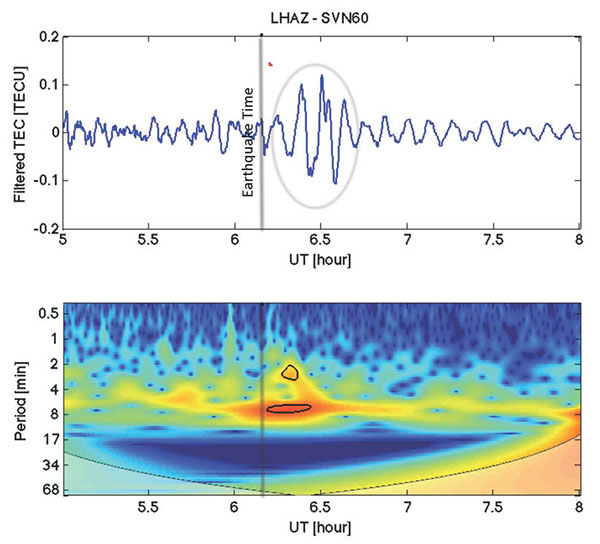
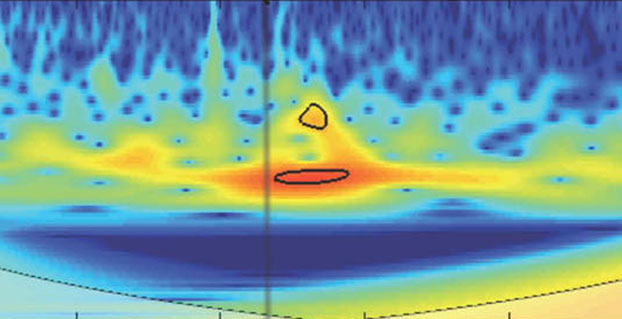
    The April 25 magnitude 7.8 earthquake in Nepal created waves of energy that penetrated into Earth’s upper atmosphere in the vicinity of Nepal, disturbing the distribution of electrons in the ionosphere. These disturbances were monitored using GPS signals received by a science-quality GPS receiver in Tibet, a neighboring region to Nepal.

    The data show that after the initial earthquake rupture (indicated by the vertical black line on the graphic), it took about 21 minutes for the earthquake-generated ionospheric disturbance to reach a GPS station (LHAZ) about 400 miles (640 kilometers) away from the epicenter in Lhasa, Tibet, China.

    Image Credit: NASA/JPL/Ionosphere Natural Hazards Team
    Image Credit: NASA/JPL/Ionosphere Natural Hazards Team

    The disturbance measurements, known as vertical total electron content (VTEC) (depicted in blue in the upper panel), have been filtered using processing software developed by NASA’s Jet Propulsion Laboratory in Pasadena, Calif., to show wave-like disturbances (circled in red) in the distribution of electrons in the ionosphere. The waves have periods of between two and eight minutes in length. The disturbance measurements following the earthquake rupture are circled in black in the lower panel. The colors represent the relative strengths of the earthquake-induced ionospheric disturbances as captured by the GPS signals, with red being high and blue being low.

    Attila Komjathy, a principal  investigator of the Ionospheric and Atmospheric Remote Sensing group at JPL and adjunct professor at the University of New Brunswick, is leading this effort. Komjathy is also a GPS World annual award winner and named a Fellow of the Institute of Navigation in January.

    The LHAZ GPS station is hosted at the Tibet Autonomous Regional Bureau of Surveying and Mapping Institute. The site collects both GPS and GLONASS (the Russian global navigation satellite system) data at a rate of 1 Hertz and is part of the International GPS Service (IGS).

    Scientists study ionosphere-based measurements caused by natural hazards such as earthquakes, volcanic eruptions and tsunamis to better understand wave propagation in the upper atmosphere.The ionosphere is a region of Earth’s upper atmosphere located from about 37 miles (60 kilometers) to 621 miles (1,000 kilometers) above Earth’s surface.

    The disturbances caused by earthquakes help scientists develop new first-principle-based wave propagation models. These models may become part of future early warning systems for tsunamis and other difficult-to-detect natural hazards.

    The data is available on this FTP site.

  • UNB Technology Launched into Space

    After a two-week delay, a rocket carrying a GPS instrument designed by University of New Brunswick scientists was launched into space aboard the SpaceX Falcon 9 rocket on September 29. The rocket left Vandenberg Air Force base in California as part of the CASSIOPE (Cascade Smallsat and Ionospheric Polar Explorer) mission.

    Dr. Richard Langley, GPS World Innovation editor and professor in geodesy and geomatics engineering at the University of New Brunswick, is a principal investigator behind the scientific portion of the CASSIOPE mission. Langley and his colleagues will monitor data from the GPS instrument, which is part of the Enhanced Polar Outflow Probe (e-POP) payload aboard the spacecraft.

    E-POP will continue the sequence of Canada’s orbiting space environment sensors, which began with Canada’s first satellite, Alouette 1, launched in 1962 to study the ionosphere. e-POP is, perhaps, the most extensive suite of sensors for studying the ionosphere/magnetosphere/thermosphere yet to be launched, and will provide Canadian and other scientists with the opportunity to better understand the impact and variability the sun has on the space environment — what we call “space weather.”

    A static fire retested the Falcon 9 rocket after several problems cropped up during a hotfire of the launcher’s engines during preparation for the original launch date September 15. The launch was then delayed because the U.S. Air Force Western Range, which controls a network of tracking and communications assets based at Vandenberg, was busy with Minuteman ballistic missile testing.

    The small hybrid satellite blasted off on board a Falcon 9 rocket developed by SpaceX, a commercial space company. The Canadian Space Agency became one of SpaceX’s first customers when the agency decided years ago to use the private U.S. rocket to deliver the satellite at a reduced cost of $10 million. It cost the space agency $63 million to develop the satellite.

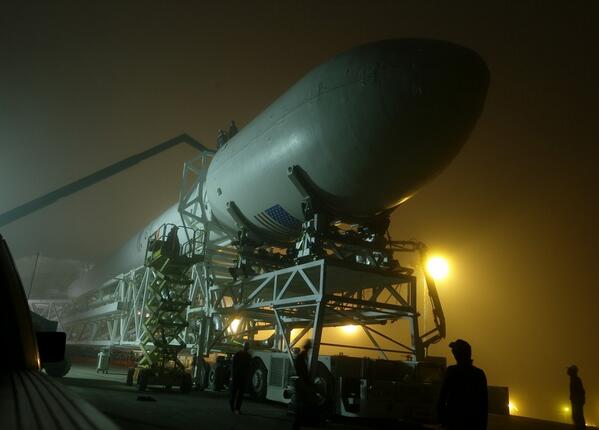
    The Falcon 9 rocket, with CASSIOPE inside its fairing, on the way to the launch pad at Vandenberg Air Force Base. (Photo credit: SpaceX).
    The Falcon 9 rocket, with CASSIOPE inside its fairing, on the way to the launch pad at Vandenberg Air Force Base. (Photo credit: SpaceX).
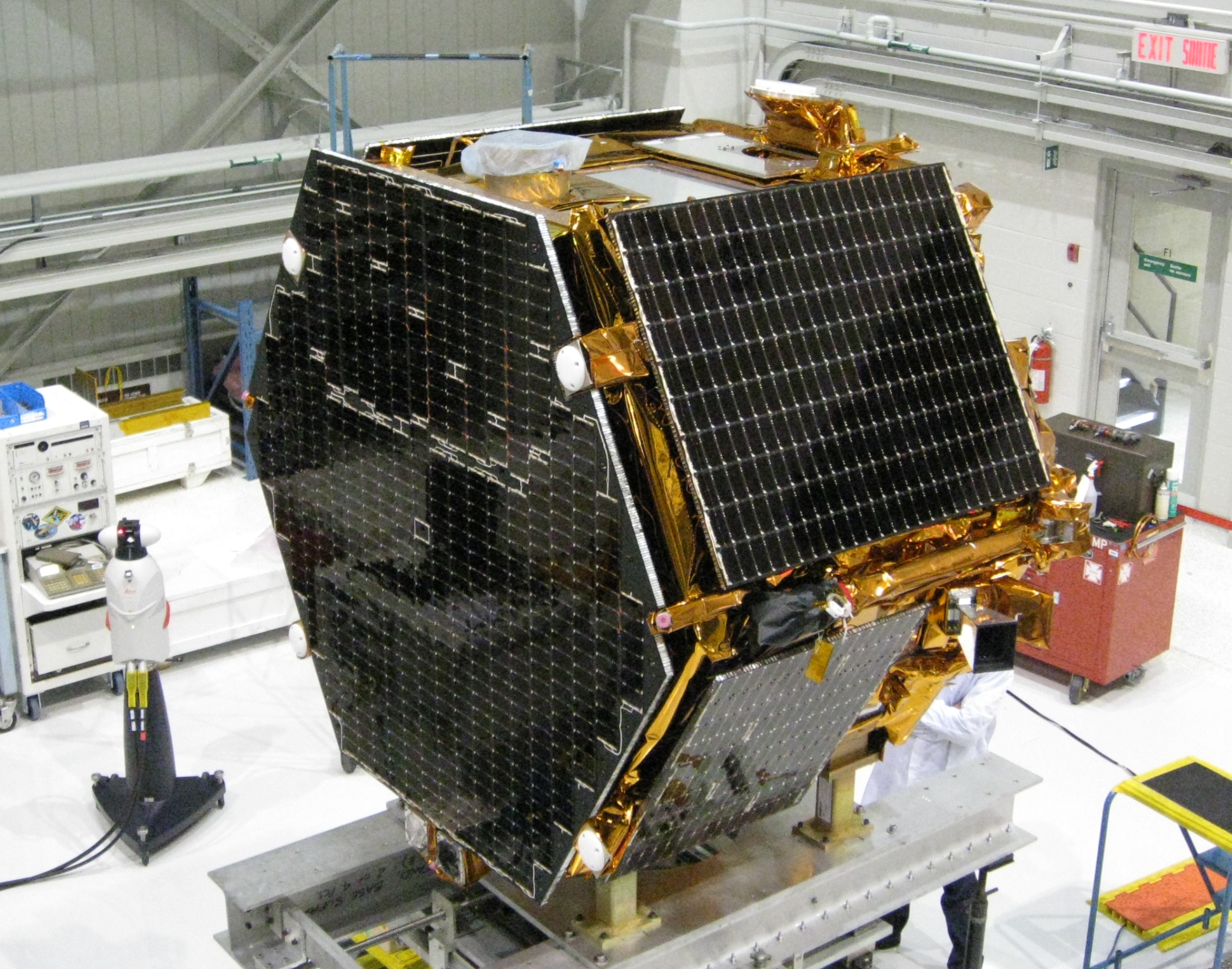
    The research satellite CASSIOPE on a test platform at the Canadian Space Agency’s David Florida Laboratory. CASSIOPE hosts the GPS Attitude, Positioning, and Profiling instrument designed by GGE researchers. It is currently scheduled for launch in 2010. The four white antennas on the left-facing side of the spacecraft will be used to determine the position, velocity, and attitude of the spacecraft while the antenna on the upper side will be used to profile the ionosphere’s electron density. Photograph courtesy of MacDonald, Dettwiler and Associates Ltd.
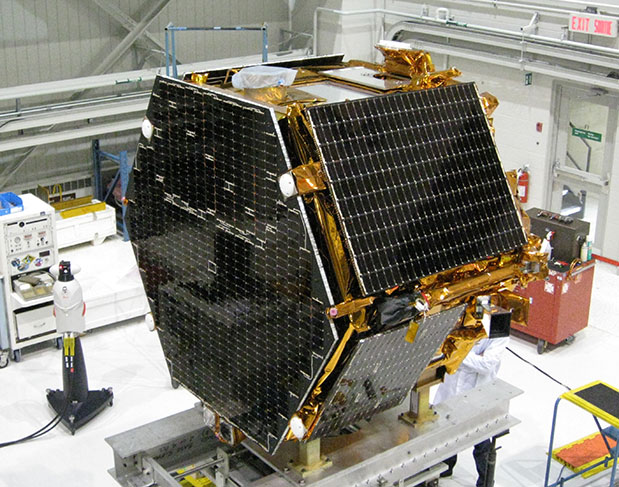
    The research satellite CASSIOPE on a test platform at the Canadian Space Agency’s David Florida Laboratory. CASSIOPE hosts the GPS Attitude, Positioning, and Profiling instrument designed by GGE researchers. The four white antennas on the left-facing side of the spacecraft will be used to determine the position, velocity, and attitude of the spacecraft while the antenna on the upper side will be used to profile the ionosphere’s electron density. (Photograph courtesy of MacDonald, Dettwiler and Associates Ltd.)
  • UNB Technology Space Launch Delayed

    UNB Technology Space Launch Delayed

    Update: Elon Musk, SpaceX’s CEO and chief designer, has posted an update on the status of the upcoming Falcon 9 launch on his Twitter account. “Will do another static fire of rocket to make sure all is good & AF [[Air Force]] needs to test ICBMs, so probable launch Sept 29/30,” Musk tweeted.

    “The static fire is scheduled for later this week, perhaps Wednesday, sources said. It will retest the Falcon 9 rocket after several problems cropped up during a hotfire of the launcher’s engines Thursday at Vandenberg Air Force Base, Calif.

    “The U.S. Air Force Western Range, which controls a network of tracking and communications assets based at Vandenberg, is busy for the next few weeks due to Minuteman ballistic missile testing.”


    The Falcon 9 rocket, with CASSIOPE inside its fairing, on the way to the launch pad at Vandenberg Air Force Base. (Photo credit: SpaceX).
    The Falcon 9 rocket, with CASSIOPE inside its fairing, on the way to the launch pad at Vandenberg Air Force Base. (Photo credit: SpaceX).

    A GPS instrument designed by University of New Brunswick scientists is scheduled to be launched into space aboard the SpaceX Falcon 9 rocket on September 15. The rocket will depart Vandenberg Air Force base in California as part of the CASSIOPE (Cascade Smallsat and Ionospheric Polar Explorer) mission.

    Dr. Richard Langley, GPS World Innovation editor and professor in geodesy and geomatics engineering at the University of New Brunswick, is a principal investigator behind the scientific portion of the CASSIOPE mission. Langley and his colleagues will monitor data from the GPS instrument, which is part of the Enhanced Polar Outflow Probe (e-POP) payload aboard the spacecraft.

    E-POP will continue the sequence of Canada’s orbiting space environment sensors, which began with Canada’s first satellite, Alouette 1, launched in 1962 to study the ionosphere. e-POP is, perhaps, the most extensive suite of sensors for studying the ionosphere/magnetosphere/thermosphere yet to be launched, and will provide Canadian and other scientists with the opportunity to better understand the impact and variability the sun has on the space environment — what we call “space weather.”

    The website SpaceFlight Now will be covering the launch.

    The research satellite CASSIOPE on a test platform at the Canadian Space Agency’s David Florida Laboratory. CASSIOPE hosts the GPS Attitude, Positioning, and Profiling instrument designed by GGE researchers. It is currently scheduled for launch in 2010. The four white antennas on the left-facing side of the spacecraft will be used to determine the position, velocity, and attitude of the spacecraft while the antenna on the upper side will be used to profile the ionosphere’s electron density. Photograph courtesy of MacDonald, Dettwiler and Associates Ltd.
    The research satellite CASSIOPE on a test platform at the Canadian Space Agency’s David Florida Laboratory. CASSIOPE hosts the GPS Attitude, Positioning, and Profiling instrument designed by GGE researchers. The four white antennas on the left-facing side of the spacecraft will be used to determine the position, velocity, and attitude of the spacecraft while the antenna on the upper side will be used to profile the ionosphere’s electron density. (Photograph courtesy of MacDonald, Dettwiler and Associates Ltd.)