Tag: vehicle-to-everything

  • Cohda Wireless to support landmark V2X deployment in Arizona

    Cohda Wireless to support landmark V2X deployment in Arizona

    The Maricopa County (Arizona) Department of Transportation (MCDOT) has selected connected-vehicle technology specialist Cohda Wireless to support delivery of its Connected Vehicle
    Acceleration Zone (CVAZ).

    The CVAZ is a USDOT-backed deployment designed to accelerate interoperable vehicle-to-everything (V2X) technology across key corridors in the county. CVAZ forms part of the Federal Highway Administration’s “Saving Lives with Connectivity: Accelerating V2X Deployment” program, which is supporting national models for connected vehicle deployment in Arizona, Texas and Utah.

    The Maricopa County project will rely primarily on 5.9 GHz
    communications and is expected to connect up to 750 physical and virtual roadside units with 400 onboard units across transit, emergency response and freight fleets.
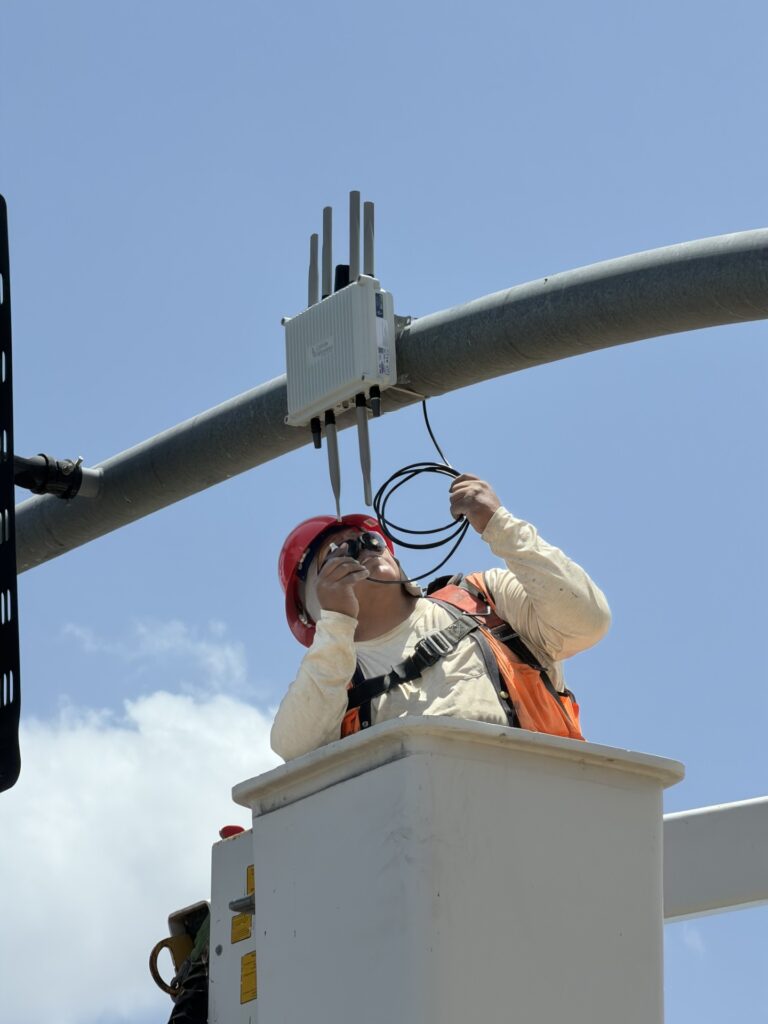
    The deployment will support emergency vehicle pre-emption, vulnerable road user alerts, transit signal priority and freight signal priority in Phoenix, Tolleson, Avondale and unincorporated Maricopa County, as well as along ADOT’s US 60 highway.

    Together, these applications are intended to help emergency vehicles move more efficiently through intersections, improve transit reliability, reduce freight delays and provide earlier warnings around pedestrians and cyclists.

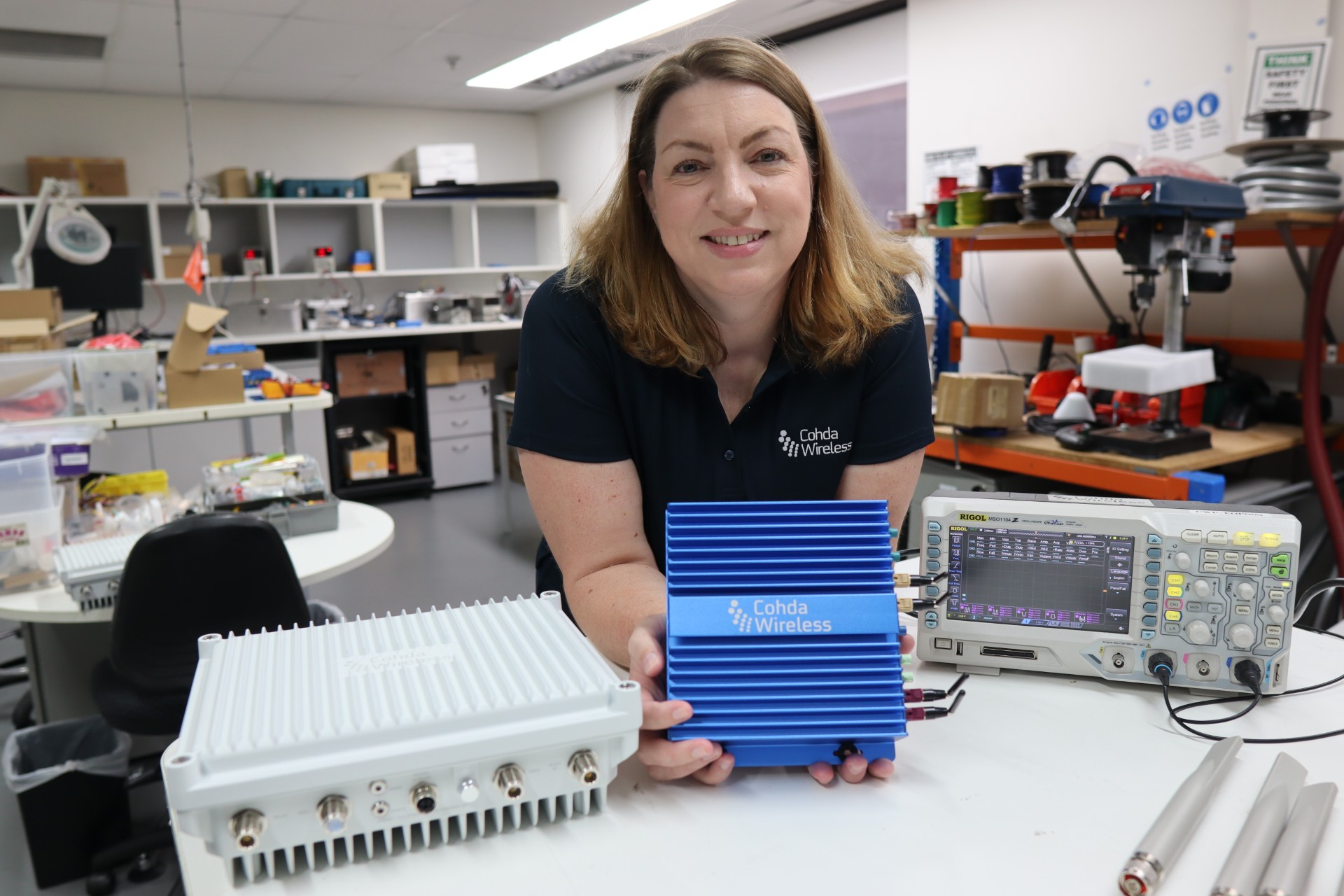
    Following its selection as a vendor, Cohda is contributing technical expertise in testing and deployment planning to support delivery of the CVAZ application zones. Under the project, Cohda will supply MK6 Road-Side Unit (RSU) kits and MK6 On-Board Unit (OBU) kits across the CVAZ application zones.

    The program is designed as a multi-vendor deployment. Cohda’s RSU and OBU platforms are positioned to integrate with the county’s selected roadside processing environment, helping reduce integration risk and support faster deployment.


  • DENSO and Brandmotion join on V2X integration

    DENSO and Brandmotion join on V2X integration

    Photo: jonathange/iStock/Getty Images Plus/Getty Images
    Photo: jonathange/iStock/Getty Images Plus/Getty Images

    Brandmotion LLC is collaborating with DENSO Products and Services Americas to offer a one-stop service to cities seeking to equip vehicles with advanced vehicle-to-everything (V2X) technology.

    DENSO is a global mobility supplier and Brandmotion develops vehicle integration for V2X deployments. By combining forces, the two companies are offering cities and agencies an easier path to vehicle integration for V2X deployment testing.

    V2X technology has been proposed by the U.S. Department of Transportation as the best way to address the chronic death toll on America’s roadways, with nearly 37,000 lives lost and a record 6,721 pedestrians killed at intersections in 2020. Many city managers and state transportation agencies are looking to deploy V2X technology regionally to reduce vehicle crashes and fatalities and improve pedestrian safety.

    The DENSO-Brandmotion partnership simplifies the process of equipping vehicles for long-term testing. Many cities have had to assemble the elements of a large vehicle V2X deployment manually, developing specifications and coordinating multiple vendors.

    Brandmotion has served the Tampa Connected Vehicle Pilot for five years and provided responsive professional-grade automotive integration and service capability. DENSO is the on-board unit (OBU) supplier to OEMs for phase 4 of Tampa’s pilot project, bringing true Tier 1 development capabilities to the project.

    The partnership will provide transportation agencies with the following vehicle-related deployment services:

    • the DENSO On Board Unit (OBU) platform (Hercules), which has the ability to run and process applications that support both cellular V2X (C-V2X) communications and dedicated short range communications (DSRC) in an automotive environment (while DSRC is still permitted by the U.S. Federal Communication Commission)
    • a standard set of applications, including blindspot/lane-change warning, electronic emergency brake light, forward crash warning, intersection movement assist, red light violation warning, and traffic signal priority
    • custom application development for specific agency application goals
    • thorough vehicle-specific installation planning, vehicle system design and validation
    •  small to large-scale installation and tech support.
  • Cohda Wireless adapts V2X solution for Mongolian mine

    Cohda Wireless adapts V2X solution for Mongolian mine

    Cohda Wireless logoIntelligent transport company Cohda Wireless is applying its vehicle positioning solution to the Oyu Tolgoi mine in Mongolia to drive safety and productivity.

    In its first use for mining, Cohda’s V2X-Locate technology is being deployed at the Oyu Tolgoi copper and gold mine, managed by Rio Tinto, to provide vehicle and personnel location accuracy.

    V2X-Locate was initially developed to solve vehicle positioning accuracy challenges inherent in the urban canyons of cities where large buildings, underground parking lots and tunnels interfere with GNSS signals. Using dedicated short-range communication (DSRC) signals, Cohda’s signal processing and positioning algorithms provide highly accurate vehicle position irrespective of GNSS availability or quality.

    Cohda Wireless is headquartered in Australia and has offices in Europe, the United States and China. Its V2X (Vehicle-To-Everything) technology connects vehicles with each other and with roadside infrastructure to create a cooperative and intelligent transport environment.

    The system can integrate and manage location data from multiple sensor types with sub-meter accuracy throughout the mine site, said Paul Gray, Cohda Wireless CEO. He called it a significant improvement on using a combination of disparate collision avoidance systems across the mining environment, as is usually the case.

    “When you have hundreds of vehicles and personnel operating in close proximity underground, a meter matters. And whilst the prevention of injury and death is always the top priority, we also know that the ability to visualize, optimize and monitor vehicles brings significant operational benefits and efficiencies,” Gray said.

    More than 200 mining vehicles of all types are being fitted with Cohda’s XBU-V specially adapted on-board units that connect vehicles to each other and to XBU-I roadside units installed in mine tunnels. Mining vehicles are fitted with a human-machine interface that will notify operators to warn them of potential collisions. More than 2,000 personnel will use V2X-Locate-compatible cap lamps, enabling time-of-flight analysis of wireless signals to resolve spatial locations.

  • Trimble VRS Now covers 1M square miles with acquisition of MidStates VRS

    Trimble VRS Now covers 1M square miles with acquisition of MidStates VRS

    Trimble continues to increase its footprint to deliver high-accuracy positioning correction services

    Photo: Trimble
    Photo: Trimble

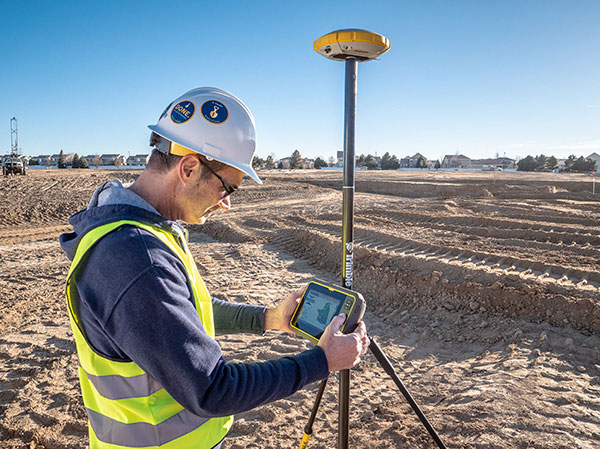
    Trimble has acquired MidStates VRS, a network previously owned by Butler Machinery and Frontier Precision. The addition of the network, in North and South Dakota, increases the footprint of Trimble’s VRS Now GNSS corrections service to cover more than one million square miles in North America. Financial terms were not disclosed.

    As part of an ongoing expansion strategy, the new coverage for the VRS Now subscription service helps users in more places achieve high-accuracy positioning to increase productivity, reduce operational costs and improve safety.

    The correction service is designed for professionals in agriculture, geospatial and construction as well as emerging autonomous applications including lane-keeping for passenger vehicles, vehicle-to-everything (V2X) position identification and unmanned aerial system guidance.

    Adding 105,000 square miles of coverage, the acquisition expands Trimble’s VRS Now network to be one of the largest in North America — over one million square miles, contributing to Trimble’s shift toward a software, services and subscription business emphasis.

    When using the Trimble VRS Now service, land and construction surveyors, GIS professionals and farmers — with a Trimble or third-party commercial GNSS receiver — can leverage instant high-accuracy corrections delivered via cellular network to improve productivity.

    Enabling users to work without a GNSS base station, the service is cost-effective and simple to use. It is ideal for a variety of applications that require sub-inch level accuracy and is an important component of the connected construction site and connected farm workflows.

    “The MidStates VRS network covers significant farmland, oil fields and rapidly developing urban areas, providing farmers and surveyors in the region with the real-time GNSS correction services they need to improve their day-to-day work,” said Patricia Boothe, senior vice president of Trimble’s Autonomy Sector. “The purchase of the MidStates network demonstrates Trimble’s ongoing commitment to provide a wide range of correction services for autonomous solutions — delivering unmatched access to fast, reliable and highly accurate positioning in more areas than ever before.”

    Trimble networks are supported by a global network operations team made up of GNSS system engineers, geodesy experts and IT professionals. The team monitors the networks 24/7 from operation centers located on three continents, providing consistent and reliable service uptime and performance integrity.

    Trimble VRS Now. The correction service offers instant access to centimeter-level positioning tailored to the users’ geographic location; the service is always on wherever and whenever needed within the network coverage area. With no base station or setup required, it is cost-effective, efficient and simple to use.

    VRS provides positioning professionals with instant access to real-time kinematic (RTK) and post-processing (PP) corrections utilizing a network of permanent (fixed) continuously operating reference stations (CORS).

    Trimble-owned VRS networks are accessible now in areas throughout the U.S. and Canada as well as Eastern Australia and Tasmania, France, Belgium, the Czech Republic, Estonia, Germany, Great Britain, Ireland, Luxembourg, the Netherlands, Sweden and New Zealand.

  • Harman to demonstrate Autotalks’ C-V2X capabilities at CES 2019

    Harman to demonstrate Autotalks’ C-V2X capabilities at CES 2019

    Hagai Zyss, CEO of Autotalks. (Photo: Daniel Danilov)
    Hagai Zyss, CEO of Autotalks. (Photo: Daniel Danilov)

    Autotalks’ second-generation chipsets have been selected by Harman International to provide the vehicle-to-everything (V2X) chipset for the Harman telematics platform. The platform will be showcased at the Consumer Electronics Show, taking place Jan. 8-11 in Las Vegas.

    With V2X, all vehicles share location, speed and trajectory, giving drivers warnings of on-road dangers. Autotalks’ second-generation chipsets are mass-market ready and support both DSRC and C-V2X direct communications (PC5 protocol).

    Harman is a wholly-owned subsidiary of Samsung Electronics Co. Ltd., focused on connected technologies for automotive, consumer and enterprise markets.

    Harman will showcase a connectivity display of its telematics platform with C-V2X capabilities. The live demonstration will show a vehicle communicating with a motorcycle using C-V2X direct communications (the Autotalks chipset is used in both).

    Harman’s solution consists of a modular telematics control unit (TEC) accommodating a cellular network access device (NAD) beside Autotalks’ second-generation chipset providing C-V2X capabilities. Autotalks C-V2X capabilities consist of a 3GPP compliant PC5 modem, with dual antenna and diversity for both transmission and reception, as well as an optimized closed-loop remote antenna solution for the highest radio performance.

    “Autotalks is proud to work with Harman on their TCU with our secure and deployment-ready C-V2X solution,” said Hagai Zyss, CEO of Autotalks. “We are excited to have our chipset inside Harman’s telematics platform and to demonstrate the flexibility and maturity of our global V2X solution which has been chosen for series production by leading automakers.”

    “Together with Harman, we will achieve deployment readiness before the mass-commercialization of C-V2X in China and elsewhere,” Zyss said.

    “We are pleased to showcase Autotalks’ C-V2X capabilities in our Telematics platform at CES 2019,” said Mike Peters, president, Connected Car Division at Harman. “The Autotalks chipset provides us with the flexibility, security and performance needed in today’s worldwide market for telematics and V2X.”

    Autotalks’ V2X chipset is now available for customer and partner demonstrations.

  • Quectel’s new C-V2X module supports autonomous driving

    Quectel’s new C-V2X module supports autonomous driving

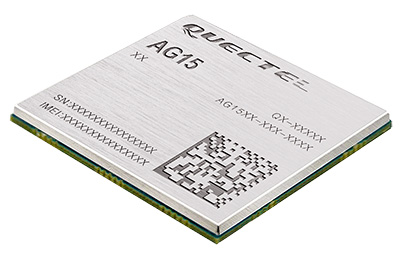
    Quectel Wireless Solutions has launched the automotive-grade C-V2X module AG15, which features the Qualcomm 9150 C-V2X chipset solution from Qualcomm Technologies, a subsidiary of Qualcomm Incorporated.

    Image: Quectel
    Image: Quectel

    The module is now sampling to the automotive industry for the development of commercial C-V2X products.

    The AG15 C-V2X module is manufactured in accordance to IATF 16949:2016 quality management system standard for the automotive sector, and it fully complies with the automotive product quality processes, including APQP and PPAP.

    Pairing with the Quectel automotive-grade LTE module AG35, Quectel’s AG15 is designed to meet the telematics and vehicle-to-everything (V2X) connectivity requirements of the next-generation automotive applications, such as autonomous driving and road safety.

    Also known as LTE-V2X, C-V2X is the V2X communication technology based on the globally recognized Third Generation Partnership Project (3GPP) Release 14 specifications. The PC5-based direct communication mode of C-V2X supports vehicle-to-vehicle (V2V), vehicle-to-infrastructure (V2I) and vehicle-to-pedestrian (V2P) communications on the 5.9-GHz intelligent transport system (ITS) spectrum.

    In addition, C-V2X paves a strong evolution path toward 5G new radio (5G NR) and plays an essential part of the future of safe autonomous driving with its capabilities including non-line-of-sight (NLOS) sensing to support high-speed mobility and high vehicular density deployments, the company said.

    For positioning function, the AG15 features a built-in multi-constellation high-precision GNSS (GPS/GLONASS/BeiDou/Galileo/QZSS) receiver, with additional support from satellite-based augmentation systems (SBAS) and Qualcomm 3D dead-reckoning technology, which greatly improves the positioning accuracy and speed while simplifying customer designs.

    Based on C-V2X technology, the Quectel AG15 module adopts the 3GPP Release 14 C-V2X PC5 protocol. It is designed to allow low-latency, highly reliable and highly dense data exchange between vehicles and their surroundings, enabling effective information sharing among road users in avoidance of collisions, thus improving automotive safety, automated driving and traffic efficiency.

    Without the need for a subscriber identity module (SIM), cellular subscription or network assistance, the C-V2X direct communication mode helps reduce complexity and cost for customers.

    Additionally, the Qualcomm 9150 C-V2X chipset solution has a built in A7 application processor (1.5 GHz), which could be potentially utilized to run ITS stack and associated C-V2X applications.

    “We are very pleased to introduce our first batch of automotive grade C-V2X modules based on the Qualcomm 9150 chipset solution. Automated driving has unique requirements for V2X connectivity, such as lower latency, higher reliability and wider bandwidth, all of which could be addressed by C-V2X technology,” said Patrick Qian, CEO of Quectel. “Built upon Quectel’s expertise in connected vehicles and Qualcomm Technologies’ high-performance C-V2X chipset solution, the AG15 module is expected to help automakers and Tier 1 suppliers to effectively accelerate their efforts towards automated driving.”

    “Quectel is a global leader in cellular modules with rich experience in commercial automotive products,” said Nakul Duggal, vice president of product management, Qualcomm Technologies. “We are pleased to work closely with Quectel again to support its modules with our 9150 C-V2X chipset solution to help create safer and more efficient V2X solutions and to help empower road safety and autonomous driving. We look forward to working with Quectel in delivering the solutions required to address the needs of the next generation automobiles.”