Tag: Velodyne

  • Inertial Labs releases laser for remote-sensing apps

    Inertial Labs releases laser for remote-sensing apps

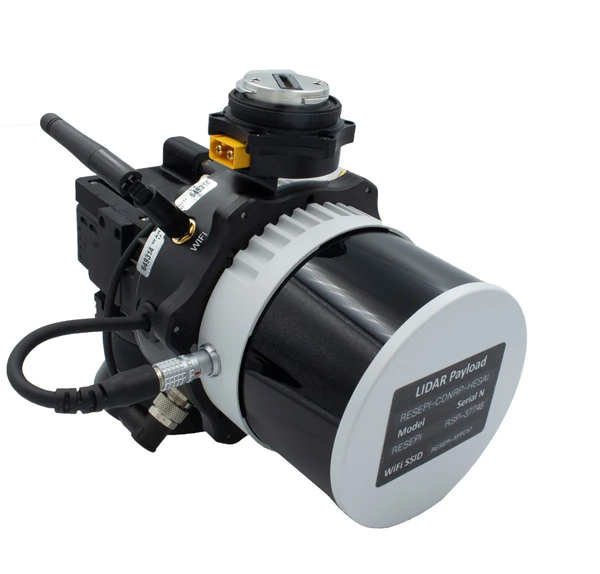
    (Image: Inertial Labs)
    (Image: Inertial Labs)

    Inertial Labs has released a remote sensing payload instrument. The Resepi Hesai XT32 laser is designed for accurate remote-sensing applications. The Resepi laser can be used with commercially available lidar scanners, including Velodyne, Quanergy, Ouster, RIEGL, LIVOX and Hesai, as well as with UAVs.

    Resepi is completely modular, so users have full control for customization. The remote sensing device uses a GPS-aided inertial navigation system with NovAtel RTK/PPK single- or dual-antenna GNSS receiver, integrated with a Linux-based processing platform. It also comes with a 2 TB USB memory drive and has an embedded Wi-Fi cellular modem.

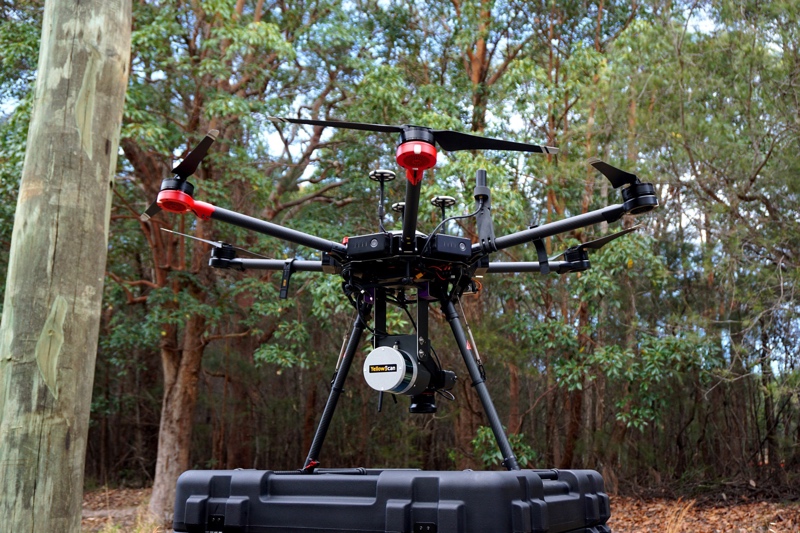
    Resepi has 3-5 cm point-cloud accuracy and can reach heights of more than 200 m above ground level. It is compatible with most UAV models; however, it is typically used with DJI M300, DJI M210 or DJI M600 models.

    The device is suitable for scanning and mapping, precision agriculture with lidar, simultaneous localization and mapping (SLAM) algorithm development, utility inspection and construction site monitoring. Resepi-supported software includes Hexagon NovAtel, PCPainter and PCMaster.
  • New version of OxTS Georeferencer provides more lidar integration

    New version of OxTS Georeferencer provides more lidar integration

    Oxford Technical Solutions (OxTS) has launched the latest version of its lidar georeferencing software, OxTS Georeferencer 1.4.

    OxTS is taking steps to improve surveyor’s user experience, streamline survey processes, and allow surveyors to get to work faster, while simultaneously improving results.

    OxTS Georeferencer fuses position, navigation and timing (PNT) data from an OxTS inertial navigation system (INS) with raw lidar data to output highly accurate 3D point clouds. The software uniquely makes use of navigation diagnostic data that provides surveyors with lidar point-error estimation. This error estimation allows surveyors to focus their analysis on viewing parts of their survey based on estimated errors in points, helping them understand if there are any parts of a survey that need to be looked at again.

    Rather than relying on surveyors to integrate their chosen lidar sensors themselves, OxTS has pre-integrated a number of sensors natively. Previous versions of OxTS Georeferencer integrated widely used sensors from Velodyne, Ouster and Hesai. The pre-existing integrations allow surveyors to focus on surveying rather than ensuring the two datasets work in tandem.

    An optional boresight calibration tool uses data to calibrate the angles between the navigation and survey devices.

    Highlights of OxTS Georeferencer 1.4

    Version 1.4 of OxTS Georeferencer integrates new lidar sensors from Hesai. A previous version released in November 2020 was the first integration of the Pandar40P Hesai lidar. Now, seven new Hesai sensors are being integrated:

    • Pandar40 (beta)
    • Pandar40M (beta)
    • Pandar64 (beta)
    • PandarQT (beta)
    • Pandar128 (beta)
    • PandarXT-16 (beta)
    • PandarXT-32 (tested)

    OxTS Georeferencer 1.4 also features several new developments to enhance the user experience and make it more intuitive.

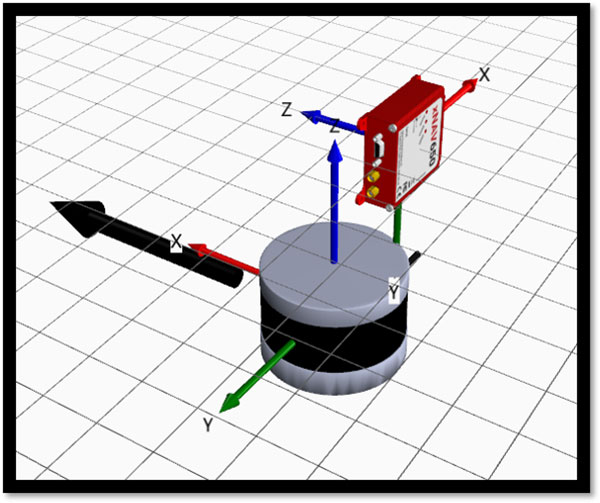
    3D Hardware Setup Viewer. To help input the correct relative rotation angles, specific lidar models will be available to view depending on the surveyor’s choice of lidar. The model will represent the lidar sensor in appearance, size and orientation within OxTS Georeferencer with respect to the OxTS INS for quick and intuitive configuration.

    The OxTS Georeferencer Hardware setup viewer shows the OxTS xNAV650 INS alongside a Hesai lidar sensor. (Image: OxTS)
    The OxTS Georeferencer Hardware setup viewer shows the OxTS xNAV650 INS alongside a Hesai lidar sensor. (Image: OxTS)

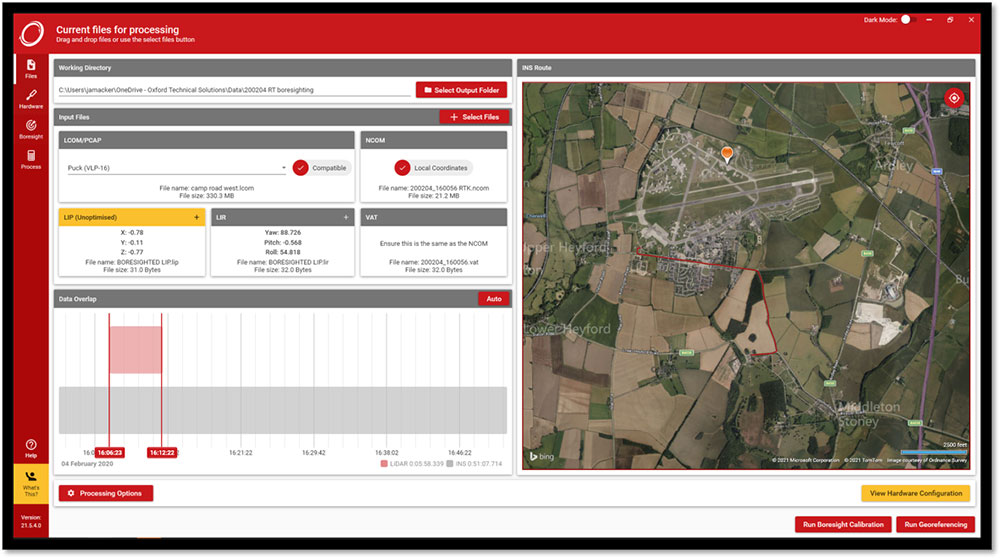
    Time overlap chart. Georeferencer 1.4 reintroduces a time overlap chart that allows surveyors to visualize their survey route on a map and select specific start and end times. This enables surveyors to control the part of the route they would like to view, with the added ability to georeference only that section of the survey.

    The OxTS Georeferencer time overlap chart. (Image: OxTS)
    The OxTS Georeferencer time overlap chart. (Image: OxTS)

    Lidar CAD models will make it easier for surveyors to calculate and input accurate LIR angles into OxTS Georeferencer, further streamlining the survey process.

    The time overlap function will provide surveyors with even more flexibility — this time after the survey. Giving surveyors the ability to choose the start and end times of their survey, and therefore which part of the survey to georeference, enables full control of what to present to their peers.

    These new features, coupled with those already present in OxTS Georeferencer (optional boresight calibration and point uncertainty analysis) give surveyors the flexibility and control they need to produce the best possible lidar surveys.

  • Latest OxTS tool combines inertial and lidar point-cloud data

    Latest OxTS tool combines inertial and lidar point-cloud data

    The OxTS Georeferencer combines INS and point-cloud data from third-party lidar sensors. (Image: OxTS)
    The OxTS Georeferencer combines INS and point-cloud data from third-party lidar sensors. (Image: OxTS)

    OxTS  is offering its new OxTS Georeferencer, a powerful lidar georeferencing software tool. OxTS Georeferencer combines OxTS inertial navigation data with raw lidar data to give surveyors the ability to create georeferenced point clouds along with tools to calibrate their setup and analyze the accuracy of their surveys.

    Users can now combine data from their OxTS inertial navigation system (INS) with a much broader range of lidar sensors. The OxTS Georeferencer works with pointclouds from Hesai, Ouster and Velodyne lidar sensors. New sensors brought to market can be quickly and easily added to OxTS Georeferencer.

    This release ensures that surveyors can easily and confidently use OxTS Inertial Navigation Systems and OxTS Georeferencer, to produce georeferenced point clouds irrespective of the LiDAR scanner they prefer to use.

    The OxTS Georeferencer gives surveyors flexibility in terms of the hardware they may use to survey their environment.

    Users can combine OxTS INS data with data from the following models:

    • Velodyne. VLP-16 Puck, Puck LITE (beta), VLP-32C (beta) and Alpha Prime VLS128 (beta). The Velodyne VLP-32C sensor is single-return mode only.
    • Hesai. Pandar40P
    • Ouster. All Ouster Gen2 lidar, The OS1 and OS2 lidar with 32, 64 and 128 lasers (all Ouster integrations, other than the OS1-64 in uniform laser distribution, are in beta.)

    Features of this release include:

    • Improved calibration. Take advantage of a broader range of set-ups without extensive planning and set-up costs. A data-driven calibration technique helps to get the best results from your set-up. It eliminates blurring and double-vision, especially at longer distances. The new version now can calibrate angles AND linear displacements. Please note that LIP calibration is in beta.
    • Error estimation. Gain more control over your point-cloud. The new pointcloud error estimation uses a sophisticated formula together with OxTS navigation data diagnostics. These are then used to estimate the centimetre uncertainty in point positions. Users can then choose a maximum uncertainty to be included or remove inaccurate points.
    • Dual return. Provide customers with enhanced point-cloud images. The new version of OxTS Georeferencer includes dual return capability for nearly all supported models. Where available, this will give point clouds much higher definition. Users can then present enhanced point-cloud images to customers and internal stakeholders as well as service specific applications.
    • Easily integration of new lidar families. This latest version of OxTS Georeferencer supports the future proofing of other new LiDAR sensors. It allows users to quickly and simply add new LiDAR families to the framework. If there are any LiDAR sensors NOT currently integrated that you want to see, contact OxTS and they will consider them.

    For more information on OxTS Georeferencer or to arrange a demonstration, contact OxTS – OxTS Georeferencer.

    Also, OxTS is hosting a webinar at 15:00 hrs (GMT) on Wednesday, Dec. 9, on “What’s New in OxTS Georeferencer.”

  • How lidar boosts the value of mobile mapping

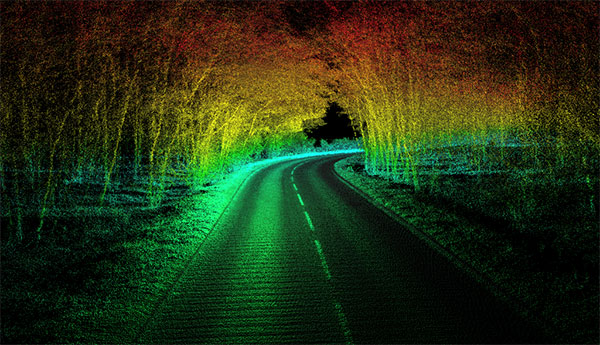
    Velodyne presents business cases of lidar solutions in forestry, utilities and surveying at AUVSI’s Xponential.

    Frank Bertini, UAV and robotics business manager at Velodyne Lidar (booth #1420), will deliver a featured presentation on the business cases for 3D lidar technology in mobile mapping applications at AUVSI Xponential 2019, taking place on April 29 to May 2, at McCormick Place in Chicago.

    Bertini will discuss revenue-generating strategies created by adding lidar to drones, backpacks and all-terrain vehicles (ATV) to build autonomous solutions.

    Bertini’s session, “Emerging Autonomous Applications for 3D Lidar,” will provide a technical overview of industrial applications for lidar onboard unmanned systems. The presentation focuses on emerging use-cases which are creating businesses opportunities in developing markets, including forestry management, utilities management, and surveying.

    The session takes place on Wednesday, May 1, 2-2:30 p.m. in XPO Hall – Solutions Theater.

    “Velodyne Lidar helps systems developers by providing rich computer perception data that enables high-performing mapping systems in a lightweight, versatile solution,” said Bertini. “Velodyne sensors make it quick and easy for companies to build highly accurate 3D models of any environment, such as forests, power corridors, and solar energy farms.”

    In the presentation, Bertini will examine how drones equipped with Velodyne’s lightweight, powerful lidar can produce high-density point clouds for a forest canopy as well as the terrain underneath.

    He will also explain how this can be done at ground level with a backpack application.

    Additionally, the session will include mobile mapping case studies involving a power line inspection and surveying a solar power field.

    Attendees to AUVSI Xponential 2019 can visit the Velodyne booth to learn about Velodyne’s state-of-the-art lidar technology that delivers a high-resolution surround-view image to accurately measure and analyze the environment.

    The performance, range and compact form factor of Velodyne sensors enable developers to design versatile systems that can be configured to any mapping need.

  • Latest YellowScan lidar system designed for UAV surveys

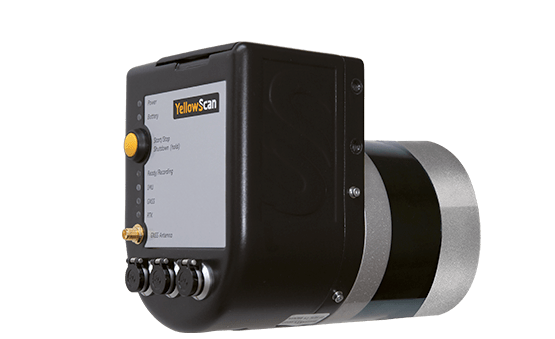
    YellowScan has launched a new lidar system, the Surveyor Ultra. It integrates the Velodyne VLP-32C scanner and the Applanix APX-15 GNSS/inertial measurement unit (IMU).

    With high density (600,000 shots per second), the system is suitable for high-speed UAVs and long-range needs (maximum range: 100 meters). Its light weight (1.7 kg) makes it easy to mount on any drone, including vertical takeoff and landing (VTOL) UAVs.

    As for all YellowScan lidar systems, the Surveyor Ultra is a turn-key system fitted for under vegetation 3D modeling and fast data processing, the company said.

    Applications such as forestry, archeology and environmental research will benefit from Surveyor Ultra, as they require long-endurance flights high above trees or over rocky mountains and rugged terrain.

    “The Surveyor Ultra shows great potential to safely and efficiently operate lidar on lightweight fixed-wing UAVs,” said Tristan Allouis, YellowScan CTO. “The Surveyor Ultra completes our product line, including the successful Surveyor Lidar System (integration of the VLP-16 scanner from Velodyne).”

  • Velodyne partners with YellowScan for UAV lidar system

    Velodyne partners with YellowScan for UAV lidar system

    Velodyne Lidar Inc., maker of 3D vision systems for autonomous vehicles, is partnering with YellowScan to integrate its VLP-16 Puck and VLP-16 Puck LITE lidar sensors into YellowScan’s Surveyor.

    The result is a turn-key and reliable lidar system for demanding UAV applications, the companies said.

    Real-time lidar systems for UAVs are used around the world for industrial and scientific applications, including surveying, civil engineering, archeology and environmental science.

    By combining its LiveStation app with the real-time 3D data capture capabilities of Velodyne’s VLP-16 Puck and VLP-16 Puck LITE sensors — both of which feature a 360-degree horizontal field-of-view, 100-meter range, and weigh 830 grams and 590 grams, respectively — YellowScan delivers a turn-key surveyor system that can be mounted to any drone for short-time data processing needs.

    The result is a real-time in-flight lidar monitoring platform, with users able to see how the final map is being generated in real-time during the drone mission, and the basic map datasets available immediately after the mission.

    “YellowScan is known for its commitment to providing reliable and easy to use sensing solutions for the UAV industry, which make the VLP-16 Puck sensors an easy choice for the Surveyor system,” said Erich Smidt, executive director, Europe, Velodyne Lidar. “The VLP-16 Pucks are some of our newest offerings, with significant effort put into reducing weight while maintaining the resolution and reliability expected of Velodyne’s industry-leading lidar sensors.”

    “YellowScan Surveyor, the turn-key lidar solution integrating Velodyne’s advanced VLP-16 sensor, enables mapping professionals to do more in less time thanks to tremendously high density and accurate measurements acquired from UAVs,” said Tristan Allouis, CTO of YellowScan.

  • Velodyne features VLP-16 Puck mobile mapping system at AUVSI’s Xponential 2016

    Velodyne‘s Frank Bertini talks about the company’s new 3D lidar VLP-16 Puck at the Association for Unmanned Vehicle Systems International‘s Xpontential show, held May 3-5 in New Orleans.

    The sensor offers real-time data, 360-degree scanning, 3D distance and calibrated reflectivity measurements for the mapping, automotive, UAV, security and robotics markets.