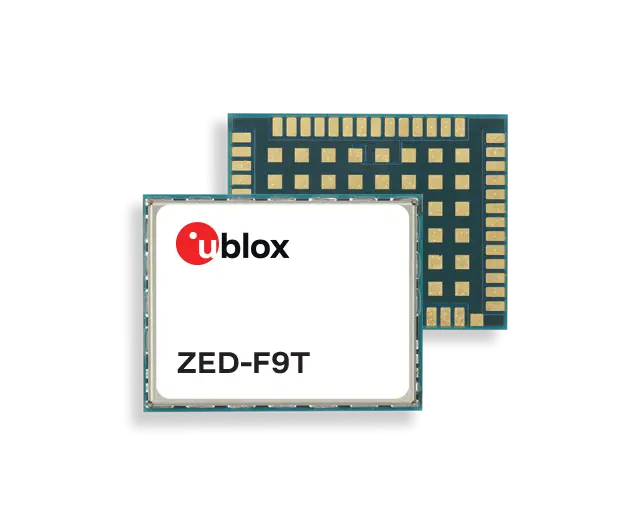
Tag: ZED-F9T

  • U-blox GNSS tech powers telescope array searching for alien life

    U-blox GNSS tech powers telescope array searching for alien life

    The PANOSETI project achieves sub-nanosecond synchronization without fiber infrastructure using u-blox ZED-F9T 

    The u-blox ZED-F9T high-precision GNSS receiver is enabling sub-nanosecond synchronization in an advanced telescope array used in optical Search for Extraterrestrial Intelligence (SETI) research. 

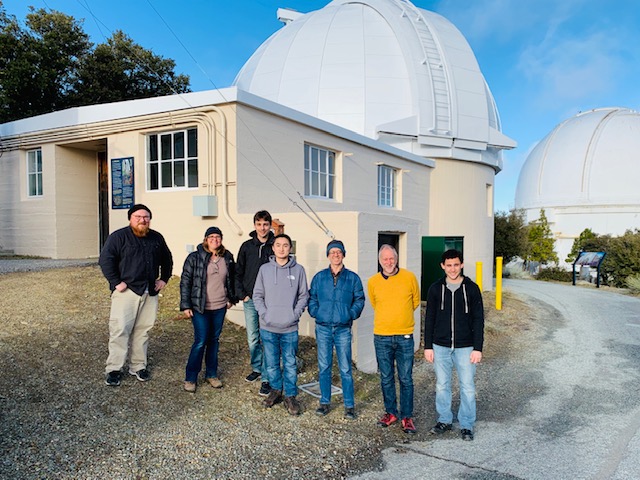
    The results have been achieved for the SETI program called PANOSETI (Pulsed All-sky Near-infrared Optical SETI), a multi-institutional scientific initiative where precise time synchronization across distributed telescope arrays is critical. Institutions involved include the University of California Berkeley, UC San Diego, Harvard and Caltech.

    Discovery at unprecedented scale

    PANOSETI is designed to detect fast-transient optical and near-infrared signals across the entire observable sky, with the goal of identifying potential technological signatures or astrophysical phenomena. Achieving this requires extremely precise time synchronization between widely distributed telescope nodes.

    Traditionally, such synchronization depends on fiber-based systems such as White Rabbit, which can be costly and impractical to deploy in remote observatory locations.

    By leveraging GNSS-based differential timing with the u-blox ZED-F9T, the PANOSETI team demonstrated:

    • ~0.7 nanosecond standard deviation between 1PPS signals over a 1 km baseline 
    • Improved performance down to ~200 picoseconds using filtering techniques 

    This level of accuracy meets, and in some cases exceeds, the requirements for next-generation distributed sensing systems.

    Precision timing without constraints
    Credit: U-blox
    Credit: U-blox

    The results highlight a key benefit of GNSS-based timing: high-precision timing can be achieved in environments where fiber infrastructure is unavailable, impractical or excessively costly.

    These results show the capabilities that GNSS timing offers, not only for scientific research, but also for a range of other emerging applications, such as distributed sensor networks, remote timing systems and resilience of critical infrastructure, also in remote locations.

    Collaboration driving innovation

    “Achieving this level of synchronization without fiber is a significant step forward for distributed instrumentation,” said Dan Werthimer, chief scientist of the PANOSETI project at UC Berkeley. “It allows us to achieve the timing precision we need for our telescope array in locations where traditional fiber-based systems are not feasible.”

    “At u-blox, we are excited to support PANOSETI in their search for extraterrestrial intelligence,” said Samuli Pietilä, Director of Product Line Management, Timing and Infrastructure. “GNSS timing is used across many industries, but none quite like the advanced optical telescopes that PANOSETI is deploying.”

    The ability to move from physically-based precision synchronization to resilient GNSS solutions unlocks the potential for distributed sensor networks.
  • Facebook chooses u‑blox timing to speed up data centers

    Facebook chooses u‑blox timing to speed up data centers

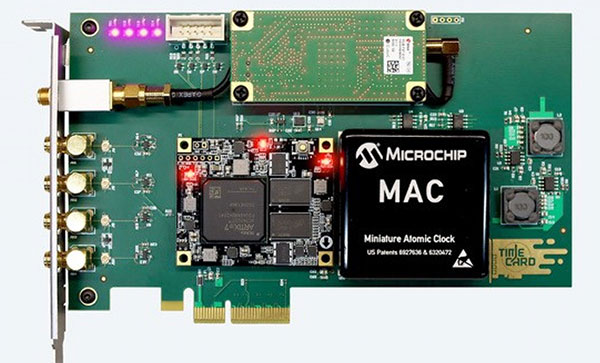
    Facebook has open-sourced the design of its time card, which features the ultra-precise u‑blox ZED-F9T timing module, providing easy access to nanosecond-level timing

    Photo: u-blox
    Photo: u-blox

    Facebook has chosen the u‑blox ZED-F9T GNSS receiver module for timekeeping, according to u-blox. By improving the synchronization of networked computers, Facebook’s time card can significantly speed up the performance of its data centers and distributed databases.

    By open-sourcing their designs, Facebook has bolstered the adoption of highly accurate timing solutions based on u‑blox technology. These solutions can be adopted by other industries requiring nanosecond-level timing, such as 5G cellular networks or smart power grids.

    Facebook set out to create a precise timing solution that reduces the computational overhead required when synchronizing the timing between different computers in a network, u-blox said. The social media company used a u‑blox ZED-F9T multi-band GNSS receiver to sync up its solution with the highly accurate GNSS atomic clocks. To bridge possible gaps in GNSS coverage and keep clock drift to a minimum, the time card contains a backup timing source: a miniaturized atomic clock continuously synchronized with GNSS time.

    To maximize the impact of the solution, Facebook decided to open-source the design of its time card, which fits onto a PCIe form factor. Anyone with experience working with microelectronics can turn any PC built on an x86 architecture and featuring a network interface controller into a nanosecond-level-accurate timing and synchronization solution, u-blox said.

    Easy access to nanosecond-level timing accuracy — based on the u‑blox RCB-F9T timing board, which hosts the u‑blox ZED-F9T GNSS receiver — opens new avenues in industry segments that rely on highly synchronized signals, such as 5G network base stations that require tighter synchronization than those of previous generations, u-blox said.

    As power-distribution networks become more complex to accommodate a growing share of decentralized renewable energy, they are becoming more reliant on reliable and accurate timing solutions. Data centers and computer networks will be able to modernize infrastructure management to speed up performance and reduce latencies.

    Facebook has shared the GitHub repository including the specs, the schematics, the mechanics, the bill of material, and the source code in partnership with the Open Compute Project (OCP) under the Time Appliance Project (TAP).