Author: Janice Partyka

  • 5G and IoT: Big winners of CTIA Super Mobility 2016

    5G and IoT: Big winners of CTIA Super Mobility 2016

    This year’s CTIA Super Mobility show, held Sept. 7-9 in Las Vegas, Nevada, shone the spotlight most brightly on 5G and the Internet of Things (IoT). The killer app use case for 5G is IoT and, symbiotically, IoT cannot be fully realized without the higher capacity of 5G.

    IoT is the world of interconnected devices and includes smart cities, connected vehicles, smart homes, wearables, enterprise and healthcare solutions. The magnitude of growth forecast in connected devices is staggering; 23 billion in 2020 and increasing to 75 billion five years later, and will dwarf the number of smartphones, say analysts at Frost & Sullivan.

    “Keep America Great Again” could have been the title of many talks with the patriotic rallying call to keep the United States at the forefront of wireless innovation. The U.S. has more than 99 percent of the population covered by LTE, more than any other country. We rule on apps, too, with 74 percent being based here. Whether this a good sign or not, Americans have more apps on their phones than anyone else —37 for each of us.

    And we’ve led in the development of 3G and LTE. So the cry to arms from FCC Chairman Tom Wheeler and carriers alike is that we can and will lead 5G. Verizon is getting ahead of the pack and recently announced it launched LTE Advanced technology to bring 50 percent faster peak wireless data speeds to more than 288 million people in 561 cities who are using one of Verizon’s 39 LTE Advanced equipped devices.

    Keynote speakers at the conference swooned about the truly revolutionary capabilities of speed and improved latency 5G brings, forecast to be in full deployment in 2020. More high spectrum is needed and an FCC auction underway.

    Obtaining the small cell sites needed for required antennas was on many minds. “There are just over 200,000 cell towers in the U.S., but there may be millions of small cell sites in the 5G future,” worried Wheeler. “If siting for a small cell takes as long and costs as much as siting for a cell tower, few communities will ever have the benefits of 5G.”

    Dana Tardelli, Mobilitie, stands in front of a model of Churchill Downs, a DAS (distributed antenna system) installation. (Photo: Janice Partyka)
    Dana Tardelli, Mobilitie, stands in front of a model of Churchill Downs, a DAS (distributed antenna system) installation.
    (Photo: Janice Partyka)

    5G requires denser cell sites and every city has different rules and processes. The challenge, says Dana Tardelli of Mobilitie, is to get the cities to see the benefits. For instance, the city of Palo Alto, the epicenter of Silicon Valley, has poor cell service because the citizens and town resist having antennas installed. Reportedly, Steve Jobs had to go out in his yard to make a call. The future is smaller cells with distributed antennas, but unlimited data plans are on their way back and will create a large infrastructure load.

    For Telit and other enablers of IoT, the sweet spot of the market is enterprise, an industry sector that is making money and can easily quantify savings from technology investments. “In five years, half of the show will be IoT, and it isn’t about technology, but about things that will be connected,” predicted Jack Indekeu of Telit. “There is also a strong market for devices that allow people to connect socially around issues of personal health and fitness.” Telit was highlighting its bundled platform, services and solutions, including data plans.

    Jack Indekeu of Telit gives a presentation at the Telit booth. (Photo: Janice Partyka)
    Jack Indekeu of Telit gives a presentation at the Telit booth. (Photo: Janice Partyka)

    Comtech Telecommunications announced the availability of Location Studio, a developer’s platform to build cloud-based embedded and hybrid applications using location-based tools. Location Studio connects assets using AGPS and sensor positioning for location and integrates with a host of geolocation applications, taking advantage of the previous acquisition of Networks in Motion capabilities for mapping, messaging and navigation.

    “There is great advantage of our approach over Google or Apple in which free access is bartered for data,” said Sameer Vuyyuru of Comtech. “Our approach eases clients’ concerns about security of data.” Last year, TeleCommunication Systems (TCS) was acquired by Comtech. Perhaps in the future, Comtech’s satellite products will be added to TCS’ public safety and LBS offerings.

    CalAmp announced the availability of the MDT-7P, an Android-based tablet suited to deliver and support value-added applications for industries such as long-haul trucking, fleet management, asset delivery and mobile workforce management. The MDT-7P leverages CalAmp’s management and maintenance system, PULS, for autonomous over-the-air installation of applications and firmware directly to the tablet while in service.

    U-blox announced plans to launch modules supporting Category M1 LTE networks. The first SARA R4 module developed by u-blox will be available later this year and targets mobile network operators in the U.S. market. With the recently launched SARA N2, a cellular NB IoT module, the new LTE Cat M1 complements u-blox’s product offering for the IoT.

    Qualcomm Technologies and Verizon announced Verizon will pre-integrate its ThingSpace IoT platform-as-a-service within Qualcomm Technologies’ MDM9206 Category M LTE modem. The initiative also utilizes Verizon’s 4G LTE network as the gateway for simplifying the process of building, deploying and managing IoT applications customized for a wide-range of use cases.

    The Teradata team at the Ford Developers Hackathon. (Photo: Janice Partyka)
    The Teradata team at the Ford Developers Hackathon. (Photo: Janice Partyka)

    Quite different from years ago when CTIA was chock full of carmakers, Ford was the only participant, and hosted the Ford Developer Hackathon on the exhibit floor. The event presented a two-way street for developers to learn how to use car data to build apps, and for Ford to see what interests the developer community. SmartDeviceLink is an open-source platform that enables creation of brought-in applications that appear integrated onto a car’s head unit.

    I spoke to a team from Teradata who was working on creating an app that would compare fuel usage on the same route over time. For instance, I could compare my gas usage over each day of my commute and also compete against my co-workers who drive the same route. This team stayed until 3 a.m. at the convention center and were there the following morning to resume work. If they win the hackathon competition, team Teradata will take home all-expenses-paid trips to CES or share a Mustang car lease.

    The Car Connectivity Consortium with its MirrorLink platform has a different approach to in-vehicle apps. The Ford platform requires that developers use templates for the interface. With MirrorLink, developers encounter more complexity but added freedom as they create the user interface. Alan Ewing of the Car Connectivity Consortium provided perspective on the industry’s current focus.

    “We are polishing technology and working to refine the user experience,” Ewing said. “There will be wireless connectivity with no cabling and in the future, we may be able to distinguish among the phones in the car as to which belongs to driver.” He reports there is quite a bit of interest in in-vehicle streaming video.

    Iridium showed an early sample of Edge, an M2M/IoT rugged transceiver scheduled to launch later this year. The Edge can be added onto existing products to enable satellite communications and used for tracking mobile or fixed assets. Many will use it alongside terrestrial communication. “IoT has opened up M2M markets and created standards and integration,” reported Tim Last of Iridium. ”We are also looking at consumer products, working with Garmin, wearables and handheld devices.”

    InterDrone, an international drone show concurrently held in Las Vegas and partnered with CTIA, featured both low and high-end commercial products. The low-end (less than $1,200) serves advanced hobbyist and some professional uses.

    Janice in KITT, the talking car from “Knight Rider”. (Photo: Janice Partyka)
    Janice in KITT, the talking car from “Knight Rider”. (Photo: Janice Partyka)

    “The high-end commercial markets include precision agriculture, construction and infrastructure inspection, mining, surveying and mapping, and top-shelf drone cinematography,” said Ted Bahr of BZ Media and InterDrone. “This segment gets all of the attention of U.S. drone makers, and the innovation and competition is intense.”

    The CTIA show has changed through the years in an attempt to recapture its former luster and has come to an end. Most recently, CTIA consolidated its two shows per year into one. Next year, look for a replacement event, GSMA Mobile World Congress Americas, in partnership with CTIA, which will debut in San Francisco Sept. 12-14, 2017. The CTIA show is gone, but I’ll see you next September in San Francisco.


  • New testbed for verifying location technologies

    New testbed for verifying location technologies

    Horizontal indoor accuracy now, elusive z-axis by end of year

    At their advent, mobile phones were conceived to be useful for when people were, well, mobile. And in 1996 when the U.S. Federal Communications Commission (FCC) first required that a handset’s location be sent to 911 dispatchers and meet accuracy performance standards, the FCC was understandably solely interested in calls made outdoors.

    Indoor FCC rules

    (rmnoa357 / Shutterstock.com)
    (rmnoa357 / Shutterstock.com)

    In recognizing the pervasive use of mobile phones indoors and gains in location-determining technology, last year the FCC adopted new rules that establish accuracy requirements for indoor 911 calls.

    The FCC didn’t stop there and tackled vertical positioning, ordering that within six years, the elusive z-axis, or altitude, be added to requirements and meet accuracy standards in cases when there is no dispatchable location. The z-axis is critical in finding a person in a building of more than one story, whether a high-rise apartment building in Brooklyn or a three-story dormitory at a university.

    This spring, a testbed for verifying location technologies began operations. The FCC required that nationwide wireless providers create an independently administered and openly transparent test bed to verify location technologies used in meeting the accuracy requirements. CTIA, the trade association for the U.S. wireless communications industry, established the 9-1-1 Location Technologies Test Bed as an independent company.

    Testing is designed and administered by ATIS, an industry standards association. The testbed regions are located in metropolitan Atlanta and San Francisco and cover a wide range of building types and terrain.

    Indoor testing will be performed in 20 buildings within each test region, spanning four morphology types (dense-urban, urban, suburban and rural). Test bed administrators will not divulge the technologies being tested.

    No Silver Bullet. The FCC acknowledges that there won’t be one silver bullet location technology, one size fits all that will be the best location solution in all situations.

    In the order released on Feb. 3, 2015, the FCC writes, “To be sure, no single technological approach will solve the challenge of indoor location, and no solution can be implemented overnight. The requirements we adopt are technically feasible and technologically neutral, so that providers can choose the most effective solutions from a range of options.

    “In addition, our requirements allow sufficient time for development of applicable standards, establishment of testing mechanisms, and deployment of new location technology in both handsets and networks… Clear and measurable timelines and benchmarks for all stakeholders are essential to drive the improvements that the public reasonably expects to see in 911 location performance.”

    The 9-1-1 Location Technologies Test Bed has begun indoor testing of currently deployed horizontal location technologies, and its results will be used as part of location accuracy compliance reporting to meet FCC benchmarks.

    Toward the end of this year, location technology vendors will use the Test Bed to test near-term emerging horizontal and vertical location technologies, such as z-axis, that are not currently deployed by the nationwide wireless carriers.


    JANICE PARTYKA is GPS World’s contributing editor for wireless. She is principal at JGP Services and provides strategy and marketing consulting to the mobile industry. She reported on a previous round of tests, the 2013 FCC-chartered Communications Security, Reliability and Interoperability Council (CSRIC) trials of NextNav, Qualcomm and Polaris technologies. See gpsworld.com/indoor-trial-results-next-fcc-chief/.

  • What to expect from the Consumer Electronics Show

    What to expect from the Consumer Electronics Show

    A scene from the hectic and high-tech show floor of CES 2015.
    A scene from the hectic and high-tech show floor of CES 2015. (Photo: CES)

    It won’t be long until the January Consumer Electronics Show (CES) overwhelms us, so I want to ensure that we don’t overlook innovation occurring now, both in mapping and in automated vehicle technology. And if you are attending the show or following its news, I will provide you with a heads-up that will help orient you.

    what3words. GPS has revolutionized mapping and burst open a host of technologies. We have lived through a transformative age, but today, new features are mostly iterative, just a bit better than last year. A UK startup, what3words, is providing an intriguing perspective on geolocation, mapping the world by words instead of long number strings of location coordinates.

    what3words has divided the world into 57 trillion nine-meter square tiles, each randomly assigned a unique string of three words and, yes, that’s a big vocabulary. For instance, Strawberry-Cart-Walk might be the name for a patch of soil in Africa, and Flower-Hay-Pen might designate a square on the sidewalk in Manhattan. The words have no context, but provide the advantage of being easier to remember, communicate (particularly vocally) and may be less prone to error.

    The advantage of worded geolocations is more apparent in places that are mapped poorly, and have inadequate addressing or limited technology. This describes most of the world, where water wells in remote places can’t be found and aid has trouble reaching people that lack a way to communicate their location. Even in well-mapped areas, worded geo-location can be helpful by identifying specific locations at a traditional address, such as goods and vehicle entrances as well as front doors. How many times are we told by a nav system that we have arrived at our destination when the entrance or driveway isn’t in sight? what3words has recently signed a deal with Esri and has received a Series A investment round.

    Google’s Latest Patents. The race to owning the connected car has been a marathon, and the smartest companies have focused on developing intellectual property that can be patented. Google is in the lead, and most recently the company was granted a patent regarding the interaction between a vehicle and a pedestrian. Self-driving vehicles by necessity are overly cautious or may overreact to road “obstacles.” They are disadvantaged by not being able to interact like a human driver, who might nod or frown or gesture to a pedestrian to indicate intent. Google was recently granted a patent for automated vehicles to communicate intent with a pedestrian, via a physical signaling device, an electronic sign or lights, or a speaker for providing audible notifications. Signage on the vehicle might illuminate to indicate that the vehicle will stop at a crosswalk and that it is safe for the walker to proceed.

    Innovations Unveiled. The CES Innovation Awards are given prior to the show. Bosch is a 2016 winner for a new in-vehicle touch screen that provides haptic control. The screen recognizes the pressure applied by fingers and activates functions accordingly. Having recently announced that it is entering the auto component market, expect different offerings from Samsung. Anticipation is growing that Faraday Future, a new automaker planning to go head-to-head with Tesla, will unveil a concept car.

    Innovation will abound at the Consumer Electronic Show in Las Vegas. Look for the most exciting technology announcements in automotive and virtual reality technology. CES in expanding automotive exhibit space by 25 percent to fit 100 automotive technology companies and nine automakers. Virtual reality and robotics will both have a much stronger presence this year. In addition, the evolution of smart homes, wearables, drones and mobile health technology will be interesting to watch. And if you want see the next trendsetters, check out the curated area of 500 startups. That is the real barometer of the future.

    If you are interested in the connected vehicle, attend the conference Driverless, the Business of Autonomous Vehicles, which will be held March 22-23, 2016, near the San Francisco Airport.

    This is the last issue of Wireless LBS Insider. For six years I have been the editor of GPS World’s newsletters Wireless Pulse and then Wireless LBS Insider, to provide perspective on location-based trends. My coverage started with the beginnings of E-911, telematics and location-based services (LBS) and expanded into connected vehicles, location-based advertising, and M2M.

    As an industry insider, I have a consulting practice devoted to helping companies shape new offerings, research new markets, take the temperature of customers, develop new business and communicate the value of their offerings. Let’s keep in touch. Email me at [email protected]. And if you happen to be at CES, we can meet and talk technology.

  • Detroit and Silicon Valley Tech showcased at LA Auto Show

    Detroit and Silicon Valley Tech showcased at LA Auto Show

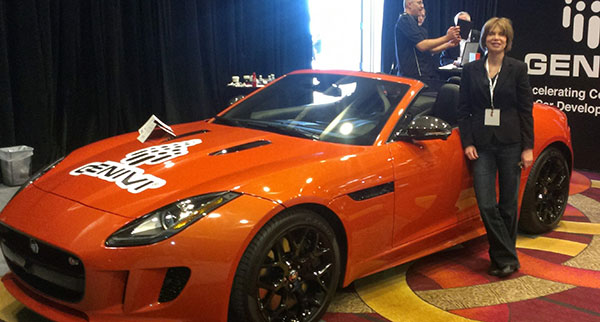
    Janice Partyka at the LA Auto Show with a car representing the GENIVI Alliance, a non-profit automotive industry alliance committed to driving the broad adoption of an in-vehicle Infotainment open-source development platform. (Photo: courtesy of Janice Partyka)
    Janice Partyka at the LA Auto Show with a car representing the GENIVI Alliance, a non-profit automotive industry alliance committed to driving the broad adoption of an in-vehicle Infotainment open-source development platform. (Photo: courtesy of Janice Partyka)

    LOS ANGELES — The Los Angeles Auto Show’s Connected Car Expo, held Nov. 18-19, puts LA at the intersection of Detroit and Silicon Valley. Cybersecurity garnered attention, as did the impact of the sharing economy on connected features. Caution was urged that these new technologies be carefully vetted for safety and reliability, as failures will impede market acceptance. And research shows safety to be one of consumers’ highest valued attributes that connected vehicles can offer.

    Call to action on automotive cybersecurity. Safeguarding the vehicle with its hugely complex supply chain is an enormous challenge. Sensors can be spoofed, wireless sensors and radar can be forged, and cameras can be blocked, warned Andre Wiemerskirch of the University of Michigan Transportation Research Institute. A greater following distance between cars would allow other systems to kick in, should some sensors be hacked. Wiemerskirch appealed for a delay on all connected vehicle features that make a vehicle too vulnerable to hacking until there are better cyber security solutions. He proposed confidence levels for determining the integrity of information coming back from sensors. And he called for a resilient architecture to be created with mature security solutions, such as those used in iPhone security.

    A dependable car hacker? Faith in vehicle reliability is one thing; faith that the vehicle won’t be hacked is another. I was looking forward to Chris Valasek’s appearance once again at the Connected Vehicle Show. He is a skilled automotive hacker, who has helped the industry become more secure. You may have read the account by Andy Greenberg in Wired magazine of how Valesek and a cohort hacked Greenberg’s Jeep (with permission) while he was traveling on a freeway. This included disabling its brakes, accelerator and other core functionality. Valasek didn’t show up for his scheduled talk, which, perhaps, can’t be seen as unexpected.

    How well do they perform? Connected vehicles struggle with performance in certain environments, warned Thomas Form of Volkswagen. More testing and work are needed for automated cars to handle bad weather, particularly conditions in which visibility is obscured, like fog or sandstorms. Unusual objects, such as tumbleweed skittering across the highway, can cause an automated vehicle to make an emergency stop. What would happen when a traffic light is red, but a police officer points to a driver to go, or indicates she needs to stop at a green light? Form exhorted attendees to test all scenarios, even the unlikely ones.

    Will driver skills erode? One attendee asked panelists if with automation, drivers’ skills will become rusty from disuse and be less able to handle manual driving, pointing to the airplane disasters of Asiana in San Francisco and Aeroflot in China. Both flights crashed due to pilots’ confusion with autopilot. The U.S. Federal Aviation Administration (FAA) claims two thirds of pilots make mistakes because of their reliance on technology. A common error is not recognizing that the autopilot has been disconnected. A report from the FAA reads, “pilots sometimes rely too much on automated systems and may be reluctant to intervene.”

    Industry worried about sharing. The exponential growth in the sharing economy and declining interest among young people in owning a vehicle was one theme of the conference. If this becomes a massive disruptive trend in mobility, do we know its influence on the uptake of connective technology? The young are most ready to embrace new technology, yet teenage driver license rates peaked in 1982 and have fallen ever since.

    New mobility options. Millennials, those born after 1980, are showing less enthusiasm for car ownership and driving than their predecessors. Less than 70 percent of those aged 16-24 have a driver’s license. John Zimmer of Lyft reported that 60 percent of their rides in San Francisco and 50 percent of those in New York City are with Lyft Line, a service in which strangers heading in the same direction share Lyft rides. Not only are riders accepting an unknown person to drive them in a personal car, they don’t mind sitting shoulder-to-shoulder with strangers in the intimate confines of a vehicle. Zimmer reported that Lyft is now looking to offer themed cars, such as those showing sports or other types of entertainment on video screens to create new market “verticals.”

    Transforming a personal car into rental vehicle. Cars are vastly under-utilized with the average U.S. household using its cars just four percent of the time with only 1.7 seats occupied on average. This has been duly noted by some car owners, who have created an economy of renting out their vehicles with the help of services like RelayRides. Automakers are taking stock of how Airbnb sliced into the hotel market and are looking at ways to own shared mobility. Ford is one of the OEMs experimenting in the sharing market. Alicia Agius of Ford described Go!Drive, which offers access to a fleet of cars for flexible and affordable one-way journeys throughout London. It also serves to introduce drivers to the Ford brand and build a loyal base among those who become car buyers.

    How are we doing? The intersection of tech and automotive is going remarkably well, and the OEMs are proud of how they have cut long development cycles and become more open to new ways of thinking. Tech has prided itself as the innovators, but a speaker from Google humbly remarked, “The automotive industry has been thinking about the future longer than those of us living in Silicon Valley and working at Google.” A nice tip of the hat.

  • The Risks of Self-Driving Cars

    The Risks of Self-Driving Cars

    Janice Partyka
    Janice Partyka

    We fear the hacker who might corrupt the software system of our vehicles. Maybe they will subvert our brakes or steering. And Volkswagen gave us a new scare. Maybe we should fear the car manufacturer. Can we trust vehicle OEMs for the safety of self-driving cars? Before we buy a vehicle, most of us read reviews and test drive the vehicle. In a short drive, we can judge the peppiness of the engine and handling around corners. We can’t test the reliability of the vehicle software, a particular concern when it is going to be driving our car.

    Tesla just released Autopilot, a $2,500 optional software upgrade which, in a blink, enables autonomous driving. Model S owners wirelessly download the software, and voila, have a self-driving vehicle.

    This isn’t the first semi-autonomous vehicle. Volvo and Mercedes-Benz have these features, but at lower speeds or with the requirement that the driver touch the steering wheel at prescribed intervals. Toyota is playing catch-up, and announced a target to commercialize semi-autonomous cars in five years. Later this year, Toyota plans to launch three new car models in Japan with sensor technology and vehicle-to-vehicle and vehicle-to-infrastructure communication.

    Tesla has been out in front of these efforts in speed and hands-off control with Autopilot able to drive at 70 miles per hour. A driver must have faith in an automaker’s testing, quality control and honesty to put himself in the hands of new software for such a ride. Aaron M. Kessler of the New York Times recently drove a Tesla with Autopilot. Within 20 minutes, he felt comfortable enough to withdraw his hand from near the steering wheel to his lap. He was confident in what he observed in those 20 minutes. Smart? I’m not convinced.

    With Consumer Reports dropping its recommendation of the Model S, Tesla is faced with public outing of problems that plague any new car model. In a survey of 1,400 survey Model S owners, Consumer Reports discovered noise, motors and door issues with the car. Shares of Tesla fell 10 percent with news of the pulled recommendation, and perhaps will lower confidence in the reliability of Autopilot.

    Road & Track magazine recently sounded off to their readers that despite concerns that driving will no longer be fun, autonomous vehicles will arrive, wanted or not. Readers were warned of a future where self-driving would be allowed only on designated roads and would entail a higher insurance premium. The bet is that software from companies (VW?) will be more dependable than we humans.

  • CTIA 2015 Recap: What Mattered Most

    CTIA 2015 Recap: What Mattered Most

    Janice Partyka writes from CTIA in Las Vegas.
    Janice Partyka writes from CTIA in Las Vegas.

    LAS VEGAS — About 30,000 attendees sweltered in Las Vegas for CTIA’s Super Mobility show this past week. Attendance was flat from last year, but the exhibit floor and meeting rooms bustled. The energy of the show focused on M2M and Internet of Things (IoT). In past years, the connected vehicle was a highlight, but not so this year. Wearable technology was scant. Those looking for the big product introductions of the past were disappointed. However, CTIA’s keynote speakers added focus and vision into the show, reminding us of the drive and vigor that built the industry.

    In the past, the network operators (we once called them carriers) and device manufacturers owned the CTIA show, where they made their biggest product reveals. This year, AT&T had a flurry of announcements, including a partnership with car manufacturer Jaguar Land Rover North America. AT&T will supply connectivity to the cars for features such as Wi-Fi hotspots, connected navigation and a suite of apps. Customers will be able to share wireless data between phones, tablets and vehicles on its Mobile Share Value plan for an additional 10 dollars per month access fee. AT&T previously signed agreements with Audi, BMW, GM, Ford, Tesla, Nissan, Volvo and Subaru.

    AT&T and Telogis announced a collaboration to offer solutions for companies with mobile workforces, a combination of AT&T’s network and Telogis’ telematics, compliance and navigation fleet solutions. AT&T was showing off ZTE Mobley, AT&T’s first plug-in vehicle Wi-Fi hotspot, which has just appeared in stores. Smaller announcements from AT&T included the formation of a dedicated smart city organization and a personal security app that provides live, OnStar-type professional monitoring (video and audio).

    Verizon unveiled Go90, a streaming-video, social media service that works across carriers. Go90 is a free, ad-based service accessed only on a mobile phone and focused on short clips, viral videos and a social element, with crowdsourced recommendations and the ability to join groups. Go90 is targeted at Millennials, people younger than 30 years old. Although this seems like a minor announcement, obtaining the loyalty of Millennials and Generation Z (those still in their teens) is critical. With two-thirds of Millennials considering smartphones as their most important device for video, the strategy behind Go90 makes sense.

    New Sprint CEO Marcelo Claure is never boring and used his time at the podium to continue trash- talking the competition. With cocky confidence, he pronounced that under his leadership, Sprint will enjoy “one of the biggest turnarounds in telecom history.” In July, Claure used Twitter to declare T-Mobile’s aggressive “uncarrrier” promotion to be “bullshit and a fake show.” He continued his rant at CTIA. “We spent the first year cutting AT&T or Verizon’s bills in half, which was fun. We’ve moved on today to offering all the DirecTV customers the choice to not be stuck with AT&T.”

    One of the most pressing industry issues is spectrum. With wireless data forecast to grow ten-fold by the end of 2020, the industry is concerned that the 2016 spectrum auction will not be sufficient. Keynotes appealed for more spectrum to enable the U.S. to lead in 5G, just as it led in 4G. U.S. company-run operating systems are currently on nine out of ten smartphones, worldwide. FCC Chief Tom Wheeler was at CTIA to give assurances that the spectrum auction slated for March 2016 will be successful and occur as scheduled. He countered CTIA’s CEO Meredith Baker’s assertion that the FCC has no added plans beyond this auction for freeing up spectrum.

    Freetel mobile products of Japan was one of several international companies participating in CTIA this year.
    Freetel mobile products of Japan was one of several international companies participating in CTIA this year.

    Location Players, M2M, IoT

    TeleCommunication Systems (TCS), a stalwart of location-based services, beefed up its indoor location capabilities with the purchase of Loctronix. The platform, Sensorvision, aggregates and integrates location-positioning technologies, like Bluetooth, beacons and Wi-Fi, as well as content, such as mapping. Sensorvision is currently in beta testing and is aimed at wireless operators. With more stringent rules for 911, including indoor location requirements, TCS is positioned for both public safety and commercial needs. What’s next? In five years, Michael Mathews of TCS predicts, “We’ll be talking about the huge amount of information available from the road and the great impact on apps, including vehicles that are informing other cars of their actions, such as when they initiate traction control or start windshield wipers.”

    u-blox, the maker of wireless and positioning modules and chips, announced a portfolio of new LTE low data rate cellular modules for IoT and M2M applications in the industrial and automotive markets. The portfolio consists of multi mode, multi carrier and of LTE only modules specific for large North American carriers. u-blox expects LTE Cat. 1 technology to become the future norm for M2M applications. And when asked about long-term success, Sven Etzold of u-box says, “The challenge for our industry is picking the right partners and being part of successful consortia. We need to partner with the right network operators and play with sensors’ companies.”

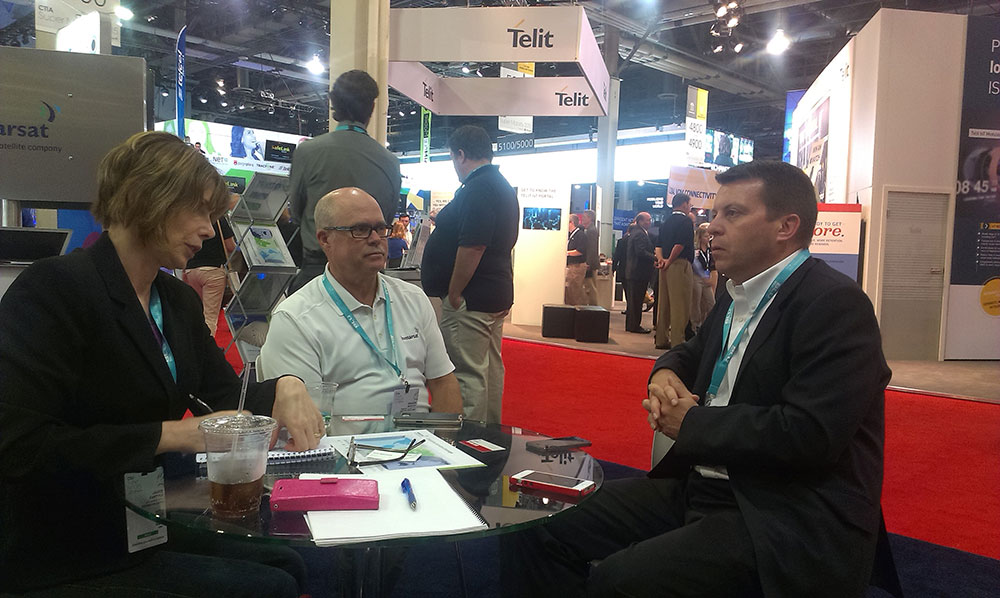
    Janice visits with Don Wigglesworth (right) of Inmarsat.
    Janice visits with Chuck Moseley (center) and Don Wigglesworth (right) of Inmarsat.

    Inmarsat unveiled its new machine-to-machine (M2M) and its IoT strategy, the “Internet of Everywhere.” The company is increasing use of VARs and OEMs to enable solutions that will provide more visibility and control of mobile assets throughout the world. “We are empowering existing and prospective VAR partners to offer unparalleled worldwide connectivity to their M2M and IoT customers through a single network and a single SIM,” said David Wigglesworth of Inmarsat. The company’s dedicated M2M services are IsatData Pro, a low-data-rate messaging service, and BGAN M2M, a two-way IP data service for monitoring and control of assets that require higher bandwidth capabilities.

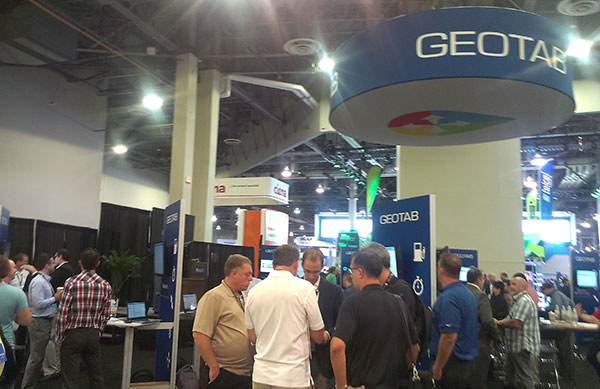
    Geotab, with one of the exhibit floor’s most crowded booths, showcased the development platform of a small form-factor GPS tracking device. The Geotab GO7 device plugs directly into a vehicle’s OBDII port. Developers create applications that are available on the Geotab Marketplace. The booth was crammed with developers who offer M2M and IoT solutions.

    Geotab's booth was crowded with developers interested in the Geotab Marketplace for M2M and IoT solutions.
    Geotab’s booth was crowded with developers interested in the Geotab Marketplace for M2M and IoT solutions.

    Microsoft’s Start-Up Alley contained interesting ventures from the Microsoft Accelerator. One young company, Parknav, offered an app for finding parking spaces based on predictive modeling, and not sensors. Users are guided to street blocks with the highest probability of available parking spaces. The app uses a number of sources, including number of parking spaces, traffic flow and undisclosed data. Parknav enables searches for free, paid and permit parking in 30 cities in Germany and a few cities in the U.S.

    On a charitable note, Jimmy Whales of Wikipedia fame was at CTIA to promote his phone business, a Sprint-based MVNO cellular service. Like Wikipedia, The People’s Operator (TPO) is not a profit driven enterprise. Ten percent of a subscriber’s monthly bill goes to a charity of her choosing, and 25 percent of the company’s profits are donated to non-profits. In talking about Wikipedia, Whales cited China’s current ban of the website. Wikipedia has recently made changes to its website that make it impossible for censors to ban specific Wikipedia pages, although the entire site can be blocked, as it currently is in China.

    I have parting advice for the organizers of CTIA. This year’s show was disrupted by competing events that included the iPhone 6 announcement in Cupertino. Shame on Apple, who is a member of the CTIA board. Also, CTIA had organized a virtual co-conferencing with Internationale Funkausstellung Berlin (IFA), one of the largest trade shows for consumer electronics and home appliances. The IFA event was held in Berlin the prior week and stole attention from CTIA. It isn’t all about location. Timing matters.

  • Post-Mortem on Flight MH370 Crowdsource Search

    Post-Mortem on Flight MH370 Crowdsource Search

    Janice Partyka
    Janice Partyka

    Last year, in a massive crowdsourcing effort, eight million volunteers from around the world sat at their computers and searched high-resolution satellite imagery looking for signs of Malaysia flight 370, which had left Kuala Lumpur and never arrived in Beijing. The effort was akin to putting thousands of digital helicopters into the sky above 340,000 square kilometers of ocean. The project, organized by DigitalGlobe’s Tomnod group, didn’t find evidence of the plane. More than a year later and with wreckage recently discovered, it’s a good time to do a post-mortem of the crowdsourcing effort that involved amateur GPS citizen scientists from around the world.

    Tomnod provided volunteers with images of the Thailand Gulf, Andaman Sea and areas of the Indian Ocean (West of Australia), an area that had been recommended for scrutiny by AMSA, the Australian Maritime Safety Authority. The area was organized by map tiles, each one-eighth of a kilometer. The images provided to the volunteers were still photos, a snapshot in time. The search followed the core rule of crowd sourcing — redundancy, and all map tiles were reviewed by multitudes of people.

    Malaysian_DigitalGlobe-O
    The Tomnod crowdsourcing website from 2014.

    I signed up to search images, and like others, was instructed to individually tag signs of wreckage, rafts, oil spills and interesting objects. Volunteers submitted 18 million tags for further review. Some of the tags were then inspected by analysts at Tomnod, but the vast majority were analyzed by computer programs alone. Search and rescue organizations were given the results to aid their search efforts.

    With advancements in object recognition, one would think it possible for the initial search to be done by computer vision algorithms. Crowdsourcing could be used to manually clarify or further refine classifications. Tomnod believes identifying objects in the ocean is difficult and best done by humans, but has used digital object recognition in a new project. “For our project of mapping Swaziland to help eliminate malaria, Tomnod uses object recognition algorithms to locate buildings,” says Caitlyn Milton of DigitalGlobe. “Our next step is having crowdsource volunteers manually draw building footprints for each individual building. We either use volunteers or deploy our algorithm to identify the roof types (metal, wood or thatch), which are correlated with Malaria rates.”

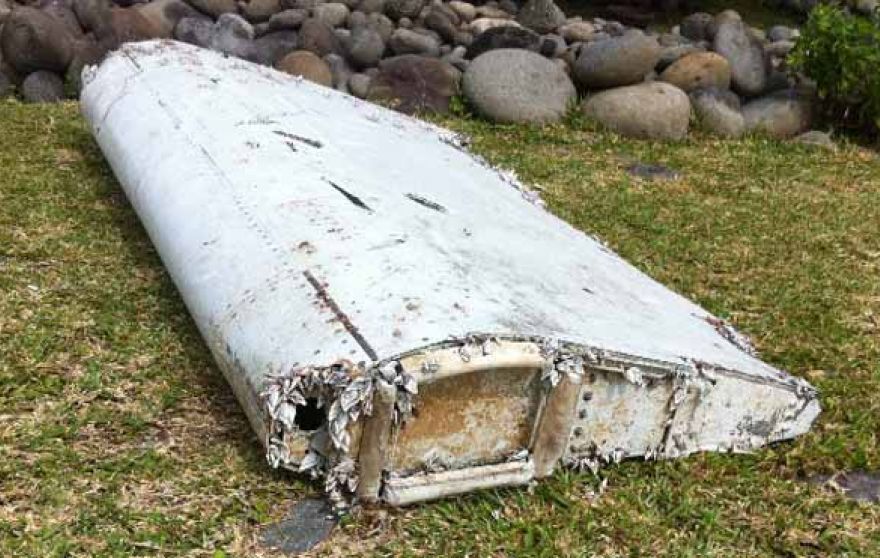
    Debris from flight MH370 washed up on Réunion Island in July.
    Debris from flight MH370 washed up on Réunion Island in July.

    Tomnod would have needed a trifecta: the correct geographic area, visible debris and identification of the debris to yield the actual crash site. Unfortunately, even with the discovery of plane parts found last month near Réunion Island in the Indian Ocean and even with analysis of ocean currents and weather conditions, it will be difficult to ascertain if the plane crashed within the Tomnod search area.

    Crowdsourcing is not new to mapping. European countries offered hefty pouches of gold in the 1500s to people who could help solve the puzzle of determining latitude for maritime navigation. The competitors were well educated — mathematicians, astronomers and watchmakers. To contribute today, all one needs is a computer, a wireless connection and free time.

    Next month, I’ll be in Las Vegas at CTIA’s Super Mobility 2015 reporting on industry developments. If you have interesting news, contact me.

  • Phones Allow Surreptitious Geo-Tracking

    Phones Allow Surreptitious Geo-Tracking

    Janice Partyka
    Janice Partyka

    Not everyone wants to be located. Consumers think they have the ability to turn off the tracking ability of their phones. But can they? More about that later. In other news, there are good reasons why Nokia’s HERE mapping is still on the selling block. And blind people are using a no-tech version of a widely used location positioning method that doesn’t need canes.

    The controls that phone makers have devised to enable consumers to opt out of being located have a big hole. Android-based phones are giving app makers free access to phone data that can be used to surreptitiously geolocate devices. The data comes from an unlikely source: power consumption, and no consent is needed.

    The technique, called PowerSpy, was developed by researchers at Stanford and Rafael, Israel’s defense research group, and gathers a phone’s power usage history. Simplistically, the location of the phone is tracked by using the phone’s battery consumption to determine the distance of a phone to a cell tower. The further the distance, or the greater the obstacles blocking the tower, the more power is consumed by the battery. The researchers say they can take into account phone usage battery drain and filter out the noise created by focusing on long-term trends.

    At its current level of development, the PowerSpy method requires the snoop to have driven a route (war driving) to identify its power consumption pattern. With tests conducted in San Francisco, the method worked with 90 percent accuracy to identify a correct route from seven choices. The team is working on using the data to detect unknown routes that have not been previewed.

    How would the hypothetical stalker, crook or unethical mobile advertiser get access to this data? They would entice a person to download an app. The smoke screen app might be a game or a productivity app that is quietly slurping up the power consumption data.

    Here Today, Not Gone Tomorrow? Wouldn’t you think that Nokia would by now have clinched a deal to sell the mapping division? Given its mapping debacle, Apple was on the top of everyone’s list as a buyer, but apparently the company didn’t even participate in the bidding, and instead is committed to further development of its self-built mapping database. Contenders — Facebook, Baidu, Tencent and Uber — seem to have dropped out of the competition. Left is a consortium of German automakers — BMW, Daimler and Volkswagen — who feel that they should get a better deal with no other buyers in sight. It is a double-edged sword, as they also worry that if the highly accurate maps are acquired by tech firms, the car makers will lose a competitive advantage in the fight for supremacy of the automated vehicle. High-precision mapping is critical to the success of the auto OEMs.

    Who Will Win Connected Vehicles? Follow the Money. Investors who want a piece of the connected vehicle action are placing bets on the tech companies, not the auto OEMs. Many blue chip and small companies are seeing healthy gains in price. Sensor chip makers, car infotainment and telecom companies are some of the winners. With the surge of connectivity required in the Internet of Things, networking technology will also do well.

    E911 Innovations. While regulations are in place for eventually requiring technology to automatically identify the location of indoor E911 calls, dispatchers don’t yet have that capability. Callers can be inside a large complex, like a dormitory or hotel, and if they are unable to speak or identify their location, response is hampered. Smart911 from Rave Mobile Safety is sending dispatchers floor plans of buildings to help in rescue efforts. The maps are automatically sent with the 911 call and have already been credited with quicker responses.

    Quick Business News. Uber acquired Microsoft’s geo-imagery team and assets, known at BIT (Bing Imagery Technologies), which is based in Boulder. Microsoft didn’t need this technology as it had already outsourced Bing Maps technology to Nokia HERE. Telecommunication Systems (TCS) purchased location-based technology and intellectual property from Loctronix. The purchase will further TCS in developing indoor-location technologies. Denmark has become the first country to use real-time traffic data across a national network. Denmark will use GPS probe data managed by INRIX for congestion management. The Internet of Things relies on multitudes of sensors and a new start-up, Sense360, has built a platform to manage that data.

    No-Tech Location Technology. Daniel Kish was a particularly helpful kid who made deliveries for his mom to homes outside of his neighborhood. What is unusual is that Kish is blind and uses echolocation to “see” the space around him. He clicks his tongue to ascertain the unique echoes of his surroundings, starting by identifying areas of high or low density, such as tall buildings, squat houses or open space. And in a version of drive testing, blind users like Kish first walk a neighborhood with a sighted guide and remember the signature echoes. Whether it is solely by ear or with a big computer algorithm like PowerSpy, pattern mapping can be effective.


  • Crowdsourcing Indoor Positioning, Connected Vehicle News

    Janice Partyka
    Janice Partyka

    One of the marvels of the decade is crowdsourcing. This month I look at crowdsourcing for indoor-location positioning and report findings on GPS in smartphones that provide reliable earthquake warnings. Google has had some issues with mapping crowdsourcing, leading to the temporary suspension of Map Maker. If Google can’t block inappropriate content, it does give pause.

    Next, I look at connected cars. Since this fall, four out of nearly 50 self-driving cars driving throughout California have gotten into accidents. With connected vehicles about to start popping out of dealerships, the legality of hands-free driving is belatedly being examined. And, last, INRIX has released an analytics platform that will use the massive data coming from connected vehicles.

    Crowdsourcing Indoors. Crowdsourcing has worked for mapping, but what about for indoor location? Sensewhere thinks it can work. The company’s indoor positioning technology learns Wi-Fi mapping through crowdsourcing. The premise is that it gets better over time, with each user’s device adding to the Sensewhere database. For instance, Sensewhere’s ability to determine the location of an office door from the building’s lobby will improve with each trip down the corridor. Although other systems may be more accurate, Sensewhere requires no infrastructure. The company claims accuracy of 10 meters or better.

    Sensewhere’s solution doesn’t require the Wi-Fi mapping labor that companies like Skyhook initially undertook. Skyhook engaged in “wardriving,” a peculiar term defined by Wikipedia as “the act of searching for Wi-Fi wireless networks by a person in a moving vehicle, using a portable computer, smartphone or personal digital assistant (PDA).” The term “wardriving” originated from “wardialing,” popularized by the 1983 film War Games in which the lead character, played by Matthew Broderick, has his computer automatically dial phone numbers in search of modems, perhaps the precursor to robocalling.

    Crowdsourcing for Earthquakes? The GPS in smartphones can detect the earliest signs of a quake with at least a magnitude of 7. The challenge is to distinguish an earthquake from the usual bouncing and jarring every cell phone encounters. Scientists at the U.S. Geological Survey found that if 103 phones in a defined vicinity record the same displacement, there is an overwhelming likelihood that a quake is occurring. The amount of forewarning is very small and maybe only a few seconds, but it could be enough time for a surgeon to retract a scalpel or a person to take cover.

    Is Automated Hands-Free Driving Legal? Given the batch of vehicles with automated driving about to land this year and next, you’d think that the answer would be a resounding yes. But it isn’t clear. Only one state, New York, requires drivers to have one hand on the wheel at all times. The law was enacted in 1967 without the impetus of connected vehicles. A handful of states have legalized automated driving in certain instances. It would be more practical for the federal government to step in to avoid a patchwork of regulation. The automotive industry and other boosters would argue that if automated driving isn’t specifically prohibited, it is legal. However, “drivers” of automated vehicles could find themselves ticketed by police, who could deem hands-free driving as “reckless driving.”

    Tapping Big Data from Connected Vehicles. Where you go in your car and what you do in it will be used by INRIX in its new Insights analytics platform. Over the years, INRIX has transformed itself from a purveyor of traffic data to a sophisticated driving and traffic analytics player. The platform will use data from connected vehicles for urban planning, retail site selection and advertising usage, leveraging real-time GPS from a network of 250 million vehicles and devices. INRIX introduced InsightsTrips, a data-as-a-service application for understanding population movement across a metropolitan area.   InsightsVolume provides information on how many vehicles typically pass a location.

    Android Mascot Defacing Apple’s Logo. Not even Google is impervious to spam attacks and obscene edits. Google has temporarily disabled its crowdsourcing map editing tool, Map Maker. The tool, especially important in countries that lack detailed maps, allows maps to be updated with new geographical features and roads. In April, Google improved its spam detection system in response to escalating hacking, but the company’s efforts were not enough. One recent misdeed was the renaming of a business located near the White House to “Edwards Snow Den,” a play on Edward Snowden. However, the prank that seemed to precipitate Google taking Map Maker offline was an image of the Android mascot urinating on an Apple logo that appeared on a map.

    The Android mascot could have used the crowdsourced app Sit or Squat to find a more appropriate venue. Crowdsourcing knows few boundaries.

  • Nokia Selling HERE, Indoor Location Intensifies

    Janice Partyka
    Janice Partyka

    It has been an interesting month for developments in location. Nokia is looking for a buyer for HERE, the mapping and navigation business that once set the industry gold standard. While carriers are planning how they will comply with new FCC mandates for locating indoor E911 calls, the commercial indoor location market has moved beyond “emerging” and is well underway. It is a confusing ecosystem for buyers of indoor location solutions. And there is yet another mega-entry into the connected vehicle market, Alibaba and China’s SAIC Motor.

    With the likely merger of Nokia and Alcatel-Lucent, Nokia has started looking for a buyer for its digital map and LBS division. The mapping industry has changed dramatically since Nokia purchased the mapping leader Navteq in 2007. Google has become a mapping juggernaut, and less accurate free maps have become serviceable for many types of uses. In fall 2014, Nokia took a EUR1.2-billion impairment charge on HERE’s book value and now estimates the fair value for HERE at EUR2 billion. Possible buyers include Google, Microsoft, Apple and Uber, all companies with deep pockets and hardy appetites.

    Indoor Location Market Is Messy. The indoor location market is pulling away from the station, as technology is ready and there are applications and use cases primed to get started. Unfortunately, the market is chaotic, teaming with companies offering solutions with various levels of accuracy, infrastructure requirements and cost. An ideal indoor location technology would provide at least 3-meter accuracy, be cost effective and fully universal, working anywhere on all devices. It doesn’t exist, but the competing technologies, all with trade-offs, will find applications that fit. For instance, the precision required in locating an apartment in the case of an E911 emergency call differs greatly from the pinpoint accuracy need by an app that directs a shopper to Lucky Charms cereal on an aisle crowded with boxes.

    One Size Doesn’t Fit All. There is more to an indoor location technology than accuracy. “Accuracy is important, but so is universality, the ability to work everywhere and in all phones. So is cost, in terms of the investment required from a site deploying the technology,” asserts Bruce Krulwich of Grizzly Analytics. “Universal technologies can win in the market even if they’re less accurate, and technologies with cheaper infrastructure can win even if they’re less accurate than those with expensive infrastructure. High-end systems can deliver sub-meter accuracy to those willing to pay for it.” Grizzly Analytics just completed a comprehensive report on the indoor location market.

    Test First. Each of the numerous companies vying for the indoor location market makes claims regarding accuracy, availability/coverage, latency and battery usage. Judicious companies that invest in indoor location systems would be wise to test the claims of vendors. “Making a fair comparison among different indoor location offerings is complex, and nuances in how the testing is performed need to be controlled to ensure an apple-to-apple comparison,” asserted Khaled Dessouky of ComVerity. “It is important to use an unbiased methodology that relates to your use cases.” Dessouky managed the neutral test bed for the FCC’s Communications Security, Reliability and Interoperability Council (CSRIC) for indoor E911 calls.

    Quuppa. An interesting highly accurate offering comes from Quuppa, a Finnish company with a bunch of high caliber researchers spun off from Nokia. Like some others, they are using Bluetooth Low Energy (BLE) beacons, but add angle of arrival (AOA) algorithms that pump up the precision, which they self-report to be 30 centimeters to 1 meter. With this performance, Quuppa has been used in sports to track hockey pucks and athletes’ movements during game play for coaching, player load monitoring and infotainment that can be broadcast during the game. The use of this type of high-precision location in health care settings is compelling. Patient flow management, security and critical asset tracking can be improved with precise positioning technology. Quuppa is a system that likely wouldn’t be used in apps that locate a coffee shop at a mall, but for uses that demand high performance and can spare some expense, it is compelling.

    And Yet Another Mega Entry. The number of companies vying for a piece of the connected-car market keeps expanding and getting more international. E-commerce giant Alibaba and SAIC Motor, China’s popular car maker, together set up a $160 million fund to develop “car on the Internet.” Alibaba will be leveraging its communications, entertainment, map and cloud-computing services. The company joins a group that includes Google, Apple, Baidu and Uber in challenging auto makers.

  • Uber and Decarta: Automated Taxi Tomorrow?

    Uber and Decarta: Automated Taxi Tomorrow?

    Janice Partyka
    Janice Partyka

    The force of mapping was punctuated this month when Uber, the juggernaut taxi service, acquired long-time mapping and navigation company deCarta. Uber and its competitor, Lyft, redefined taxi service with a smartphone app that connects users and drivers. These services have exceled by offering reliable low-cost rides and quick pick-ups, functionality that is enabled by seamless mapping and navigation technologies. Acquisition of a mapping company serves Uber’s high ambitions.

    Following introduction in San Francisco and New York, Uber just rolled out its ride sharing service, UberPool, in my city, Los Angeles. The service allows multiple individual customers going in the same direction to share a ride and lower their fare by as much as half. The potential for reducing traffic in congested cities is large, but how likely is it that UberPool can find matches and people willing to ride with strangers?

    New-Logo-Vertical-Dark-TEffective vehicle routing, navigation and traffic prediction is critical to making UberPool work. First, Uber must find pairs of trips that are similar enough in their timing and pathways to make a pairing attractive to the riders. Then, Uber needs to execute quickly and on time, given the unpredictability of whether the other rider is ready when expected. Coping with these uncertainties will be a huge challenge for Uber. Just 10 percent of work trips in America are by carpool. Can Uber develop the algorithm to make ride sharing attractive? Let’s wait and see.

    It is no surprise that Uber has announced that it will be developing self-driving car technology with the goal of self-driving Uber taxis. This puts it in direct competition with Google, one of Uber’s largest investors. Uber has partnered with Carnegie Mellon University to create a research center for mapping, vehicle safety and autonomy technology. If Uber can someday build cars that drive themselves, they can eliminate the need for a driver. The question for 2015 may well be, who is not pursuing driverless cars? Maybe Macy’s and Martha Stewart will partner on a particularly tasteful automated vehicle? Do you think you’d still have to tip?

    In other news, two former leading location competitors, LocationSmart and Locaid, have merged. Together they have the largest location-as-a-service platform for enterprise location for mission-critical applications in a number of industries including service assistance, proximity marketing, workforce management, emergency alerting, mobile gaming and transaction verification. As far as I know, they are not developing a self-driving vehicle.

  • A Milestone in Digital Mapping

    Janice Partyka
    Janice Partyka

    Editor’s Note: Janice Partyka is principal of JGP Services, a consulting practice. She is GPS World’s editor for wireless, writing a monthly column for the Wireless LBS Insider newsletter. The views expressed are her own.

    Hard to believe, we have only now reached the 10th anniversary of Google Maps. As important as digital maps have become, their purpose is much the same as the printed and drawn maps that preceded them. Digital maps emerged in the 1960s with the Census Bureau’s DIME maps. These first digital maps were used for analysis of place-specific data, such as populations within census tracts or cities. Digital maps in turn led to geographic information systems (GIS) for spatial analysis. Though GIS had uses in fields like city planning, the main stimulus for digital maps came in the 1990s with the convergence of the completion of GPS infrastructure, and affordable and portable computers.

    Naturally, just knowing where you are doesn’t have huge value, but if that information can be fused with a digital map, which could generate a route to the destination of your choice, or access information on the places that surround you, then you have something. This is why companies like Etak, Tele Atlas and Navteq began the painstaking process of converting satellite images, printed topographic maps and data that could only be observed with one’s eyes (such as street signs, addresses, speed limits, and turn restrictions) into digital form.

    One of my projects during the 1990s was to compare the accuracy of competing digital maps. It was a tedious process, entailing two-person driving crews traveling each street. The passenger recorded all relevant information and made periodic readings with a large, costly GPS receiver. At the time, digital maps could only be accessed by complicated GIS programs which restricted their usefulness.

    Since then, digital maps have grown in significance due to the advent of smartphones, a growing suite of digital-map-enabled applications, and of course Google Maps. Google has made maps friendlier to developers through its application program interfaces (APIs), which also improved the user experience for scrolling across locations from a map view.

    Google has mastered the process of data capture from roadways. Rather than rely on the eyes of people in the field, sensors and cameras collect mapping data. Image-processing software extracts and geo-codes textual data, automating and enhancing map creation. And Google has incorporated overhead and street-level photographic images into maps, adding substantial value.

    We will never arrive at having a perfect digital map. The work to keep mapping accurate and give it more context will be ongoing. The next challenge in digital mapping is making it work offline and creating accurate maps of the indoors. These next innovations will not be led by GPS, but by sensors, including beacons. GPS has already done the heavy lifting.