Qualcomm Incorporated announced Thursday that its subsidiary Qualcomm Global Trading Pte. Ltd. has completed the acquisition of CSR. CSR is known to the GPS/GNSS industry as the maker of the SiRFstar series of chips, which are used in many consumer devices.
Qualcomm started the acquisition process for CSR in October 2014. With this close of the acquisition, Cambridge Silicon Radio Limited, or CSR, is renamed Qualcomm Technologies International Ltd.
The acquisition, which was completed at an enterprise value of approximately $2.2 billion, complements Qualcomm Technologies, Inc.’s offerings by adding a compelling portfolio of new products, sales channels and a large number of customers in the areas of IoE and automotive — both key growth priorities for Qualcomm Technologies.
Cambridge Silicon Radio Limited is an indirect, wholly-owned subsidiary of CSR that operates, along with its affiliates, substantially all of CSR’s engineering, research and development functions, along with substantially all of the CSR products and services businesses. Cambridge Silicon Radio Limited will be renamed Qualcomm Technologies International, Ltd., which will become a subsidiary of Qualcomm Technologies.
“As we strive to connect billions more devices, automobiles and people within the Internet of Everything, we are enthusiastic about the growth that this combination will foster,” said Steve Mollenkopf, chief executive officer, Qualcomm Incorporated. “CSR’s complementary strengths in connectivity, audio technologies and systems-on-chips will help strengthen Qualcomm Technologies’ position in the IoE and automotive industries, and add to a broad and highly advanced portfolio.”
“We are pleased to join a recognized leader such as Qualcomm Technologies at an exciting time as customers race to satisfy the growing consumer desire for more and more seamlessly connected devices in their ‘smart’ homes, offices and cars,” said Joep van Beurden, chief executive officer, CSR. “Our employees have a strong history of pioneering new products and collaborating with customers to deliver critical technology requirements such as interoperability, low power and connectivity. Together with Qualcomm Technologies, we are better positioned to meet our customers’ needs today and into the future.”
While the accounting for the transaction is not yet finalized, Qualcomm estimates that on a Non-GAAP basis the acquisition will be modestly accretive to earnings per share in fiscal 2016 consistent with prior guidance. In addition, based on preliminary estimates, Qualcomm expects the transaction to be modestly dilutive to GAAP earnings for fiscal 2016 driven primarily by acquisition-related items.
CSR is becoming Qualcomm Technologies International.
Qualcomm started the acquisition process for CSR in October 2014. With the expected close of the acquisition in two weeks on Aug. 13, the name of the company — Cambridge Silicon Radio Limited, or CSR — will be changed to Qualcomm Technologies International Ltd. (QTIL).
Here is the renamed company’s contact information:
Qualcomm Technologies International, Ltd.
Churchill House, Cambridge Business Park, Cowley Road
Cambridge, CB4 0WZ, UK
Emails will retain an @csr.com address until a QTIL address is created.
CSR is known to the GPS/GNSS industry as the maker of the SiRFstar series of chips, which are used in many consumer devices. Qualcomm is a leading maker of chips used in smartphones.
CSR issued a letter to its customers explaining the change, sent by Chris Dale, senior manager, CSR Global Procurement. Dale asked that customers make the appropriate change in their purchase order systems before Aug. 13. “As part of an ongoing program of review and improvement to trading arrangements and business processes, we will be updating our standard terms of purchase. You will be able to review the revised terms at qualcomm.com/procurement.”
The revised terms of purchase will apply to purchase orders issued by QTIL on and after Aug. 13.” Finally, please note that for the near term there will be no changes to the Accounts Payable or purchasing process or contacts,” Dale wrote.
The OriginGPS Multi Spider module provides high sensitivity and noise immunity by incorporating its proprietary Noise Free Zone technology for faster position fix and navigation stability even under challenging satellite signal conditions.
SiRFstarV — CSR’s GNSS receiver that tracks both GPS and GLONASS satellites — has the CSR mbed Shield, which comes fitted with the OriginGPS Multi Spider module (ORG4572) requiring 1V8 supply, ground, UART interface and connection to GNSS capable antenna. Additional IOs are available for interrupts, turning the receiver on and off, reset, fix status and power mode information.
The OriginGPS Multi Spider is a tiny GPS + GLONASS module designed to support ultra-compact applications in which size is at a premium, such as smartwatches, wearable devices, trackers and digital cameras. It is a fully integrated, highly sensitive GPS + GLONASS receiver module measuring 7 x 7 x 2.1 millimeters.
The Multi Spider continuously tracks all GPS and GLONASS satellites in view and provides real-time positioning data in the standard industry format, defined by the U.S. National Marine Electronics Association (NMEA).
For more information about GPS/GNSS modules, visit OriginGPS.
In the report, the analysts have identified and deciphered the market dynamics in important GNSS industry segments, highlighting the areas offering promising possibilities for companies to boost their growth, according to Research and Markets. The report studies the market by sectors including location-based services (LBS), transportation (further divided into road navigation, rail navigation, air navigation and marine navigation), surveying and agriculture. The GNSS application market is further studied by region: North America, Europe, Asia-Pacific, and Rest of World.
The report provides a complete overview of the GNSS market globally. All the current trends and drivers, coupled with potential growth areas of the GNSS industry, have been evaluated in the report. Furthermore, the report provides information on opportunities in the industry for different companies in the chapter titled Opportunity Assessment.
Additionally, to provide an exhaustive knowledge of the prospects for GNSS players on the geographical front, the report provides comprehensive knowledge of the 10 most worthwhile GNSS markets around the world (U.S., Canada, UK, France, Germany, Russia, Japan, China, South Korea and India). It includes information about the present state and future outlook of the LBS and telematics markets in these countries along with information about their personal navigation systems such as GPS, BeiDou,Galileo, GLONASS, QZSS and IRNSS.
The report also looks into the competitive landscape covering business overviews, key financials, product analyses, recent developments and strengths and weaknesses of each of the players.
Key trends considered in the report include:
Driverless Car: New GNSS Technology Use
Indoor GNSS Positioning Poised for Growth
People, Pets and Thing Finder: The Next Attraction
GNSS Based Products: A Burgeoning Market Opportunity
This year’s CES featured the usual big TV screens, loudspeakers, wearables, 3D printers, drones and connected vehicles surrounded by 150,000 attendees over several Las Vegas meeting venues. What was interesting was the continued rise of autonomous, or self-driving, vehicles and platforms. Lost in all of the noise was a small, but important, location-based services enclave that consisted of GPS-enabled wearables and indoor positioning.
LAS VEGAS—A big chunk of the estimated 30 billion worldwide connected devices will be those linked to vehicles, say industry experts at the International Consumer Electronics Show here. Nearly all automakers had a presence at CES — all with a long-term connected vehicle strategy.
No matter how big and exhausting CES is, with long taxi lines and 150,000 attendees, there is good reason to come a day before the giant conference, as the Consumer Telematics Show and AT&T Developer’s Conference feature many industry executives and new developments. At the Consumer Telematics Show, speakers explained how and why connected vehicles are transitioning to autonomous capability.
The connected car industry has matured to the point where technology and market points are coming together, said Thilo Koslowski, Gartner vice president and practice leader, automotive vehicle ICT mobility, at CTS. “The opportunity of connected vehicles are becoming the center of mobile and [Internet of Things] innovations. It has come from, in 1997, a pure telematics safety and security device to vehicle integration, digital lifestyle convergence and Internet of cars,” he said. “At the end of the year, there will be 25 million connected vehicles in the world, but most in mature markets. That might not look like a lot, but only in five more years, I think that number is going to 150 million vehicles.”
In some cases, the newer outfitted vehicles will have only safety and security features, Koslowski said, but most will have two-way data communication, part of the 30 billion devices connected by 2020. He predicted last year that most automakers would have shifted general mobile applications to vehicle and customer-specific services.
Koslowski says the top connected car features that consumers have asked for include automated map updates, real-time weather and news, parking spot finder and driving assessment and coaching. “Consumers don’t want application downloads directly into the car. In addition, in-vehicle media purchases are not there yet, as are in-vehicle social networking updates,” he said. “I predicted in 2013 that 25 percent of the automakers would monetize mobile commerce transactions in their connected vehicle offerings such as parking, buying gas, etc.,” he said.
Self-Aware Vehicle Emergence
Imagine sleeping, or reading, in your car during the morning commute. It may be a reality, but major technical, cultural and legal issues need to be resolved before fully autonomous vehicles hit the road. “There is going to be trouble if [automakers] don’t get consumers involved early on. Or allow governments and insurance companies telling people when to hit the button (to drive),” Koslowski said. “You press the [drive yourself] button and you pay 30 percent more in insurance. About 39 percent of those we surveyed are interested in some sort of self-driving car — that doesn’t mean fully autonomous vehicles. But 61 percent say they are not ready.”
Koslowski says there is a lot of education that includes basic acceptance of the technology and trust that it really works. “There usually is a 30-second rule. The first 30 seconds is ‘holy moly, this thing drives itself’,” he said. “The second 30 seconds is ‘is this beneficial?’ There are real benefits such as reducing the cost of accidents, which amount to $900 per U.S. citizen.”
In terms of cyber security and privacy, Koslowski said it’s a big deal for autonomous vehicles. “A couple of breaches will be a big deal. Still, consumers are not that paranoid. They are willing to share information, especially if there is a monetary or societal function,” he said.
Cost is still big factor that will drive the adoption of autonomous vehicles. Koslowski says that consumers polled will only pay an additional $1,404 for autonomous capability. The cost of a test vehicle, right now, is about $85,000. “The good news is that number is coming down. It is shrinking to less than $6,595,” he said.
At the Transportation Research Board meeting a week after CES in Washington, Chris Urmson, who heads Google’s self-driving vehicle program, said the Kentucky Fried Chicken bucket-looking gizmo on top of their car cost $70,000 alone.
Cost aside, by 2016, three automakers will have concrete plans for upcoming autonomous vehicle launches, Koslowski said. “This is happening a lot faster from a technology standpoint than experts thought it would,” he said.
Overall, Koslowski said that big IT companies need to step up to make autonomous vehicles work. “Governments are a little behind. The slowness of automotive companies also make them vulnerable to technology companies to step in and take over the industry,” he said.
Indoor Positioning and Other Location Markets at CES
Such companies as CSR were at CES and said the show was good for indoor location providers. “CES was good for us. We had good interest in our live demo of indoor location where customers were free to walk around testing the performance of our (solution). We also saw a lot of interest from the automotive market for an indoor/outdoor navigation (product), such as being able to find your way back to the car in a complex shopping mall and the best place to park for access to your indoor destination,” said Dave Huntingford, CSR’s director of product line for location.
In 2015, the company believes that one of the key drivers for indoor location will be the ubiquity of maps for public locations, Huntingford said. “The availability of indoor maps for malls, airports and retail chains will help drive indoor location awareness with consumers for both utility value (not getting lost) and retail marketing applications,” he said. “We also expect to see a variety of social networking applications supporting indoor location, reflecting the fact that we spend the vast majority of time indoors.”
Huntingford believes a key limitation of many indoor technologies is the requirement to have dedicated, or upgraded, infrastructure such as BT Smart beacons or updated Wi-Fi access points with new location capabilities, and a dedicated manual survey of the building to measure indoor Wi-Fi signatures.
At CES, Magellan rolled out its line of 5-inch RoadMate Auto GPS Devices with 3D buildings and landmarks. “The units retail from $169 to $229. “We are surprised at the interest our PNDs are having in the market, particularly with back-up video,” said William Strand, Magellan associate director, product marketing. “The dash camera is a small market, but catching on to block insurance fraud.”
In other CES news:
Audi pulled off a coup when it invited journalists to drive with its autonomous vehicle from San Francisco to Las Vegas.
Most location companies have wearables product lines that are making retail chains take notice.
Transportation Research Board Meeting Becoming Big Autonomous Show
WASHINGTON—The Transportation Research Board Annual Meeting here has grown to be one of the bigger autonomous vehicle meetings, with 12,000 mainly government execs and academics meeting.
About 300 people showed up for a panel headlined by Chris Urmson, who heads up Google’s autonomous vehicle program. All was well and good hearing about Google’s self-driving vehicle technology except TRB had 100 chairs for 300 attendees…a lot of people left. But that is the level of interest autonomous vehicle is having in the government and academic community.
“We are planning to find out how our car does with red lights flashing in front of it. The software will figure out, along with GPS and insertional and high-resolution maps,” Urmson said. “The world isn’t empty. Our vehicle has to know about the pick-up making a lane change, the bicyclist pedaling next to it.”
Urmson said there are no sensors on the market that power the car — Google makes them in-house.
In other TRB news, TomTom announced it is partnering with the I-95 Corridor Coalition. The company is using one of three main real-time traffic products in its portfolio, said Nick Cohn, TomTom senior business developer. “It is all about our TomTom Traffic Flow product, which provides speed information for individual road segments every minute, based on our mix of probe data sources,” he said. “This is one of three main real-time traffic products we have. TomTom Traffic provides one-minute updates of locations and delays of traffic jams and other traffic incidents. The third product is a set of APIs for providing, for example, travel times that can be displayed on variable message signs along roadways to inform drivers about delays.”
The government market is a steady business for TomTom, which has seen traffic management success mainly in European cities such as Berlin, Rome and London, Cohn said.
SiRFusion SDK brings plug-and-play simplicity to Android app developers.
With location industry consolidation, several companies are looking at established players to grow niche markets. United Kingdom-based CSR is leveraging several technologies to grow the nascent indoor location market into a powerhouse.
As GPS World recently reported, Qualcomm agreed to buy CSR, based in the United Kingdom, for $2.5 billion to boost its automotive infotainment and Internet of Things (IoT) offerings.The deal makes Qualcomm, which spun off its Gimbal location beacon technology into an independent company, a major competitor to chipmaker Broadcom.
Long term, CSR believes that multiple technologies, ranging from satellite- and cellular-based to local beaconing, will allow consumers to expect higher quality location services, said Dave Huntingford, CSR’s director of the location product line. “As part of improving accuracy, we also expect to see the emergence of dual-frequency operation of GNSS in consumer automotive — and, as part of improving security, better spoofing protection,” he said.
CSR recently launched its SiRFusion software development kit, SDK, for Android app developers. The company says the software will enable indoor positioning for developers who want to add such new capabilities as indoor location tagging and analytics for social networking.
“We expect to see good pick-up of the solution over the next few months for a wide variety of location services, and being handset-agnostic is a big benefit for any developer. However, if you are looking for accuracy down in the meter range, you will need to add infrastructure to supplement the location calculation, which can come in many forms,” Huntingford said.
Hutingford believes the big selling point for retailers is striking the balance between benefits they obtain from the app vs. benefits the consumer gets — what he calls the equity balance.
“Too many irrelevant notifications while walking around the shop will result in people not wanting to run the app, and can potentially harm consumer acceptance of retail applications. The interest is already there from the retailer side as the benefits are somewhat obvious, but the question is, what do you give back to an increasingly technology-smart consumer?” he said.
Overall, the indoor location market is attracting major interest in retailers — which is refreshing to many industry observers after seeing online sales cut into brick-and-mortar stores’ profits.
“iBeacons and other beacons proved to be the fastest location-proximity technologies that are being deployed full scale by Macy’s, CVS, and other retailers for a first quarter 2015 rollout,” said Kris Kolodziej, an indoor location-based services advisor.“I see more acquisitions like the one of Groupon acquiring Swarm Mobile, a beacon platform for smaller tier-two retailers and businesses. In addition, we will see more partnerships like the one between Gimbal and Urban Airship to provide a holistic outdoor-indoor solution for geofencing and engagement platforms.”
CSR has added significant upgrades to its SiRFDRive software dead-reckoning algorithms, improving automotive positioning performance and meeting the requirements of leading OEMs across the globe. This video demonstrates how these latest algorithms improves the overall performance in Chicago, once of the most challenging environments to obtain accurate vehicle positioning results.
CSR plc has released significant upgrades for the SiRFstarV 5ea automotive-grade quad-GNSS location platform. Support has been added for concurrent use of GPS and BeiDou (BDS) satellite constellations, along with major updates to the SiRFDRive software dead-reckoning algorithms. Together, these upgrades ensure that SiRFstarV 5ea offers improved automotive positioning performance meeting the requirements of OEMs across the globe.
CSR is being acquired by Qualcomm, with the transaction expected to close by the end of the summer of 2015.
By adding support for China’s BDS constellation to SiRFstarV 5ea’s existing GPS and GLONASS capabilities, the new software offers automotive OEMs the flexibility to perform concurrent GPS and GLONASS or GPS and BDS operations. The new BDS capability provides OEMs the opportunity to market their products to regions where BDS support is mandated and also exploit the benefits of the BDS satellite constellation which is now fully operational over China and surrounding countries. The SiRFstarV 5ea platform, which is optimized and certified for the strict requirements and life cycles of the automotive industry, is also Galileo-ready through future software upgrades.
“Automotive OEMs from around the globe all have something to gain from the new additions to our cutting-edge SiRFstarV 5ea automotive location platform,” Anthony Murray, senior vice president, Business Group, at CSR, said. “Tier Ones and OEMs are looking to develop global platforms that can be easily configured to meet regional requirements and preferences, while Asian car manufacturers in particular have been calling for simultaneous GPS and BDS support to meet regional market needs for BDS support.”
SiRFDRive for SiRFstarV 5ea now also includes CSR’s latest dead reckoning algorithms that work alongside concurrent GPS and GLONASS operations. The combination of increased satellite visibility and the latest dead-reckoning algorithms improves the overall performance in challenging environments such as Chicago and Tokyo by a factor of two.
“Many Tier Ones are looking for more complete dead reckoning solutions to simplify the design process and accelerate time to market. SiRFDRive is a state-of-the-art plug-and-play solution that covers a range of end products spanning from low to high end telematics and navigation systems,” continued Murray.
SiRFstarV 5ea is designed for automotive market AEC-Q100 qualification requirements as a standalone location engine platform. The platform provides automotive Tier One suppliers and OEMs around the world with continuous, highly accurate positioning capabilities for the next generation of in-dash navigation and telematics applications in cars, trucks and other moveable assets requiring automotive-qualified devices.
Updated SiRFstarV 5ea evaluation kits are available now, and the SiRFstarV 5ea platform is ready for immediate integration into next generation infotainment and telematics products.
CSR provides the following video describing SiRFDrive.
CSR plc today announced the launch of its SiRFusion Software Development Kit (SDK) for Android application developers. The solution enables indoor positioning for Android developers looking to create next-generation apps.
Developers can now leverage the SiRFusion library to rapidly integrate new location-based capabilities and services such as indoor location tagging and analytics for social networking applications, indoor navigation, lone worker efficiency and safety capabilities, as well as indoor asset tracking and targeted e-commerce services.
CSR is being acquired by Qualcomm, with the transaction expected to close by the end of the summer of 2015.
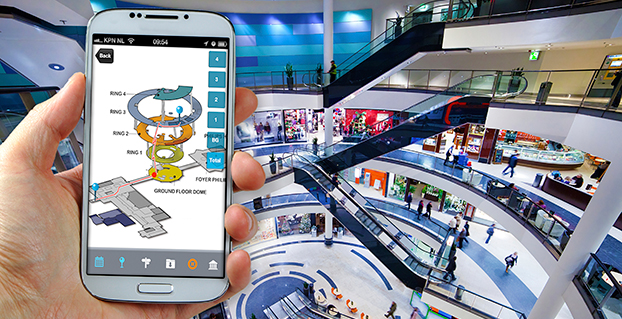
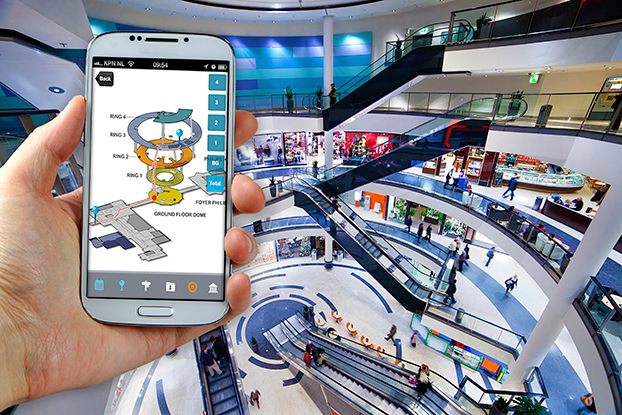
Mobile applications with integrated SiRFusion can now deliver the ubiquity of outdoor navigation to indoor environments without costly surveys or infrastructure upgrades. SiRFusion combines real-time Wi-Fi signals, satellite positioning information, pedestrian dead reckoning, and the company’s cloud-based CSR Positioning Center to calculate accurate indoor location. SiRFusion technology provides the accurate indoor position fixes needed to make continuous indoor navigation a part of everyday life. The system automatically crowd-sources a venue’s indoor Wi-Fi signatures as consumers walk through the location, and it has also been architected to accommodate future proximity and location technologies such as Bluetooth Smart beacons, Wi-Fi Round Trip Time (RTT), and Indoor Messaging System (IMES).
“Offering indoor positioning accurate enough to be useful has been a challenge that the industry has been trying to solve for many years,” said Anthony Murray, Senior Vice President, Business Group at CSR. “But with consumers coming to expect anytime-anywhere positioning wherever they are, our customers have continued to express a growing interest for accurate indoor positioning without the need for additional infrastructure. With our SiRFusion Software Development Kit, we have, for the first time, made indoor location a reality for developers who want to deliver innovative location-based products and services without proprietary infrastructure.”
SiRFusion for Android can be integrated into any app running on Android version 4.4 or later. The SDK will be available for download from www.csr.com in Q1 2015, and will include the SiRFusion library, API descriptions, and a Developer’s Guide. CSR will demonstrate SiRFusion for Android at the Location and Context World conference December 2-3, held at the JW Marriott in San Francisco, and at Consumer Electronics Show (CES) in Las Vegas January 6-9, 2015. To schedule a private briefing and demo at either event, contact [email protected]
Because of nonstop government regulation, which can help and hinder the trucking industry, the mobile resource management market will continue to be one of the strongest location segments. In other news this month, while it doesn’t get much bigger a deal in the location industry than a $2.5 billion purchase, as in the case of Qualcomm buying CSR, one smaller deal that should not be overlooked is ST Telecom’s acquisition of Shopkick, a growing indoor location provider.
SAN DIEGO — The global trucking market for fleet management products has always been strong — and one of the first location segments to have prospered over the last 15 years. This market growth will continue because of new technology and government requirements, say attendees at the American Trucking Association annual management conference here.
An American Transport Research Institute report offered at ATA, “Critical Issues in the Trucking Industry – 2014,” outlines 10 issues, mainly driven by government regulation, that concern fleet owners.
One of the big issues is hours of service (HOS). Rules adopted by the feds require 11 hours of driving — and a 34-hour break before restart. This includes a 30-minute break before driving again after eight hours. ATRI believes these rules cost carriers $1.6 billion to $3.9 billion annually in driver pay impacts.
An electronic device (ELD) mandate requires all drivers to keep records of duty status via a logging device. A mandate could come in 2016 that outlines hardware specs.
Another big issue is truck parking — and could be an opportunity for mapping and location companies. Because HOS regulations require drivers to take many breaks, shortage of parking is a big and dangerous concern because drivers are operating beyond allowable rules to find areas to park. ATRI wants closed public rest areas to reopen. They want real-time truck parking information availability and trucking parking reservation systems.
Driver distraction in the form of texting and driving is a growing concern. ATRI wants the feds to ban hand-held cell-phone use/texting for all motorists, encourage harsher penalties and more aggressive enforcement, and to continue to research to understand the size of the distracted-driving problem.
Other issues include driver shortage, health and retention; compliance, safety, Accountability (CSA); and congestion funding.
“My takeaway from [ATA’s] luncheon panel was that the trucking sector is in pretty good shape overall, except for the driver shortage. In regard to mobile resource management (MRM), I would estimate overall growth in in-cab and trailer monitoring at less than 10 percent per year,” said Clem Driscoll, president, CJ Driscoll Associates. “The Truckload sector is heavily penetrated with in-cab solutions. Most large carriers have a system. CSA is motivating some sales to mid-size fleets, but many small fleets are waiting for the ELD regulations. So, the delays with ELD regulations have probably been slowing market growth.”
Such companies as AT&T are trying to address the growing trucking requirements with new and existing products. For example, Saia LTL Freight, a trucking and logistics company, is managing its fleet of trucks with several AT&T products. Saia drivers are using handheld computers to connect with dispatch managers and monitor fuel consumption, safety, and location using AT&T’s wireless network.
“[SAIA] is a trucking company that is using all our capabilities. We partnered with them from an early stage, starting with the [Electronic Device Mandate] requirements,” said John Moscatelli, AT&T advance resource management solutions director. “Then we helped them with rugged handhelds and voice where necessary.”
Overall, Moscatelli sees a few fleet trends emerging. “There have been a lot of mergers and acquisitions in this industry. I also see that trucking companies are very aware of forced hours of service regulations for every company [mandated by the government],” he said. “It will not necessarily be the first adopter of technology that will be needing units. We have looked at the demographics, and even small and medium fleets are going to need affordable connected systems. The other trend is the growth of government sales — local, state and federal — very strong.”
Targeting a large worldwide market, Trimble has acquired several companies in the fleet space in recent years. One of them is Minneapolis-based PeopleNet, which is gearing up for the ELD mandate with an “Internet of Transportation Things” strategy that includes multiple devices talking to each other, said Randy Boyles, company senior vice president, tailored solutions.
The company rolled out its Wi-Fi-enabled in-cab scanning feature at ATA that allows drivers to scan and transmit transportation documents.
PeopleNet, along with ALK, GEOTrac, Vusion and TMW Sysems, are part of Trimble’s Transportation and Logistics division. Trimble has allowed their purchased companies to operate autonomously.
“About 95 percent of our management team is still intact. TMW still works with Omnitracs and others, but you will see a convergence with [other Trimble companies],” said Boyles, who believes that oil and gas pipeline monitoring/mapping is a growing niche.
The fleet and enterprise market is a growing space for Magellan, said Mark Perini, company associate vice president. The company has been offering its Magellan RoadMate 9496T-LMB Android unit for the fleet market.
“The unit enables bulk updates using our smart GPS technology. The Android operating system has been a growing technology for fleets,” Perini said. “The HOS regulations require reporting of how many hours truckers are off duty. With our management system, operators can implement a full set of protocols [to achieve HOS compliance]. It’s on a server, so the driver can’t change anything.”
Telogis Partners with Ford
Telogis has grown from a small company to a major player in the fleet market. The company recently announced it will be the “technology provider” for the Ford Crew Chief in North America, which is an expansion of its European partnership with the automaker.
In Europe, Ford’s telematics products will be offered to customers as a dealer-installed option and will feature vehicle location, diagnostics and performance.
The company has also been a major player in the U.S. market, integrating into Volvo Link, said Kevin Moore, Telogis vice president of OEM sales at ATA.
“While the trucking business is huge, the aftermarket is also growing,” he said. “While location information is central to what we do, we are constantly growing the platform. We are looking to be the only product that provides crowdsourcing for the commercial market.”
Even though the U.S. fleet market is growing, other world markets are growing by double digits each year. Driscoll, in his China Commercial Telematics Market Study, says the Chinese markets are growing at 20 percent, or more, each year. “China is manufacturing over 600,000 commercial trucks per year for internal use, so the addressable market is growing at a very fast rate,” he said. “China has a very inefficient logistics system and spends far more on logistics than the U.S. or Europe as a percentage of GDP. The government is very aware of the problem and is mandating the use of satellite tracking solutions in a number of sectors. Systems being sold in China today typically support both GPS and BeiDou (Compass).”
In other ATA news:
Orbcomm rolled out its GT 1100 chassis tracking solution to allow trucking companies to monitor where their rigs are located. It also allows operators to see if a trailer is mounted.
10-4 Systems is offering real-time data products NonStop, NonStop Mobile and NonStop premium. The company has a track/trace asset management capability for operators.
Qualcomm to Buy CSR for $2.5 Billion
The recent announcement by Qualcomm saying it would buy United Kingdom-based CSR for $2.5 billion signals continued inroads into the connected car and Internet of Things markets for the San Diego company.
In 2009, CSR, which stands for Cambridge Silicon Radio, purchased SiRF Technology, a GPS pioneer that was making huge strides in indoor location technologies. CSR, mainly known for its wireless Bluetooth technology, has chips in such products as audio speakers and Apple-owned Beats headphones.
The connected car market will be a big one for Qualcomm in the future. The connect car market, a dominant topic at most wireless trade shows, is expected to grow to $20 billion by 2018, according to Juniper Research. Another research company, SBD, has even higher expectations for the technology, saying the connected car market will grow to $54 billion by 2018.
Macy’s plans to add Shopkick indoor location beacons in preparation for holiday shopping. (Photo by Nicholas Eckhart is licensed under CC BY 2.0.)
Shopkicking It at Macy’s
In another big industry acquisition, SK Planet, part of South Korean mobile carrier SK Telecom, bought indoor location provider Shopkick for $200 million. The sale indicates how valuable the worldwide indoor location market is becoming.
Macy’s announced it was installing 4,000 Shopkick beacons prior to the holiday shopping season, according to published reports. The company has nearly 8 million active users and relationships with 20 retailers
In other location news:
General Motors OnStar is arguing for less restrictive open Internet rules for wireless carriers, according to published reports. OnStar argues that future connected services (Wi-Fi hotspots, wireless collision avoidance systems, streaming video and audio) that are going into cars make the net neutrality issue vital for the auto industry. The auto giant, which works with such carriers as AT&T Mobility, is siding with the wireless carriers in their battle with the FCC over net neutrality.
A number of location companies, and companies using the technology, are seeing major investments. Most notably, INRIX received a $55 million investment from Porsche. XAd, which develops mobile advertising products, received $50 million in funding from a number of partners. Geofeedia, an LBS social media monitoring company, raised $3.5 million. The company gathers social data from such sources as Twitter, Instagram, YouTube, Flickr, Facebook and others.
Nokia’s HERE mapping platform is now available on Samsung’s Galaxy smartphones. The HERE app, available in Samsung’s Galaxy App Store, will run on devices operating Android 4.1. Currently, Google Maps is the default mapping service on Android phones. However, the HERE platform gives consumers another Android option.
TomTom said it has “extended [its] location-based services product portfolio with an online turn-by-turn navigation service” with support from deCarta. While TomTom has many customers, including Apple, it has never offered an off-board, server-based navigation service. Industry sources say that this announcement will allow TomTom to better compete in the Internet of Things/connected car market.
Qualcomm, Inc., has agreed to buy British CSR for $2.5 billion, to enhance its automotive infotainment and Internet of Things (IoT) offerings. CSR is known to the GPS/GNSS industry as the maker of the SiRFstar series of chips, which are used in many consumer devices. Qualcomm is a leading maker of chips used in smartphones.
According to Qualcomm, the acquisition complements the company’s offerings by adding products, channels, and customers in the important growth categories of Internet of Everything (IoE) and automotive infotainment. “This opportunity is aligned with Qualcomm’s established strategic priorities in these rapidly growing business areas,” according to a Qualcomm statement. The transaction is expected to close by the end of the summer of 2015.
Once the transaction is complete, the two major U.S. wireless/mobile-chip design/manufacturers will have GPS/GNSS technology firmly embedded within their organizations. In July 2007, Broadcom acquired Global Locate. More recently, CSR acquired SiRF Technology in June 2009, and now CSR has in turn been acquired by Qualcomm. Throughout 2008, Broadcom and SiRF were locked in a patent battle that Broadcom eventually won, precipitating a decline in SiRF’s one-time dominance and sending it into eventual disappearance/acquisition by CSR. The two companies are again aligned as opponents as part of the rival camps, Qualcomm and Broadcom, whose competition is fully as intense as the former Global Locate (then Broadcom) versus SiRF tussle.
“The addition of CSR’s technology leadership in Bluetooth, Bluetooth Smart, and audio processing will strengthen Qualcomm’s position in providing critical solutions that drive the rapid growth of the Internet of Everything, including business areas such as portable audio, automotive and wearable devices,” said Steve Mollenkopf, chief executive officer of Qualcomm Incorporated. “Combining CSR’s highly advanced offering of connectivity technologies with a strong track record of success in these areas will unlock new opportunities for growth. We look forward to working with the innovative CSR team globally and further strengthening our technology presence in Cambridge and the UK.”
The full announcement, issued in accordance with Rule 2.7 of the UK Takeover Code, can be found on Qualcomm’s website at www.qualcomm.com/2.7.pdf.