Tag: Full Operational Capability

  • Directions 2023: Galileo Offers New Services

    Directions 2023: Galileo Offers New Services

    In 2022, the Galileo GNSS continued to provide the world’s most precise satellite navigation information, to a user base that stands at more than 3.5 billion worldwide. Furthermore, provided services continue to improve and expand, with plans for high-accuracy positioning and signal authentication now reaching fruition.

    The European Union Agency for the Space Programme (EUSPA) and the European Space Agency (ESA) continue to enjoy an effective collaboration on the many development, deployment, and evolution activities of the Galileo Programme — each according to their respective responsibilities for service provision and system development with the European Commission (EC) acting as the program manager.
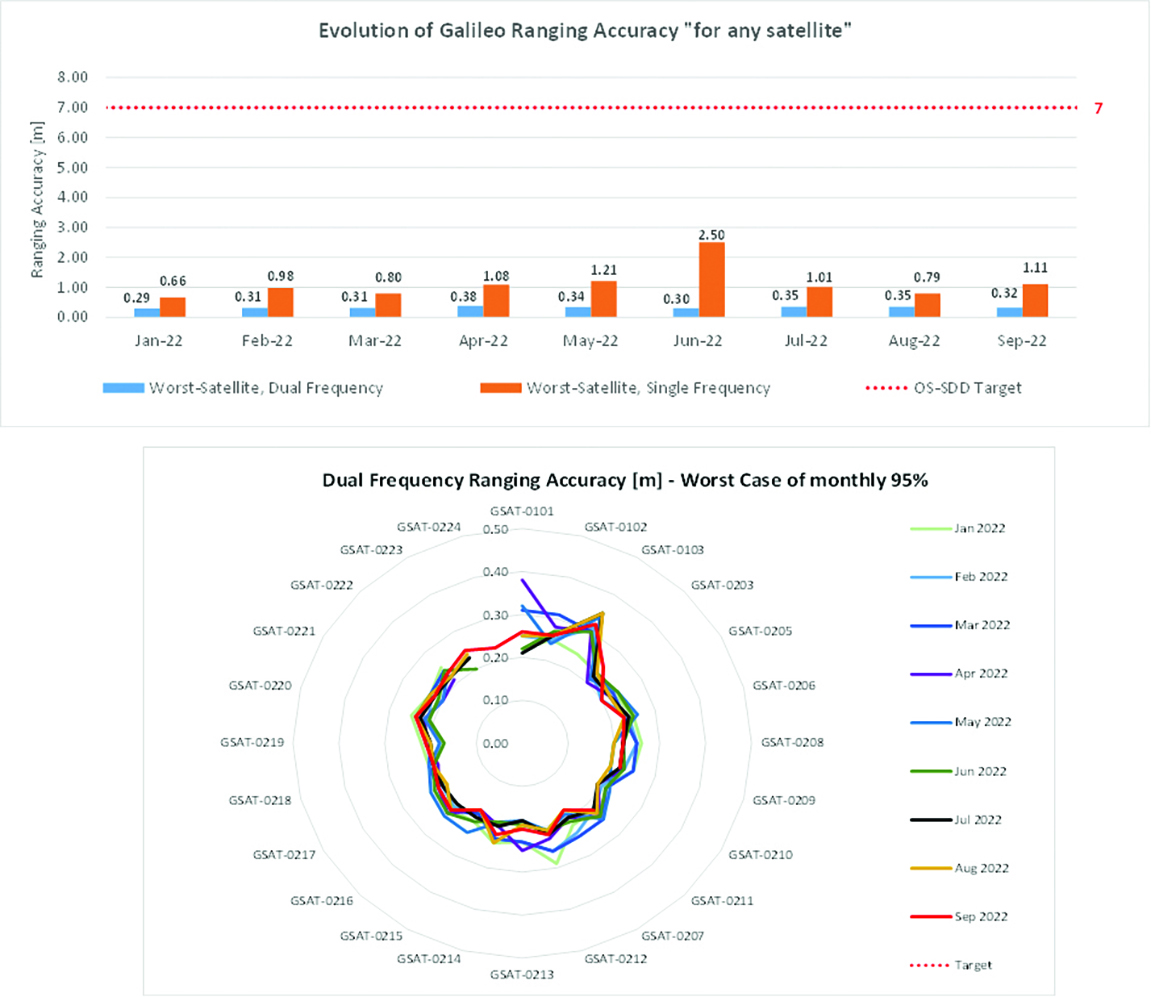
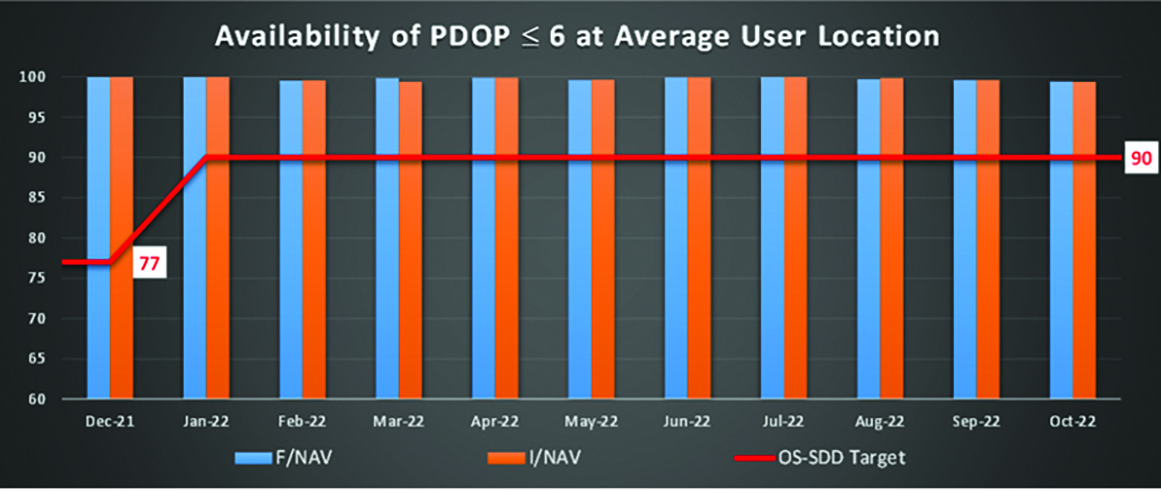
    Photo: Image 1 Directions 2023
    Ranging accuracy performance from January to September 2022.
    image002.Directions2023
    Positioning-related MPLS from January to October 2022.

    New Services Launched in 2022

    Excellent Performance
    Service delivery operations and maintenance of operational systems are managed by EUSPA, which supervises many contracts that carry out the day-to-day activities from dedicated control and monitoring centers throughout Europe. In 2022, Galileo timing, navigation, and SAR/Galileo services were delivered with excellent performances that continue to exceed the formal declarations for minimum performance levels (MPL), which were increased in January, both in terms of absolute accuracy and overall service availability. The entry into service of two additional satellites in May and August, have further consolidated the overall service availability to end users.
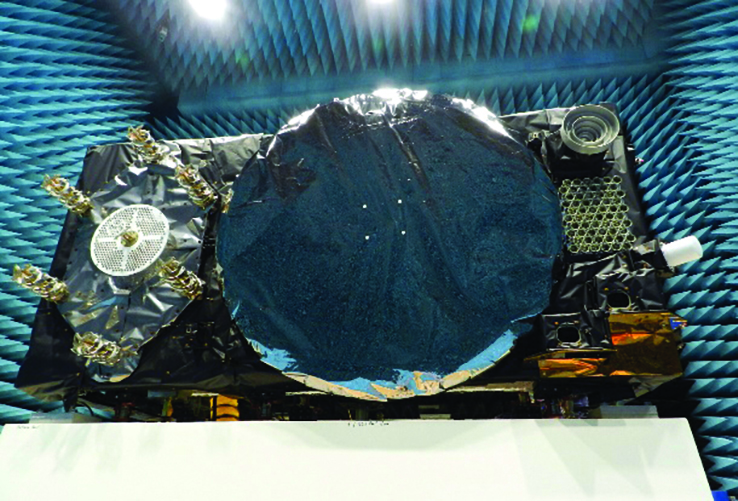
    image006.Directions2023
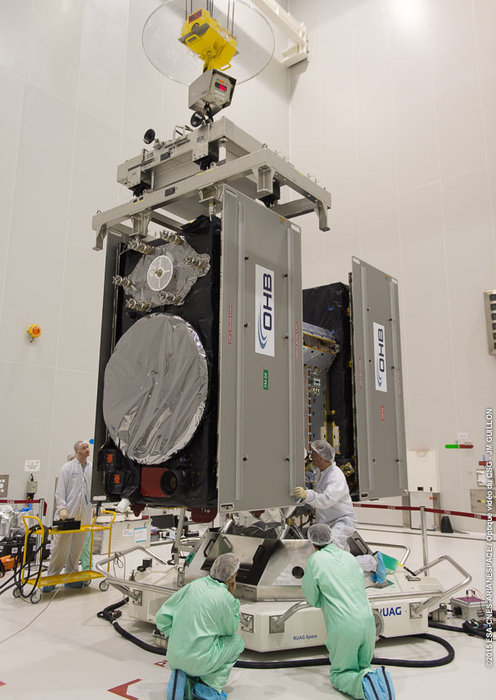
    Galileo FOC Batch 3 satellite under testing.

    Expansion of Service Portfolio
    The service provision teams have been able to focus on improvements to, and expansion of, the service portfolio.

    The I/NAV improvement will positively impact end users by enabling a faster time to first fix, and updates to the data validity status flags will lead to better protection of users against expired navigation data. These changes are implemented in updates of the onboard software of the satellites being rolled out across the constellation. At present, seven operational satellites have been successfully updated; the complete software upgrade campaign is planned to be completed this summer.

    Galileo’s new High Accuracy Service will provide free precise point positioning (PPP) corrections, in the Galileo E6-B data component and by terrestrial means, for Galileo and GPS (single and multi-frequency) to achieve real-time user position improved by up to 10 times. The infrastructure to support an initial service (Phase 1) is nearing completion, and the formal declaration of the service capabilities is planned for early this year.

    To provide users with a method of authenticating the received Galileo signals, especially the satellites ephemerides and the Galileo timing parameters, the new Open Service Navigation Message Authentication (OSNMA) service enables a receiver to confirm that a navigation message originated from the EU Galileo infrastructure. Many application areas are expected to benefit from this capability, including smart tachographs, telematics and logistics, UAVs, location-based services, and timing services. Having successfully demonstrated the technology behind the service in 2022, including a public observation phase, the roll-out of the Initial Service is planned to take place by the end of the year.

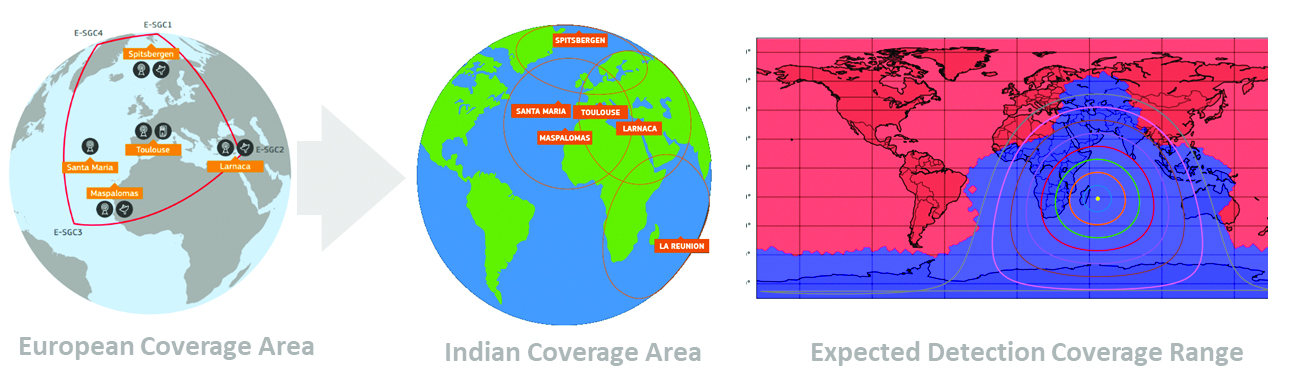
    A fourth Medium Earth Orbit Local User Terminal (MEOLUT) in La Réunion will extend the SAR/Galileo Forward Link Service Coverage Area over the Indian Ocean as part of the SAR/Galileo full operational capability (FOC) declaration expected in the first quarter of 2023. The Cospas-Sarsat commissioning of this new station was completed in September 2022, and operational data is already being distributed to Cospas-Sarsat.

    Reference documents for the above services can be found at the EUSPA European GNSS Service Centre website, including technical notes, interface control documents and service declaration documents.
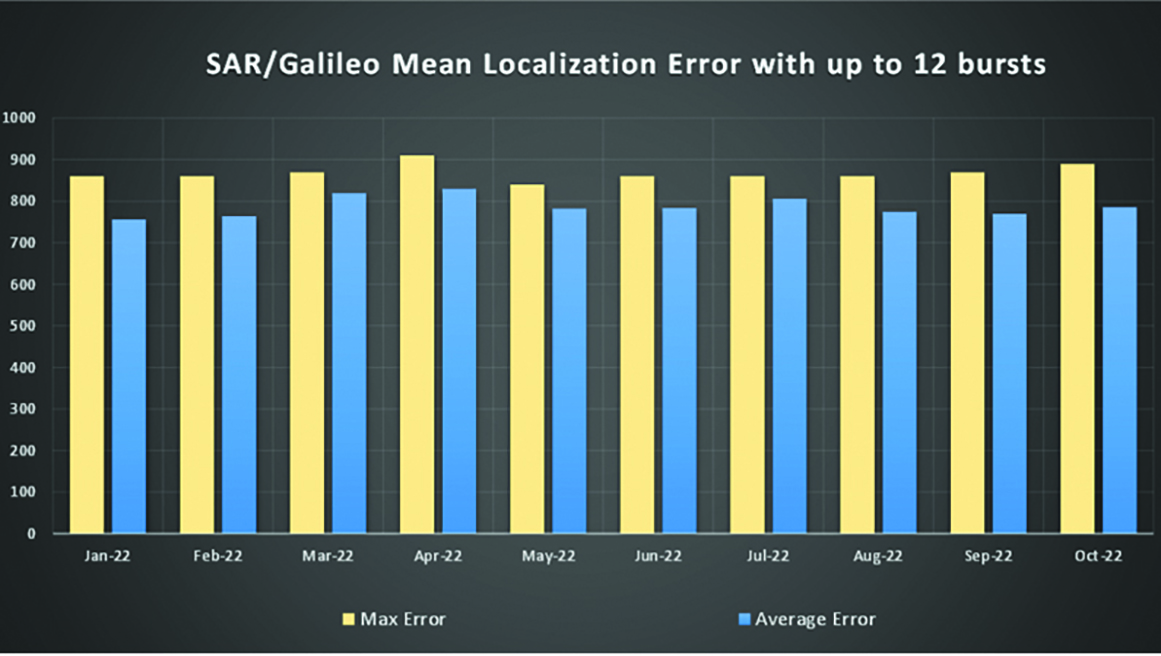
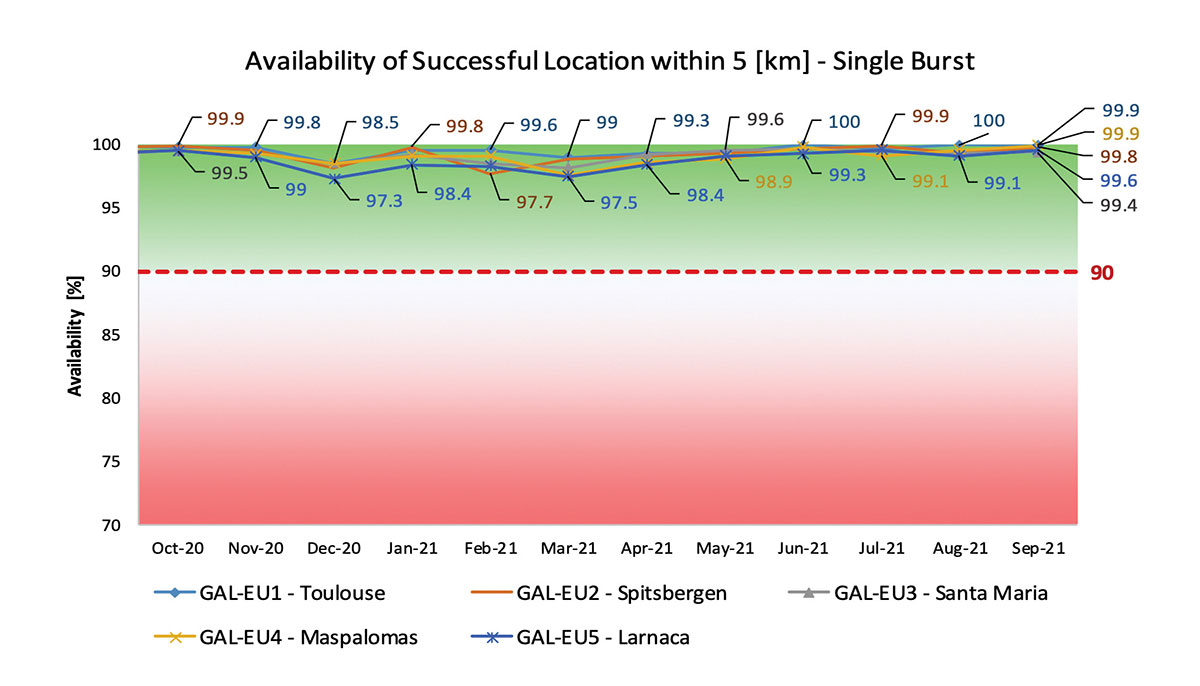
    SAR/Galileo-related metrics from January to October 2022.
    SAR/Galileo-related metrics from January to October 2022.
    image005.Directions2023
    Extension of the SAR/Galileo Forward Link Service Coverage Area over the Indian Ocean.

    FOC Infrastructure Development Nears Completion

    Satellite Production
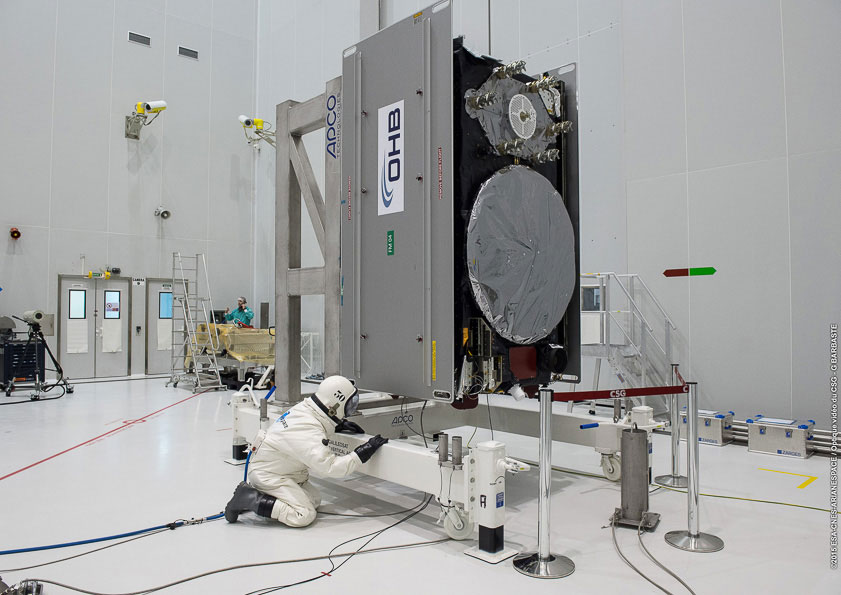
    The production of the third batch of Galileo FOC satellites advanced further in 2022 with the completion of the environmental tests and the system compatibility test campaigns at the European Space Agency Test Centre in Noordwijk, The Netherlands. After 10 years of successful testing, on Oct.18, 2022, the last Galileo FOC satellite (flight model number 34) left the test center to return to the premises of the satellite manufacturer, OHB Systems, in Germany. Testing of the remaining 10 satellites has confirmed that they have been correctly built and will perform well in orbit. The acceptance review of the last couple of satellites will take place this summer.
    At the beginning of 2023, the plan is to start in-orbit testing of a quasi-pilot signal on the E5 frequency using the Galileo GSAT201/202 satellites in elliptical orbit. The provision of a signal offering coarse acquisition in Galileo E5-A/GPS L5 can be a distinguishing feature for Galileo with respect to all other constellations to further improve the capability to acquire the E5 signal at low complexity. Following in-orbit testing, the strategy for roll-out of this capability will be assessed with the involvement of receiver manufacturers.

    New SAR Galileo MEOLUT Facility in Réunion island
    New SAR Galileo MEOLUT facility in Réunion island.

    Access to Space
    The discontinuation of Soyuz launch services from the Kourou Space Centre in French Guiana, because of the Russia-Ukraine conflict, has caused delays in the two Galileo launches that had been planned for 2022. The Launch 12 campaign had to be interrupted and in March 2022 the FM25 and 26 satellites were put in storage at the Kourou launch base, then returned to Europe in November.
    Ariane 6 is the baseline launcher for Galileo satellites to ensure European independent access to space. The remaining Batch 3 satellites will be launched with the Ariane 62 launcher vehicle, the two strap-on solid booster variants of Ariane 6, now undergoing the final stages of development led by prime contractor Ariane Group. Ariane 6’s maiden flight is scheduled to take place in the fourth quarter of 2023.

    Ground Segment
    An upgrade of the ground control segment, in charge of command and control of the satellite constellation, is being developed by the industrial consortium led by GMV. The upgrades will address resolution of hardware and software obsolescence including cyber security, operability improvements, and a security monitoring overlay.

    With the planned increase in the number of satellites in orbit, an additional telemetry tracking and control facility (TTCF) is being deployed in Kourou leading to seven operational TTCF stations in early 2023.

    The ground mission segment, in charge of navigation control, is undergoing a complete technological refresh, including hardware/software virtualization performed by an industrial consortium led by Thales France. This upgrade will provide additional robustness, including a system extended contingency mode resilient to outages lasting up to seven days and a new state-of-the-art cyber security monitoring system. It will also provide ranging authentication through encrypted codes on the E6-C signal component for the implementation of the Commercial Authentication Service. Global coverage will be further increased with the introduction of two Galileo sensor stations in Wallis (Pacific Ocean) and Bonaire (Caribbean Sea), for a total of 15 sites around the globe.
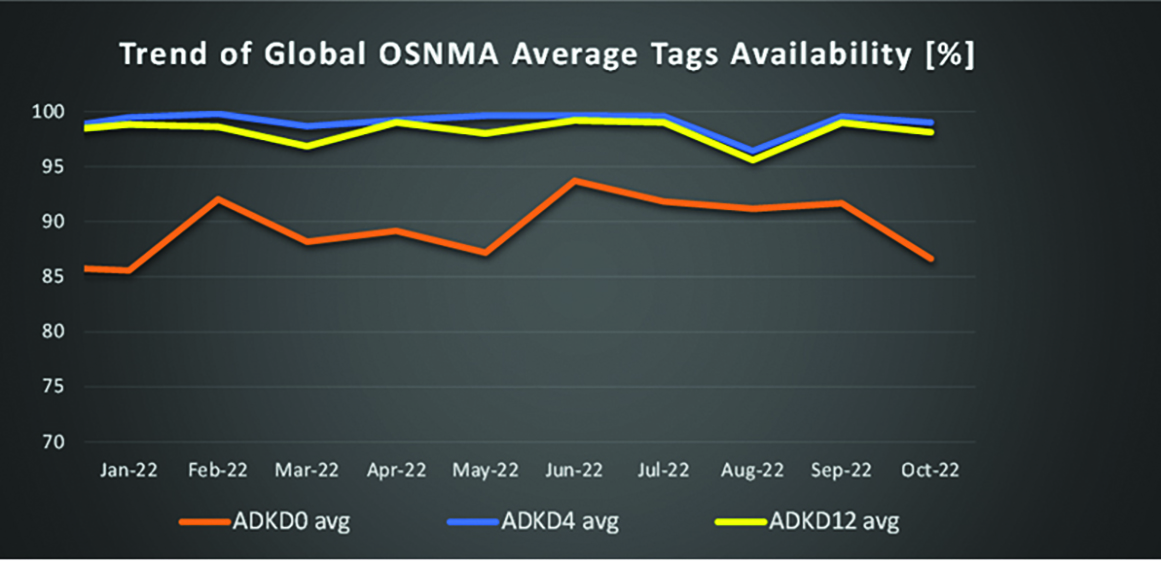
    image004.Directions2023
    OSNMA-related metrics from January to October 2022.

    G2G Development Started

    Galileo’s second generation (G2G) will introduce many innovative technologies to offer unprecedented precision, robustness, and flexibility.
    2022 was a key year for the evolution of G2G activities with the fast development cycles of the first batch of G2 satellites, beginning development of the associated G2G in orbit validation (IOV) ground segment and system test beds, and the consolidation of the G2G final system capabilities — including the coordination of the mission/service roadmaps with the EC, EUSPA, and the EU Member States delegates.
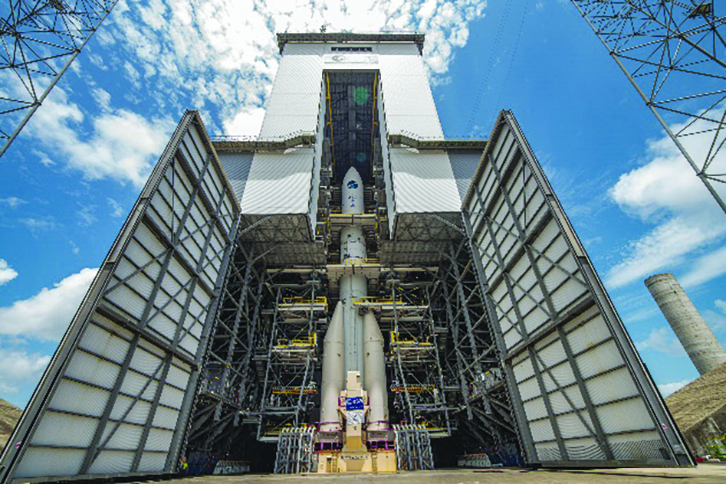
    image007.Directions2023
    Ariane 62 launcher.

    G2G Satellite Manufacturing
    From the satellite development point of view, the two parallel contracts to develop and manufacture each of the six G2G batch one (G2SB1) satellites are progressing in a fast development environment, with the first hardware units ready for integration and testing.
    Following the completion of preliminary design review, these two contracts (for six satellites each) are preparing for unit-level validation/testing, which will lead to the critical design review.

    These satellites will provide the following key innovations:

    • Reconfigurable fully digital navigation payload
    • Point-to-point connection between satellites by inter-satellite-link for command and control, and ranging functionalities
    • Electric propulsion for orbit-raising capabilities
    • Advanced jamming and spoofing protection mechanisms to safeguard.

    The Galileo signals will improve with:

    • On-board authentication capabilities
    • Increased ground-to-space data rate
    • Improved time reference (number of clocks and advanced clock monitoring functions).

    G2G IOV Procurements
    2022 was also the year in which two key events took place with respect to G2G in-orbit validation (IOV) ground segment and system test bed procurements:

    • Finalization of the procurement cycle, now in the final evaluation/award phase, to be kicked off in the first quarter of this year
    • Confirmation of the IOV design through different coordinated actions with the EC and EUSPA, including the G2 system preliminary design review.
    • The contracts will provide Europe with the following capabilities:
    • G2SB1 satellite launch and early orbit phase, in-orbit testing and enhanced legacy services provision
    • G2 new capabilities in-orbit validation, including prototyping and validation of all the novel technologies that can exploit the full capabilities of the G2SB1 satellites.

    Eleven contracts will be issued to manage in synchrony all the G1 and G2 assets for the coming years:

    • G2 IOV ground control segment (G2 GCS) for satellites monitoring and control
    • G2 IOV ground mission segment/secured facility (G2 GMS-GSF) for the production, dissemination and monitoring of all enhanced legacy services and the dissemination of new G2 advanced capabilities for validation
    • G2 IOV security monitoring (G2 SECMON), for the cyber/security monitoring of the system
    • G2 filling device (G2 FD), to ensure proper initialization of system assets
    • G2 system test bed (G2STB), to generate and monitor new G2 capabilities for validation of the G2G mission/services
    • G2 PRS test bed (G2PRSTB), similar to G2 system test bed but focused on advanced PRS capabilities for validation purposes
    • G2 security chain (G2SC), a test bed to ensure proper satellite-ground segment qualification before launch
    • Four system engineering support contracts (G2 SETA), where the main GNSS technical experts from different industries in Europe provide their support to ESA and EUSPA in their different fields of expertise.
    • These contracts are complemented by a significant set of system research and development and test tools, such as test user receivers and radio frequency constellation simulators.
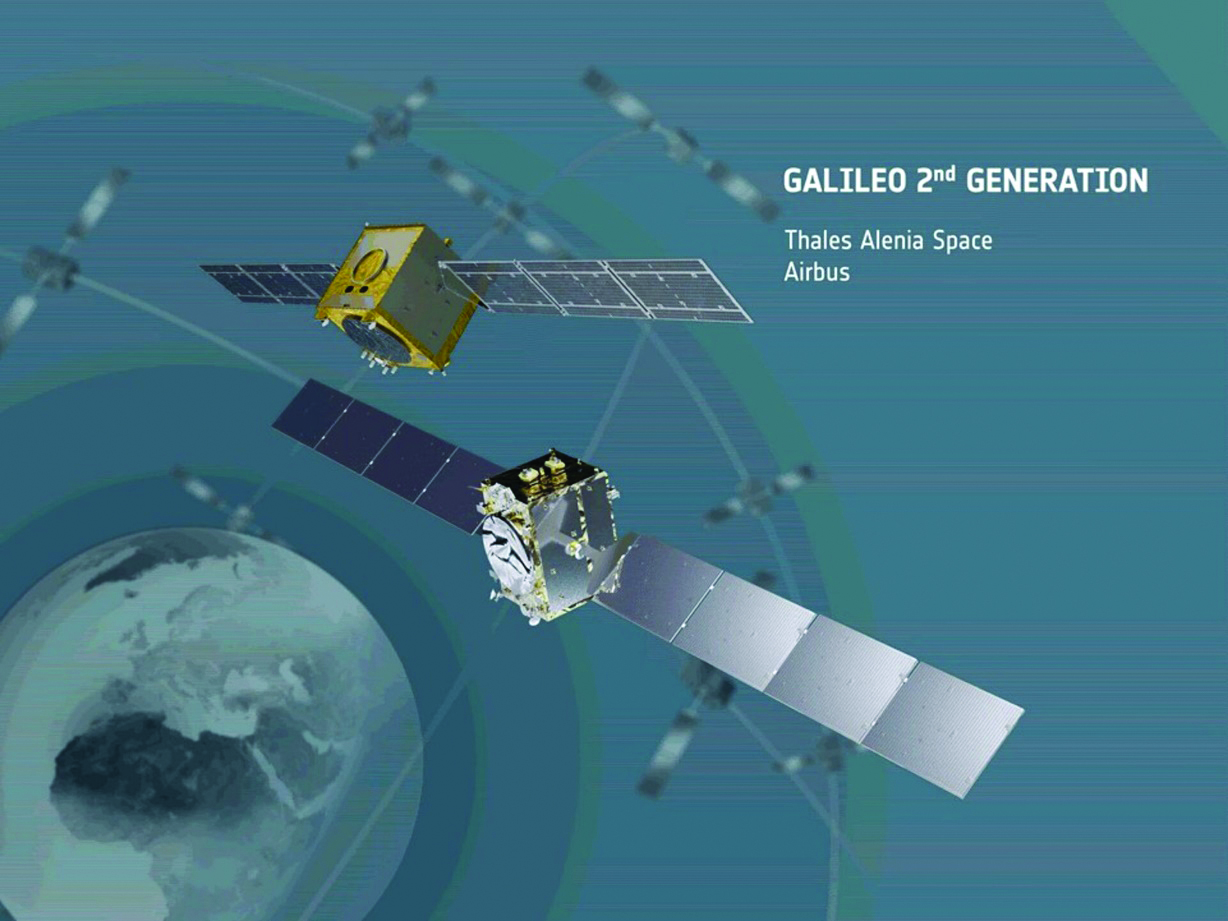
    Photo:
    G2G batch number one (G2SB1) satellites.

    Galileo Second Generation System PDR
    The Galileo Programme is not only focusing on short-term G2G development activities, but also looking forward to the future in terms of the consolidation and definition of G2G final operation capabilities. During the second half of 2022, more than 200 public representatives from the EC, EUSPA, ESA and Member States held countless meetings in the frame of the G2G system preliminary design review, which concluded in early December 2022.

    As part of this review, the long-term implementation (G2G in orbit capability, or IOC, and final operational capability, or FOC) was reviewed and an agreement was reached on future steps. The evolution of Galileo capabilities will not only provide better services through advanced technical solutions, but will also ensure continuity of service and enhanced backward compatibility for first-generation legacy users.

    Conclusions
    The efforts of ESA and EUSPA continue with the aim of providing users continuous and stable services and evolving space and ground infrastructure to maintain Galileo competitiveness with the other global navigation satellite systems.


    For analogous updates on the other three GNSS constellations, please see:
  • Directions 2022: Galileo FOC, G2 on the horizon

    Directions 2022: Galileo FOC, G2 on the horizon

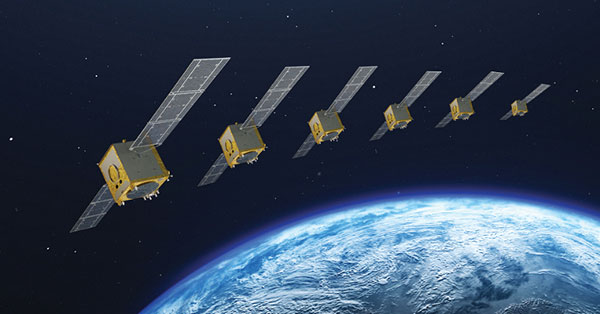
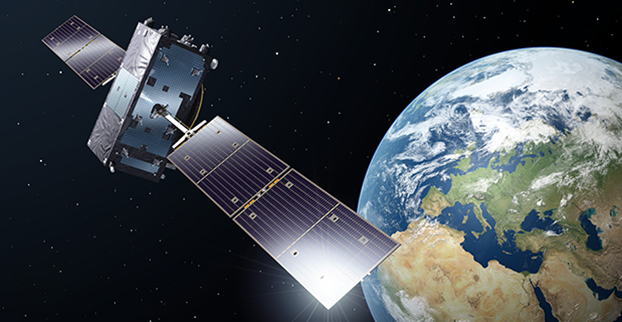
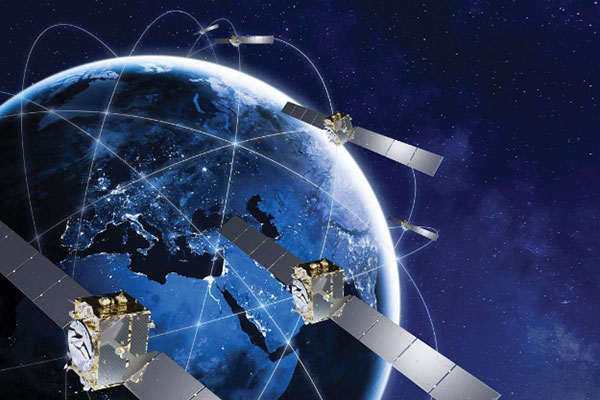
    Galileo Second Generation Batch#1A satellites. (Image: ESA).
    Galileo Second Generation Batch#1A satellites. (Image: ESA).

    Successful European Cooperation

    Galileo is Europe’s civil global satellite navigation constellation and a major success, being the world’s most precise satnav system and offering meter-scale accuracy to more than two billion users around the globe.

    The signature of the Financial Framework Partnership Agreement (FFPA) on June 22, 2021, further strengthened effective cooperation between the European Commission (EC), the European Union Agency for the Space Program (EUSPA), and the European Space Agency (ESA) — key to successfully achieving a crucial EU Space Program component like Galileo in the current EU Multi Financial Framework (2021–2028).

    The EC is the program manager, with EUSPA acting as the exploitation manager and ESA as the system development prime.

    Stable Service Performance

    Galileo continues to deliver excellent service performance every month in a safe, secure and seamless manner. Delivery of Galileo services is managed by EUSPA, as the Galileo service provider, with industrial partner SpaceOpal, the Galileo service operator prime contractor. The performance of Galileo services is independently monitored by the Galileo Reference Center (GRC) and regularly published on the GNSS Service Center (GSC) web portal at www.gsc-europa.eu — both agencies were developed by GMV. The security of the Galileo System is monitored by the Galileo Security Monitoring Centers (GSMC), operated by EUSPA.

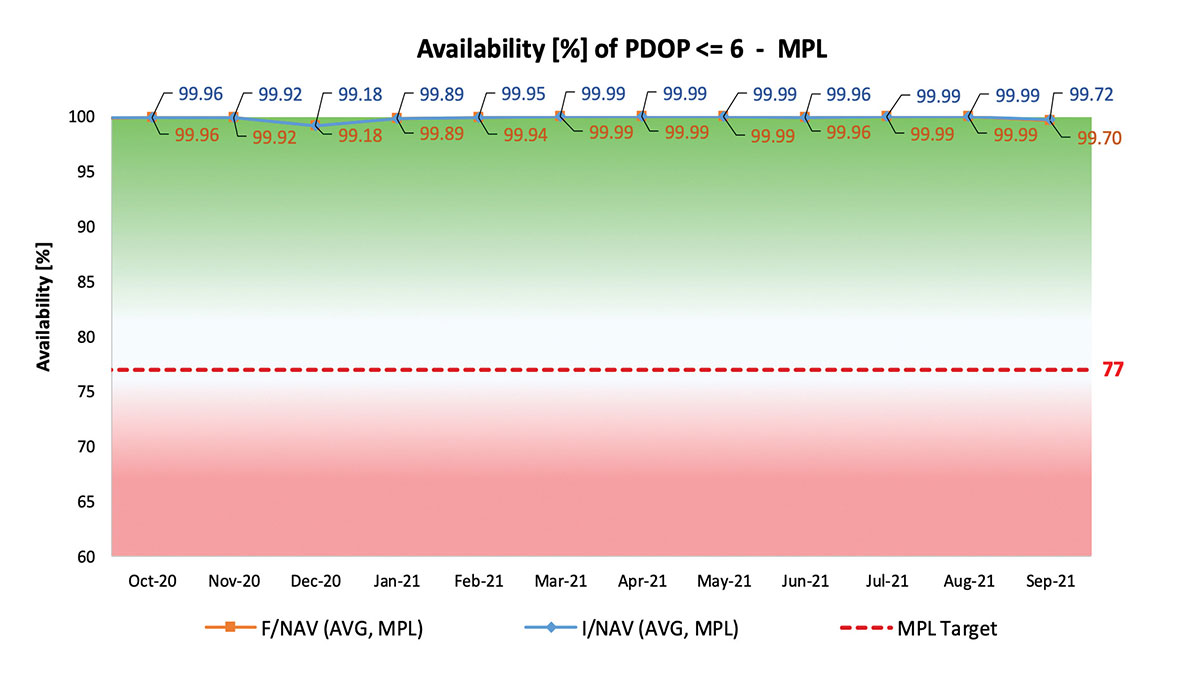
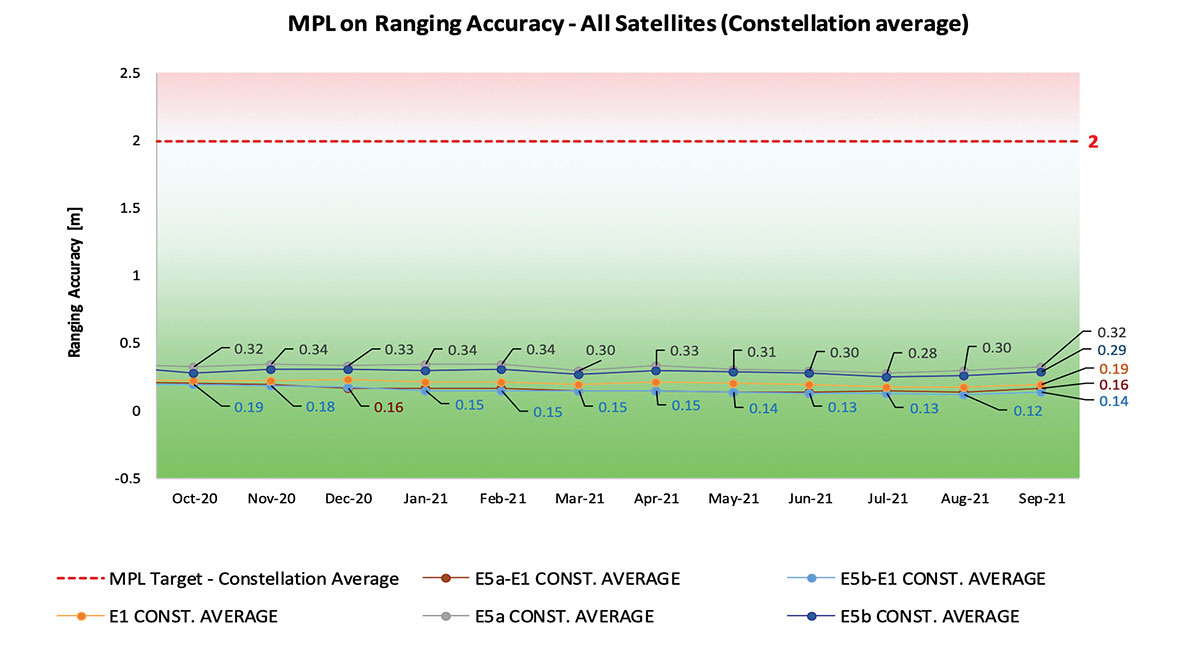
    With 22 satellites in service, the open service is already delivering more than 99% availability of PDOP <= 6 worldwide. This, together with the excellent ranging accuracy, suggests that most Galileo dual-frequency users are typically experiencing positioning accuracy in the order of only 2 to 3 meters.

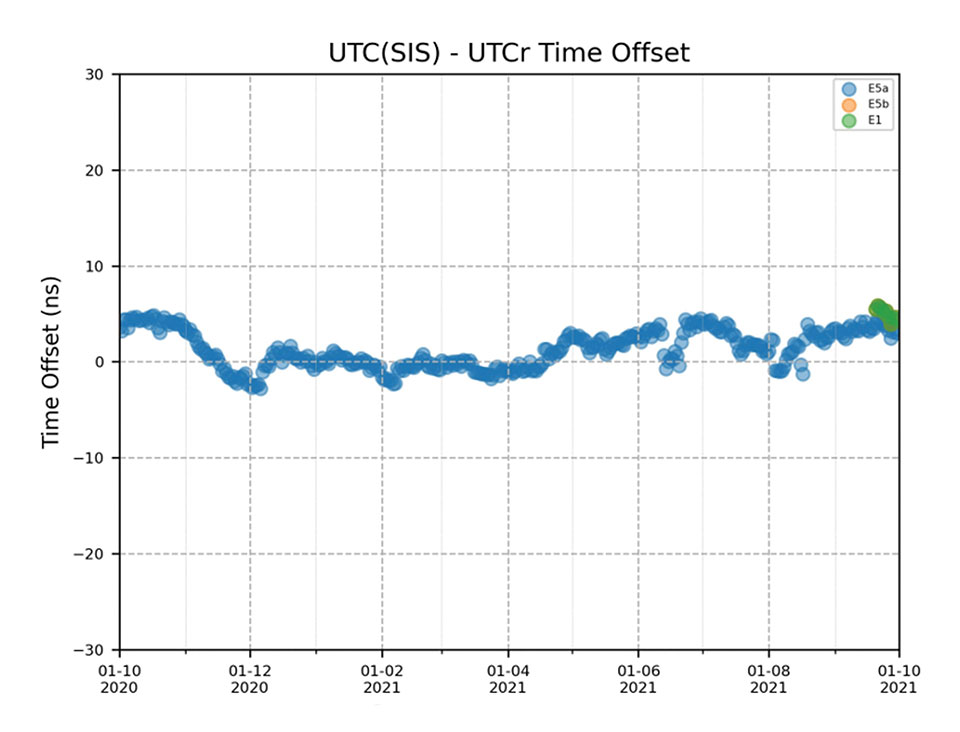
    Timing users also continue to receive accurate (in the order of 5 ns) access to Galileo System Time, which they can trace to Universal Coordinated Time (UTC) through the corresponding offset parameters transmitted by the satellites.

    The SAR/Galileo service, contributing to COSPAS/SARSAT, continues to deliver both the Forward Link Service (FLS) and the Return Link Service (RLS) with more than 99% availability, allowing users in distress not only to issue an alert and be located within a few minutes, but also be notified that the alert was successfully processed and rescue is on the way. The SAR/Galileo control center is located in Toulouse (France) and operated by CNES under the authority of EUSPA. The excellent performance of the service has been demonstrated both through several rescue exercises and real-life emergencies.

    Galileo Launch 11

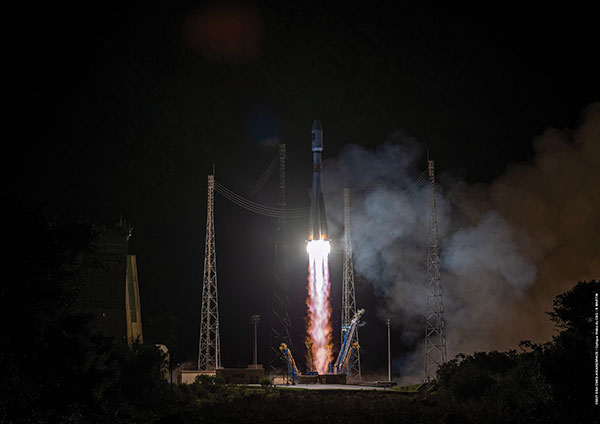
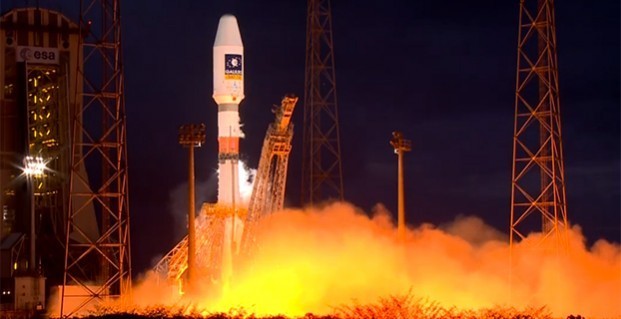
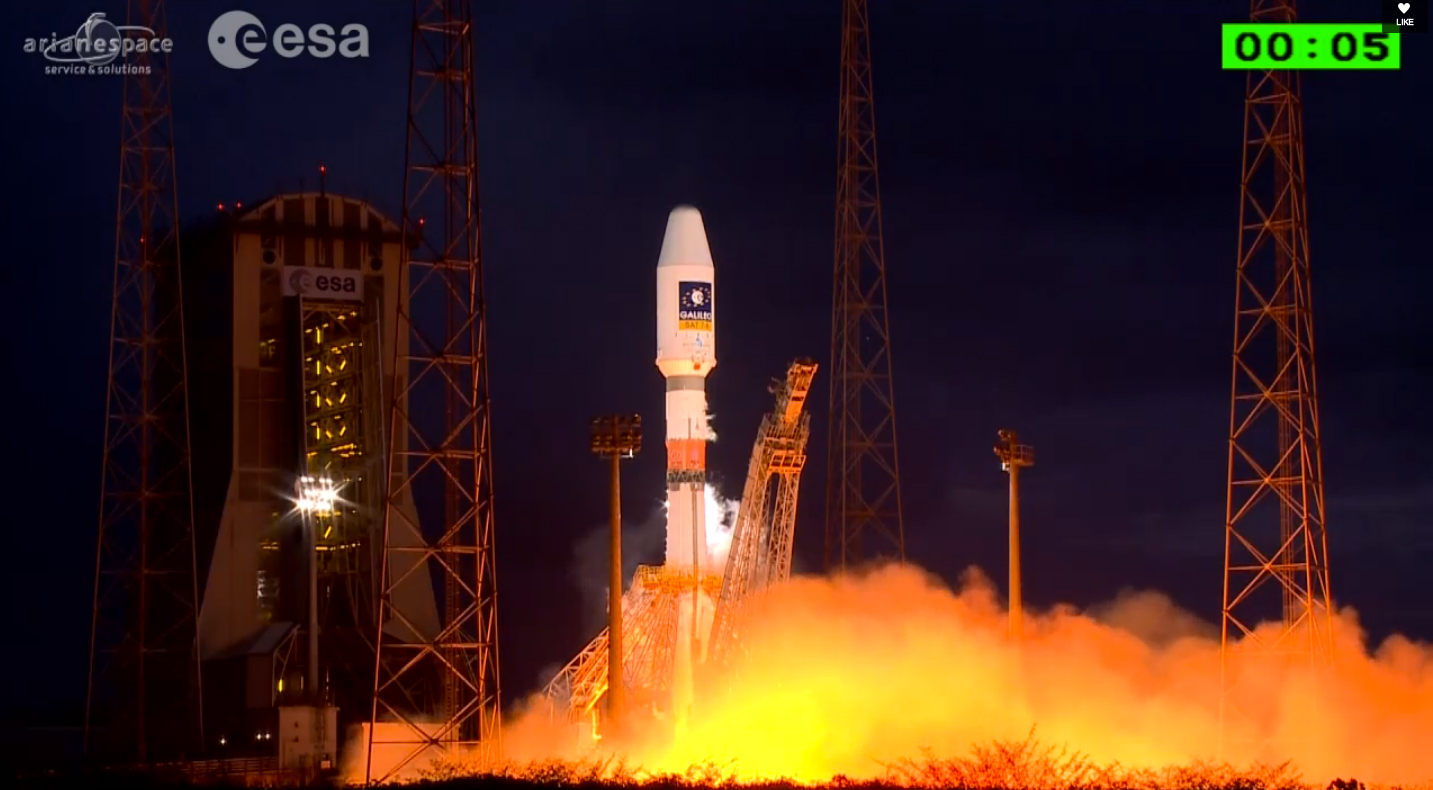
    Soyuz launcher VS-26 lifted off from French Guiana with the first pair of Galileo Batch 3 satellites on Dec. 5, 2021, at 01:19 CET. This marks the 11th Galileo launch of operational satellites in 10 years: a decade of hard work by Europe’s Galileo partners and European industry. With these satellites, the robustness of the constellation has increased, guaranteeing a higher level of service.

    Thanks to an upgrade of the Ground Control Segment, the Launch and Early Orbit Phase has been for the first time conducted directly from the Galileo Control Center, rather than requiring an external mission control site. This version of the ground segment increases overall reliability and cybersecurity and opens the way to significant expansion of the Galileo constellation, allowing command and control of up to 38 satellites. The development has been performed by an industrial consortium led by GMV, harnessing state-of-the-art technology using the latest solutions on the market.

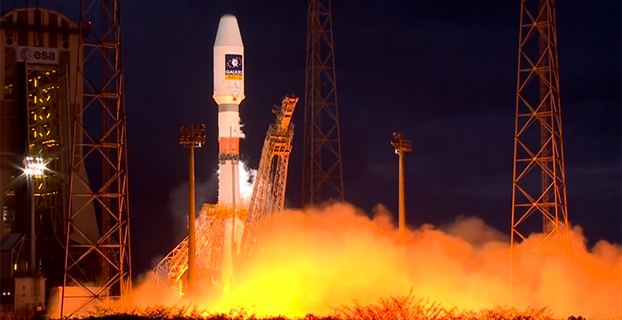
    Galileo launch 11 from Europe’s spaceport in French Guyana. (Photo: ESA)
    Galileo launch 11 from Europe’s spaceport in French Guyana. (Photo: ESA)

    On Route to Full Operational Capability

    This year will pave the way toward Full Operational Capability of Galileo services.

    Industrial prime contractor OHB Systems has nearly completed production of the additional 10 recurrent satellites belonging to Galileo Batch 3. Six of them are undergoing final acceptance testing at the ESA satellite test center, and the other four are under integration at the satellite prime facilities.

    Preparation for Launch 12 has already started, with the satellites’ acceptance for a launch date planned in the first months of 2022, followed by Launch 13 in autumn. This is leading toward completion of the Galileo constellation, providing an increased availability of the Galileo signal in space for both GNSS and search-and-rescue users.

    From 2023 onward, the remaining Batch 3 satellites will be launched with the new Ariane 62 launch vehicle, a variant of Ariane 6 with two strap-on solid boosters. The launcher is undergoing the final stages of development, led by prime contractor ArianeGroup.

    The Galileo Ground Mission Segment will undergo a complete technological refresh, including hardware virtualization and porting of several million lines of code, performed by an industrial consortium led by Thales France. A series of improvements will be introduced to increase system resilience, including an extended mode of operation to improve service continuity and robustness.

    Cybersecurity monitoring of all the ground assets will be introduced as an overlay to the current ground infrastructure. The upgrade will undergo a rigorous level of qualification testing followed by worldwide deployment in a seamless way in both Galileo control centers, in both Galileo security monitoring centers, and at all remote locations without affecting continuity of service.

    The service facilities that contribute to the delivery of Galileo services (the European GNSS Service Center, the Galileo Reference Center, and the SAR data service providers) will also evolve to support not only the transition from Initial Services to Full Operational Capability, but also the early roll-out of service evolutions. In this regard, extensive work is ongoing to deliver an exciting set of improvements, some of which are already in development or testing, to reach the users in the year to come:

    • Improvements of the I/NAV signal to increase robustness and time-to-first-fix, while assuring full backward compatibility with legacy receivers.
    • OS Navigation Message Authentication (OS-NMA) to support applications that require trust in the authenticity of the data transmitted by the Galileo satellites (a public observation campaign was launched in November 2021 to engage stakeholders and collect their feedback before moving to the initial service provision).
    • An initial phase of the High Accuracy Service, delivering corrections in the Galileo E6 signal and over terrestrial network to allow users to perform precise point positioning over Europe; test signals were already transmitted with promising results.
    • A Search and Rescue Beacon Command Service complementing the SAR Return Link, providing improved capabilities to timely locate beacons under authorized emergency situations (such as the disappearance of Flight MH370 in the Indian Ocean in 2014).
    • A first implementation of an Emergency Warning Service over Europe, allowing the authorized national emergency-management authorities of the EU Member States to relay alert messages through Galileo signals, which can reach target areas even in case of disrupted terrestrial communications (such as due to floods or earthquakes).
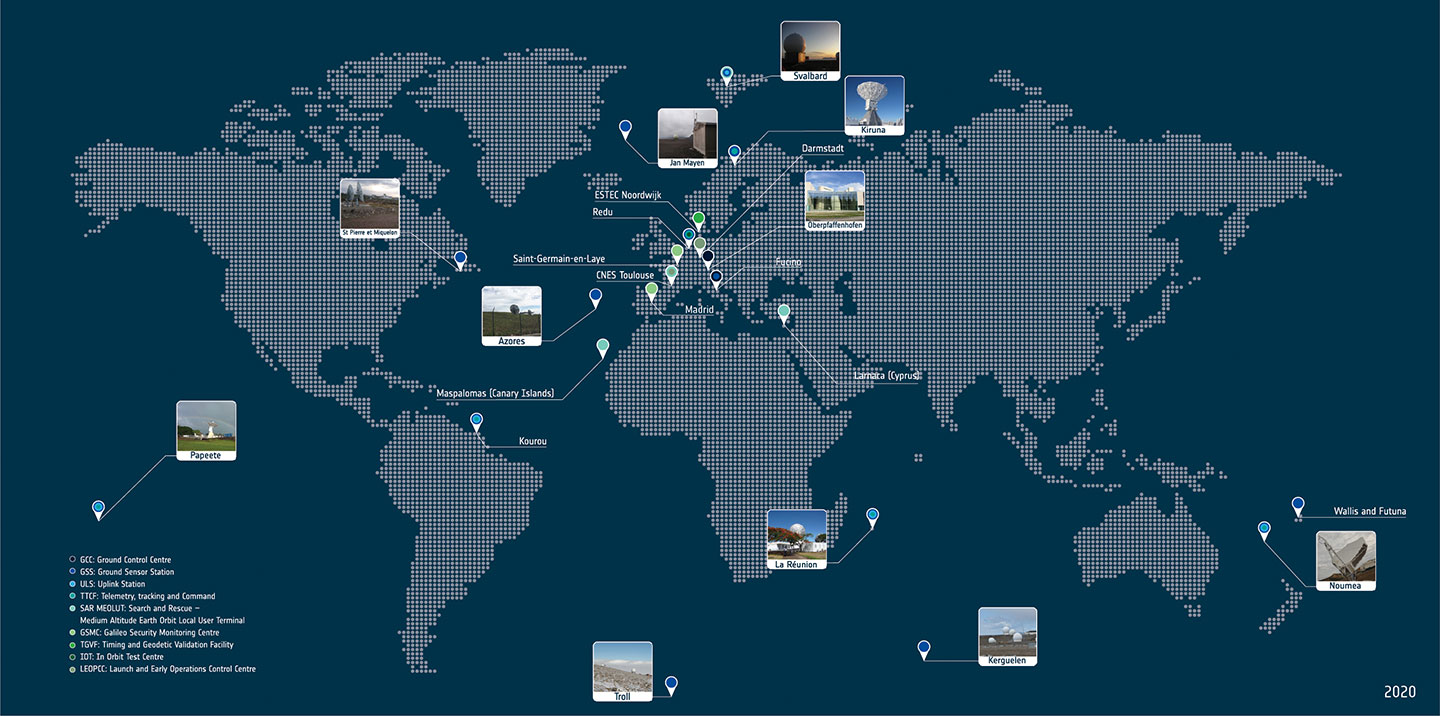
    Galileo worldwide ground segment. (Credit: ESA)
    Galileo worldwide ground segment. (Credit: ESA)

    Second Generation in the Making

    The FFPA will bring Galileo to the next level with the development of the second generation, a further step forward with the use of many innovative technologies to guarantee the system’s unprecedented precision, robustness and flexibility.

    In parallel to the completion of the first generation of Galileo, Europe has conducted in recent years preparation activities for the Second Generation (G2). Elaborating on market, user and exploitation needs collected by EUSPA, ESA identified a number of system evolution scenarios, which were discussed among relevant EU stakeholders to select the second-generation mission and services baseline to build the system infrastructure.

    The evolution of Galileo capabilities will not only provide better services through advanced technical solutions identified by ESA, but will also ensure continuity of service and backward compatibility for
    first-generation legacy users.

    Two parallel contracts to develop and manufacture each of the six Galileo Second Generation Batch#1 satellites were kicked off in the first half of 2021 with Thales Alenia Space (Italy) and Airbus Defence & Space (Germany). The new G2 satellites will be constructed on a short time scale, with their first launch via Ariane-62 expected in less than four years, allowing them to commence operations in space as soon as possible. Both contracts have already undergone preliminary design reviews.

    Development of the G2 satellites is supported by the Galileo Payload Test Bed, which provides an early proof-of-concept of the advanced G2 payload architecture. These satellites will provide, among others, the following key innovations:

    • Reconfigurable fully digital navigation payload.
    • Point-to-point connection between satellites by Inter-Satellite-Link for command and control and ranging functionalities.
    • Electric propulsion for orbit-raising capabilities.
    • Advanced jamming and spoofing protection mechanisms to safeguard Galileo signals.

    System and Ground Segment definition studies, together with the associated technology pre-developments, have been performed, leading to the definition of the preliminary design and technical requirement baseline for the G2 system, a project involving most of Europe’s space industrial partners.

    The G2 In-Orbit Validation Ground Segment and System Test Bed have been defined and relevant procurement procedures are ongoing, with these objectives:

    • G2 Batch#1 satellites launch and early orbit phase, in-orbit testing and enhanced legacy services provision.
    • G2 new capabilities in-orbit validation, including prototyping and validation of all the novel technologies that can exploit the full capabilities of the G2 Batch#1 satellites.
    Galileo Second Generation Batch#1B satellites. (Image: ESA).
    Galileo Second Generation Batch#1B satellites. (Image: ESA).

    Definition activities for the G2 Initial Orbit Capability (IOC) are progressing well and are expected to converge in the first half of 2022, in order to establish the future roadmap for new G2 services provision in the years to come.

    2022 will be a key year for the evolution of Galileo Second Generation activities, through the consolidation of the first batch of G2 satellite design and development activities and the start of development of associated G2G IOV Ground Segment and System Test Beds.

    A bright future awaits Galileo, both through the completion of its Final Operational Capability and the start of evolution towards Galileo Second Generation.


    Guerric Pont is Galileo Exploitation Program manager for the European Union Agency for the Space Program (EUSPA).

    Marco Falcone is Galileo First Generation Project manager for the European Space Agency (ESA).

    Miguel Manteiga Bautista is Galileo Second Generation Project manager for the European Space Agency (ESA).

  • Random recollections of GPS/GNSS

    Random recollections of GPS/GNSS

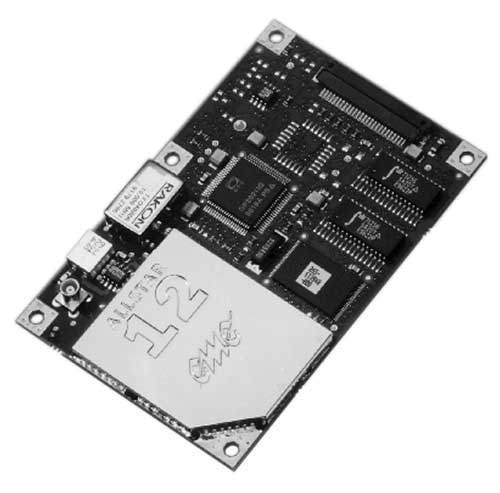
    2000: An Allstar OEM receiver. (Photo: NovAtel)
    2000: An Allstar OEM receiver. (Photo: NovAtel)

    GPS had been around for about five years before first launch in February 1978 and Full Operational Capability (FOC) was eventually declared in April 1995. It takes time to develop, field and prove something as complex as the world’s first satellite navigation system. But we’re now well into a third generation of the venerable GPS, with GLONASS, Galileo, BeiDou and IRNSS/NavIC and QZSS around the world and in geographic locales. So, putting aside Transit or anything else, this would make GPS about 47 years old — heading into middle age.

    Therefore, it would seem that Glen Gibbons waited until “this GPS thingy” looked like it might actually work — circa 1990 — to launch GPS World, since the magazine is now 30 years old and is also into its third-generation of editor-custodians! Alan Cameron bravely carried the flag after Glen and nurtured the magazine for a good number of years and brought me into the fold as a contributor. We shared ION GNSS conventions and GPS World Leadership dinners and he was able to cajole monthly articles out of me for many years. Now Marty Whitford has his hand firmly on the tiller as publisher, with Tracy Cozzens as senior editor.

    So what went down during these decades of technological advancement and for many of the people in the satnav industry? It would be impossible to answer within my word-limit, so I’ll take on an extremely small subset and recount a few things I can still remember.

    µGPS. I got into GPS around 1990 in an OEM board-level product spin-off program from a certified GPS airborne receiver at CMC in Montreal — we initally called that L1 receiver µGPS because then it was a small GPS board. Later it became known as the AllStar receiver. We found pretty neat applications for the early ’90s — golf-course systems, vehicle tracking, airport vehicle tracking, the start of vehicle nav systems and such.

    At NovAtel in Calgary in the early ’90s, we watched things develop through L1/L2 dual frequency, began RTK market applications in survey, geographic information systems (GIS), agriculture, mining and all multitudes of attempts to get new companies off the ground.

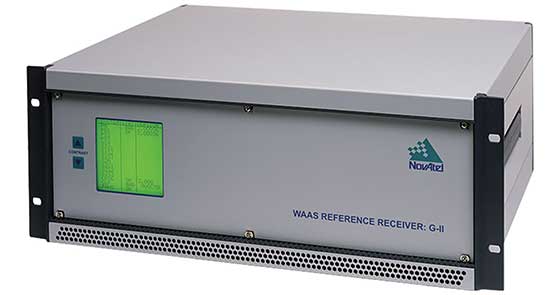
    2013: NovAtel’s WAAS G-II reference receiver. (Photo: NovAtel)
    2013: NovAtel’s WAAS G-II reference receiver. (Photo: NovAtel)

    WAAS. Eventually the U.S. Wide-Area Augmentation System (WAAS) program came and swallowed us up through three different prime contractors. Once that Federal Aviation Administration program was running well, we were into programs in Europe, Japan, India and China, and that led into Galileo ground reference receivers. The software qualification work we did on Galileo positioned us to take on mil-spec receiver work, and even anti-jam products.

    Then CMC bought NovAtel, and we also joined with CMC to develop a certified airborne receiver. In 2003, NovAtel bought the AllStar OEM product line from CMC — funny how things work out! The joint certified receiver program eventually resulted in a new generation of high-accuracy airborne sensors. We again changed hands in 2007 when Hexagon bought us, and then NovAtel began working closely with Hexagon subsidiary Leica on survey applications. Many new and interesting developments are still going on there.

    Nowadays, my interests lie with assisted GNSS and with Rx Networks in Vancouver, which I support and advise. Assisted GNSS comes in many forms, has many avenues in the marketplace, and presents its own unique challenges.

    As GPS has evolved into GNSS and into so many, many applications, companies have come and gone but the core of people who drive the industry has grown and acquired new and specialized skills, developing ever more capable technology and products. Even after 47 years of the industry and 30 years of GPS World, we aren’t anywhere close to done.

  • Directions 2020: Galileo Moves Ahead

    Directions 2020: Galileo Moves Ahead

    By Javier Benedicto
    Head, Galileo Programme department,
    European Space Agency

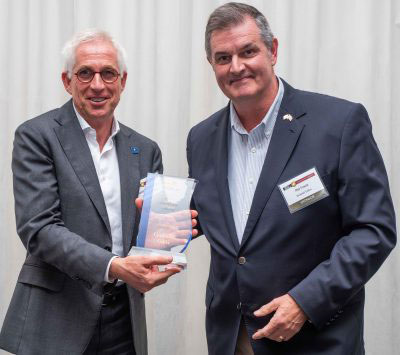
    Javier Benedicto, left, accept the Satellites Leadership Award on behalf of Giuliano Gatti of the European Space Agency, from Phil Froom of Rockwell Collins. (Photo: Melanie Beus)
    Javier Benedicto, left, accept the 2018 GPS World Satellites Leadership Award on behalf of Giuliano Gatti of the European Space Agency, from Phil Froom of Rockwell Collins. (Photo: Melanie Beus)

    Since the Galileo initial services declaration in December 2016, the Galileo Program has been providing global PNT and search-and-rescue services for users worldwide. The European GNSS Agency (GSA) just issued its GNSS 2019 Market Report in October, providing a complete overview of the current status and trends of the GNSS worldwide market with focus on European GNSS (Galileo and EGNOS) applications and services.

    In parallel with service provision, the Galileo Program is undertaking extensive infrastructure development and deployment activities to reach Full Operational Capability (FOC), incorporating new service capabilities, but above all aiming at increasing the robustness and resilience of the system infrastructure, operations and service provision.

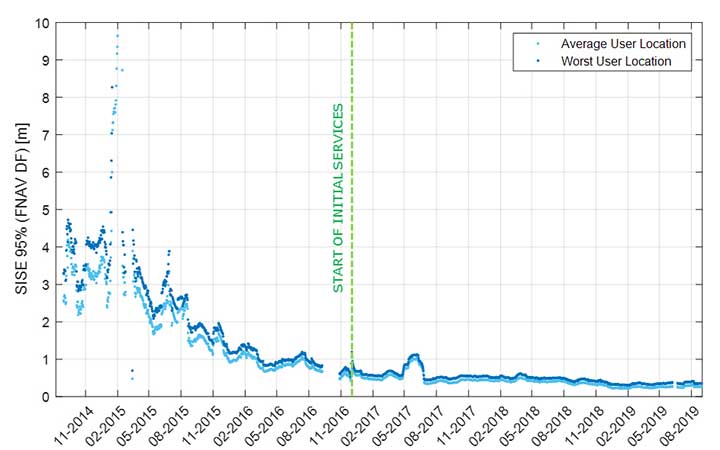
    Galileo’s signal-in-space quality has steadily improved over the past few years, reaching in 2019 a best signal-in-space error (SISE) of about 0.25 meters (95%, global average; Figure 1). This has been achieved through a combination of several factors, including the increased number of operational satellites, enhanced versions of the Ground Mission Segment, and higher uplink rate of the navigation message (lower age of data). This performance is well within Galileo’s initial service accuracy commitments, as defined in the public Open Service – Service Definition Document (OS SDD).

    Figure 1. Long-term historical SISE plot over a 30-day sliding window, constellation averaged. (Image: ESA)
    Figure 1. Long-term historical SISE plot over a 30-day sliding window, constellation averaged. (Image: ESA)

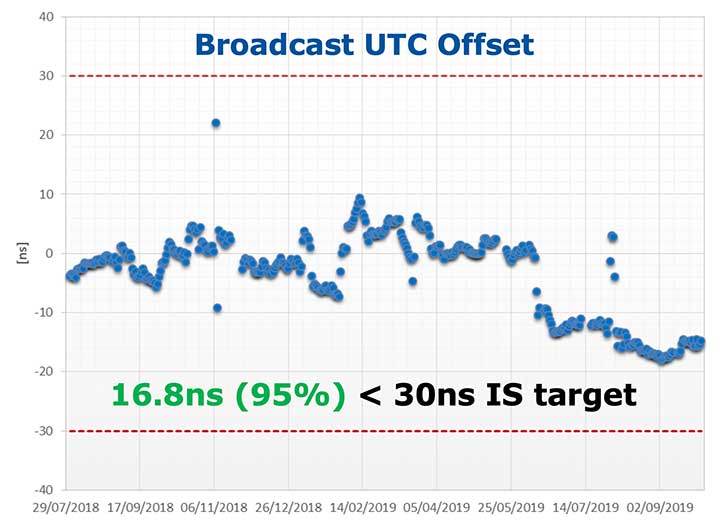
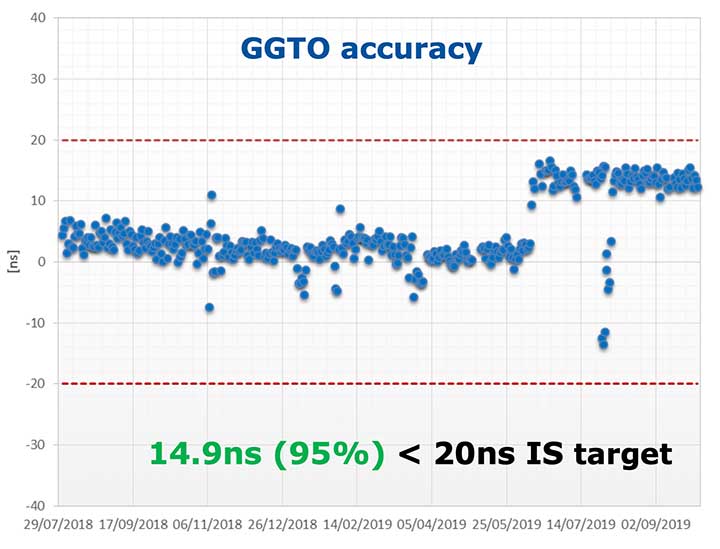
    Figures 2 and 3 (see page 40) show Galileo’s timing performance as broadcast UTC offset and GGTO accuracy. The evaluation was performed with calibrated GPS/Galileo timing receivers operated in UTC(k) laboratory (PTB, INRIM). Again, the initial timing service commitments have been fully met.

    Figure 2. Galileo Broadcast UTC offset accuracy performance. (Image: ESA)
    Figure 2. Galileo Broadcast UTC offset accuracy performance. (Image: ESA)
    Figure 3. Galileo GGTO offset accuracy performance. (Image: ESA)
    Figure 3. Galileo GGTO offset accuracy performance. (Image: ESA)

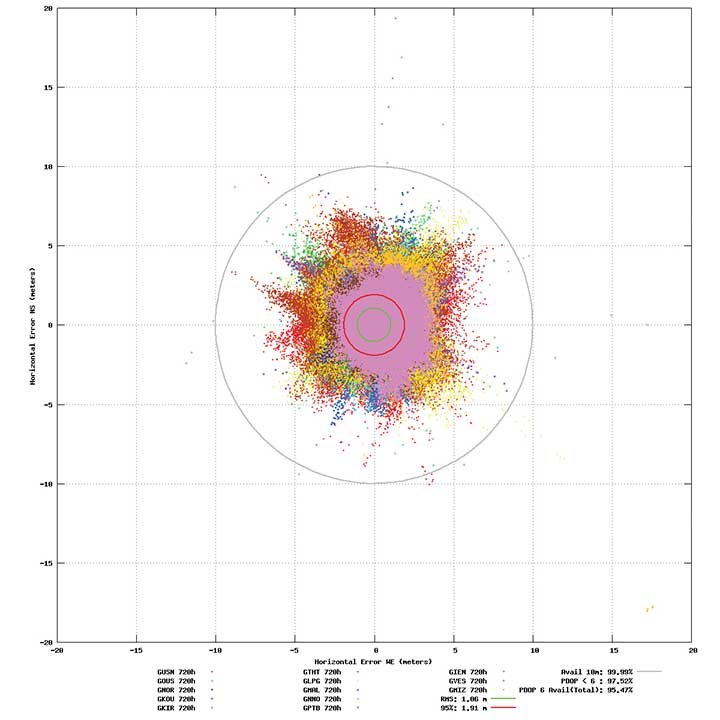
    Probably the most significant discriminator of Galileo compared to other GNSS is its capability to broadcast multi-frequency (E1, E6, E5) signal components on all operational satellites. The position performance of a dual-frequency user receiver on-ground is shown in Figure 4. This measurement from June 2019 demonstrates a Galileo position accuracy well below 2 m (95%).

    Figure 4. Galileo position accuracy performance, dual-frequency, June 2019. (Image: ESA)
    Figure 4. Galileo position accuracy performance, dual-frequency, June 2019. (Image: ESA)

    With the aim of further improving the Open Service (OS) performance, three newly introduced I/NAV message improvements on Galileo E1-B are under implementation, namely FEC2 Reed-Solomon Clock and Ephemeris (CED), Reduced CED, and Secondary Synchronization Pattern (SSP). Galileo Open Service (OS) users will benefit from improved robustness in terms of navigation data retrieval in challenging environments, in addition to facilitating a reduced time to first fix. Those I/NAV improvements on Galileo E1-B are backwards compatible with previously released OS SIS ICDs.

    In addition, Galileo infrastructure is currently being upgraded to provide means for OS authentication. The protocol proposed uses the E1B External Data Broadcast Service (EDBS) to provide authentication data to the user. The OS Navigation Message Authentication (NMA) is based on an adaptation of the Timed Efficient Stream Loss-tolerant Authentication (TESLA) protocol.

    Beyond the OS, the Galileo system has been designed to allow for the dissemination of value-added data, such as high accuracy and authentication, in the E6B signal component. The component has been designed to broadcast the Galileo High Accuracy Service based on the provision of accurate satellite data (clocks, orbits and biases) and atmospheric data (mainly ionospheric corrections) to enable multi-frequency multi-constellation PPP with correction data transmitted through an open format in the Galileo E6B signal.

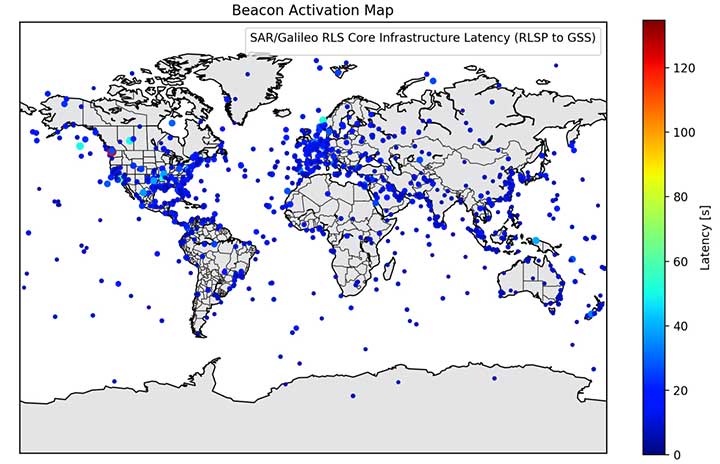
    The introduction in early 2020 of the automatic acknowledgment of the SAR/Galileo Return Link Message (RLM) as part of the Cospas-Sarsat system will enable space assets to be used for search and rescue — persons in distress will get swift acknowledgement that their alert has been detected and located. The Return Link is the means to interact with a SAR beacon, improving the effectiveness of SAR operations. Extensive testing has demonstrated that the median latency for the reception of a return link message on the ground is 14.2 seconds, while 99% of messages are received within 57 seconds, after the request for the RLM transmission is delivered to Galileo (from Cospas-Sarsat to the RLSP). At the same time, the measured rate of reception was 100%, considering line-of-sight availability, thanks to the very robust Galileo navigation data link. This performance has been demonstrated to be uniform across the globe, as shown in Figure 5.

    Figure 5. Beacon activation map and RLM delivery latency through the Galileo system. (Image: ESA)
    Figure 5. Beacon activation map and RLM delivery latency through the Galileo system. (Image: ESA)

    Following the re-profiling of the Galileo Safety-of-Life (SoL) service, Galileo is meant to be exploited through dual-frequency multi-constellation (DFMC) SBAS and will support the provision of integrity through the concept of Horizontal Advanced Receiver Autonomous Integrity Monitoring (H-ARAIM). To allow the exploitation of Galileo for these SoL applications, a thorough analysis of the actual signal-in-space (SiS) performance and of potential feared events critical for SoL users is key. In this context, the Galileo Integrity Failure Mode and Effect Analysis (IFMEA) process is implemented through measurements and review of the system design, including feared-events characterization.

    Ground Segment Brings Robustness

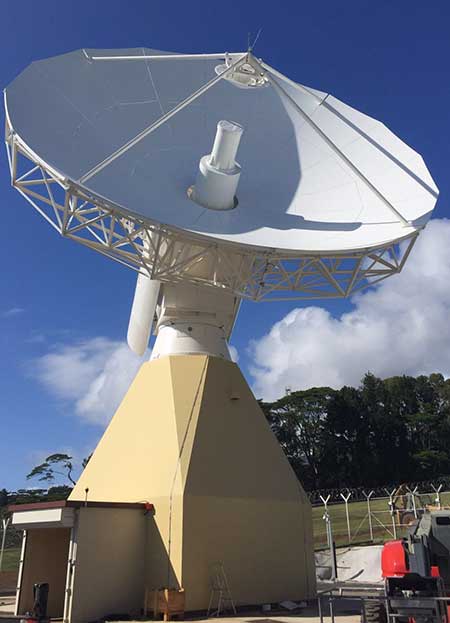
    Galileo telemetry and telecommand ground station. (Photo: ESA)
    Galileo telemetry and telecommand ground station. (Photo: ESA)

    Galileo’s Ground Segment is being upgraded to fully redundant control centers. These include processing and storage, monitoring and control facilities, and security monitoring centers. A worldwide network of Galileo Sensor Stations (GSS) allows monitoring and measuring of satellite signals; uplink stations allow dissemination of the navigation message to users through Galileo satellites; and telemetry, tracking and control (TTC) stations allow monitoring and control of the satellites.

    Ground segment upgrades under production by Thales Alenia Space France (in charge of the ground mission segment and security monitoring) and GMV Spain (in charge of the ground control segment) are addressing increased service robustness, through the introduction of a more flexible infrastructure with a significant technology refresh, improved security, service continuity, enhanced service performances, and enhanced operability features.

    One important objective of the ongoing upgrades is to implement a modern infrastructure, based on leading virtualization technologies. This modernized infrastructure will make it possible to easily accommodate hardware and software changes without requiring significant redesign or requalification, and will minimize the impact to Galileo service operations — under responsibility of Spaceopal GmbH — during future deployment activities.

    Batch 3, Ariane 6 Under Production

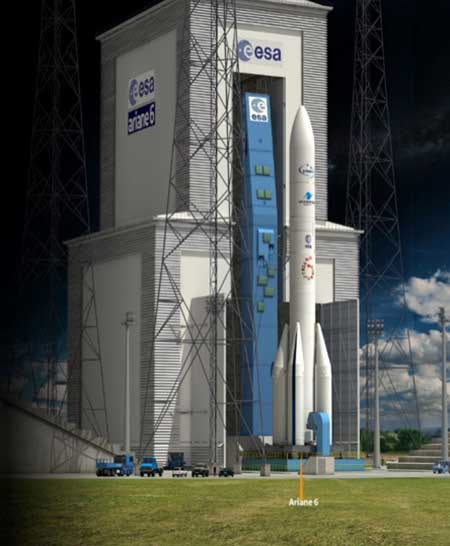
    Ariane 6 on the launchpad. (Artist's concept: ESA)
    Ariane 6 on the launchpad. (Artist’s concept: ESA)

    The production of Batch 3 of 12 additional Galileo FOC satellites is proceeding, aiming at readiness for launch by the end of 2020 onward. The satellite design includes a selected number of improvements compared to the 22 FOC satellites launched previously and built by the same satellite manufacturer OHB Systems.

    The different stages of assembly, integration and initial test phase in the OHB production plant in Bremen have already started, before shipment to ESA-ESTEC in the Netherlands for the environmental test campaign consisting of thermal vacuum, mechanical tests, interface verification with the launcher and system end-to-end performance tests with the elements of the Galileo ground segment.

    Following the phasing out of the Ariane 5 SE launcher, the third batch of Galileo satellites will be progressively launched with the new Ariane 62 launcher vehicle, the two solid-booster variant of Ariane 6 now in the final stages of development.

    Evolution to Meet User Needs

    The Galileo Second Generation roadmap has achieved maturity in 2019 and is now entering the preliminary design and implementation phase. Based on the EU’s H2020 Galileo Second Generation activities managed by ESA, and the GSA prospective market analysis, the European Commission, in close consultation with EU member states, has agreed on an ambitious set of long-term PNT goals for the future European GNSS infrastructures.

    Technology pre-developments, critical engineering activities and synergic design activities between space and ground infrastructure are being conducted. This will translate into the progressive deployment of a complete set of space/ground infrastructure that is tailored to satisfy the diversified user needs in four main dimensions:

    • Satellite and ground segment infrastructure with capabilities that can dynamically adapt to current and future user needs. Key drivers are flexibility and robustness, ensuring fast time to market to meet user needs.
    • Full synergy between GNSS and SBAS systems infrastructure, to complement and enhance the service portfolio. This will allow segmentation and complementarity of safety-critical services and extension to all new PNT services available today, including high-accuracy positioning integrity.
    • Enhanced integration with terrestrial systems — 5G/6G, signals of opportunity (SOOP), terrestrial beacon systems (TBS). ESA and GSA have been actively leading the 5G positioning standardization worldwide in collaboration with public and private institutions inside 3GPP and will soon move toward the start of standardization of 6G terrestrial positioning and GNSS interconnection technologies.
    • Full complementarity with external sensors (such as INS, barometer and lidar) and application environments (low-power devices and internet of things) so that the Galileo Second Generation Infrastructure enhances and complements the capabilities provided by these external means.

    A key pillar for this long-term strategy is the Galileo transition satellites. The competitive procurement procedure for the first batch of transition satellites is coming in 2020. The flexibility and robustness of these satellites will allow the European PNT infrastructure to satisfy all the different user needs in the next decade. This procurement — together with others at system, ground segment and technology level — will enable the start of the in-orbit validation of second-generation capabilities from 2025 onward.

    Additional ground and test infrastructure are in early engineering analysis, design and technology development, in order to proceed with additional procurements for experimental and operational usage, starting early in the 2020s.

  • Directions 2019: Galileo moves toward FOC

    Directions 2019: Galileo moves toward FOC

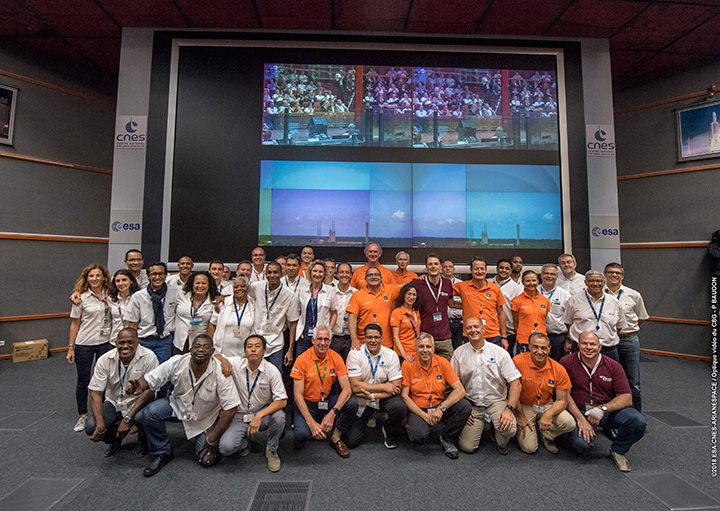
    Countdown team at Kourou, Guiana control center for July’s four-satellite launch. (Photo: ESA/CNES/Arianespace, P. Baudon)
    Countdown team at Kourou, Guiana control center for July’s four-satellite launch. (Photo: ESA/CNES/Arianespace, P. Baudon)

    By Javier Benedicto
    Head, Galileo Programme department, European Space Agency

    Since the declaration of initial services in December 2016, the European Space Agency (ESA) and the European GNSS Agency (GSA) have expanded Galileo’s system capabilities and service robustness with significant improvements of the ground segment and the last batch of four satellites launched by Ariane 5 in July. Once these satellites reach their final position and complete their in-orbit commissioning before the end of 2018, all 24 nominal slots of the Galileo constellation will be occupied.

    Up to 22 satellites are planned to be commissioned in early 2019 and, eventually, the two FOC satellites injected in elliptical orbit should join the operational constellation after on-board software upgrade to provide for automatic health status flagging to users. This should lead to a total of 24 operational Galileo satellites supporting global PNT for users worldwide.

    New Infrastructure Contracts

    To further expand the system capabilities by 2020 and beyond, and reach Full Operational Capability (FOC), ESA has awarded new large industrial contracts in the context of the Exploitation Phase.

    A contract to build and test another twelve Galileo satellites (so-called Batch-3) was awarded in 2017 to a consortium led by prime contractor OHB GmbH in Germany, with Surrey Satellite Technology Ltd in the UK as payload prime. These new satellites are based on the already qualified design of the previous Galileo FOC satellites. Production is advancing well, with first launch planned by late 2020.

    With the Galileo constellation now expanded to 26 navigation satellites and plans to deploy additional Batch 3 satellites, the ground control infrastructure is undergoing a corresponding upgrades. In July, ESA awarded a new contract for the Galileo Ground Control Segment to GMV Aerospace and Defence, Spain. This contract includes upgrading the system architecture to manage a constellation of up to 41 Galileo satellites, updating obsolescent elements in the current system, improving operability linked to the provision of services and additional telemetry, tracking, and command capabilities to improve system robustness.

    In October, Thales Alenia Space in France received a contract to upgrade the Galileo Ground Mission Segment and the Galileo Security Monitoring Centres (GSMC). This work includes upgrading Galileo’s system architecture to provide more accurate navigation products for broadcast by Galileo satellites, updating obsolescent elements in the current system and improving operability linked to the provision of services and enhanced robustness.

    It will also include the construction of additional navigation message uplink and sensor stations. This contract will also augment the capabilities for implementation of the Public Regulated Service (PRS), the single most accurate and secure class of Galileo signals. Encrypted PRS signals will be made available only to authorized governmental users through approved national authorities. GSMCs in France and Spain will ensure the security monitoring functions for Galileo operational assets and manage PRS access and operations.

    Growing Service Portfolio

    The European Commission, GSA and ESA have jointly defined a broad range of service improvements and system capability enhancements to be deployed in 2019–2020, leading to FOC.

    The newly qualified system infrastructure will support the broadcast of authentication information as part of the Open Service Navigation Message in E1; experimentation will start by end of 2019, leading to the possibility to offer trusted PNT to Galileo users.

    Galileo will also be the first GNSS constellation to provide a Search and Rescue return link capability: as of 2019 the system will allow broadcast of acknowledgement of receipt message to users in distress with a very low latency, contributing to saving lives.

    ESA has also started preparing the necessary modifications to the Navigation Signal Generation on-board the satellites to offer further capabilities to users after 2020. The signal-in-space will be enhanced with additional data transmitted in the I/NAV message, offering faster acquisition and more robust Galileo positioning on E1 and an encrypted navigation signal on E6 supporting authentication at signal level.

    The new Galileo High Accuracy Service, soon entering the experimental phase, will consist in the delivery of un-encrypted high accuracy correction data in E6, enabling users to achieve sub-meter level positioning.

    The usage of Galileo Open Service for aviation applications using horizontal advanced receiver-autonomous integrity monitoring techniques is being carefully assessed through measurements and review of the system design, including feared-events characterisation.

    Longer Term Evolution

    Galileo Second Generation has been the subject of technology pre-developments in the areas of platform and payload critical equipment, system techniques and processing algorithms, as well as system and segment Phase B studies over the past few years. We are now approaching the start of the implementation phase.

    The European Commission, in close consultation with EU member states, has defined a decision roadmap aiming at very important future budget and programme implementation decisions in the course of 2019. In this context, ESA has launched a competitive procurement procedure for the first batch of so-called “Transition Satellites” with a broad range of enhanced and some new capabilities being considered. This includes improvements in the signal domain for faster acquisition and lower receiver power consumption, on-board clock technology, inter-satellite links, electrical propulsion, flexible payloads and power allocation by means of on-board digital technology and in-orbit re-configurability.

    Transition satellites and related ground segment development contracts will begin by the end of 2019, aiming at in-orbit validation of second-generation capabilities from 2025 onwards.

    EGNOS Evolution for Aviation

    The adoption of Europe’s SBAS EGNOS by aviation is growing faster and faster. EGNOS will continue to evolve in the coming years. In particular, for 2019 and 2020, the evolutions under implementation focus on the obsolescence management of the hardware of some critical components, improvement of the system performances thanks to addition of new stations and system algorithms.

    All these evolutions are planned to be qualified in 2021-2022, to continue to offer an excellent level of performance to Aviation Users until the operational take-over by the second generation of EGNOS V3,planned in 2025.

    The European Performance-Based Navigation Implementing Regulation plans a growth from the current 35% to 66% in 2020 and 100% in 2024 of all European airports instrumental runways end-equipped with SBAS localizer performance with vertical guidance procedure.

    On the aircraft manufacturer side, Airbus confirmed that it will continue equipping its aircraft; following the A350 family already equipped, both A320 and A330 families will be equipped for entry into service in summer 2020.

    NAVISP

    ESA’s Navigation Innovation and Support Programme (NAVISP), launched in 2017, will continue to boost member states’ industrial competitiveness and innovation in the upstream and downstream navigation sector, investigate the integration of satellite navigation with non-space technologies and complementary positioning and communication techniques, and study novel receiver-based techniques to counteract vulnerabilities and improve the robustness and reliability of GNSS.

    Conclusion

    The EU-built GNSS infrastructure systems EGNOS and Galileo are operational and serving users in Europe and worldwide. EC, GSA, ESA and European industries are committed to improvement plans over the next 2–3 years, with emphasis on endurance, resilience and robustness of the systems’ infrastructure, and delivering enhanced services.

    For the longer term, the real challenge is to modernize the systems with new spaceborne and ground technologies, increase operational robustness and automation, and provide for additional system capabilities, while retaining a large degree of flexibility and in-orbit re-configurability to meet the long-term challenges and evolution of satellite-based navigation and timing.

  • Last Galileo satellite leaves ESA Test Centre

    Last Galileo satellite leaves ESA Test Centre

    Enclosed in its protective container, Galileo Full Operational Capability (FOC) Flight Model 21 (FM21) is seen departing ESA’s ESTEC Test Centre on Aug. 24. Photos courtesy of the European Space Agency

    News from the European Space Agency

    The last of 22 Galileo satellites has departed the European Space Agency’s (ESA) Test Centre in the Netherlands. This concludes the single longest and largest scale test campaign in the establishment’s history, ESA said.

    Cocooned in a protective container for its journey — equipped with air conditioning, temperature control and shock absorbers — the final Galileo satellite left the establishment by lorry on Aug. 24.

    ESA’s Test Centre at ESTEC in Noordwijk, the Netherlands, houses a collection of test equipment to simulate all aspects of spaceflight. It is operated for ESA by private company European Test Services (ETS) B.V.

    In May 2013, the Test Centre began testing the first of 22 Galileo “Full Operational Capability” (FOC) satellites, having previously performed the same function for the very first Galileo “In-Orbit Validation” satellite under a separate contract.

    Photo courtesy of the European Space Agency
    Pictured is a Galileo Full Operational Capability satellite being removed from the Phenix thermal vacuum chamber after a fortnight-long “hot and cold” vacuum test.

    The Galileo FOC satellites had their platforms built by OHB System AG in Germany, incorporating navigation payloads coming from Surrey Satellite Technology Ltd. in the United Kingdom. They then traveled on to ESTEC to be subjected to the equivalent vibration, acoustic noise, vacuum and temperature extremes that they will experience for real during their launch and orbit, plus testing of their radio systems.

    With a steady stream of satellites coming off the production line, the challenge for the combined ETS and OHB team overseeing Galileo testing was to put them through all necessary tests on a rapid and efficient basis, while also keeping the Test Centre accessible to other European missions requiring its unique services.

    A total of 14 FOC satellites have since joined the first four IOV satellites in orbit, forming an 18-strong constellation that began Initial Services to global users on Dec. 15, 2016. The next four FOC satellites are scheduled for launch on an Ariane on Dec. 5.

    Photo courtesy of the European Space Agency
    Europe’s Galileo navigation satellites orbit 23 222 km above Earth to provide positioning, navigation and timing information all across the globe.

    “For the first time in more than four years, there are no Galileo satellites in the Test Centre, but hopefully this will not be the end of our association with the programme,” said Jörg Selle, managing director for ETS. “The contract for making the next eight Galileo satellites — known as Batch 3 — was also awarded to OHB last June, and ETS will be bidding for the contract to test these satellites too.”

    “The availability of the ETS facilities in ESTEC have substantially contributed to the programme,” said Paul Verhoef, ESA director of the Galileo Programme and navigation-related activities. “We thank ETS for their professionalism and support over this extended period.”

    The final Galileo travelled back to OHB in Germany for some final refurbishment ahead of its launch together with another three satellites in December.

  • New Galileo Pair Head to Working Orbit

    New Galileo Pair Head to Working Orbit

    Galileo 7 and 8 were launched into orbit on time today. (Screenshot of  ESA/Arianespace livestream feed.)
    Galileo 7 and 8 were launched into orbit March 27. (Screenshot of ESA/Arianespace livestream feed.)

    Europe’s two newest Galileo satellites — launched March 27 — have carried out maneuvers to take them down to their working positions in orbit. Both satellites are performing well. Galileo 7 and 8 were launched into a circular 23,522 km altitude orbit about 300 km above their final orbit.

    Using their onboard thrusters, the two Galileo satellites have performed all their Launch and Early Operations Phase (LEOP) maneuvers, reports the European Space Agency (ESA). The maneuvers began as soon as the automatic initialization sequence was completed.

    A joint team of ESA and CNES personnel oversaw the LEOP process from the French space agency CNES in Toulouse. On March 28, the team ensured that the two satellites’ solar arrays deployed correctly and oversaw the gradual switch-on of the satellites systems.

    Once the two satellites passed inspection, control was passed to Galileo’s Oberpfaffenhofen-based Control Centre (run by SpaceOpal, a joint venture by DLR Gesellschaft für Raumfahrtanwendungen and Telespazio) to prepare for their final In-Orbit Testing (IOT) in two phases: commissioning for the host satellite platforms, and then their navigation and search and rescue payloads. Platform commissioning is now taking place.

    The Galileo satellites’ navigation and the search and rescue payloads will be switched on in few weeks and will begin detailed in-orbit testing, overseen from ESA’s Redu centre in Belgium, which is equipped with a 20-meter antenna for high-resolution acquisition of the navigation signals.

    The hosting of Galileo’s LEOP team alternates between CNES in Toulouse and ESA’s ESOC control centre in Darmstadt, Germany. Early operation of the next pair of Galileo satellites will be masterminded from ESOC — launch is scheduled for September.

  • Two Galileo Satellites Launched for Europe’s Navigation Constellation

    Two Galileo Satellites Launched for Europe’s Navigation Constellation

    Galileo 7 and 8 were launched into orbit on time today. (Screenshot of ESA/Arianespace livestream feed.)
    Galileo 7 and 8 were launched into orbit on time today. (Screenshot of ESA/Arianespace livestream feed.)

    UPDATE: The two Galileo satellites are confirmed separated from their Soyuz Fregat upper stage into 22,522 altitude orbit right on schedule, according to ESA. Both are in their planned orbits.


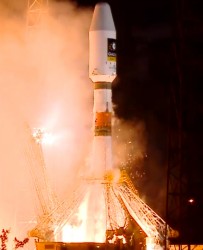
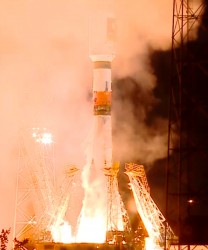
    Two more Galileo satellites were successfully launched today from Europe’s Spaceport in French Guiana. The seventh and eighth Galileo satellites were lifted aloft on time at 21:46:18 GMT (22:46:18 CET) atop a Soyuz ST-B rocket.

    The first three stages of the Soyuz rocket are delivering the Galileo satellites and their Fregat upper stage into low orbit. Then the reignitable Fregat, as much a spacecraft as a rocket stage, will take over the task of hauling the satellites higher through a pair of burns. The satellites will be released in opposite directions by their dispenser once they reach their set 22,522 kilometer-altitude orbit 3 hours, 47 minutes, 57 seconds after launch.

    The launch is designated VS11 in Arianespace’s numbering system. Flight VS11’s passengers — built by OHB System, with Surrey Satellite Technology Ltd. supplying the navigation payloads — are the third and fourth Full Operational Capability (FOC) satellites in the Galileo program, which is creating a European-operated space-based navigation system.

    The European Commission is managing and funding Galileo’s FOC phase, during which the network’s complete operational and ground infrastructure will be deployed. The European Space Agency has been delegated as the design and procurement agent on the commission’s behalf.

    Watch a replay of the launch here:

  • Soyuz in the Launch Zone for March 27 Galileo Launch

    The seventh and eighth Galileo satellites being fitted together onto the dispenser, March 16-17. (Photo courtesy of ESA)
    The seventh and eighth Galileo satellites being fitted together onto the dispenser, March 16-17. (Photo courtesy of ESA)

    The Soyuz for Arianespace’s next medium-lift mission is in the launch zone at French Guiana, where it stands ready to receive the two spacecraft passengers that will join Europe’s Galileo global navigation satellite system.

    Applying procedures that have been followed since the workhorse Soyuz launcher inaugurated the Space Age, the basic three-stage vehicle for Arianespace’s March 27 flight emerged today from its MIK integration building in the Spaceport’s northwestern sector.

    Riding horizontally on a transporter/erector rail car, Soyuz was transferred to the ELS launch zone — which was followed by its erection to the vertical orientation and positioning over the launch pad, suspended in place by four large support arms.

    With this step completed, all was ready for the purpose-built 53-meter-tall mobile gantry to be moved into position around the launcher — a phase of the processing in French Guiana that differs from Soyuz operations at Baikonur Cosmodrome in Kazakhstan and Plesetsk Cosmodrome in Russia.  The gantry provides a protected environment for installation of the “upper composite,” which consists of the two Galileo spacecraft, the Soyuz’ Fregat upper stage and a two-piece protective payload fairing.

    The March 27 launch — designed VS11 in Arianespace’s numbering system — is scheduled to lift off at precisely 6:46:18 p.m. local time in French Guiana, with its Galileo satellite passengers to be deployed during a flight lasting approximately 3 hrs., 47 min. Total payload lift performance is estimated at 1,597 kg., which includes a combined mass of some 1,428 kg. for the two spacecraft.

    Flight VS11’s passengers — built by OHB System, with Surrey Satellite Technology Ltd. supplying their navigation payloads — are the third and fourth Full Operational Capability (FOC) satellites in the Galileo program, which is creating a European-operated space-based navigation system.

    The European Commission is managing and funding Galileo’s FOC phase, during which the network’s complete operational and ground infrastructure will be deployed. The European Space Agency has been delegated as the design and procurement agent on the Commission’s behalf.

    Follow Arianespace’s launch activity at: www.arianespace.com.

  • Sixth Galileo Satellite Reaches Corrected Orbit

    Sixth Galileo Satellite Reaches Corrected Orbit

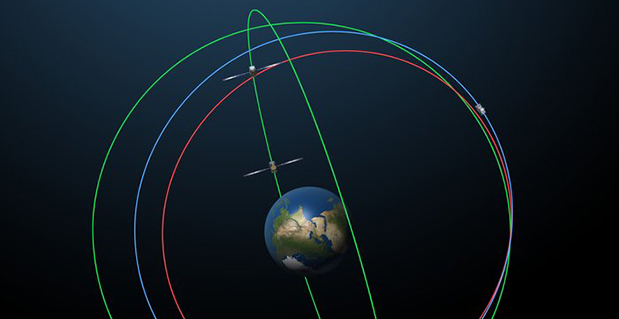
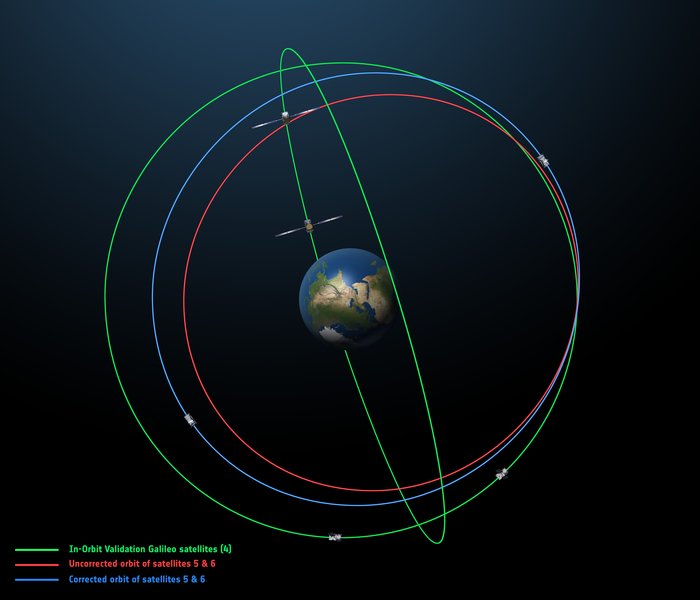
    The original (in red) and corrected (in blue) orbits of the fifth and sixth Galileo satellites, along with that of the first four satellites (green). Photo: European Space Agency
    The original (in red) and corrected (in blue) orbits of the fifth and sixth Galileo satellites, along with that of the first four satellites (green). Photo: European Space Agency

    By the European Space Agency

    The sixth Galileo satellite of Europe’s navigation system has entered its corrected target orbit, which will allow detailed testing to assess the performance of its navigation payload.

    Launched with the fifth Galileo last August, its initial elongated orbit saw it traveling as high as 25,900 km above Earth and down to a low point of 13,713 km — confusing the Earth sensor used to point its navigation antennas at the ground.

    A recovery plan was devised between ESA’s Galileo team, flight dynamics specialists at ESA’s ESOC operations centre and France’s CNES space agency, as well as satellite operator SpaceOpal and manufacturer OHB. This involved gradually raising the lowest point of the satellites’ orbits more than 3500 km while also making them more circular.

    The fifth Galileo entered its corrected orbit at the end of November 2014. Both its navigation and search and rescue payloads were switched on the following month to begin testing. Now the sixth satellite has reached the same orbit, too.

    This latest salvage operation began in mid-January and concluded six weeks later, with 14 maneuvers performed in total. Its corrected position is effectively a mirror image of the fifth satellite’s, placing the pair on opposite sides of the planet. The exposure of the two to the harmful Van Allen Belt radiation has been greatly reduced, helping to ensure future reliability.

    Significantly, the corrected orbit means they will overfly the same location on the ground every 20 days. This compares with a standard Galileo repeat pattern of every 10 days, helping to synchronize their ground tracks with the rest of the constellation.

    The test results from Galileo 5 proved positive, with the same test campaign for the sixth satellite due to begin shortly, overseen by ESA’s Redu centre in Belgium. A 20 m-diameter antenna will study the strength and shape of the navigation signals at high resolution.

    “I am very proud of what our teams at ESA and industry have achieved,” says Marco Falcone, head of Galileo system office. “Our intention was to recover this mission from the very early days after the wrong orbit injection. This is what we are made for at ESA.”

    The decision whether to use the two satellites for navigation and search-and-rescue purposes will be ultimately taken by the European Commission, as the system owner, based on the in-orbit test results and the system’s ability to provide navigation data from the improved orbits.

    The next pair of satellites is due for launch on March 27.

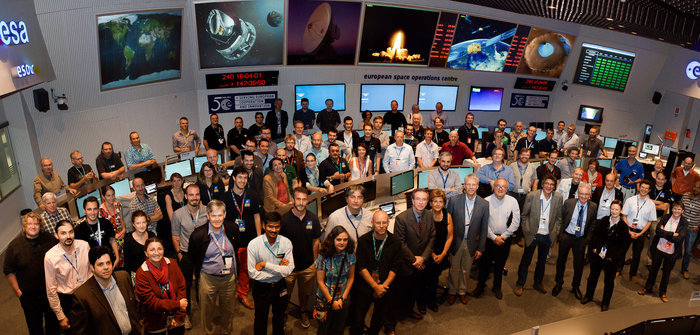
    The Galileo operations team, joined by Director General Jean-Jacques Dordain, Director of Human Spaceflight and Operations Thomas Reiter and experts from European industry, in the Main Control Room at ESA’s Space Operations Centre, ESOC, in Darmstadt, Germany, August 28, 2014. (Photo courtesy of ESA)
    The Galileo operations team, joined by Director General Jean-Jacques Dordain, Director of Human Spaceflight and Operations Thomas Reiter and experts from European industry, in the Main Control Room at ESA’s Space Operations Centre, ESOC, in Darmstadt, Germany, August 28, 2014. (Photo courtesy of ESA)
  • Launch Prep on Track for Galileo’s Next FOC Satellites

    Launch Prep on Track for Galileo’s Next FOC Satellites

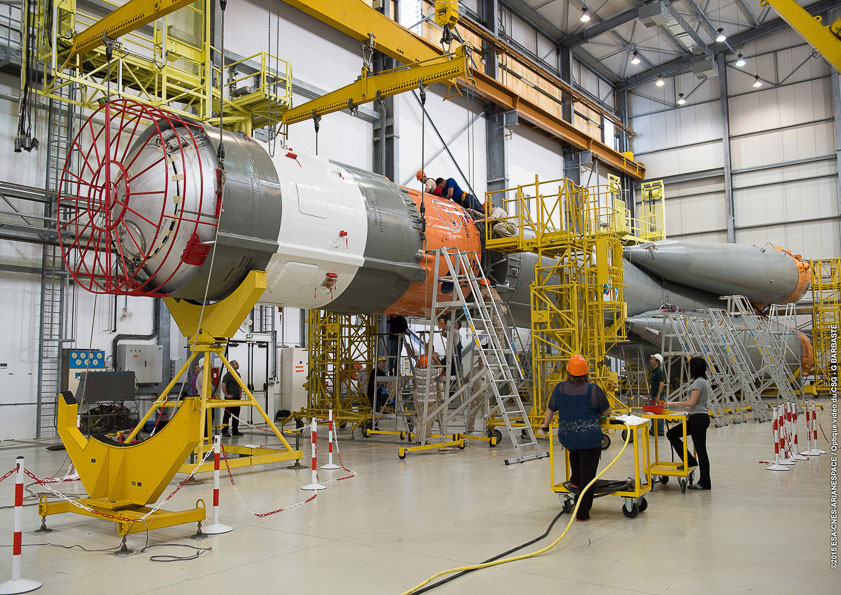
    Soyuz’ Block I third stage is mated to the launcher at the Spaceport’s MIK integration building.
    Soyuz’ Block I third stage is mated to the launcher at the Spaceport’s MIK integration building. Photo: Galileo

    Preparations for Arianespace’s next Soyuz flight, which will lift into orbit two more Galileo satellites, are in full swing at multiple locations across the spaceport in French Guiana. Work includes a key integration step for the medium-lift launcher, plus the start-up of fueling for its Galileo satellite passengers.

    Soyuz’ Block I third stage was mated to the vehicle’s core during activity today in the MIK Launcher Integration Building, concluding its basic build-up. Once the checkout process is completed, Soyuz will be transferred to the launch pad, where it will receive the two Galileo spacecraft and the Fregat upper stage, all of which are well into preparation phases of their own.

    Payload fueling began earlier this week, with Galileo 8 (Galileo FOC-FM4) — the fourth Galileo Full Operational Capability (FOC) satellite, and eighth overall — receiving its propellant load in the Spaceport’s S5A fueling and integration hall. After its sister Galileo FOC-FM3 (Galileo 7) co-passenger undergoes this same process, the two will be integrated side-by-side on a dispenser for their shared ride aboard Soyuz on March 27.

    The fueling process followed the finalization last week of FM3 and FM4’s hardware and software, as well as the charging of their batteries — which will be relied upon during the short period from launch to unfurling of these spacecraft’s solar arrays in orbit.

    The Galileo program is Europe’s initiative for satellite navigation, providing a highly accurate global positioning system under civilian control — to consist of 30 satellites in total, along with European control centers and a worldwide network of sensor and uplink stations.

    Galileo’s FOC phase — during which the network’s complete operational and ground infrastructure will be deployed — is managed and funded by the European Commission, with the European Space Agency delegated as the design and procurement agent on the Commission’s behalf.

    The FM3 and FM4 spacecraft were built by OHB System in Bremen, Germany. Their navigation payloads, which will generate the precision positioning measurements and services to users worldwide, were supplied by Surrey Satellite Technology Ltd. in Guildford, UK.

    This upcoming mission is designated Flight VS11 in Arianespace’s numbering system. It will be the company’s fourth launch carrying spacecraft for the Galileo constellation, as well as the 11th flight of a workhorse Soyuz from French Guiana since the 2011 introduction.

    the fourth Galileo Full Operational Capability (FOC) satellite is loaded with on-board propellant inside the S5A fueling and integration hall. Photo: Galileo
    the fourth Galileo Full Operational Capability (FOC) satellite is loaded with on-board propellant inside the S5A fueling and integration hall. Photo: Galileo
  • Orbit of Second Wayward Galileo Satellite Adjusted

    Editor’s Note: See the report from the European Space Agency here.


    An official with the European Space Agency has confirmed that the sequence of maneuvers to adjust the orbit of the second of two Galileo satellites launched into a wrong orbit in August 2014  has been completed.

    The orbit of the first satellite, known variously as GSAT0201, Galileo FOC-FM1 or Galileo 5 (with COSPAR ID 2014-050A and NORAD ID 40128) was raised during operations carried out in November, and the satellite began transmitting L-band signals on Nov. 29.

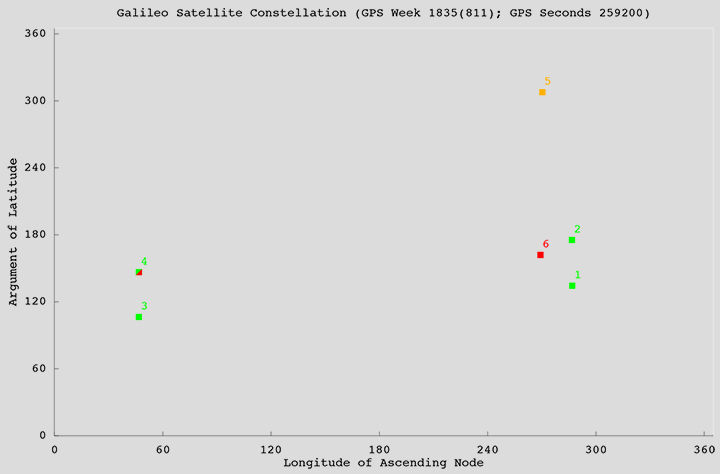
    Maneuvering of the second satellite (GSAT0202, Galileo FOC-FM2 or Galileo 6, with COSPAR ID 2014-050B and NORAD ID 40129) began around Jan. 15. The procedure took somewhat longer than that for the first satellite as it also involved changing the mean anomaly of the satellite to be about 180° away from that of the first satellite.

    The locations of the satellites in the Galileo constellation are shown in the accompanying figure. Satellites in green are transmitting a full complement of L-band signals. Galileo 4 (GSAT0104), one of the in-orbit validation satellites, suffered a power anomaly and only transmits on the E1 frequency. Galileo 5 is transmitting L-band signals but its orbit cannot be properly represented in the Galileo broadcast almanac. Galileo 6 has not started transmitting valid L-band signals yet.

    Officially, all Galileo signals are currently declared unavailable during an extended period of testing following ground segment upgrades. However, signals continue to be monitored by stations participating in the International GNSS Service Multi-GNSS Experiment.

    galileo_constellation-rev