Tag: LTE

  • Mobile Mark offers 5G fleet management antenna for GNSS, Wi-Fi

    Mobile Mark offers 5G fleet management antenna for GNSS, Wi-Fi

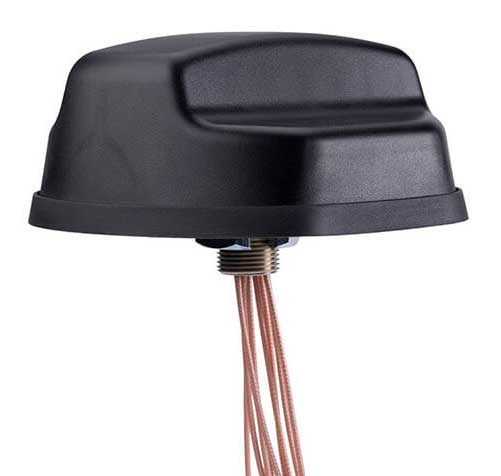
    The new Mobile Mark nine-cable LTMG944 multiband antenna is designed for 5G-ready routers and gateways covering dual-carrier LTE MIMO, Wi-Fi MIMO and GNSS.

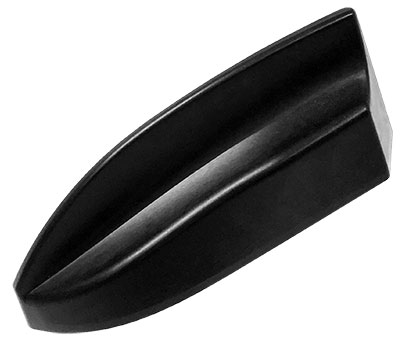
    LTM508 antenna. (Photo: Mobile Mark)
    The LTM508 antenna. (Photo: Mobile Mark)

    The 9-in-1 dual-carrier antenna expands Mobile Mark’s LTM series, used for public transit communications, public safety and vehicle fleet management. It contains nine separate antenna elements housed within a single antenna radome. The antenna has:

    • four cellular/LTE elements
    • four Wi-Fi elements
    • one GNSS element covering GPS, GLONASS and Galileo.

    The LTM900 series can also be configured with fewer elements — for example, the LTMG942 contains four LTE, two Wi-Fi and one GNSS element.

    The LTMG944 model can be paired with multi-connection 5G-ready routers and gateways already on the market. The cellular/LTE elements are designed to accommodate dual-carrier MIMO coverage (i.e. 2xMIMO on two different cellular carriers) or 4xMIMO for 5G.

    Complete cellular coverage is offered from 694-960 and 1710-3700 MHz, with GNSS coverage on GPS and Galileo (1575 MHz) and GLONASS (1612 MHz), and dual-band Wi-Fi coverage on 2.4 and 5 GHz.

    “Our new dual-carrier antenna solution series is compatible with the latest fleet management modems and routers offering dual-carrier coverage,” said Michael Berry, Mobile Mark president and CEO. “A single antenna provides MIMO coverage for each carrier.”

    The antenna also provides broadband coverage. “We are happy to report that Mobile Mark’s new 9-cable 5G-ready antennas are in production today with efficient, 5 dBi gain on the FCC allocated 5G mid-bands of 3550-3700 MHz as well as being backwards compatible for other cellular frequencies,” Berry said.

    The antenna is housed in the attractive, recognizable LTM radome in a choice of black or white. It is sold as a kit with 1-foot pigtails (LMR-100 except RG174 on GPS) and 14-foot jumper cables. The antenna elements fit in a compact radome that measures 5.5-inches in diameter by 2.38 inches high (140 mm x 60 mm). The LTMG944 series antennas are available as surface mounted antennas, but not as mag-mounts.

    For high-vibration applications such as mining or large earth-moving equipment, Mobile Mark has developed a proprietary construction technique with superior shock and vibration test results. This option is available for the LTM944 series antennas.

    The dual-carrier antenna is made in the USA, in Mobile Mark’s Itasca, Illinois, factory.”

  • PCTEL unveils GNSS L1/L2/L5 combo antenna at RSSI

    PCTEL unveils GNSS L1/L2/L5 combo antenna at RSSI

    Photo: PCTEL
    Photo: PCTEL

    PCTEL Inc. has released an antenna that combines precision multi-constellation GNSS with high-performance LTE, sub-6 GHz 5G, Bluetooth and Wi-Fi connectivity.

    The Coach II antenna with GNSS L1/L2/L5 is designed to provide greater precision and reliability for advanced rail communications systems, enabling everything from next-generation positive train control (PTC) to passenger Wi-Fi.

    “Precise timing and tracking information is critical not just for rail, but for a variety of fleet, public safety, and industrial IoT [internet of things] applications,” said Rishi Bharadwaj, PCTEL’s chief operating officer. “PCTEL’s antenna technology enables our customers to deploy new technologies with confidence,” added Bharadwaj.

    The new antenna features:

    • Global multi-GNSS compatibility: 1150-290 MHz (GPS L2/L5; Galileo E5A/E5B/E6; GLONASS L2/L3; BEIDOU B2/B3); 1500-615 MHz (GPS L1; Galileo E1; GLONASS L1; BEIDOU B1/B1-2)
    • Dual-port 4G LTE / sub-6 GHz 5G NR
    • 802.11ac Wi-Fi / Bluetooth connectivity
    • AAR compliant for railway applications
    • IP67-rated design

    PCTEL is displaying its Coach II antenna with GNSS L1/L2/L5 on Sept. 22-24 at RSSI C&S Exhibition in Minneapolis, Minn. It is available to order now for shipment in early November using part #GL125-DLTEMIMO.

  • Airgain offers 6-in-1 and 5-in-1 antennas with GNSS, LTE, Wi-Fi

    Airgain offers 6-in-1 and 5-in-1 antennas with GNSS, LTE, Wi-Fi

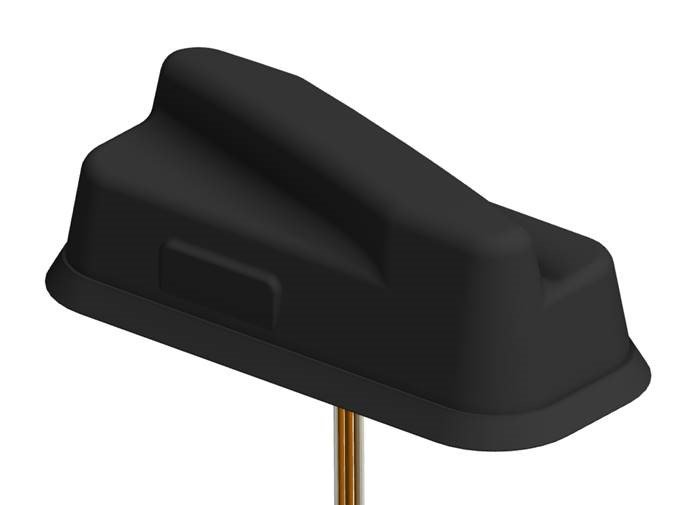
    Photo: Airgain
    Photo: Airgain

    Airgain Inc. has released its Multimax FV 6-in-1 and 5-in-1 antennas.

    The compact Multimax FV family is available in a range of configurations, supporting multi-constellation GNSS. The antennas also support up to dual MIMO LTE (including Band 14 for the FirstNet public safety network), 3×3 MIMO Wi-Fi or 2×2 MIMO Wi-Fi.

    Airgain is a provider of advanced antenna technologies used to enable high-performance wireless networking across a broad range of devices and markets, including connected home, enterprise, automotive and internet of things.

    With a small footprint and a strong, bolt-mount aluminum base, the Multimax FV family provides protection against natural hazards threatening vehicles, including vibration, ice, salt, car washes and tree sweeps.

    In addition, the elegant shark-fin design allows fleet owners to add style to their vehicles without compromising performance.

    The new products include high-gain antennas that deliver a larger cellular footprint alongside high rejection GNSS technology with coverage for multiple satellite systems including GPS, GLONASS, Galileo and BeiDou.

    “Not only does reliable connectivity matter to fleet owners, but also aesthetics and the antenna form factor,” said Reed Pangborn, Airgain’s vice president of Channel Sales for North America. “Our new Multimax FV family is uniquely designed to deliver in each of these key areas. Owners can rely on our commitment to providing class-leading performance across cellular, Wi-Fi and GNSS as well as our industry-best reliability, but all built into a new, sleeker design that complements today’s fleet vehicles.”

    The Multimax FV family of antennas can be ordered in either black or white and are available now.

  • PCTEL announces Trooper II antenna for public safety

    PCTEL announces Trooper II antenna for public safety

    PCTEL Inc. has announced the next generation of its Trooper antenna, the company’s flagship multi-band platform for public safety fleets.

    The new Trooper II provides optimal wireless communications performance through the antenna’s 4-port 4G LTE connections and 4×4 802.11ac Wi-Fi MIMO capability, the company said. It also incorporates PCTEL’s newest high rejection multi-GNSS technology for high precision tracking and asset management.

    The Trooper II antenna. (Photo: PCTEL)
    The Trooper II antenna. (Photo: PCTEL)

    “The Trooper II antenna enhances PCTEL’s successful Trooper platform, with expanded multi-band RF and GNSS capability in a robust, aerodynamic housing,” said Rishi Bharadwaj, senior vice president and general manager of PCTEL’s Connected Solutions group. “Its slender new design with a single cable exit accommodates installation restrictions often encountered on modern public safety vehicles.”

    “Our Trooper antennas have been broadly deployed on public safety fleets, notably in support of  the leading FirstNet public safety broadband network systems. The Trooper II is also ideal for many Industrial IoT deployments,” Bharadwaj added.

    The rugged Trooper II (part #GL9X1AX-TRB) features PCTEL’s new proprietary high rejection multi-band technology, which supports GPS L1, GLONASS and Galileo for high precision tracking.

    In addition to public safety applications, the antenna is suitable for tracking and communications support for industrial internet of things (IoT) and other fleet management applications, including farming tractors for precision agriculture, utility service fleets and railway positive train control systems.

    PCTEL will display the Trooper II antenna Aug. 6-7 at APCO 2018, Booth 1719, along with its portfolio of antennas for the public safety industry and grid testing solution for in-building public safety networks.

    The Trooper II antenna is available for pre-order now. First shipments are expected in early fall.

  • PNT Roundup: Positioning integral to system design of 5G cellular networks

    PNT Roundup: Positioning integral to system design of 5G cellular networks

    The cellular 5G standard targets latencies under 1 millisecond, data rates of up to 10 gigabits per second, extremely high network reliability and better accuracy in positioning. With location awareness becoming an essential feature in many new markets, positioning is considered as an integral part of the system design of upcoming 5G mobile networks.

    The cellular industry is currently implementing Long-Term Evolution (LTE)-Advanced, which might be called “4G” mobile broadband. Simultaneously, the industry is preparing the next step, a fifth-generation (5G) system. It will process communication 10 times faster than 4G, according to experts. 5G rollout will be complete in many international metropolitan areas by 2020.

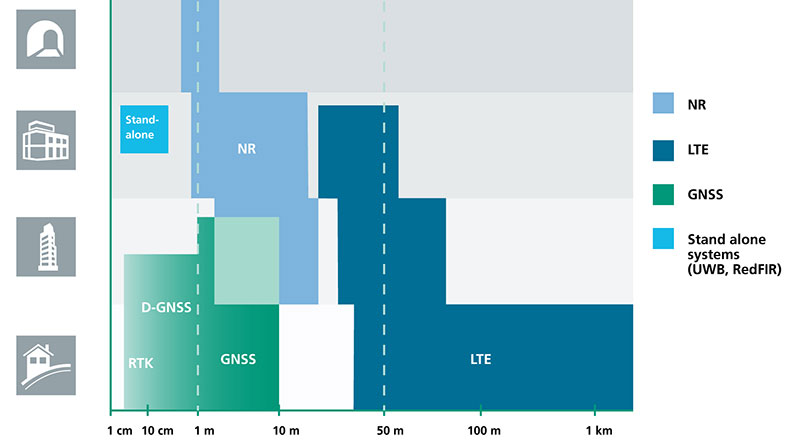
    Positioning Performance for 5G NR and other technologies in different environments. (Image: Fraunhofer IIS)
    Positioning Performance for 5G NR and other technologies in different environments. (Image: Fraunhofer IIS)

    Adaptive array antennas

    In addition to the precise positioning it will afford, 5G shares another characteristic with GPS/GNSS: adaptive array antennas for digital beamforming (DBF). Adaptive arrays have many advantages for PNT, primarily in mitigation for multipath, jamming and spoofing.

    Adaptive antenna arrays with DBF are becoming increasingly important for PNT in challenging signal environments. DBF combines multiple antenna inputs to generate gain in arrival direction of the desired satellite signal and to create spatial nulls in the direction of jamming. (See the January 2017 Innovation column “Correlator beamforming for low-cost multipath mitigation” and the February follow-up, “Mitigating interference with a dual-polarized antenna array in a real environment.”)

    Picocells

    Emerging applications of DBF in 5G involve dense networks of picocells, small cellular base stations that typically cover a small indoor area. Picocells extend coverage where outdoor signals do not reach well, and add network capacity in areas with very dense phone usage. 5G architectures will use adaptive array technology to achieve high data rates, spectrum reuse and communications robustness.

    The implications for PNT are that 5G will require improved (relative) PNT to operate effectively, and picocells will be a source of PNT information in constrained environments.

    5G involves massive directional communications via multiple-input, multiple-output (MIMO), enabling high-bandwidth communications in fading (multipath) channels by using multiple antenna inputs to adapt to channels. It can do this without knowledge of user location, but it adds to the processing complexity. The directional capability can enable multiple users to be serviced in a picocell at different frequencies, while permitting spectrum re-use by nearby picocells through narrow beamwidth and the limited range of millimeter-wave (mmWave) frequencies.

    The PNT implications of 5G architectures, according to Gary McGraw of Rockwell Collins, are that 5G picocells will be synergistic with PNT in challenged environments — naturally, indoor and dense urban. They will necessitate development of distributed, networked PNT processing and infrastructure.

    Fraunhofer

    The 5G positioning framework will integrate a multitude of sensors into a hybrid positioning scheme, according to the Fraunhofer Institute for Integrated Circuits (IIS) in Germany. Fraunhofer IIS is currently prototyping low-latency and high-precision positioning systems for legacy LTE and future 5G New Radio (5G NR).

    5G NR enables positioning by providing high bandwidths for precise timing, new frequency bands at mmWave, massive MIMO for accurate angle-of-arrival estimation and new architectural options that support positioning. Improved accuracy, robustness and latency can be achieved, according to the institute.
    5G provides fast and reliable access to moving objects to achieve time-critical process control and optimization in industrial environments. Increased contextual awareness of goods, parts, machines and workers will enable new interaction and collaboration, the institute said.

  • New LTE tracker platform connects and locates objects

    New LTE tracker platform connects and locates objects

    LTE chipmaker Sequans Communications S.A. and semiconductor company STMicroelectronics have introduced CLOE, an LTE-connected tracker platform based on the integration of Sequans and ST technologies.

    An acronym of Connecting and Locating Objects Everywhere, CLOE combines the Internet-of-Things (IoT) technologies of two industry manufacturers into one comprehensive platform that simplifies the development of LTE-based IoT tracker devices for the full range of vertical markets, including logistics, consumer electronics and automotive.

    Specifically designed and optimized for OEMs and ODMs to add IoT tracking capability to their product offerings, CLOE integrates Sequans’ Monarch LTE Cat M1/NB1 chip and ST’s Teseo III GNSS chip for communications and satellite-based tracking performance.

    “CLOE targets multiple vertical markets with best-in-class performance for all of the important tracking measures: battery life, location accuracy, reachability, mobility and reporting periodicity,” said Antonio Radaelli, infotainment BU director at STMicroelectronics. “’Componentizing’ ST’s navigation technology and Sequans’ LTE modem technology makes CLOE an ideal platform to build trackers of all types — anything a developer can think of.”

    “The tight integration of ST’s latest-generation Teseo chip with our Monarch LTE chip results in a power-optimized, cost-effective, all-in-one solution to speed new IoT tracker devices to market in a very short time,” said Danny Kedar, vice president of Sequans’ IoT business unit. “CLOE delivers ultra reliable LTE connectivity with ultra-low-power consumption, and high performance GNSS and accelerometer performance, including lowest time to first fix.”

    CLOE Key Features

    • Turnkey cellular tracker solution for OEMs and ODMs, anywhere in the world
    • Chipset integrates PMU, LTE, GNSS, memories and MCU
    • First-to-market, operator-certified
    • LTE Cat M1/NB1 dual-category
    • Covers all worldwide LTE bands with a single hardware design
    • High GNSS accuracy and short time to first fix
    • Support for autonomous or server-based Assisted GPS (AGPS) for optimal time to fix
    • Designed to address multiple track & trace segments, including
      • Logistics
      • Consumer electronics
      • Automotive
    • Optimized for low power consumption and cost
    • Modular design includes GNSS, cellular connectivity, MEMS; can be expanded to include other sensors, Bluetooth and/or Wi-Fi.

    CLOE is designed and optimized for production based on a full bill of materials (BOM) that includes LTE, GNSS, accelerometer, power supply, battery management, LED and button management. The modular design enables copy/paste and optimizes BOM cost. CLOE is easily customizable.

  • Sprint certifies Telit module for its LTE Cat 1 network

    Sprint has announced that Telit is to start commercial deliveries of its LE910C1-NSLTE Cat 1 module upon conclusion of Sprint certification, expected this month. The product is an embedded industrial Internet of Things (IoT) LTE module delivering up to 10 Mbps download and 5 Mbps upload speeds.

    Because of pin-to-pin compatibility with both CDMA and EV-DO versions of Sprint certified xE910 modules, Telit integration support, powerful development tools and resources, the new Cat 1 module allows Sprint IoT customers to realize significant reduction in time to market and savings for both new projects as well as upgrades from 2G and 3G to LTE.

    The module will primarily be used for IoT applications, enabling cellular data communication in devices used in warehouse management, remote monitoring and control, robotics, traffic control, logistic services, supply chain management, fleet management and telemedicine.

    “We are excited to certify this module because Telit is a world-class leader in the IoT,” said Mo Nasser, director of product development and marketing at Sprint. “Having this module commercially available and Sprint certified allows us to expand the number of applications we can provide new customers and has the added benefit of simplifying migration of current IoT customers to LTE.”

    The Telit LE910C1-NS single-mode module operates in multiple bands including LTE B2, B4, B5, B12, B25 and B26. Features include a high-speed USB 2.0 port, industrial operating temperature range (-40°C to +85°C) and advanced power-saving modes (3GPP Release 12).

    “We’re certain that supplying Sprint customers with this module will open doors to numerous new application areas requiring the longevity and speeds of LTE with the reliability and coverage of the Sprint nationwide network,” said Manish Watwani, vice president of global product marketing at Telit. “We believe that our technology is cutting-edge, enabling Sprint to continue delivering world-class customer experience in the IoT space.”

  • Taoglas launches Axiom reference design for connected cars

    Taoglas launches Axiom reference design for connected cars

    Taoglas has launched Axiom, a reference design for a low-profile, compact multiple-antenna solution for the next generation of connected cars. Taoglas is a provider of GNSS, automotive and Internet of Things products.

    The reference design will help automobile manufacturers overcome one of the biggest challenges of the connected car: where and how to place the multitude of antennas needed for maximum performance.

    As many as 18 antennas are needed to power the next-generation connected car, including

    • multiple cellular antennas for network connectivity;
    • Wi-Fi for hotspot connectivity;
    • GNSS for navigation, emergency call systems and other location-based technologies;
    • satellite radio;
    • AM/FM antennas;
    • radar antennas for object detection;
    • Bluetooth antennas for smartphones and other devices, and
    • dedicated short-range communications (DSRC) antennas for vehicle-to-vehicle/infrastructure applications.

    Locating these antennas in a vehicle in close proximity to each other and additional electronics systems while minimizing interference and maximizing performance is extremely challenging from a design and RF performance perspective.

    Manufacturers also need to take into consideration both ease of installation and assembly, and antenna size to determine how they would best work with the vehicle’s aesthetics. Taoglas has worked with the automotive industry for more than a decade, providing antenna solutions to many of the major tier 1 automobile OEMs across the globe.

    The Axiom reference design incorporates Taoglas’ wealth of knowledge and expertise gained over the years into a roadmap to help automobile manufacturers more quickly advance antenna configurations that work for their particular make and model.

    “Getting that many antennas to work efficiently in a small space at a competitive cost is the number one challenge for the RF teams of automobile manufacturers,” said Dermot O’Shea, co-CEO of Taoglas. “While every car manufacturer will require a slightly different solution, having a multi-antenna reference design to work from allows them to see what they can do in terms of placement and size, and how that impacts performance — all without waiting months for a custom solution to test. They can take the prototype and test it in the field to prove out concepts. Using Taoglas’ Axiom reference design allows them move more quickly to market with solutions that work. We can also work with Tier 1 OEMs to integrate the elements of the Axiom antenna reference design quickly and efficiently directly onto the board of their telematic control units, achieving highest radiated power and sensitivity, while minimizing project time, cost and size, all in one single package.”

    Taoglas’ Axiom reference design has integrated nine antennas, including:

    • LTE Antennas: Four LTE antennas, each operating from 698 MHz to 6 GHz to fully cover LTE worldwide application bands.
    • Wi-Fi Antennas: Two Wi-Fi elements, supporting both 2.4 GHz and 5.8 GHz bands for Wireless Local Area Network.
    • GNSS Antenna: An active GNSS element to support GPS, GLONASS and BeiDou navigation systems. L1/L2 options available.
    • SDARS Antenna: One SDARS element to support satellite radio applications.
    • DSRC Antenna: One DSRC element, which supports V2V/V2X dedicated short range communication.

    Taoglas’ advantage is its ability to integrate all of the antennas required for the connected car in a confined space and maintain maximum performance. The Axiom reference design uses a compact PCB all with SMT-mounted components, and also incorporates a unique board-to-board connector option, allowing the antennas and electronics systems to coexist in a single space inside the vehicle, with no RF cables or additional connectors required.

    The Axiom reference design also helps auto manufacturers simplify manufacturing and assembly, with surface-mount solutions that feature the temperature and vibration resistance with the quality standards that manufacturers require. Installation is clipping the PCB into the telematics board.

  • Telit receives AT&T certification for automotive-grade module

    Telit’s 300-Mbps LE940B6-NA LTE Cat 6 module has received AT&T certification for use on the carrier’s North American LTE wireless networks. The smart module is the first 300 Mbps Cat 6 automotive-grade solution certified by AT&T, Telit announced in a press release.

    With advanced security features, the LE940B6 aligns with automakers’ vehicle roadmaps which include requirements for secure, high-speed mobile data that support next generation applications such as advanced diagnostics, infotainment and remote software updates.

    “The automotive industry is continuously raising the bar on internet connection speeds to the car,” said Yossi Moscovitz, CEO of Telit Automotive Solutions. “Along with higher speeds, there are increasing requirements for security, quality and environmental performance which Telit has achieved with the LE940B6. With certification of the North American LTE-Advanced LE940B6-NA module variant, auto makers can immediately start delivering car models in the United States with these new modules.”

    The LE940B6 powers the entire connected-car platform, supporting current needs while including advanced features that enable future integration of up-coming value-added, telematics and managed services.

    The module can run in-vehicle applications inside a secure processing environment from the built-in 64-bit application processor, storage and memory. Automotive application programs can run entirely and securely on the module itself protected by advanced cyber-security capabilities.

  • Telit unveils 450-Mbps LTE-advanced automotive-grade module

    Telit has introduced the LE940A9 smart module, an automotive-grade module designed to support LTE Advanced Category 9 (Cat 9) networks.

    The series offers three multi-band, multi-mode variants — including voice-over-LTE (VoLTE) — and is optimized for automobile manufacturers to deploy next-generation connected-car technology in world markets.

    The LE940A9 is the latest addition to Telit’s xE940 family of automotive-grade modules. According to Telit, it delivers 450 Mbps download and 50 Mbps upload speeds with extremely low latency and advanced security, enabling the next wave of automobile industry’s applications and services which also serve as a springboard for autonomous driving.

    https://youtu.be/kXBlY_L3OjI

    “Digital transformation is driving the evolution of the connected car with major improvements in driver safety, new revenue streams, and an immersive connected experience,” Telit said in a press release. “With government safety mandates around the globe, added advancements in the connected world, there is greater demand for more value-add services and feature-rich in-vehicle applications.

    The xE940A9 40×40 mm LGA form factor nests with the 34x40mm Telit xE920 automotive module family, offering flexibility for the OEM or tier-one integrator.

    “From commercial and consumer telematics services, to autonomous driving and driver assistance features, along with a host of other applications dependent on remote software updates, including infotainment; secure, wired broadband-like speed is now a requirement. The evolution to high-speed wireless connectivity is only possible if powered by LTE Advanced, with little to no lag time, for the applications to work.”

    The LE940A9 powers the entire connected-car platform, supporting current needs while including advanced features that enable future integration of upcoming value-added, telematics and managed services.

    The module can run in-vehicle applications inside a secure processing environment from the built-in application processor, storage and memory. Automotive application programs can run entirely and securely on the module itself, protected by advanced cyber-security capabilities.

    “In addition to serving as a significant advancement for the connected car industry, the LE940A9 series is a powerful testament to Telit’s continued technology leadership enabling the future of the connected car worldwide,” said Yossi Moscovitz, CEO of Telit Automotive Solutions. “Not only does the LE940A9 enable unprecedented applications with the speed and low latency of Cat 9 of the multi-mode variants, it also simplifies integration and reduces costs that help accelerate the development of our OEM partners’ global roadmaps.”

  • LTE cellular steers UAV: Signals of opportunity work in challenged environments

    No GPS? No Problem!

    Long-term evolution (LTE) cellular signals can be exploited for accurate and resilient autonomous vehicle navigation in the absence of clear GNSS signals. Simulation and experimental results demonstrate that GPS-like performance can be achieved in the absence of GPS signals when cellular pseudoranges aid an inertial navigation system.

    By Zaher M. Kassas, Joshua J. Morales, Kimia Shamaei, and Joe Khalife

    Navigation systems onboard today’s vehicles mainly rely on integrating global navigation satellite system (GNSS) receivers with an inertial navigation system (INS). As vehicles approach full autonomy, requirements on the accuracy and resiliency of the vehicle’s navigation system become ever more stringent.

    Besides the known limitations of GNSS indoors and in deep urban canyons, recent cyber attacks on GNSS signals (jamming and spoofing) are exposing an alarming vulnerability, necessitating alternative and complementary navigation systems when GNSS signals become unavailable or untrustworthy.

    When GNSS signals become unavailable, the errors of the INS’s navigation solution diverge, and the divergence rate is dependent on the quality of the inertial measurement unit (IMU). Such diverging errors compromise the required safe and efficient operation of autonomous vehicles (AVs).

    Two conflicting considerations arise in the design of an AV’s integrated navigation system: high accuracy and low size, weight, power and cost (SWaP- C). Current trends to supplement an autonomous vehicle’s navigation system in the inevitable event when GNSS signals become unusable are traditionally sensor-based, such as cameras and lasers.

    However, such sensors could violate SWaP-C constraints and may not function properly all the time, in all weather conditions. Recently, research in navigation via signals of opportunity (SOPs) has revealed their potential as an attractive source for navigation in GNSS-challenged environments. SOPs are ambient radio signals, which are not intended as positioning, navigation and timing sources: cellular, Wi-Fi, AM/FM, digital television, Iridium satellites and so on. SOPs are practically free to use and could alleviate the need for expensive and bulky aiding sensors.

    Among different SOPs, cellular signals are particularly attractive due to their inherent characteristics:

    • Abundance: Cellular signals base transceiver stations (BTSs) are plentiful.
    • Geometric diversity: The cellular system configuration by construction yields favorable BTS geometry, unlike certain terrestrial SOPs such as digital television, which tend to be co-located.
    • Large bandwidth: Cellular signals have a bandwidth up to 20 MHz, yielding accurate time-of-arrival (TOA) estimation.
    • High received power: The received carrier-to-noise ratio (C/N0) from nearby cellular BTSs is commonly tens of dBs higher when compared to GNSS signals.

    While cellular SOPs are lucrative to exploit for navigation purposes, a number of challenges must be first addressed, since such signals were never intended for navigation purposes. TABLE 1 compares GNSS space vehicles (SVs) and cellular BTSs with respect to relevant navigation attributes. Unlike GNSS SVs whose positions and clock errors are transmitted to the receiver in the navigation message, cellular BTSs do not transmit such information. Therefore, the receiver must either estimate these quantities in a stand-alone fashion or have access to a database (cloud-hosted) that is crowdsourcing this information from multiple nearby receivers.

    The first strategy is analogous to the simultaneous localization and mapping (SLAM) problem in robotics, while the second strategy could be achieved by deploying multiple receivers, whether vehicle-mounted or affixed on dedicated stations.

    This article discusses relevant cellular code division multiple access (CDMA) and long-term evolution (LTE) signals that could be exploited for navigation. The article also presents a specialized software-defined receiver (SDR) called Multichannel Adaptive TRansceiver Information eXtractor (MATRIX), developed at the Autonomous Systems Perception, Intelligence, and Navigation (ASPIN) Laboratory at the University of California, Riverside. MATRIX is capable of producing pseudorange observables to cellular CDMA and LTE BTSs. We also present a radio SLAM approach for AV navigation via a tightly-coupled cellular-aided INS framework. Simulation and experimental results demonstrate ground vehicles and unmanned aerial vehicles (UAVs) navigating with cellular signals in the absence of GNSS signals.

    CDMA SIGNALS

    CDMA is at the heart of third-generation (3G) wireless communication systems, which use orthogonal and maximal-length pseudorandom noise (PN) sequences to enable multiplexing over the same channel. The sequences transmitted on the forward link channel, from BTS to receiver, are known. By correlating the received cellular CDMA signal with a locally generated PN sequence, the receiver can estimate the TOA and produce a pseudorange measurement. In a cellular CDMA communication system, 64 logical channels are multiplexed on the forward link channel: a pilot channel, a sync channel, seven paging channels, and 55 traffic channels.

    The receiver uses the pilot signal to detect the presence of a CDMA signal and synchronize its locally-generated short code. The sync and paging channels are used to provide time and frame synchronization to enable the receiver to register in the network. All forward-link signals are spread at 1.2288 MHz by a 32,768-chip PN sequence called the short code. To distinguish the received data from different BTSs, each station uses a shifted version of the short code. This shift, known as the pilot offset, is unique for each sector of each BTS and is an integer multiple of 64 chips; hence, a total of 512 pilot offsets can be realized.

    The goal of a cellular CDMA navigation receiver is to acquire and track the signal parameters, namely the code phase and the carrier phase. To this end, such a receiver consists of three main stages: signal acquisition, signal tracking and message decoding. The pilot channel is used for signal acquisition and tracking. In fact, the pilot channel is dataless: only the short code is transmitted. This enables longer integration periods. A search in time and frequency in the acquisition stage obtains a coarse estimate of the TOA and the Doppler frequency.

    Next, these parameters are tracked and their estimates are refined via tracking loops. Similar to a GPS receiver, a phase-locked loop (PLL) and a carrier-aided delay-locked loop (DLL) are used to track the carrier and code phase, respectively. Finally, the sync and paging channels are decoded for timing and data association purposes. FIGURE 1 illustrates the three stages of the cellular CDMA module of the MATRIX SDR, implemented as LabVIEW virtual instruments (VIs), and the front panel corresponding to each stage.

    LTE SIGNALS

    LTE has become the prominent standard for fourth-generation (4G) communication systems. Its multiple-input, multiple-output capabilities allow higher data rates compared to previous wireless standards. The high bandwidth and ubiquity of LTE networks make LTE signals attractive for navigation. In LTE Release 9, a broadcast positioning reference signal (PRS) was introduced to enable network-based positioning capabilities within the LTE protocol.

    However, PRS-based positioning suffers from a number of drawbacks:

    • The user’s privacy is compromised since the user’s location is revealed to the network.
    • Localization services are limited only to paying subscribers and from a particular cellular provider.
    • Ambient LTE signals transmitted by other cellular providers are not exploited.
    • Additional bandwidth is required to accommodate the PRS, which caused the majority of cellular providers to choose not to transmit the PRS in favor of dedicating more bandwidth for traffic channels.

    To circumvent these drawbacks, user equipment-(UE)-based positioning approaches, which exploit the existing reference signals in the transmitted LTE signals, have been explored.

    LTE Frame Structure. LTE uses orthogonal frequency division multiplexing (OFDM) to transmit signals. In OFDM, the transmitted symbols are first parallelized into groups of length Nr. Then, to provide a guard band, the resulting signal is zero-padded to a length Nc, which is set to be greater than Nr. Finally, an inverse fast Fourier transform (IFFT) is taken, and the last Lcp elements are repeated at the beginning. TABLE 2 shows the possible values for Nr and Nc in an LTE system.

    The OFDM signals are arranged into blocks called frames. A frame is composed of 10 ms data, which is divided into either 20 slots or 10 subframes with duration of 0.5 ms or 1 ms, respectively. A slot can be decomposed into multiple resource grids and each resource grid has numerous resource blocks. Then, a resource block is broken down into the smallest elements of the frame, namely resource elements. The frequency and time indices of a resource element are called subcarrier and symbol, respectively.

    LTE Reference Signals

    There are three possible reference sequences in a received LTE signal that can be exploited for navigation.

    Primary synchronization signal (PSS). The PSS is transmitted in symbol 7 of slots 0 and 10 of each frame. This signal, which is transmitted on the middle 62 subcarriers, provides symbol timing to the UE. The PSS is expressible in only three different orthogonal sequences, each of which represents a BTS’s (also known as eNodeB) sector ID. This presents two main drawbacks: the received signal is highly affected by interference from neighboring eNodeBs with the same PSS sequences, and the UE can only simultaneously track a maximum of three eNodeBs, which is not desirable in an environment comprising more than three eNodeBs.

    Secondary synchronization signal (SSS). The SSS is transmitted in symbol 6 of slot 0 or 10 of each frame. This signal, which is transmitted on the middle 62 subcarriers, provides frame timing to the user equipment. The SSS is expressible in only 168 different sequences, each of which represents the cell group identifier; therefore, it does not suffer from the aforementioned drawbacks of the PSS. The transmission bandwidth of the SSS is 930 KHz, which is slightly less than the GPS C/A code bandwidth (1.023 MHz). Therefore, navigation with SSS provides comparable results to GPS: low-cost and relatively precise pseudorange information using conventional PLLs and DLLs in an environment without multipath, but low TOA accuracy in a multipath environment.

    Cell-specific reference signal (CRS). The CRS is mainly transmitted to estimate the channel between the eNodeB and the UE. Therefore, it is scattered in both frequency and time and is transmitted from all transmitting antennas. The CRS is known to provide better accuracy in estimating the TOA in a multipath environment due to its higher transmission bandwidth. Since the CRS is scattered across the LTE bandwidth, it is not possible to track the TOA from the CRS using conventional low-complexity DLLs. Several methods can be used to estimate the channel parameters, including the TOA: multiple signal classification (MUSIC), estimation of signal parameters via rotational invariance techniques (ESPRIT) and space-alternating generalized expectation-maximization (SAGE) algorithms.

    LTE Receiver Structure

    The LTE navigation receiver exploits SSS, PSS and CRS, and consists of four stages.
    Acquisition. In this step, the received signal is correlated with the locally generated PSS and SSS signals to obtain the frame start time estimate, Doppler frequency estimate and the eNodeB’s cell ID.

    System information extraction. In LTE systems, the bandwidth can be assigned to different values. The actual value of the bandwidth is provided to the UE by the eNodeB in a block called master information block (MIB). When user equipment enters an LTE network, it starts receiving signals with the lowest possible bandwidth. After obtaining the frame start time, it is possible to convert the LTE signals into frame structure by executing the steps discussed in the LTE Frame Structure section in reverse order. Then, the UE decodes the MIB and obtains the actual bandwidth. The UE can then increase the sampling rate to as high as the signal bandwidth.

    Due to the near-far effect on the PSS signal, it is not possible to acquire all the available eNodeBs in the environment. Each eNodeB provides the list of its neighboring cell IDs to the UE in the system information block (SIB). After obtaining the frame start time and the actual transmission bandwidth, the UE can decode the SIB to obtain the neighboring cell IDs.

    Tracking. The receiver starts tracking the SSS using components of the tracking loop: a frequency-locked loop (FLL)-assisted PLL to track the carrier phase and a carrier-aided DLL to track the code phase.

    Timing information extraction. To overcome the error due to multipath in tracking the SSS, the CRS is used. For this purpose, by knowing the CRS sequence and the received signal, the channel frequency response is first estimated. Then, the channel impulse response is obtained by taking an IFFT of the channel frequency response. Finally, the first peak of the channel impulse response is detected, which represents the line-of-sight TOA.

    FIGURE 2 illustrates the block diagram of the LTE module of the MATRIX SDR and the corresponding LabVIEW VIs.

    CELLULAR-AIDED INERTIAL NAVIGATION

    To correct INS errors using cellular pseudoranges, an extended Kalman filter (EKF) framework similar to a traditional tightly coupled GNSS-aided INS integration strategy is adopted, with the added complexity that the cellular BTSs’ states (position and clock error states) are simultaneously estimated alongside the navigating vehicle’s states (position, velocity, attitude, IMU measurement error states and receiver clock error states). This framework is composed of two modes.

    Mapping Mode. The EKF produces estimates and associated estimation error covariances of both the navigating vehicle and the cellular BTSs’ states (augmented in x) using both GNSS SV and cellular BTS pseudoranges. Between aiding corrections, the EKF produces the state prediction x^– and prediction error covariance P– using INS model and receiver and cellular BTS clocks models. When an aiding source is available, either a GNSS SV or cellular BTS pseudorange, the EKF produces a state estimate update x^+ and associated estimation error covariance P+.

    SLAM Mode. The cellular-aided INS framework enters a SLAM mode when GNSS pseudoranges become unavailable. In this mode, INS errors are corrected using cellular BTS pseudoranges and the cellular BTSs’ state estimates provided from the mapping mode. As the autonomous vehicle navigates, it simultaneously continues to refine the BTSs’ state estimates. FIGURE 3 illustrates a high-level diagram of the cellular-aided INS framework.

    SIMULATION RESULTS

    To evaluate the performance of this cellular-aided INS framework presented, simulations were conducted of a UAV equipped with the MATRIX SDR, navigating in downtown Los Angeles, while exploiting ambient cellular signals. Two navigation systems were employed to estimate the trajectory of the UAV: a traditional tightly-coupled GPS-aided INS with a tactical-grade IMU; and the cellular-aided INS discussed here with a consumer-grade IMU.

    A simulator generated the true trajectory of the UAV and clock error states of the UAV-mounted receiver, the cellular BTSs’ clock error states, noise-corrupted IMU measurements of specific force and angular rates and noise-corrupted pseudoranges to multiple cellular BTSs and GPS SVs.

    The IMU signal generator models a triad gyroscope and a triad accelerometer, each with time-evolving biases that provided sampled data at 100 Hz. GPS L1 C/A pseudoranges were generated at 1 Hz using SV orbits produced from receiver independent exchange files downloaded Oct. 22, 2016, from a continuously operating reference station server. The GPS L1 C/A pseudoranges were set to be available for only the first 100 seconds of the 200-second simulation. Cellular pseudoranges were generated at 5 Hz to four BTS locations, which were surveyed from real tower positions in downtown Los Angeles.

    The UAV’s true trajectory included a straight segment followed by two banked orbits in the vicinity of the four cellular BTSs, shown in FIGURE 4(a). The resulting EKF estimation errors and corresponding three standard deviation bounds for the north and east position of the UAV are plotted in FIGURE 4(b). The navigation solution from using the cellular-aided INS and navigation solution from using only an INS during the 100 seconds GPS pseudoranges were unavailable appear in FIGURE 4(c). The final BTS estimated position and corresponding 95th percentile estimation uncertainty ellipse is shown in FIGURE 4(d).

    We can conclude that when GPS pseudoranges become unavailable at 100 seconds, the estimation errors associated with the traditional GPS-aided INS integration strategy begin to diverge, as expected, whereas the errors associated with the cellular-aided INS are bounded within this 100-second duration of GPS unavailability. Second, when GPS was still available during the first 100 seconds, the cellular-aided INS with a consumer-grade IMU almost always produced lower estimation error uncertainties when compared to the traditional GPS-aided INS integration strategy with a tactical-grade IMU.

    EXPERIMENTAL RESULTS

    To evaluate the standalone LTE navigation performance, two field tests were conducted with real LTE signals in semi-urban and urban environments. In both tests, a ground vehicle was equipped with LTE and GPS antennas and universal software radio peripherals (USRPs). LTE signals were simultaneously downmixed and synchronously sampled via a dual-channel USRP driven by a GPS-disciplined oscillator. The GPS navigation solution served as ground truth. FIGURE 5(a) shows experimental results for a CRS-based and an SSS-based receiver in a semi-urban environment with moderate multipath. The table, FIGURE 5(b), demonstrates the importance of exploiting CRS to alleviate multipath effects. Figure 5(b) shows the experimental results for a CRS-based receiver in an urban environment with severe multipath.

    To evaluate the performance of cellular-aided inertial navigation, a field test was conducted with real cellular signals and an IMU-equipped UAV. The UAV was equipped with three antennas to acquire and track:

    • GPS signals
    • LTE signals from nearby eNodeBs
    • cellular CDMA signals from nearby BTSs.

    Samples of the received signals were stored for off-line post-processing. The LTE and CDMA signals were processed by the MATRIX SDR. FIGURE 6 depicts the experimental hardware setup.

    Experimental results are presented for two scenarios: the cellular-aided INS described in this article, and for comparative analysis, a traditional GPS-aided INS using the UAV’s IMU. The true trajectory traversed by the UAV is plotted in the opening figure (b)-(c), which consists of a GPS unavailability run of 50 seconds, starting at a location marked by the red arrow. The north-east root mean squared errors (RMSE) of the GPS-aided INS’s navigation solution after GPS became unavailable was more than 100 meters.

    The UAV also estimated its trajectory using the cellular-aided INS framework using signals from the two eNodeBs and three cellular BTSs illustrated in opening figure (a) to aid its onboard INSs. The north-east RMSEs of the UAV’s trajectory after GPS became unavailable was 4.68 meters with a final error of 4.92 meters.

    TABLE 3 summarizes the UAV’s RMSEs and final errors.

    CONCLUSION

    Cellular signals can be exploited to navigate in the absence of GNSS signals. Experimental results demonstrated a UAV navigating with a cellular-aided INS using two LTE eNodeBs and three cellular CDMA BTSs achieving GPS-like performance in the absence of GNSS signals. This article is based on IEEE/ION PLANS, ION GNSS+ and ION ITM papers by the authors; see online version.

    This work is supported by grants from the Office Naval Research (ONR) under Grant N00014-16-1-2305 and the National Science Foundation (NSF) under Grant 1566240.

    MANUFACTURERS

    Cellular antennas used were consumer-grade 800/1900-MHz cellular omnidirectional antennas. The UAV and GPS antenna used were DJI with the A3 flight controller. The cellular signals were simultaneously down-mixed and synchronously sampled via two Ettus E-312 USRPs tuned to 1955 MHz (AT&T) and 882.75 MHz (Verizon) carrier frequencies.


    JOSHUA J. MORALES is a Ph.D. student at the University of California, Riverside and a member of the Autonomous Systems Perception, Intelligence, and Navigation (ASPIN) laboratory.

    KIMIA SHAMAEI is a Ph.D. candidate at the University of California, Riverside and a member of the ASPIN Laboratory.

    JOE KHALIFE is a Ph.D. student at the University of California, Riverside and a member of the ASPIN Laboratory.

    ZAHER (ZAK) M. KASSAS is an assistant professor at the University of California, Riverside and director of the ASPIN Laboratory. He received a Ph.D. in electrical and computer engineering from the University of Texas at Austin.

  • Research: Assessment evaluates GNSS receivers’ tolerance of adjacent band

    By Stephen Mackey, Hadi Wassaf, Karen Van Dyke, Christopher Hegarty, Karl Shallberg, John Flake and Terence Johnson.

    OOBE Levels associated with LTE signal power used in testing.
    OOBE Levels associated with LTE signal power used in testing. Source: Stephen Mackey, Hadi Wassaf, Karen Van Dyke, Christopher Hegarty, Karl Shallberg, John Flake and Terence Johnson.

    The Adjacent Band Compatibility Assessment evaluated the adjacent radiofrequency band power levels that can be tolerated by GPS and GNSS receivers, to advance the U.S. Department of Transportation’s understanding of the extent to which such power levels impact devices used for transportation safety purposes, among other applications. The paper describes the testing approach and data analysis used to develop interference tolerance masks (ITMs) based on a 1-dB carrier-to-noise-ratio (CNR) degradation. DOT and other participants tested 80 GPS/GNSS receivers in an anechoic chamber. Four types of testing were conducted which involved a linearity test, 1-MHz Bandpass Noise, 10-MHz Long Term Evolution (LTE), and effects of third order intermodulation.

    This paper also presents the resulting ITMs and puts forward a recommendation for the bounding ITM for each GPS/GNSS receiver category. Given a particular use case scenario, the significance of these bounding ITMs is that they provide information that is necessary for the downstream analysis to determine the maximum Effective Isotropic Radiated Power (EIRP) that can be tolerated in the adjacent radiofrequency bands on a per category basis. The paper discusses acquisition results as they relate to the 1-dB CNR degradation limit, and a cross comparison for some of the receiver results between radiated and conducted tests incorporating the appropriate antenna characterization data.

    Presented at ION ITM, January 2017.