NextNav Inc. has successfully advanced its NextGen PNT solution commercialization path operating on standard 5G network equipment. The development represents a major milestone toward a widescale commercial 5G-powered 3D PNT solution. The company is showcasing its solution this week at Mobile World Congress in Las Vegas, booth #96.
“This latest achievement highlights the seamless integration of NextNav’s technology and 5G, reinforcing the scalability and practicality of a resilient terrestrial complement to GPS,” said Sidd Chenumolu, chief business development officer. “We have proven the technology with standard 5G equipment and look forward to the opportunity to completing the final steps to commercialization.”
NextNav completed demonstrations using Lekha Wireless Solutions 5G base stations with positioning reference signals (PRS) enabled. The partnership with Lekha Wireless Solutions, a commercial 5G infrastructure equipment supplier, brings PNT capabilities in the NextNav spectrum band.
The demonstration delivered accurate timing and positioning information via PRS transmissions while simultaneously delivering both downlink and uplink data transmissions. These capabilities align tightly with NextNav’s broader solution of utilizing standards-based 5G PRS in lower 900 MHz band spectrum for terrestrial PNT and combining it with barometric pressure sensors for vertical accuracy.
“Demonstrating these capabilities on commercial 5G equipment is a critical step towards integrating this solution into networks, a hallmark of NextNav’s 3D PNT architecture,” said NextNav Co-Founder and CTO Arun Raghupathy. “It shows that our PNT solution can be deployed efficiently using existing 5G equipment, delivering accurate timing and positioning information along with simultaneous 5G data.”
At MWC Las Vegas, NextNav will showcase these developments as well as an interactive demonstration of the company’s Pinnacle technology, highlighting how vertical location transforms government, public safety, and commercial applications.
U-blox has signed an agreement with GMV to combine GNSS receiver hardware from u-blox with GMV’s safe correction service and sensor fusion and positioning engine. This solution is suitable for automotive applications because it provides a holistic safety approach that maximizes performance and minimizes timetomarket costs.
Starting in April 2023, u-blox will directly commercialize the solution. This includes integration services and certification support provided jointly by u-blox and GMV for applications such as ADAS Level 2+ and vehicle autonomy.
The collaboration was forged at the recent Mobile World Congress (MWC), Barcelona 2023. The two companies will work hand in hand to integrate their technologies and provide a solution for the needs of future automotive application
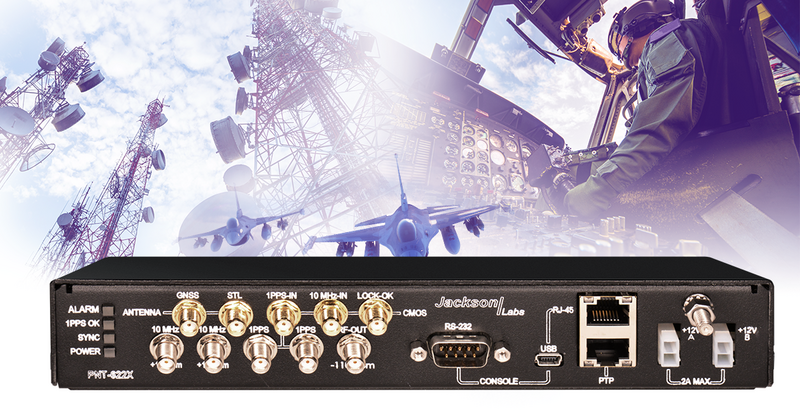
Viavi Solutions has unveiled the PNT-6200 Series Assured Reference for resilient positioning, navigation and timing (PNT). Viavi acquired Jackson Labs Technologies in November 2022.
The PNT-6200 Series Assured Reference provides resiliency and robust cybersecurity for critical infrastructure.
The compact system can supplement or replace GPS signals based on connectivity to the broadcast range of timing sources in the market including other GNSS satellites, and commercial satellite, terrestrial, wireline, and atomic clock services. The PNT-6200 Series will draw the timing signal from the most reliable source and use it as a replacement for the GPS input, enabling continuous operation.
The PNT-6200 Series will be showcased at Mobile World Congress in Barcelona, Feb. 27-March 2.
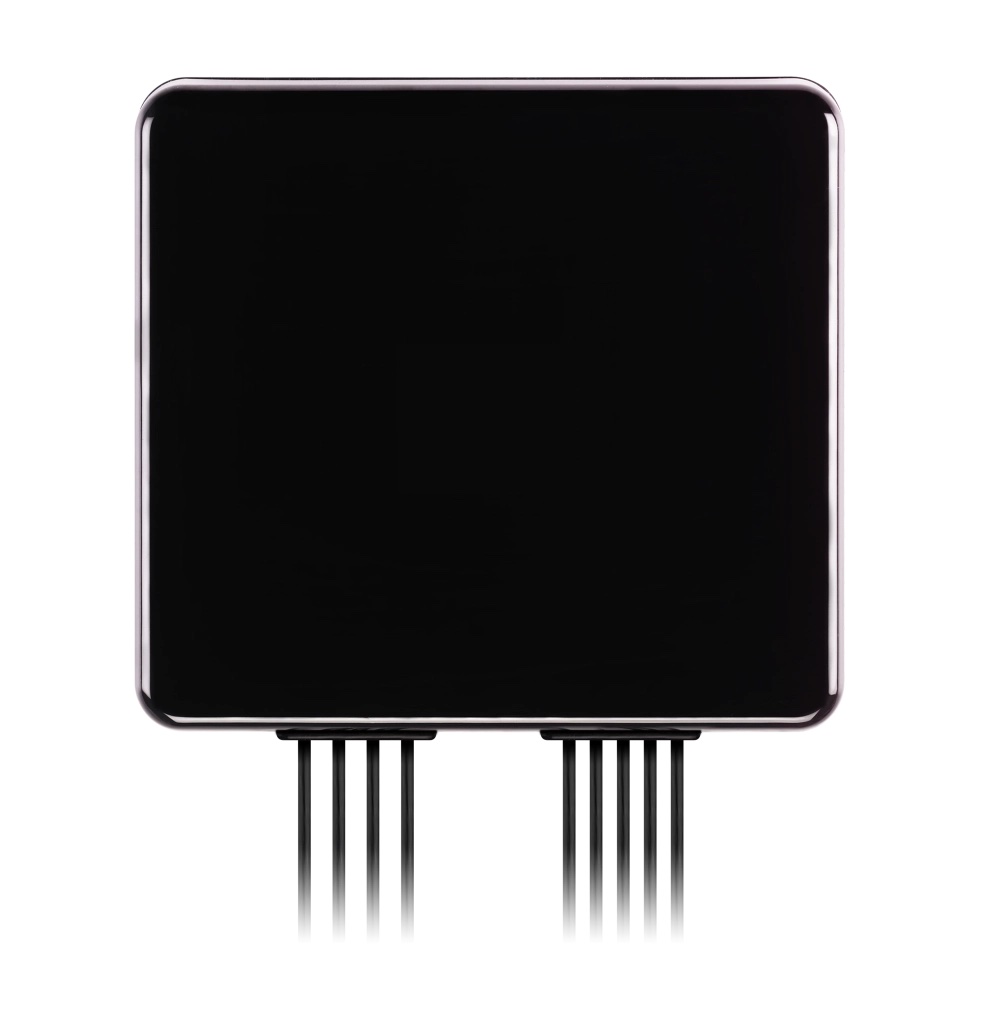
Taoglas announced its smallest 9-in-1 combination antenna with dual-band GNSS and high-performance 5G/4G, the Taoglas MA990 Guardian.
Taoglas made the announcement at Mobile World Congress (MWC) Barcelona 2022, which takes place Feb. 28–March 3; Taoglas is exhibiting at booth #5E32.
The Taoglas MA990 Guardian antenna is a small 9-in-1 combination antenna with dual-band GNSS (L1/L2) and globally supported cellular (5G/4G). It has been designed to support emerging market demand for modules that cover specific 5G/4G bands.
For example, two of its eight cellular MIMO antennas cover from 600 to 6,000 MHz, while another two are optimized for 3,000 to 6,000 MHz to cover high-band 5G and C-band/CBRS applications. The product is designed to operate on all carrier networks globally and is future-proofed to work with latest 5G routers in the market.
Housed in a low-profile, robust, IP67-rated waterproof, adhesive-mount external enclosure, the MA990 is designed for space-constrained, mission-critical applications, including asset and vehicle tracking, first- responder vehicles and high-definition video sources such as surveillance cameras.
The Taoglas MA990 also is highly customizable, including for any variation of antennas below 9-in-1 and the addition of Wi-Fi/single-band GNSS.
Rohde & Schwarz has expanded the capabilities of its R&S SMBV100A/B GNSS simulator and R&S CMW500 LTE network simulator to operate with Vector CANoe .Car2x, a software tool for simulation, development and test of V2X-based communication applications.
Image: Rohde & Schwarz
The solution enables engineers to easily verify critical end-to-end safety-related V2X scenarios in a lab environment. It uses the C-V2X software package for the R&S CMW500 to simulate the physical- and MAC-layer, transmitting and receiving data over the simulated PC5 interface. This covers ideal, faded and congested channel conditions to the device under test (DUT). In its current form, the solution supports both GNSS and PSSS/SSSS sidelink synchronization options.
Rohde & Schwarz and Vector have successfully demonstrated its solution, which is designed to configure and run traffic scenarios to comprehensively test the physical layer 3GPP Rel. 14 up to the application layer of C-V2X ECUs in a lab environment.
Rohde & Schwarz is demonstrating the test solution at Mobile World Congress 2019 in Barcelona in hall 6, booth 6C40, Feb. 25-28.
The automotive industry is evolving toward connected and autonomous vehicles that offer many benefits, such as improved safety, less traffic congestion, reduced environmental impact, and lower capital expenditure. With the trend to equip vehicles with 3GPP Release 14 C-V2X ECUs, peer-to-peer data transfer in ad-hoc networks between vehicles will be realized. All vehicles share location, speed and trajectory, enabling warnings regarding on-road dangers to be shared between drivers.
Applications cover use cases such as vehicle-to-vehicle (V2V) communication, data exchange with roadway infrastructure (V2I), and interaction with vulnerable road users such as pedestrians (V2P). Data communication is implemented in the 5.8 GHz and 5.9 GHz intelligent transportation system (ITS) spectrum bands.
Traffic scenarios
CANoe .Car2x offers a range of functions designed to configure and run traffic scenarios. This allows the stimulation of a C-V2X control unit according to a defined traffic situation that tests the implemented application in a structured manner.
The included Car2x Scenario Editor supports the creation of traffic scenarios using a graphical interface. CANoe .Car2x generates the corresponding ITS communication based on the test scenario. The scenario is then played back with the R&S CMW500 providing the radio access layer with the specific physical interface. This verifies data transmission and reception over the PC5 interface so that the functions of the ECU can be tested comprehensively.
The combined solution covers all layers – the complete stack, 3GPP Radio Access Layers for C-V2X Mode 4, region specific ITS protocol layers such as EU ITS-G5 and U.S. WAVE and the ITS application message sets.
This enables testing of specific use cases such as Emergency Electronic Brake Light (EEBL), Left-Turn Assist (LTA) or Intersection Movement Assist (IMA), as well as more complex scenarios with multiple simulated vehicles such as a congested highway.
Additionally, security mechanisms could also be verified running simulations with both valid and invalid signed certificates. On top of this CANoe supports all common automotive bus connectivity such as CAN, LIN, MOST, FlexRay and Automotive Ethernet, enabling the test engineer to analyze or stimulate the ECU within an entire system from their desk.
By extending the solution with the VN4610 interface from Vector, customers can access IEEE 802.11p and CAN (FD) networks as well. This enables users to analyze and test C-V2X and IEEE 802.11p (DSRC) communication and related applications with a single setup and a common user interface.
“C-V2X device testing through the application layer is a significant step towards achieving the goal of having fully connected vehicles to improve road safety,” said Anton Messmer, vice president of Mobile Radio Testers at Rohde & Schwarz. “Our efforts in developing and verifying C-V2X end-to-end application scenarios are enabling user equipment manufacturers and OEMs to reduce the time needed to roll out C-V2X technology on a worldwide basis.”
“CANoe .Car2x has a strong focus on testing V2X based protocols and ADAS applications. This combined solution, CANoe .Car2x with the R&S CMW500, enables our customers to stimulate the V2X ECU with real scenario data in order to perform tests from physical layer up to the application,” said Stefan Krauß, director of Tools for Network and Distribution Systems at Vector. “The collaboration on this solution shows what can be achieved when leading players from the automotive and telecommunication industries work hand in hand.”
Image: iStock.com/metamorworks via Bentley Systems
Nestwave has developed an ultra-low power, advanced GNSS solution for use in internet of things (IoT) applications.
Nestwave, a Paris-based startup, is demonstrating its new low-power, high-accuracy GPS IP at Mobile World Congress, being held Feb. 25-28 in Barcelona, Spain.
The software-based GNSS solution allows modem customers to add accurate position-based services to their modem platforms.
When integrated with an IoT modem such as NB-IoT, Cat M1, LoRa or Sigfox, the solution offers low-cost geolocation for emerging applications such as asset tracking, smart factories and smart cities, without the need for an external GNSS chip.
“After several years of development and based on a number of key signal processing breakthroughs, we believe Nestwave is well-positioned to provide a best-in-class solution for low-power IoT applications where position awareness is key,” said Rabih Chrabieh, Nestwave CEO. “We are excited to demonstrate our GPS solution, in collaboration with Cadence by leveraging their Tensilica Fusion F1 DSP platform at MWC this year.”
“The Fusion F1 DSP is gaining traction with customers as a platform for low-cost, power-sensitive IoT communications standards like NB-IoT,” said Gerard Andrews, director of marketing for Tensilica products at Cadence.
The Cadence Tensilica Fusion F1 DSP is designed for low-cost IoT applications requiring a single processor core that is proficient at both DSP and control-code workloads.
Developed on a highly configurable architecture, the Fusion F1 DSP is specifically designed to excel at “always-on” processing, including wake-on-voice and sensor fusion applications.
Additionally, the Fusion F1 DSP instruction-set architecture is very efficient at running narrowband wireless communications standards like BLE, Thread, Zigbee, 802.11ah, NB-IoT and GNSS.
Visit the Nestwave/Cadence demo at the Cadence booth at Fira Gran Via, hall 6, stand 6L34.
CEVA Inc. and Nurlink have introduced Nurlink’s NK6010 3GPP Rel.14 eNB-IoT system-on-chip (SoC), powered by the CEVA-Dragonfly NB2 IP solution.
The companies made the announcement in advance of Mobile World Congress, which takes place Feb. 25-28 in Barcelona, Spain.
According to the companies, NK6010 is a cost- and power-efficient NB-IoT system on chip (SoC) designed specifically to enable narrowband connectivity in massive internet of things (IoT) devices such as smart meters, wearables, asset trackers and industrial sensors.
The SoC, built around the CEVA-Dragonfly NB2 solution, incorporates an RF front-end, RF transceiver, cellular baseband, power management unit and application processor, all highly integrated to minimize the size and cost of the device.
The SoC includes an extremely low-power multi-GNSS subsystem, supporting GPS/Beidou/Galileo/GLONASS global navigation systems, to ensure highly-accurate device tracking and locating, worldwide, the companies said.
It also supports all NB-IoT frequency bands and major global carriers, ensuring smooth and rapid certification of devices on any NB-IoT commercial network around the world.
The CEVA-Dragonfly NB2 IP solution is a modular technology, composed of the CEVA-X1 IoT processor, an optimized RF transceiver, baseband, and a protocol stack to offer a complete Release 14 Cat-NB2 modem IP solution that significantly reduces time-to-market and lowers entry barriers.
It is a fully software-configurable solution and can be extended with multi-constellation GNSS and sensor fusion functionality. The IP includes a reference silicon of the complete modem design, including an embedded CMOS RF transceiver and PA, an advanced digital front-end, physical layer firmware and a protocol stack (MAC, RLC, PDCP, RRC, and NAS).
“We developed NK6010 to meet the exceptional demand for NB-IoT chipsets to power the multitude of new use cases and applications that narrowband cellular connectivity serves,” said Xiaohua Kong, Nurlink CEO. “The CEVA-Dragonfly NB2 enabled us to massively accelerate our time-to-market by providing many of the key building blocks for our SoC design, already silicon proven and pre-integrated.
“In addition, through the programmable nature of the Dragonfly solution, our engineering team were able to add our innovation during the communication system development and SoC customization,” Kong said. “This framework eventually helped us to create a truly differentiated product. Our path from licensing to silicon was achieved in under one year, and we’re now engaged with operators worldwide to certify our SoC.”
“NB-IoT has reached critical mass, with more than 60 operators around the world already supporting the standard and dozens more launching coverage imminently,” said Michael Boukaya, vice president and general manager of the wireless business unit at CEVA. “Now the drive towards ultra-low cost NB-IoT chipsets and modules has begun and Nurlink, powered by our CEVA-Dragonfly NB2 IP solution, is one of the early entrants into this fast growing space. We applaud their efforts to reach the market so quickly and look forward to monitoring their success.”
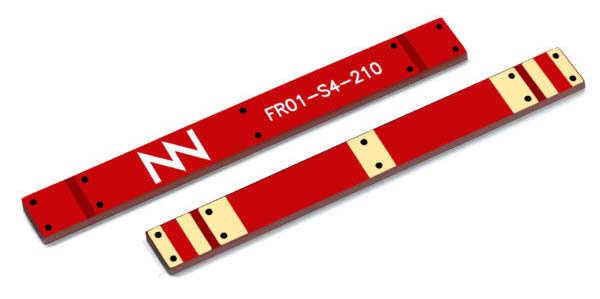
Fractus Antennas has launched a mobile antenna that enables coverage at 3G, 4G and 5G — the TRIO mXTEND chip antenna component.
The TRIO mXTEND has been specifically designed to provide flexibility to operate any required frequency band inside any wireless device.
It is capable of operating the main mobile communication standards, enabling worldwide coverage, as well as GNSS such as GPS, GLONASS and BeiDou (1561 MHz, 1575 MHz and 1598-1606 MHz) and the main short range wireless bands such as Bluetooth and Wi-Fi (2400-2500MHz and 4900-5875MHz) through the same antenna component.
The TRIO mXTEND is a modular, multiband and multi-port antenna component that enables top-quality worldwide coverage at any mobile communication standard. Its reconfigurable and off-the-shelf nature allows multiple architectures so the antenna component can be assembled into any mobile or IoT device.
It has been designed for providing mobile operation in three different frequency regions: 698-960 MHz, 1710-2690 MHz and 3400-3800 MHz. In addition, TRIO mXTEND is presented in an ultra slim component of 1 millimeter that enables easy placement into any device.
The Fractus Antennas team will be at Mobile World Congress in Barcelona, either at the venue or in Fractus Antennas Headquarters, which is based in the city. Those interested are invited to arrange a meeting.
Taoglas is launching a new RF Filter division specifically developed for Internet of Things (IoT) and mobile applications.
Taoglas, a provider of IoT and M2M antenna products, made the announcement at at Mobile World Congress Americas this week.
Taoglas aims to provide high-quality, small-form-factor, cost-effective and easy-to-implement RF filters.
The new filter division will feature a range of off-the-shelf filters for a variety of applications, including filters for emerging license-free bands used for IoT, L1/L2 and L1/L5 GNSS applications.
Taoglas can also work with customers to develop custom filter solutions.
“Today’s mobile and IoT applications require high-performance RF filters, in a form factor and cost that makes sense for our customers,” said Dermot O’Shea, co-CEO at Taoglas. “We’ve seen the frustrations our own engineers have had in quickly sourcing reliable components for active antenna and electronic designs. Taoglas is eliminating that frustration with its own filter division, applying the same principles for success that we’ve demonstrated with our antenna business.”
The filters are manufactured in Taoglas’ purpose-built production facilities in Taiwan, and shipped immediately anywhere worldwide. Support is available from any Taoglas location globally. Filters are available through regular Taoglas sales and distribution channels.
Barcelona’s Fira center hosted Mobile World Congress, a gathering of 105,000 industry participants.
By Kevin Dennehy Contributing Editor for LBS
The big takeaway from this year’s Mobile World Congress was the interest in location data from a growing number of vendors. Although still a small footprint in the cavernous halls of Barcelona’s Fira center, at least 33 companies displayed products and services related to indoor location, which was more than past years, said Bruce Krulwich, Grizzly Analytics founder and chief analyst.
“There are also more major multinational companies that are exhibiting indoor location, including Phillips, Panasonic and Cisco,” he said. “The growth in the area is clear.”
This year’s MWC also featured four different applications of indoor technology, Krulwich said.
“The MWC app included mapping and navigation based on Pole Star’s technology and also proximity marketing and notifications based on MOCA [customer engagement software],” he said. “The security staff had a security management system based on Situm technology,” he said. “The smart badges at the entrances used [Bluetooth low energy] to detect the phone moving through the turnstile.”
Rise of Ultrasonic
Ultrasonic sound was prominent, Krulwich said. “In the past there was a single company, MTI, using ultrasonic sound for positioning, but this year three new players are using ultrasonic: Marvelmind for highly accurate positioning, Yap for proximity and Prontoly for selective content and communication,” he said. “If the technology is effective in real-world deployments, it may be a big step forward in increasing accuracy using existing phone technologies.”
Modulated LED lighting, also known as visible light communication, is receiving more interest. “Phillips was demonstrating a solution in that space this year,” Krulwich said. “I2Cat also returned with an LED solution, and Oledcomm is a new entrant in that space.”
Although beacon prices have gone down, the key is indoor positioning’s scalability and solution maturity. “Many of the solutions shown at MWC addressed scalability, including Estimote with self-mapping beacons, indoo.rs with SLAM-based automated configuration and Situm with infrastructure-free positioning,” Krulwich said. “The solution maturity is evident from the number of full commercial deployments (not trials) by companies like Pole Star and indoo.rs,” he said.
Another trend is the increasing numbers of high-accuracy systems.
“Quuppa has shown highly accurate positioning at MWC for several years,” Krulwich said. “But this year they were joined by powerhouse Phillips and by newcomer Marvelmind. All three showed centimeter-level accuracy with very fast response, each with a very different technology.”
Samsung press conference had hundreds of journalists in attendance at MWC.
Indoor Location
The lack of indoor location vendor participation at January’s National Retail Federation BIG Show in New York is a cause for concern, Krulwich said.
“Indoor location has been expected to cross the chasm for years, and it’s still stuck among early adopters,” he said. “But recent improvements in accuracy and in the maturity of the solutions, with easier configuration and integration into back-end systems, should lead to more full commercial deployments and then larger adoption in retail. It is also important to note that retail is not the only application of indoor location. Asset tracking and customer analytics are both growing. We also see a growth in the number of companies developing practical solutions on top of existing technologies, such as MOCA, Qualigon and xAd.”
Quest for Data
Companies that aggregate location data found increased interest at MWC.
Teralytics, which processes data points using predictive algorithms, provides human behavior information based on location. The company is working with not only wireless carriers, but governments and others on smart-city initiatives worldwide, said Luciano Franceschina, Teralytics co-founder and CTO. “We are already working with different verticals, and not just the telco verticals themselves, who are using the location analytics. A top transportation planner in Germany scrutinized our system for a year and now uses it to plan and decide what infrastructure investments to make.”
The company is collecting billions of data points, and aggregating geolocation and demographics to assess human behavior globally. This allows a retailer to assess where to build the next store, or how much capacity a train line should handle. For municipal planners, the data shows what transit system stops are being used more than others, Franceschina said.
Virtual reality goggles were big again at MWC.
Other markets for Teralytics’ data are tourism, retail, hedge funds and automotive, said Lisa Peterson, Teralytics vice president.
“That could be location data that allows auto[makers] to use to see driver behavior,” she said. “A company like Marriott could see why their silver members aren’t upgrading to gold, because they can see their hotel usage patterns. The can see these consumer traits and target their members with better offers.”
The acquisition of location data is more reliable that research methods used by such companies as Gallup, which still uses phone surveys and other antiquated methods, Peterson said.
IoT Growing
Comtech Telecommunications showed off its Location Studio platform that allows customers to build or enhance cloud-based embedded and hybrid LBS applications. The platform includes modular suites with indoor and outdoor positioning, geolocation, fraud detection, maps, search, routing, navigation, real-time messaging and analytics, the company said.
The rise of Internet of Things (IoT) and location hasn’t surprised Comtech.
“My team moved into IoT because it’s impacting a lot of new areas,” said Keith Bhatia, Comtech senior vice president. “IoT objects come down to how cheap you can make the connection and make the device available during the early stages. The momentum is there.
However, the hype that every device will be connected is just not price feasible.”
Comtech is looking for that location price sweet spot when it comes to IoT, Bhatia said. “We are seeing a pull for cheap location. We are seeing significant strides from last year to this year.”
Location company PoLTE partnered with ACS at MWC. ACS will use PoLTE’s LTE-based location tracking to allow business in the manufacturing, industrial and transportation industries to track assets, goods, workers and devices.
PoLTE, which delivers location services both indoors and outdoors, said that while Wi-Fi, Bluetooth and GPS have deficiencies when tracking LTE devices, its system leverages native cellular signals to geolocate 4G and 5G devices. PoLTE uses an advanced radar location technique to transform reference signals in LTE transmissions into precise location.
The company started focusing on LTE positioning nearly seven years ago, said Russ Markhovsky, PoLTE founder.
“Customers are going to be able to embed the available service into platforms and devices next year,” Markhovsky said. “We are undergoing trials and proofs of concepts and are connected to wireless operator’s network test platforms.”
The location information derived from PoLTE’s network is valuable to retailers and others who track a consumer’s spending habits, said John Dow, PoLTE president and chief operating officer
“LTE works everywhere,” he said. “You can track a user’s behavior when they went to Walmart, then went home,” he said. “It’s not a Swiss-cheese approach, as there is persistent location information. Retailers can receive decision-making data that is valuable compared to what’s out there today.”
Other Tech Finds IoT Location Niche
Another technology that is gaining traction with IoT companies is low power, wide area (LoRa) that leverages time difference of arrival (TDOA) triangulation to calculate the position of a device. One company, France-based Actility, says the system works with three gateways that receive data from a device, timestamps it and forwards it to a geolocation solver.
The Actility network geolocation solver collects the timestamps to estimate the device’s position using triangulation. However, a precise time-synchronization mechanism, usually using GPS, is necessary to achieve nanosecond precision time measurement.
“The number of agriculture and tracking applications are growing [for LoRa technology]. We are showing its applicability around Barcelona with a geofence, without GPS, through TDOA time stamping through different gateways,” said Christophe Francois, Actility senior vice president, marketing and digital. “Actility provides a different type of location services in that companies sometimes don’t need to know when the asset is not moving. This might mean to see if an asset like valuable copper in a yard is still there. You don’t need GPS to do that.”
Data Playing Large Role in Fleet Market
Geotab sees continued growth in 5G rollouts and data as key drivers to its European fleet transport market strategy, said Colin Sutherland, Geotab executive vice president, sales and marketing.
“Telefónica has been a great partner here [in Europe]. We continue to try to keep a pulse on the market over here and evangelize our data-centric telematics and 5G enablement,” he said. “We are also very focused on cyber security to keep cars and trucks safe on the road.”
Sutherland says he believes 2019–22 will see continued growth in the fleet market, with focus on data.
“Back in the day, companies focused on either a diagnostic bundle, or a GPS-based [fleet management] bundle,” he said. “What will happen in our industry is a growth of bundled software. There will be a lot of data play with the new business models and suite-specific applications, including data sharing.”
Observations from MWC
Conference organizers estimated more than 105,000 attendees went to MWC this year. Last year, I said Barcelona was getting too small for the conference, which is has turned into a mini-CES. This year was slightly larger, with the requisite traffic jams, high taxi cab prices, crazy high hotel room prices, unreal crowds and lines. One organizer took offense to my criticism of this huge growth, saying that I had no solutions. Well, yeah, though I love Barcelona as a venue, maybe it’s time to move it to a larger city?
MWC touts itself as the mobile event of the year. Barcelona crows that it is the most tech-savvy town in Europe. How can that be if Uber and Lyft aren’t even allowed and the alternative is long lines with price-gouging taxis? As a reporter with Asian heritage, I get the business, literally, when I get into a cab (read: inflated prices).
The high cost of hotel rooms has forced companies to use Airbnb and other sites to get lodging. Sad thing is that lodging may be in Badalona or Sitges, which require long train rides and eat up precious conference time. Again, maybe it’s time to either move it, or talk to city officials about getting more rooms in town.
Despite all of my criticism about the show, it still is one where you can meet people, network and manage the huge halls, which are positioned in one large building. You can’t do that at CES anymore as meetings and exhibits are spread over the convention center and various hotels. You may never see an executive or contact again after one meeting at CES, but MWC still has the feel that you can still rub elbows with some of the bigwigs at either the Fira or offsite meetings and receptions.
Global navigation satellite system (GNSS) technology found its way into products ranging from autonomous vehicles to wearables at this year’s Mobile World Congress in Barcelona, Spain.
One company says it is tailoring a GNSS receiver chip to meet the demands of mobile devices that require high levels of speed and position accuracy. Thalwil, Switzerland-based u-blox said its new low-power UBX-M8230-CT GNSS receiver chip can not only be used for smartwatch development, but for tracking people, animals and assets.
“The highlight of the chip is that it has much better balance, while maintaining the accuracy of a traditional, full-power receiver,” said Florian Bousquet, u-blox market development manager. “It can work in the most difficult urban canyon environments. It works well in sports watches, smartwatches, activity trackers and other wearables — and just about anything portable that has a battery.”
Bousquet said the chip, in what the company calls a Super-E mode, uses GPS with either GLONASS or BeiDou. This mode allows batching location data on the chip, which reduces power consumption, he said.
Bousquet said the chip is available now, in an evaluation kit, for around $120. He said the chip will be manufactured in volume this summer.
It took u-blox a year-and-a-half to develop the GNSS chip, Bousquet said. “It took time for our development team to optimize the system and field test the infrastructure to make sure the product performed in different scenarios and environments.”
Another company, Racelogic, exhibited its LabSat 3 Wideband GNSS simulator, which is used by u-blox and others to help test and develop products. Some applications include drones, autonomous vehicles, survey equipment, personal monitoring devices, aerospace and end-of-the-line product testing, the company said.
The newer L2C, L5 and L1C signals give companies the opportunity to develop products that are compatible with new receivers as they come to market, said Mark Sampson, LabSat product/sales manager.
The company also showed off its SatGen v3 simulator software that allows users to create a data file to be replayed on the LabSat GNSS simulator. The software allows companies to define a complicated route, and then import it into the software.
Company tests eCall and ERA-GLONASS modules
Both the European Union (EU) and Russian Federation are requiring governments to have intelligent telematics-based safety systems. In case of a serious accident, these systems automatically call for local medical services.
Technology to meet the requirements of eCall and ERA-GLONASS include an antenna, GNSS receiver, crash sensors and other components.
To reproduce end-to-end and standard-compliant testing of the eCall and ERA-GLONASS modules, Rohde & Schwarz offers two products. One is the CMW-KA094 eCall application software. The other is the CMW-KA095 extension for ERA-GLONASS to simulate a public safety answering point (PSAP) to emulate a cellular network in a lab.
“It’s pretty important testing because of the safety of life. We have set up implementation of it in our labs,” said Christian Hof, Rohde & Schwarz senior product manager for mobile radio testers.
CMW500 simulator by Rohde & Schwarz. Photo: Rohde & Schwarz
During testing, governments and companies can use the CMW500 platform, which identifies Internet of Things (IoT) and mobile communications devices’ IP connection security issues, Hof said.
The company believes, since many IoT platforms are proprietary as standardization is still in progress, security gaps are frequently reported.
Spirent rolls out new simulator
Spirent Communications displayed its Elevate IoT Device Test Solution, a new cellular test designed to support IoT applications. These applications include end-to-end cloud server connectivity, security-vulnerability assessment and battery-life measurement.
The new unit is available through the company’s Spirent Elevate platform, which addresses areas affected when designing 3G, LTE and new narrowband wireless technologies for IoT devices.
Overall, Spirent is finding many use cases and applications in the IoT and mobile industry.
“We are finding that smaller companies developing software and services want to test GNSS, but don’t have the capabilities to do so. These could include small projects such as people and pet trackers,” said Simon Loe, Spirent’s head of marketing solutions and services. “We are trying to democratize the technology. Another trend we are seeing is growing importance on GNSS in network timing.”
Not everything is about drab simulation. Far from it. Spirent last year teamed with Aston Martin Racing to evaluate automotive technologies on the 2016 V8 Vantage GTE race cars.
This includes the accuracy and performance of GPS receivers and interference monitoring, said Julian Kemp, Spirent product manager, custom solutions.
Antenna market for IoT, autonomous vehicles robust
Taoglas is offering GNSS antennas that support IoT products, unmanned aerial vehicles (UAVs) and future autonomous vehicles, said Ronan Quinlan, company co-founder.
The company is offering lightweight antennas for mass-market unmanned UAVs, which had a growing presence at Mobile World Congress this year.
The future markets for Taoglas will be in connected and autonomous vehicles, Quinlan said. “We found out years ago that we missed out on the rise of 2G, but we did not miss the rise of 4G. The advent of 5G and GNSS will lead to the development of the autonomous vehicle,” he said.
Antenna costs associated with the rise of autonomous vehicles will have to be reduced, Quinlan said. “Some antennas that were $100 solutions have to go down to $20 solutions once they get into a car,” he said.
In other Mobile World Congress news:
Fraunhofer IIS displayed its Enhanced Voice Services (EVS), the Third Generation Partnership Project (3GPP) communication protocol designed specifically for voice over LTE (VoLTE) services.
Telit said it is expanding its relationship with Tele2 on Pan-European long-term evolution (LTE) IoT connectivity services. Telit and Tele2 now offer custom data plans with predictable pricing, no hidden fees or roaming charges for high bandwidth IoT applications, the company said. Services include video monitoring, digital signage or real-time asset tracking.
Spirent Communications is now offering the Elevate IoT Device Test Solution, a new cellular test solution designed to support a wide range of testing areas applicable to Internet of Things (IoT) applications, including end-to-end cloud server connectivity, security vulnerability assessment and battery-life measurement.
The announcement was made at Mobile World Congress, which is taking place Feb. 27 to March 2 in Barcelona, Spain.
The compact and flexible device test solution, available via the Spirent Elevate platform, addresses critical areas that are affected when designing 3G, LTE, and upcoming narrowband wireless technologies into IoT devices.
Innovative IoT developers are emerging worldwide with many of their applications reliant on communicating via a cellular network. Cellular deployment has several benefits including higher guaranteed service quality, more robust air interface security, and broader coverage availability. Yet designing IoT devices can present a myriad of complex challenges, especially when cellular connectivity enters the equation.
Testing on a live network has several limitations: data traffic is not visible between the device and cloud server; the appropriate live network may not be deployed where the development takes place; and there is no ability to control network settings such as power levels.
Spirent Elevate provides easy access to a controllable, lab-based testing environment, allowing developers to explore the special challenges a cellular network presents in a repeatable manner.
A number of recent events, including widespread Distributed Denial of Service (DDoS) attacks, has illustrated the very real exposure of IoT device security, highlighting the immediate need for developers to ensure devices are protected from known baseline vulnerabilities.
The Elevate IoT test solution facilitates access to Spirent SecurityLabs services, including dedicated teams of experienced security professionals offering comprehensive scanning, penetration testing and monitoring services for embedded devices.
Many IoT devices require operation in hard-to-reach places for extremely long periods of time while in potentially unforgiving environments, making it imperative that batteries perform as expected under variable conditions. The Elevate IoT Device Test Solution allows developers to accurately determine predictable battery life in real-world conditions with actual usage profiles.
“The Internet of Things is here to stay — it represents a cultural and technology revolution, and has serious implications for security,” said Jeff Wilson, research director and advisor, cybersecurity technology, at analyst firm IHS. “The post-IoT threat landscape is complicated, and the consequences of attacks are increasingly severe. If a device is compromised, it can either fail to work itself, or introduce threats into a wider network, or both; the Mirai and LizardStresser IoT botnets used to launch DDoS attacks were just the tip of an enormous iceberg. Successfully managing connectivity, technology and risk will be vital to IoT implementations from this point forward.”
Spirent’s IoT Device Test Solution is an integrated suite of tools centered in a compact network emulator that brings a repeatable cellular test bed into any hardware or software lab, providing the ability to replicate service providers’ wireless networks in a portable desktop system.
When used as part of an expanded Spirent solution that can simulate multiple types and levels of security attacks, the system allows users to accurately understand how a device will hold up against each one and what factors may be impacted.
Emulating as many conditions as possible helps developers understand exactly how devices, including factors such as battery life, may be impacted in the real world.
“For IoT developers, many of them new to cellular technology, it can be dauntingly complex to navigate new technologies, manage power performance challenges, and care for imminent cybersecurity threats,” said Saul Einbinder, vice president of new venture development at Spirent Communications. “Our aspiration is to help developers, operators, and service providers optimize their IoT solutions and get to market faster, while also staying considerate of the budget constraints of IoT device realization.”