Author: GPS World Staff

  • Averna acquires US-based Nexjen Systems

    Averna acquires US-based Nexjen Systems

    NexJen-logoAverna, a developer of test solutions and services for electronics device-makers, has acquired 100 percent of U.S.-based Nexjen Systems for an undisclosed amount.

    Nexjen Systems is a full-service integrator with expertise in mechanical test systems, RF automated test equipment, industrial control, measurement and monitoring systems, and automation control panels.

    Nexjen Systems, a division of Jenkins Electric Company, was created in 2005 to service Jenkins Test & Measurement customers in the southeast region. Located in Charlotte, North Carolina, Nexjen Systems is a National Instruments Alliance Partner.

    Nexjen Systems’ president, Darren Lingafeldt, and vice president, Brian Esque, will continue to participate in the day-to-day operations and expansion plans as Averna employees.

    “Averna is extremely pleased to announce the acquisition of Nexjen Systems and welcomes its employees to the team,” stated François Rainville, vice president of sales and marketing for Averna. “Nexjen Systems represents an exceptional opportunity to expand Averna’s presence in the Eastern USA in each of our major market segments as well as tap new resources, solutions, and expertise to offer an extended Test & Quality Solution portfolio.”

    Darren Lingafeldt, president for Nexjen Systems, added, “We are delighted to join the Averna team and provide our long-standing customers with additional opportunities to deliver their test and quality projects worldwide as well as benefit from Averna’s renowned global support.”

  • Russia issues stamp to honor GLONASS

    Russia issues stamp to honor GLONASS

    A Russian stamp honoring GLONASS was issued July 5.
    A Russian stamp honoring GLONASS was issued July 5.

    A new Russian Federation postage stamp features the GLONASS-­K satellite and graphic icons representing the main application areas of the satellite navigation system’s services. The stamp and first-day cover were officially issued on July 5.

    First-day postmarks honoring GLONASS are also available for Moscow and the city of Zheleznogorsk, Krasnodar Krai.

    The full orbital constellation of GLONASS consists of 24 satellites, operating in three orbital planes, with eight evenly spaced satellites on each.

    First-day cover honoring the GLONASS constellation.
    First-day cover honoring the GLONASS constellation.

    Design: A. Povarikhin.
    Face value: 19 RUB.
    Size of stamp: 36.5×29 mm, size of sheet: 100×150 mm.
    Form of issue: sheet with illustrated margins of 8 (2×4) stamps. Circulation: 280,000 stamps (35,000 sheets).

  • Chinese BeiDou plans outlined in new white paper

    A new white paper outlines plans for the Chinese BeiDou constellation, including its plans for international cooperation and exchanges.

    The State Council Information Office of the People’s Republic of China published the white paper, which is titled “China’s BeiDou Navigation Satellite System,” in June.

    “Navigation satellite systems are the commonwealth of the development of mankind, and also a space infrastructure which can provide all-time precise time and space information,” according to the report’s conclusion. “China will continue its BDS construction, improve the system performance, and fulfill its service commitments.”

    Following is the full text of the white paper.


    China’s BeiDou Navigation Satellite System

    The State Council Information Office of the People’s Republic of China
    June 2016


    Preface

    The BeiDou Navigation Satellite System (hereinafter referred to as the BDS) has been independently constructed and operated by China with an eye to the needs of the country’s national security and economic and social development. As a space infrastructure of national significance, the BDS provides all-time, all-weather and high-accuracy positioning, navigation and timing services to global users.

    In the late 20th century, China started to explore a path to develop a navigation satellite system suitable for its national conditions, and gradually formulated a three-step strategy of development: to complete the construction of the BDS-1 and provide services to the whole country by the end of 2000; to complete the construction of the BDS-2 and provide services to the Asia-Pacific region by the end of 2012; and to complete the construction of the BDS and provide services worldwide around 2020.

    Along with the development of the BDS project and service ability, related products have been widely applied in communication and transportation, marine fisheries, hydrological monitoring, weather forecasting, surveying, mapping and geographic information, forest fire prevention, time synchronization for communication systems, power dispatching, disaster mitigation and relief, emergency search and rescue, and other fields. These products are gradually penetrating every aspect of social production and people’s life, injecting new vitality into the global economy and social development.

    Navigation satellite systems are public resources shared by the whole globe, and multi-system compatibility and interoperability has become a trend. China applies the principle that “The BDS is developed by China, and dedicated to the world” to serve the development of the Silk Road Economic Belt and the 21st Century Maritime Silk Road (“Belt and Road Initiative” for short), and actively pushes forward international cooperation related to the BDS. As the BDS joins hands with other navigation satellite systems, China will work with all other countries, regions and international organizations to promote global satellite navigation development and make the BDS better serve the world and benefit mankind.

    I. Goals and Principles of Development

    China lays store by the construction of the BDS, ranking it one of its national key technical projects that supports its innovative development strategy.

    (I) Goals of Development

    Building a world-class navigation satellite system to meet the needs of the country’s national security as well as economic and social development, and providing continuous, stable and reliable services for global users; developing BDS-related industries to support China’s economic and social development, as well as improvement of people’ s living standards; and enhancing international cooperation to share the fruits of development in the field of satellite navigation, increasing the comprehensive application benefits of Global Navigation Satellite System (GNSS).

    (II) Principles of Development

    China upholds the principles of “independence, openness, compatibility and gradualness” in the BDS construction and development.

    – By “independence,” it means to uphold independent construction, development and operation of the BDS, and acquire the capability to independently provide satellite navigation services to global users.

    – By “openness,” it means to provide open satellite navigation services free of charge, and encourage all-scale, multilevel and high-quality international cooperation and exchange.

    – By “compatibility,” it means to enhance BDS compatibility and interoperability with other navigation satellite systems, and encourage international cooperation and exchanges, so as to provide better services to users.

    – By “gradualness,” it means to carry out the BDS project step by step, enhance BDS service performance, and boost the development of satellite navigation industry in a comprehensive, coordinated and sustainable manner. 

    II. Development of the BDS

    Based on its national conditions, China has independently developed the BDS step by step with constant improvement.

    (I) Three-Step Strategy of Development

    – The first step is to construct the BDS-1 (also known as BeiDou Navigation Satellite Demonstration System). The project was started in 1994, and the system was completed and put into operation in 2000 with the launching of two Geostationary Earth Orbit (GEO) satellites. With an active-positioning scheme, the system provided users in China with positioning, timing, wide-area differential and short message communication services. The third GEO satellite was launched in 2003, which further enhanced the system’s performance.

    – The second step is to construct the BDS-2. The project was started in 2004, and by the end of 2012 a total of 14 satellites – 5 GEO satellites, 5 Inclined Geosynchronous Satellite Orbit (IGSO) satellites and 4 Medium Earth Orbit (MEO) satellites – had been launched to finish the space constellation deployment. Based on a technical scheme which was compatible with the BDS-1, the BDS-2 added the passive-positioning scheme, and provided users in the Asia-Pacific region with positioning, velocity measurement, timing, wide-area differential and short message communication services.

    – The third step is to construct the BDS. The project was started in 2009 to inherit the technical schemes of both active and passive services. The goal is to provide basic services to the countries along the Belt and Road and in neighboring regions by 2018, and to complete the constellation deployment with the launching of 35 satellites by 2020 to provide services to global users.

    (II) Main Composition of the BDS

    The BDS is mainly comprised of three segments: space segment, ground segment and user segment.

    – The space segment. The BDS space segment is a hybrid navigation constellation consisting of GEO, IGSO and MEO satellites.

    – The ground segment. The BDS ground segment consists of various ground stations, including master control stations, time synchronization/uplink stations, and monitoring stations.

    – The user segment. The BDS user segment consists of various kinds of BDS basic products, including chips, modules and antennae, as well as terminals, application systems and application services, which are compatible with other systems.

    (III) Characteristics of the BDS

    The BDS development follows a model of developing regional service capacities, then gradually extending the service globally. This practice has enriched the development models for navigation satellite systems worldwide.

    The BDS possesses the following characteristics: First, its space segment is a hybrid constellation consisting of satellites in three kinds of orbits. In comparison with other navigation satellite systems, the BDS operates more satellites in high orbits to offer better anti-shielding capabilities, which is particularly observable in terms of performance in the low-latitude areas. Second, the BDS provides navigation signals of multiple frequencies, and is able to improve service accuracy by using combined multi-frequency signals. Third, the BDS integrates navigation and communication capabilities for the first time, and has five major functions – real-time navigation, rapid positioning, precise timing, location reporting and short message communication services.

    (IV) Improvement of BDS Performance

    To meet the increasing user demand, BDS technical research and development in the areas of satellites, atomic clocks and signals will be strengthened, and a new generation of navigation, positioning and timing technologies will be explored to improve service performance.

    – Providing global services. China will launch new-generation navigation satellites, develop airborne atomic clocks with enhanced performance, further improve the performance and lifetime of satellites, and build more stable and reliable inter-satellite links. It will broadcast additional navigation signals, and enhance the compatibility and interoperability with other navigation satellite systems, so as to provide better services for global users.

    – Strengthening service capabilities. China will establish a grounded test and validation bed to accomplish the full coverage of tests and validation for space and ground equipment; continue to build and improve satellite based and ground based augmentation systems to substantially enhance BDS service accuracy and reliability; optimize the technical system of location reporting and short message communication to expand user volume and service coverage.

    – Maintaining spatio-temporal reference. The BDT is related to the Coordinated Universal Time, and the time bias information is broadcast in the navigation message. China will push forward the clock bias monitoring with other navigation satellite systems, and improve their compatibility and interoperability. It will develop a BDS-based worldwide location identification system, increase the interoperability between BDS coordinate frame and that of other navigation satellite systems, and constantly refine the reference frame.

    III. Reliable and Safe Satellite Navigation Services

    China is committed to ensuring the safe and reliable operation of the BDS by taking multiple measures, and to providing continuous, stable and reliable open services to users free of charge.

    (I) Ensuring Safe and Reliable BDS Operations

    – Improving the management mechanism on operation. Perfecting a normalized multi-party response mechanism for BDS space segment, ground segment and user segment. Continuously enhancing the capability of assurance to manage the operation of large-scale constellations.

    – Establishing a GNSS monitoring and assessment network. Constructing an international GNSS Monitoring and Assessment System, actively implementing international cooperation, extensively exploiting international resources, carrying out monitoring and assessment of the constellation status, signal accuracy, signal quality and service performance of the BDS at every scale, and providing references for users’ applications.

    – Taking a redundant and backup approach. Adopting a satellite backup strategy both in-orbit and on-ground to reduce and avoid the effects of emergent in-orbit satellite fault affecting service performance. Redundant and backup design is adopted to enable ground facilities to eliminate weak links, and to enhance BDS reliability.

    (II) Providing Open Services Free of Charge

    Currently, B1I and B2I open service signals are being broadcast by the operating BDS-2 to provide open services to the Asia-Pacific region free of charge. The services cover an area extending 55 degrees North-55 degrees South and 55 degrees East-180 degrees East, with positioning accuracy less than 10 meters, velocity measurement accuracy less than 0.2 meter per second, and timing accuracy less than 50 nanoseconds.

    (III) Disseminating BDS Information in a Timely Manner

    – Publishing BDS documents related to open services and signals to provide inputs for global BDS product development efforts. The Interface Control Document of B1I and B2I signals has been published, which defines the interface specifications between the BDS-2 satellites and user terminals. It specifies the signal structures, basic characteristics, ranging codes, NAV messages and other contents. The Open Service Performance Standard has been published, which defines the service coverage area, accuracy, continuity, availability, and other performance indexes of the BDS-2. In the future, related documents will be updated and published in step with BDS construction and development.

    – Establishing a multi-channel information dissemination mechanism. China holds news conferences when appropriate to disseminate important information about BDS development, and releases the latest news of the system in a timely manner through the official BDS website (www.beidou.gov.cn) from the aspects of system construction, operation, application, and international cooperation. It also issues notifications worldwide in advance before carrying out plans which might affect user services.

    (IV) Protecting the Utilization of Radio-Navigation Satellite Frequency Spectrum

    – Protecting the radio-navigation satellite frequency spectrum according to law. China protects the utilization of BDS frequency spectrum, and ensures the safety of BDS operation and BDS users pursuant to the national laws and regulations regarding the radio frequency spectrum.

    – Firmly rejecting harmful interference. China prohibits the production, sale and use of illegal interference devices, investigates and punishes in accordance with the law any hostile interference actions which affect the system operations and services.

    IV. BDS Application and Industrial Development

    China strives to enhance BDS application development, in an effort to build a BDS industrial chain which comprises the basic products, application terminals, application systems and operational services, keeps strengthening BDS-related industrial supporting, promotion and innovation systems, continuously improves the industrial environment, expands the application scale for integrated development, and increases the economic and social benefits of the satellite navigation industry.

    (I) Establishing an Industrial Supporting System

    – Industrial policies. China has formulated development plans for the satellite navigation industry, making overall arrangement for medium- and long-term satellite navigation industrial development, and encourages competent departments and local governments to enact relevant policies to support BDS application and industrial development.

    – Equitable market environment. China is making efforts to build a development environment for the satellite navigation industry marked by orderly competition, and increase the efficiency and effectiveness of resource allocation. It encourages and supports domestic and overseas organizations, including scientific research institutions, enterprises, colleges, universities and social organizations, to actively develop BDS applications, and fully release market vitality.

    – Standardization process. In 2014 the National Technical Committee on BeiDou Satellite Navigation of Standardization Administration of China was established, and the BeiDou Satellite Navigation Standard System was set up, which has been constantly improved. China promotes the standards verification and implementation, and expedites the formulation and revision of standards which are fundamental, generally applicable and in urgent need, so as to enhance the quality and benefits of the procedure-based development of satellite navigation.

    – Product quality system. China is working to establish and improve a public service platform for satellite navigation product quality assurance. It also actively promotes third-party quality test, type approval and authentication efforts of BDS basic products used in the security sector and application products in key fields. It is regularizing satellite navigation application services and operations, and cultivating the BeiDou brand. It aims to gradually establish satellite navigation product test and authentication institutions, strengthen admissibility of third-party certification, promoting the upgrading of the core competitiveness of BDS products on all scales, and pushing forward BDS applications in line with international conventions.

    – Comprehensive service system of location data. China welcomes commercial operation to be introduced to help build the basic platform of location service based on its BDS augmentation systems, which will have extensive coverage of application fields and interconnections, and provide support services to different regions and industries and to public customers.

    (II) Establishing an Industrial Application Promotion System

    – Application in key sectors. Great efforts are being made to promote the application of BDS technologies and products, which are compatible with other systems, in the key sectors related to national security and economy, to provide important assurance for the steady and safe running of the national economy.

    – Industrial and regional applications. China is pushing forward close integration between satellite navigation and each industry in the national economy, carrying out demonstrations of BDS industrial applications, formulating comprehensive application solutions for industries, and promoting transformation and enhancement in the areas of transportation, national land resources, disaster prevention and reduction, agriculture, forestry and water conservancy, surveying and exploration, and emergency response and rescue. It encourages BDS regional application demonstrations to meet the requirements of the state strategies on regional development, such as the “Coordinated Development for the Beijing-Tianjin-Hebei Region,” the building of “Yangtze River Economic Zone” and the development of smart cities. It is also promoting commercial and large-scale BDS applications, and enhancing BDS-related industries, as well as regional economic and social development.

    – Mass market application. The goal is to produce miniaturized, low power-consuming and highly-integrated BDS-related products, oriented to the mass market in the sectors of smart phones, vehicle-borne terminals and wearable devices. The focus is on pushing forward the adoption of satellite navigation and positioning functions based on the BDS and other compatible systems as a standard configuration in the fields of vehicle-borne and intelligent navigation, and promoting diversified applications in social services, transportation, caring for vulnerable groups, and smart cities.

    (III) Establishing an Industrial Innovative System

    – Research and development of basic products. To make breakthroughs in key technologies, China is developing chips, modules, antennae and other basic products based on the BDS and other compatible systems, and fostering an independent BDS industrial chain.

    – Establishment of an innovation system. China encourages and supports the construction and development of key laboratories for satellite navigation application technologies, research centers of engineering (technology), technology centers of enterprises, and other innovative bodies, enhances the capacity of engineering experiment platforms and achievement transformation platforms, supports relevant enterprises, and makes more efforts to protect intellectual property rights, so as to form a technology innovation system which relies on the enterprise as the main body and combines the efforts of universities, research institutes and application.

    – Integrated industrial development. China encourages the integrated development of the BDS and Internet+, big data, and cloud computing, supports the integrated positioning and innovative utilization of satellite navigation together with mobile communications, WLAN, pseudo-satellites, ultra-wide band and Ad Hoc Network signals, promotes integrated development of satellite navigation and emerging industries such as the Internet of Things, geographic information, satellite remote sensing and communication, and mobile Internet, and encourages people to start their own businesses and make innovations, so as to vigorously upgrade the innovation capability of the industry. 

    V. International Cooperation and Exchanges

    China will push forward the international development of the BDS, actively carry out international cooperation and exchanges in this field, so as to serve the Belt and Road Initiative, promote the development of global satellite navigation, and enable the BDS to serve the world and benefit mankind better.

    (I) Strengthening Compatibility and Joint Applications with Other Navigation Satellite Systems

    China actively pushes forward the cooperation and exchanges between the BDS and other navigation satellite systems in the fields of system construction and application from all perspectives, strengthening compatibility and interoperability, achieving resource sharing, complementarity and technology advancement, improving the services of navigation satellite systems, and providing users with more qualified, diversified, safe and reliable services.

    (II) Utilizing Frequency and Orbital Slot Resources According to International Rules

    As limited and valuable natural resources, frequencies and orbital slots provide a critical foundation for the development of navigation satellite systems. Adhering to the International Telecommunication Union (ITU) rules, China works to facilitate coordination of BDS frequencies and orbital slots through negotiations, actively participates in the research and formulation of ITU rules and other relevant activities, and expands radio-navigation frequency resources through cooperation with other nations. Since 2000 China has held effective coordination activities on more than 300 satellite networks with more than 20 countries, regions and international organizations.

    (III) Promoting the Ratification of the BDS by International Standards

    The ratification of the BDS by international standards is a milestone for the integration of the BDS into international systems. China spares no effort to get the BDS ratified by the International Organization for Standardization and other international organizations in the industrial and professional application sectors. Currently, positive efforts are being made to advance the recognition of the BDS in the International Civil Aviation Organization, International Maritime Organization, Third-Generation Mobile Communication Standard Partnership Project, and other organizations. China advocates the involvement of enterprises, scientific research, colleges and universities in the formulation of satellite navigation terminals and application standards. In November 2014 the BDS gained recognition from the International Maritime Organization.

    (IV) Participating in Multilateral Activities in the Field of International Satellite Navigation

    The BDS is one of the major GNSS providers, and China actively participates in international satellite navigation affairs, attends the activities held by the International Committee on Global Navigation Satellite Systems (ICG) and other relevant international organizations, supports academic exchanges and cooperation in this area, and promotes satellite navigation applications with the contribution of the BDS. China actively takes part in relevant tasks within the orbit of the United Nations, successfully held the Seventh Meeting of the ICG in 2012, when the proposals for the international GNSS Monitoring and Assessment and the BDS/GNSS Application Demonstration and Experience Campaign were initiated, and the Joint Statement of Global Navigation Satellite Systems for serving the whole was issued. The China Satellite Navigation Conference is held annually, and plays a positive role in the development of satellite navigation technologies and applications worldwide.

    (V) Promoting International Satellite Navigation Applications

    – To intensify publicity and popularization in this field, China has implemented the “BDS Tour” series of events, pushed forward the establishment of BDS Centers to enable better understanding of the BDS. BDS Centers have been jointly set up in a number of nations. The BeiDou International Exchange and Training Center has been opened, and a demonstration platform for education and training in the field of satellite navigation has been set up. In addition, academic education, summer schools, short-term training courses and symposiums, and other international education and training activities have been regularly held.

    – To advance and implement internationalization projects, China is promoting research and consultancy services regarding the policies, markets, laws and finance related to international satellite navigation applications, and improving comprehensive international service capabilities. In line with the Belt and Road Initiative, China will jointly build satellite navigation augmentation systems with relevant nations, provide highly accurate satellite navigation, positioning and timing services, improve the overseas BDS service performances, and promote international applications of navigation technologies. China will also carry out application demonstrations in the fields of transportation, tourism, maritime application, disaster reduction and relief, and agriculture, and boost application on a large scale, through establishing an operation and service platform for highly accurate satellite navigation, positioning and timing services.

    Conclusion

    Navigation satellite systems are the commonwealth of the development of mankind, and also a space infrastructure which can provide all-time precise time and space information. They promote the development of emerging industrial clusters that are technology- and knowledge-intensive with huge growth potentials and sound comprehensive benefits, thus becoming critical support for national security, economic and social development, and increasingly improve the people’ s production and living activities.

    China will continue its BDS construction, improve the system performance, and fulfill its service commitments. It will persist in opening up and cooperation, promote the popularization in this field, strive to advance satellite navigation applications worldwide, and make satellite navigation better benefit the wellbeing of the people and the progress of mankind.

  • New speaker, technologies on July 28 GIS field data collection webinar

    Date: Thursday, July 28, 2016LaserTechnologyLogo-WebinarEmail
    Time: 1 p.m. EDT / 10 a.m. PDT
    Sponsor: Laser Technology

    A new speaker and a new mapping technology have joined the line-up for next Thursday’s (July 28) free webinar, “Laser Rangefinders, Lidar, Cameras and More:  Other Sensors Integrated with GNSS for Special Mapping Requirements.” Survey and mapping consultant Eric Gakstatter will speak on the use of digital cameras, laser rangefinders, and lidar.

    Eric Gakstatter
    Eric Gakstatter
    He joins Joakim Rydell, author of the magazine’s July cover story, “See Into the Smoke with Inertial,” and Paul Adkins, global communications manager for Laser Tech, Inc. Overall, the panelists will present valuable business and technical information to increase  workflow efficiency with smart devices, apps, rangefinders and cameras, and to keep attendees on the forefront of new GIS field data collection methods.

    Field data collection and mapping is booming in many industrial, business, defense and other organizational workflows. The demand for accuracy and data richness constantly increases, and the frontiers for mapping and navigation are steadily pushing outward through all types of obstructed environments — or inward. These new positioning challenges are met by a range of sensors complementing GNSS: laser range-finders, inertial measurement units, cameras of various kinds and more.

    Practitioners and researchers in these industries will find this GPS World webinar material profitable:

    • Survey and Defense
    • Mining and Construction
    • GIS Mappping and GPS Mapping
    • Forestry and Natural Resource Management
    • Utilities and Telecommunications

    Speakers:

    JoakimRydell

    Joakim Rydell
    Senior Scientist, Swedish Defense Research Agency

    “Inertial Navigation and Dense Distance Measurements from a Range Camera”

    A prototype for soldiers and first responders in dangerous environments integrates inertial navigation with near-infrared images and dense distance measurements from a range camera using active illumination. This produces real-time results on a tablet computer. Experiments demonstrate that the system provides good positioning and mapping performance in a range of indoor environments, including darkness and smoke.

    PaulAdkins_2

    Paul Adkins
    Global Marketing Communications Manager, Laser Technology, Inc.

    “GIS Field Data Collection Using Smart Devices “

    Learn how to increase GIS field data collection workflow efficiency utilizing smart devices (BYOD), internal GPS and apps with compact total station laser rangefinders. Also, using the camera function on the smart devices and/or laser.

    Eric Gakstatter
    Contributing Editor, GPS World, Geospatial Solutions

    Gakstatter is a contributing editor for the Geospatial Solutions Monthly e-newsletter, an e-newsletter focused on geospatial technologies. He owns and operates his own drone or UAV. Following 10 years of work experience within the GPS/GNSS industry, since 2000, he’s been a power user of GPS/GNSS technology as well as a consultant with capital management companies; federal, state and local government agencies; and private companies on the application and/or development of GPS technology. Since 2006, he’s been a contributing editor to GPS World magazine and the Geospatial Solutions website.

    Moderator:

    Alan Cameron
    Editor-In-Chief, GPS World

    Cameron is editor-in-chief and publisher of GPS World magazine, where he has worked since 2000. He also writes the monthly GNSS System Design e-newsletter and the Wide Awake blog.


    Button

  • Spectra Precision MobileMapper 50 combines smartphone design with GNSS capabilities

    Spectra Precision MobileMapper 50 combines smartphone design with GNSS capabilities

    Spectra Precision has announced its new MobileMapper 50 GNSS handheld device for simple GIS data collection or for use as a data controller for Spectra Precision SP60 and SP80 GNSS receivers. Available with an Android OS, the MobileMapper 50 combines smartphone capabilities with a ruggedized design to improve positioning accuracy.

    The company made the announcement at the 2016 Esri User Conference, being held in San Diego, California, June 27-July 1.

    Together with the MobileMapper 50, Spectra Precision also introduced two new software applications: an Android OS version of MobileMapper Field software for GIS professionals and Spectra Precision Survey Mobile software to control SP60 and SP80 GNSS receivers.

    “In today’s market, GIS and survey professional users are looking for a smartphone device experience, but still require a professional, rugged and waterproof design,” said Olivier Casabianca, general manager of Trimble’s Spectra Precision Division. ”With the MobileMapper 50 we can address all these requirements and more — real-time accuracy, the latest connectivity capabilities and a rugged compact design.”

    The MobileMapper 50 is available in two versions: both with Android OS and Wi-Fi, and with optional 4G LTE cellular module. The rugged, smartphone-like device is IP67 rated, thin (14.6 mm) and lightweight (300 grams or 10.6 ounces).

    It also features a 1.2 GHz quad core processor, 5.3 inch sunlight readable display, large memory (8 or 16 GB, depending on the version) and a high-resolution, built-in camera (8 or 15 MP, depending on the version). As a professional device, the MobileMapper 50 provides accurate GNSS positioning, supporting SABS, GPS, GLONASS and BeiDou constellations as well as post processing for improved accuracy.

  • Galileo program governance: New chair of GSA Administrative Board named

    Galileo program governance: New chair of GSA Administrative Board named

    Jean-Yves Le Gall
    Jean-Yves Le Gall (Photo: Liberation)

    Meeting on Thursday, June 23, at its headquarters in Prague, the Administrative Board of the European Global Navigation Satellite Systems Agency (GSA) elected its new chair: Jean-Yves Le Gall, Centre National d’Etudes Spatiales (CNES, the French space agency) president and France’s interministerial coordinator for European satellite navigation programmes.

    Le Gall succeeds Sabine Dannelke, German federal minister of Transport and Digital Infrastructures.

    Headquartered in Prague, GSA is in charge of managing operations of satellite navigation systems on behalf of the European Union since 2014 for the European Geostationary Navigation Overlay Service (EGNOS) and from 2017 for Galileo. Carlo des Dorides is GSA’s executive director.

    Commenting on his election, Jean-Yves Le Gall said: “I am most honoured to have been elected Chair today of the GSA Administrative Board, with Galileo now poised to enter its operational phase.

    “My election recognizes France’s key role in satellite navigation, reflected in the commitment of the members of the Interministerial Working Group (GTI) and CNES’s historic expertise in this domain, for which it has shown unwavering support for the EGNOS and Galileo programmes since their inception.

    “This election and that as Deputy Chair of Mark Bacon, representing the United Kingdom, also confirms EU member states’ desire to join forces through Europe’s Space Team on the cusp of a period that is set to prove most prolific for GSA, since it will be moving Galileo towards full operational capability.

    “I would like to thank Sabine Dannelke for her decisive action over the last few years as Chair of the Board, and I very much look forward to working hand in hand with Executive Director Carlo des Dorides and everyone at GSA, whom I know, like and respect.”

  • Trimble unveils TDC100 handheld data collector at Esri UC

    Trimble unveils TDC100 handheld data collector at Esri UC

    TDC100 Series Handheld Photo: Trimble
    TDC100 Series Handheld
    Photo: Trimble

    Trimble introduced its Trimble TDC100 handheld data collector at the 2016 Esri User Conference, which is being held July 27 to July 1 in San Diego, California.

    An entry-level GNSS device for a variety of geographic information system (GIS) applications, the Trimble TDC100 combines both smartphone and ruggedized data collection capabilities in a single, mobile device, the company says in a news release.

    The Android-based TDC100 can run commercially available or in-house developed applications on a professional, IP-67 ruggedized platform with a sunlight readable display and user replaceable batteries. The built-in GNSS receiver also provides real-time accuracy.

    The Trimble TDC100 is available in two models — both models are available with an Android operating system and Wi-Fi, with an optional 4G LTE cellular version. It has a high-resolution 5.3-inch display, an 8 MP (Wi-Fi model) or 13 MP (4G LTE model) camera, and lithium-ion batteries in standard or enhanced capacity. It also supports GPS, GLONASS and BeiDou, as well as satellite-based augmentation system (SBAS) capabilities.

    “GIS professionals using GNSS handheld devices for a wide range of data collection applications are expressing a desire for smartphone like capabilities in a built-to-last form factor,” says Ron Bisio, vice president of Trimble’s geospatial division. “We believe the TDC100 will be a workhorse. It has been designed for mobile workers who need a functional field computer that is tougher than a consumer-grade device, while providing easy-to-use features and convenience that people have come to expect. Users can collect and retrieve highly accurate spatial data anytime, and from virtually any place, while remaining in touch with the office — with a single device.”

    Trimble TDC100 is expected to be available through Trimble’s geospatial distribution channel in mid-August 2016.

  • ArcGIS apps for the field launched at Esri UC

    ArcGIS apps for the field launched at Esri UC

    Esri has launched two new ArcGIS apps for field operating efficiency at the Esri User Conference, being held June 27–July 1 in San Diego. Attendees can see live demonstrations and experiment with Drone2Map for ArcGIS and Survey123 for ArcGIS.

    “These two apps are already becoming game changers,” said Esri President Jack Dangermond. “What we’ve done is make it much easier for our users to collect data, including imagery, and then right away start working with that data — mapping, analyzing, sharing—in ArcGIS.”

    Drone2Map for ArcGIS provides safe and affordable imagery on demand—a benefit especially useful to people who work in land analysis or infrastructure inspection and those monitoring events such as natural disasters and environmental change. Drone2Map takes still imagery captured by a drone and quickly turns it into high-quality 2D and 3D products in ArcGIS.

    The app detects camera and sensor parameters and intelligently applies appropriate defaults. Its rapid-process capability allows teams in the field to be sure they’ve captured everything they need to avoid costly return trips. The imagery products created using Drone2Map can be used for analysis in ArcGIS Online and ArcGIS Pro to support informed decision-making.

    Esri Survey123.
    Esri Survey123.

    Survey123 for ArcGIS is a simple yet powerful form-centric field data gathering solution that makes it possible to create, share, and analyze surveys in three easy steps. With Survey123, paper forms are effectively transformed into digital surveys. Surveys, from simple to sophisticated, are authored and then shared in ArcGIS.

    Using the Survey123 mobile app for iOS, Android or Windows, teams in the field capture survey results with their smartphones and tablets, even in disconnected environments. Data captured in the field is immediately available for analysis in ArcGIS to help users make better decisions. Survey123 is a versatile data collection solution already popular with people in public health, education, public works, disaster response, and humanitarian agencies.

    Attendees of the Esri User Conference can see live demos and get hands-on experience with both of these new apps along with hundreds of other solutions designed to enable a smarter world.

    ]The annual event attracts 16,000 geographic information system (GIS) users, managers, and developers. It offers 300 moderated sessions, 450 hours of technical training, access to 300 software vendors, inspirational keynotes, and one-on-one sessions with Esri technical and professional support staff. See more of GPS World’s coverage.

    Learn more about Esri apps for the field.

  • 3DR to integrate Site Scan with Esri Drone2Map

    Today at the Esri User Conference, 3DR announced that it has teamed up with Esri to integrate 3DR’s Site Scan with Esri Drone2Map.

    Designed for the field professional, Site Scan is an intuitive, powerful and open aerial data capture and analytics platform that delivers an end-to-end solution ready-made for existing mapping and survey workflows, 3DR said in a news release. With Site Scan and Drone2Map, Esri customers can safely, quickly and easily conduct surveys with the Solo smart drone and effortlessly deliver that data to ArcGIS and ArcGIS Online.

    “Aerial data capture technology is bringing about a revolution in surveying and mapping,” said Lawrie Jordan, Director of Imaging and Remote Sensing at Esri. “We are thrilled to partner with 3DR to streamline the creation of professional imagery products with Site Scan and Drone2Map for ArcGIS. Together we will accelerate the development and use of remote sensing across all industries.”

    Site Scan automatically calculates a flight plan and Solo autonomously executes both flight and image capture. Images are processed and integrated with Esri Drone2Map to create high-resolution georeferenced maps and digital elevation models to share as tile or feature services in ArcGIS and ArcGIS Online.

    “Capturing site data today is costly, time consuming and often dangerous. Drones can easily go where it’s inefficient or unsafe for field personnel, making it easier to accurately measure our world so we can better analyze and manage it,” said Chris Anderson, CEO of 3DR. “We’re delighted to partner with such a great industry leader and integrate Site Scan with Esri Drone2Map. Together, we offer a complete solution for site capture that will help our customers create maps that tell stories, record change over time and perform analysis all while saving time, saving money and keeping humans out of harm’s way.”

    Site Scan makes it safer and easier than ever for people in land management, GIS, mapping, energy, infrastructure and related fields to aggregate and process multiple forms of aerial imagery and data and easily incorporate them into the Esri tools they use every day, 3DR said.

    Engineering and survey firm McKim & Creed, based in Fort Worth, Texas, is one customer. “Utilizing the 3DR Solo and SiteScan allowed McKim & Creed to confidently collect accurate spatial information in dangerous and demanding environments where it would have been difficult to use traditional survey methods,” said Christian Stallings, R&D Manager at McKim & Creed.

    “Using Esri’s Drone2Map software, surveyed ground control and 3DR’s Solo, we were able to collect detailed elevation information and high-resolution orthophotography over a dredging containment pond operated by the United States Army Corps of Engineers (USACE). This approach proved to be accurate and kept people out of harm’s way — which would only be achievable using this approach,” Stallings said.

    3DR designed Site Scan as an open and extensible platform. On the hardware side, the Solo smart drone has open gimbal and accessory bays, which give both 3DR and their global technology partners the ability to integrate additional cameras and sensors.

    Additionally, Solo firmware updates optimize the drone’s flight profile and performance. On the software side, 3DR continually updates the Site Scan application so that customers can take advantage of the most recent and advanced analytics technologies.

    With Site Scan, even users new to drone technology will fly with confidence from day one. The Site Scan app includes 3DR’s airspace safety information software, which alerts users if they’re about to fly in restricted airspace. They can then pull up a map of the area with all restrictions around them clearly marked.

    To support enterprise customers further, 3DR offers Success Services, including the Premier Success Plan. Included with their purchase of Success Services, all Site Scan users will have access to experts on Site Scan and Solo. They will also have a Solo overnight replacement guarantee should anything go wrong with one of their drones.

    Site Scan with Solo Enterprise is available immediately for order on store.3dr.com, priced at $3249 with a monthly service fee of $499 paid annually with a 12-month commitment.

  • GPS World reports live from the 2016 Esri User Conference

    GPS World reports live from the 2016 Esri User Conference

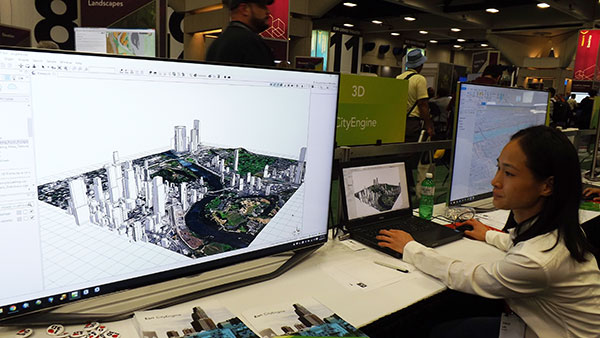
    The 2016 Esri User Conference, the mecca of geographic information systems (GIS) in the U.S., takes place June 28 to July 1 in San Diego, California. The conference is designed to give attendees practical advice and hands-on experience with GIS tools from Esri and other companies, as well as share ideas and best practices for improving our world through maps.

    The event encompasses 16,000 GIS users, managers and developers; 300 moderated sessions; 450 hours of technical training; and 300 software vendors.

    GPS World/Geospatial Solutions staff is on site, and we will be posting news, photos and videos live from the show on this page. Also follow us on Twitter at @GSS_NCM and @GPSWorld.

    NEWS

    Spectra Precision MobileMapper 50 combines smartphone design with GNSS capabilities


    Golden Software releases Strater 5 well log, borehole and cross-section plotting program (6/28)

    Trimble unveils TDC100 handheld data collector at Esri UC

    SAP debuts Geographical Enablement Framework at Esri UC (6/28)

    ArcGIS apps for the field launched at Esri UC (6/27)

    3DR to integrate Site Scan with Esri Drone2Map (6/27)

    Esri, DigitalGlobe partner to expand World Imagery Map (6/27)

    CoreLogic expands location-based intelligence with building footprints (6/27)

    Laser Technology shares new time-saving mapping tools at Esri UC (6/23)

    Septentrio to spotlight drone GNSS solutions at Esri UC (6/23)

    PHOTOS

    VIDEO PLAYLIST

  • Laser Technology shares new time-saving mapping tools at Esri UC

    Laser Technology shares new time-saving mapping tools at Esri UC

    Laser Technology Inc. (LTI) is offering a close-up look at its new geospatial information systems (GIS) technology at the 2016 Esri User Conference, which is being held June 27 to July 1 in San Diego, California.

    Attendees are invited to stop by booth #2525 to discover how LTI can help professionals stay connected and map smarter by using its lasers and a personal smart device. The company will be handing out vouchers for a complete mapping solution, which could save GIS professionals hundreds of dollars.

    The New TruPoint 300 with MapSmart on Android, by LTI.
    The New TruPoint 300 with MapSmart on Android, by LTI.

    The company’s MapSmart on Android software combines all of the sophisticated technology that is typically required to collect field data and puts it into a straightforward app for smart devices. The software simplifies the mapping process by allowing users to establish an origin quickly and begin mapping in minutes, LTI said.

    With MapSmart now available on Android, users gain an improved workflow that includes wireless data transfer, a larger display and built-in help support. Users also have the ability to integrate location data by utilizing the GPS from a smart device or improve accuracy with an external antenna.

    LTI is redefining the traditional total station with its brand-new TruPoint 300. A lightweight, compact, simple point-and-shoot laser with survey-grade accuracy, the TruPoint 300 costs a fraction of alternative technology. The unit measures the distance between two remote points and has onboard solutions for volume, heights and 2D and 3D areas.

    Users can collect 3D measurements from a single location using a personal smart device and capture a photo of every shot taken. With the ability to collect on-site, extremely precise data in half the time, the modern total station is a go-to tool for collecting measurements quickly, easily and safely, LTI said.

    “Achieving survey-grade accuracy with a compact and affordable unit is very exciting,” says Derrick Reish, senior product manager for Laser Technology’s Professional Measurement division. “Having the TruPoint 300 and our flagship TruPulse laser products communicate with MapSmart on Android allows us to offer a complete solution for field measurement and mapping.”

    Imagine if you didn’t have to occupy the location you needed to map. LTI has made this possible with LaserGIS for Esri’s ArcPad data-collection software. This software allows users to fully maximize field work productivity. Working seamlessly with the current ArcPad platform, LaserGIS improves the data-collection process by making laser integration faster and easier. Users can now cover more ground in less time and measure the slope distance, inclination, azimuth and position remote features with one, simple shot.

    Laser Technology Inc. is a Colorado-based designer and manufacturer of reflectorless laser measurement devices for GIS, forestry, natural resource management, general construction, utilities, mining and telecommunication applications.

  • Septentrio to spotlight drone GNSS solutions at Esri UC

    Septentrio to spotlight drone GNSS solutions at Esri UC

    Septentrio will showcase its latest GNSS systems and software solutions for GIS professionals at the 2016 Esri User Conference in San Diego, June 28-30, with a special focus on the rapidly growing market for drone-based aerial survey.

    The AsteRx-m UAS by Septentrio.
    The AsteRx-m UAS by Septentrio.

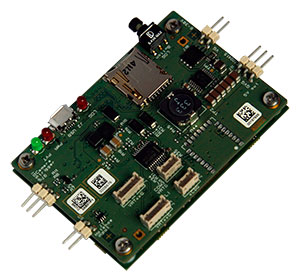
    At center stage will be Septentrio’s suite of products designed specifically for aerial surveys. They include the compact AsteRx-m UAS onboard GNSS receiver and GeoTagZ high-accuracy drone positioning software, which is optimized for automatic interface with Esri ARCGis and Drone2Map platforms.

    “Demand for drone imagery is booming in the GIS marketplace as a fast and efficient alternative to ground-based surveys for applications such as mapping, photogrammetry, infrastructure inspection and natural disaster monitoring,” said Neil Vancans, vice president of Septentrio Americas. “To meet that demand, we are bringing to market a range of hardware and software solutions that will make it easier than ever for Esri users to capture, georeference, process and visualize drone-captured imagery.”

    Septentrio is also introducing new firmware for its versatile NR2 GNSS receivers and the PinPoint-GIS utility software for terrestrial applications. NR2 V1.2.0 offers a host of new connectivity features, including direct dial-up, dynamic DNS, base-rover Wi-Fi point-to-point connection and other new features that will streamline field work. PinPoint-GIS has also been enhanced to provide seamless integration with Esri’s Collector for ArcGIS.

    “Septentrio is pioneering the way by which Esri users collect data,” said Gustavo Lopez, product manager at Septentrio. “GeoTagZ and PinPoint-GIS bring more accuracy and flexibility into the field by combining the power of Septentrio’s GNSS products with the user-friendly interface of Collector for ArcGIS. From the air to your own device, you are guaranteed accuracy and reliability in your GNSS positioning by using GeoTagZ to georeference aerial photos and PinPoint-GIS to harness the power of GIS data.”

    Esri User Conference attendees are invited to visit Booth 2633 for a first-hand look at Septentrio’s solutions for the full range of aerial and ground-based GNSS solutions for GIS, including the new-generation APS-3G multi-constellation RTK receiver, which was just introduced to the market.