Author: GPS World Staff

  • GPSTrackIt Announces Financial Incentives for Acquiring Fleet Tracking Systems

    GPSTrackIt announces new financing options that significantly reduce the initial cost of implementing its Fleet Manager system and GPS tracking devices. The new “No Pay Until 2014” financing plan program postpones hardware payments until January. This includes documentation fees and the monthly payment, reducing the cost of entry to a flat $24.99 per unit for service. This offer applies to deals of $2,500 or more. Credit must approve the transaction and any term length over 36 months.

    Also, the Internal Revenue Service’s Section 179 offers tax incentives for businesses, enabling owners to deduct equipment costs and by providing rebates. The deduction limit for Section 179 is now $500,000. The 2013 Section 179 deduction threshold for total amount of equipment that can be purchased is now $2,000,000. Most new and used equipment, as well as some software, qualify for the Section 179 deduction. Only new equipment purchased in 2013 qualifies for the “50% Bonus Depreciation.”

    For more information about GPSTrackIt, their new financing options, or their Fleet Manager vehicle tracking system, visit their website at gpstrackit.com.

  • Public Interface Control Working Group Meeting Set for September

    The Air Force has issued a Federal Register Notice regarding an upcoming Public Interface Control Working Group (ICWG) meeting, set for September 24-25. Here is the notice:

    Public ICWG Announcement—2013

    This notice informs the public that the Global Positioning Systems (GPS) Directorate will be hosting a Public Interface Control Working Group (ICWG) meeting for the NAVSTAR GPS public signals in space (SiS) documents and ICD-GPS-870; IS-GPS-200 (Navigation User Interfaces), IS-GPS-705 (User Segment L5 Interfaces), IS-GPS-800 (User Segment L1C Interface), and the Navstar Next Generation GPS Operational Control Segment (OCX) to User Support Community Interfaces (ICD-GPS-870).  Dates and times can be found below.

    The purpose of this meeting will be twofold: (1) To resolve the comments against the public signals-in-space (SiS) documents with respect to the six issues outlined below, and (2) to collect issues/comments outside the scope of the issues outlined below for analysis and possible integration into the following release. The ICWG is open to the general public. For those who would like to attend and participate in this ICWG meeting, we request that you register no later than August 6, 2013. Please send the registration to [email protected] or [email protected] and provide your name, organization, telephone number, address, and country of citizenship.

    Please note that the Directorate’s primary focus will be the disposition of the comments against the following GPS related topics:

    1.      L1C Week Number of Operation (WNOP)
    2.      Removal of Obsolete Information from the Public Signals-in-Space (SiS) Documents
    3.      CNAV Reference Times
    4.      PRN Mission Assignments 211-1023
    5.      CNAV Broadcast Intervals
    6.      Document Baseline for User Community & Zero AOD User Interfaces

    All comments must be submitted in Comments Resolution Matrix (CRM) form. These forms along with the Was/Is Matrix, current versions of the documents, and the official meeting notice will be posted at http://www.gps.gov/technical/icwg/.

    Comments outside the scope of the above issues will be collected, catalogued, and discussed during the public ICWG as potential inclusions to the version following this release. If accepted, these changes will be processed through the formal Directorate change process for IS-GPS-200, IS-GPS-705, IS-GPS-800, and ICD-GPS-870.

    There will also be a special topic that will be discussed at the Public ICWG.

    1.      Adjacent Band Compatibility (ABC) Study Group Kickoff

    Please provide comments in the CRM form and submit to the SMC/GPER mailbox at [email protected] or to Mark Marquez at [email protected] by August 7, 2013.

    Public Interface Control Working Group Meeting (ICWG)
    Date(s) and Times: 24-25 Sep 2013 (0800-1700) (Pacific Daylight Time P.D.T)
    Dial-in Information and Location: 1-800-366-7242, Code: 1528652
    Address: SAIC Facility 300 North Sepulveda Blvd, 2nd Floor, Conference Room
    2060 El Segundo CA 90245

    * Identification will be required at the entrance of the SAIC facility (Passport, state ID, or Federal ID). SAIC Facility phone number: 310-416-8300.
  • SBG Systems Offers Dual-Antenna GNSS Inertial System

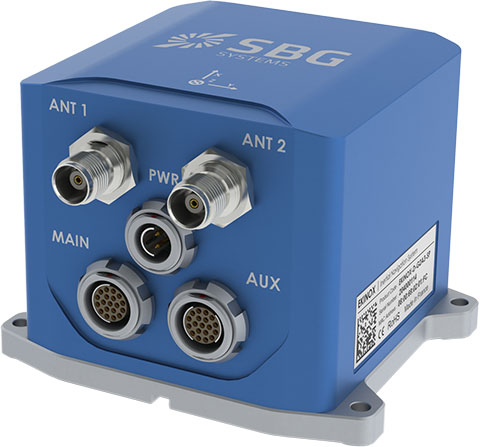
    The Ekinox-D.
    The Ekinox-D. Photo: SBG Systems

    SBG Systems has added a new inertial system to its Ekinox Series. With integrated Dual Antenna GPS + GLONASS receiver, the Ekinox-D is a ready-to-use survey-grade inertial navigation system that provides consistent true heading (0.05°), SBG Systems said.

    The Ekinox-D is a high-performance inertial navigation system that embeds a dual-antenna L1/L2 GNSS receiver to deliver more robust heading and position, while increasing satellite reception availability. Ekinox-D is an integrated system: GNSS data and inertial information are fused by an Extended Kalman Filter (EKF) to improve data integrity. This computation allows the system to achieve 0.05° roll, pitch, and true heading; 5-cm heave; and 2-cm RTK GNSS position.

    The Ekinox-D is an all-in-one Solution for demanding applications. Instead of mounting separate GNSS receiver and inertial systems on a boat, car, or plane, the Ekinox-D can be installed and connect it to a  camera, SONAR, or LiDAR system. With its 8-GB datalogger and its high output rate (200 Hz), Ekinox-D joins simplicity and performance for applications where robust heading is required such as surveying and hydrographic applications, unmanned system navigation, and auto testing.

    The IP68 Ekinox Series brings robust, maintenance free, and cost-effective MEMS to the next level thanks to a drastic selection of high-end MEMS sensors, an advanced calibration procedure, and powerful algorithm design, SBG Systems said, adding that compromise is no longer required between high accuracy and cost.

  • Satelles Announces Patent and Technology License Agreement with Boeing

    Satelles, a division of iKare Corporation, has entered into a patent and technology license agreement with The Boeing Company. This license allows Satelles to provide timing and location solutions to commercial markets delivered over the Iridium constellation of 66 low-Earth-orbiting satellites.

    The timing and location signals are available anywhere on Earth, without the need for local infrastructure, making the system perfect for augmenting GPS and other location-based technologies, Satelles said. Unlike standard GPS, the high-power signals can reach into many building structures. The signal-in-space provides a location-specific signature that can reliably prove (or authenticate) the location of a mobile device or other equipment, while being virtually impervious to spoofing and other attacks, Satelles said.

    Gregory Gutt, CEO of iKare Corporation, stated, “After working closely with Boeing for years to create a global indoor-positioning solution, we are thrilled to be entering this license agreement, which includes over 30 issued and pending patents.”

    Michael O’Connor, CEO of the Satelles business, agreed. “We see tremendous dual use potential for the technology going forward. Indoor location is an exciting area, and we are seeing keen commercial interest in a solution that delivers trusted location for secure network communication or network transaction security.”

    Satelles is headquartered in Silicon Valley, in Redwood City, California, with an office in Ashburn, Virginia.

  • GPS Source Receives USAF GPS Directorate Approval for GLI-FLO

    GPS Source Receives USAF GPS Directorate Approval for GLI-FLO

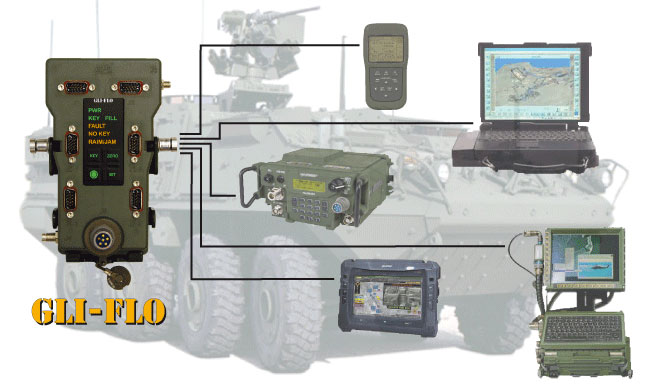
    GPSSource's GLI-FLO receiver.
    GPS Source’s GLI-FLO.

    GPS Source announced today that GLI-FLO has been granted security approval by the U.S. Air Force Global Positioning Systems Directorate. The GPS Directorate security approval provides GPS Source with the opportunity to supply military end-users and prime contractors with a DAGR Distributed Device (D3) that meets the mandate for reliability and security, GPS Source said.

    GLI-FLO is a secure (ICD-GPS-153 compliant) GPS position, navigation, and timing (PNT) distribution device. One GLI-FLO has the same capability as four DAGRs operating in a platform mounted application (eight DAGRs with custom cabling). GLI-FLO serves ICD-GPS-153 PNT data simultaneously to multiple communication or weapon systems that require GPS information. It routes PNT data while secured in the bracket now used by the DAGR, utilizing standard DAGR accessory cables. When GLI-FLO is connected to one DAGR (or as alternative option, interfaces with an internal secure GPS receiver), secure PNT data can be distributed without the integration of GB-GRAM cards to multiple devices.

    GLI-FLO meets the stringent requirements for reliability and security by integrating a GPS Directorate-approved SAASM receiver (Selective Availability/Anti-Spoofing Module). SAASM is the security architecture selected by the Joint Chiefs of Staff (JCS) to provide current security functions for GPS-authorized military users.

    “We understand the importance of reliable GPS/PNT data for synchronizing military operations and the need to protect against jamming and/or spoofing,” said Robert Horton, CEO of GPS Source. “We further realize the importance of protecting our national assets by designing products that fully comply with all GPS Directorate security requirements. This security approval makes it possible for our GLI-FLO to be deployed by military forces without reservation.”

    In addition to the SAASM compliance, other GLI-FLO features include the ability to serve ICD-GPS-153 PNT data simultaneously to multiple communications or weapon systems that require secure GPS information. It is a significant step for GPS Source toward compliance in GPS Signal Distribution (Single PNT Distribution Point). With zero impact to subscriber application software/hardware, it removes the need to rely on multiple, expensive GB-GRAMS found in military platforms.

  • Clarion Selects Averna for Testing In-Vehicle Infotainment Systems

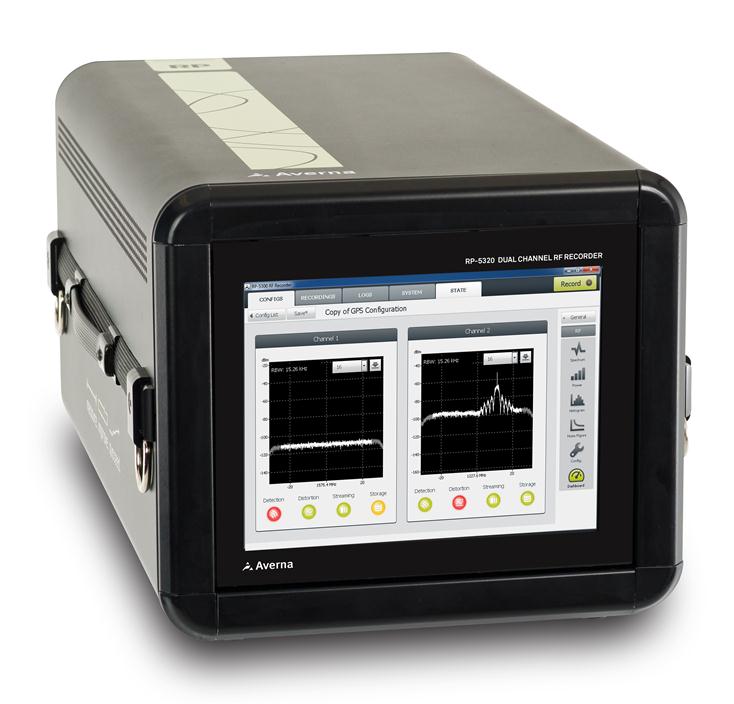
    Averna’s Record & Playback platform.
    Averna’s Record & Playback platform. Photo: Averna

    Averna, a developer of test solutions and services for communications and electronics device makers, announced today that Clarion has selected Averna’s Record & Playback solution to validate upcoming in-vehicle entertainment systems and certify that the devices perform well in real-world conditions. Clarion is a global manufacturer and seller of car navigation systems and in-vehicle equipment with a focus on car audio systems.

    The R&D Division, Experiment and Evaluation Team at Clarion will use Averna’s R&P platform to record radio signals such as AM, FM, HD Radio, and DAB from key locations around the world and replay them in the Tokyo-based lab where the design team is located.

    The R&P platform selected by Clarion features:

    • RP-5100, a compact 2-channel RF recorder designed to record live RF signals in the field
    • URT-5000, a software-defined RF Player and Signal Generator
    • RF Studio, high-performance RF record-and-playback software for RF product designers and researchers to facilitate recording, analysis and storage of RF signals
    • DriveView plug-in for synchronized recording/viewing of video, audio, and GPS positioning data

    The Averna RP-5100 RF Recorder is specifically designed to capture real-world RF signals, with impairments, for navigation as well as broadcast radio and video receiver validation, testing and support. The system has two 20-MHz wide channels that can be tuned on any frequencies from 250 kHz to 2.65 GHz. To address the challenges of validating the RF response with the physical environment, Averna has developed DriveView, a plug-in for the proprietary RF Studio software, offering visual verification by video-recording drive tests.

    “Clarion needed a platform to record live RF environments and reproduce them in a repeatable manner in their lab. Our R&P solution allows them to go through all the different use cases without having to go back in the field at each testing phase,” said Etienne Frenette, VP of Sales, Asia for Averna. “As receivers become more complex, it is imperative that real-world signals and conditions be recreated for thorough validation and testing in order to help enhance the user experience.”

    “We recognize and appreciate Averna’s unique expertise and advanced solutions in device performance testing,” commented the R&D Division, Experiment and Evaluation Team at Clarion. “Clarion is dedicated to delivering better products reaching the market faster and Averna is helping us achieve this goal.”

  • Telit Chosen as Representative of Italian Tech Industry for Galileo

    Telit Wireless Solutions has been selected among various applicant members of the Italian Technology Industry as one of the nation’s key representatives in the global roll-out of Europe’s Galileo satellite positioning system. The selection reflects the high degree of credibility demonstrated by the Italian government in the strategic plan proposed by Telit to accelerate global adoption of the Galileo technology, Telit said.

    Telit is a global enabler of machine-to-machine (M2M) communications providing cellular, short range and positioning module products. Telit’s positioning technology R&D center is an integral part of the company’s R&D function headquartered in Trieste, Italy.

    Telit also received a grant to execute its proposed strategic plan. The grant offers Telit the opportunity to accelerate its activities in development of projects for the positioning technology market. It bolsters human and financial resources required to enable Telit to quickly advance in this market area and achieve leadership in product performance with services to match. This achievement is likely not only to enhance the company’s competitiveness but is also provide measurable boost for the Italian economy, concretely contributing tangible progress in the strategic and very high growth segment of m2m.

    The inclusion of positioning expertise stems from the company’s mergers and acquisitions over the past few years, which have made it a leading designer and manufacturer of innovative GNSS solutions for OEM applications, from personal and asset tracking to automotive solutions. Telit has sold millions of high-performance GPS modules sold worldwide.

    Galileo is Europe’s global navigation satellite system, designed to provide a highly accurate, guaranteed global positioning service under civilian control. It is inter-operable with GPS and GLONASS, the U.S. and Russian global satellite navigation systems. By offering dual frequencies as standard, Galileo delivers real-time positioning accuracy down to the meter range. It ensures availability of the service under all but the most extreme circumstances and informs users within seconds of any satellite failure, making it suitable for safety-critical applications such as guiding cars, running trains and landing aircraft. A range of services will be extended as the system is built up from initial operational capacity (IOC) to reach the Full Operational Capability (FOC) by this decade’s end. The fully deployed Galileo system consists of 30 satellites (27 operational + 3 active spares), positioned in three circular Medium Earth Orbit (MEO) planes at 23 222 km altitude above the Earth, and at an inclination of the orbital planes of 56 degrees to the equator.

    “Achievement of a leading position in now in Galileo technology not only boosts Telit’s global stance and strength, and consequently that of the Italian technology industry but also extends the reach of our leadership in positioning which already includes two decades of pioneering work in GPS in the United States,” said Dominikus Hierl, chief marketing officer at Telit Wireless Solutions. “The planned work-force expansions in support of this new effort will create extraordinary value-add, not only in terms of project acceleration but also in innovation, vision and new relationships for Telit.”

  • IEEE/ION PLANS 2014 Issues Call for Abstracts

    Abstracts are now being accepted for the IEEE/Institute of Navigation (ION) Positioning, Location and Navigation Symposium (PLANS) 2014 to be held May 5-8 at the Hyatt Regency Monterey Hotel in Monterey, California. The deadline for submitting abstracts is November 1, 2013.

    Instructions on submitting your abstract can be found at www.plansconference.org.

    PLANS 2014 is the fifth biennial conference co-sponsored by the IEEE, AESS and the ION. The conference features researchers and engineers from around the globe who present their latest work in positioning and navigation technologies. Presentations range from fundamental research, to applications, to field test results with a particular emphasis on inertial navigation. Technical sessions cover a range of subjects for both beginners and seasoned professionals.

    IEEE/ION PLANS 2014 technical program will be centered around four technical tracks including Inertial Sensing and Technology, GNSS Technologies and Systems, Integrated Applications of Sensors and Technology and Systems Technology.

    Technical papers will be presented on current position, location and navigation issues:

    • High-Performance Inertial Sensor Technologies
    • Low-Cost Inertial Sensor Technologies
    • Multisensor Integrated Systems and Sensor Fusion Technologies
    • Sensor Manufacturing, Error Modeling & Testing
    • Emerging Atom-Based Sensor Technologies
    • Micro-technology for PNT
    • Receiver and Antenna Technology
    • High Assurance GNSS
    • Interference, Spectrum Issues and Robust Navigation
    • Precise Positioning, Weak Signal, and Advanced Processing
    • Algorithms
    • Modernized GNSS
    • GNSS Augmentation Systems
    • Indoor Personal and First-Responder Navigation
    • Urban Personal and Vehicular Navigation
    • Vision/Integrated Navigation Systems
    • Adaptable Navigation System Technology
    • Environmental Features and Novel Navigation Sensors
    • Terrestrial Radionavigation and RF-Positioning
    • Commercial Aviation Positioning and Navigation Applications
    • Small UAV Positioning and Navigation Applications
    • Consumer, Smartphone and Personal Navigation Applications
    • Marine Positioning and Navigation Applications
    • Terrestrial and Automotive Positioning and Navigation Applications
    • Robotic Guidance, Navigation and Control Applications

    In addition to a commercial exhibit, this year’s program includes half-day, pre-conference tutorials on:

    • Fundamentals of Inertial Navigation
    • Sensor Integration for Personal Navigation
    • Fundamentals of Kalman Filtering
    • Alternative Navigation Methods
    • NonLinear Kalman Filtering
    • Multi-constellation GNSS – Similarities/differences between GPS, Galileo, BDS, and GLONASS
    • Image-Aided Navigation

    The deadline for submitting abstracts is November 1, 2013. Submit your abstract today at www.plansconference.org.

  • Spectracom Teams with Geodetics For Rugged PNT Equipment

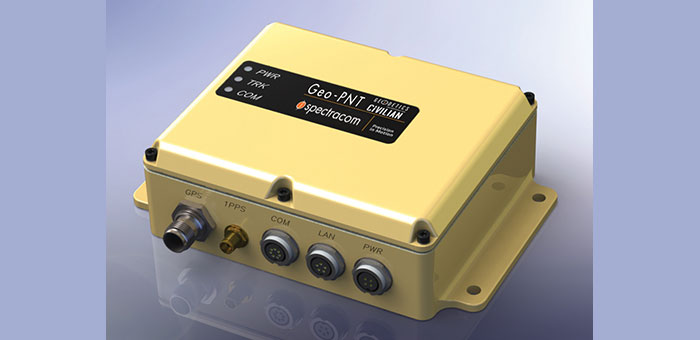
    Spectracom Teams with Geodetics For Rugged PNT Equipment

    Spectracom announced today a strategic partnership with Geodetics Incorporated of San Diego, California. The partnership includes a variety of initiatives to enhance each company’s customer reach, channels, products and technology.

    The partnership includes a distribution agreement for Geodetics’ Geo-iNAV inertial navigation products. Spectracom will offer Geo-iNAV alongside its portfolio of precision timing, test and simulation equipment. Geo-iNAV is a fully integrated GPS-aided inertial navigation system that provides real-time, high-precision positioning and navigation solutions for manned and unmanned air, sea and ground vehicles. It combines GPS and sensor fusion to achieve centimeter-level real-time positioning and navigation for dynamic platforms.

    “In line with our long heritage in delivering robust precision time and frequency products and services, we understand the challenges our customers face to adopt and adapt new and often disparate GPS and GNSS technologies,” said Spectracom President and CEO, Lisa Withers. “We believe our partnership with Geodetics will help to simplify the integration of complex positioning, navigation and timing technologies and provide our customers with a broad range of GPS and inertial navigation platforms readily suited for today’s dynamic and mobile environments.”

    Geodetics President and CEO Lydia Bock added, “Spectracom’s global reach immediately widens the playing field for our inertial navigation products and technology. They have a keen sense of customer’s needs for the convergence of PNT in both military and commercial applications.”

    As the GNSS eco-system expands to support mission critical applications, so must the prevalence of interoperability and signal fidelity, and ultimately PNT applications must be able to withstand the temporary loss of GPS due to factors such as signal obscuration, Spectracom said. As such, contemporary GNSS signal management solutions must be resilient to various GPS impairments as required of the application. Geo-iNAV delivers this capability through six configurations. It is available in commercial as well as SAASM GPS configurations as well as a choice of IMU depending on accuracy requirements. It offers a low SWaP (size, weight and power) profile for autonomous vehicles and payloads on manned vehicles to meet a wide range of applications.

    As a part of Spectracom’s broader initiative to provide a comprehensive portfolio of GNSS signal management products, systems and services, the Geo-iNAV is the first in a series of compact and rugged solutions specific to PNT applications. In addition to simplifying complexity for its customers with contemporary, modular platforms, Spectracom’s market reach, together with the technical strengths of their partners such as Geodetics will accelerate time to market and aggregate the resources necessary to support unique and changing needs for precision references, simulation and signal test and analysis.

  • Lockheed Martin Prototype to Help Prep for GPS III Launch

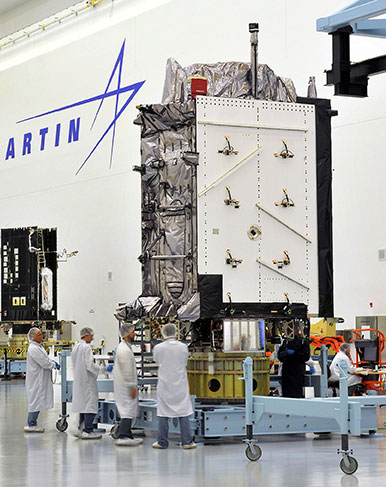
    The GPS III Non-Flight Satellite Testbed completed pathfinding activities at Lockheed Martin’s GPS III Processing Facility outside of Denver prior to it shipping to Cape Canaveral Air Force Station to test facilities and pre-launch processes there in advance of the arrival of the first GPS III flight satellite.
    The GPS III Non-Flight Satellite Testbed completed pathfinding activities at Lockheed Martin’s GPS III Processing Facility outside of Denver prior to it shipping to Cape Canaveral Air Force Station to test facilities and pre-launch processes there in advance of the arrival of the first GPS III flight satellite. Photo: Lockheed Martin

    Lockheed Martin has delivered a full-sized, functional prototype of the next-generation GPS satellite to Cape Canaveral Air Force Station to test facilities and pre-launch processes in advance of the arrival of the first GPS III flight satellite.

    The GPS III Non-Flight Satellite Testbed (GNST) arrived at the Cape on July 19 to begin to dry run launch-base space-vehicle processing activities and other testing that future flight GPS III satellites will undergo. The first flight GPS III satellite is expected to arrive at the Cape in 2014, ready for launch by the U.S. Air Force in 2015.

    The GNST arrived at the Cape by Air Force C-17 aircraft from Buckley Air Force Base near Lockheed Martin’s GPS III Processing Facility (GPF) in Denver, Colorado. Prior to shipment, the GNST was developed and then completed a series of high-fidelity activities to pathfind the integration, test and environmental checkout that all production GPS III satellites undergo at Lockheed Martin’s new satellite manufacturing facility.

    An innovative investment by the Air Force under the original GPS III development contract, the GNST has helped to identify and resolve development issues prior to integration and test of the first GPS III flight space vehicle (SV 01).  Following the Air Force’s rigorous “back-to-basics” acquisition approach, the GNST has gone through the development, test and production process for the GPS III program first, significantly reducing risk for the flight vehicles, improving production predictability, increasing mission assurance and lowering overall program costs.

    “We call the GNST a ‘pathfinder’ because it has truly blazed the trail for every one of our GPS III processes from initial development, production, integration and test, and now pre-launch activities,” explained Keoki Jackson, vice president for Lockheed Martin’s Navigation Systems mission area. “All future GPS III satellites will follow this same path, so the GNST was a smart initiative to help us discover and resolve any issues in advance, implement production efficiencies, and ultimately save a tremendous amount of time and money in the long run.”

    GPS III is a critically important program for the Air Force, affordably replacing aging GPS satellites in orbit, while improving capability to meet the evolving demands of military, commercial and civilian users. GPS III satellites will deliver three times better accuracy, include enhancements which extend spacecraft life 25 percent further than the prior GPS block, and a new civil signal designed to be interoperable with international global navigation satellite systems.

    Lockheed Martin is currently under contract for production of the first four GPS III satellites (SV 01-04), and has received advanced procurement funding for long-lead components for the fifth, sixth, seventh and eighth satellites (SV 05-08).

  • Trimble Expands Rugged Handhelds to Include Enhanced GPS

    Photo: Trimble

    Trimble introduced today new functionality and configuration options for its Juno T41 rugged handheld computer. In addition to a handheld computer and smartphone configuration, the series now includes enhanced, real-time 1-2 meter GPS accuracy and high-speed 1D/2D barcode imaging technology.

    The new configurations are in addition to the capabilities already available in Trimble’s Juno T41 handheld computer. All models are built to meet military-grade standards of ruggedness for drops, temperature, altitude, humidity extremes, vibration, chemical exposure and shock with either an IP65 or IP68 rating for water and dust.

    “The Juno T41 is truly a workhorse,” said Jim Sheldon, general manager of Trimble’s Mobile Computing Solutions Division. “We designed it for today’s worker who needs a functional field computer that is tougher than any consumer-grade device, while providing easy-to-use features and convenience that people have come to expect.”

    All Juno T41 handheld computers feature a 1 GHz processor and 512-MB RAM with either Android 4.1 or Microsoft WEHH 6.5 operating systems. Other standard features include an 8-MP integrated camera, multi-touch capacitive 4.3” sunlight-readable display and 9 PIN Serial and USB ports, all-day battery life and 2-4 meter GPS accuracy capability.

    The Juno T41 X configuration is designed to replace Bring Your Own Device (BYOD) smartphones with SMS text and 3.75 cellular data transfer capabilities on GSM networks worldwide.

    To increase real-time positional accuracy, the Juno T41 G configuration provides enhanced, 1-2 meter GPS acquisition capability and it can be combined with other Juno T41 configurations, including the smartphone or the 1D/2D Imager.

    The Juno T41 G supports the GPS L1 band and offers reliable performance in reduced signal environments. Workers who have to move from place to place to collect remote assets won’t have to waste time waiting for a system warm-up: the Juno T41 G tests at an average cold start of less than 38 seconds, and a warm start of less than 6 seconds. The G configuration handheld collects data in real-time at 1-2 meter accuracy, while also capturing Raw Data Output for post-processing applications. The Juno T41 G is designed to work with Satellite Based Augmentation Systems (SBAS), third-party Real-Time Networks (RTN), and corrections services from Trimble.

    Trimble Scan technology in the Juno T41 S reads a variety of traditional 1D barcodes as well as 2D matrix codes, and captures signatures and images. These features are customizable using the Trimble “Scan Agent” application. Enterprises can also use the Software Development Kit (SDK) to optimize applications to meet specific customer needs. Omni-directional reading capabilities along with high-motion tolerance allow for rapid, accurate scanning from virtually any angle or orientation from the handheld to the barcodes.

    With these additions, the Juno T41 rugged handheld series has a configuration that can meet a wide variety of business needs in a single rugged device, Trimble said. Users can mix and match the capabilities to create the Juno T41 that is right for their specific business needs: combine the X smartphone with barcode imaging in the Juno T41 XS; add enhanced GPS for the XG. Combine barcode imaging with enhanced GPS and smartphone capabilities in the XGS.

  • Tallysman Introduces Dual-Frequency Antenna Series

    Tallysman Introduces Dual-Frequency Antenna Series

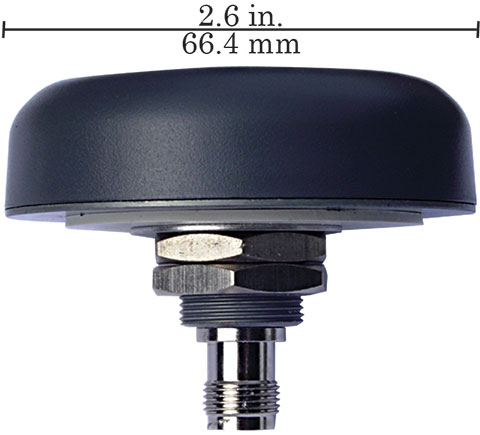
    TW3802 Shown with flat radome.  Conical radome also available.
    TW3802 Shown with flat radome. Conical radome also available.

    Tallysman Wireless Inc. has added the dual-frequency TW3800 series to its high-quality precision line of antenna products.

    The TW3800 series antennas feature a circular stacked patch antenna for improved axial ratio, yet are small and light, and have the extended bandwidth required for L1/L2 GPS & G1/G2 GLONASS, the company said. The operating voltage range is from +2.5 to 16 VDC. The antennas have a temperature compensated LNAs and operate from -40 to +85o C to provide reliable performance in most any environment. The TW3800 is packaged in a through hole mount making it suitable for mobile applications.

    The TW380x is suited for many applications, including:

    • Anti-jamming GPS
    • Mission-critical GPS timing
    • Military and security
    • Network timing and synchronization
    • Precise tracking
    • High signal availability

    The TW3805 is the OEM version of the TW3802, and can be custom tuned to provide optimal performance inside virtually any housing, Tallysman said.

    “The circular patch design of the TW380X antennas permits precision custom tuning with excellent axial ratios.”  said Gyles Panther, president of Tallysman Wireless. “This flexibility, combined with the very wide operating voltage enables this antenna to work with virtually any receiver on the market.”

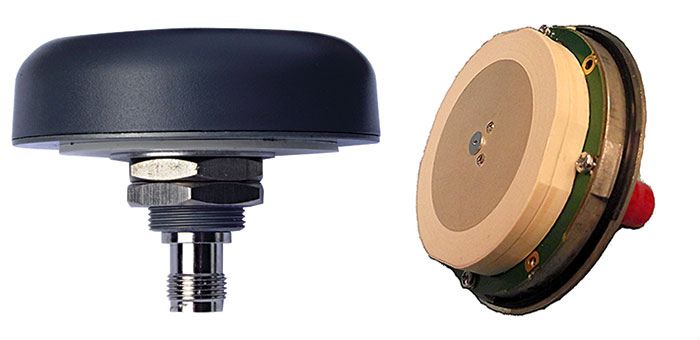
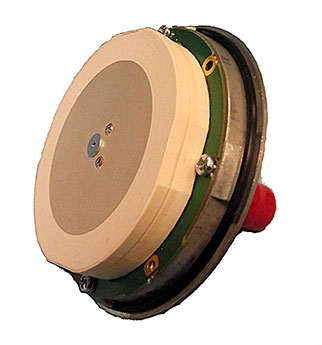
    The Tallysman TW3805HR antenna.
    The Tallysman TW3805HR antenna.