Author: GPS World Staff

  • EU to Meet with China on Nav Dispute

    The European Union (EU) and China will be meeting in December in Paris to discuss overlapping radio frequencies both plan to use for their future encrypted government/military satellite navigation services, according to a joint statement from both parties, reports Space News.

    The December meeting will be conducted under what the Joint Statement on Space Technology Cooperation specifies as the ITU Framework. ITU is the International Telecommunication Union of Geneva, a United Nations affiliate that regulates satellite orbital slots and frequencies.

    The statement was signed as an annex to a broader EU-China summit held September 20 in Brussels. As Space News reports, the two sides are continuing collaboration on satellite navigation despite the signal conflict, which has been a subject of debate for at least two years. The 27-nation EU and China have agreed to continue the China-Europe GNSS Technology Training and Cooperation Center.

  • Istanbul to Host First INTERGEO Eurasia in 2014

    The new INTERGEO Eurasia conference trade fair, which will take place in Istanbul on the Bosphorus in spring 2014, will cater specifically to the needs of this economic area. It is aimed at Turkey, south-eastern Europe, the Middle East and the “stan” countries. INTERGEO Eurasia is a collaboration between HINTE Messe and Messe München International. One way in which the DVW is supporting this project is through the use of the INTERGEO brand.

    As Olaf Freier, CEO of HINTE Messe, explains, “This step is a response to the internationalization strategy of numerous INTERGEO partners. The aim is to firmly establish a concept geared specifically to the circumstances in this up-and-coming economic area. The collaboration with Messe München International provides additional expertise and structures for this step and will ensure INTERGEO Eurasia gets off to the best possible start.”

    Hartmut Rosengarten, chairman of the INTERGEO Exhibitor Advisory Board, adds: “INTERGEO has become the number one international platform for many global companies. In addition to further developing INTERGEO in Germany, it makes strategic sense to pursue a growth policy that is closely linked to the existing success concept in other economic areas, too.”

    The INTERGEO Eurasia programme is being planned in close consultation with international INTERGEO exhibitors and the relevant institutions and associations in Turkey.

    HINTE Messe is a partner of the DWV (German Association of Surveying) and has been responsible for organising INTERGEO since 1995. During this period, the conference trade fair has enjoyed continuous growth in Germany. INTERGEO East events aimed primarily at the south-eastern European market have already been held in Belgrade, Zagreb, Sofia and Istanbul.

    Messe München International is one of the world’s leading trade fair companies and has organised events in Asia, Russia, the Middle East and South America. It benefits from a global network, with six foreign subsidiaries and over 60 agencies serving more than 90 different countries.

  • Launch Tomorrow for Second Pair of Galileo IOV Satellites

    The European Space Agency (ESA) will be launching a second pair of Galileo IOV satellites tomorrow from Europe’s Spaceport in French Guiana.

    The satellites will ride a  Soyuz ST-B rocket from Europe’s Spaceport in French Guiana. Launch is scheduled for 18:15:00 GMT (20:15:00 CEST) October 12.  Live streaming will begin at 17:48 GMT (19:48 CEST) for about one hour.

    From launch to final deployment, when the dispenser releases the satellites sideways in opposite directions, takes three hours and 44 minutes. Live coverage resumes at 21:25 GMT (23:25 CEST).

    More details, including live streaming of the launch, are available at the ESA website.

    This flight is designated VS03 in Arianespace‘s mission numbering system, and it will be the Spaceport’s third launch since Soyuz was introduced at this near-equatorial facility one year ago. Arianespace is the launch contractor.

    The two Galileo satellites will join the first two spacecraft orbited by Arianespace’s historic VS01 flight on October 21, 2011, marking Soyuz’ introduction at the Spaceport.  Once all four are operational in space, they will provide the minimum number of satellites required for navigational fixes — enabling system validation testing when all are visible in the sky.

    As a European initiative, the Galileo satellite navigation system is being developed in a collaborative effort of the European Union and the European
    Space Agency.  The In-Orbit Validation (IOV) satellites weigh 700 kg. each and were built by a consortium led by the Astrium division of EADS — which
    produced the platforms and has responsibility for the payloads, while Thales Alenia Space handled the assembly and testing tasks.

  • Pacific Crest Offers Wide-Band Data Link for Field Communications

    Photo: Pacific Crest
    Photo: Pacific Crest

    Pacific Crest has introduced the XDL Rover, an advanced, high-speed, wireless data link built to withstand the rigors of GNSS/RTK surveying and precise positioning.

    The XDL Rover is a lightweight, ruggedized UHF receiver designed for digital radio communications between 403 and 473 MHz in either 12.5 or 25 kHz channels. It uses Pacific Crest’s latest generation XDL modem technology while remaining backward compatible with existing Pacific Crest products. Users can instantly communicate with GNSS precise positioning receivers that share the same protocols throughout the world.

    “The XDL Rover is an ideal high-speed radio receiver for products that require a one-way communications link,” said Dale Hermann, director of marketing and sales for Pacific Crest. “Its interoperability with existing equipment and greater functionality will allow customers to rapidly integrate and cost-effectively deploy the XDL Rover with their products and solutions.”

    The XDL Rover joins the rapidly growing line of XDL products that includes the XDL Micro, a transceiver OEM board. The XDL Micro is a 0.5 Watt UHF transceiver designed for integration into products that require either a one- or two-way radio communication link that is configurable for operation between 403 and 473 MHz. The XDL radio line is based upon the successful ADL products from Pacific Crest.

  • GPS World 2012 Leadership Dinner

    At the GPS World magazine’s annual Leadership Dinner, held during the ION-GNSS Conference, we gave the first GNSS Leadership Awards to four individuals for their respective work in the four fields of satellites, signals, services, and products. We asked each recipient to give us a vision of the future: upcoming work, whether that’s something they plan to undertake or they think someone else should get going on, new directions for the industry, and so on. We asked them to ruminate as speculatively and as far into the future as they wished to go. Here is what they said.

    Read the story here.

  • Applanix Introduces POS LV 120 for Improving Land Mobile Mapping Productivity

    Photo: Applanix
    Photo: Applanix

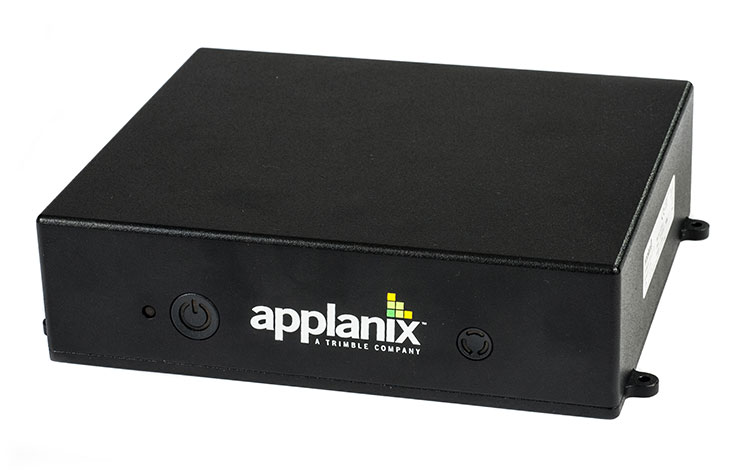
    Applanix has introduced the POS LV 120, the latest version of its positioning and orientation systems for land vehicles. Using commercial Micro-Electro-Mechanical (MEMS) inertial measurement unit (IMU) technology, the Applanix POS LV 120 is a small, lightweight system and provides an economical solution for any continuous positioning and orientation application.

    POS LV 120 is a fully integrated, turnkey position and orientation system, using integrated inertial technology to generate stable, reliable and repeatable positioning solutions for land-based vehicle applications, Applanix said. Redesigned to be smaller and lighter, it maintains identical data interfaces and software compatibility with the established POS LV line of products.

    “With a MEMS IMU and a 220 channel, dual-antenna GNSS receiver integrated into a single enclosure, the POS LV 120 is a cost-effective GNSS-Inertial solution designed to support many types of land-based mobile mapping projects,” said Kevin Andrews, product manager for Land Products at Applanix.  “The integrated system is smaller than the standard POS LV computer system (PCS), making it ideal for use in lightweight applications such as robotics, autonomous vehicles, centerline mapping, asset mapping and short-range direct georeferencing.”

    POS LV 120 is available now through the Applanix sales network.

  • Taxi Booking App Comes to U.S.

    myTaxi, a taxi booking smartphone application, today launched in Washington, D.C., its first introduction into the U.S. marketplace. The announcement was made during a live-streaming press conference given directly in a moving taxi.

    myTaxi was first launched in Germany in June 2009. It connects 2.3 million users to more than 18,000 taxis worldwide. Today marked the first time consumers in the U.S. will have access to the app. myTaxi’s services offer consumers a personal, transparent and convenient way to travel with features such as:

    • Peer-to-peer connection between driver and passenger, including driver photos, information and phone numbers.
    • A ratings system for selecting and reviewing your taxi driver and a favorites list to save your favorite drivers for future pickups.
    • Live tracking of taxi approach on display including arrival time, fare calculator, distance and automatic positioning via GPS.
    • View of every myTaxi in the area on the taxi radar.
    • myTaxi Payment – a direct billing process in the taxi via smartphone.

    “Americans took more than 10 billion trips on public transportation last year,” said Niclaus Mewes, co-founder and CEO, myTaxi. “Smartphones can have an immense impact on urban mobility. At myTaxi we want to rethink and reshape how taxi trips are taken. Passengers and drivers want something convenient, transparent and tailored to their needs. We want to deliver on that.”

    Every driver using myTaxi has the ability to become a contractor and build their own client base by consistently providing passengers with good service and earning high customer ratings. myTaxi offers a driver-side version of its app allowing taxi drivers to efficiently monitor the locations of customers and receive basic information on each customer once an order is placed.

    “The DC Taxicab Commission welcomes any electronic reservation company such as myTaxi, bringing technological advancements to the District of Columbia,” said Ron Linton, DC Taxicab Commission Chairperson. “We are delighted that passengers using DC public vehicles-for-hire will enjoy the enhanced quality of service.”

    During its press conference, myTaxi outlined a voucher system that will be provided to the app’s early adopters. The voucher campaign is one of the many programs and features myTaxi will continue to roll out in the D.C. marketplace. myTaxi will also bring new payment facility into the D.C. taxi market. The implemented feature “myTaxi Payment” provides users with the ability for cashless, card-less payments on all myTaxi rides by registering a credit card to their account. The myTaxi application is available in stores for free download to iOS and Android devices.

  • IGNSS Society 2013 Conference & Exhibition

    The IGNSS Society will be holding the 2013 conference & exhibition at the Outrigger Hotel, Gold Coast, Queensland, Australia, July 16-18, 2013.

    The program will include keynote speakers, oral presentations, interactive poster sessions, panel sessions, open interactive forums, an informative trade exhibition, GNSS demonstrations and a field day.

    Topics will include:

    • Status of GNSS (GPS, Galileo, GLONASS,     Compass, QZSS)
    • Innovative GNSS Applications
    • Land Mobile Applications
    • Aviation and Aerospace Applications
    • Maritime Applications
    • Precise Timing
    • Machine Guidance and Automation
    • GNSS Interference and Signal Processing
    • Alternatives and Backups to GNSS
    • Multi-sensor Integration
    • GNSS Receiver Hardware Design
    • Software GNSS Receivers
    • Atmospheric Effects and Space Weather
    • Precise Carrier Phase-Based Positioning
    • Geodetic Infrastructure and Datums
    • Pedestrian and Indoor Navigation
    • GNSS Policy, Governance and Alternatives and Organisational Issues

    For more information, visit the website, or email [email protected].


  • NovAtel Announces New SPAN MEMS Enclosed Receiver

    Photo: NovAtel
    Photo: NovAtel

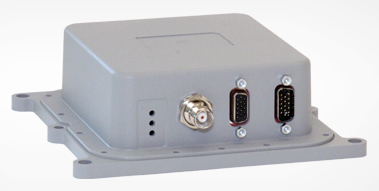
    Today at Intergeo, NovAtel Inc., NovAtel announced the addition of a new commercially exportable single-enclosure SPAN MEMS receiver to its line of SPAN GNSS/INS products. Available in the first quarter of 2013, the low-power, lightweight SPAN MEMS enclosure incorporates a diminutive Micro Electromechanical Systems (MEMS) Inertial Measurement Unit (IMU) and a NovAtel high-precision OEM615 GNSS/INS SPAN receiver to provide continuously available position, velocity and attitude (roll, pitch and yaw) in a small, single-unit form factor, the company announced.

    “This product ensures we meet crucial price/performance and size/weight requirements for our customers,” Jason Hamilton, director of Marketing at NovAtel, said. He added, “By integrating this IMU with our powerful OEM6 GNSS/INS SPAN engine, which provides many advanced positioning options such as AdVance RTK, ALIGN heading technology and RAIM, we are able to offer a GNSS/INS solution for a wide range of applications.”

    The lightweight SPAN MEMS enclosure provides a rugged housing for demanding applications. Serial and USB communication interfaces plus several I/O options support additional peripherals. An embedded wheel sensor interface is also available to enhance GNSS outage bridging capabilities. Tight coupling of the GNSS and inertial technologies enables continuous, robust positioning in difficult environments where satellite signals are unreliable or unavailable for short periods of time.

    This product will be available as an integrated single-enclosure SPAN solution, enclosed standalone IMU for use with external SPAN-enabled receivers, and as an OEM component.

    Shipments of the new receiver start Q1 2013 with OEM availability Q4 2012. A limited supply of enclosure evaluation units will be available in Q4 for integrators looking to get a head start on their projects.

  • GPSWorldTV – Javad Ashjaee speaking at ION – Part 1 of 5

    GPSWorldTV – Javad Ashjaee, founder and CEO of Javad GNSS – speaking at the ION GNSS Show – Part 1 of 5

  • GPSWorldTV – GNSS Technologies at ION GNSS

    GPSWorldTV with Dinesh Manandhar of GNSS Technologies Inc. at the ION GNSS 2012 conference.

  • GPSWorldTV – ITT Exelis at ION GNSS

    GPSWorldTV talks with Justin Stallings of Rohde & Schwarz at the ION GNSS 2012 conference.