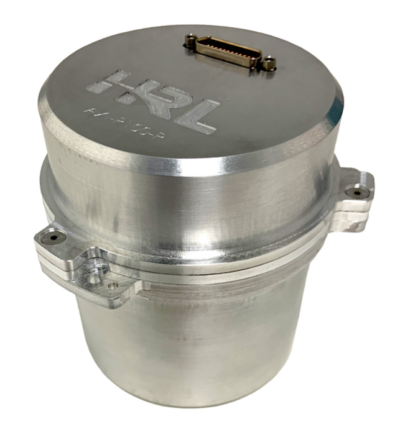
HRL Laboratories has introduced a new inertial measurement unit (IMU) that provides near navigation-grade accuracy in a palm-sized package.
Smaller and lighter than grade-equivalent conventional sensors, HRL’s AXI-R100 delivers range-extending accuracy for GPS-contested navigation. The product is now ready for pre-production orders.
Using silicon microelectro-mechanical systems (MEMS) technology, HRL’s gyros exceeds the performance of many tactical-grade IMUs in the same or smaller package size, and is manufactured in high volumes at wafer-scale. This near navigation-grade performance is available at a tactical-grade price.
The new IMU is suitable for use in defense, aerospace and automotive applications, including missile-guidance systems and drone navigation, as well as for commercial automotive applications with higher levels of autonomy. The product is ready for integration as it has been designed and tested against challenging vibration, shock and thermal conditions representative of those applications.
HRL will present product specifications at the 2026 Joint Navigation Conference, taking place this week in Cincinnati, Ohio, and is exhibiting in booth 129.
By leveraging high volume design automotive methodologies, HRL designed AXI-R100 navigation sensors to scale for high-volume automotive demand while maintaining performance superiority over traditional tactical-grade sensors. The result is a gyroscope compatible with foundry fabrication processes for high volume applications.
“Our gyroscopes and inertial sensors support navigation, pointing and stabilization systems for autonomous vehicles, aircraft and guided missile and munition applications,” said Jeff Dickman, director, Precision Sensing, HRL Laboratories. “We leveraged our extensive microelectronics legacy along with innovations in micromechanical and manufacturing processes to pave the way for AXI-R100 to address the urgent needs from our industrial base.”
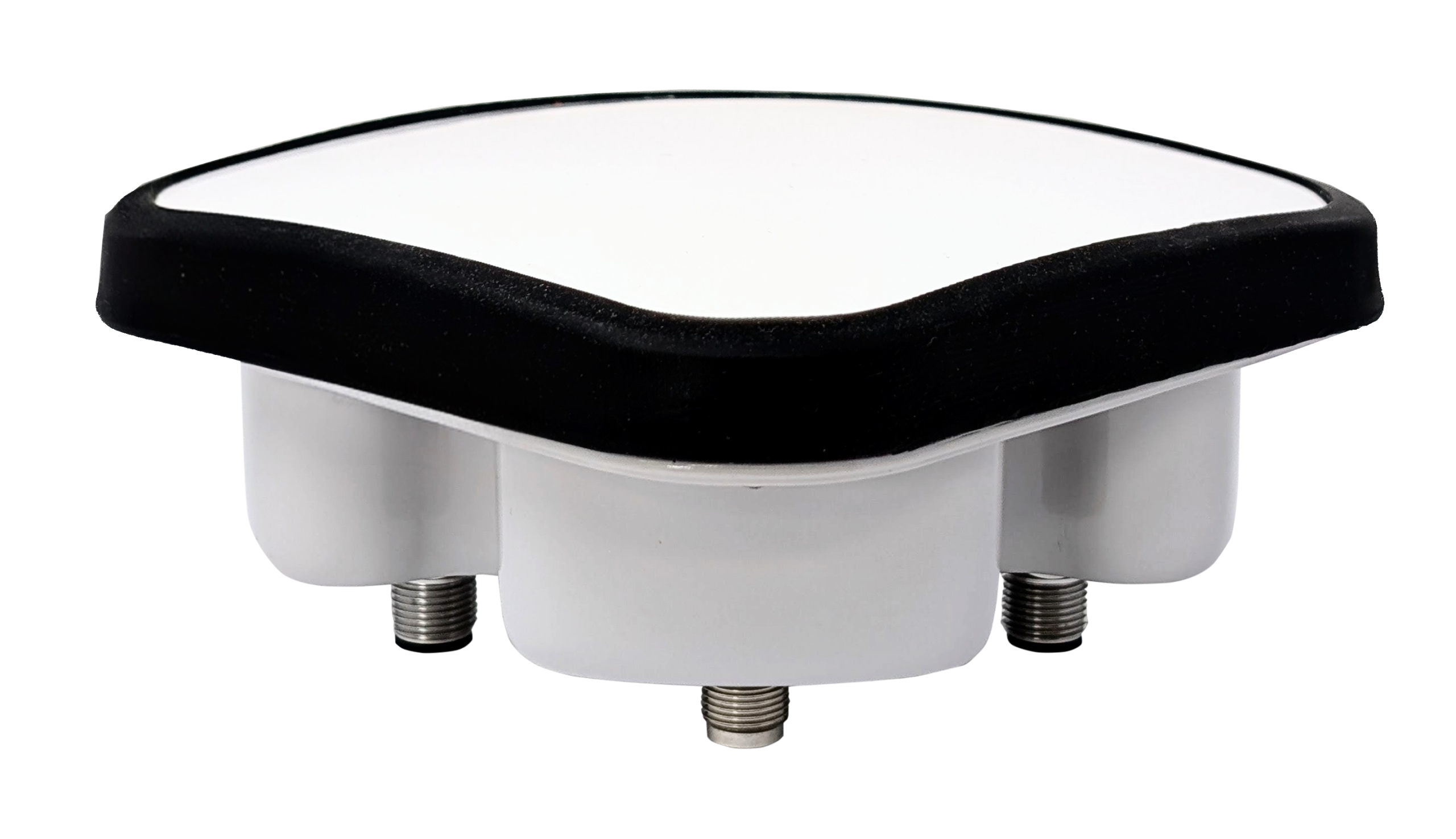
Calian has introduced two pole mount variants of its controlled reception pattern antenna (CRPA) line. The new models support L1/E1 + L2/E5b (CR8894PXF+) and L1/E1 + L5/E5a (CR8854PXF+), giving customers expanded deployment and frequency support options for resilient GNSS applications.
The new architecture increases installation flexibility across critical infrastructure, timing, marine and defense environments while maintaining Calian’s CRPA and extended filtering plus (XF+) interference mitigation performance.
Flexible deployment
The pole-mount design integrates into fixed and marine installations such as communications towers, vessels, monitoring stations and critical infrastructure, supporting rapid setup and optimal antenna placement.
With dual-band options, the platform aligns with modern multi-frequency GNSS architectures, improving accuracy, robustness, interference rejection and compatibility with current and next-generation receivers.
Advanced anti-jamming features include:
GPS and Galileo support
Operation across L1/E1 and L2/E5b or L5/E5a
Mitigation of three jamming sources per band
Integrated XF+ filtering for superior out-of-band rejection and cross-band isolation
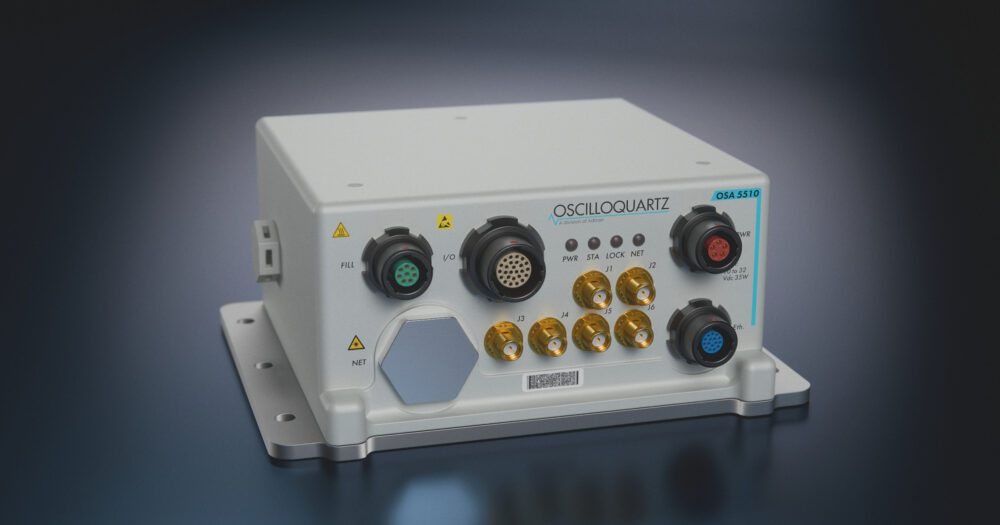
Oscilloquartz has launched its ruggedSync Series OSA 5510, a ruggedized timing and synchronization platform engineered for defense and other harsh, mission-critical environments.
The OSA 5510 is designed for deployment in tactical communications networks, mobile command centers, aviation systems and other highly demanding operational environments. It combines PTP grandmaster and NTP server functionality with synchronization assurance and resilient holdover in a compact military (MIL)-qualified platform.
Multi-band GNSS support, encrypted and authenticated timing options, and environmental protection enable operation in contested and GNSS-denied environments where trusted synchronization must be maintained.
Built to support resilient defense timing architectures, the OSA 5510 integrates advanced synchronization technologies and flexible mission-critical interfaces within a hardened platform compliant with MIL-STD-810H and MIL-STD-461G. The solution supports IEEE 1588v2 PTP, SyncE and secure NTP services, while programmable I/O and timecode interfaces, including STANAG, Have Quick, IRIG and PPS/CLK distribution, support diverse defense payloads and operational requirements. Optical and copper SFP/SFP+ 1G/10G interfaces and dual power feeds further enable deployment across modern high-bandwidth defense networks.
The ruggedSync Series OSA 5510 strengthens multi-source resilience through zero-trust architecture, with support for M-code, Galileo PRS and Iridium STL. Extended holdover, low phase-noise outputs, and jamming and spoofing detection and mitigation help maintain continuity during GNSS degradation or disruption, while White Rabbit readiness supports advanced timing distribution use cases.
The launch also builds on Oscilloquartz’s expanding global aerospace, defense and government partnerships, including regional representative and VAR relationships supporting resilient timing and assured PNT deployments across the Americas, EMEA and Asia-Pacific.
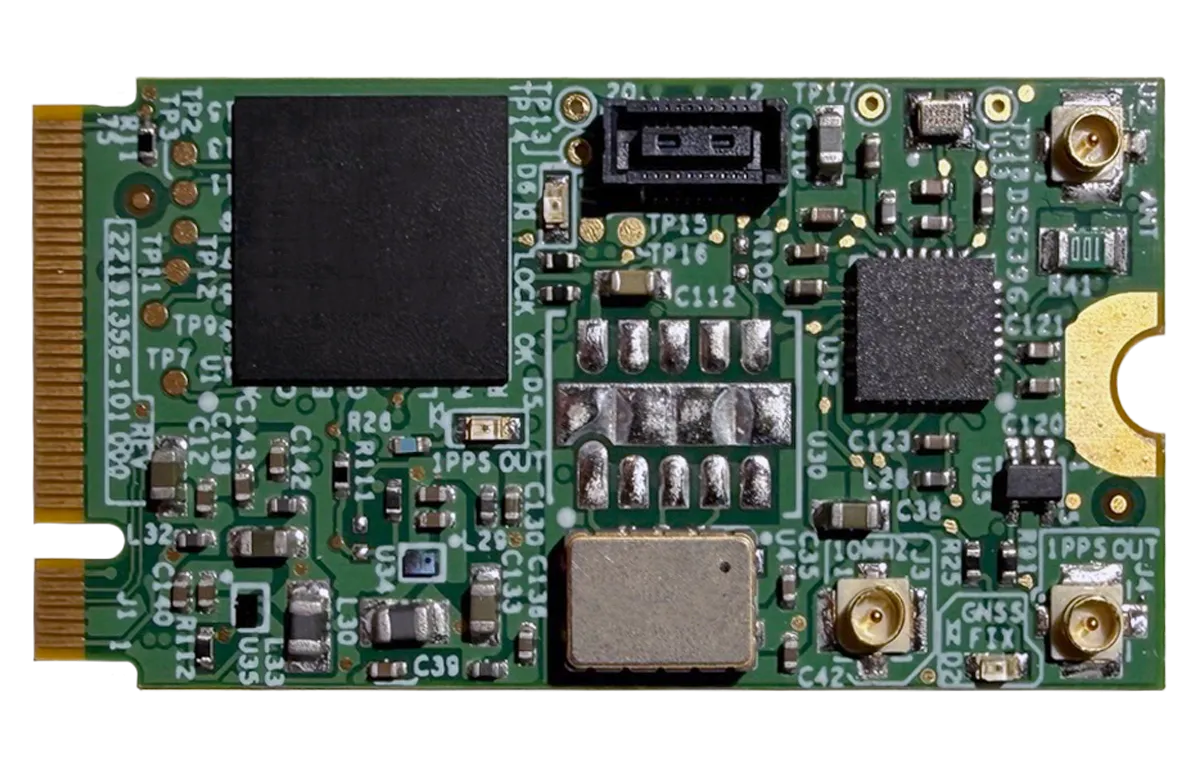
Viavi Solutions has launched the µPNT GDO-1000, a GNSS-disciplined oscillator built in the M.2 B-key form factor, suitable for low size, weight and power (SWaP) platforms.
Measuring 22 x 42 mm (the size of a postage stamp) and weighing less than 4 grams, the GDO-1000 is designed for platforms requiring accurate timing in places where traditional timing modules do not fit or are too power-hungry, including defense and airborne platforms, unmanned systems, data center cards, and communications equipment.
The µPNT GDO-1000 addresses these challenges through a combination of capabilities:
Dual-frequency L1/L5 GNSS reception with microsecond-class 24-hour holdover enables precise, resilient timing in compromised conditions.
The M.2 B-key form factor drops into modern compute platforms, time appliance cards, and embedded systems without custom mechanical design, drawing approximately half a watt.
Patented AI and ML algorithms developed by the Jackson Labs team, now part of VIAVI, predict and compensate for oscillator behavior across environmental conditions
The microelectro-mechanical systems (MEMS) oscillator delivers better thermal stability across the full military temperature range than traditional quartz oven-controlled crystal oscillators (OCXOs), with sustained phase noise and Allan Deviation performance under vibration and shock
It accepts an external 1PPS input, allowing it to be disciplined by M-code GPS, alternative navigation sources, or other external references without hardware modification
Multiple 1PPS and low-phase-noise 10MHz coaxial inputs and outputs for system integration flexibility, despite its miniature size.
The GDO-1000 will be on display by Viavi at booth 407 during the 2026 Joint Navigation Conference, taking place June 1-4 at the Northern Kentucky Convention Center. As part of the event technical program, Lisa Perdue and Nino De Falcis of Viavi will speak on a “New Cesium-Less ePRTC Solution to Provide Timing for Homeland Critical Infrastructure.”
Russian acts targeting critical infrastructure, satellite signal interference paralyzing maritime and air navigation, and cognitive operations aimed at intimidating European societies are examples of Russian hybrid activities targeting the Baltic Sea region states.
The paper, “White Paper on Russian Acts of Sabotage and Subversion against Members of the Council of the Baltic Sea States,” can be downloaded here. Authors Filip Bryjka, Anna Maria Dyner and Aleksandra Kozioł are with the Polish Institute of International Relations.
The report explores GNSS signal disruptions in the Baltic Sea and how it affects the safety of maritime and air traffic.
Scale and Methods of Russian Operations
Since the beginning of the full-scale invasion of Ukraine, Russia has intensified its hybrid activities against NATO member states, particularly those that have most actively supported Ukrainian resistance. This group includes the members of the Council of the Baltic Sea States. It is against them that the vast majority of acts of diversion and sabotage recorded in Europe since February 2022 have been directed.
Russia deploys a full spectrum of tools against the region:
Acts of diversion and sabotage targeting critical infrastructure.
Border incidents: Violations of airspace and maritime borders.
GNSS signal disruptions (satellite radio transmissions), creating operational problems for maritime and air navigation.
Cognitive influence, aimed at causing measurable damage, testing state responses, and inducing a sense of growing threat among societies.
Recommendations: How to Counter Hybrid Threats?
The offensive nature of Russian actions demonstrates an intent to destabilize NATO and EU countries. Effective defense requires developing shared mechanisms:
Close cooperation among agencies: Ensuring a high level of situational awareness through the coordination of activities (at both national and international levels) among military and civilian intelligence, counterintelligence, border guard services, and the police.
A dedicated information exchange system: Leveraging the geographical proximity and potential of the CBSS states to quickly share threat data.
Unambiguous attribution of persuasions: Publicly naming Russia as the author of the attacks. A lack of clear attribution hinders coordinated preventive and retaliatory measures.
A catalog of best practices: Developing common rules for monitoring, reporting, and responding to known and repetitive Russian operational patterns.
The authors conclude that only a full spectrum of coherent measures taken by all states in the region, alongside NATO and EU structures, can effectively influence Russia and reduce the risk of future incidents.
A two-kilometer free-space demonstration validates quantum-secure communications and resilient PNT capabilities
Xairos Systems has met a significant milestone for its Ares Quantum Optical Terminal, a robust system designed to deliver quantum-secure, high-data-rate communications and resilient position, navigation and timing (PNT) in RF- and GPS-denied environments.
The Ares terminal will combine 10 Gbps free-space optical communications, entangled photon distribution for timing and encryption key sharing, and a stable clock ensemble disciplined by Xairos’ exclusive Quantum Time Transfer technology.
Xairos completed two-kilometer free-space range testing with Space Development Agency-compliant optical communications and established simultaneous quantum and optical links using a common Ares Quantum Optical Terminal. This free-space testing — distinct from fiber-based demonstrations — marks a critical step toward real-world operational deployment.
The fully integrated Ares Quantum Optical Terminal will combine 10 Gbps free-space optical communications, entangled photon distribution for timing and encryption key sharing, and a stable clock ensemble disciplined by Xairos’ Quantum Time Transfer (QTT) technology — all within a ruggedized compact package. QTT provides unprecedented security and resilience for PNT where GPS and RF signals are unavailable or jammed.
The Ares Quantum Optical Terminal underpins a communications and PNT mesh network for aircraft, uncrewed aerial systems (UAS), ships, and other assets in contested environments, and serves as a foundation for a future space-based architecture spanning satellites, air vehicles and ground nodes.
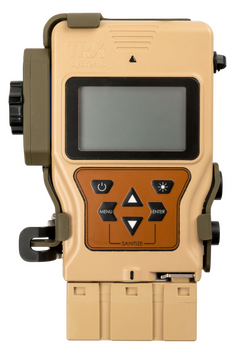
Developed for a U.S. Army Program of Record, the TRX DAPS GEN II solution provides warfighters with a resilient, trusted source of position, navigation and timing (PNT) that remains operational in GPS-degraded, jammed or denied environments.
The new enhancements strengthen DAPS GEN II system performance in extended-duration threat environments and include a new mounted capability that facilitates vehicle integration.
The new mounted capability delivers a modular, open architecture that expands client support and provides future extensibility while leveraging the core DAPS GEN II capability. To facilitate use of DAPS GEN II in vehicles, a vehicle interface adapter (VIA) is under development to provide the following capabilities:
Hold the DAPS GEN II device securely in the vehicle, enabling improved inertial performance under threat
Accept and condition power from the vehicle, extending battery life
Extend the number of supported clients, enabling vehicle systems to consume a single assured-PNT feed
Provide RF and data interfaces to anti-jam antennas, enabling tight integration with the antennas, including sharing of electronic warfare situational awareness information
Provide a FLEX-IO port, enabling extensibility by supporting addition of new PNT sensors and simplifying transition of new assured PNT capabilities
JNC 2026 attendees can visit the TRX team in Booth #319 to learn how the DAPS GEN II solution supports dismounted and mounted operations by delivering continuous, assured PNT – even in contested environments.
During the conference, TRX leaders will participate in technical sessions where they will discuss the latest DAPS GEN II innovations and share testing results for delivering assured PNT in both dismounted and mounted situations:
Session C6 (Tuesday, 11:30 a.m.): Speakers from TRX Systems and Combat Ready PNT will present U.S. Army Program of Record: DAPS Gen II Advancements, Interoperability, and Performance. This presentation will review DAPS GEN II innovations that increase resilience to extended-duration threats.
Session C6: TRX Systems is supporting an alternate presentation,U.S. Army Program of Record DAPS Mounted ECP (DME). This presentation will cover the functionality being developed with the VIA and provide results from the development and testing.
Apogee has been awarded a five-year, $103 million task order to provide positioning, navigation and timing (PNT) support services for the U.S. Department of Defense.
The contract supports modernization, acquisition and sustainment planning across the international PNT enterprise, ensuring resilient and reliable capabilities that underpin critical military operations worldwide.
Under the contract, Apogee will deliver technical expertise and mission support across multiple locations, including Robins Air Force Base, Georgia; Wright-Patterson Air Force Base, Ohio; and Eglin Air Force Base, Florida.
Apogee’s team will contribute to advancing next-generation PNT capabilities, strengthening system performance and supporting the continued evolution of a mission essential to joint and coalition operations.
Apogee is headquartered in Colorado Springs, Colorado, with regional offices nationwide.
The project is framed within the COINCIDENTE Programme, the Spanish Ministry of Defence’s National R&D Plan, which seeks innovative technological solutions of interest for defense. It will also benefit from the support of institutions such as AICIA (Association for Research and Industrial Cooperation of Andalusia, University of Seville) and FADA-CATEC (Advanced Aerospace Technologies Centre).
The main objective of FENIX is the design, development and validation through simulation and flight test campaigns of a technological demonstrator for an autonomous control and coordination system for heterogeneous unmanned aerial vehicle (UAV) swarms.
The system will build on Alpha Unmanned Systems’ existing UAV platforms, as project lead, and on the advanced autopilot technology of UAV Navigation-Grupo Oesía. Building on this foundation, new technologies will be developed to endow the swarm with collective intelligence, in alignment with military doctrine. These technologies will analyze, assess and demonstrate how the use of such systems enhances effectiveness and efficiency in surveillance and reconnaissance tasks in complex and contested environments, while also providing increased robustness.
Key developments and objectives of the project include:
Swarm coordination and planning system: Capability for efficient, real-time replanning in response to unforeseen events.
Cooperative perception system: Integration of multisensor data collected by the different UAVs, enhancing detection accuracy and robustness against occlusions, concealment and adverse weather conditions.
Advanced capabilities for critical missions: Identification and mapping of areas of interest under GNSS signal interference (jamming) or spoofing, as well as in NRBQ (CBRN) threat scenarios, and detection of specific targets in patrol, reconnaissance, target acquisition, and search-and-rescue missions.
The use of a heterogeneous UAV swarm will enable these missions to be carried out more effectively and efficiently, directly enhancing defense operational capabilities. The FENIX system operator will only need to define the mission to be executed by the swarm through a single human–machine interface.
The system will automatically decompose the mission defined by the operator into simple tasks, optimally allocate these tasks to the UAVs within the swarm according to their capabilities and constraints, and generate and assign safe, efficient and physically feasible trajectories for each UAV, while respecting kinematic constraints, energy limitations, communication range constraints, and other operational factors.
The FENIX Project, supported by the advanced intelligence of UAV Navigation-Grupo Oesía’s GNC systems and Alpha Unmanned Systems’ rotary-wing platforms, represents a significant step forward in the use of UAV swarms for military applications. This project provides a robust and efficient tool for inspection and reconnaissance in complex and contested environments.
The rapid growth of autonomous military systems is creating a new challenge for the defense industry, working to keep equipment operating when navigation becomes unreliable.
Across recent conflict zones and contested regions, GNSS disruption is affecting UAVs, loitering munitions, ISR platforms, maritime systems and autonomous ground vehicles.
“InfiniDome is expanding its vision beyond GNSS protection, toward a future of mission continuity and navigation awareness in contested environments,” the company stated.
The statement reflects a broader trend across the defense autonomy sector. While anti-jamming technologies were once treated primarily as protective add-ons, many military programs are now integrating navigation resiliency into wider autonomy architectures. The result is a growing shift in how autonomous systems are evaluated.
Rather than focusing solely on navigation accuracy or platform performance, defense organizations are increasingly asking whether autonomous systems can maintain operational continuity under degraded or denied conditions. Industry observers note that this transition is particularly evident in the loitering munition and tactical UAV sectors, where survivability in contested environments is becoming a baseline operational requirement.
At the same time, low-SWaP anti-jamming capabilities are becoming more common across the market, increasing pressure on companies to differentiate beyond hardware alone. That pressure appears to be accelerating a broader industry movement toward what some describe as “navigation awareness,” the ability not only to withstand interference, but also to understand and react to the electromagnetic environment in real time.
InfiniDome is expected to demonstrate this direction during the exhibition through IroNav, developed jointly with Wonder Robotics. The demonstration will include autonomous operation streamed live from a jammed environment in Israel, showcasing navigation resilience capabilities under active interference conditions.
The live demonstration comes as European defense programs continue increasing investments in autonomy, tactical drones, and resilient battlefield systems amid growing concerns surrounding electronic warfare and GNSS vulnerability.
As GNSS interference becomes more common and sophisticated across defense and mission-critical operations, resilient systems are now a core design priority.
At Jammertest in Andøya, Norway, industry participants evaluated how GNSS technologies perform under realistic interference conditions designed to replicate operational challenges faced in the field. Among them was Septentrio, which used the event to assess resilience strategies, explore emerging threat scenarios and showcase its latest advancements in anti-jamming and anti-spoofing technology.
GPS World spoke with Septentrio product manager, Yasmine Hunter, about Jammertest, the growing complexity of GNSS-denied environments and the company’s newly introduced mosaic-G5 P8 receiver designed for SWaP-sensitive, mission-critical applications operating in contested environments.
Jammertest and Real-World Scenarios
How realistic are the Jammertest scenarios, and how closely do they reflect real-world GNSS interference challenges?
I would say quite realistic. One of the strengths of Jammertest is that participants can actively propose scenarios based on what we have encountered in the field, and organizers are often able to adapt to those. For us, this means providing feedback on settings/scenarios that we have seen with our customers.
In addition, it offers participants the opportunity to test the equipment under real environmental conditions. Propagation conditions, terrain, platform dynamics, and antenna behavior (including multipath) all play major roles. These factors significantly influence GNSS performance and are very difficult to fully replicate in a laboratory, so testing them in an operational environment adds a lot of value.
To what extent do these scenarios mirror conditions in conflict zones (e.g., the Middle East or Ukraine)?
In my view, it’s very difficult to fully replicate a conflict‑zone environment, even in a remote location like Andøya. Conflict zones involve a unique combination of sustained, coordinated interference, evolving tactics, and operational pressure that is hard to mirror exactly.
Jammertest allows us to explore individual elements of those environments in a controlled and repeatable way and bridges lab and real‑world deployment by exposing systems to realistic threat profiles without the unpredictability and risk of an active conflict zone.
What are the biggest takeaways from Jammertest?
One clear takeaway is that jamming and spoofing scenarios are becoming more complex and sophisticated every year. It’s increasingly challenging as GNSS manufacturers to address these threats in isolation and still ensure robust operation across real-world use-cases.
Which brings me to the second point; resilience is not only about maintaining position availability. Situational awareness – understanding what the receiver is experiencing and why – becomes increasingly critical. Knowing when GNSS can be trusted, and when it cannot, is just as important as maintaining a solution.
What does Septentrio do differently from competitors when it comes to mitigating jamming and spoofing?
Septentrio has been working on jamming and spoofing mitigation for a long time, and that experience is built on extensive real‑world use cases rather than purely theoretical approaches.
This means that our receivers have been designed to be resilient, not just at the signal processing level, but also in how they disseminate this information to users. From my application‑engineering background, I’ve seen that these two aspects are equally important: strong mitigation technologies and clear insight into what is happening so users can make informed decisions.
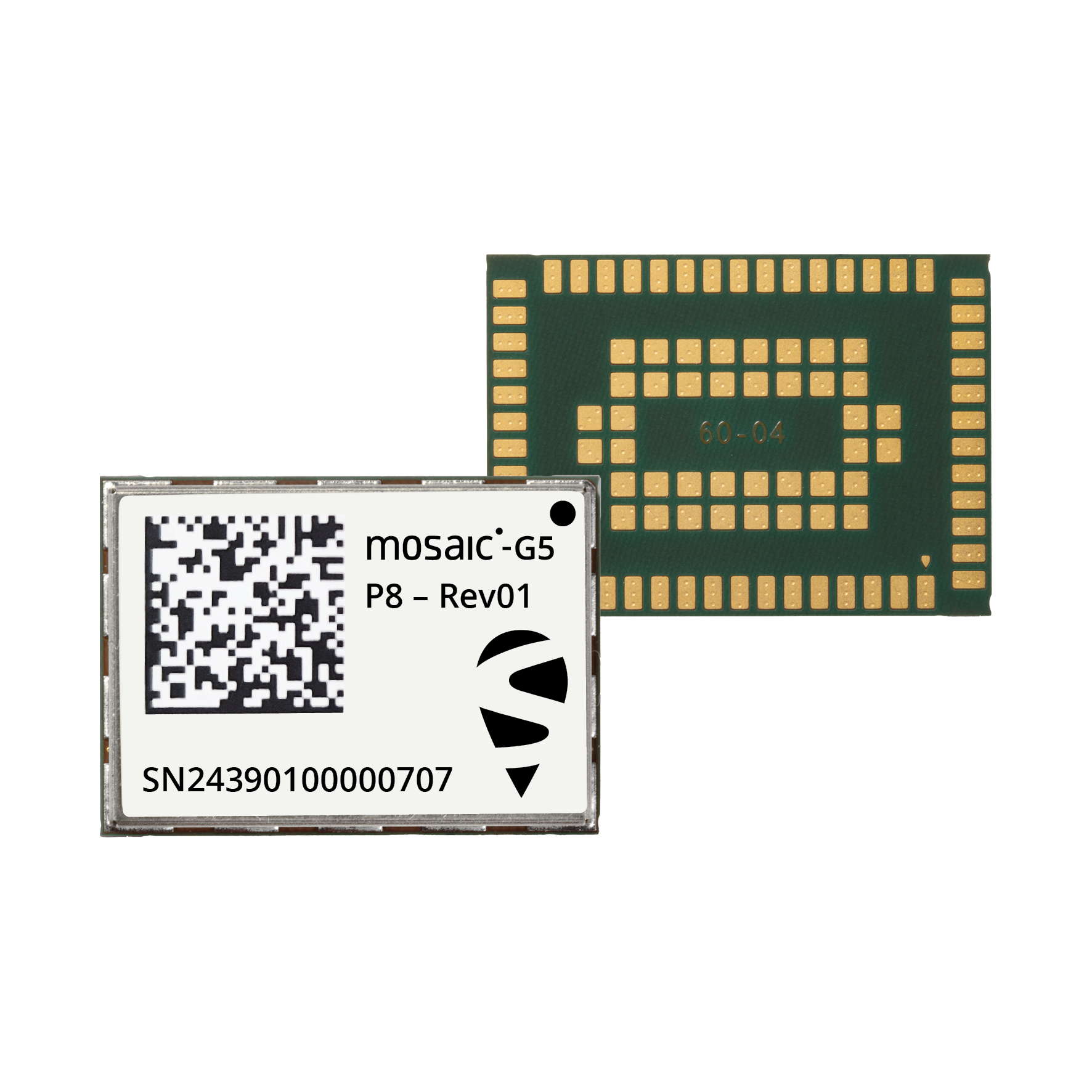
The mosaic-G5 P8 offers trustworthy positioning and seamless switching to alternative sensors during GNSS disruptions. (Photo: Septentrio)
What are some of the most significant engineering or design challenges in developing resilient GNSS solutions?
A key challenge is balancing performance, robustness, and usability. Advanced mitigation techniques often come with trade‑offs in complexity, power consumption, or cost. As we are targeting increasingly SWaP‑sensitive applications with our latest modules, this balance becomes especially critical and requires careful design decisions from the outset.
From a usability perspective, it’s not just about rejecting interference or spoofing, but also doing so in a way that preserves continuity and transparency (or trust) in the solution that we provide.
How is your approach evolving as interference becomes more sophisticated?
We increasingly accept that GNSS will rarely operate alone in challenging environments. The focus is shifting toward deeper integration with complementary sensors and systems.
From our side, that means ensuring the GNSS receiver provides reliable, high‑quality information — not just position — but also integrity metrics and interference indicators (like our jamming and spoofing flags) that other systems can use effectively. Understanding how GNSS fits into a broader navigation or mission architecture is becoming essential.
Upcoming Product Releases in the Defense Market
Can you provide an overview of the new product and the specific problem it is designed to solve?
The mosaic-G5 P8 introduces what we call “ultimate resilience”. It is targeted to mission-critical applications where optimizing not only availability, but also the integrity of the solution is the main goal.
The product directly addresses environments where GNSS interference is not occasional but expected — and where incorrect positioning data can be more dangerous than no data at all.
What are the key technical specifications or innovations that set this product apart?
It has the highest level of jamming rejection and combined with more advanced spoofing mitigation capabilities. In addition, the mosaic-G5 P8 provides access to synchronized baseband samples and jamming-power indicators. These outputs enable advanced use cases such as jammer detection and localization.
How does this solution improve performance in contested or denied environments?
It improves both availability and integrity. The receiver is designed to maintain a usable solution for as long as possible, while also clearly indicating when conditions degrade. This allows operators or higher‑level systems to react appropriately.
What types of platforms or use cases is this product best suited for (e.g., UAVs, ground vehicles, naval, etc.)?
We are primarily targeting SWaP‑sensitive, mission‑critical platforms. So far, we’ve seen strong adoption (of our other products) in highly mobile applications such as UAVs and USVs, but we see clear potential across a broader range of platforms, including ground and (other) maritime systems.
How does it integrate with existing systems or architectures?
The receiver is designed to integrate seamlessly into existing architectures through standard interfaces, while also offering advanced outputs for customers who want deeper system‑level integration. This flexibility allows it to serve both as a drop‑in GNSS solution and as an active sensor within a larger resilience framework.
How does this launch reflect broader trends or priorities in the defense GNSS market?
It reflects a clear shift toward resilience, integrity, and transparency rather than pure accuracy. Defense users increasingly recognize that GNSS denial is not an edge case, but a baseline assumption. Solutions must therefore be designed to operate, inform, and adapt under persistent interference and spoofing.
Looking Ahead
What should defense and industry stakeholders be preparing for now?
They should be preparing for a reality in which GNSS interference is persistent, adaptive, and increasingly deliberate—not an exception, but an operating condition.
This is also an aspect we are actively considering with solutions like the mosaic‑G5 P8. Rather than treating resilience as a theoretical requirement or a nice add-on, we’re designing for operational use cases where integrity, interference awareness, and transparent behavior under stress are essential.
For stakeholders, this means thinking beyond standalone receivers and focusing on system‑level architectures: how GNSS integrates with other sensors, how integrity information is consumed, and how platforms respond when GNSS performance degrades.
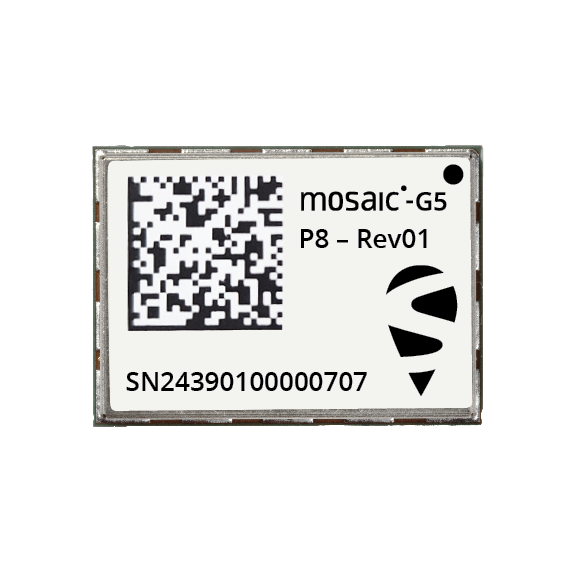
Septentrio, part of Hexagon, has announced the launch of the mosaic-G5 P8 receiver. The multi-frequency module, measuring 23 mm by 16 mm and weighing 2.2 grams, enables accurate and resilient positioning without any performance compromises for mission-critical devices, UAVs, marine vessels, and rail applications.
Built for reliable operation in contested GNSS environments, AIM+ Ultimate technology protects the receiver from powerful and sophisticated GNSS jamming and spoofing attacks. It delivers comprehensive situational awareness, combining timely interference and spoofing indicators with detailed power and frequency data, which can help localize jammers.
“The mosaic-G5 P8 is in a class of its own: uncompromised GNSS resilience in a secure, ultra‑compact, all‑in‑one design,” said Yasmine Hunter, product manager at Septentrio.
The newly released module features an integrity-focused design that ensures truthful positioning and reporting, enabling the system to quickly switch to other sensors during GNSS disruptions in heavily compromised environments. Secure communication with input and output authentication prevents unauthorized access and data interception. mosaic-G5 P8 also offers high update rate with low latency, supporting reliable navigation and control in highly dynamic applications.
The module is compatible with widely used, open-source autopilots like PX4 and ArduPilot, simplifying drone integration. The mosaic-G5 P8 evaluation kit, featuring direct autopilot connections, is available for testing and prototyping, and the RxTools user interface streamlines setup and evaluation.
Meet Septentrio’s GNSS experts and mosaic-G5 P8 during SOF Week in Tampa, Florida, May 18–21, in booth #609.