Category: Mapping

  • In Jack Maple’s steps: Fighting crime with GIS

    Who better to know about connections than a GIS professional whose very job is discovering them? Weaving a thread through time from decades ago isn’t a typical geospatial connection, but this one is, and it is connected by a person.

    Let’s reflect on who we are as a profession and how we, the geospatial community, has made the world a better place.

    Let’s also take a moment to learn about one of the leaders who led the way and what he had to overcome to help us appreciate who and what we are. It is an oft-repeated refrain: “Those who do not know the past are condemned to repeat it”, and, my personal favorite, “The future flows through us becoming the past so that we remember it and do not repeat it.”

    Jack Maple. (Photo: Newsday Photo, 1986 / Bruce Gilbert)

    In 1961, the trend in crime began climbing. Many people lived in fear, especially in big cities. New York captured many of the nation’s headlines in a long, tragic list of brutal, horrible crimes. Hope was bleak. It was expected to get worse. But, it didn’t. The fever had broken. It peaked in 1991. The crime spree lasted 30 years.

    By contrast, the Vietnam War lasted 20 years. The total number of troops serving on active duty during Vietnam was 9.1 million troops and 58,318 lost their lives in combat, yet fewer people died on the streets of America during the same period. In fact, on average, during the 30-year crime wave, every 22 days the number of victims of violent crime in the United States equaled the total number of soldiers killed in Vietnam. America was a battlefield and ground zero was New York City.

    What happened in 1991? What stemmed the tide? That year, a new type of hero emerged, a crime fighter, unlike any before.

    It began at ground zero, in the most dangerous areas of New York City — the subways, referred to as the “caves.” Thugs, rapists, murders and thieves roamed the depths. Police could do little. They were outnumbered and operated under strict rules. It was preferable to be a regular police officer, above ground, dealing with routine crimes, even the murders, rather than be a transit cop covering a beat in the dark, rough, unforgiving underworld of the subway. Only four types of people dwelled there: criminals, victims, transit cops, and those who got away.

    Sometimes, transit cops or criminals were the victims. Transit cops were difficult to recruit, but New York needed more of them. This provided an opportunity for those with few other choices. Sometimes, those who have no other options are the ones who make the most of an opportunity. They work the hardest because it is their only way out. Success lies with the willing — those incendiary hearts waiting to be ignited by a challenge that gives them purpose. Life is too often fraught with peril and strife. It is vision and the courage to pursue them that manifests dreams into reality.

    This new hero didn’t fit the caricature. He was short, balding, overweight and lacked a high school diploma. He was street smart, cocky, unpolished and would rather fight than prove his point. He didn’t come from a privileged background. He just had his wits. He knew right from wrong and had the courage to stand his ground. He took on the criminal element lurking in the subterranean worlds. He worked hard, earning his GED at night. It served him better that way like a badge of honor, the hard way being its own reward.

    His name was Jack Maple, the crime fighter, and he understood the streets in ways others didn’t. He knew, like a hunter knows, to find the deer trails. Animals are creatures of habit. They prefer to stay where they know the area, the smells, the rhythms, the sounds, where the food is, and where to run for cover. Criminals measure their risks too. They prefer familiar places. They are territorial and keen to their surroundings. Jack knew if you look for their patterns, you’ll find them. He covered his walls with subway maps, placing pins where and when the crimes happened.

    The criminal’s habits and behaviors began taking shape. With this knowledge, Jack had become the hunter. Knowledge is power, but real power is action, and Jack took it. He would not have become the hero otherwise. He staked out their patterns of place and time, setting traps and luring them in with their weaknesses.

    One by one, and group by group, he reclaimed New York’s subways. Crime dropped by 69% over the next five years. Putting that in perspective, two of every three victims were spared. Unfortunately, 629 people were still murdered in New York City, but it was a drastic departure from the peak of 1,946 just five years before, meaning 1,317 men, women and children did not suffer a violent crime that year or any other year thereafter.

    The values of crime are most often represented as a 1:100,000 scale ration; however, this chart shows three different categories, each represented by a different order of magnitude. (Data from Disastercenter.com)

    Rudy Giuliani, then mayor of New York, recognized the value of what Maple had developed. Maple called his maps the Charts of the Future. His colleagues called it wallpaper. The mayor called it amazing and gave Jack Maple his full support, praising him by saying, “One of the truly great innovators in law enforcement, who helped make New York City the safest large city in America.” Maple was promoted to Deputy Police Commissioner of Crime Control Strategies.

    Maple founded CompStat, Computerized Statistics, calling it his electronic pin maps to support his four precepts: accurate and timely intelligence, rapid deployment of forces, effective tactics, and relentless follow-through.

    New York’s CompStat program for the NYPD.

    CompStat changed policing to a data-driven business. GIS professionals will recognize CompStat as a geographic information system, and Jack as a self-trained geospatial developer and analyst. Geospatial science was still a very niche technology at the time.

    Jack Maple’s success continued to grow. Two men, William Bratton and John Timoney, both police commissioners and senior to Maple in the police hierarchy, became evangelists of Maple’s CompStat, spreading it to other cities throughout the world, and through those two men, predictive policing and crime mapping evolved.

    Maple, Bratton and Timoney became independent consultants helping cities worldwide establish their own CompStat programs.

    His success did not end there. Based on his experiences fighting criminals on the streets and fighting change in the antiquated police system, he wrote the book, The Crime Fighter: How You Can Make Your Community Crime Free. The book is an excellent read and readily available online. He also co-wrote the TV series The District, based on his exploits in the book.

    If you haven’t seen the series, the show is worth watching. Season 1, Episode 3, shows a 1990s projector screen with a large GIS display and the city’s police chiefs being held to account for telling their district’s crime stories in accordance with the map.

    A good and short video about New York and the influence Maple, Bratton and Guiliani had on the city is New York’s Indispensable Institution.

    Jack Maple was a modern-day rags to riches story and a pioneer of the GIS profession. When he passed away in 2001, he had become a beloved character in New York. When he died, each of the major New York City publications covered the story of his life crediting him for reducing crime and giving the citizens back their city. The CompStat room at 1 Police Plaza CompStat, New York, was renamed after him in tribute. Craig Horowitz, writer for New York Magazine, penned a worthy tribute.

    CompStat would be further developed with more advanced crime mapping and crime analysis methods, predictive analytics, environmental criminology and geographic profiling. Kim Rossmo coined the term geographic profiling, based on his patented Rossmo Formula, which is a form of predictive analytics that takes location, time, social behavior and the psychology of criminals into account and turns it into a mathematical equation that can be fed into a GIS. This narrows down the probable location of a suspect, allowing investigators and police to better focus their resources.

    Geographic profiling was used during the D.C. sniper case. The Rossmo Formula was featured on the TV series Numb3rs. I hope to write a future article on Dr. Rossmo complete with interviews.

    The trend in crime has continued decreasing ever since the peak in 1991. Crime in New York City has now dropped back to 1940s levels as of 2017 and continues to decline.

    The power to change the world lies with those fervent, intrepid souls — the unrelenting dreamers, who seek a better world and through innovation, creativity and courage, and manifest it into reality.

    It is a great time to be in the geospatial profession. The United States leads the world in geospatial science. Take heart, because opportunities abound in this industry. I hope you become a hero in the field, and someday I have the opportunity to write about you.

  • Harris wins three 10-year NGA geospatial data contracts

    Harris wins three 10-year NGA geospatial data contracts

    Earth's western hemisphere, 2002. (Photo: NASA)
    Earth’s western hemisphere, 2002. (Photo: NASA)

    Harris Corporation has been awarded three multi-award indefinite delivery/indefinite quantity (IDIQ) contracts with ceilings totaling $1.5 billion to provide the National Geospatial-Intelligence Agency (NGA) with geospatial data services for up to 10 years.

    Harris will create, manage and disseminate high-quality geospatial-intelligence (GEOINT) information for use by the U.S. intelligence community and military worldwide under contracts that cover all three areas of NGA’s JANUS program — geography, imagery and elevation.

    The JANUS program will contribute to and maintain comprehensive, geospatially accurate databases of the world that can be accessed quickly as intelligence, operational and crisis needs arise.

    Harris will use its predictive analytics technology to continuously evaluate the health of NGA databases and to guide the acquisition, creation and integration of all forms of geospatial data. Harris’ cloud-based tools will validate and correct the data — pinpointing locations that require updates.

    “Winning JANUS continues our long-standing legacy of providing high-quality, responsive GEOINT and analytics to the intelligence and military communities,” said Bill Gattle, president, Harris Space and Intelligence Systems. “Our analytics technology provides NGA with fit-for-purpose data, reduced production costs and cloud-based access to geospatial products and content.”

    Harris is investing in new technologies that improve the speed and accuracy of providing GEOINT products. The company has partnered with the NGA for almost 20 years to provide automated geospatial data processing, data management, and geospatial systems design and development. Harris provides high resolution geospatial data content and products under NGA’s Foundation GEOINT Content Management program, and previously supported the Global Geospatial-Intelligence program.

    Hexagon US Federal Also Contracted

    The NGA also has selected Hexagon US Federal as a prime contractor on two multiple award, indefinite delivery/indefinite quantity contracts for amounts totaling $1.17 billion for the JANUS Geography and JANUS Elevation contracts.

    JANUS Geography. Hexagon’s tasks for the JANUS Geography program will support the creation, conflation, integration and enrichment of Foundation GEOINT data used to produce a comprehensive and seamless dataset for NGA partners and customers.

    The creation of this dataset will ensure more accurate and readily available geospatial data for military and intelligence operations as well as disaster relief missions saving time and lives.

    JANUS Elevation. As a prime contractor on the JANUS Elevation contract, Hexagon will support NGA’s Office of Geomatics with maintenance to an existing worldwide library of digital elevation models. The effort includes products generated, modified or assessed by the office that are a digital representation of the terrain surface of the Earth.

  • Esri and Waze deliver near real-time data for smarter cities

    Esri and Waze deliver near real-time data for smarter cities

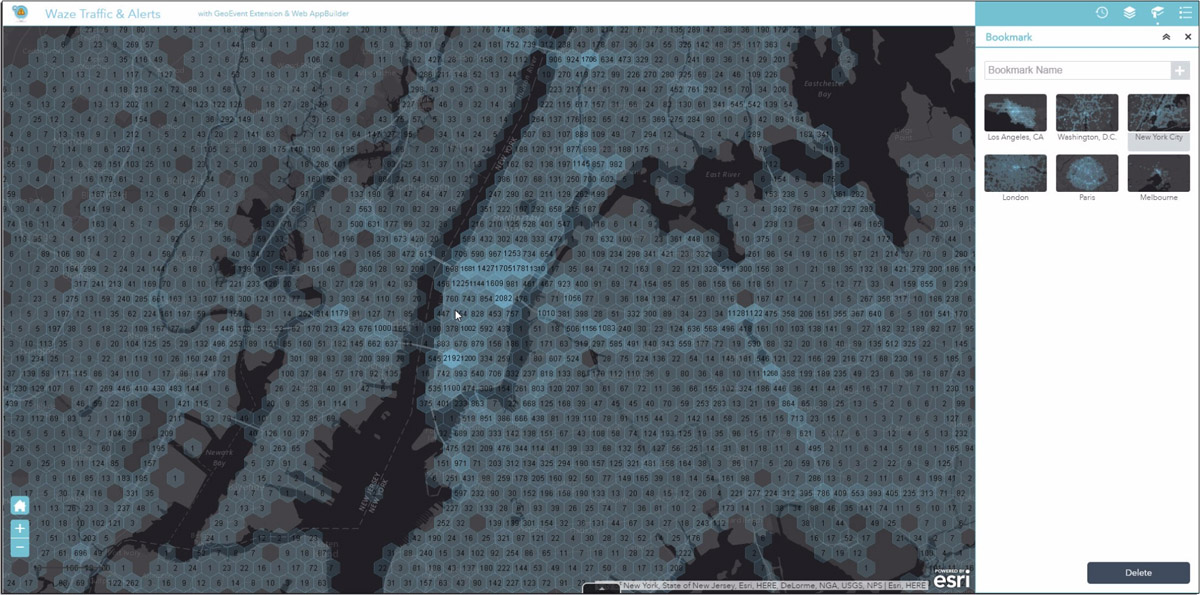
    Esri and Waze smart cities partnership grows. (Image: Esri)
    Esri and Waze smart cities partnership grows. (Image: Esri)

    Waze Live Alerts on traffic and infrastructure now available in ArcGIS Marketplace.

    Waze live alert data will now be available in Esri’s ArcGIS Marketplace for free to members of the Waze Connected Citizens Program.

    The Connected Citizens Program, a two-way sharing of publicly available traffic and road condition information, offers governments a stream of data, constantly updated in real-time, whenever they need it. This enables personnel to make data-driven infrastructure decisions and improves the efficiency of incident response.

    Waze, a free crowdsourced traffic and navigation app, is now fully supported by ArcGIS Online, where its live feed of mapped traffic alerts and other information, such as accidents, congestion and street damage, can be used in applications in minutes.

    “Municipalities can now leverage near up-to-the-minute reports without having to write code or purchase additional software,” said Andrew Stauffer, manager of civic technology at Esri. “Mapped Waze data is available immediately in all ArcGIS apps, where traffic engineers and even city planners can use it to maintain and build safer, more efficient transportation systems.”

    Municipal personnel like traffic engineers can start using this data to analyze where the biggest problems exist on the roads so they can create targeted solutions. For instance, by seeing exactly where the most crashes are occurring, engineers can know where they need to place more officers, replace street signs, or adjust the timing of traffic lights.

    “The Waze Connected Citizens Program is all about removing any barriers to innovation,” said Adam Fried, Waze Global Partnerships manager. “We want to help our partners leverage existing infrastructure and be able to make better data-driven decisions. Now, with just a couple of clicks, a city can easily access and analyze Waze data within Esri ArcGIS and use those insights to improve roadway management and build safer roads for its citizens.”

    Much of the information government organizations rely on to make decisions is becoming obsolete as communities are starting to use technology like sensors and drones to monitor the quality of roads, bridges, and utilities. The Waze Connected Citizens Program gives municipalities the power to harness crowdsourced driver data to not only improve safety and congestion but also make better-informed decisions by giving planners an edge to start building infrastructure that meets the demands of a twenty-first-century city.

    Governments can sign up for the free Waze Connected Citizens Program and start working with the alert data in ArcGIS to create operational dashboards that departments can use right away.

  • MapVault streaming service issues new release

    East View Geospatial (EVG) is offering a new version of MapVault, a streaming service that brings together maps from around the world.

    According to the company, MapVault provides access to more than 500,000 geo-referenced map sheets from more than 1,000 authoritative map series, which can save organizations the costs of procuring, storing and digitizing physical maps.

    MapVault users have access to a diverse collection of topographic, aeronautical, nautical and geological map series sourced from international mapping agencies. Each series has been mosaicked for easy use and quick navigation. Robust metadata along with series index maps and individual sheet-level metadata are included.


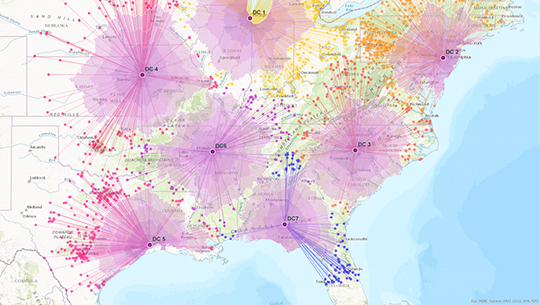
    New map series are added to MapVault on a regular basis, and subscriptions are customizable. Users can choose to subscribe to the series that cover their exact areas of interest or select from multiple regional package options.

    East View Geospatial also provides custom series solutions and encourages users to contact the company about adding their own mapping resources to the MapVault platform.

    MapVault was designed for a wide variety of users, both GIS and non-GIS specialists, and data is easily integrated into GIS software, the company said. The MapVault catalog can be accessed over the internet or through any WMTS (web mapping tile services) connection. Layer files formatted specifically for ArcGIS Desktop, QGIS, Global Mapper or other open-source GIS packages can be downloaded.

    “What makes MapVault unique is the many advantages it brings to users,” said Kent Lee, president and CEO of East View Geospatial. “We’ve taken the time and cost out of tiling entire map series, giving users consistent, reliable data served up in a straightforward, easy-to-use streaming service. Whether you are interested in global or country-wide mapping coverage, or even county- or city-level mapping, MapVault gives users of all experience levels a simple and accessible environment in which to discover and utilize maps.”

  • Launchpad: RTK modules, inertial sensors

    Launchpad: RTK modules, inertial sensors

    OEM

    RTK and Heading Module

    Positioning and attitude determination

    Image: Unicore
    Image: Unicore

    The UM442 can simultaneously track GPS, BDS, GLONASS and Galileo. It also supports SBAS and QZSS. It uses Uncore’s new-generation Nebulas II chip and UGypsophila real-time kinematic (RTK) algorithm. Based on high-performance data-sharing technology and the simplified operation system of the Nebulas II chip, the UGypsophila RTK algorithm dramatically optimizes matrix processing, enabling the UM442 to track more satellites and shorten the initialization time to 5 seconds.

    Unicore Communications, www.unicorecomm.com

    Inertial sensors

    Designed for dynamic inclination and positioning

    Image: Lord Sensing
    Image: Lord Sensing

    The MV5-AR inertial sensors are designed for off-highway and military vehicles, marine and mobile robot applications, and the autonomous vehicle market. The rugged, compact sensors use LORD’s fifth-generation high-performance industrial-grade solid-state six-degrees-of-freedom (6-DOF) micro-electromechanical accelerometer and gyro inertial sensor technology. Successfully deployed on ground robots and heavy machinery, applications also include autosteer and terrain compensation; dynamic incline detection (roll, pitch, rotation); vehicle stability and leveling; platform control, alignment and stabilization; operator feedback; and precision navigation. The compact and rugged reinforced housing is fully sealed for immersion and pressure wash. Each sensor is calibrated and temperature compensated.

    LORD Sensing Microstrain, microstrain.com

    BeiDou upgrade

    GNSS simulators ready for 2020

    Spirent's GSS7000 test system. (Image: Spirent)
    Spirent’s GSS7000 test system. (Image: Spirent)

    BeiDou Phase 3 signals are now available on Spirent GNSS RF constellation simulators GSS7000 and GSS9000 — existing users can obtain the software upgrade by contacting Spirent. Phase 3 of the Chinese BeiDou system will extend its coverage from Asia to the entire world, providing receiver developers and integrators with additional GNSS signals to make positioning, navigation and timing systems more accurate, and help to support new applications, such as autonomous vehicles. Customers can test their designs before the system is fully operational in 2020.

    Spirent Communications, www.spirent.com

    High-precision module

    Based on u-blox F9 technology

    Image: u-blox
    Image: u-blox

    The ZED-F9P multi-band GNSS module has integrated multi-band real-time kinematic (RTK) technology for machine control, ground robotic vehicles and high-precision unmanned aerial vehicles applications. It measures 22 x 17 x 2.4 millimeters and uses technology from the u‑blox F9 platform to deliver robust high-precision positioning performance in seconds. The ZED-F9P is a mass-market multi-band receiver that concurrently uses GNSS signals from all four GNSS constellations (GPS, GLONASS, Galileo and BeiDou). Combining GNSS signals from multiple frequency bands (L1/L2/L5) and RTK technology lets the ZED‑F9P achieve centimeter-level accuracy in seconds.

    u-blox, u-blox.com

    Chip-scale atomic clock

    Ready for space

    Image: Microsemi
    Image: Microsemi

    The SA.45s Commercial Space Chip-Scale Atomic Clock (CSAC) is a commercially available radiation-tolerant CSAC suitable for low Earth orbit (LEO) applications. The device provides the accuracy and stability of atomic clock technology while achieving significant breakthroughs in reduced size, weight and power consumption. It provides excellent drift performance and built-in 1 pulse per second (PPS) input for GPS disciplining, making the device well-suited for holdover applications. Commercial and research space applications include satellite timing and frequency control; satellite cross linking; assured position, navigation and timing; and Earth observation.

    Microsemi, microsemi.com


    SURVEY & MAPPING

    Radio modem

    For heavy-duty RTK applications

    Image: Harxon
    Image: Harxon

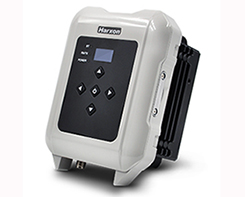
    The long-range, power-efficient eRadio is designed to support high-precision GNSS real-time kinematic (RTK) applications in surveying and precision agriculture. It is enabled with intelligent serial baud rate identification for different RTK devices. It can automatically identify RTK serial baud rate with a radio data cable and provide a plug-and-play form for easy connection between the eRadio and RTK. With its high transmitting power (5-35 Watts), transmission data can be up to 19200 bps/s over a connection distance of 50–80 kilometers. It can work as either a base or repeater with other Harxon radio modems in challenging environments.

    Harxon, harxon.com

    GNSS receiver

    Wireless communication with any Android or Windows terminal

    Image: SXblue/Geneq
    Image: SXblue/Geneq

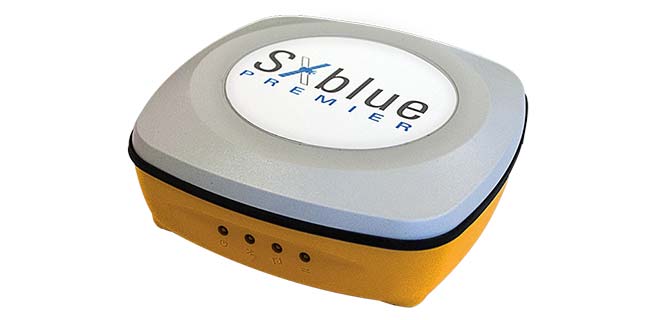
    The SXblue Premier GNSS receiver is available in a submetric version (GNSS) or centimetric version (RTK). It is equipped with Pacific Crest Maxwell 6 Trimble technology with BD910 (GNSS version) and BD930 (RTK version) OEM boards, delivering 220 channels to acquire and track GNSS signals from all constellations in view. It makes effective use of GPS, GLONASS, Galileo, BeiDou, QZSS and SBAS signals for precise positioning.

    SXblue, www.sxbluegps.com

    Smart antennas

    With integrated Atlas L-band

    Image: Hemisphere GNSS
    Image: Hemisphere GNSS

    The single-frequency, multi-GNSS Vector V123 and V133 all-in-one smart antennas are multi-GNSS compass systems using GPS, GLONASS, BeiDou, Galileo and QZSS for simultaneous tracking for heading, position, heave, pitch and roll. Both support NMEA 0183 and NMEA 2000. The V123 and V133 thrive in radar/ARPA, AIS, ECDIS, side-scan survey, multi- and single-beam surveys, dredging and general navigation applications.

    Hemisphere GNSS, hemispheregnss.com


    TRANSPORTATION

    Mobile GPS tracker

    For tracking vehicles, assets and people

    Images: Trak4
    Images: Trak4

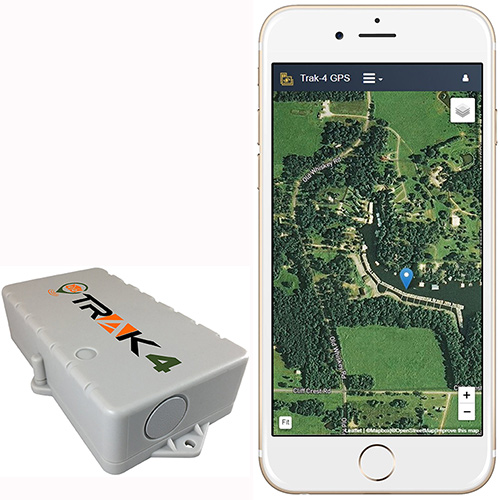
    The Trak4 provides GPS tracking with cell-trilateration fallback. Ping rates can be selected from every two minutes to once a day, with email and text alerts provided for geozone entry and exit or if the high-capacity rechargable battery is low (the battery runs up to 12 months on a single charge.) The Trak4 is designed for tracking vehicles, assets and inventory; it can also be used to track people such as the elderly. Indoor/outdoor weatherproofing allows “anywhere” mounting.

    Trak-4, trak-4.com

    Multi-GNSS antennas

    For positive train control

    Image: PCTEL
    Image: PCTEL

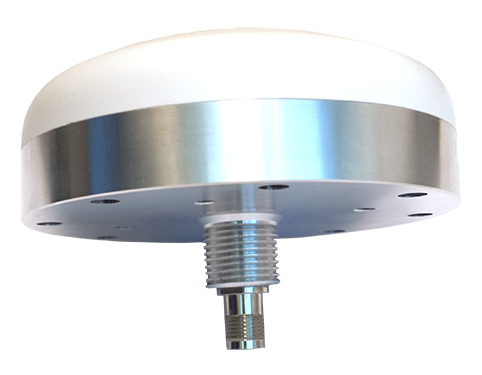
    PCTEL’s multi-GNSS L1/L2/L5 antennas combine aerospace-level precision with global satellite compatibility in a highly durable package. They enable critical applications including vehicular automation, 5G network timing synchronization and Positive Train Control (PTC) systems. The antennas increase the accuracy of timing and location information by providing simultaneous access to multiple GNSS signals across multiple frequency bands. The antennas support all relevant GPS, GLONASS, BeiDou and Galileo frequencies with excellent multipath mitigation and high out-of-band rejection for greater signal clarity. Their robust AAR and IP67-compliant design makes them suitable for years of use on railways and in other harsh real-world environments.

    PCTEL, pctel.com

    Off-Road GPS

    New range for walking and cycling

    Image: Ordnance Survey
    Image: Ordnance Survey

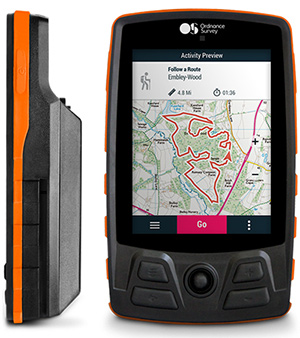
    Four new GPS handhelds are designed for off-road use, with safety in mind. All four of the OS GPS models have a built-in SIM card with access to the SeeMe subscription-based service and its safety features. With I.C.E (In Case of Emergency), users can send emergency alerts with exact coordinates to family and friends directly from the OS GPS. Live Tracking enables the user to be locatable at all times, sharing location and performance data with up to 20 friends in real time. Aventura, the most advanced navigation device, can be used in all weather conditions.

    Ordnance Survey, ordnancesurvey.co.uk

    Fleet management

    Real-time GPS fleet tracking

    Image: Zubie
    Image: Zubie

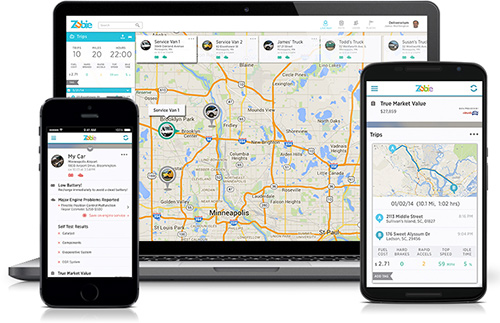
    Zubie Fleet Connect provides real-time GPS fleet tracking, driver check-in and performance reports, and vehicle health alerts. The monitoring and reporting service lets managers of fleets from 2 to 5,000 vehicles optimize business on the road. Wi-Fi connection to the cloud delivers important information about the health and performance of the vehicle, enhancing driver safety. Zubie also works with large enterprises to develop custom data flows and access driving data that can be used to analyze driving patterns, spot geographical trends in activity, or improve fleet asset management based on vehicle wear and tear.

    Zubie, zubie.com

    Multi-sensor payload

    Utility inspections with manned helicopters

    Image: Sharper Shape
    Image: Sharper Shape

    The Heliscope 2.0 provides onboard data collection with speed, efficiency and productivity improvements for the utility inspection industry. It provides a solution for operations over greater distances or in harsher environments than drones can accommodate The system integrates multiple sensor systems into a single, lightweight helicopter payload, capable of simultaneously collecting a range of data types required for utility maintenance and vegetation management inspections. Deployment enables optimized inspection and maintenance schedules, offering potential cost savings in those operational activities by as much as 50 percent. The Heliscope 2.0 has flexible mounting configurations and the ability to adapt for mounting on many different helicopter types.

    Sharper Shape, sharpershape.com


    UAV

    Survey system

    Accurate, quick aerial surveys

    Image: Aibot
    Image: Aibot

    Based on DJI’s M600 Pro platform, the Leica Aibot system is designed to rapidly and autonomously enable digitizing of critical infrastructure. It enables users to get a complete data set quickly with a user-friendly interface. Using Leica Infinity for point-cloud, digital surface model and orthophoto generation enables surveyors to process and visualize aerial data. For construction projects, Aibot provides access to critical information to perform volume calculations and monitor site progress. Users can see high-definition imagery and 3D mapping of the site and document progress. The UAV data can be combined with other survey technologies such as GPS for a more complete set of information.

    Leica Geosystems, leica-geosystems.com

    UAV antenna

    GPS L1/L2 + GLONASS G1/G2

    Image: Tallysman
    Image: Tallysman

    Two lightweight, compact antennas are designed for UAVs with a low aerodynamic profile. Antenna model TW1829 is for original equipment manufacturers (OEMs), and model TW8829 is a housed version. Accutenna technology provides high-level rejection of multipath signals, a phase linear response and tight phase-center variations. Pre-filters prevent saturation of the front-end low noise amplifier by strong near frequency and harmonic signals.

    Tallysman, www.tallysman.com

    GNSS Antenna

    Multi-GNSS, multi-frequency four-heliX UAV antenna

    Image: Hemisphere GNSS
    Image: Hemisphere GNSS

    The HA32 high-performance antenna supports GPS, GLONASS, Galileo, BeiDou and Hemisphere’s Atlas L-band correction service. It is designed for UAVs, geographic information systems (GIS), surveying, real-time kinematic (RTK) and other applications requiring high-precision positioning and navigation. The HA32 is built on a proprietary four-helix antenna technology that provides superior filtering and anti-jamming performance with features such as a low noise figure of 2.0 dB (typical) and up to 30-dB gain (typical). Suitable for most outdoor and harsh operating environments, the HA32 antenna is sealed in a durable and ruggedized IP67-rated. The lightweight (40 g, typical), compact form factor (40 x 75 mm) makes it resistant to wind when on UAVs.

    Hemisphere GNSS, hemispheregnss.com

  • UAVs, new sensors and mapping help with volcano eruption response

    A team of five volunteers armed with drones, advanced sensor systems and GIS technologies joined the response effort at Kilauea Volcano Lower East Rift Zone to assist in tracking and predicting the ongoing volcanic eruption.

    Using small unmanned aerial systems (sUAS) together with air-quality sensors, advanced imaging tools and Esri’s spatial analytics and mapping, the team from the Center for Robot-Assisted Search and Rescue (CRASAR) provided real-time aerial views of the eruption.

    The CRASAR team identified a new fissure not visible from the ground, projected the lava flow rate during the night when manned helicopters were not allowed to fly, and provided ongoing data collection from new thermal sensors technology.

    The CRASAR response marks the first known use of sUAS for emergency response to a volcanic eruption and first known use of sUAS for sampling air quality. The CRASAR team provided Hilo Fire Department and the Civil Defense with live streaming of video from the sUAS over the new FirstNet cellular network.

    “This latest CRASAR mission is another example of dedicated volunteers working together with private sector partners to deploy technology to save lives and property when disaster strikes,” said CRASAR Director and disaster robotics expert Robin Murphy. “With support from technology partners like Esri, Hangar Technologies, RemoteGeo and RMUS, we are able to both respond to active disasters but also demonstrate to the first responder community best practices and benefits of engaging robots and other technologies in disaster response.”

    CRASAR supported tactical response operations at the Leilani, Hawaii, eruption event May 14-19, supplementing the University of Hawaii Hilo’s (UHH) sUAS capabilities and allowing UHH sUAS operators to focus on geographical and volcanology.

    During the six-day Leilani deployment, the CRASAR team flew 44 sUAS flights, including 16 at night, using DJI 200, 210, Inspire, and Mavic Pro drones.

    Esri’s Drone2Map for ArcGIS together with Hangar’s Enterprise Platform for 360-degree imaging enabled rapid 360-imaging for situational awareness.

    DJI’s new XT2 thermal sensor provided unprecedented drone-based air-quality monitoring.

    Video and data were shared with local first responders using FirstNet, the first high-speed, nationwide wireless broadband network dedicated to public safety.

    The CRASAR response team included sUAS pilots Justin Adams of Constellation Consulting Group, David Merrick and Laura Hart of Florida State University Center for Disaster Risk Policy, Jon McBride of Rocky Mountain Unmanned Systems, and Robin Murphy of Texas A&M University. Funding was provided in part through research grants from an insurance partner and the National Science Foundation.

    “This eruption is especially impactful because of its location,” said Esri’s Public Safety Lead, Ryan Lanclos. “That makes the CRASAR’s use of drones and mapping technologies, and the near real-time situational awareness it provides of people, homes, businesses and infrastructure during this disaster, a resource first responders will be able to turn to time and again.”

    CRASAR’s deployment to Hawaii marked a number of firsts for technology applied to disaster response. To interact with the same GIS mapping and imaging technologies responders used on the scene at Kilauea Volcano Lower East Rift Zone, visit this page.

  • Esri book highlights analyzing, mapping surface water features

    Esri has published its latest book, “GIS for Surface Water: Using the National Hydrography Dataset,” by Jeff Simley, which details how to use geographic information system (GIS) technology to visualize and analyze data sets. Simley is an award-winning cartographer and the former lead of the Hydrography Program at the United States Geological Survey (USGS).

    The book examines the complexities of surface water systems and shows readers how to use the Esri ArcGIS software, the USGS’s National Hydrography Dataset (NHD) and the Watershed Boundary Dataset (WBD), and the U.S. Environmental Protection Agency’s NHDPlus dataset to better study and manage the United States’ vast water system.

    According to Esri, the book thoroughly examines the representation of water features and their attributes in a GIS and then turns its attention on how that data is structured in the NHD, WBD and NHDPlus datasets. In addition, after seeing how surface water hydrography can be modeled in a GIS, readers can then learn how to use these tools to solve real-world problems, such as protecting and restoring the fisheries habitat in Washington.

    The book also offers instructions to guide readers to create surface water flow-volume maps that show how much water flows through any given river system.

    “This book is unique in that it is the most comprehensive, authoritative source for the NHD,” said hydrologist David Maidment in the book’s foreword. “But it is more than that: It is a monument to the intellectual craft and dedicated effort of a generation of digital mapmakers who devoted their professional careers to the completion of this enormous task.”

  • Esri User Conference to highlight mapping technology

    Esri will be hosting its 38th annual Esri User Conference July 9-13 at the San Diego Convention Center in San Diego. The company expects more than 18,000 mapping and GIS users to attend the event, which will include 345 technical workshops and 243 presentations.

    Futurist Juan Enriquez will present the keynote speech, “Evolving Ourselves — Redesigning the Future of Humanity.” According to Esri, his talk will explore the future of humanity as it depends on the intersection of geography and genetics as we design our places and ourselves.

    Attendees will also hear presentations from users who are creating smarter organizations that can tackle complex global issues, including how to create more sustainable businesses, address homelessness, diminish poverty and counter the effects of climate change, Esri added.

    Other presenters will include:

    • Civil rights leader and activist Dolores Huerta, who will discuss how the Dolores Huerta Foundation utilizes Esri technology to inspire and organize communities to build volunteer organizations empowered to pursue social justice;
    • New York Times best-selling authors James and Deborah Fallows, who will discuss their book “Our Towns: A 100,000-Mile Journey into the Heart of America,” which provides anecdotal stories about the challenges small-town America faces; and
    • Felix Finkbeiner, a recent college graduate and recipient of the German Federal Cross of Merit, will detail his Trillion Trees Campaign — a commitment to the environment that has grown from planting 1 million trees to planting more than 15 billion trees in 190 countries under the guidance of the United Nations Environment Programme.

    “The Esri User Conference is truly as the name suggests — a conference for our users,” said Jack Dangermond, Esri founder and president. “This is an opportunity for all of us to come together and learn from each other so we can take part in personal development and organizational advancement to further the impact that we can have on our planet.”

  • OGC calls for proposals for Indoor Mapping and Navigation Pilot Initiative

    The Open Geospatial Consortium (OGC) has released a call for participation to solicit proposals for the its Indoor Mapping and Navigation Pilot Initiative.

    According to OGC, the Indoor Mapping and Navigation Pilot Initiative, sponsored by the Public Safety Communications Research Division of the National Institute of Standards and Technology (NIST), will create and advance solutions to complex geospatial challenges related to indoor mapping and navigation for first responders.

    First responders typically survey high-risk facilities in their jurisdiction at least once per year as part of a preplanning process. The preplanning process can be time-consuming and inefficient, according to OGC, so the Public Safety Communications Research Division of the NIST Communications Technology Laboratory has identified mobile 3D light detection and ranging (lidar) as a potentially transformational technology for first responders. Using lidar and 360-degree camera imagery coupled with advanced software processing, first responders could efficiently capture 3D point clouds and a wealth of other information, both observed and derived, while walking through buildings as part of their routine preplanning operations, OGC said.

    In addition to creating point clouds for visualization and mapping, 3D lidar can be used in localization, object classification, integration with virtual/augmented reality solutions, change detection and more. OGC’s Pilot Initiative will call upon a diverse array of leading organizations in the field and leverage standardized, open GIS frameworks, data models and data exchange formats to stimulate the rapid generation of prototypes and demonstrations for these activities.

    According to OGC, best practices and lessons learned from the Pilot Initiative shall be captured in engineering reports or other means and, where appropriate, forwarded to the respective standards committees under the OGC and International Standards Organization for consideration.

    Participation is only open to OGC members; however, proposals from non-members will be considered provided that a completed application for OGC membership (or a letter of intent to become a member) is submitted prior to (or with) the proposal.

  • New Leica Aibot facilitates accurate, safe aerial surveys

    Leica Geosystems has released the Leica Aibot, its latest unmanned aerial vehicle (UAV) system based on DJI’s aerial platform, the M600 Pro, designed to rapidly and autonomously enable digitizing of critical infrastructure.

    Leica Geosystems’ UAV technology enables users to get a complete data set in less time with a user-friendly and innovative interface, opening new business opportunities while reducing time, costs and effort from with traditional data collection methods.

    A proprietary software suite supports the new UAV workflows. Using Leica Infinity for point cloud, digital surface model and orthophoto generation enables surveyors to process and visualize aerial data, increasing productivity and speeding data delivery. Supporting users to share data to Cylcone and Cloudworx, the integration of the UAV point cloud with terrestrial scan data enables informed decisions, while complete data sets increase project efficiency.

    Use in construction

    Throughout a construction project lifecycle of planning, designing and construction, Aibot provides easy access to critical information to perform volume calculations and monitor site progress. From creating digital terrain models to stripping and bulk earthworks and trenching to finally fine grading, paving and compaction, the solution facilitates actuals comparisons. This provides a more transparent view of site progression monitoring and volume calculations with safer operations, to keep projects on schedule.

    High-definition imagery and 3D mapping enable viewing of site mapping or progress documentation, meaning users identify gaps early with high accuracy, and save time and money at all project stages.

    Automating operations

    The new technology, developed in partnership with UAV manufacturer DJI, allows users to process and analyze millions of data points gathered from above and to visualize the data for actionable information. UAV data can be combined with existing survey technologies, such as TPS, GPS and laser scanning, for a more complete set of information.

  • TomTom adopts what3words addressing system

    TomTom and what3words will collaborate to bring what3words addressing to TomTom’s customers globally.

    what3words addressing will roll out to TomTom consumer and automotive customers in the second half of 2018. TomTom made the announcement at TU Automotive Detroit.

    what3words is a simple way to talk about location. The world is divided into a grid of 3 x 3-meter squares, and each square is assigned a unique three-word address. As such, what3words will complement TomTom’s existing maps, allowing people to accurately find any location and share it more quickly, easily and with less ambiguity than any other system.

    The three-word address for TomTom’s head office, for example, can be found at ///pancake.climbing.beaker. The easy-to-use addressing system works well in areas where traditional maps and addressing don’t, including off-road locations and countries without standardized addressing systems such as India and the Middle East, the company said.

    GPS World’s sister site, Geospatial Solutions, first discussed the innovation of what3words in 2015. It has since seen adoption by countries (such as Mongolia, Djibouti and Sint Maarten), and national mapping agencies of countries such as Norway and Switzerland. Sygic also adopted it for its fleet solutions.

    “Whether you’re trying to find an address in the center of Turin, or on the streets of Tuvalu, TomTom wants to get you there quickly and efficiently,” said Antoine Saucier, managing director of TomTom Automotive. “Our collaboration with what3words demonstrates our commitment to embracing new addressing technology that is easy-to-use and integrates simply into our navigation offering.”

    “We are delighted to partner with TomTom, and bring the benefits of more accurate addressing to their customers,” said Chris Sheldrick, CEO and co-founder of what3words. “By using what3words, drivers are able to navigate to any precise location — as specific as a side door, gate or parking spot. Equally, destinations that previously have been unaddressed now have a simple, reliable and easy-to-remember three-word address.”

  • Esri location intelligence to integrate with SAP HANA Spatial Services

    Esri location intelligence to integrate with SAP HANA Spatial Services

    Esri’s ArcGIS software is being integrated into SAP’s latest cloud-based offering, SAP HANA spatial services, to help customers create location-aware business applications faster, according to spatial analytics company Esri.

    Based on SAP Cloud Platform, the new offering enables businesses to process location data such as complex imagery, as well as visualize and analyze their authoritative data in a geospatial context.

    The new geo-enabled solution from SAP will allow users to deliver their data through consumer-friendly maps and integrate the results into custom business applications, the company said. Customers using SAP software will also be able to create custom models that efficiently process streams of Earth observation data such as water content or soil temperatures and see this data on high-quality basemaps provided by Esri’s ArcGIS Online.

    Most business objectives — such as increasing revenue growth, reducing operational costs or improving customer service — rely on some sort of location data. Unfortunately, many executives lack an accurate and up-to-date understanding of where performance is going well and where improvements need to be made.

    This new offering from SAP, which leverages Esri technology, lets organizations extract high-value business information from satellite, drone and open data sources and then easily discover and share location-based insights.

    “As an SAP global technology partner, we are very excited about this offering, as it demonstrates that SAP and Esri products work better together,” said Chris Cappelli, director of strategic business development at Esri. “Users of SAP HANA spatial services can now achieve native integration of spatial and enterprise data across all business processes. By putting the power of location information into the hands of key stakeholders, businesses can make better-informed decisions with their own data.”

    The integration follows SAP’s announcement on Jan. 24 that Esri supports SAP HANA as an enterprise geodatabase with the release of ArcGIS 10.6 and ArcGIS Pro 2.1.

    Esri and SAP customers can benefit from enhanced performance and scalability as well as full integration of both enterprise and spatial data. Both Esri and SAP continue to deliver new innovations that help lower total cost of ownership and administration costs brought on by the tight integration of IT and geospatial landscapes, Esri said.

    Esri will showcase its new integration of location intelligence technology with SAP HANA spatial services at SAPPHIRE NOW and ASUG Annual Conference in booth #1239.