Category: Mobile

  • Telit releases category 11 LTE full mini PCIe card

    Telit has launched the LM940, a global Full PCI Express Mini Card (mPCIe) module for the router and gateway industry supporting LTE Advanced Category 11 (Cat 11) with speeds of up to 600 Mbps.

    The internet of things (IoT) module is available with various mobile network operator approvals in the fourth quarter of 2017, the company said.

    The module includes quad-constellation integrated GNSS and is in an mPCIe form factor to support Cat 11 with the Snapdragon X12 LTE modem. The industrial-grade LM940 delivers significant flexibility and a competitive edge to original equipment manufacturers (OEM) looking to quickly deploy next generation products.

    Today, customers of router and gateway OEMs demand additional bandwidth and near instant network response times as applications like high definition video streaming with digital signage, commercial and enterprise failover needs and pop-up stores are becoming increasingly sophisticated.

    “This industrial-grade module from Telit supporting LTE Cat 11 with global coverage will be very attractive for equipment manufacturers looking to deploy the latest solutions now, especially in the router and gateway market supporting high-bandwidth dependent applications like digital signage,” said Sam Lucero, senior principal analyst for IHS Markit, a global information provider. “As detailed in our June 2016 report on the industrial cellular IoT gateways market, IHS Markit anticipates gateway shipments will rise from nearly two million shipped in 2016 to more than six million shipped in 2021. The value of these industrial cellular IoT gateways shipped in 2021 will slightly exceed USD $1.6 billion.“

    “Telit extends its leadership again by delivering customers the latest releases in LTE Advanced technology that they can take to market today,” said Manish Watwani, vice president of global product marketing for Telit. “The LM940 is the only global product for the router and gateway segment that allows OEMs to immediately leverage the 3x carrier aggregation and the higher order modulation of the 256 QAM capabilities currently available amongst most mobile operator networks. Combined with an exceptional power efficiency platform, this is by far the ideal solution to enable commercial and enterprise applications in the router industry, such as branch office connectivity, LTE failover, digital signage, kiosks, pop-up stores, vehicle routers, construction sites and more.”

    “The Snapdragon X12 LTE modem with LTE Advanced technologies providing peak download speeds of 600 Mbps, defines a new level of service for emerging applications,” says Gautam Sheoran, director of product management for Qualcomm Technologies, Inc. “We are pleased with our ongoing collaboration with Telit to bring technologies that enable emerging applications like 4K video, virtual reality and cognitive computing to the global market.“

    Additional technical features include:

    • LTE Category 11 LTE Cat. 11 DL / Cat. 5 UL Rel.10
    • 3x Carrier Aggregation leverages extended capabilities of the network for increased coverage and bandwidth
    • Up to 600 Mbps DL w/3x Carrier Aggregation and 256 QAM
    • Up to 75 Mbps UL w/ 64QAM
    • HSPA+ Rel. 8
    • Quad-constellation integrated GNSS
    • Popular mPCIe form factor (50.95 x 30 x 2.8 mm)
    • Temperature range: -40 to 85° C
    • Linux and Windows driver support
  • Joint venture to bring high-precision positioning to mass market

    u-blox, Bosch, Geo++ and Mitsubishi Electric are establishing the joint venture Sapcorda Services to bring high-precision GNSS positioning services to mass markets, including autonomous driving.

    Bosch, Geo++, Mitsubishi Electric and u-blox have created Sapcorda Services GmbH, a joint venture that will bring high-precision GNSS positioning services to mass-market applications.

    The four companies recognized that existing solutions for GNSS positioning services do not meet the needs of emerging high-precision GNSS mass markets.

    As a result, they decided to join forces to facilitate the establishment of a worldwide available and affordable solution for system integrators, OEMs and receiver manufacturers. Each partner brings its unique expertise to the joint venture Sapcorda Services.

    Sapcorda will offer globally available GNSS positioning services via internet and satellite broadcast and will enable accurate GNSS positioning at centimeter level. The services are designed to serve high-volume automotive, industrial and consumer markets.

    The real-time correction data service will be delivered in a public, open format and is not bound to receiver hardware or systems. More information will be made available later this year.

    “We believe this initiative with Bosch, Geo++ and Mitsubishi Electric to create Sapcorda Services will bring a truly disruptive GNSS service offering to the market,” said Daniel Ammann, executive VP and co-founder at u-blox. “Key characteristics such as security, safety and mass-scalability, coupled with an attractive business model and an open approach — serving all interested GNSS receiver manufacturers alike — will be a game-changer across a large number of established and emerging applications.”

    “We are looking forward to collaborating with our partners in this joint venture,” said Jumana Al-Sibai, member of the executive management of the Chassis Systems Control division of Robert Bosch GmbH. “Together, we want to create a GNSS positioning service that fully supports the requirements for positioning sensors in the automotive sector. Only with built-in safety and the highest levels of precision will we be able to make automated driving reality.”

    “Geo++ anticipates defining the future of high precision positioning services with our partners at Bosch, Mitsubishi Electric and u-blox. The combination of the partners’ longstanding leadership in automotive and mass market solutions with Sapcorda’s commitment to push open formats will pave the way for a raft of next generation GNSS applications,” said Gerhard Wübbena founder & president of Geo++.

    “Mitsubishi Electric aims to create a border-less global market for high-precision positioning systems where receivers will be able to enjoy real-time correction data services potentially interoperable with the Japanese government’s Centimeter Level Augmentation Service (CLAS) via the Quasi-Zenith Satellite System,” said Masamitsu Okamura, executive officer in charge of Electronic Systems at Mitsubishi Electric Corporation. “We believe that this venture will accelerate adoption of automated driving and safe driving support.”

  • STATSports, Taoglas hit the field with GNSS trackers

    STATSports, Taoglas hit the field with GNSS trackers

    The Apex tracker has Taoglas inside. (Photo: STATSports)

    When the world’s best athletes take the field, many are equipped with a GPS-based performance monitor that tracks a wealth of data. By monitoring in real time the players’ actions, professional sports teams can collect and analyze data that gives them an edge over the competition.

    STATSports is a provider of GPS player tracking and analysis solutions for some of the biggest sports franchises in the world. Teams in the English Premier League, La Liga, National Football League, National Basketball Association and other leagues rely on STATSports to help them improve performance and strategy, and reduce injuries.

    Tracking Key Metrics. STATSports’ Apex System includes the Apex Pod and Apex Software. The Apex Pod is an ergonomically designed unit that curves to fit players’ backs. The pod is inserted into a specially designed vest or base layer.

    It tracks a variety of metrics, including a player’s total distance, speed, accelerations, decelerations, heart rate, fatigue level and other variables that teams can use in real time or alongside post-game reviews. The data is processed through Apex Software, which creates reports and visual tracking mechanisms to compare players, track players over time and provide metrics personalized for each team.

    A tablet app gives coaches portable functionality. (Photo: STATSports)

    Apex Live Streaming uses multiple channels and synchronized mesh networking to deliver data streams from players to Apex Software for analysis. Apex delivers GPS speed and positional data; heart-rate variability; and digital compass, gyroscopic and accelerometer data. It transmits half a million numbers every minute during training and games for a squad of more than 30 players.

    Accurate Antenna

    In devices so small and sensitive, antennas can be the most common point of failure in the communications chain, said Dermot O’Shea, co-CEO of Taoglas. STATSports evaluated several antenna options before selecting Taoglas.

    Taoglas’ 25×25-mm AGGBP.25B is a two-stage 28-dB active GPS patch antenna module that provides positional accuracy in a small form factor.

    With a few dozen players and coaches on the field in training and at games, highly accurate positioning is critical. Players move quickly and are often clustered around a ball, making it difficult to accurately track player movement. STATSports required location accuracy within 1 meter, precision that
    Taoglas delivered.

    The LA Galaxy team uses STATSports. (Photo: LA Galaxy)

    Because the STATSports technology captures data in real time, teams can make real-time tactical and strategic decisions and adjustments instead of waiting for post-game analysis.

    However, with that many antennas and transmissions in close proximity, interference can be an issue. Taoglas’ solution includes a front-end surface acoustic wave (SAW) filter in front of the two-stage low noise amplifier (LNA) to reduce out-of-band noise, such as signals from nearby cellular transceivers.

    The real-time nature of STATSports’ solution means the company also requires a condensed time to first fix — when the devices are turned on, STATSports needs them to register a signal quickly and begin to receive data. The Taoglas antenna is ready within 30 seconds of powering on.

    STATSports’ proximity to Taoglas’ Wexford, Ireland, headquarters and development labs means the teams can collaborate on new functionality as STATSports develops increasingly advanced performance-tracking solutions.

  • Ericsson HQ gets indoor positioning upgrade

    StepInside and partner Flowscape to help Sweden HQ team easily find available workspace and colleagues

    The Senion StepInside indoor positioning system has been deployed in the 500,000-square-foot Kista (Stockholm) headquarters of telecom company Ericsson.

    Using personal or work-issued smartphones, more than 4,000 employees working throughout 20 floors distributed over four buildings can now use a corporate app to easily find available rooms and spaces to work, the company said.

    The indoor positioning system is designed by Senion’s longtime partner Flowscape. With StepInside integrated into the Flowscape platform, the two companies will help Ericsson employees reduce wasted time searching for people, places or things, increasing productivity.

    The StepInside software development kit (SDK) offers location readings in latitude, longitude and floor level in real time. The SDK can easily be integrated into any smartphone application. StepInside relies on an advanced sensor fusion algorithm that works with the smartphone’s movement and radio sensors to provide accurate and robust positioning.

    “Indoor positioning technology is perfect for large offices with multiple floors, offices, and meeting spaces — the bigger and more intricate the better,” said Christian Lundquist, CEO and co-founder of Senion. “We’re seeing that large companies are taking serious measures to combat friction in order to increase both productivity and employee satisfaction. We now aid Ericsson in giving back time to their employees so they can be more efficient in their day-to-day work.”

    The implementation of StepInside at Ericsson is part of the company’s larger global platform designed to enable rapid IoT application development.

    “We looked carefully at the benefits of using IPS [indoor positioning system] in our offices, and determined the system would pay for itself in productivity savings alone,” said Magnus Arlidsson, global head application platform for IoT at Ericsson. “Our initial roll-out focuses on productivity improvements by saving employees time they might waste searching for things, such as conference rooms or places to work.”

    The system as implemented today is the starting point for a bigger roll-out with additional workplace enhancements at Ericsson.

    Senion’s comprehensive IPS services include analytics, wayfinding, geofencing, friend finder and tracking. With more than 300  indoor positioning system installations globally, Senion has worked closely with shopping malls, hospitals, corporate campuses and more to improve workflows. Senion is headquartered in Linkoping, Sweden, and San Francisco.

  • Rohde & Schwarz offers test system for A-BeiDou LBS

    Rohde & Schwarz and MediaTek have successfully completed the verification of location-based services (LBS) in the U-plane and C-plane for Assisted Beidou (A-BeiDou), China’s GNSS satellite positioning system.

    The R&S TS-LBS test solution allows mobile manufacturers, chipset manufacturers, test houses and network operators to verify chipsets and mobile devices in order to obtain permission to operate them in a particular network.

    The successful A-BeiDou verification of the MediaTek device under test (DUT) using the Rohde & Schwarz test system marks an important milestone in the GNSS evolution of positioning and navigation. According to Rohde & Schwarz, this was the first time that the setup could be used to validate and verify a device for A-BeiDou location-based services.

    The R&S TS LBS from Rohde & Schwarz is a test system for testing GNSS and network-based LBS. It consists of an R&S CMW500 as the base station simulator and an R&S SMBV100A GNSS simulator. The R&S CMW500 provides assistance data to the DUT and the R&S SMBV100A simulates the BeiDou satellites. The R&S TS-LBS test system can be used to obtain GCF and PTCRB certification as well as network operator-specific certification for chipsets and mobile devices.

    “We are delighted to collaborate with MediaTek and to contribute our test and measurement expertise to the development of A-BeiDou location based services,” said Alexander Pabst, vice president of Systems and Projects within the Rohde & Schwarz Test & Measurement Division. “Rohde & Schwarz already has a strong global footprint with testing solutions for A-GNSS, such as A-GPS or A-GLONASS, and for OTDOA/eCID. Thanks to our close cooperation with our partners, Rohde & Schwarz is committed to accompanying the evolution from existing to new satellite systems such as A-BeiDou with our innovative test and measurement solutions.”

    “MediaTek is committed to developing and testing the latest mobile technologies and standards to drive the industry forward,” said TL Lee, general manager of the Wireless Communications Business Unit at MediaTek. “We have worked closely with Rohde & Schwarz to develop and validate the test solution for A-BeiDou LBS, verifying the A-BeiDou proof-of-concept trial system based on the R&S TS-LBS and MediaTek DUT. This represents an exciting step forward in the evolution of LBS technology, enabling the mobile ecosystem to verify chipsets and mobile devices on the new LBS technology.”

  • Sygic incorporates augmented reality into GPS navigation app

    Advanced GPS navigation app Sygic has released its new augmented reality (AR) feature. More than 200 million Sygic users worldwide can engage with AR for an improved navigation experience on the road.

    Sygic’s new AR feature uses a smartphone’s GPS and camera to implement its augmented reality-powered GPS navigation system. With the AR feature, the driver no longer needs to follow a map on their phone. Instead, they’re guided by a virtual path on the smartphone camera preview.

    The AR feature is not only intuitive, but is also safer than traditional navigation apps. Drivers can rest assured they won’t miss anything crucial on roads or highways, as the real-time camera preview enables them to check conditions on the screen without impacting driving safety.

    “We are so pleased to make Sygic’s AR feature available to users around the world. We understand the value of bringing the latest technology features into Sygic GPS Navigation, and to bringing smart life to your device,” said Michal Stencl, CEO of Sygic. “However, our new AR capability isn’t just a shiny new tool. Whether you’re in the car with your loved-ones, friends or by yourself, the AR featured is designed promote the highest form of road safety.”

    The AR feature called Real View Navigation is available for all Android and iOS users as in app purchase for 9,99 EUR.

    Sygic posted a video clip of the new feature on its Twitter account.

    According to a 2015 Pew Research Center study, 67 percent of smartphone users surveyed said they occasionally use their phones for turn-by-turn navigation while driving. Even more, 31 percent said they frequently use navigation apps.

    Sygic was described as one of the world’s most successful apps by the BBC.

    “Sygic’s philosophy is to explore the boundaries of navigation, and we look forward to bringing more revolutionary tools and features to users later in 2017,” Stencl said.

  • Sierra Wireless offers LPWA module with GNSS

    Sierra Wireless offers LPWA module with GNSS

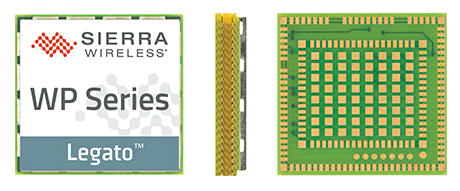
    Sierra Wireless, a provider of fully integrated device-to-cloud solutions for the Internet of Things (IoT), is offering global, dual-mode low-power wide-area (LPWA) cellular modules. The AirPrime WP77 smart wireless modules simplify LPWA deployments for customers developing products that need to connect to multiple networks where different LPWA technologies are supported.

    The Sierra Wireless AirPrime WP Series.

    The WP series simplifies development for secure telematics and gateway applications, providing a dedicated application CPU core running the Linux-based open source Legato application framework.

    With integrated GNSS for tracking and location-based services, low-power modes and a comprehensive set of interfaces for connecting sensors and companion chips, including Wi-Fi and Bluetooth, customers can develop multi-service platforms for the transportation market, and use the WP77 for applications requiring low throughput and optimized power performance.

    The WP77 supports both LTE-M (Cat-M1) and NB-IoT (Cat-NB1) with optional 2G fallback, allowing customers to deploy the same device with multiple network operators worldwide. For those deploying in regions where 4G LTE coverage is not as widely available, 2G fallback ensures their devices stay connected to the network.

    ABI Research forecasts that cellular LPWA network technologies will begin to see rapid growth from 2018 onward as carriers upgrade their networks in 2017, however, carriers have varying plans and timelines for LTE-M and NB-IoT.

    “A module with dual-mode, global coverage will be very attractive for global equipment manufacturers, especially for applications such as telematics, metering, and location tracking, which we expect will lead the way for LPWA volume deployments,” said Dan Shey, managing director and vice president at ABI Research.

    With the commercialization of LTE-M and NB-IoT LPWA technologies, cellular is now a superior option for many IoT applications that were previously restricted to short-range technologies due to cost and battery life. LPWA technologies combine lower cost, broader coverage and better battery life with globally available and secure cellular networks and will connect millions more things to the Internet.

    “With the AirPrime WP77 modules, IoT developers have everything they need in a single module to quickly build low-power connected products that can be deployed anywhere in the world,” said Dan Schieler, senior vice president and general manager, Embedded Solutions, Sierra Wireless. “The integrated open source Legato platform and AirVantage cloud provide our customers with a proven device-to-cloud architecture to design innovative LPWA solutions that extend the IoT into new applications.”

  • GPS tracking device market expected to grow 2017 to 2023

    The GPS tracking device market is expected to exhibit significant growth potential between 2017 and 2023, according to a new report by Research and Markets.

    The key driving factors for the growth of the GPS tracking device market include the increase in sales of commercial vehicles, smaller size, affordable price and high return on investment. Moreover, the advent of cellular technology reduced the service cost, while the decline in GNSS/GPS IC makes inroads in cellphone that provide the scale of economies to GNSS/GPS module supplier.

    The report is titled GPS Tracking Device Market by Type, Deployment Type, Industry & Geography – Global Forecast to 2023.

    Other findings:

    • Transportation and logistics to hold the largest share of the overall GPS tracking device market.
    • APAC will be the fastest-growing market for GPS tracking device during the forecast period.

    Learn more here.

  • Telit introduces Bluetooth module with integrated MEMS

    Telit has launched BlueMod+S42M, a Bluetooth low-energy (BLE) 4.2, standalone, single-mode module with embedded 3-axis accelerometer, temperature and humidity sensors.

    The cost-effective component is optimized for efficiency and simplicity in end-device design and manufacturing, delivering reliable BLE functionality with robust endpoint security, motion and environmental sensors and essential features that reduce development costs, bill of materials, and time to market.

    Designed for large-scale projects, the BlueMod+S42M expedites device design across a wide range of industrial and consumer applications areas, the company said. The embedded sensors are for high-value, fragile asset tracking, and time- or temperature-sensitive applications such as cold chain monitoring in the pharmaceutical and agriculture industries.

    The release of the certified BlueMod+S42M complements the Telit portfolio of Bluetooth and BLE modules and directly addresses the demand in the rapidly growing BLE-dependent market. A report released by IndustryARC Analysis, forecasts Bluetooth Low Energy enabled devices shipments to increase to 8.4 billion units by 2020 at a CAGR of 29 percent.

    “Cost, power, and reliability are critical to the success of IoT applications that demand efficient BLE solutions,” said Ronen Ben-Hamou, Telit EVP of products and solutions. “Our new qualified Bluetooth module caters to designers of all levels with tight development, materials and manufacturing cost constraints and even tighter timelines. The beauty of the +S42M is it’s simplicity: single-chip SoC (system on chip), feature packed, sensibly priced, exceptional power savings and extensive interoperability.”

    Full applications can be embedded in the BlueMod+S42M, which is a self-contained SoC requiring no additional external supporting components. It is equipped with an on-board micro controller, integrated chip antenna, passive components, T°/Humidity sensor, and an accelerometer.

    Leveraging a rich subset of features from Telit’s diverse family of BlueMod+Sx modules, including a GATT interface and terminal I/O profile combination, the new BlueMod+S42M greatly simplifies and accelerates the development of applications, Telit said.

    In addition to efficient performance and low power consumption, BlueMod+S42M includes value-added features that further streamline development:

    • Bluetooth v4.2 Qualified Module
    • RED, SRCC Certified
    • Generic GATT Client and Server
    • LE Secure Connections
    • Configurable DIS (Device Information Service)
    • LE Data Length Extension
    • Terminal I/O for Easy Transparent Data Transfer (BLE- SPP like)
    • Embedded Sensors
    • Over-the-Air Updates
    • Sample Code for iOS and Android
    • WeChat Air Sync Protocol

    Designers using the BlueMod+S42M have access to comprehensive development and integration tools including evaluation and development kits.

    Visit Telit at the Sensors Expo in San Jose, California, June 27-29, booth 1244.

  • Location and context advances in Android

    Location and context advances in Android

    Plus access to raw GNSS measurements for all

    By Steve Malkos
    Technical program manager, Google

    Google’s annual developers conference in May, Google I/O, featured many announcements, accomplishments and 2017 plans. Of particular interest, the Android Location and Context Team’s talk “Android Sensors & Location: What’s New and Best Practices,” is available online.

    This followed a keynote by CEO Sundar Pichai on solving problems at scale with deep neural networks, machine learning algorithms and artificial intelligence (AI). He also spoke about a shift from a mobile-first model to AI-first. Google is doing this across every product area, applying AI and machine learning. Other keynotes updated Assistant, Photos, YouTube, Superchat, Android and VR (virtual reality).

    The Android Location and Context team — Marc Stogaitis, Wei Wang, Souvik Sen and myself — spoke about background location, location accuracy, activity recognition, Android sensor hub, Android sensors, and the future of location and context.

    Discussing why battery life is so important, we showed detailed graphs on the costs of accessing different parts of the phone subsystems like WiFi, GNSS and making data connections.

    Then we introduced Background Location Limitations (at the 4:30 point in the posted video) coming with Android’s latest operating system in Android O. These limits will prevent applications from misusing Android’s APIs in the background, thus saving its user’s battery. There were examples on how to make your app background ready for these upcoming changes.

    We showed plans for location accuracy improvements (12:50) coming later this year and comparisons of existing vs. upcoming solutions for the positioning algorithm.

    We covered the tools to help analyze GNSS measurements. How strong are the individual measurements? How accurate are the range measurements? With these tools, developers now have direct insight into the lowest layers of a GNSS receiver. Then came activity recognition algorithms (15:40) and how deep neural networks will improve the precision of these algorithms and help advance the field in activity recognition.

    I spoke spoke about the Android Sensor Hub (20:27), how Google is leveraging the capabilities of an always-on low-power processor in Android phones. The sensor hub allows Google to port algorithms such as Activity Recognition, Geofencing and Gestures from the main application processor into the low-power sensor hub. We then went into detail around the new sensor features (25;55) and improvements around the compass (28:34).

    Finally, we looked into the future (33:28). I covered Project Elevation, Accurate Indoor Location, and dual-frequency GNSS. Closing thoughts were around how more signals are going to be added into the low-power always-on compute domains so that the phone is more aware and intelligent, simplifying users’ interactions, augmenting human memory and knowledge, and assisting users understanding of themselves and the world around them.

    Access to Raw GNSS Measurements

    In related news, our new web page is up and operational!  This site provides all the details around GNSS Raw measurements in Android along with our analysis tools for anyone to download. Our previous site was accessible to people who signed up as a partner with Google, but now we have opened up this site to everyone.

    Android GNSS Analysis Tool: Shows how you can select and run the analysis on a per satellite basis. This tool now supports multi-constellation and dual frequency (L1+L5) by default

    Android apps typically access GNSS chipsets through a filter, which improves the GNSS location output for the majority of use cases. Filters use additional sensors, such as motion sensors, to improve the end user experience. However, filtering is not appropriate for some applications used by professionals such as researchers and original equipment manufacturer (OEM) developers. The Android Framework provides access to raw GNSS measurements on some Android devices. The page lists Android devices that support raw GNSS measurements as well as tools that help you log and analyze GNSS data.

    For more on Android and raw GPS measurements, see the GPS World Innovation article Precise positioning using raw GPS measurements from Android smartphones.

  • Sprint certifies Telit module for its LTE Cat 1 network

    Sprint has announced that Telit is to start commercial deliveries of its LE910C1-NSLTE Cat 1 module upon conclusion of Sprint certification, expected this month. The product is an embedded industrial Internet of Things (IoT) LTE module delivering up to 10 Mbps download and 5 Mbps upload speeds.

    Because of pin-to-pin compatibility with both CDMA and EV-DO versions of Sprint certified xE910 modules, Telit integration support, powerful development tools and resources, the new Cat 1 module allows Sprint IoT customers to realize significant reduction in time to market and savings for both new projects as well as upgrades from 2G and 3G to LTE.

    The module will primarily be used for IoT applications, enabling cellular data communication in devices used in warehouse management, remote monitoring and control, robotics, traffic control, logistic services, supply chain management, fleet management and telemedicine.

    “We are excited to certify this module because Telit is a world-class leader in the IoT,” said Mo Nasser, director of product development and marketing at Sprint. “Having this module commercially available and Sprint certified allows us to expand the number of applications we can provide new customers and has the added benefit of simplifying migration of current IoT customers to LTE.”

    The Telit LE910C1-NS single-mode module operates in multiple bands including LTE B2, B4, B5, B12, B25 and B26. Features include a high-speed USB 2.0 port, industrial operating temperature range (-40°C to +85°C) and advanced power-saving modes (3GPP Release 12).

    “We’re certain that supplying Sprint customers with this module will open doors to numerous new application areas requiring the longevity and speeds of LTE with the reliability and coverage of the Sprint nationwide network,” said Manish Watwani, vice president of global product marketing at Telit. “We believe that our technology is cutting-edge, enabling Sprint to continue delivering world-class customer experience in the IoT space.”

  • Altair markets narrowband cellular chipset with integrated GNSS

    Altair markets narrowband cellular chipset with integrated GNSS

    LTE chipset maker Altair Semiconductor has demonstrated GNSS functionality integrated in its new ALT1250 narrowband CAT-M1 and NB1 (NB-IoT) chipset.

    In addition to GNSS functionality, the ALT1250’s extreme level of integration eliminates the need for most external components required to design a cellular Internet of Things (IoT) module.

    Its GNSS capability was demonstrated June 13  at the Sierra Wireless Innovation Summit being held at the Paris Novotel Tour Eiffel in Paris, France.

    Approximately the size of a shirt button and less than 100 mm2 in size, an ALT1250 module features support for both Release 13 standards — CAT-M1 and NB1, and includes a wideband RF front-end supporting unlimited combinations of LTE bands within a single hardware design, a multi-layered and hardware-based security framework, an internal application MCU subsystem and packaging that enables standard, low-cost PCB manufacturing.

    “Location determination is essential in many IoT applications — including asset tracking, vehicle monitoring and wearable devices. Satellite positioning is the most accurate method for doing that,” said Eran Eshed, co-founder and vice president of marketing for Altair. “Integrating GNSS functionality in the ALT1250 significantly reduces the overall cost of IoT solutions while offering state-of-the-art, low-power satellite positioning capabilities in a miniature package. The market is responding well to it.

    “We called the ALT1250 a game-changer when we announced it several months ago — integrated GNSS is one of a large set of groundbreaking innovations offered by this chip.”