Category: Applications

  • Euroship Services Gets eLoran as Backup

    Euroship Services Gets eLoran as Backup

    Container ship in port.
    Container ship in port.

    Ship management company EuroShip Services Ltd. has installed eLoran as a backup to GPS to ensure the safety of its vessels operating off the coast of the United Kingdom.

    The trial installation may lead to implementation across the full fleet of 16 vessels managed by Euroship, working routes in Northern Europe. The land-based radio navigation system is intended to seamlessly take over in the event of a GPS outage. EuroShip plans to simulate GPS outages to test eLoran provision of position, navigation and timing data automatically.

    The General Lighthouse Authorities of the UK and Ireland announced the initial operational capability of UK maritime eLoran on Oct. 31, 2014 .

    Euroship Services is one of the first ship managers to trial eLoran as a back-up to its GNSS. The company manages vessels owned by Cobelfret. They are mostly shortsea vessels, operating in and out of port, frequently in congested waters and with bridge teams that rely heavily on bridge systems for situational awareness.

    Euroship managing director Frank Davies told Lloyd’s List that the company has so far been impressed with the first trial system on one of the company’s vessels. He said that with the company’s vessels entering and exiting large European ports, crews have even noticed distorted GPS signals while going under bridges.

  • USGS Holds Stakeholder Workshops for 3D Topo Data

    This map depicts the proposed body of work for 3DEP in Fiscal Year 2015. The BAA awards will add more than 95,000 square miles of 3DEP quality LiDAR data to the national database.
    This map depicts the proposed body of work for 3DEP in Fiscal Year 2015. The BAA awards will add more than 95,000 square miles of 3DEP quality LiDAR data to the national database.

    The U.S. Geological Survey National Geospatial Program is developing the 3D Elevation Program (3DEP) to respond to growing needs for high-quality topographic data and for a wide range of other three-dimensional representations of the nation’s natural and constructed features.

    To expand awareness of 3DEP status and plans, as well as provide an open forum for 3DEP stakeholders to communicate and coordinate potential Broad Agency Announcement (BAA) proposals, the USGS is offering numerous state and regional coordination workshops.

    The meetings will be held throughout the U.S. from now until June 30. The workshops will include in-person and virtual participation options.

    The primary goal of 3DEP is to systematically collect 3D elevation data in the form of light detection and ranging (LiDAR) data over the conterminous United States, Hawaii, and the U.S. territories, with data acquired over an eight-year period. Interferometric synthetic aperture radar (ifsar) data will be acquired for Alaska, where cloud cover and remote locations preclude the use of LiDAR in much of the state.

    The 3DEP initiative is based on the results of the National Enhanced Elevation Assessment that documented more than 600 business uses across 34 federal agencies, all 50 states, selected local government and tribal offices, and private and nonprofit organizations. A fully funded and implemented 3DEP would provide more than $690 million annually in new benefits to government entities, the private sector and citizens.

    3DEP is a “Call for Action” because no one entity can accomplish it independently. 3DEP presents an opportunity for collaboration between all levels of government to leverage the services and expertise of private-sector mapping firms that acquire the data, and to create jobs.

    “When partners work together, they can achieve efficiencies and lower costs so that 3DEP can become a reality,” the USGS said in a press release. “When 3D elevation data are available to everyone, new innovations will occur in forest resource management, alternative energy, agriculture, and other industries for years to come,” the USGS said.

  • Esri Releases ArcGIS 10.3.1 with Smart Mapping, 3D Content Sharing

    Complex-3D-objects
    3D Web Scenes.

    Esri has released ArcGIS 10.3.1, bringing new capabilities.

    Smart Mapping is an innovative approach for creating maps that is available through ArcGIS Online. Users can quickly style the features of a map to create useful and visually stunning maps every time, Esri said.

    3D Web Scenes allow users to view, create, and share 3D web scenes in a browser. Available in ArcGIS for Server and Portal for ArcGIS, users can share these scenes within their own infrastructure or make them public.

    With the ArcGIS 10.3.1 release, ArcGIS for Server with Portal for ArcGIS can now host web scenes and layers that include multipatch–based 3D models and symbology, such as photo-realistic buildings, trees, and visibility domes.

    For more details about what’s new in ArcGIS 10.3.1, visit the ArcGIS blog.

  • Cap-XX Launches 0.6mm Thinline Supercapacitors for Wearables

    Cap-XX Launches 0.6mm Thinline Supercapacitors for Wearables

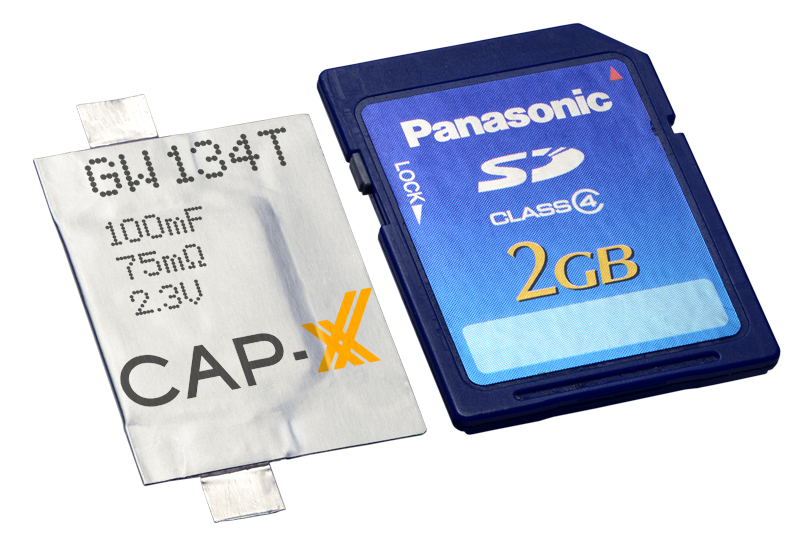
    Cap-XX Thinline Supercapacitor shown with an SD card.
    Cap-XX Thinline Supercapacitor shown with an SD card.

    Cap-XX, developer of flat supercapacitors for burst and back-up power in space-constrained electronic devices, has launched its Thinline series of single-cell supercapacitors. The thin (0.6-mm) supercapacitors were developed to address the size, weight and cost challenges of designing thin, sometimes disposable electronic devices for the Internet of Things (IoT).

    Examples include wearables (medical, fitness and health monitors, smartwatches, drug delivery systems), portables (active credit cards, smartphones, RFID tags), and connected electronics (smart homes and smart buildings, electronic shelf labels, wireless sensor networks).

    To reduce thickness and manufacturing costs, CAP-XX increased the power and energy density in its electrode materials to deliver equivalent performance in about half the volume, and eliminated the folded edges and copper terminals that contribute to thickness in its standard line supercapacitors. (For comparison, CAP-XX’s thinnest traditional single-cell supercapacitor is 1.10 mm.)

    Cap-XX Thinline supercapacitors support power requirements in IoT devices including GPS acquisition, wireless communication (Bluetooth, Bluetooth Smart, Zigbee, Z-Wave, Ant, active RFID), electronic paper and OLED displays, haptic or tactile feedback, vibration alerts, and injection or inhalation system delivery.

    Cap-XX supercapacitors benefit from a nanotechnology construction that stores electrical charge in engineered carbon electrodes on aluminium foil, to minimize resistance and maximize capacitance. The electrode construction packs the highest energy and power densities possible into thin, prismatic packages, the company said.

    Supercapacitors can handle peak power events, supporting batteries and energy harvesters configured to provide low-power current at maximum efficiency. This architecture allows designers to use smaller, cheaper, low-power batteries and extend their run-time and cycle life, or use intermittent ambient energy sources such as solar photovoltaic. Supercapacitors also enable ultra-quick device charging and wireless power transfer, and provide the backup needed for graceful shutdown and “last gasp” transmissions in mission-critical applications.

    The Thinline idea was born while working with a customer designing a disposable insulin pump. “We figured out how to eliminate materials and change some processes to reduce costs and thickness,” explained Anthony Kongats, Cap-XX CEO.

    Thinline works with thin-film, solid-state, and other low-power batteries such as coin cells/button cells, energy harvesting modules (solar, vibration/kinetic, RF, and other ambient energy sources), as well as inductive/wireless and cable/cradle fast-charging systems.

    Features of Thinline include:

    • Extremely thin, flexible packaging from 0.6mm (600µm) thick
    • Best-in-class power density and power output (up to 117kW / litre)
    • Ultra-low resistance, even at low temperatures (ESR from 16mΩ, 2x nominal at -40°C)
    • Excellent energy storage to support ambient/intermittent sources (up to 0.8Wh / litre)
    • High cell voltages to facilitate integration with primary batteries (up to 2.75V continuous)
    • Wide operating temperature range (from -40°C to +85°C)
    • Very low leakage current to maximize battery life and minimize losses (typically < 1µA)
    • Virtually unlimited charge-discharge cycle life

    Cap-XX Thinline supercapacitors are available in three footprints:

    • “A” series: 19.5mm x 20.0mm x 0.6 – 0.9mm thick, 60 – 180 mF, 45 – 200 mΩ
    • “W” series: 28.0mm x 20.2mm x 0.6 – 0.9mm thick, 100 – 300 mF, 24 – 120 mΩ
    • “S” series: 39.0mm x 20.2mm x 0.6 – 0.9mm thick, 180 – 540 mF, 16 – 75 mΩ

    Suggested retail price for all 0.6-mm cells is less than US$1 in large volumes. The 0.7 mm and 0.9 mm cells in each series have higher C/lower ESR and cost slightly more. All parts are available in a 2.3V / 70°C, or 2.75V / 85°C configuration. They can be assembled by soldering or welding (ultrasonic, laser or spot).

  • Precision Farming Report Considers GNSS, Other Tech

    Marketsandmarkets.com is offering a new report on the precision farming market, with forecasts to the year 2020. The report covers various technologies and components, including GNSS.

    The report is titled “Precision Farming Market by Technology (GPS/GNSS, GIS, Remote Sensing & VRT), Components (Automation & Control, Sensors, FMS), Application (Yield Monitoring, VRA, Mapping, Soil Monitoring, Scouting) and Geography – Global Forecasts to 2020.”

    According to marketsandmarkets.com, “Precision farming is growing rapidly from its infancy towards maturity. Driven by advancements in data management, precision farming has a remarkable impact on traditional approaches to farming. Applying technological developments in data collection and geo-location tracking, precision farming uses technology to optimize yield and detect operating efficiencies as well as deficiencies. Precision farming applications guide farmers about the right time to plant and harvest, and the amount of fertilizers and pesticides needed for better yield production. This information helps cut down input costs, fuel usage, and labor, and negate the environmental impact. Farmers across the globe have been benefitted due to innovations in precision agriculture.

    “Major drivers for this market are augmented yield and profitability, which are contributing factors for farmers to opt for precision farming; other drivers like energy and cost saving, and government assistance have also been contributing to the market growth. Major restraints like high initial investments, and lack of awareness and their impact analysis are also covered under this study.

    “The total precision farming market size is expected to grow at a CAGR of 12.2% from 2014 to 2020 and reach $4.55 billion by 2020. The report analyzes the precision farming supply chain, giving a very clear insight of all major segments and supported segments to the industry. The report also provides a detailed scrutiny of the Porter’s five force analysis for the market. All five major factors in these markets have been quantified using internal key parameters governing each of them.

    “The report also includes company profiles of leading players in this industry with their recent developments and other strategic business activities. The competitive landscape section of the report entails key growth strategies and detailed market share analysis of key industry players. Some of the major players in the precision farming market are AgJunction Inc. (U.S.), Ag Leader Technology (U.S.), Dickey-John Corporation (U.S.), Teejet Technologies (U.S.), Deere & Company (U.S), Trimble Navigation System (U.S.), Precision Planting Inc. (U.S.), ACGO Corporation (U.S.), Topcon Precision Agriculture (U.S.), and Raven Industries Inc. (U.S.).”

  • Juniper Systems Pulls Cedar Tree Under Its Banner

    Juniper Systems Pulls Cedar Tree Under Its Banner

    CT4-Handheld-W
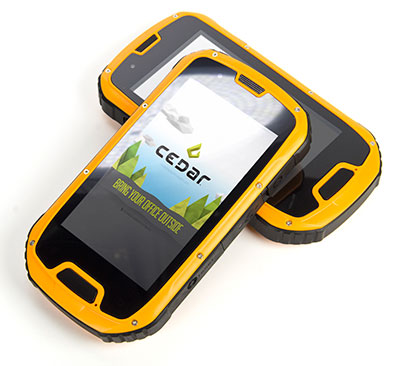
    The CT4 and other rugged handhelds by Cedar Tree Technologies will now be available through Juniper Systems.

    Juniper Systems is merging its subsidiary company, Cedar Tree Technologies, into Juniper Systems. The move will allow customers to purchase Cedar’s Android-operated rugged handhelds directly from Juniper Systems.

    Juniper Systems launched Cedar Tree Technologies as a rugged handheld company in August 2014.

    “With a reputation for top-of-the-line, ultra-rugged handheld computers, Juniper Systems aimed to expand its products to meet the needs of customers who may not need the outstanding level of ruggedness or support that Juniper handhelds provide. And that’s how Cedar Tree Technologies began. Cedar handhelds lie somewhere between consumer devices and Juniper Systems’ ultra-rugged handhelds, providing a mesh of both ruggedness and affordability,” said a statement from the company.

    Cedar handhelds run on the Android operating system, offering access to thousands of business-ready apps and Google services via the Google Play Store. This provides users with an off-the-shelf product, eliminating the need to download third-party data collection software. Juniper Systems has published a blog post that outlines the differences between Cedar and Juniper handhelds.

    The Cedar product line that Juniper Systems will now be carrying includes three new handheld devices:

    • CT7 Rugged Tablet. Featuring a large, 7-inch display, the CT7 tablet is IP67 waterproof and dustproof, and is priced at $899 USD.
    • CT4 Rugged Handheld. The CT4 handheld is a more compact device than the CT7. Featuring a 4.3-inch display and an IP68 waterproof and dustproof rating, it is priced at $489.
    • CMP1 Miniphone. The CMP1 Miniphone is rated IP65 (dustproof and resistant to water), and is ideal for swapping out a regular smartphone for outdoor excursions, for kids, or for use as an emergency phone. The CMP1 sells for $124.

    To learn more about Juniper Systems’ new Cedar handhelds, visit the company website.

  • Antenova’s Tiny Weii Antenna Designed for Consumer Applications

    Antenova announces its first antenna for consumer applications — the tiny Weii 2.4-GHz ceramic antenna. Measuring 1 mm x 0.5 mm x 0.5 mm, the company believes the Weii could be the smallest antenna in the world.

    The new Weii miniature ceramic antenna is designed for 2.4-GHz, Bluetooth, Wi-Fi, Zigbee and industrial, scientific and medical (ISM) applications.

    While all of Antenova’s antennas and antenna module products are small surface mounted devices, this antenna is the smallest that Antenova has created so far. It is designed specifically for the consumer, Internet of Things (IoT) and machine-to-machine (M2M) markets.

    Colin Newman, Antenova’s director and vice president of sales, explains how Antenova has miniaturized the antenna. “Ceramic antennas offer low dielectric losses and high isolation. Our engineers have used this technology to greatly reduce the antenna volume without sacrificing performance. The challenge in building antennas for today’s small consumer devices is to achieve high isolation and frequency selectivity while maintaining good efficiency. This antenna is resistant to detuning from environmental effects, and combining this with its ultra-small size, makes it ideal for today’s wearable products.”

    The Weii is an omni-directional, surface-mount device (SMD) mounted dielectric antenna that can be used to add wireless connectivity to any small electronic device, such as wearables, headsets, medical devices, personal navigation devices, dongles and sensors.

    A ceramic antenna offers several advantages for these emerging applications. Its tiny footprint is designed for the new, scaled-down printed circuit boards (PCBs) that are being developed for consumer devices in M2M. It offers a highly efficient antenna that is powerful over indoor ranges, and that performs well when sited close to the human body, Antenova said.

    Antenova says it takes a unique approach to the design of antennas, which it calls “Design For Integration” (DFI). Because the antennas are always embedded within a customer’s design, the successful operation of the customer’s device depends upon obtaining the correct performance from the antenna when it is placed on the PCB; therefore, Antenova is designing its antennas with this difficult RF integration in mind.

    The Weii is designed to be easily integrated into all kinds of PCB designs and various ground plane sizes — it has been engineered so that it can simply be dropped into the design, using CAD footprint files, which are provided free of charge. To ensure that customers can harness the antenna successfully and achieve the optimal performance of the antenna, Antenova provides engineering assistance along with advice on RF design layout and the integration of the antenna, and customer support.

    The antennas are available through distributors worldwide. See www.antenova-m2m.com for more details, or to request a sample board for the Weii antenna.

  • Fleetmatics’ Intelligent Routing Tool Coming This Summer

    Fleetmatics’ Intelligent Routing Tool Coming This Summer

    Fleetmatics_Routist_Screen-O

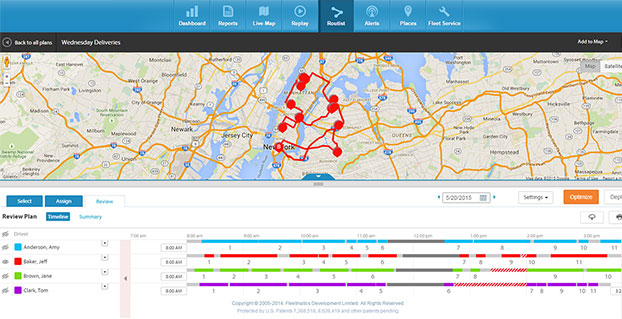
    A new routing program from Fleetmatics Group is coming this summer. Fleetmatics Routist is an intelligent routing optimization solution that systematically builds the most cost-effective, customer-friendly routes for fleets.

    Fleetmatics Routist seamlessly calculates and deploys route plans to drivers in the field, and features real-time and historical data that gives users the most holistic view into routing performance, the company said.

    Fleetmatics Routist operates by taking locations, vehicles, time windows, technician skills, and costs and capacities into consideration, among other inputs, while remaining simple and intuitive for customers to use. Fleetmatics Routist also incorporates historical traffic data into its algorithm, elevating traffic and routing optimization effectiveness for customers operating in metropolitan areas.

    “Inefficient routing wastes minutes, miles and money, leaving on-time arrivals and important elements of customer satisfaction to chance,” said Jill Ward, president and chief operating officer of Fleetmatics. “Customers that choose Fleetmatics Routist won’t have to worry about manual or time-consuming routing, and we fully expect the benefits will extend to their customers, as well.”

    Fleetmatics Routist’s robust feature set, offered to customers as an add-on module, will integrate into the Fleetmatics REVEAL fleet management solution, helping it to become one of the most effective routing optimization solutions known to be available today. Customers can import work orders from electronic files or integration with their order management software, select the drivers involved in the plan, and get a cost efficient and customer satisfying route, Fleetmatics said.

    Route planners can make adjustments to the plan based on their own business insight, and then deploy to the field. Route plans can be delivered effortlessly to drivers via the Fleetmatics REVEAL Field Application for smartphone and mobile devices, via Garmin integrated devices or simple route sheets printed at the office.

    Once the routes are live, dispatchers and managers stay current on a driver’s progress against route stops in real-time on the Fleetmatics REVEAL live map and can make real-time adjustments as needed. When the day is done, actual versus plan analysis is available to compare the stops made by drivers against the work orders provided, so managers can provide appropriate coaching around route deviations and the impact of field activity on customer satisfaction.

    Register here to receive additional information and notice of Fleetmatics Routist’s availability.

  • New Airbus A350 Airliner Comes EGNOS-Capable

    New Airbus A350 Airliner Comes EGNOS-Capable

    Airbus_A350_node_full_image_2
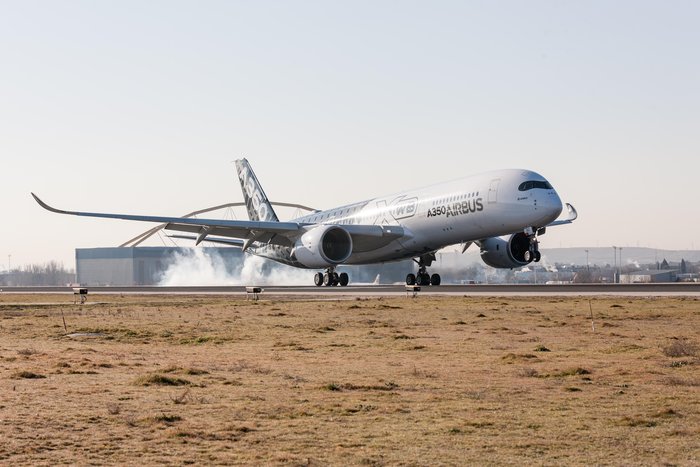
    The twin-engine, wide-body Airbus A350 XWB, seen here at Spain’s Adolfo Suárez Madrid-Barajas airport, comes with EGNOS capability.

    News by the European Space Agency

    The EGNOS system, developed by the European Space Agency (ESA) for sharpening the accuracy of satnav across Europe, has been adopted by a growing number of airports to enable satellite-guided landing approaches. The new Airbus A350 airliner, currently entering service, comes fitted with it as standard.

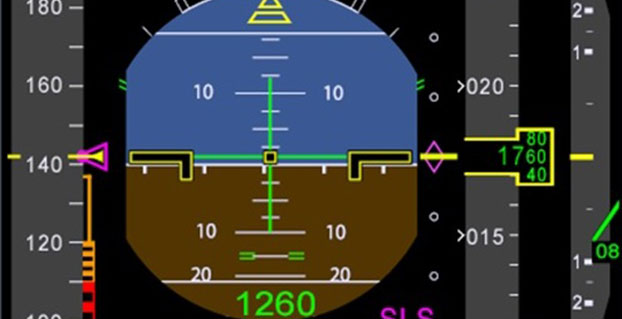
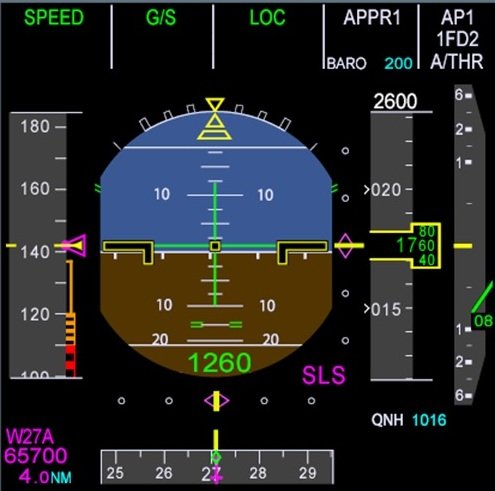
    “For the first time on the A350 we have a new system called the Satellite Landing System,” explained Jean-Francois Bousquie, an Airbus flight-test engineer focused on avionics. “This allows pilots to perform precision landing approaches guided by EGNOS or its U.S. equivalent, WAAS, offering vertical guidance down to a minimum of 60 meters before the pilot sights the ground to make the go/no-go decision on the final landing descent.”

    A350 isi equipped with a new system called the Satellite Landing System, allowing pilots to perform precision landing approaches guided by EGNOS or its US equivalent WAAS. This capability offers vertical landing guidance down to a minimum of 60 m before the pilot sights the ground to make the go/no-go decision on the final landing descent.
    The A350’s Satellite Landing System allows pilots to perform precision-landing approaches guided by EGNOS or its U.S. equivalent, WAAS. The capability offers vertical landing guidance down to a minimum of 60 miles before the pilot sights the ground to make the go/no-go decision on the final landing descent.

    The European Geostationary Navigation Overlay System, or EGNOS, can provide horizontal and vertical guidance to anywhere in Europe, without the need for any additional airport-hosted infrastructure. By using three geostationary satellites and a 40-strong network of ground stations, EGNOS improves the accuracy of GPS signals over European territory, while also providing continuous updates on their integrity.

    The result is that the EGNOS-augmented signals are guaranteed to meet the extremely high performance standards set out by the International Civil Aviation Organisation standard, adapted for Europe by Eurocontrol, the European Organisation for the Safety of Air Navigation. The signals from space can therefore be relied on routinely for the safety-critical task of vertically guiding aircraft during landing approaches.

    A total of 131 airports in Europe offer some 225 EGNOS-based approach procedures. By 2020, 582 landing procedures are expected across 20 European countries. The largest international airports use Instrument Landing System (ILS) infrastructure, with radio beams offering a truly precision landing capability, including the ability to autoland when visibility is at its worst.

    But ILS is expensive to install and maintain, so smaller regional airports often forego it. The same is true of many new or expanding airports. Even with larger airports, in many cases only their busiest runways are equipped with ILS. So EGNOS offers a cost-effective way of safely increasing use of remaining runways, boosting the flexibility of any given airport.

    “By reducing the value of the minima — the lowest safely guided altitude — for non-ILS runways, EGNOS increases the efficiency and safety of aircraft landings,” added Bousquie. “The take-up of EGNOS by European airports remains relatively low for now, but this should change over time. And with the A350, we are really designing for the long term — each aircraft will have a working life of 25 to 30 years.”

    “Every qualified commercial airline pilot has been trained on ILS, to follow its radio beam,” Bousquie said. “So the Satellite Landing System works by having them follow the same type of cues as much as possible on a ILS ‘look-alike’ basis, employing all available navigation data including EGNOS.”

    A pair of onboard Multi Mode Receivers manage the A350’s radio sensors, compute the deviations and ensure interface with display and guidance systems.

  • Apple Acquires GPS Company Coherent Navigation

    Apple has acquired Coherent Navigation, according to various media reports.

    Coherent Navigation is a Bay Area GPS firm founded in 2008 by engineers from Stanford and Cornell. One of its areas of focus was high-integrity GPS (iGPS), an enhanced version of GPS that uses both normal, high-altitude GPS satellites and lower-altitude voice and data satellites from Iridium to increase the accuracy of a consumer’s GPS reading from the ground.

    The acquisition seems to be Apple’s latest efforts to bolster its mapping capabilities.

  • Lockheed Martin Demonstrates Indago UAS at AUVSI Show

    Lockheed Martin Corporation demonstrates its Indago UAS at Unmanned Systems 2015, held May 4-7 in Atlanta. The Indago payload system features a quick disconnect adapter which allows the operator to choose the appropriate payload for the mission, according to Lockheed Martin. The payloads are available for a variety of different applications, including agricultural, mapping, inspection and ISR.

  • Derailed Train in Philadelphia Lacked Automatic Controls

    An automatic train control system — many of which use GPS — was not installed on the commuter rail route where an Amtrak train left the track on Tuesday, according to the National Transportation Safety Board. The advanced safety technology, known as positive train control, is designed to prevent high-speed derailments.

    Seven people were killed and more than 200 injured when Amtrak Northeast Regional Train 188 with seven cars derailed while rounding a curve at more than double the 50-mph speed limit.

    An Advanced Civil Speed Enforcement System (ACSES) was due to be installed on the route before the end of the year.

    The U.S. Department of Transportation describes these methods of positive train control, most of which use GPS:

    • ACSES (Advanced Civil Speed Enforcement System). A transponder-based system, in use on Amtrak’s Northeast Corridor originally put into use on the Northeast Corridor by the specific requirements of an Order of Particular Applicability. This type of positive train control system has been approved and certified by the Federal Railroad Administration (FRA).
    • ETMS (Electronic Train Management System). A GPS- and communications-based system being deployed by BNSF Railway.
    • I-ETMS (formerly called Vital Electronic Train Management System). A GPS- and communications-based system, not yet ready for deployment. It is the system of choice for CSX Transportation, Norfolk Southern Railway and Union Pacific Railroad. BNSF Railway is to upgrade to it when software is available; various passenger/commuter and other railroads are adopting it for compatibility and interoperability.
    • ITCS (Incremental Train Control System). A GPS- and communications-based system used by Amtrak on its Michigan line, authorized for passenger train speeds up to 110 mph, originally put into use by the specific requirements of an FRA-approved waiver. ITCS certification through Amtrak’s request for expedited certification process is pending successful resolution of a few remaining issues before FRA approval for certification.

    The Rail Safety Improvement Act of 2008 mandates that positive train control be implemented across a significant portion of the nation’s rail industry by Dec. 31, 2015.