Category: Survey

  • On the Edge: Sensing the Rivers

    Photo courtesy of Jérôme Thai
    UC Berkeley researchers have developed a method to provide real-time, high-resolution data in hard-to-map waterways, using GPS. Tossing a robot is Andrew Tinka, with Kevin Weekly. (Photo courtesy of Jérôme Thai.)

    By Tracy Cozzens

    A fleet of 100 robots equipped with GPS and sensors were released May 9 into California rivers to measure water flow, salinty levels, and pollution. The Floating Sensor Network is a project by the University of California, Berkeley, to improve the way water quality and flows are monitored.

    About two-thirds of California’s fresh water is in the Sacramento-San Joaquin river system where the test took place. This water supplies about two-thirds of the state’s population with drinking water and irrigation. The initiative is led by associate professor Alexandre Bayen at the Center for Informatin Technology Research in the Interest of Society (CITRIS).

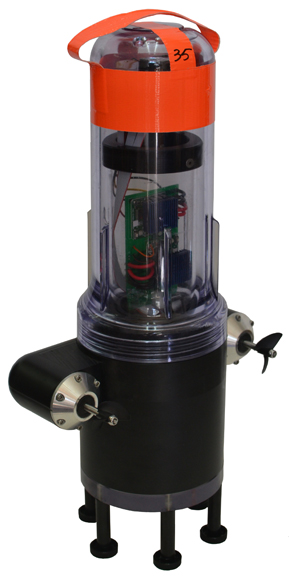
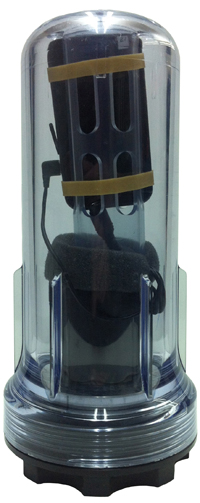
    The robots each have a sensor to test salinity and a GPS unit from a smartphone. Some have propellers so they can maneuver around obstacles and reach specific destinations. The robots also sent Tweets to @fsnandroid61.

    The robots drifted through the area of the river being measured, then were retrieved by boat. “One advantage of our real-time communication system is that we can see where all our sensors are on a map, which makes it very easy to chase them down and retrieve them,” said graduate student researcher Andrew Tinka.

    With the first test completed, the team’s efforts over the summer have two priorities, Tinka explained. “First, we’re using the flow data that we gathered on May 9 to understand how this ‘mobile’ data can be best used for river hydrodynamics studies. We’re learning how to turn the individual traces of water that each sensor gives us into a big-picture view of the entire river region, sort of how like meteorologists take the data from a few weather stations and turn it into an overall view of what the weather is doing over a large area. Second, we’re working with other hydrodynamics research groups to expand the use of this kind of mobile sensor. We’re loaning our equipment to other groups, doing pilot projects with others, and basically trying to get these sensors into researchers’ toolboxes throughout the water community.”

    There are two types of devices in the fleet, active and passive. The active sensors have a twin-propeller drive system that lets them move through the water to avoid obstacles or stay in the correct region of the river. “We developed the internal electronics for this device ourselves,” Tinka said. “We integrated a Magellan AC12 GPS receiver along with a Gumstix embedded computer and a Motorola GSM module. Our passive sensors don’t have a propulsion system; they do exactly what the water does. We developed this system with a focus on cost and ease of assembly.” The team used a waterproof consumer smartphone, the Motorola Defy, for the GPS positioning, computation, and comunications.

    So far, the test has proven the usefulness of such a network. The devices were developed to be easily deployable, especially where a lot of flexibility is needed, such as in disaster response. “The ability to quickly and easily put these sensors into new inland environments, by just about any method (throw them from a boat, drop them from a helicopter, toss them from a dock or a bridge) makes them a really useful new tool,” Tinka said.

    photos courtesy of Jonathan Beard
    photos courtesy of Jonathan Beard
    photos courtesy of Jonathan Beard
    photos courtesy of Jonathan Beard

    A hundred robots, 40 with propellers, were released into the Sacramento River near Walnut Grove (photos courtesy of Jonathan Beard).


  • LightSquared and Another FCC Issue You Should Be Aware of

    Although the LightSquared issue seems to have waned, it’s like a virus in that it’s really difficult to erradicate it completely. However, Harbinger Capital Partners (LightSquared’s primary financial backer) and LightSquared are facing tougher problems than they have since they’ve started this adventure, not only from their technical foes but now from the U.S. Securities and Exchange Commission (SEC).

    Earlier this week, the SEC filed fraud charges against Phil Falcone and Harbinger. In particular, the SEC alleges that:

    • Falcone fraudulently obtained $113.2 million from a hedge fund that he advised and misappropriated the proceeds to pay his personal taxes;
    • Falcone and two Harbinger investment managers through which Falcone operated manipulated the price and availability of a series of distressed high-yield bonds by engaging in an illegal “short squeeze;”
    • Falcone and Harbinger secretly offered and granted favorable redemption and liquidity rights to certain strategically-important investors in exchange for those investors’ consent to restrict redemption rights of other fund investors, and concealed the arrangement from the fund’s directors and investors; and
    • Harbinger engaged in illegal trades in connection with the purchase of common stock in three public offerings after having sold the same securities short during a restricted period.

    “Not only are hedge fund managers expected to be savvy investors, they are supposed to serve the interests of their clients. Here, in addition to raiding a fund for personal benefit and cutting secret deals with favored investors, Falcone then lied to investors about what he had done,” said Bruce Karpati, Chief of the Asset Management Unit in the SEC’s Division of Enforcement.

    This follows a civil lawsuit filed on February 17, 2012 by Harbinger investors, claiming Breach of Fudiciary Duty, Gross Negligence, Breach of Contract, and Fraud.

    It also follows LightSquared filing Chapter 11 bankruptcy on May 14, 2012.

    Yes, it’s getting ugly. However, they aren’t giving up. I wouldn’t expect so after spending ~$4 billion on this project.

    LightSquared’s latest proposal to the Federal Communications Commission (FCC) is a spectrum swap. Read the details of their proposal here. In fact, LightSquared was able to convince a group of your legislators to lobby the FCC in support of the spectrum swap.

    “In the absence of a viable technical solution that would allow LightSquared to use its own licensed spectrum, we believe a spectrum swap is the most resourceful and efficient way to quickly expand broadband access nationwide,” wrote Reps. Jim Moran (D-Va.), Maurice Hinchey (D-N.Y.), Steve Rothman (D-N.J.), Rodney Alexander (R-La.) and Ander Crenshaw (R-Fla.), who all serve on the Appropriations Committee.

    Seriously? Our own U.S. legislators want to trade for spectrum worth almost nothing for spectrum worth billions of dollars? Who’s side are these people on? Clearly, not the taxpayer. However, there’s little or no chance a spectrum swap is going to happen. It’s a dream that they ran up the flagpole so see who would salute it. I doubt anyone did, at least anyone of significant influence, and now the legislators can say they fulfilled their obligations (in exchange for ??) and no harm done.

    Serious Technical Issues Still Exist

    Aside from the serious financial, legal, and political challenges LightSquared faces, they are no closer to solving the GPS interference problems disclosed a year ago.

    If you recall, the National Telcommunications and Information Administration (NTIA), a U.S. government agency tasked by the FCC to study the LightSquared/GPS interference issue, concluded:

    “The federal agencies and LightSquared have invested significant time and resources to identify and analyze proposed solutions to address the impact of LightSquared’s planmned network implementations. Based on the testing and analyses conducted to date, as well as numerous discussions with LightSquared, it is clear that LightSquared’s proposed implementation plans, including operations in the lower 10MHz would impact both general/personal navigation and certified aviation GPS receivers. We conclude at this time that there are no mitigation strategies that both solve the interference issues and provide LightSquared with an adequate commercial network deployment.”

    That pretty much says it all. While the “lower 10” the NTIA is likely a technically solvable problem, the cost of redesigning and redeploying GPS receivers across commercial, military, aviation, etc. markets to accomodate the lower 10 MHz is huge. It’s likely in the high tens of billions or even into the hundreds of billions.

    The upper 10 MHz of LightSquared’s spectrum, there is no practical technical solution that exists. If there was one, even one that was close, LightSquared would be talking about it all day long. You can bet that many engineers from many different companies and agencies have been working to solve this technical problem since early last year, but no one has come up with any reasonable solution yet. Also, remember that the upper 10 MHz hammered the vast majority of all GPS receivers in existence, not just high-precision receivers.

    The Way Forward

    Without a technical solution to their GPS interference problem, LightSquared is stuck trying to convince regulators that it deserves to be gifted alternative spectrum since they couldn’t make theirs work. As I wrote earlier, I think the possibility of a spectrum swap is low, but the conversation may linger.

    From now on, it’s clear that the technical discussion has disappeared. It’s turning into a pure political discussion. Even though the FCC received the NTIA’s recommendation to not allow LightSquared to proceed back in February, the FCC still hasn’t declared a ruling on anything regarding this matter. Some speculate that they won’t make a ruling before the U.S. presidential election this coming November in order to fly under the radar. For this reason, it would not be surprising to me if this issue hung in limbo for the rest of the year; dormant, but it’s still lurking, like a virus.

    Last Monday, June 25, 2012, I was a guest on America’s Web Radio’s ACSM Radio Hour discussing the current LightSquared situation. It’s a good discussion (60 minutes). The podcast is a standard audio recording you can play on your MP3 player or listen to on your computer. You can download it here.

    FCC Narrowbanding Rule

    While we’re on the subject of the FCC, you might have heard about the Narrowbanding rule the FCC established some years ago. It’s going to kick in January 1, 2013. If you’re an RTK user who uses UHF or VHF radios, you’re likely going to be affected and should be aware of it. Following is a summary statement from the FCC:

    “On January 1, 2013, all public safety and business industrial land mobile radio systems operating in the 150-512 MHz radio bands must cease operating using 25 kHz efficiency technology, and begin operating using at least 12.5 kHz efficiency technology. This deadline is the result of an FCC effort that began almost two decades ago to ensure more efficient use of the spectrum and greater spectrum access for public safety and non-public safety users. Migration to 12.5 kHz efficiency technology (once referred to as Refarming, but now referred to as Narrowbanding) will allow the creation of additional channel capacity within the same radio spectrum, and support more users.

    After January 1, 2013, licensees not operating at 12.5 KHz efficiency will be in violation of the Commission’s rules and could be subject to FCC enforcement action, which may include admonishment, monetary fines, or loss of license.”

    Essentially, the FCC is trying to increase the efficiency of the UHF and VHF radio spectrum so it can accomodate more users.

    If you use UHF or VHF radios for RTK, you’ll likely need to upgrade or replace your UHF/VHF radio hardware. Be aware that this could be quite expensive.

    Following are some relevant FCC documents on the matter:

    May 13, 2008 Fourth Memorandum Opinion and Order

    January 5, 2012 Reminder from FCC Regarding Narrowbanding Transition

    February 21, 2012 FCC Provides Supplemental Guidance For Licensees In The 150-174 MHz and 421-512 MHz Bands Seeking Waivers Of The Narrowbanding Deadline

    Following is a link to a page on Pacific Crest’s website regarding narrowbanding transition:

    The FCC’s Narrowbanding Regulations

    April 30, 2012 Pacific Crest Letter “Applying for a 25kHz FCC License”

    Look for more from me on this subject soon as the deadline is looming.

    Thanks, and see you next time.

    Follow me on Twitter

  • Topcon Helps Search for Evidence of UFOs in New Show

    Chris Carter’s famous X-Files slogan,“The truth is out there,” is put to the test when a team of pioneering investigators pushes the limits to find the truth behind unexplained UFO sightings, using modern technology for data collection and analysis. Topcon’s IS-3 imaging station is featured in "Chasing UFOs," which premieres June 29 on the National Geographic Channel.


    Topcon’s Scott Langbein (right) provided training on the Topcon equipment to
    investigator Ben McGee (left) during the filming of the series “Chasing UFOs.”

    According to the National Geographic Channel (NGC), these real-life “Scullys and Mulders” are not looking for more stories on extraterrestrial activity — they want answers. An investigative team comprised of one believer, one skeptic and one independent thinker, the dynamic team examines a well-documented UFO sighting (Roswell, N.M.), meets with an alleged alien abduction survivor in Colorado and even tracks glowing orbs near NASA’s Kennedy Space Center.
     
    NGC’s new eight-part series “Chasing UFOs,” premieres Friday, June 29, 2012, at 9 p.m. ET/PT, with a second all-new episode airing at 10 p.m. ET/PT.
     
    A Topcon IS-3 imaging station is used to gather site data for analytic research in three episodes — the June 29 series premiere “Texas is for sightings,” July 13 “UFO landing zone,” and July 20 “Abducted in Arizona.” In Texas, the experts witness lights in the skies that leave them with new questions.  In the July 13 episode, the three thrill-seekers explore the famed crash site in Roswell where they challenge a possible military cover-up and in the July 20 episode, the team collects video footage of unusual-shaped lights over Arizona.

    Scott Langbein, Topcon Positioning Systems director of product marketing, served as onsite technical consultant for the New Mexico shoot, working with the team on the use of the IS-3 imaging station for pinpoint scanning and mapping of the Roswell site.
     
    Langbein said, “Topcon was invited to meet up with the investigative team in Roswell. The IS-3 imaging technology of measurements and photo documentation is powerful, so a little training was required. They picked it up really fast and were able to take the gear with them to their other scenes.  It was a lot of fun to see the IS-3 used in a unique way. Who would have thought an IS-3 would be used to investigate UFOs?


    Investigator Ben McGee, shown here while shooting the new series “Chasing UFOs”
    at night, used the Topcon IS-3 imaging station to quickly establish onsite reference grids.


    “The three investigators — Ben McGee, Erin Ryder and James Fox — were completely professional in their scientific approach to the project, and quickly picked up how beneficial the IS-3 scanning speed and image collection could be for the investigations.”

    The IS-3, in addition to taking the industry’s longest scanning range (to 6,500 feet), provides industry-best accuracy, automatic scanning speed as well as on-board features providing quicker scanning definition, faster image collection and real-time preview of scanned data.

    Ben McGee, an experienced geologist, radiation scientist and field explorer said, “As a field geoscientist, I cannot speak highly enough of Topcon's survey, scanning and imaging equipment. Holding up under the most demanding field conditions and shrugging off the rigors of off-grid travel, we were able to rely on the IS-3 to help us quickly establish onsite reference grids for scientific data and sample collection, survey key topographic features, and digitally preserve the site using 360-degree panoramic imaging — all from a single tripod.  With this unit, we were able to accomplish multiple days' worth of work in a fraction of the time.”

    McGee said, “On the Roswell UFO debris field and at the alleged century-old UFO crash site in Dublin, Texas, we established reference survey grids of appreciable size of the sites we were investigating.

    “Additionally, the imaging station was also used to create detailed panoramas of the famed ‘Fire in the Sky’ Travis Walton UFO abduction site in the deep forests outside of Snowflake, Arizona, and used for onboard ranging to identify the precise locations of historical tree core sampling.”
     
    McGee said, “Survey projects that would have taken hours and days 10 years ago, with the aid of Topcon's IS-3, now take only seconds and minutes. The IS-3 allowed us to hit all our goals and objectives quickly and with incredible accuracy.”

  • Gakstatter Speaks at Field Tech Conference, Registration Now Open

    Eric_Gakstatter_Savannah_9137Eric Gakstatter, GPS World’s editor for survey and Geospatial Solutions Weekly, will be a keynote speaker at the Second Annual Field Technology Conference (FTC 2012). FTC 2012 is hosted by the Western Forestry and Conservation Association (WFCA), GPS World magazine, and Geospatial Solutions Weekly.

    The conference will be held September 26-27 at the Holiday Inn Convention Center in Portland, Oregon. This unique conference, centered around geospatial technology, features tracks on field devices (handhelds/tablets, GPS, lasers, 3D scanning), remote sensing (aerial photography, satellite imagery, airborne lidar), and mapping software (mobile GIS, open source GIS, datum conversions).

    The opening general plenary session will feature world-class experts in emerging geospatial technologies of Unmanned Aerial Vehicles/Systems (UAV/UAS), Mobile GIS, Open Source GIS, and GPS/GNSS. The keynote speakers will discuss how these emerging technologies are changing the way geospatial data is collected and managed. Besides Gakstatter, featured speakers include:

    • Dr. Joe Paiva – Paiva Consulting
    • Jeff Shaner – Esri Mobile Technology Program Manager
    • David Percy – Portland State University GIS Research Faculty

    “Audience feedback from last year’s conference was very good,” said keynote/moderator Eric Gakstatter. “Attendees said they appreciated our intimate and focused content as well as expert analysis of technology trends. Listening to feedback from last year’s attendees, we’ve expanded a bit this year to include outdoor demonstration sessions with UAVs, handhelds/tablets, laser rangefinders, mobile phones, and GPS units. We’ve also attracted more experts from around the country to present their work and thought leadership.”

    Registration for the Second Annual Field Technology Conference (FTC) is now open. 2011 attendees included representatives from federal, state, and local government, Fortune 1000 companies, Native American tribes, higher education, and natural resource consultancies.

    The registration fee is $245 if registered by September 21, and $295 if registered after September 21, 2012. The registration fee includes lunch on both days as well as refreshments during breaks. The conference room rate is $99/night plus tax. After September 5, the reduced rate will be subject to availability.

    For more information as well as a draft of the conference agenda, visit the website.

    Sponsorship opportunities are available. Contact Richard Zabel.

    A two-minute Youtube video of last year’s conference:


  • Hemisphere GPS Introduces A325 GNSS Smart Antenna

    Today, Hemisphere GPS introduced the A325 GNSS Smart Antenna. It incorporates professional-level centimeter and sub-meter positioning accuracy powered by Hemisphere GPS' Eclipse receiver technology and includes L-band and Bluetooth communications support. A325 is designed for a variety of applications including agriculture, construction, straddle carriers, robotics, marine, survey, and GIS, Hemisphere GPS said.

    A325 accuracies are software scalable to be custom configured for the customer's specific needs and budget. Users can take advantage of free SBAS sub-meter accuracy or decimeter-level L-band support. For more precise needs such as land and hydrographic surveying, customers can activate the centimeter-level RTK feature with robust GPS and GLONASS positioning utilizing Hemisphere GPS' exclusive SureTrack technology.

    Various communication options within A325 make it compatible with a range of data collectors, terminals, and software applications. With dual serial ports offering NMEA 0183, a wireless Bluetooth mode, controller area network (CAN) interface that supports NMEA 2000, and pulse outputs the A325 will quickly and easily connect to systems used by positioning, navigation, and machine control professionals, Hemisphere GPS said.

    With a durable IP-69K sealed and lightweight enclosure that houses both antenna and receiver, A325 is easy to install and operate in harsh environmental conditions, the company said, and can be mounted on vehicles and backpacks. Wireless connections to a data controller make it easy to establish positions and attributes, making A325 useful for mapping municipal assets, forestry, and topographical features. The easy-to-see multi-color LED status indicator and integrated 2D tilt sensor enable offset corrections and add to the simplicity of A325.

    "A325 offers customers a very versatile precision GNSS smart antenna at an amazing price," said Phil Gabriel, Vice President and General Manager, Precision Products, for Hemisphere GPS. "This enhances our GNSS receiver portfolio, allowing us to offer customers a wider range of products and solutions to meet their needs."

    A325 is now available through the Hemisphere GPS Precision Products global dealer network. For more information about Hemisphere GPS' Precision Products and A325 antenna, visit www.hemispheregps.com/precision.

  • Esri Releases ArcGIS for Windows Mobile 3.0

    Esri announced the release of ArcGIS for Windows Mobile 3.0 and its availability for download from the Esri Customer Care site.

    According to the announcement, with a new name and a new version number, ArcGIS for Windows Mobile 3.0 includes significant enhancements and improvements to the user experience, architecture and deployment of mobile solutions.
     
     
    Here are a just a few highlights of 3.0:
     
    Creating and Managing Field Projects
     
    • Simplified Project Management – with the 3.0 release you can include mobile caches, basemaps and project extensions inside the mobile projects you create. So all you need to do is pull or push the project to your device and it will unpack and manage the offline data content as well as any and all extensions.
    • Project and Service Validation – the Mobile Project Center includes a validation framework that will ensure the integrity of your field projects by detecting, notifying and recommending changes before you publish out to your field workers.
    • Qualify Map Layers for Synchronization – 3.0 simplifies the way you synchronize changes between the client and server. You can fully qualify the behavior of map layers inside of the project so your field workers need not worry about the details of synchronizing edits/changes.

    Using the ArcGIS Application (Windows Mobile)

    • GPS – the integration and use of GPS has improved considerably. First time install walks you through a process of configuring GPS for use with your device, now you can view GPS position info on top of the map using the GPS info bar, navigate to a feature using a GPS compass, auto-populate GPS information when creating new features, and create new features using a simplified collection process (single shot GPS collection).
    • Attachments – now you can attach media to your features. Using Geodatabase Attachments you can capture many photos per feature and you can attach other media types to features that are both editable and read-only (pdfs, docs, videos, etc). Attachments are fully supported for offline use on your device and special consideration is taken during the synchronization process as well.
    • Feature Editing – now you can update the location of existing features and in a field-savvy way! Explore new workflows for data capture/editing with the ability to extend a line or replace the portion of a feature using GPS.
    • Auto-populate and user identity – with 3.0 you can greatly simplify the collection of attributes by automatically populating values such as GPS information, the user identity and date/time of capture, and more.
    According to the ArcGIS Resource Center Blog, ArcGIS for Windows Mobile 3.0 is a really big release and there is a lot to discuss. Look for more articles on focused enhancements, workflow improvements and more coming soon. For a list of what is new, check out the documentation available on the Resource Center.
  • Magellan eXplorist GIS Pro 10 GPS Now Offers Effigis OnPOZ Data Collection and Post-Processing Software

    Magellan and Effigis announced a partnership and reseller agreement to create a comprehensive out-of-the-box solution for Magellan customers to collect and post-process geo-localized data using Effigis OnPOZ software on the Magellan eXplorist GIS Pro 10.


    According to the announcement, as part of the partnership, three Effigis OnPOZ precision positioning software products are available for the Magellan eXplorist GIS Pro 10, a rugged, lightweight and waterproof handheld GPS device specifically designed for professional GPS/GIS data collection.   

    • EZTag CE, geospatial data acquisition software, facilitates the collection of geospatial data including points, lines and polygons plus their specific attributes, and valuable GNSS observations necessary for post-processing.  Users can customize the data capture properties to match their office database structure. 
    • GNSS Driver for ArcPad, software extension that improves the quality of data collected using ESRI ArcPad GIS software.
    • EZSurv, GNSS post-processing software, provides a reliable, efficient RTK offline solution for data integrity. Users can play back their RTK survey for QA control, make corrections to non-RTK GNSS field data, or significantly improve GIS data accuracy.  

    “The combination of Effigis OnPOZ software and the Magellan eXplorist GIS Pro 10 device creates a powerful and accurate, yet cost-effective solution for collecting and post-processing GIS data,” said Stig Pedersen, Associate Vice President of Product Management for Magellan. “Our partnership with Effigis enables Magellan to continue providing GIS professionals with complete GIS data collection solutions to facilitate their biggest GIS mobile application challenges.”   

    Magellan reports that with its rugged IPX-7 waterproof casing, the eXplorist GIS Pro 10 device is designed for GIS professionals who need to collect GPS/GIS data. The GPS device can deliver 3 to 5 meters accuracy in real-time using its internal GPS receiver and works with supported Bluetooth-enabled GPS receivers to achieve 1 to 3 meter accuracy. Powered by Windows Mobile v6.5 OS, the Pro 10 GPS device allows GIS professionals to run powerful GIS data collection software, such as Effigis, and a wide range of Windows Mobile data collection applications.

    “Partnering with a leading GPS manufacturer like Magellan will allow Effigis to reach a wider range of GNSS users,” said Denis Parrot, President of Effigis. “With this agreement, we are very pleased to continue to bring an enhanced level of data accuracy and reliability to users.”

    Effigis OnPOZ software for the Magellan eXplorist GIS Pro 10 is available now from Magellan’s authorized GIS resellers as a bundled option with the GPS device, or as a software-only add-on for users who previously purchased the Pro 10 model. More details are available at www.MagellanGPS.com/GIS.

  • Webb Simpson Wins the 2012 U.S. Open on Putting Surfaces Built with Topcon Precision Measurement Technology

    Last Sunday, when 156 of the world’s best golfers gathered together at The Olympic Club Lake course in San Francisco, California, to compete in the 2012 Men’s U.S. Open golf tournament, it signaled the culmination of years of work at The Olympic Club Lake course that included the complete tear-down and reconstruction of all 18 green complexes using Topcon’s precision measurement technology. Webb Simpson took the title, the first major for the Charlotte, North Carolina, resident.

    Over the course of many months in 2008 and 2009, all 18 green complexes were completely torn down and rebuilt in preparation for the 2012 U.S. Open. Roundworms were eating away at the greens and drainage needed to be fine-tuned. The challenge was issued: members at the privately held Olympic Club were happy with the slopes and contours of fourteen of the eighteen greens at the Lake course. That meant fourteen greens had to be torn down and rebuilt exactly the same. Every contour, every slope and every shape had to be precisely recreated in order for a golf ball to roll the same.

    The Lake Course superintendent Brian Koffler said “the membership washappy with those 14 surfaces. The club was very adamant about putting the exact contours back on those putting surfaces, exactly as-is.”

    In order to precisely rebuild the greens, high-precision construction equipment capable of vertical and horizontal measurement precision within six millimeters was required.

    Golf course builder Frontier Golf of Jones Mills, Pennsylvania was selected as the contractor to perform the work. Frontier’s support team included Topcon sales consultant Dave Krautz of Productivity Products and Services, Inc (PPS). Krautz recommended Topcon’s high-precision GPS/GNSS receiver technology as well as Topcon’s patented Millimeter GPS laser leveling technology. Krautz recommended Topcon’s Millimeter GPS technology because it improves vertical precision up to 300 percent over existing GPS-based systems.

    “The whole process moved much quicker than we originally had planned”, said superintendent Koffler. He said other contractors who had expressed interest in the project were forecasting two to three times the manpower to complete the project than what Frontier accomplished with Topcon equipment.

    With the success at the Olympic Club's Lake course, Topcon's Millimeter GPS technology left Nicholas Scigliano, president and CEO of Frontier Golf, suitably impressed. "On our next greens restoration project, I'm going to turn to (Topcon’s) Millimeter GPS right out of the gate. The vertical accuracy is right on," he said. "It's pretty neat stuff," he said of the Lake Course project. "We are doing stuff here that’s unique in our field."

    In addition to rebuilding 14 greens, Topcon’s Millimeter GPS technology was used to reshape the 18th green at the Olympic Club Lake course that was the source of controversy at the end of the 1998 U.S. Open. With the pin placed on a ridge at No. 18, a number of putts were rolling well past the pin. As a result, the green was flattened in 2000, but as Koffler explained, Olympic Club members felt it had become a little too flat; it had gone from perhaps too challenging to not challenging enough – they could two-putt from anywhere on the green, so the Olympic Club decided to return some of the challenge on the 18th green.

  • Juniper Systems Introduces Microsoft Windows Embedded Handheld 6.5 Upgrade for the Mesa Notepad

    Juniper Systems introduced Microsoft Windows Embedded Handheld 6.5 for the Mesa Rugged Notepad. This latest operating system version includes operating system updates from Microsoft, several new features requested by customers, and other various improvements. The new operating system is now shipping on new Mesa Rugged Notepads and is available to download for all existing Mesa Rugged Notepads on the Juniper Systems website. 

    “As senior product manager at Juniper Systems, I am constantly looking for ways to further improve our rugged handheld computers and enhance the data collection experience for our customers,” said John Florio. “This new operating system upgrade for the Mesa includes several new user-requested features and I believe the Mesa is now better positioned to lead the rugged handheld industry as the most rugged and unique mobile device on the market.” 

    One of the most significant changes to the operating system is the renaming of Microsoft Windows Mobile 6.5 to Microsoft® Windows Embedded Handheld 6.5, solidifying the commitment by Microsoft to this platform. Additionally, Microsoft Office Mobile has been upgraded to Office Mobile 2010 and supports Office 2010 file formats for simplified compatibility.

    New additions and feature enhancements have been added, including the new finger-friendly “Mega Keys” on-screen keyboard with larger keys and more special characters available. This keyboard is specially designed to run on the Mesa and is available to use in any text-entry field. The GPS function of the Mesa has been improved to allow enabling/disabling of WAAS/SBAS corrections, as well as an increased GPS breadcrumb trail point size to 36,000 points. The integrated camera application now allows users to emboss the image file name directly on to the photo and to embed a user note into an image file. Portuguese (Brazil version) has been added as an available language on the new Mesa operating system.

    The Mesa Rugged Notepad is a rugged handheld computer designed for dedicated field data collection in extreme environments. Described as featuring the combined advantages of a handheld computer and a tablet PC without the disadvantages of either, the Mesa’s large 5.7 inch display and compact design create the ultimate, one-of-a-kind data collection companion.

  • City of Edmonton Launches Pilot for Intergraph and Leica Geosystems GIS Solution

    Intergraph announced that the City of Edmonton, Canada, has implemented a pilot program that will use Intergraph and Leica Geosystems combined products for enhanced tracking of assets within its expansive network of public parks. The City of Edmonton is utilizing the Leica CS25 ultra rugged tablet and the GG02+ GNSS Smart Antenna, the most accurate data collection and update system available today for GIS professionals, in conjunction with Intergraph's GeoMedia, a powerful GIS management product. Together, Intergraph and Leica Geosystems contribute to Hexagon's comprehensive portfolio, addressing all aspects of the geospatial life cycle – from capture to delivery.

    Leica Zeno GG02 with CS25 Tablet

    Managed by the Parks Branch within the City of Edmonton, the pilot program will allow city workers and officials to track the condition of park-related assets through the use of a Leica Geosystems device running Intergraph's GeoMedia software. For the past five years, the Parks Branch has been collecting information in the field regarding these assets. This integrated solution provides a means to easily track and better perform maintenance and condition assessments for all of its properties.

    "We have spent a significant amount of time collecting data regarding all of our assets, and now we need to continually assess their condition," said Michael Boychuk, GIS Coordinator, Parks Branch. "By running this pilot program, we now have a mechanism for our workers in the field to report back the condition of any asset within our expansive park system."

    The Parks Branch is currently using devices to download the existing asset data from its GIS database. The new mobile data will be updated when field workers perform condition inspections, as well as add on new data regarding new assets – streamlining the entire workflow.

    GeoMedia enables users to realize the maximum value of their geospatial resources, integrating them to present clear, actionable information. It provides simultaneous access to geospatial data in almost any form, uniting them in a single map view for efficient processing, analysis, presentation and sharing. GeoMedia's intuitive, dynamic analysis functionality enables concatenation of analysis processes so the results of one operation feed directly into the next process, as well as automatic updating of results in response to data changes.

    The Leica CS25 is a versatile tablet computer combining a 7'' screen, fully rugged and lightweight. It provides a highly useable means for accomplishing data collection tasks efficiently, taking the office to the field. The GG02+ Smart Antenna is the most accurate system for GIS data collection and update. It brings high-accuracy RTK positions to the GIS user in a seamless way. Centimeter accuracy can be achieved either in post-process or real time by using the Leica SmartNet correction service or radio links. Coupled with GeoMedia's flexible architecture, the two products provide a dynamic solution.

    "This pilot is a prime example of how two Hexagon companies can be fully integrated to provide real-world solutions for any organization that is tracking assets in the field," said Mladen Stojic, Vice President, Geospatial at Intergraph SG&I. "The combined offering provides a complete end-to-end solution for making data relevant and actionable, allowing any organization to be more efficient and effective."

    The City of Edmonton has more than 460 parks and hosts the largest expanse of urban parkland in North America with its North Saskatchewan River Valley parks.

  • Esri Releases ArcGIS Online for Organizations

    Esri officially released ArcGIS Online for organizations, a groundbreaking service that offers expanded collaboration tools for cataloging, visualizing, and sharing geospatial information.

    "ArcGIS Online is a new cloud-based mapping system for organizations that is essentially changing how GIS managers, as well as IT managers, think about mapping and GIS," said Jack Dangermond, president, Esri. "ArcGIS Online works with all types of data and is built on a powerful enterprise mapping platform that lets users simply manage their geospatial content, such as data, maps, images, applications, and other geographic information."

    According to the announcement, early adopters of ArcGIS Online have realized immediate benefits from extending their existing geographic information to reach more people across the enterprise and the public. The system supports better collaboration among teams and departments by allowing data to be easily integrated and shared. ArcGIS Online provides on-demand, self-serve mapping and is closely integrated with Excel for making maps from spreadsheet data commonly accessible. ArcGIS Online provides new insights and opportunities for organizations to visualize their information spatially and quickly turn these visualizations into web services that can be shared anywhere. Organizations can mash up map services coming from a variety of sources and configure an array of ready-to-use applications that can be embedded and run in browsers and on mobile devices.

    Through the purchase of an annual subscription, an organization can obtain a private and secure instance in Esri's cloud that's scalable and ready to use. No additional hardware or software has to be purchased or installed. An organization has access to tools for mapping and location analytics, global basemaps and imagery, demographic information, a library of templates, and applications for browsers and mobile devices.

    Users can catalog and discover maps and applications, set up groups to collaborate, and share items with each other, the entire organization, or publicly. For example, without any programming, any user that's part of an ArcGIS Online subscription can quickly share maps by embedding them in a website or blog, through social media, or using a preconfigured web application template.

    Because ArcGIS Online is integrated with ArcGIS for Desktop and ArcGIS for Server, maps created by GIS professionals can now be made accessible to others in the organization using the same system. Everyone in the organization can view and interact with these maps via a browser, smartphone, tablet, or other mobile device.

    Registering ArcGIS for Server services in ArcGIS Online only takes a few steps and puts them into the hands of those who need this information to get their work done. In addition, non-GIS professionals, such as knowledge workers who have a need for GIS, now have a way to quickly create maps from the unstructured information they work with in spreadsheets and text files and share these maps with others who can access them on any device.

    This type of on-demand and self-serve mapping frees up GIS professionals from having to respond to constant requests for maps and instead concentrate on making and publishing authoritative information products. An ArcGIS Online subscription also includes access to an API that developers in the organization can use to extend the system or integrate a custom solution with the ArcGIS system.

    A flexible, annual subscription plan structured to accommodate different sizes of organizations or departments is available—from small workgroups to an enterprise-wide implementation. What plan to purchase depends on the size of an organization and the online resources it plans to consume. You can purchase separate subscriptions for each department or one large subscription for the entire organization.

    The subscription plans start as small as 5 users and 2,500 service credits all the way to a multidepartment plan with 1,000 users and 110,000 service credits or even larger for enterprise plans. Regardless of which plan your organization chooses, more users and service credits can be added to the plan at any time.

    Service credits are the currency of the ArcGIS Online system. Each service credit entitles your organization to consume a set amount of ArcGIS Online services, such as storing features or tiled map services and geocoding. Providing a pool of credits gives your organization flexibility to use the system to fit your organizational workflows and other needs. Organizations that have an existing enterprise license agreement (ELA) with Esri receive an ArcGIS Online subscription as part of their agreement with a certain number of service credits allocated and unlimited users.

    There are three roles in ArcGIS Online: administrators, publishers, and users. Administrators of the ArcGIS Online subscription have the ability to publish and use content and also monitor service consumption through a dashboard. If the dashboard indicates that the service credits are at a low level, more credits can be purchased either online or by contacting Esri. Administrators also have the ability to invite and add users, remove users, assign user roles, delete content and groups, and set and manage the security policy.

    Administrators also have the ability to customize an organization's ArcGIS Online home page to represent the organization's brand and identity. Customization options include adding a logo and banner, creating a custom URL, and featuring maps and applications important to the organization.

    Publishers do not have administrative privileges but can publish content and use content published by others. Users can interact with and consume content but not publish it. It is important to note that organizations retain all the rights and title to, and interest in, any content they publish in ArcGIS Online.

    For organizations that didn't have the opportunity to participate in the ArcGIS Online beta program or be part of the early adopters program, a 30-day evaluation is available. To get more details about ArcGIS Online and sign up for the free 30-day trial, visit esri.com/agol.

  • Latvian State Forest Service Purchases 262 Ashtech Mobile Mapper 100 GPS Handhelds

    Ashtech announced that the Latvian State Forest Service (SFS) recently evaluated four leading brands of GNSS handheld mapping devices in a head-to-head comparison that included rigorous field trials, financial cost and technical specifications. The Ashtech MobileMapper 100 achieved the best results in all comparisons, according to an SFS spokesperson.

    According to the announcement, SFS inspectors carried out the field trials over three days in three different Latvian forest test areas. Sixty percent of the measurements were done in SBAS mode and forty percent in real time DGPS.  All test reference points were positioned in extremely difficult GNSS reception areas using land survey total stations. The MobileMapper 100 won the field trial competition, and the final results showed the MobileMapper 100 delivered the most stable performance across all the test locations and conditions, including dense and experimental forests and under different weather conditions.  “In addition, the MobileMapper 100 provided all the necessary functionality at the best price,” said the SFS spokesperson.

    Ashtech reported that based on all the comparisons, SFS purchased 262 MobileMapper 100 units from Spectra Precision Ashtech distributor Envirotech, Ltd.  Envirotech Ltd., headquartered in Riga, is Latvia’s leading developer and supplier of GIS/GNSS solutions and technologies. The company is the official distributor of Spectra Precision Ashtech products and sole authorized distributor of ESRI software and offers certified training in ArcGIS software in Latvia.