Category: Transportation

  • R&S simulator tests Russia’s emergency call system

    New cars for the Russian market must be equipped with the automatic ERA-GLONASS emergency call system.

    For certification of these in-vehicle systems, both conformance and performance tests are mandatory, in line with the Russian GOST R 55534 specification.

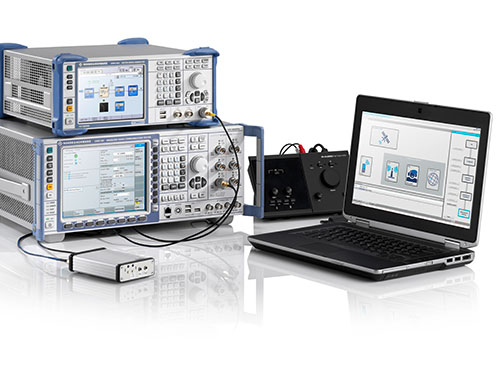
    The Rohde & Schwarz CMW500 is being used to test the ERA-GLONASS system.
    The Rohde & Schwarz CMW500 is being used to test the ERA-GLONASS system.

    For both types of tests, the Russian Certification Center Svyaz-Certificate uses standard-compliant test solutions from Rohde & Schwarz. Manufacturers and component suppliers can use the same test solution in pre-tests to speed up certification for their products.

    The R&S SMBV100A was first used in the mandatory conformance test, with an R&S CMW500 wideband radio communication tester, GNSS simulator and the associated application software.

    Now, for the newly required performance test, the center is using the GNSS simulator in the R&S SMBV100A vector signal generator.

    Accuracy Requirements. During performance testing, it is verified whether the GNSS receiver of an ERA-GLONASS emergency call system fulfills the accuracy requirements of the specification.

    In case of an emergency, the call system should not only correctly transmit position data according to a specified protocol to the public safety answering point, but position data must also be accurate so that the first responder can locate the accident vehicle quickly.

    ERA-GLONASS module manufacturers and test houses can use the R&S SMBV100A during pre-tests to create reliable and reproducible conditions similar to those in official certification tests, according to Rohde & Schwarz, to minimize the risk of failing tests during certification.

  • Spirent, Tata Elxsi V2X automotive test system adopted by researchers

    Spirent, Tata Elxsi V2X automotive test system adopted by researchers

    A V2X test system developed by Spirent and Tata Elxsi has been adopted by CAICT, a scientific research institute directly under the Ministry of Industry and Information Technology of China.

    V2X, or “vehicle to everything,” includes vehicle to vehicle (V2V) and vehicle to infrastructure (V2I) connected technology as well as vehicles to pedestrians, devices or transportation grids.

    Tata Elxsi, based in Bangalore, India, is a design and technology services provider for product engineering in industries including broadcast, communications and automotive.

    The next-generation test system provides a flexible, scalable and comprehensive test environment for testing and performance benchmarking of V2X applications, in various stages of the development cycle, from early research up to pre-production.

    The China Academy of Information and Communications Technology (CAICT) in Beijing.
    The China Academy of Information and Communications Technology (CAICT) in Beijing.

    Using a combination of Tata Elxsi’s patent-pending V2X Emulator software and Spirent’s advanced solutions for GNSS and radio channel simulation, the integrated V2X test bed offers the ability to bring real-world traffic scenarios into the lab, significantly reducing costs and time associated with extensive field testing.

    Various driving scenarios can be emulated under a variety of terrain, wireless channel and atmospheric conditions. The V2X test bed, which supports both WAVE-DSRC (U.S., Asia) and ITS-G5 (Europe) standards, offers a comprehensive platform for both functional and performance assessment of V2V and V2I/I2V safety applications, V2X security testing and test report generation.

    “V2X technology is gaining tremendous interest among global OEMs and tier-1 companies for delivering safer driving experience,” said Nitin Pai, senior vice president of marketing, Tata Elxsi. “With China being the largest automotive market in the world, this latest win with CAICT in China is significant for us and automotive companies targeting this market.”

    The V2X Test System enables multi-standards compliance testing using a single solution. The system has the capability to emulate more than 100 onboard units (OBU) and roadside units (RSUs) on a single hardware, enabling repeatable testing of complex scenarios from early development stages without the high risks and costs associated with live vehicle testing.

    “V2X communication will contribute significantly to making the autonomous car a safe and secure reality,” said Peter Tan, Greater China and East Asia, Spirent. “The U.S. DOT’s [Department of Transportation] newly issued regulation proposal mandating V2V communication for light vehicles is another confirmation of this widely accepted fact. With test solutions for conformance, functionality and performance developed in partnership with Tata Elxsi, Spirent is proud to help our customers ensure that their devices meet all conformance functionality and performance requirements to master these major changes ahead.”

    Tata Elxsi is showcasing the V2X Test System along with an array of other automotive solutions covering integrated e-cockpit, infotainment, ADAS, autonomous vehicle technology and telematics at its booth 6223 at CES 2017, Las Vegas.

  • TomTom launches new car nav devices in US

    Netherlands-based TomTom has launched two car navigation products in the U.S. under the TomTom GO and TomTom VIA lines. The advanced GPS devices offer TomTom’s latest innovations and most up-to-date maps.

    TomTom made the announcement at the Consumer Electronics Show, CES 2017, which is being held this week in Las Vegas, Nevada.

    The TomTom GO devices are available in two models, GO 520 and GO 620, in 5-inch and 6-inch capacitive touchscreens, respectively. They include a new Wi-Fi capability feature and integrate seamlessly with smartphones, the company said.

    TomTom VIA1625.
    TomTom VIA 1625.

    TomTom GO devices can read text messages aloud, enable full use of smartphone personal assistants and allow hands-free calling to keep drivers’ eyes on the road. Lifetime World Maps or software can be updated via Wi-Fi with no computer connectivity.

    The devices are able to learn drivers’ habits and can predict destinations: The devices become familiar with regularly driven commutes, automatically alert drivers to traffic and provide alternate routes.

    The slim TomTom VIA GPS devices are available in three models: VIA 1425, VIA 1525 and VIA 1625, available in 4-inch, 5-inch and 6-inch touchscreens, respectively. They offer an enhanced address search that helps drivers define destinations from the search menu or by touching a point on the map.

    TomTom VIA devices also offer Advanced Lane Guidance, helping drivers prepare for exits and intersections by clearly highlighting the correct driving lane for a planned route. Drivers also have the ability to update maps for the device’s lifetime at no extra charge with Lifetime Maps.

    TomTom Go 520.
    TomTom Go 520.

    “At TomTom we continue to bring innovation to our navigation products working to make the experience safer and smarter,” Corinne Vigreux, co-founder and managing director, TomTom Consumer. “We constantly strive to make more accurate maps, deliver faster and more detailed traffic information, and create smarter routing. This combination is what makes the TomTom driving experience so unique.”

    “Listening to our customers, we understand the responsibility we have as the most trusted companion to drivers, and with the new TomTom GO and TomTom VIA series, we’re once again honoring that trust and confidence,” Vigreux said.

    The TomTom GO and TomTom VIA devices will be available on TomTom.com in March 2017.

    Visitors to CES can visit TomTom to find out more at Sands Expo Hall C, Booth No. 43705 (level 2).

  • NovAtel positioning on display at CES autonomy exhibit

    NovAtel Inc. is showcasing its high precision positioning technology as part of AutonomouStuff’s “Roadmap to Autonomy” exhibit at the 2017 Consumer Electronics Show (CES), Jan. 3-8 in Las Vegas. The exhibit is located at the MGM Grand in the Skyline Terrace Suite.

    ces-roadmapAutonomouStuff provides research and development platforms for the safe and reliable testing of automation technologies.

    It uses NovAtel’s exceptionally robust SPAN GNSS + Inertial (INS) technology to provide the highly precise, continuous 3D positioning necessary to evaluate robotic and autonomous solutions for autonomous applications.

    NovAtel’s SPAN technology combines a high-performance Global Navigation Satellite System (GNSS) receiver with an Inertial Measurement Unit (IMU) to deliver deeply-coupled centimeter-level positioning. SPAN provides robustness against short GNSS outages, using IMU updates to bridge the positioning solution. SPAN also provides high data rate position, velocity and attitude (pitch, roll, heading) updates to capture the full real-time motion profile of a vehicle. Widely deployed in the automotive R&D space, SPAN supports applications ranging from autonomous navigation to V2X systems, where it is utilized to provide a source of vehicle ground truth.

    As a committed technology partner, NovAtel has worked closely with AutonomouStuff to optimize SPAN for AutonomouStuff’s vehicle perception kits. As a result of these efforts, AutonomouStuff is able to offer three different levels of positioning performance — “good, better, best” — based on the grade of IMU selected.

    “We are always excited to work with the team at NovAtel and cannot wait to show off their ‘good, better, best’ SPAN GNSS options for autonomy in our suite at CES,” said AutonomouStuff CEO Bobby Hambrick. “Their solutions are a significant piece of autonomous research and development. With three kit options, there is something for everybody. We’ve done the work for you, allowing you to choose which kit is best for you based on your accuracy needs and price range.”

    The collaboration with AutonomouStuff is reflective of NovAtel’s commitment to the development of fully autonomous vehicles for a wide range of industries. In May 2016, NovAtel announced the formation of a new Safety Critical Systems (SCS) Group, tasked with developing functionally safe GNSS positioning products that will meet the exceptional performance and safety requirements of autonomous vehicles.

    “Our team made significant progress in 2016 towards product definition, GNSS integrity for automotive applications, and corporate TS 16949 compliance,” said Jonathan Auld, Director of the SCS Group at NovAtel. “As the world leader in high precision GNSS technology for more than 20 years, NovAtel is leveraging its extensive experience developing safety critical systems for the aviation industry to meet the future safety thresholds required for driverless cars.”

    AutonomouStuff and NovAtel representatives will be available in the MGM Grand Skyline Suite during the CES to answer customer questions. To set up a meeting with the NovAtel SCS team at CES 2017, attendees can contact Allan MacAulay, Business Development Manager, SCS ([email protected]).

  • Qualcomm offers variant of connected car platform

    Qualcomm Technologies Inc. has introduced a new variant of its connected car reference platform using its flagship gigabit class Snapdragon X16 LTE modem to help car manufacturers deliver the high-speed, high-quality and reliable connectivity required for advanced telematics and connected vehicle services — supporting peak download speeds up to 1 Gbps.

    Qualcomm is showcasing the variant at CES 2017, which is being held Jan. 5-8 in Las Vegas, Nevada.

    Snapdragon-QualcommBuilding on the Company’s leadership supplying 3G/4G LTE modems for automotive, the reference platform is designed to allow carmakers to quickly and easily integrate the broad range of additional wireless and networking technologies required in today’s vehicles, including Wi-Fi, Bluetooth, Bluetooth Low Energy and GNSS, with optional support for DSRC and Cellular-V2X.

    The platform also includes a module reference design for the Snapdragon X16 LTE modem to help automotive suppliers accelerate development and improve time-to-commercialization.

    Highlights of the new connected car reference platform include:

    • Gigabit Class LTE cloud connectivity: The Snapdragon X16 LTE modem supports Gigabit-class download speeds, up to 10x as fast as first generation 4G LTE devices. The modem is designed to employ sophisticated digital signal processing to pack more bits per transmission with 256-QAM, receives data on four antennas through 4×4 MIMO, and supports for up to 4x Carrier Aggregation. All of this comes together to support peak download speeds up to 1 Gbps, helping satisfy the connectivity needs and use cases of the next generation of connected vehicles including high-definition map updates, connected navigation with real-time traffic and road condition information, software upgrades, Wi-Fi hotspot and multimedia streaming.
    • In-car networking and satellite navigation: The connected car reference platform also integrates Wi-Fi 802.11ac, Bluetooth 4.2, Bluetooth Low Energy 4.2, sensor support for stolen vehicle tracking and recovery, quad-constellation GNSS and 3D Dead Reckoning (DR) location solutions, with optional support for vehicle-to-everything communications using DSRC/802.11p or Cellular-V2X. The solution is designed to manage concurrent operation of multiple wireless technologies using the same spectrum frequencies. In addition, the reference platform features in-vehicle networking technologies such as Gigabit Ethernet with Automotive Audio Bus (A2B), Controller Area Network (CAN) and Local Interconnect Network (LIN) interfaces.
    • OEM and third-party applications support: Qualcomm Technologies also provides a security-rich framework for the execution of custom OEM and third-party telematics applications. The simplified access to tightly-integrated apps processing functionality is designed to help automakers and service providers handle the increasing number of use cases requiring connectivity — simultaneously in many cases — and quickly prototype, develop and deliver unique and differentiated experiences to their customers.

    Qualcomm Technologies has also developed a reference hardware module in two different band configurations, North America and Rest of World (including Europe). The module design is engineered to support up to four antennas to utilize the 4×4 MIMO capabilities of the Snapdragon X16 modem and reach the peak download speeds of up to 1 Gbps. This can help accelerate the time-to-commercialization of this flagship device and the Company is working with module manufacturers and Tier 1 suppliers to further optimize 2-antenna and 4-antenna configurations aiming to meet cost-effectiveness and size requirements of specific automakers, specific segments and use cases.

    “Connected cars are becoming intelligent sensors on the road, not only using data for consumer use cases such as Wi-Fi hotspots and video streaming, but also collecting and transmitting critical, rich real-time information about road conditions, map updates and driver status,” said Patrick Little, senior vice president and general manager, automotive, Qualcomm Technologies, Inc. “As a leader in car connectivity, Qualcomm Technologies is well positioned to address the tremendous data demand, helping automakers integrate the broad set of technologies required by a new generation of connected vehicles.”

    The new connected car reference platform using Snapdragon X16 LTE modem, including its corresponding reference module, is expected to be available in the first half of 2017.

    All major global automakers currently use products from Qualcomm Technologies’ broad portfolio of automotive solutions, including the Company’s flagship Snapdragon automotive processors and modems.

    Across telematics, infotainment and connectivity, Qualcomm Technologies has achieved more than 150 automotive design wins, and car manufacturers across the globe have selected Snapdragon processors for their next generation infotainment solutions. To learn more, please visit Qualcomm Technologies’ automotive booth at CES, north hall, booth #5609, or visit qualcomm.com/automotive.

  • ESCAPE with autonomous driving and the GSA

    escape-logoThe European agency for global navigation satellite systems (GSA) has kicked off ESCAPE, a three-year, 5.4 million euro project to use Galileo services for automated driving.

    ESCAPE (European Safety Critical Applications Positioning Engine) will coordinate relevant industrial and research institutions in Europe to create a positioning engine for safety-critical applications on the road — applications involving highly automated driving.

    ESCAPE is led by the Spanish company FICOSA in collaboration with partners from across Europe: GMV from Spain, Renault and IFSSTAR from France, STMicroelectronics and Istituto Superiore Mario Boella from Italy. All partners are important stakeholders of the value chain in the domain of safety-critical applications for road transportation.

    By 2019, the ESCAPE consortium will finish the development of an innovative positioning engine tailored to meet the safety requirements expressed by those road transport applications that will involve automation and have the potential to harm or damage people and goods.

    escape-receiver-concept
    ESCAPE core features.

    GPS+Galileo Receiver

    The first mass-market GPS+Galileo chipset receiver with multi-frequency capability tailored for the automotive sector is a key element of this innovative positioning device.

    ESCAPE will enable a high-grade of data fusion with different vehicle sensors and the exploitation of key technological differentiators such as the precise point positioning service (PPP), the potential use of the Galileo ionospheric model and the provision of an integrity layer to assess the degree of trust one can associate to the position information provided by the device.

    The use of the integrity layer is crucial: in safety-critical applications, it can be more important to know whether information is reliable than the precise information itself.

    ESCAPE will set a new paradigm among and across the technologies enabling road vehicle automation, following the vision of the companies that joined the project, according to the ESCAPE team. The main keyword of this new paradigm is “safety-oriented,” while the pathway is the integration of multiple sources of positioning information (multiple satellite constellations, multiple signal frequencies, and multiple onboard sensors including maps) and high-accuracy services.

    ESCAPE has been funded under the Fundamental Elements program of the GSA, a new European Union R&D funding mechanism supporting the development of EGNSS-enabled chipsets, receivers and antennas, with the major objectives of facilitating the adoption of the European GNSS Systems and improving the competitiveness of the EU industry, by addressing specific user needs in priority market segments.

  • 2016 fleet management technology report now available

    2016 fleet management technology report now available

    A new report that explores technologies for U.S. commercial fleets is now available.

    The 2016 Fleet Management Technology Report, sponsored by GPS Insight, includes results of a survey conducted by Bobit Business Media, publisher of Automotive Fleet Magazine, Fleet Financials Magazine, Business Fleet Magazine, and Work Truck Magazine.

    Cover: 2016 Fleet Management Technology ReportGPS Insights asked a series of questions pertaining to fleet management and telematics to examine the current state and experiences of the marketplace.

    Commercial fleets across the U.S. are finding that telematics is providing insight they never had before which helps to reduce costs, reduce risk, and increase revenue. Most industry reports state that the adoption rate is somewhere between 30-40 percent. The findings in this report are similar, and includes additional data broken down by region, fleet size, and industry.

    “We put this report together for business owners and fleet managers to get a clear understanding of what their peers are saying about their experience with telematics,” said Ryan Driscoll, marketing director of GPS Insight. “We also want it to serve as a guide for those looking to implement a better telematics solution or for those looking for the first time.”

    Topics covered in the report include:

    • Adoption: Who is and isn’t using telematics
    • Choosing a provider: What fleets say is important to consider
    • Benefits: How it’s helping commercial businesses
    • Return on investment: What fleets should expect from the investment

    The report can be downloaded from the GPS Insight website.

  • Skypine car navigation maker adopts Furuno receiver with dead reckoning

    Skypine car navigation maker adopts Furuno receiver with dead reckoning

    Chinese car navigation systems company Skypine has adopted Furuno’s GPS receiver with a dead-reckoning function.

    Furuno Electric, headquartered in Nishinomiya, Japan, said its receiver GV-86 has been adopted for use in the car navigation platform designed and produced by Skypine — a major car electronics manufacturer in China.

    GV-86 will be installed in the car navigation systems designed for major automotive companies, not only in Japan but also around the world and the specialized companies, which Skypine contracted.

    Furuno’s GV-86 is used by many automotive customers requiring high quality and reliability. Additionally, thanks to the dead-reckoning function, GV-86 achieves high-accuracy performances in deep urban canyons where the accuracy of GNSS-only positions could be reduced.

    Furuno-Skypine
    Skypine’s car navigation systems (left); Furuno’s Multi-GNSS Receiver Chip eRideOPUS 6 and GPS+DR Receiver Module GV-86.
  • FAA suspends approval of NavWorx ADS-B units over GPS chip inspections

    The U.S. Department of Transportation’s Federal Aviation Administration today issued an emergency order suspending the authorization NavWorx Inc. uses to manufacture certain Automatic Dependent Surveillance-Broadcast (ADS-B) navigation units.

    The suspension order was issued after NavWorx declined on repeated occasions to allow FAA personnel to conduct the required inspections. The suspension is immediate and will remain in effect until NavWorx consents to the inspections and demonstrates compliance with FAA standards.

    ADS-B units, when properly manufactured and operated, help to improve the safety and efficiency of aircraft operations.

    The authorization, known as a Technical Standard Order Authorization (TSOA), enables suppliers to produce components for use on aircraft after proving that each component meets FAA standards. Federal regulations set forth FAA’s authority to inspect suppliers’ quality systems, facilities, technical data, and products to determine whether they meet safety standards. These regulations also provide that FAA may witness any tests necessary to determine a product’s compliance.

    The FAA is concerned that two versions of the company’s ADS600-B units, carrying part numbers 200-0012 and 200-0013, may contain an internal GPS chip that does not meet the FAA’s minimum performance standards for transmitting an aircraft’s accurate location.

    On June 29, the FAA requested to inspect NavWorx’s facility to determine the specific GPS unit and software installed in part numbers 200-0012 and 200-0013, and if the units are marked correctly. NavWorx informed the inspector that he would not be allowed inside the company’s facility. During subsequent correspondence, NavWorx agreed to allow an Aug. 31 inspection but then denied access when FAA inspectors arrived.

    NavWorx later agreed to allow inspectors into the facility on Nov. 21 but they were again denied access.

    Due to the company’s unwillingness to comply with these requirements, the FAA has determined that NavWorx’s continued use of its FAA authorization is contrary to the interests of safety in air commerce. During the suspension, NavWorx may not mark or otherwise indicate that its ADS600-B units meet FAA standards.

    NavWorx Responds

    Navworx president Bill Moffit posted the following on the company website:

    “I first want to thank all of you for your patience during this unfortunate and unprecedented situation. Contrary to what you may surmise from emails and proposed actions, I want to ensure everyone that we are diligently working on the solution to resolve this situation in a timely matter. NavWorx values the commitment you have placed in us by purchasing our products and strives to honor that commitment that you have entrusted with us.

    “Currently we are waiting on the resolution of the AD [Airworthiness Directive] on or about December 20th. Based on the final AD, the AD may be rescinded, or the AD may be modified to allow for just previously approved GPS sources. If the FAA does not allow the use of the internal GPS, then we will offer the ability to modify the products from the 200-0012 & 200-0013 part numbers to part numbers 200-0112 & 200-0113. The 200-0112 & 200-0113 part numbers are approved under the FAA Rebate program and are not the subject to the AD.

    “As I hope you understand, the past few weeks our phone system has been overwhelmed by volume and we can imagine the frustration this may cause. Be assured we are here and working tirelessly to take care of you, our customer.

    “Please check our web page weekly for updates and for our announcements which will detail our program to remedy this situation.

    “For those that need immediate service, feel free to contact our support email at [email protected] or contact our Distributor, Dallas Avionics, Inc Product Specialist, Scott C Edwards at 214-668-7466 or 800-527-2581.

    “Regards,

    “Bill Moffitt
    “President,
    “NavWorx Incorporated”

    NavWorx also issued the following statement on Oct. 17:

    Statement on FAA Proposal of AD

    The FAA has proposed an AD for our model ADS600-B part number (P/N) 200-0012 and 200-0013 and Model ADS600-EP P/N 200-8013. The proposal is just that; a proposal. We disagree with the FAA’s position that the units supposedly communicate unreliable position information.

    The FAA has never shared with us any instance of our units doing so, there is no support for this claim in the docket, and we are unaware of any unit doing so. In fact, for two and a half years the FAA had no problem with the ability of our units to correctly communicate the position of aircraft with the units.

    Unfortunately, in January of 2016 the FAA would have cut off functionality of these units because they were broadcasting a SIL of 0. This action was the result of a March 2015 notice to deny TIS-B access to ADS-B units that were uncertified and broadcasting with a SDA of 0. The units subject to the proposed AD are neither uncertified nor do they broadcast with a SDA of 0.

    To insure continued access to TIS-B data we implemented a minor change so the units would broadcast a SIL of 3, which our testing had confirmed was appropriate, allowing them to continue to be identified for TIS-B purposes. The proposed AD would deny these units access to TIS-B data.

    We intend to file comments on the proposal and would encourage you to do likewise regarding your experience with our units. In the meantime we continue to work with the FAA to resolve our disagreements.

    If you have comments on this AD or the FAA’s implementation of ADS-B, please contact Administrator Huerta or your congressman:

    Contact: Administrator Huerta
    Via: Max Slutsky, Special Advisor to the Administrator
    email: [email protected] tel: 202-267-9869
    Contact your Congressman: http://www.house.gov/representatives/find/
  • Data key to Intel’s $250 million autonomous investment

    Data key to Intel’s $250 million autonomous investment

    Intel Capital is targeting more than $250 million of additional new investments over the next two years to make fully autonomous driving a reality, Intel CEO Brian Krzanich announced at the Los Angeles Auto Show’s AutoMobility LA conference in November. This was the first time Intel delivered a keynote address at an automotive conference.

    The investments will drive the development of technologies that push the boundaries on next-generation connectivity, communication, context awareness, deep learning, security, safety and more.

    Intel displays its automated driving technology at the Automobility LA conference on Nov. 15. (Photo: Intel)
    Intel displays its automated driving technology at the Automobility LA conference on Nov. 15. (Photo: Intel)

    Drilling down into the areas that will be fueled by the fresh investments, Krzanich highlighted technologies that will drive global Internet of Things (IoT) innovation in transportation; areas where technology can directly mitigate risks while improving safety, mobility and efficiency at a reduced cost; and companies that harness the value of the data to improve reliability of automated driving systems.

    Data Deluge. Addressing a large crowd of automotive and technology industry representatives, Krzanich talked about how the automotive industry is on the cusp of a major transformation, demanding unprecedented levels of computing, intelligence and connectivity.

    With the variety of sensors, sonar, lidar and cameras that will come embedded in autonomous cars, he highlighted the need for the industry to be prepared for the data deluge with more than 4,000 gigabytes of data coming from a single car each day.

  • T-Mobile device makes older cars ‘connected’

    t-mobile-sync-wT-Mobile is offering SyncUp Drive, a device that turns any post-1996 car into a 4G LTE connected car — a Wi-Fi hotspot that also provides vehicle diagnostics, safety and security features. The device is being offered as an incentive with two-year service plans, or separately.

    SyncUp Drive plugs in to a car’s OBD-II (on-board diagnostics) port, which is standard on autos built after 1996. The device is always on, doesn’t require charging and can be managed from a smartphone.

    Other carriers don’t yet offer 4G solutions. The diagnostic tool HUM by Verizon runs on 2G technology. AT&T has been going a different route  — partnering directly with car manufacturers to integrate 4G LTE data connectivity into new vehicles.

    SyncUp DRIVE was developed by T-Mobile with ZTE, a global provider of mobile devices and telecommunication systems, and Mojio, the open platform for the growing ecosystem of connected car apps and services.

  • Lidar, sensors hidden in Hyundai self-driving car

    Lidar, sensors hidden in Hyundai self-driving car

    Hyundai Motor Company introduced the Autonomous Ioniq concept Nov. 16 at the Automobility LA conference.

    Hyundai said the vehicle is one of the few self-driving cars in development to have a hidden lidar system in its front bumper instead of on the roof, enabling it to look like any other car on the road.

    The goal in designing the autonomous Ioniq was to keep the self-driving systems as simple as possible. This was accomplished by using the production car’s smart cruise control’s forward-facing radar and lane-keeping assist cameras, which are integrated with lidar technology.

    Photo: Hyundai Motor Company Hyundai is also developing its own autonomous vehicle operating system, with the goal of using less computing power. This should result in a low-cost platform, which can be installed in future Hyundai models that the average consumer can afford, Hyundai said.

    The car’s hidden lidar system also allows the autonomous Ioniq to detect the absolute position of surrounding vehicles and objects.

    The features build upon the capabilities of the production Ioniq, which offers automatic emergency braking with pedestrian detection, smart cruise control, lane departure warning and rear cross-traffic assist.

    hyundai-kia-namyang-rd-center-w
    Hyundai Motor Research and Development Center.

    The Ioniq also incorporates all autonomous controls into existing systems to ensure that drivers can have a seamless transition between active and self-driving modes.

    Earlier this year, Hyundai Motor earned a license to test its autonomous cars in urban environments. Hyundai Motor is currently testing three autonomous Ioniqs and two autonomous Tucson fuel-cell vehicles at Hyundai Motor Research and Development Center in Namyang, South Korea.

    To showcase its autonomous vehicles in action, Hyundai Motor will debut two autonomous Ioniqs at the Consumer Electronics Show in January 2017, where the cars will be found driving up and down the Las Vegas strip. The testing in Las Vegas will build upon Hyundai’s efforts to bring the most adept and safest self-driving car to market.

    Autonomous Ioniq Features

    • Forward-facing radar that detects the relative location and speed of objects in the vehicle’s forward path to aid in route planning
    • A three-camera array that detects pedestrian proximity, lane markings and traffic signals
    • A GPS antenna to determine the precise location of each vehicle
    • High-definition mapping data from Hyundai MnSoft which delivers location accuracy, road grade and curvature, lane width and indication data
    • Blind-spot detection radar to ensure even simple lane changes are executed safely