Category: Defense

  • A simulation perspective on supporting GPS modernization

    A simulation perspective on supporting GPS modernization

    Q & A with Roger Hart, Director of Engineering, Spirent Federal Systems. Read more from this cover story here


    Why do you see the need to modernize GPS?

    For many lay users, global navigation satellite systems (GNSS) are simply there, reliably guiding them and their systems to do the right thing in the right place at the right time. But with its vulnerabilities, we cannot take GNSS — GPS specifically — for granted, and it cannot remain static. Its ubiquity in commercial and defense applications demands ongoing improvements to signal quality, diversity, availability, and assurance. The GNSS signal space is increasingly contested, navigation warfare is common, and the risk to civilians and warfighters increases. For those of us focused on defense, we see the growing array of threats steadily ticking upward in novelty and number.

    We applaud the ongoing efforts by the U.S. Space Force and Air Force to modernize the GPS space segment, control segment, and user equipment. GPS-contested and -denied environments are here to stay, so we must hone GPS as a tool for both the military and civil user.
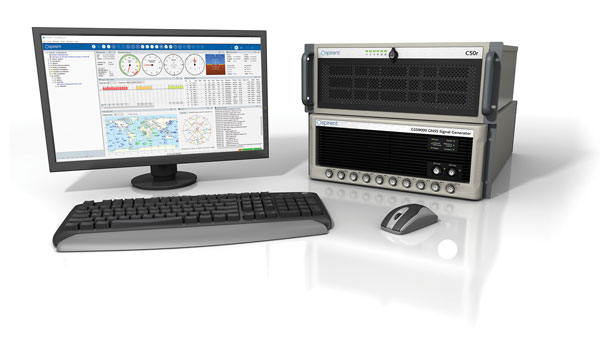
    Spirent’s flexible SDR-based GSS9000 Simulator supports GPS modernization efforts. (Image: Spirent Federal Systems)
    Spirent’s flexible SDR-based GSS9000 Simulator supports
    GPS modernization efforts. (Image: Spirent Federal Systems)

    How is Spirent Federal supporting modernization efforts?

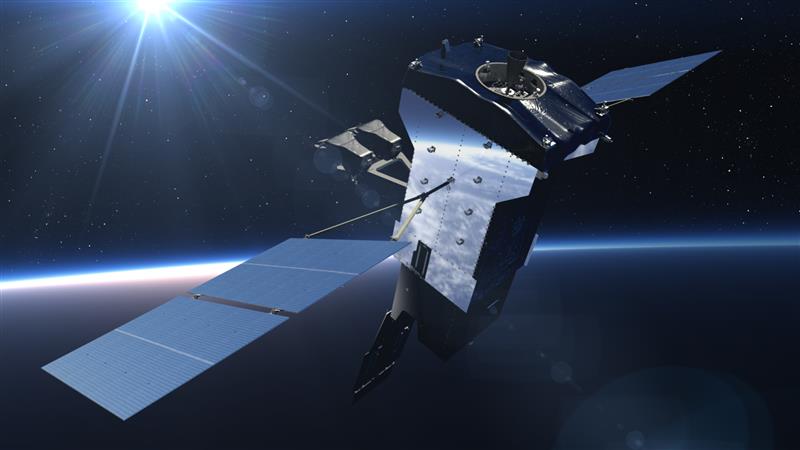
    In short, by providing deterministic simulation for future signals and capabilities not yet in theater. Regional Military Protection (RMP) is a recent example. RMP is a nascent anti-jamming capability that will be available on GPS III Follow On (GPS IIIF) satellites. RMP provides military users with a steerable, narrow-beam M-code signal that greatly amplifies the power over a defined geographical area. According to the GPS IIIF satellite manufacturer, Lockheed Martin, RMP can provide up to 60 times greater anti-jamming support. This allows U.S. and allied forces to operate with accuracy and resilience much closer to interfering sources than with legacy signals. GPSIIIF satellites with RMP are in production, and the latest publicly forecasted launch date is FY2027. With Spirent’s software-defined-radio-based simulator’s ability to support RMP simulation, modernized GPS user equipment (MGUE) can be tested and integrated with RMP early in the design phase before live-sky signals are available. Adaptive antennas, other constellations, encrypted signals, and non-RF sensors can also be tested with RMP. Coupled with this, the ability to simulate a wide range of edge cases during development enables superior performance in the real world.
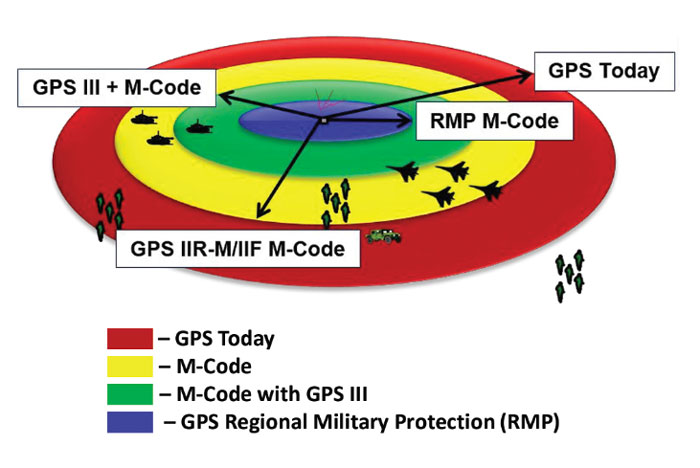
    Image: U.S. Space Force
    Image: U.S. Space Force

    And beyond RMP?

    Low-Earth-orbit (LEO) constellations have been a focus for several years as we look to next-generation alternative positioning, navigation and timing (PNT) methods to complement GPS. We have developed LEO simulators for both the military and commercial sectors, including modeling tools that simplify the generation of large LEO constellations with high-fidelity orbital dynamics, delivering greater realism for applications that have no margin for error.

    As GPS modernizes, there is a growing movement toward software-defined radio (SDR) architectures for both receivers and transmitters. Flexible SDR-based simulation encourages experimentation: on the same platform, applications can range from standard GNSS signals to entirely new constellations and RF modulations, including interference threats. Simulation of RF signals can be done in concert with inertial and other non-RF sensors, and deterministic architecture ensures that performance is maintained.

    Another focus is on spoofing — creating tools to support defense in their efforts to harden GPS. One of the latest technological advancements in simulation is an “augmented reality” range capability: the device under test (DUT) on a moving aircraft or land vehicle is attached to a portable simulator. The DUT receives live-sky signals from the antenna on the vehicle but also receives additional spoofed signals injected by the live-sky-synced simulator.* The DUT’s resilience to the spoofed signals can then be analyzed and hardened against future spoofing attempts. Without the difficulties of setting up an open-air test, the real-world dynamics are employed in the test, heightening realism — and the simulated signals augment it.

    *It is the sole responsibility of the user to obtain appropriate permits.
  • Airbus tests UAS at sea in full operational configuration

    Airbus Helicopters and the French Armament General Directorate (DGA) tested the unmanned aerial system (UAS) VSR700 for the first time in an operational configuration from a ship at sea.

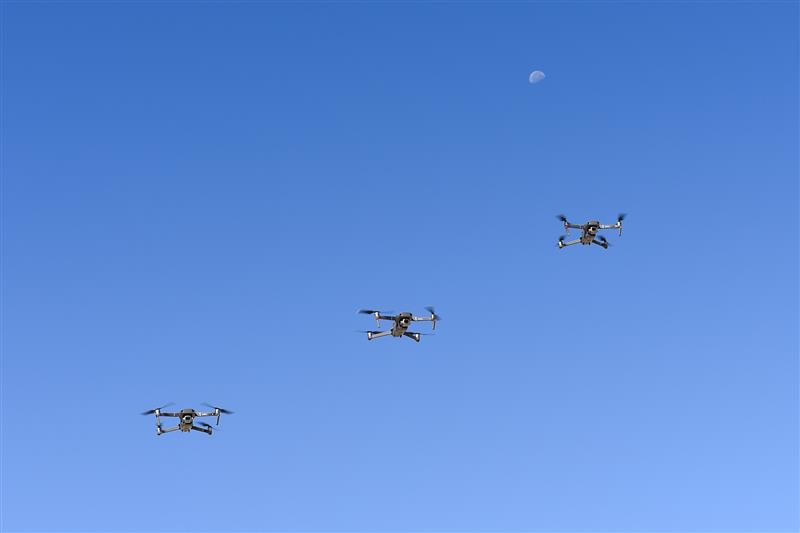
    The VSR700 performed 80 fully autonomous take-offs and landings from a civil vessel off the coast of Brittany in the west of France at the beginning of May.

    In 2022, the autonomous take-off and landing capabilities of the VSR700 were tested from the same vessel using an optionally piloted vehicle based on a modified Guimbal Cabri G2 equipped with the autonomous take-off and landing (ATOL) system, developed for the VSR700. This time the test campaign took place with the SDAM demonstrator and fully validated the capabilities of the system as part of the Système de Drone Aérien pour la Marine study that was awarded to Airbus Helicopters and Naval Group in 2017.

    Autonomous take-off and landing capabilities are a key asset of the VSR700 and are made possible with the use of the Airbus DeckFinder system. This enables autonomous launch and recovery of UAVs with an accuracy of 10cm-20cm during challenging operations in harsh environmental conditions, independently of GNSS/GPS and regardless of degraded visual conditions.

    This test campaign follows two series of trials that were conducted with the DGA in late 2022 and early 2023, from the Levant Island test center located in the south of France. During these trials, the SDAM prototype demonstrated its ability to operate in a maritime environment.

    The handling qualities of the aircraft were tested as well as the capabilities of the sensors (a maritime surveillance radar, an electro optical sensor, and an AIS receiver) alongside the mission system developed by Naval Group.

    The next development steps will see the second VSR700 prototype perform its maiden flight ahead of flight testing onboard a French Navy FREMM during the second semester of this year.

  • TRX Systems awarded military contract for PNT device

    TRX Systems awarded military contract for PNT device


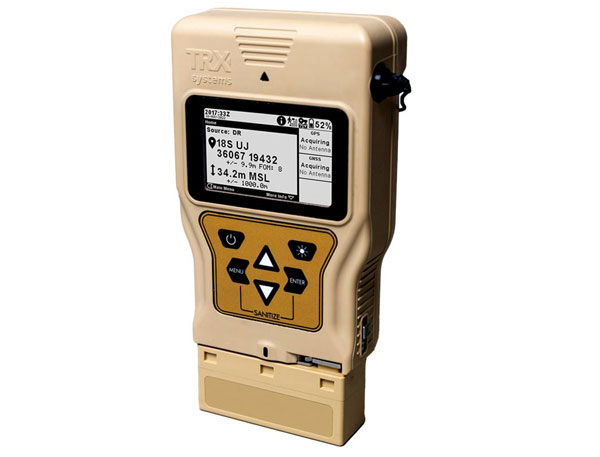
    Image: TRX Systems 
    Image: TRX Systems

    TRX Systems has been awarded a $402 million, seven-year contract by the U.S. Army for the procurement of dismounted assured positioning, navigation, and timing system generation II systems and services (DAPS GEN II).

    The TRX Systems solution to be provided under the contract, TRX DAPS II, enables dismounted maneuver operations even where GPS is compromised or denied. TRX DAPS II provides assured positioning, navigation, and timing (PNT) to dismounted users by disseminating assured position and time to dependent devices in GPS-challenged environments.

    TRX DAPS II fuses inputs from M-code GPS, inertial sensors, and complementary PNT sources. It is a small, lightweight PNT device that supports both standalone operation and integration with the Nett Warrior ensemble. It can also distribute PNT information to a customized tactical watch.

    The TRX DAPS II solution employs a modular architecture and adheres to Army PNT interface standards, facilitating the addition of new PNT sensors as threats evolve.

    TRX DAPS II will be in production for the Army later this year.

  • Safran joins Eurodrone program

    Safran Landing Systems has signed a contract with Airbus Defense and Space to provide the wheels and brakes system work package for the Eurodrone program, which is designed to outfit France, Germany, Spain and Italy with a highly autonomous medium-altitude reconnaissance UAV.

    Safran Landing Systems was selected to design, develop, qualify and produce the work package and to supply the braking control module that will be developed by Safran Electronics and Defense, the company’s partner on this program.

    The contract comprises 60 shipsets.

    Safran Electronics and Defense has also claimed a contract from Leonardo to develop and supply the high-performance Euroflir 610 electro-optical (optronic) system for the program.

    Production of the first prototype will begin in 2024 with a first delivery planned by the end of the decade.

  • SBG Systems unveils miniature GNSS-aided inertial navigation solution

    SBG Systems unveils miniature GNSS-aided inertial navigation solution


    Image: SBG Systems
    Image: SBG Systems

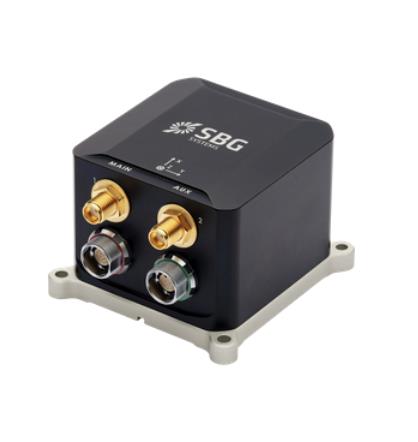
    SBG Systems has released the Ekinox Micro, a compact and rugged high-performance inertial navigation solution designed to deliver accuracy in challenging environments. Ekinox Micro combines a high-performance MEMS tactical inertial sensor with a quad-constellation, dual-antenna GNSS receiver, making it suitable for mission-critical applications.

    Ekinox Micro includes pre-configured motion profiles for land, air, and marine applications, enabling the sensor and algorithms to be tuned for maximum performance in any condition. The device is designed for ease of use and integration, with simple connectors, a web configuration interface, a datalogger, Ethernet connectivity, a PTP server, a REST API for configuration, and multiple input and output formats.

    Ekinox Micro is real-time kinematic (RTK) compatible and based on a tactical 0.8°/h class inertial measurement unit calibrated across the entire operating temperature range. It features accuracy roll/pitch of 0.015°, accuracy heading of 0.035°, and accuracy position of 1.2 m without any corrections or 1 cm in RTK.

  • SSC releases Epoch 2 RFI for industry inputs on MW/MT satellites

    SSC releases Epoch 2 RFI for industry inputs on MW/MT satellites

    Image: Lockheed Martin
    Image: Lockheed Martin

    The Resilient Missile Warning, Missile Tracking, and Missile Defense Acquisition Delta of the U.S. Space Force’s Space Systems Command (SSC) has released a request for information (RFI) seeking industry inputs for the next Epoch of medium-Earth-orbit missile warning and tracking (MW/MT) satellites. Responses from industry are requested by no later than May 16.

    A continuation of the Missile Track Custody (MTC) Program, Epoch 2 is the second increment of capability-based, phased deliveries that leverage a mature foundation of space system technology — which allows for the insertion of new technology. Resilient MW/MT Epoch 2 satellites and associated ground systems will provide next-generation overhead persistent infrared solutions to defeat advanced missile threats.

    The RFI solicits feedback from industry on the Epoch 2 acquisition strategy and technical approach for a multi-plane space segment, integrated ground segment and constellation-level systems operations.

    Epoch 2 will emphasize the maturation of MW/MT sensors, optical cross-links, data fusion, constellation mission management and robust ground communications.

    For more information on receiving the full Epoch 2 RFI can be found on the SAM.gov website linked here.

  • BAE Systems laser-guidance kits tested by US counter-UAS office

    BAE Systems laser-guidance kits tested by US counter-UAS office

    Image: BAE Systems
    Image: BAE Systems

    The Joint Counter-Small Unmanned Aircraft Systems office successfully tested BAE Systems’ APKWS laser-guidance kits in a counter-unmanned aircraft systems (C-UAS) mission.

    During the Department of Defense-led exercise at Yuma Proving Ground, Arizona, the 70 mm APKWS-guided rockets demonstrated 100% effectiveness when fired against 25-to-50-pound UAVs traveling at more than 100 miles an hour. The APKWS C-UAS solution is platform agnostic, permitting multiple options to accelerate fielding.

    APKWS transforms unguided rockets into smart munitions for precision strikes on soft and lightly armored targets. An updated proximity fuse for the standard M151 warhead enables laser-guidance kits to target Class-2 and Class-3 UAVs, which typically weigh less than 55 lbs. The fuse retains the legacy point denotation capability for flexibility of the weapon in the field.

    APKWS now enables rockets to engage and destroy UAVs at a fraction of the cost of existing C-UAS systems with unprecedented precision.

    The kits are available to all U.S. armed forces, as well as allies via foreign military sales.

  • Centimeters and picoseconds without satellites or atomic clocks

    Centimeters and picoseconds without satellites or atomic clocks

    Image: Locata
    Locata dish antenna pointed back to EU’s JRC, 44 km away, just under the setting sun. The Yagi antenna above is pointed to a cell tower in Como and used to connect the system for remote control and data logging.
    Image: Locata

    A new European Commission (EC) Technical Report, published after exhaustive and completely independent testing of several candidate A-PNT (Alternative Positioning, Navigation, and Timing) technologies, confirms that Locata has demonstrated positioning and timing performance across every test environment, delivering:

    • cm-level positioning accuracy in all tests, indoor and outdoor, under static and kinematic conditions
    • picosecond-level time transfer using Locata’s proprietary TimeLoc technology, over multiple media types including RF over distances of more than 105 kilometres and over fibreoptic and/or coaxial cables, without requiring satellites or atomic clocks.

    The rigorous scientific test campaign was conducted over a period of eight months by experts from the EC’s Joint Research Centre (JRC) in Italy. Its purpose was to establish the foundations for European navigation and timing policy, including the upcoming European radio navigation plan, in the context of growing concerns about the single-point-of-failure that GPS and other Global Navigation Satellite Systems (GNSS) pose.

    According to Locata, their validated capabilities promise to open previously unattainable, satellite-free A-PNT performance for autonomous vehicles, logistics, indoor positioning, critical national infrastructure, and aviation, as well as better levels of synchronization to improve mobile phone and digital data networks.

    Locata’s products have been deployed commercially for a decade, delivering cm-level positioning (via sales and IP licenses) to globally recognized partners, including systems now certified for safety-of-life level operation of autonomous vehicles. Prominent government customers include NASA and the United States Air Force, which runs a large Locata network that covers more than 6,500 sq km for aviation use when GPS is being jammed or spoofed.

    This performance evaluation assessment was run under a globally-open tender launched by the EC’s Directorate-General for Defence Industry and Space (DEFIS). The tender sought applications from around the world, from every potential candidate claiming they could provide “an alternative to GNSS-based PNT.” More than 30 companies applied, and this number was then down-selected by an expert panel to the seven technologies that were, in the end, independently evaluated. Locata was the only technology that was granted two contract slots, and the only technology that completed every timing and positioning test, in every indoor and outdoor environment, sought by the EU.

  • BAE Systems and Lockheed Martin tests UAS

    BAE Systems and Lockheed Martin tests UAS


    Image: Air Force Staff Sgt. Rachel Simones/ Department of Defense.
    Image: Air Force Staff Sgt. Rachel Simones/ Department of Defense.

    BAE Systems and Lockheed Martin Skunk Works partnered to test the Skunk Works Stalker and Indago UAS on BAE Systems’ amphibious combat vehicle (ACV) command, control, communication and computers (C4)/UAS variant. The UAS will provide reconnaissance capabilities to support U.S. Marine Corps expeditionary warfare and battle management capabilities.

    BAE Systems tested the Stalker and Indago UAS — in addition to other technology suppliers — as a part of contractor verification testing. With contractor verification testing complete, the USMC plans to conduct additional tests to evaluate whether the AVC C4/UAS is a solution for the Advanced Reconnaissance Vehicle program.

    “By integrating Stalker and Indago on BAE Systems’ ACV platform, we are delivering greater mission flexibility in a small form factor that supports Marine Corps operations,” Jacob Johnson, Skunk Works UAS and attritable systems director, said.

    The Skunk Works Stalker and Indago UAS provide a broad operating envelope and endurance, which enables diverse and demanding missions while maintaining a small operational footprint and crew requirement.

    BAE Systems’ ACV C4/UAS vehicle is a mobile systems integration lab built to demonstrate the technology Marines need to conduct reconnaissance, surveillance and acquisition capabilities, including the ability to sense and communicate targets over the horizon using C4 systems.

  • Safran Electronics and Defense releases defense PNT system

    Safran Electronics and Defense releases defense PNT system

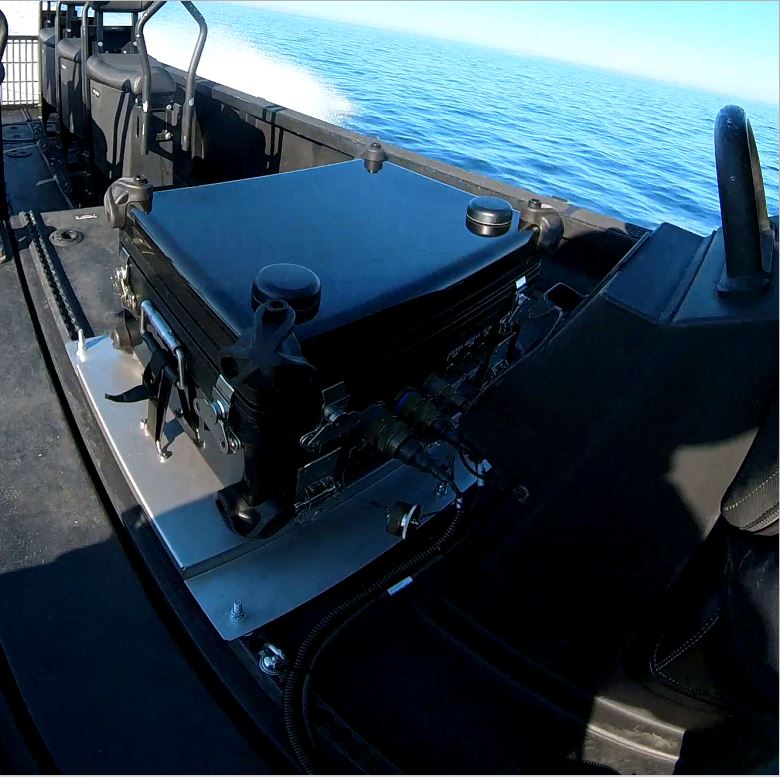
    NAVKITE on board a vessel. (Image: Safran Electronics and Defense)
    NAVKITE on board a vessel. (Image: Safran Electronics and Defense)

    Safran Electronics and Defense and Fuscolab, the innovation lab for the French Marine Corps, released a resilient position, navigation, and timing (PNT) system, NAVKITE. It provides navigation integrity and performance over long periods of time and under demanding circumstances on land and at sea.

    NAVKITE meets operational requirements for the French Navy Commandos and will be integrated in Embarcation Commando a Usage Multiple Embarquable (ECUME) — a transportable, multirole, semi-rigid boat purpose-designed for commandos and other special forces.

    NAVKITE’s capabilities depend on the coupling of Safran’s Geonyx M inertial navigation system with the VersaSync time/frequency server. Together, they handle the transmission of PNT data to ensure mission continuity.

    The first sea trials of the system, conducted by Fuscolab and the Ponchardier commando unit, demonstrated NAVKITE’s performance under operational conditions. It was then successfully deployed in February in the joint services exercise Hemex, during phase two of Orion, a large-scale operation for resilient, innovative and interoperable armed forces focused on high-intensity conflicts.

  • Sikorsky partners with CMC Electronics for FMS

    Sikorsky partners with CMC Electronics for FMS


    Image: CMC Electronics
    Image: CMC Electronics

    CMC Electronics has entered a multi-year contract with Sikorsky, a Lockheed Martin company, to supply its CMA-2082MC military flight management system (FMS) for several Sikorsky helicopter models, including the UH-60M, HH-60M, HH-60W, S-70i and the S-70M.

    CMA-2082MC is a complete FMS with integrated radio management, which provides centralized control of navigation sensors, communication radios, mission avionics and more. It is also highly reliable while operating in harsh environments.

    The helicopters complete with CMA-2082MC military FMS will be delivered to the U.S. Army and the U.S. Air Force, as well as several Black Hawk customers for use in a wide range of missions including search and rescue, troop transport, medical evacuation, disaster relief, aerial firefighting and border patrol.

  • Raytheon completes JPALS delivery to U.S. Navy

    Raytheon completes JPALS delivery to U.S. Navy

    Image: U.S. Department of Defense / Raytheon Technologies
    Image: U.S. Department of Defense / Raytheon Technologies

    Raytheon Technologies has delivered all 23 contracted Joint Precision Approach and Landing Systems (JPALS) low-rate production units to the U.S. Navy to ship to Japan. Raytheon announced the contract with the Navy back in February to provide JPALS to the Japan Maritime Self-Defense Force (JMSDF), which will be deployed on the JMSDF JS Izumo carrier in 2024.

    JPALS is a software-based GPS navigation and precision approach landing system that guides aircraft onto carriers and amphibious assault ships regardless of sea state or weather conditions, bolstering safety and operational capability.

    JPALS is deployed on all U.S. Navy aircraft carriers and amphibious assault ships, as well as all F-35 aircraft. In addition, JPALS are deployed on platforms from two countries: the UK Royal Navy’s HMS Queen Elizabeth, and the ITS Cavour, an Italian aircraft carrier, to support their F-35 squadrons.

    Raytheon has also developed an expeditionary variant of JPALS called eJPALS, which is a smaller, portable system that could be packaged in ruggedized cases, mounted on small vehicles, and deployed in austere, remote locations for precision landings. The system could establish up to 50 different landing points within a 20-nautical-mile radius.