Category: Defense

  • Utah UAV company aids defense industry

    Utah UAV company aids defense industry

    Spencer Cox, the governor of Utah, toured Teal Drones headquarters in Salt Lake City, to learn about Teal’s operations, the company’s impact on the national aerospace and defense industries and opportunities and challenges facing Utah’s local defense industry. The visit was organized by the newly created Utah Aerospace and Defense Association (UADA).

    “Teal is deepening its relationship with UADA to help accelerate the rebuilding of America’s defense industrial base, specifically for UAVs,” George Matus, Teal Drone founder and CEO said.

    Teal is certified as “Blue UAS,” authorizing the company to provide equipment to the U.S. military. Teal is also one of three UAV manufacturers invited to participate in the U.S. Army’s Short Range Reconnaissance Tranche 2, designed to deliver a portable small uncrewed aerial system that can be used by army platoons for surveillance, reconnaissance duties and improving situational awareness.

    UADA was established in 2022 to address challenges associated with innovation, entrepreneurship, workforce development and supply chains for companies in the aerospace and defense industries.

    “For far too long, we have ceded the building of UAVs to China and other places,” the governor said. “We are bringing that back and Utah is at the center of that.”

  • Australian aircraft’s GPS receiver jammed allegedly by Chinese warships

    Australian aircraft’s GPS receiver jammed allegedly by Chinese warships

    Image: JIWEI QU/iStock/Getty Images Plus/Getty Images
    Image: JIWEI QU/iStock/Getty Images Plus/Getty Images

    Some airlines and military aircraft, including the Australian commercial airline Qantas, are receiving radio interference and GPS jamming from alleged Chinese warships in the Asia Pacific, report Australia Aviation and The Guardian.

    The International Federation of Air Line Pilots’ Associations (IFALPA) released a statement acknowledging the reports of interference and recommended that pilots carry on, not respond to the warships and report all incidents to air traffic control.

    “IFALPA has been made aware of some airlines and military aircraft being called over 121.50 or 123.45 by military warships in the Pacific region, notably South China Sea, Philippine Sea, East of Indian Ocean. In some cases, the flights were provided vectors to avoid the airspace over the warship. We have reason to believe there may be interferences to GNSS and RADALT as well,” the statement noted.

    Further recommendations from IFALPA include notifying company dispatchers of the attempted contact and completing an ASAP report or other company safety report for non-ATC communication or GNSS interference.

  • Mil-Spec GPS/GNSS antennas available for portable and mobile applications

    Mil-Spec GPS/GNSS antennas available for portable and mobile applications


    Image: Fairview Microwave
    Image: Fairview Microwave

    Fairview Microwave has introduced a new series of mil-spec GPS/GNSS antennas for mobile and small form factor applications.

    The MIL-STD-810G GPS/GNSS antennas include multi-standard GPS L1, Galileo E1 and GLONASS options and are designed for environmental performance according to the MIL-STD-810G standard.

    The antennas are available in passive and active versions and provide coverage from 1,597 MHz to 1,607 MHz. The MIL-STD-810G GPS/GNSS antennas feature linear polarization for cross-polarized isolation, nominal gain options of -3 dBic and 10 dBic, and SMA mounts.

    The mil-spec GPS/GNSS antennas are IP67-rated.

    Fairview’s mil-spec GPS/GNSS antennas are available now.

  • Russian fighter jet collides with UAV

    Russian fighter jet collides with UAV

    Image: Screenshot of video uploaded by EUCOM
    Image: Screenshot of video uploaded by EUCOM

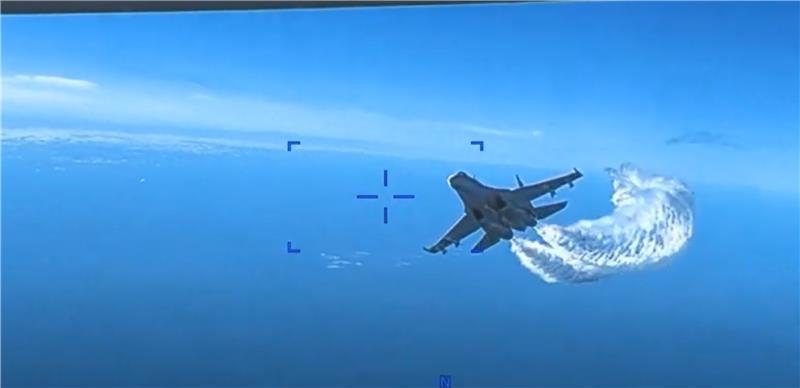
    An MQ-9 Reaper UAV has collided with a Russian Su-27 fighter jet after it tried to spray the UAV with jet fuel, reports ABC News. The U.S. European Command has released a video that was taken from a camera the bottom of the UAV and shows the moment the collision occurred.

    The Russian fighter jet took two passes at the UAV. During the second attempt to spray the UAV with jet fuel, they collided. Communication with the UAV was lost momentarily after the collision.

    From the video, one of the propeller blades of the UAV seems to be damaged.

    As of now, there are no further updates.

  • Northrup Grumman provides Marines with next-gen targeting devices

    Northrup Grumman provides Marines with next-gen targeting devices

    Photo: KaninRoman/iStock / Getty Images Plus/Getty Images
    Photo: KaninRoman/iStock / Getty Images Plus/Getty Images

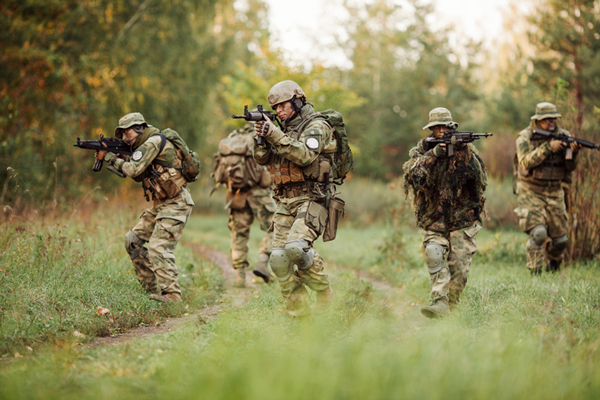
    The U.S. Marine Corps has selected Northrop Grumman to provide the Next-Generation Handheld Targeting System (NGHTS), a compact targeting system that provides advanced precision targeting and can operate in GPS-denied environments.

    NGHTS will provide Marines an enhanced capability to identify and designate targets from extended ranges.

    “NGHTS’ advanced technology will significantly enhance warfighters’ ability to safely complete their missions,” said Bob Gough, vice president of navigation, targeting and survivability, Northrop Grumman. “NGHTS is lightweight and combines four systems into one portable device with state-of-the-art imaging, targeting, ranging, designating and networking. This compact, multi-sensor electro-optical/infrared device lightens Marines’ loads and keeps them connected while adding precision and safety to their missions.”

    This laser-based device can perform rapid target acquisition, laser terminal guidance operation and laser spot imaging. Its high-definition infrared sensors provide accuracy and grid capability over extended ranges.

    Additional features include a high-definition color display and day/night celestial compasses.

  • AUVSI launches Green UAS

    AUVSI launches Green UAS

    AUVSI_NewLogo2023.png

    AUVSI has launched Green UAS, a program to expand the amount of commercial UAS that have been verified to meet high levels of cybersecurity and National Defense Authorization Act supply chain requirements.

    Green UAS meets the Blue UAS certification program of the Defense Innovation Unit. It is designed for users who do not immediately require Department of Defense authority to operate.

    Green UAS also offers a streamlined pathway to the Blue UAS 2.0 cleared list.

    Green UAS is suitable for users who rely on commercial, off-the-shelf UAVs to conduct diverse operations. These users include federal government agencies, local law enforcement, first responders and state departments of transportation.

    Green UAS is also suitable for industrial enterprise users such as energy and utility companies, telecoms, manufacturers, food and agriculture, and logistics and mapping/surveying companies.

  • Mil-spec GPS/GNSS antennas released by Pasternack

    Mil-spec GPS/GNSS antennas released by Pasternack

    Image: Pasternack
    Image: Pasternack

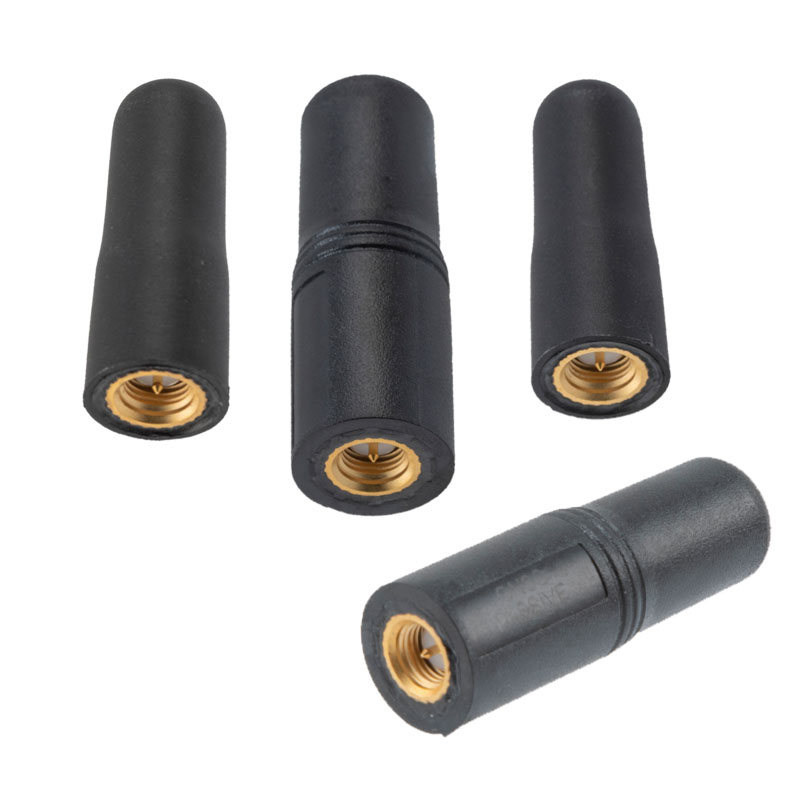
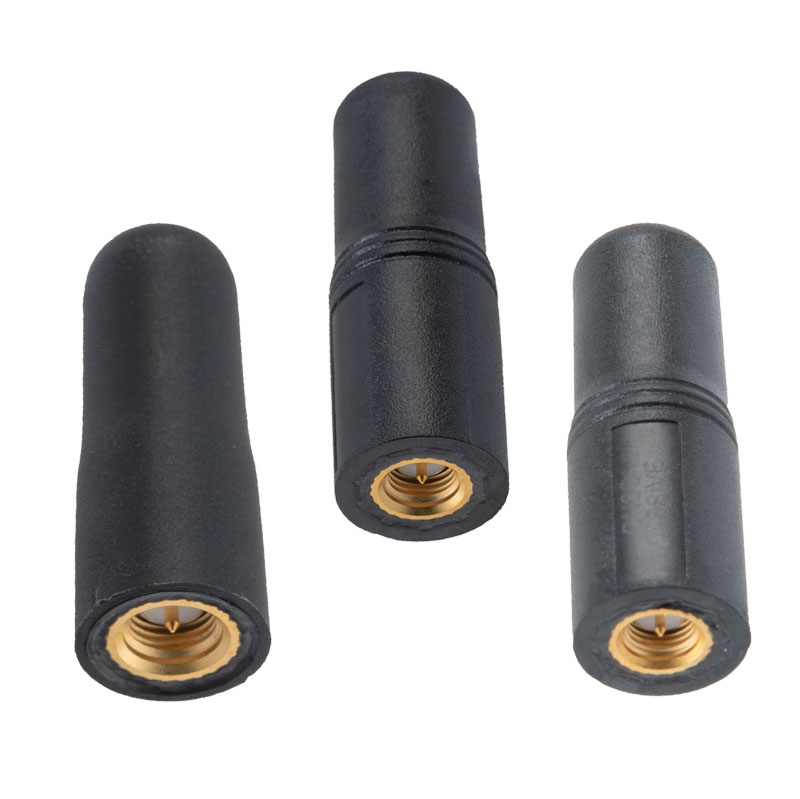
    Pasternack has released a series of GNSS antennas that meet military specifications for use in several small form factor and mobile applications.

    The mil-spec GNSS antennas are engineered for environmental performance according to the MIL-STD-810G standard and include multi-standard GPS L1, Galileo E1 and GLONASS options.

    The MIL-STD-810G GNSS antennas are IP67 rated. They are available in passive and active versions and provide coverage from 1,597 MHz to 1,607 MHz. The GNSS antennas feature linear polarization for cross-polarized isolation, nominal gain options of -3 dBic and 10 dBic, and SMA mounts.

    Pasternack’s mil-spec GNSS antennas are available now.

  • DroneShield partners with Pierce Aerospace for C-UAS tech

    DroneShield partners with Pierce Aerospace for C-UAS tech


    Image: DroneShield
    Image: DroneShield

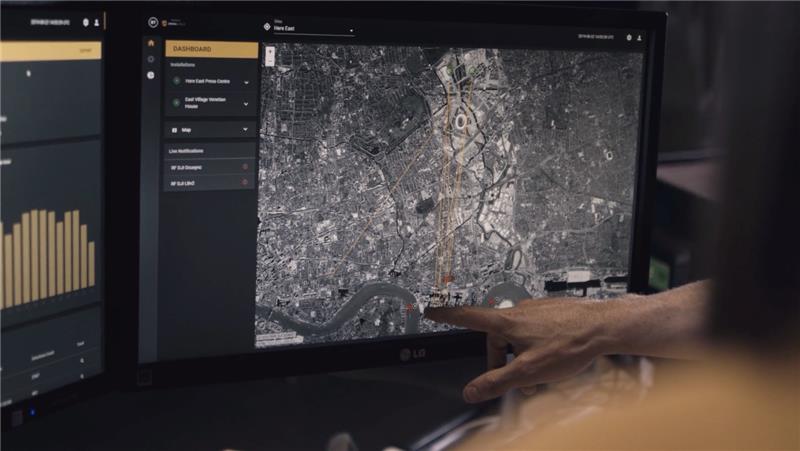
    DroneShield and Pierce Aerospace have partnered to integrate Pierce Aerospace’s Flight Portal ID remote ID technologies into DroneShield’s counter-unmanned aerial system (C-UAS) and command and control systems (C2), which includes DroneSentry-C2. The integration will provide enhanced situational awareness to end users. 

    The inclusion of Flight Portal ID’s remote ID data feeds into DroneShield’s DroneSentry-C2 system enables end users to correlate and positively identify UAS. This enhances security operations and provides a holistic air picture with target discrimination. 

    Flight Portal ID remote ID technology consists of remote ID receivers, broadcast modules, software, integration capabilities and remote administration services. It has an integration service record with several commercial unmanned traffic management (UTM), detect and avoid, Department of Defense C2 and C-UAS systems.  

    “The integration of Flight Portal ID and DroneSentry-C2 provides users with the comprehensive picture needed to deconflict their airspace, maintain safe flight operations for both crewed and uncrewed aircrafts, while also having the real-time intelligence and means necessary to protect that airspace,” said Matt McCrann, CEO of DroneShield.  

    The combined technology has a wide range of end user applications, as UTM C-UAS solutions continue to merge for several user segments, across civilian government, military and private use cases. 

    The joint capabilities will be available to customers in 2023. 

  • Raytheon claims Navy contract to provide JPALS to Japan

    Raytheon claims Navy contract to provide JPALS to Japan


    Image: Raytheon Technologies video screenshot
    Image: Raytheon Technologies video screenshot

    Raytheon Intelligence and Space has been awarded a contract from the United States Navy’s Naval Air Traffic Management Systems Program Office to deliver the Joint Precision Approach and Landing Systems (JPALS) to the Japan Maritime Self-Defense Force (JMSDF). The GPS navigation and precision landing system will be deployed on the JMSDF JS Izumo carrier.  

    The JPALS system guides aircraft onto carriers and assault ships in all weather and surface conditions and is integrated on all F-35 aircraft. JPALS is also being deployed on all U.S. Navy aircraft and assault ships. 

    In addition, JPALS will be deployed on two international platforms, including the United Kingdom Royal Navy’s HMS Queen Elizabeth, and an Italian aircraft carrier, the ITS Cavour, to support its F-35 squadron. 

    The primary work locations for JPALS are in Largo, Florida and Fullerton, California.   

  • Hexagon releases platform for defense mobile apps

    Hexagon releases platform for defense mobile apps

    Image: Hexagon
    Image: Hexagon

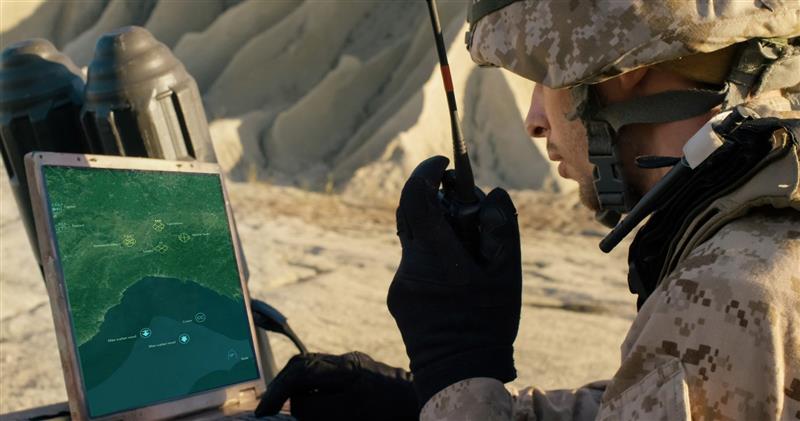
    Hexagon’s Safety, Infrastructure & Geospatial division has released for Android defense applications. The platform is designed for the development of mobile applications for dismounted soldiers in the field. 

    With LuciadCPillar, developers can build applications with 2D and 3D views. It features military symbology and supports many geospatial data types including vector data, raster data, elevation data, point clouds and 3D meshes. It has the same capabilities found in desktops, in-vehicle and browser applications built with LuciadLightspeed, LuciadCPillar and LuciadRIA. 

    The platform offers capabilities to match high-resolution screens, graphic processing units and multi-core processors including the ability to display 3D data in mobile applications. LuciadCPillar supports ARM processors and an application programming interface, which aligns with the Android developer experience. 

    Impact, a French system integrator, partnered with Hexagon to test LuciadCPillar and will integrate it into its Delta Suite product, which is used by the French Special Operations Command.  

    LuciadCPillar is part of Luciad 2022.1, which is available now globally.  

  • TRX Systems enhances military anti-jamming device

    TRX Systems enhances military anti-jamming device

    Image: TRX
    Image: TRX

    TRX Systems has added a jammer finder capability to its NEON PT-MIL. The new function and expanded threat-mapping features enable dismounted soldiers to proactively respond to navigational warfare attacks (NAVWAR).

    NEON PT-MIL helps warfighters carry out their missions even when operating in environments where GPS/GNSS signals are unreliable or intentionally denied. The device can detect and eliminate compromised GNSS data while providing an alternative source of positioning information by fusing inputs from inertial sensors, GNSS signals, ultra-wideband and more.

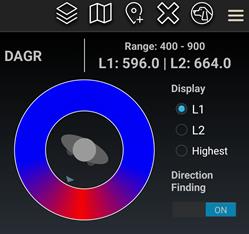
    NEON PT-MIL can also be equipped to detect and map jamming and spoofing attacks. This feature was developed through a United States Army Rapid Capabilities and Critical Technologies Office program designed to extend NAVWAR functionality. The device accepts assured GNSS data from external devices — such as the Defense Advanced GPS Receiver, or DAGR, and the Orolia Defense and Security Broadsense Nano — to deliver a fused position and a NAVWAR threat indication when detected.

    The device can also derive a line of bearing to an enemy jammer and display it within the warfighter’s Android Tactical Assault Kit (ATAK) user interface, by using the GPS jamming indications available from a connected GNSS source.

    NEON PT-MIL with the jammer finding function is available in beta versions for field testing now and will be generally available in mid-2023.

  • DOD to provide Ukraine with aerial defense package

    DOD to provide Ukraine with aerial defense package

    Image: U.S. Department of Defense
    Image: U.S. Department of Defense

    The United States Department of Defense (DOD) will provide a new package of security assistance for Ukraine to aid with ongoing Russian aerial attacks. The package includes defense tools such as GPS-guided rockets and counter-UAV equipment.

    The presidential drawdown package includes:

    • additional ammunition for High Mobility Artillery Rocket Systems
    • additional 155 mm artillery rounds
    • additional 120 mm mortar rounds
    • 190 heavy machine guns with thermal imagery sights and associated ammunition to counter unmanned aerial systems
    • 181 Mine Resistant Ambush Protected vehicles
    • 250 Javelin anti-armor systems
    • 2,000 anti-armor rockets
    • Claymore anti-personnel munitions
    • demolitions munitions
    • cold weather gear, helmets and other field equipment.

    Under the Ukraine Security Assistance Initiative (USAI), DOD will provide Ukraine with:

    • two HAWK air defense firing units
    • anti-aircraft guns and ammunition
    • equipment to integrate Western air defense launchers, missiles and radars with Ukraine’s air defense systems
    • equipment to sustain Ukraine’s existing air defense capabilities
    • air defense generators
    • counter-unmanned aerial systems
    • four air surveillance radars
    • 20 counter-mortar radars
    • spare parts for counter-artillery radars
    • Puma unmanned aerial systems
    • precision-guided rockets
    • secure communications equipment
    • medical supplies
    • funding for training, maintenance and sustainment.

    Ukraine has been able to intercept Russian UAVs and missiles; however, having additional air defense will help combat efforts.