Janam Technologies LLC, a provider of rugged mobile computers that scan barcodes and communicate wirelessly, today announced the release of its new XT85, a high-bandwidth wireless rugged mobile computer designed to support demanding enterprise applications in equally demanding outdoor environments.
Janam’s XT85 offers a complete set of features that enterprises require in a rugged wireless wide area device, at a price point that makes extending enterprise mobility affordable, Janam said. It is equipped with high-sensitivity GPS with anti-jamming technology.
The XT85 survives multiple 5-foot drops to concrete at temperature extremes (and 6-foot drops at room temperature), offers a 3.5-inch high-transmissivity display that maximizes outdoor readability while minimizing power consumption, offers advanced 4G-ready cellular network connectivity with five-band UMTS for global roaming, and is small and lightweight.
“Purpose-built mobile computers must appeal to today’s information worker who expects a device that is small, light, fast and highly capable while also serving the business needs of the enterprise for whom the mobile worker is performing mission-critical tasks,” said Harry B. Lerner, CEO of Janam. “Janam’s XT85 is optimized to appeal to both constituencies. It’s much more than a smart phone. It’s a brilliant PDA.”
In addition to 4G-ready UMTS/HSDPA/HSUPA/GSM wireless wide area network communication, the XT85 is equipped with 802.11 a/b/g/n WLAN with enterprise-grade security and Bluetooth. It is available with the SE965HP laser engine from Motorola or Honeywell’s Adaptus Imaging technology. Purpose-built to accommodate the realities of work processes and environments, the XT85 is UL-certified for use in hazardous environments, sealed to IP65 standards and available with QWERTY or numeric keypads.
Next month Spirent is hosting a meeting with hands-on training sessions on GNSS simulation equipment led by Spirent engineers. The 2013 Spirent Federal 2013 GNSS Technical Interchange Meeting will be held March 19-21 at the DoubleTree Hotel Anaheim-Orange County, in Orange, California.
March 19 and 20 are for general participation. The third day, March 21, features FOUO (For Official Use Only) sessions for U.S. citizens only.
With apologies to the Bard of Avon, as I paraphrase his prose, 2C or not 2C — that is the question for millions of GPS users and has been for several years. Indeed, over the past seven years hardly a week has gone by without an email or inquiry about the status of the GPS L2C signal.
The name “L2C” refers to the radio frequency used by the signal (1227 MHz, or L2) and the fact that it is for civilian use, but of course it will also be used by the military. There are also two military signals on the L2 frequency. In the past couple of months inquiries concerning L2C have become an almost everyday occurrence. Plus I have it on good authority that it was a topic of conversation at recent a PNT EXCOM or Executive Committee Meeting.
However, when I started making inquiries I was met with an interesting dichotomy. One group of users actually laughed and accused me of having a Don Quixote complex and tilting at windmills, since this debate has been continuing for over seven years, while other more sanguine user groups are seriously interested in the future of L2C. Here is what I discovered.
What is L2C?
According to the official U.S. government website concerning GPS, “L2C is the second civilian GPS signal, designed specifically to meet commercial needs. When combined with L1 C/A [ed. coarse acquisition] in a dual-frequency receiver, L2C enables ionospheric correction, a technique that boosts accuracy. Civilians with dual-frequency GPS receivers enjoy the same or better accuracy as the military. For professional users with existing dual-frequency operations, L2C delivers faster signal acquisition, enhanced reliability, and greater operating range. L2C broadcasts at a higher effective power than the legacy L1 C/A signal, making it easier to receive under trees and even indoors. The Commerce Department estimates L2C could generate $5.8 billion in economic productivity benefits through the year 2030. The first GPS IIR(M) satellite featuring L2C launched in 2005. Every GPS satellite fielded since then has included an L2C transmitter.”
Problems
So while this would appear to be a “no brainer” as it were, especially the $5.8 billion in economic benefits, it appears the Global Positioning System is actually at a crossroads and the decision makers are apparently on the horns of a dilemma. For some groups of users, the laudable global PNT (position, navigation and timing) gold standard is looking a bit tarnished of late but has an opportunity to shine once again. The question and future perception of GPS by many global users simply revolves around implementing full navigation messages on signals that are already in place, namely L2 and L5 with CNAV and M-code with MNAV. So, what’s the issue, you say? The signals are there, and in the case of L2C and M-code, have been for seven years — simply upload a full navigation message and be done with all the ambiguity that has become unwelcome baggage for these modern day signals. Au contraire, mon ami, if it were only that simple.
Now grant you this, should be a simple decision, but remember this is the U.S. government we are talking about — apropos failed budgets, endless continuing resolutions, health care fiascos, and the fiscal cliff — important but in the end actually simple decisions all. Unfortunately, history reflects when the U.S. government is involved, nothing is ever easy and timely decisions are hard to come by. So as not to confuse anyone, especially the players, let’s take this process one step at a time and see what all the fuss is about, shall we?
Problem Statement: The L2C and M-code signal capability has been on orbit for more than seven years, since 2005. In 2009, the 2SOPS began uploading and broadcasting a Message Type Zero on L2C, which, while not a navigation message, does put data on the channel. What users are now asking for is the full navigation message on L2C or CNAV, which is a modern-day navigation message and will have significant advantages for all users. Plus, the signal would be available to potentially more than 3 billion users versus the small subset today that utilizes the L2C carrier phase for RTK (real-time kinematic) operations. Indeed, when compared to the L1 C/A (coarse acquisition) signal, L2C has 2.7 dB greater data recovery (with a navigation message) and 0.7 dB greater carrier tracking.
The bottom line is that, with the addition of a valid and updated CNAV message on L2C, all users, the military included, would immediately have ten more potential navigation signals available, and that number would grow with each new GPS launch. Obviously, the same is true for military users with M-code and for all users with an L5 capability. However, the upgrade process needs to start somewhere, and L2C is the obvious choice since there are essentially no M-code receivers available today and there are approximately between 450,000-500,000 L2C capable receivers already in the hands of users.
Assets
Hardware – Simply put, there are currently 10 satellites (SVs) capable of broadcasting a full navigation message or CNAV message on the L2 signal and MNAV message on the M-code signal, also on L2 and three L5 CNAV capable SVs:
7 – IIRM SVs (does not include SVN-49 which, while capable, is currently in residual and/or test status).
3 – IIF SVs (same capabilities as the IIRMs and also capable of broadcasting an L5 signal with CNAV).
While the lack of L2C monitor stations has historically been used as a reason for not broadcasting the new CNAV navigation messages, today there are literally more than one hundred L2C- and L5-capable monitoring stations, which includes the NASA JPL (Jet Propulsion Laboratory) monitoring stations. Logs from several independent monitoring stations show that at any given time there are from one to three L2C SVs visible for the majority of global users, including our warfighters, who in the mountains of Afghanistan need all the signal availability we can provide.
Plus, of the estimated 450,000-500,000 fully capable L2C receivers, several thousand of those are in the hands of our warfighters. Trimble started building in the L2C and L5 CNAV capability as far back as 2003, a full two years before the first L2C launch, for users that wanted the option. However, that option has never been fully tested with live on-air CNAV coded transmissions and they need to be. More on testing later.
From a global user perspective, Japan has essentially leapfrogged the U.S., since the L2C and L5 signals with full CNAV messages are already being broadcast on the Japanese QZSS navigation satellite QZSS-1.
Software was initially thought to be an issue, but according to my sources, the current MNAV or M-code full navigation message is remarkably similar, as to be almost identical to the CNAV messages for L2C and L5, and MNAV has already been shown to work well on the ten GPS SVs capable of broadcasting the M-code signal. Granted, it is not fully integrated into the current OCS or operational control system known as AEP or Architecture Evolution Plan, but then not many future capabilities are, so this is really not an issue since manual processes abound in the current OCS. The L2C, L5 and M-code full navigation messages are supposedly still part of the plan for OCX or the future operational control system for GPS, which should be up and working sometime in early 2017. This would be twelve years after the L2C and M-code signal capability was first placed on orbit.
Timelines
Given those timelines, some would say, hey that’s only four years from now, maybe five if you count testing, and the full navigation message might actually be turned on. But, alas, rumors abound that there is a government agency apparently objecting to the immediate activation of L2C and L5. This agency, and it is not hard to ferret out exactly which one, wants extensive testing to ensure there will be no complications with the WAAS or Wide Area Augmentation System broadcasts, and as an alternative plan it proposes waiting until all the L5 satellites are on orbit before activating navigation messages on L2C or L5. Let’s do the math – that’s 24 L5 SVs, before the L2C and L5 PNT signals are activated with full navigation messages. At one launch per year, the current GPS launch rate, and it matters not whether it is a IIF or a III, and with three L5 SVs already on orbit, that effectively means we will see all 24 L5 SVs on orbit sometime in 2034, if indeed the II-F SVs are truly the first 30-year GPS SVs. If not, then it could be as late as 2037. However, given the average life span of GPS SVs today, it is more than likely that by 2037 every single L2C, L5 and M-code capable satellite on orbit today will have been disposed of without ever having broadcast any of the new signals for which they were designed. Now, how’s that for a lachrymose plan?
Fortunately, this alternate long-term “plan’ has not a prayer of passing, dare I utter the words, the dreaded Washington Post test. Never having purposely written anything for the Washington Post, even though several of my articles have been quoted and misquoted there, it is still a force to be reckoned with in our nation’s capital, simply because the Washington Post continually asks the question, “Is this a wise use of taxpayer’s money?” The answer for the alternative GPS L2C and L5 plan is obvious.
Personnel and monetary issues are always mentioned in the context of new GPS capabilities; however, I have no doubts that the absolutely superb blue suit operators, tacticians and support contractors at 2SOPS are more than capable of performing the simple actions of uploading the new navigation messages on their own.
Sure, times are tough but the blue suit operators and their on-site support staff, at the 2SOPS, have proven themselves time and again to simply be the best in the business. They have brought GPS SVs back from the dead, they (with Braxton Technologies Software) maintain residual satellites that everyone thought for years was an impossible task, and they have saved SVs for important missions that everyone else thought should have been abandoned. We don’t give the fine men and women at Schriever AFB, the 50th Space Wing and the 2SOPS (2nd Space Operations Squadron) enough credit, and I am not about to sell them short. I am convinced the signals in question can be uploaded with full navigation messages, tested and made operational, even if only on a test basis, within six months without expensive outside help.
Full-Scale Testing
This brings us back to the full testing proposal, which actually makes a lot of sense. We (all users) need immediate full scale and extensive operational evaluations that confirm “we have it right” with the CNAV and MNAV data messages. We should encourage manufacturers to participate in this testing process to ensure their GPS devices meet specifications and are not flawed because of a misinterpretation of an interface specification. The GPS equipment manufacturers would be the first to embrace this approach. The manufacturers and users need open-air full-scale testing with valid CNAV messages being broadcast by numerous satellites to ensure they have coded the L2C, L5 and M-code receivers properly.
Immediate testing is the key here, because otherwise under one proposed plan we will only find out if there is a problem with full end-to-end testing of the L2C CNAV signal and user equipment 13 years after manufacturers began fielding the supposed and promised capability. Under the wait for L5 FOC (full operational capability) plan, we won’t find out if the implementation of specifications are correct for another 20-plus years. Personally, I find this to be unacceptable. We need to begin the immediate six-month test plan now.
The aviation community has the mantra, “Test it as you fly it.” We should not do any less. A full six-month evaluation is absolutely appropriate and should be undertaken now. We cannot afford to repeat the 5.5C debacle. [ed. click to read more about 5.5C].
Users, of course, are the prime concern. If you or your organization, including the military, can benefit from 23 more navigation signals today (and three additional signals each year from now until 2034), one of them being the strongest GPS signal to ever be broadcast (L5 with CNAV), and you want/need those signals active now, then please let us know. You may email me at [email protected].
Stand up and Be Heard
Although some of my comments have been a bit tongue-in-cheek, this is indeed your chance to be heard and to make a difference. Let there be no mistake: there is no other PNT system in existence today, planned or unplanned, on the drawing boards or on PowerPoint slides that approaches the capability, availability, reliability, longevity, accuracy and integrity of the Global Positioning System. The folks at Air Force Space Command have been and continue to be admirable stewards. We just need to let them go about their business without undue restrictions.
Dare to Compare
If you want to know exactly how the GPS compares to other PNT systems, consider that the Russian GLONASS (Globalnaya Navigatsionnaya Sputnikovaya Sistema), which came into existence in 1979 only one year after the first GPS launch, has only been Fully Mission Capable (FOC) as a global PNT system for about two years, and that dubious status is literally day-to-day as it teeters on that magic number of 24 available SVs broadcasting multiple PNT signals simultaneously. Contrast that to the GPS, which currently has 32 active SVs with several additional SVs in residual status. Three GPS SVs are nearing, have attained or will soon attain 20 years on orbit. One of our SVs has been on orbit for more than 22 years. GLONASS has serious problems merely attaining an average SV life of less than five years on orbit. Even the vaunted Chinese are experiencing serious technical, longevity and integrity issues with their multiple PNT constellations. It is just not as easy as it sounds. So yes, GPS is the global PNT gold standard, and its stewards must always strive to improve and lead the way. The GPS must continue to grow and innovate or risk being left behind. This is your chance to contribute to that leadership role. Let your opinion be heard.
Until next time Happy New Year, happy navigating, and keep those card, letters and emails coming.
The General Lighthouse Authorities of the UK and Ireland (GLA) have announced that ships in the Port of Dover, its approaches and part of the Dover Strait can now use eLoran radio navigation technology as a backup to satnav systems like GPS and Galileo. What is considered the world’s busiest shipping route is the first to deploy eLoran to counter jammers and space weather, the GLA said in a statement.
The ground-based eLoran system provides alternative position and timing signals for improved navigational safety. The Dover area, the world’s busiest shipping lane, is the first in the world to achieve this initial operational capability (IOC) for shipping companies operating both passenger and cargo services.
Today’s announcement represents the first of up to seven eLoran installations to be implemented along the East Coast of the United Kingdom. The Thames Estuary and approaches up to Tilbury, the Humber Estuary and approaches, and the ports of Middlesbrough, Grangemouth and Aberdeen will all benefit from new installations, and the prototype service at Harwich and Felixstowe will be upgraded, the GLA said.
Although primarily intended as a maritime aid to navigation, eLoran could become a cost-effective backup for a wide range of applications that are becoming increasingly reliant on the position and timing information provided by satellite systems.
“Our primary concern at the GLA is for the safety of mariners,” said Captain Ian McNaught, Chief Executive of Trinity House. “But signals from eLoran transmitters could also provide essential backup to telecommunications, smart grid and high frequency trading systems vulnerable to jamming by natural or deliberate means. We encourage ship owners and mariners to assess eLoran in this region and provide feedback to the GLA on its performance.”
P&O Ferries has installed an eLoran receiver on its new vessel Spirit of Britain. She will be based at Dover and is one of the largest passenger ships the busy Dover/Calais route has ever seen.
“Accurate real-time positional information is essential for the safe navigation of ships with modern electronic charts,” Captain Simon Richardson, head of Safety Management at P&O Ferries, said. “Satellite navigation systems are vulnerable to degradation of signal strength and our ships have also experienced occasional loss of signal. We welcome the development of a robust alternative to provide redundancy in real-time positional information and we see eLoran as the most effective solution to countering the problem.”
Commenting on the announcement Stephen Hammond, Minister for Shipping, said, “I congratulate the General Lighthouse Authorities on this initiative that seeks to improve navigational safety in what is the busiest shipping channel in the world, through the development and deployment of technology. I look forward to receiving reports of its effectiveness.”
Unmanned Innovation, a provider of Development Platforms for unmanned aircraft systems (UAS), announced that it has partnered with VectorNav Technologies to integrate VectorNav’s VN-100 inertial measurement unit (IMU) into its os-Series Autopilots. Unmanned Innovation’s os-Series Autopilots offer a customizable solution that enables rapid prototyping and cost-effective production of fixed-wing, helicopter, multi-rotor, and custom configuration UAS. Unmanned Innovation has integrated VectorNav’s VN-100 miniature, calibrated MEMS-based, surface-mount IMU to provide customers the option of a fully calibrated and thoroughly tested IMU.
Unmanned Innovation’s os-Series Autopilots, made commercially available for the first time in November 2012, combine modular hardware with an open architecture, making each autopilot a development platform.
The os-Series Autopilots are offered in multiple form factors with features tailored for various vehicles, payloads, and applications. Each os-Series Autopilot is a complete integrated solution and contains an INS/GPS with air data incorporating the VectorNav VN-100, a datalink radio, payload interfaces, and a Linux computer within one miniature package, starting at 32 grams. The os-Series Autopilots come with professionally written flight control and mission software that Unmanned Innovation provides under a royalty-free license that allows for easy modification, extension, and inclusion in proprietary products.
The partnership between the two companies began during AUVSI’s Unmanned Systems North America 2012 conference in August, where Unmanned Innovation was introduced to VectorNav’s VN-100 and recognized it as an attractive alternative to its existing inertial measurement sensors due to its small form factor, low-cost, and high-precision calibration. Unmanned Innovation’s flexible architecture allowed for quick integration of the VN-100 and VectorNav provided custom firmware with a faster update rate to make the IMU compatible with Unmanned Innovation’s requirements.
The VN-100 IMU, calibrated for bias, scale factor and misalignment errors at room temperature or over the entire thermal operating range of the sensor increased the accuracy of the os-Series Autopilot navigation solution. After a short development cycle, testing and verification, VectorNav’s VN-100 IMUs are now fully integrated within Unmanned Innovation’s os-Series Autopilots. The complete os-Series product line is shipping to customers in the USA and abroad and is free of ITAR restrictions.
“We are very pleased to be working with Unmanned Innovation on their os-Series Autopilot, which we find to be a very unique and high-value product that fills a significant gap in this market,” said John Brashear, VectorNav’s president. “We hope that the VN-100 adds to this value by allowing Unmanned Innovation to focus on its strengths improving the os-Series while securing a long-term, dependable sensing solution and partnership with our company.”
Whatever happed to Allen Osborne Associates (AOA)? As a 1994 report (seeking a receiver for a “GPS Sounder” task) stated, “Signal-to-noise ratio tests of three high-performance GPS receivers in severe multipath conditions clearly show the Alllen Osborne Associates TurboRogue SNR-8000 is superior in locking and tracking C/A, P1 and P2 codes at very low receiver-to-satellite elevation angles.”
The advanced features of the TurboRogue may well have been key in AOA receivers being used for a large number of ground reference applications, including Monitor Station Receivers for the U.S. Air Force GPS Operational Control Segment (OCS).
Just to refresh your memory, AOA was acquired in 2004, and the GPS group now resides and thrives within the Communication Systems Division of ITT Exelis Corporation (ITT). Those AOA products and technology have contributed to the ITT military GPS receiver group in Van Nuys, California, becoming a leading SAASM receiver supplier.
ITT Exelis also has a Geospatial Systems group headquartered in Rochester, New York, which is home to the GPS Payload, Receiver and Control Systems group who are currently developing the ground reference receiver as part of the Raytheon team for the next-generation GPS Operational Control Segment (OCX).
Geospatial Systems has also been continuously involved in the supply of GPS payloads on every GPS satellite launched and has accumulated more than 500 years of on-orbit payload life.Geospatial Systems is also part of the Lockheed Martin team that is developing and building the satellite payloads for tomorrow’s GPS III space segment. ITT is developing and integrating the navigation payloads for eight GPS IIIA satellites.
An Exelis SINCGARS radio.
SINCGARS
SINCGARS
So, today, ITT boasts that it is the only GPS systems developer to have been a key contributor to all three GPS program segments (space, OCS and user) with both legacy and modernized equipment.
The receiver guys in Van Nuys have fielded a series of SAASM-based receivers over the years, beginning with the EGR-1020 which has gone into a large number of SINCGARS radio systems.. This adds position and GPS time-sync to each radio terminal. The handheld control display allows each radio operator to see the location in real-time of all SINCARS-equipped friendly force groups, providing active situational awareness on the battlefield.
The EGR-2000 Small Serial Interface (SSI) SAASM receiver.
The next generation EGR-2000 Small Serial Interface (SSI) SAASM receiver has been integrated into “an in-country GPS designed and manufactured system of a U.S. International Ally,” and can be found in terminals, radios and handhelds.
This brings us to the current ITT receiver product — known as the EGR-2500. ITT-funded IR&D investment in more integration and miniaturization has reduced the size of the EGR-2500 to half that of the SSI receiver. With the same capability to track through reduced signal levels and producing high-precision carrier phase and pseudorange, its not surprising that the EGR-2500 has found a few new OEM applications.
Both Geodetics and Technology Advancement Group (TAG) have worked with ITT to integrate the EGR-2500 into their products in order to achieve centimeter-level RTK positioning. The EGR provides high-quality, variable rate observations at up to 10 Hz for up to 24 different satellite signals, and this allows Geodetics and TAG to offer anti-spoofing RTK performance. With the addition of external inertial aiding, the EGR is also able to maintain a high quality RTK solution even under high dynamics.
The ITT EGR-2500.
But the SAASM receiver world is becoming even more competitive, and ITT is responding by maintaining its IR&D investment in yet another generation of receiver. The main objective is to even further improve power consumption and performance. A pair of ARM 9 processors has been added, along with circuitry that is software-controlled to reduce power to blocks not being used, so the next-generation EGR will have reduced size, weight and cost and is targeted to consume 500 milliwatts in low-power mode. The new enhanced correlator array design will also dramatically reduce time-to-first fix, and with today’s operational environment in mind, a front end filter has been added to reduce the effects of interference and jamming.
So anti-spoofing with reduced interference and jamming — sounds like a good solution for UAVs and others operating in a hostile environment. From a rack of monitoring equipment to a single board 1.1 gram OEM module, and more integration underway for the next generation receiver — another example of electronic GNSS evolution in action…
Locata Corporation today announced the U.S. Air Force (USAF) has signed a sole-source, multi-year, multi-million dollar contract to install the U.S. military’s first revolutionary ground-based LocataNet positioning system at the White Sands Missile Range in New Mexico. The USAF will field Locata’s new technology for extremely accurate “reference truth” positioning across a vast area of White Sands when GPS is being completely jammed.
In a recent USAF technical report, the need for a new non-GPS based positioning capability was described by the 746th Test Squadron as the key component for “the realization of the new ‘gold standard truth system’ for the increasingly demanding test and evaluation of future navigation systems for the U.S. Department of Defense.” Locata is the new technology now contracted to enable this capability for the USAF’s future truth reference, the Ultra High-Accuracy Reference System (UHARS).
The report documented extensive testing of Locata’s new capabilities when a LocataNet covering 1,350 square miles (3,500 square kms) was first deployed at White Sands. The USAF and the 746th Test Squadron proved a LocataNet can accurately position USAF aircraft over a large area when GPS is denied. Locata delivered accurate independent positioning as good as, or better than, the USAF’s current CIGTF Reference System (CRS). The Locata non-GPS based positioning capability is core to the UHARS that will now replace the CRS in 2014.
After the exhaustive aircraft testing, the USAF concluded that the Locata system had not only met the extremely demanding contractual tracking and positioning requirements, but actually exceeded them on many points. Some of the milestones documented and confirmed by the USAF included:
The USAF report documented LocataNet position accuracy of 2.5 inches (6cm) horizontally and 6 inches (15 cm) vertically – about the size of a dollar bill – for aircraft flying at a distance of 30 miles (50km) at up to 350 mph (550 km/hr) at 25,000 feet, without GPS.
Throughout the period of the testing, the entire White Sands network achieved nanosecond-accurate synchronization within several minutes of the LocataNet being activated, and remained synchronized even during severe weather until turned off at the end of each test.
The USAF tests showed that a stock standard Locata transmitter – the same unit used in commercial applications like mining – could have an amplifier attached to easily boost signals for long-range reception. By attaching a simple, inexpensive 10 watt amplifier, the USAF proved that Locata signals could be acquired and tracked by aircraft at distances of up to 60 miles (100 km). Longer distances could be enabled by attaching higher-powered amplifiers.
Before to the White Sands flight trials, commercial Locata systems had only been used to position ground-based vehicles, such as cars, trucks, bulldozers and drill rigs in local areas. For the USAF tests, however, the Locata system needed to function under dynamic aircraft operating maneuvers, including banking, angular and linear accelerations, airspeeds up to 300 knots (560 km/hr), and altitudes up to 30,000 feet above sea level. The required aircraft performance was verified in the real-world testing.
The USAF required Locata to design, prototype and then deliver aircraft-certified antennas for use on both the Locata ground-based transmitters and the USAF aircraft. Locata worked with Cooper Antennas Ltd. of Marlow in Buckinghamshire, United Kingdom, to produce an aircraft-certified version of Locata’s new quadrifilar helix antenna design. The Cooper manufactured antennas were used throughout the tests with excellent results, and confirmed Locata’s research and analysis.
“Locata Corp delivered a LocataNet for use in our October 2011 technical demonstration on White Sands Missile Range that provided time and position truth, independent of GPS, that was better than 18 cm (6 inches) per axis while flying at 15,000 and 20,000 foot above mean sea level profiles,” said Christopher Morin, technical director for the 746 Test Squadron. “The solutions provided by the LocataNet were within the accuracy tolerance of the squadron’s CIGTF Reference System and met our threshold objectives. Further analysis has shown that if we optimize the LocataNet deployment, characterize its errors and tightly couple its range and carrier-phase measurements with the other GPS and inertial components on the UHARS pallet into the UHARS solution post-processing software, I am confident we will be able to meet our 5-cm (2-inch) per axis truth reference objective. I am very pleased with the LocataNet’s demonstrated ability to produce an accurate, dynamic truth reference from the relatively static implementation they had already deployed in the mining industry.”
“Locata products developed and sold by important commercial partners like Hexagon and Leica Geosystems have already shown our new technology is a game-changer for positioning over industrial-sized areas,” said Nunzio Gambale, CEO and co-founder of Locata. “However, proving Locata can provide the USAF with centimeter-accurate non-GPS positioning over a vast military area when GPS is jammed instantly elevates our technology achievements into a completely new league. It’s important to grasp the scale of what we’ve done here. The 2,500 square mile LocataNet at White Sands will be 74 times the size of Manhattan Island. It must be clear, our ability to deliver centimeter-level (inch-level) positioning over an area that large, without using GPS satellites, is both unique and totally revolutionary. No one else on Earth can do this. Many valuable industrial and consumer apps will now be built around our amazing inventions, created by Locata’s co-founder David Small and our brilliant engineers.”
“This contract makes it clear you are witnessing the arrival of one of the most important technology developments for the future of the entire positioning industry,” Gambale declared.
Under this new contract Locata will provide the USAF with Locata receivers and LocataLite transmitters to blanket 2,500 square miles (6,500 sq km) of the White Sands Range. Locata will also:
a) deliver extended hardware warranty, along with ongoing Locata software and firmware upgrades, through to the year 2025;
b) supply multi-year support for the installation, fielding and testing of Locata networks; and
c) provide long-term consultation and expert technical advice to ensure optimal operational performance of the USAF’s fielded LocataNet systems.
It happens every year and it is an emotional rollercoaster. It generally starts a couple of weeks before Thanksgiving and continues until just after New Years – and it is simply heartbreaking. The letters and emails start arriving just like clockwork before the holidays and they all ask the same question – where can I buy the PHGPST or the Perfect Handheld GPS Transceiver?
As many of you know, who are faithful readers, I receive hundreds of letters and emails like this throughout the year from our warfighters and first responders, but the letters and emails over the holidays are special because they are from the wives, sisters, children, parents and grandparents of war fighters. They want nothing but the best for their loved ones. It breaks my heart to have to tell them that the PHGPST does not exist – yet.
Without a doubt, our warfighters and first responders, who put their lives on the line so that we may continue to live and thrive in a free world, where innovation and response to customer needs are hopefully met with success both emotional and fiscal, deserve nothing but the best, and that is the goal I continue to pursue on their behalf.
Dissatisfaction
Paraphrasing Walter Kaufman, “Otherworldliness or ‘belief that there is a better world’ is the child of disenchantment with this world.” To say our warfighters are disenchanted with the antiquated legacy MUE or military user equipment they are forced by policy to utilize today is an understatement. DoD’s antediluvian MUE is a joke compared to what is available in the commercial marketplace today. Studies indicate our warfighters are aware of this dichotomy and have shown their disdain in the last ten years by using commercial and civil PNT equipment in theater 40/1 over the government’s archaic MUE handheld devices. Studies further show that MUE is utilized by our warfighters only as a last resort and as a matter of necessity due to the outdated policies and technologies that continue to prevail. However, I am happy to say these anachronistic restrictions are reportedly rapidly coming to an end.
Consider that the USMC (US Marine Corps) decertified the PLGR in 2009 because “the PLGR or Precision GPS Lightweight Receiver is an obsolete GPS military receiver” [ed. PLGR was designed circa 1988] and almost all Services today use the DAGR or Defense Advanced GPS Receiver [ed. the DAGR was designed circa 2002]. The DAGR was a major capability improvement ten years ago but today is technologically obsolete and primarily used as an embedded solution only. As an embedded device the DAGR serves its purpose — providing an antiquated, unfriendly user interface to legacy government equipment. For example, rumor has it that one version of the Stryker, of which the Army has more than 4,200 in service, described as a technologically advanced combat fighting vehicle, uses nine, count them, nine individual DAGRs. Draw your own conclusions. I suspect this has more to do with the inadequacies of the DAGR vice the capabilities of the Stryker. The good news here is that my sources in the DoD tell me there will be no further DAGR purchases. Now if I were giving this as an oral presentation, I would pause here for thundering applause and a standing ovation. Can I have an Amen?
Several years ago, I penned the following: “MUE is necessary because it is the only platform that currently provides SAASM (selective availability anti-spoofing module) protection, along with a second military frequency giving the military user an advantage over his civilian counterpart.” Today none of that statement is true from a purely intrinsic or commercial point of view. There are much more capable receivers with all these capabilities and more, to include real-time centimeter-level accuracy, available on the commercial market today.
Marketplace Responds
This year the PNT (position, navigation and timing) marketplace has finally responded, and I am able to reply to warfighter family enquiries with more positive information. In just the last 18-24 months, the path to an actual PHGPST has been blazed by several major GPS manufacturers, and well-informed pundits say DOD policy changes may be in the wind as well.
The PHGPST
I had a three-hour lunch several weeks ago with the chief PNT engineer from one of the companies pursuing the PHGPST. It was enlightening to hear him wax eloquent concerning their new PNT device and the capabilities it will provide the warfighter, first responders and commercial/civil users as well. Indeed, there is a real possibility, if DoD policy changes lag technology (can you imagine that ever happening?) that civil/ commercial users may be the first recipients of this technological manna from the gods. But not to worry — if the actions of our warfighters during the last ten years of warfare are any indication, the warfighters and first responders will merely purchase what they need, from whatever sources are available, regardless of antiquated policy and doctrine. As one Marine lieutenant colonel warfighter commander so eloquently phrased it, “So please tell me where I can purchase the PHGPST…because when your life and those of your fellow Marines is on the line, who gives a damn about policy … give me the best solution possible … because the current #@*&% MUE is not even in the same ballpark as the best.”
Unfortunately, the chief engineer declined to allow me to use the name of his company, but they have promised me a pre-production unit to test and write about. As to time frame, he assures me there will still be plenty of snow banks and icy mud puddles in Colorado for my exhaustive real-world tests. Ever since that lunch I have been like a kid at Christmas… I just can’t wait for the test unit to arrive.
Trimble
However, while I am waiting with bated breath, another major PNT company/manufacturer pursuing the PHGPST has gone public with its intentions, and that is Trimble. I had the pleasure of visiting with Ann Ciganer and other Trimble executives in San Jose for a day recently, and then in early November attended Trimble Dimensions for the first time. I was simply amazed. Talk about feeling like a kid in a candy store – and that feeling had nothing to do with the venue – the Mirage in Las Vegas. Seriously, Jim Sheldon, general manager of Trimble’s Mobile Computing Solutions (MCS) Division and his team in Corvallis, Oregon, have outdone themselves. Their rugged line of PNT devices is simply jaw dropping in appearance and capability. I was privileged to sit in on some MCS planning meetings and I was blown away by what I heard — none of which I can relate here because of NDAs (non-disclosure agreements) and such — but suffice it to say that Trimble has been listening to its customers (what a concept) including warfighters/first responders, and it shows in the devices hitting the market now and in the next few months.
I was very impressed, and I guess it showed because one company PR/marketing pundit commented that I could probably write about nothing but Trimble rugged equipment for the next twelve months. Although he said it in jest, he was more correct than he knew. Indeed, another person in that group commented that I could write nothing but reviews for the next twelve months and become known as the Gunnery Sergeant Lee Emery military twin for GNSS. You may remember Emery hosted two History Channel programs: Mail Call, where he answered military questions, both modern and historic; and Lock N’ Load with R. Lee Ermey, which focused on the development of different types of military equipment, mostly weapons. I personally never missed an episode of either program and while I am flattered at the comparison, frankly I prefer the written word. But it does offer up the possibility of conducting even more PNT/GNNS equipment evaluations – the only issue being that it takes me about six weeks to properly evaluate a piece of PNT equipment, and it really helps if there is are lots of snow banks and deep icy puddles around. And remember, my rules of engagement are to never write a bad review, because why should you spend your time reading about something you can’t use, and, if at all possible, I won’t review equipment I have not personally used in the field under the most austere conditions available.
So in the next twelve months we will be looking hard at candidates vying for the title of the PHGPST, and I will do my best to keep you abreast of all the technological advancements and policy changes that make that possible. And maybe next year as the holidays approach, I will be able to respond with a plethora of choices for the PHGPST.
Vehicle-Tracking.com has been redesigned. Vehicle-Tracking.com is the official online e-commerce site of LandAirSea Systems, a provider of consumer and business-to-business GPS tracking devices since 1994.
Vehicle-Tracking.com provides passive and real-time GPS tracking devices and systems designed for a wide-range of applications, including fleet management, law enforcement surveillance, asset monitoring and personal vehicle tracking. Vehicle-Tracking also offers the full-line of accessories, replacement parts, services and software for all of LandAirSea’s tracking systems.
With more than 15 years of experience in the field of GPS tracking, LandAirSea’s support staff is available 24 hours a day, seven days a week, to assess and assist with any questions or purchases made from Vehicle-Tracking.com.
Raytheon UK has been awarded a significant contract by the UK Ministry of Defence for delivery of a new GPS anti-jam antenna land system. The contract is for an undisclosed number of advanced systems for deployment in operational theaters spanning multiple vehicle platforms. This UOR (Urgent Operational Requirement) contract is the first award for Raytheon’s GPS Anti-Jam (AJ) Land product family.
“Raytheon UK has a track record of on-time delivery for GPS AJ systems, having delivered over 7,000 units for air and naval capabilities in the UK and U.S., said Bob Delorge, chief executive, Raytheon UK. “Many of the military platforms used in operations are protected by the proven Raytheon GPS anti-jam technology, and the first order for our Land GPS AJ product family marks a significant success.”
The contract will see the deployment of the systems under a very short timescale, with final delivery of the capability expected to be completed six months from contract award.
Raytheon UK is a subsidiary of Raytheon Company. It is a prime contractor and major supplier to the UK Ministry of Defence. Raytheon UK also designs, develops and manufactures a range of high-technology electronic systems and software at facilities in Harlow, Glenrothes, Uxbridge, Waddington and Broughton.
Threat Development Parallels Information/Communication Technology
Headshot: Oscar Pozzobon
By Oscar Pozzobon
The GNSS interference session this year at the ION-GNSS conference in Nashville was one of the most crowded, confirming the need of all sectors of the community to understand the threats in GNSS and how they can be mitigated. In that context I received one of the most challenging questions of my career: “Can we predict the future of GNSS security?” What is the status of civil and commercial GNSS security today? Which are the threats and risks and how they are mitigated? Where are we going and what shall we expect from the future?
I decided to tackle this topic carefully, using as a basis and inspiration the history of information and communication technology (ICT) security: from the first threats and attacks of the 1980s to a glance at what technology offers today.
Secondly, to obtain different perspectives — and shift the blame to someone else if one day these predictions should prove to be wrong — I solicited the opinions of three other experts and colleagues in the domain of GNSS and security: Logan Scott, Todd Humphreys, and David Last.
Snapshots from History
The Internet was officially born in 1969 when the U.S. Defense Advanced Research Projects Agency (DARPA) crated the Advanced Research Projects Agency Network (ARPANET). A short 11 years later, the 414 Gang, a computer-hacking organization (the term hacking was coined at the Massachusetts Institute of Technology as early as the 1960s) performed one of the first attacks and frauds upon computer systems. In 1983 the first computer virus was discovered. In 1988 the Computer Emergency Response Team (CERT) was created to report and disseminate information on the threats, and AT&T Bell Labs created the first concept of firewalls. Some readers may recall the 1983 movie War Games, which found Hollywood hard at work on cyber-attacks, denial, and deception to computer systems at a time when we had only six GPS satellites in orbit. One year later, Steven M. Bellovin published a paper on the possibility of performing a transmission control protocol/internet protocol (TCP/IP) Spoofing attack.
Six years after that paper, in 1995, the Computer Incident Advisory Committee (CIAC) reported the first TCP/IP spoofing attack to a system. In another four years, the first denial of service (DoS) attack to computer networks was reported by the CERT. A DoS attack consists of several computer systems sending unsolicited requests to the target, causing a saturation of network and computer resources. In terms of objectives, it could be compared to what jamming causes in GNSS systems.
Between 1984 and 1986, Dorothy Denning and Peter Neumann researched and developed the first model of a real-time intrusion detection system (IDS). This prototype was initially a rule-based expert system trained to detect known malicious activity. I like to think that this could be compared to today’s jamming detection and localization systems.
In the 1990s, the need for guidelines to provide general outlines as well as specific techniques for implementing security became a pressing one for all organizations. The first standard, originally published by the British Standards Institution (BSI) in 1995 was the BS 7799, was later adopted by the International Organization for Standardization (ISO) as the ISO/International Electrotechnical Commission (IEC) 27000 series.
Information technology today can be security-evaluated via the Common Criteria (CC) standard (ISO/IEC 15408), which allows computer-systems certification. CC is a framework in which computer system users can specify their security functional and assurance requirements. The Federal Information Processing Standard (FIPS) 140 is an alternative standard for cryptographic modules, developed by the U.S. Federal Information Processing Standards.
The Nessus Project, started by Renaud Deraison in 1998, set as its objective the provision of an open-source vulnerability-assessment tool. Since 2000, Nessus has become one of most popular tools for computer-network security and vulnerability assessment, used by more than 75,000 organizations worldwide.
ICT security today is assured in a lifecycle composed by CERT managing the threats notifications, ISO/IEC 27000 managing the processes, and CC/FIPS 140 defining the security requirements for the system and vulnerability assessment tools to certify the robustness.
Now, Where Are We in GNSS?
Radio-frequency interferences (RFI) or jamming cases can hardly be tracked, as they are difficult to detect and have a long history in the military domain. Recent incidents such the one at Newark International Airport show that the threat is increasing and demonstrate the need for mitigation strategies. GNSS signal falsification frauds, or spoofing, seems to as yet have no evident cases in the civil domain.
The Volpe Report of September 10, 2001 is one of the first government public announcements of GNSS threats, including jamming and spoofing. More than 10 years, later the unmanned aerial vehicle (UAV) experiment coordinated by Todd Humphreys at the University of Texas proved that such attacks are feasible.
In GNSS, jamming detection (and sometime mitigation) are nowadays commercial options for some professional and mass-market GNSS receivers. Spoofing detection has been available in commercial prototype receivers since 2008 (among others, the Trusted GNSS Receiver (TIGER) funded by the European GNSS Agency. In 2012 we have seen the presentation of the first civil GNSS security testbed. For examples of the latter, see the University of Texas TEXBAT initiative, mentioned on page 37, and the GNSS Authentication and User Protection System Simulator (GAUPSS) project, which involved the development of software and algorithms that were integrated and tested in the radio navigation laboratory of the European Space Agency/ European Space Research and Technology Centre (ESA/ESTEC) in Noordwijk, the Netherlands.
I will make the assertion that compared to ICT security, civil GNSS security seems to be reliving the early days of the 1980s: first publication of attack concepts, first publicly known attacks, no standards, and only prototype mitigation strategies. With a gap of almost 30 years, at least four mid-Earth orbit GNSS systems becoming operational in the next few years, and an annual 10 percent growth rate of GNSS applications, the era of civil GNSS security begins now.
The Question Why
Logan Scott is a consultant specializing in radio-frequency signal processing and waveform design for communications, navigation, radar, and emitter location. His opinion on the future threat leaves no doubts:
“In assessing security threats, an important starting question is ‘Why would someone do that?’ If there is no motivation, chances are, there won’t be an attack. Over the last five years or so, the combination of ubiquitous, low-cost communications systems and satellite navigation has moved civil GNSS positioning and timing into use domains where there are stronger motivations for an attack. Specifically, widespread use in asset monitoring and tracking encourages jamming attacks and so, we are seeing more such attack. As GNSS becomes more deeply embedded into societal infrastructure, we can expect to see more attacks of increasing sophistication. Motivation will be there.”
David Last is a consultant engineer and expert witness specializing in radio-navigation and communications systems. He operates in the domain of covert tracking and law enforcement,, an area where interference can be tempting. As expert in the field, and to the best of his knowledge, he believes that “although there are some cases of jamming, we have seen no events of spoofing — so far. To date, all we have seen from criminals are crude jamming attacks. Attacks by technically sophisticated aggressors who understand GNSS vulnerability have yet to start. They will be much more serious.
“Furthermore, when the receiver stops receiving data in a court case, we can’t say it’s jamming: we can mention that is one of the things that stops the signal. Law enforcement is now beginning to use receivers that can perform jamming detection.”
David Last’s opinion on the issue of potential low-cost spoofers appearing in the near future was also provocative: “Criminals don’t buy things, they steal them.”
The Time is Right, Now
An ICT security standard arrived about 10 years after the first publication and case reports of attacks. Are we at the right time, now, to consider security certification of GNSS receivers?
Logan Scott’s opinion is that receivers should be certified in order to provide awareness of the attacks:
“Today, essentially all houses and buildings have smoke alarms. Smoke alarms don’t put out fires but they do alert the occupants to the probability that there is a problem. Similarly, GNSS receiver situation awareness regarding jamming and spoofing is a first step towards militating against attacks on GNSS components. As civil receivers stand today, many don’t discriminate between loss of lock due to signal attenuation and loss of lock due to jamming. This needs to change.
“Fairly simple algorithms can detect most types of jamming and spoofing. Jammers and simple spoofers almost invariably affect automatic gain control gain settings. They are easy to detect. More sophisticated spoofers have difficulty covering apparent direction of arrival and can be detected using some simple antenna techniques.
“The problem for the user community at large is in knowing whether or not a receiver maintains adequate situational awareness. This is where test-based receiver certification can play a role.”
Awareness is indeed needed to notify to the application the security and authentication state. GNSS authentication integrated in the system still lies far off.
Not only is implementing authentication without compromising user cost and simplicity challenging, but the impact on the ground and space segment in GNSS to maintain legacy signals compatibility is also considerable.
We believe that user-based authentication will be the Plan B for the next 5–10 years. This requires the development of receiver techniques and the use of security testbeds as the baseline for vulnerability assessment, in the same way the Nessus tool was used in the 1990s for computer network assessment.
On the test approach, Logan Scott stresses that “Using a series of canned scenarios, GNSS receivers can be tested to determine how well they maintain situational awareness. Do well enough, and the receiver can be stamped as certified, much like an Underwriters Laboratory (UL) label. The test process can be automated and conducted by an independent third party, similar to the way cellular equipment is certified.
“Additional certifications might include cyber security aspects such as accepting only digitally-signed software updates and maps, providing attestation capabilities, and use of authenticatable GNSS signals.
“The benefit for the non-expert user community is that they have a basis for selecting GNSS receivers, secure in the knowledge that they meet minimum performance standards.”
Testing, Testing
Ringing in my third fellow expert, I asked Todd Humphreys, assistant professor in the Department of Aerospace Engineering at the University of Texas at Austin, for his opinion regarding the future of GNSS security testing.
“A testbed capable of simulating realistic spoofing attacks is needed so that the efficacy of proposed civil GPS signal authentication techniques can be experimentally evaluated. A generic testbed capable of evaluating all known authentication techniques would be prohibitively expensive; for example, it would require a large anechoic chamber for evaluating receiver-autonomous antenna-oriented techniques. But if the scope of evaluation is limited to receiver-autonomous signal-processing-oriented techniques and networked techniques, then it is possible not only to develop an inexpensive testbed but to share the testbed’s data component so that the tests can be replicated in laboratories across the globe.
“In October, we released the Texas Spoofing Test Battery (TEXBAT), a set of six high-fidelity digital recordings of live static and dynamic GPS L1 C/A spoofing tests conducted by the Radionavigation Laboratory of the University of Texas at Austin. National Instruments is hosting TEXBAT on cloud servers so that anyone can download it.
“The battery can be considered the data component of an evolving standard meant to define the notion of spoof resistance for civil GPS receivers. According to this standard, successful detection of or imperviousness to all spoofing attacks in TEXBAT, or a future version thereof, could be considered sufficient to certify a civil GPS receiver as spoof-resistant.
“This is a spoofing-specific version of the ‘not stupid’ certification that Logan Scott has suggested for GNSS receivers. In my July congressional testimony, I advocated requiring a ‘spoof resistance’ certification for GNSS devices that are used in critical infrastructure.”
Looking into the Future
Now I turn and attempt to answer the final question: Can we predict the future of civil GNSS security?
I believe that we can predict that, unfortunately, attacks will increase, and new attacks will be discovered. For example, we have been talking about deception jammers (also known as intelligent, PRN, or gold code jammers) only in the last few years, as an emerging threat. We will see certification and standards for security in GNSS, and we expect them to come in the next five years. Tools for GNSS security testing are already available commercially, for example the Qascom GNSS Security testbed (GST). As ICT has CERT for notification of threat, we will also see the raising of a GNSS emergency response team — possibly called a GERT.
In conclusion, whether my predictions turn out to be correct or not, the good news is that GNSS security also has a history in Hollywood’s annals: the 1997 James Bond movie Tomorrow Never Dies narrates a spoofing attack on the GPS navigation system of a submarine, performed via a GPS encoder that modifies the time.
Again, 007 anticipated the future, and he did it 15 years before a handful of world renowned GNSS security experts.
I have not yet seen the 2012 James Bond film Skyfall. I wonder what it portends?
Oscar Pozzobon is the director and co-founder of Qascom S.r.l., based in Bassano del Grappa, Italy. He received a Masters degree in telecommunication engineering from the University of Queensland, Australia, and is the Italian contact for the Civil Global Positioning System Service Interface Committee (CGSIC).
Ray Kolibaba, Raytheon VP and Program Manager for OCX, took part in a candid conversation with Don Jewell, our defense editor at GPS World. Kolibaba gives us an unprecedented look at the GPS ground control segment, warts and all, as it exists today. His updates about a viable program are good news because at one time the OCX program was close to being terminated. Join us now for a look at OCX today and the way ahead for the GPS ground control segment.
By Don Jewell
Ray Kolibaba, Raytheon vice president and program manager for OCX.
DJ: Ray, thanks for taking time to be with us today. Perhaps we should start off with your title, your bona fides if you will, and just what you do at Raytheon in Aurora, Colorado.
RK: Don, I am a vice president at Raytheon here in Aurora and the GPS OCX program manager.
DJ: Concentrating on the OCX program, how many people do you oversee and how many people do you have on your team including sub-contractors? In other words, just how big an effort is OCX when it comes to manpower?
RK: We currently have 450 people at Raytheon working OCX, and with our subs, an additional 300 personnel. Altogether we have 750 personnel working GPS and OCX issues. This does not include the military and civilian personnel at AFSPC and SMC. [ed. Air Force Space Command and Space and Missile Systems Center].
DJ: It sounds like a thousand people when you account for all the different players. An important part of the Raytheon team has to be your subcontractors. Let’s talk about your subs and the roles they play, just so our readers have an idea of the expertise required for OCX to succeed.
RK: Don, our subs are a critical part of our team and we could not succeed without them. First of all, our major subcontractors on board include ITT Exelis — their primary role is navigation, along with JPL [ed. Jet Propulsion Laboratory]. JPL is active in the Kalman Filter area. Key management and global monitoring station receivers are also part of Exelis’ efforts. They are based in New Jersey and have been a key part of this team from the beginning. I am happy to say they survived the recent storms and did not miss a beat. For the overall GPS enterprise, ITT Exelis also supports the navigation side with Lockheed Martin for the space vehicle.
We have a number of small company subcontractors — all experts in their chosen fields of endeavor. First, we have Infinity Systems, from Colorado Springs, Colorado, and they do primarily training, technical documentation, and opscon [ed. Operations Concepts] work. We are also teamed with Braxton Technologies, which you know well, also out of Colorado Springs. Braxton does our modeling and simulations as well as the command and control or C2 segment. We also have Soladyne Solutions, from Colorado Springs, supporting C2 and mission management and some of our infrastructure support. Geologics Corporation primarily provides staffing support and other key resources. RT Logic is on board for front-end processor work. All in all about 10% of the entire OCX program is being handled by our small business partners.
We also have several large subcontractors such as Boeing out of Aurora and Colorado Springs. Boeing is focused on the transition from AEP, the current operating C2 system, to OCX as well as operational activities, such as networking and data storage. Then we have our own Raytheon Network Centric Systems (NCS) folks out of Fullerton, California, who are our key connectivity into the FAA [ed. Federal Aviation Administration] and the civil world. NCS developed the GPS-based Wide Area Augmentation System or WAAS for the FAA and similar systems for Japan and India.
So, as you can see, this a very specific and highly qualified team put together to address OCX requirements.
DJ: Thanks, Ray. Perhaps this would be a good time to review the history of the OCX program and how we arrived where we are today.
RK: Absolutely. The history of OCX at Raytheon goes back much farther than you might think. There are actually two aspects of the history. Let’s start by looking at the OCS, or the operational control system for GPS that came on board in 2007.
When I was here at Raytheon in the 2002-2003 time frame, one of the primary objectives that we had was based on my and others experiences in space and ground development projects. The issue was this — the majority of space programs’ critical decisions were primarily based on the need to support the space segment. Most space programs contracted with a single space prime to build the ground, payload, and space segments. When push came to shove, decisions were made favoring the space and payload needs thereby often depriving the ground segment. Too many trades were made from the space segment perspective. For most of my career in the US Air Force and in the aerospace industry, decisions were made the same way. In other words, the ground segment would suck it up and do whatever it had to do to make it work with what assets remained.
DJ: It sounds like you are saying the ground segment was often an afterthought.
RK: Exactly, Don. It was truly an afterthought. When additional money was needed to pay for issues on the spacecraft or payload side, it was always an easy decision to go pull money out of the ground segment, because management was always primarily spacecraft or hardware guys. Now many of these decisions may have been the best decisions given the flexibility of the ground segment and its ability to respond to changes in space, but the ground was not always an equal partner when it came to system level trades. Now I have to admit that the hardware, the spacecraft, and the sensors are sexy because it is great to be able to go out and touch and feel something, but it just does not work without the core capability of the ground segment and software that makes the system truly operational. This mindset, as I said, goes all the way back to my ops days in the Air Force in Sunnyvale, California, in the 1970s. Some of the stuff I saw back then helps me with OCX today from an ops viewpoint, because knowing what it takes to build and deliver a system and then make it operational are often two totally different areas of expertise. So having operational experience in running a ground control system and seeing what it takes to get there is important.
Don, this brings me to an item concerning testing that I will talk more about later, but in Sunnyvale in the 1970s we often found system software deliveries with numerous problems. We were launching three vehicles a year and had 30-60 days between missions. We had issues primarily because the software developers — and this goes back to a whole “day in the life” testing, or “test it as you fly” paradigm — did not test software against real life databases or actual flight commands, like we do today. So in the ’70s we went down to the contractor’s integration facility and started running our own tests before the software ever officially came into the facility; this added step greatly improved our capability to test and run the system. They delivered the right stuff the first time and it actually worked.
These are the types of things that, when you have a ground segment and operations background, help you improve the overall system. That history is part of the motivation for the changes we are looking at with the government today; it applies to OCX as well as other space programs. There is a genuine need to separate ground and space acquisitions. So that is part of the history of what this organization, Raytheon, started to do and was pushing for in the early 2000s in Air Force Space Command. Fortunately for GPS, we were able to get the ground segment broken out as a separate acquisition. This is a concept we have been chasing and pushing since the early 2000 time frame.
For instance, in 2007 the competition for OCX was between Northrop Grumman, Raytheon, and Lockheed Martin. I think our separate ground approach really helped us put together a winning bid and a system and capability that in the end will optimize and drive the overall system performance so that we all benefit. We have a very operable system, and we support the navigation needs of the civil and the military user.
DJ: So, Ray, what you are saying is that Raytheon, since the early 2000s, came to the realization that just because a company knows how to build a rocket does not necessarily mean they know anything about the ground system, the command and control system, or even the satellite and payload. They may have some expertise in those areas but it is not a given.
RK: That is absolutely correct, Don. Those are all different specialties, and as you go forward you need people that are smart in all regimes so you can figure out how to optimize the system and work from the system perspective.
DJ: Ray, you mentioned your Air Force career several times and the perspective it gave you. Give us just a bit more background and clarify how you wound up as the OCX PM.
RK: Sure, Don, I was very fortunate. I spent from 1971-79 in the U.S. Air Force. The first couple of years I attended graduate school at AFIT in Dayton, Ohio, at Wright Patterson Air Force Base [Ed: Air Force Institute of Technology]. Then I went off to Sunnyvale, California, to the Air Force Satellite Control Facility, or the Blue Cube as it was often called at the time, for four years, where I did my satellite operations stint. I did satellite ops in the days when we generated our command messages to the satellite on an old IBM 29 keypunch card and a CDC 3800 computer. We used telephone networks to transmit the data to the remote tracking stations where it was uploaded to the satellites. It was a totally different world of Command and Control in the days before relay satellites. We had remote tracking stations. We were ready with our data every ninety minutes in a message format that was sent up to the vehicle. It taught us a lot about schedule and timeliness and the ability to respond to the needs of the system.
After Sunnyvale I went down the road to Los Angeles to work in the Special Projects Organization. I worked the mission SPO and the ground systems for some future space capabilities. I spent two and a half years in LA, and then got out of the Air Force after nine years. I really enjoyed my time in the Air Force and I learned a great deal, but I made a personal decision to get out based on family considerations. Plus I really did not enjoy moving all the time.
I kept working in the industry and I worked for a small company doing orbit determination and mission management work for a number of programs. We had an opportunity to support a couple of programs in the Denver area with the old Martin Marietta Company, and one thing led to another, and in 1981 we moved to Colorado and we have been here ever since. I worked various programs for Martin Marietta and then Lockheed Martin. Then I worked for the Hughes Raytheon Group, and Northrop Grumman, basically working ground support systems for DoD and intelligence programs.
I left Raytheon in 2006, spent five years with Northrop Grumman, and decided to retire. I quickly got bored with retirement, and Bill Jones at Raytheon allowed me to come back as his deputy. So I returned in February 2011, and since we were making changes on the OCX program, I volunteered to run the program. I really thought I could come in, make a difference and help. I came to this job last December [ed. 2011].
I know you want to talk about the management changes made back then and why they came about. I can only give you Raytheon’s viewpoint. You should talk to the government about its changes. For Raytheon, part of the reason for change is because there is a huge difference — as I found out when I was working for Lockheed Martin with some really creative people who know how to put a concept and a message together concerning what you should build and why — between the planners and marketers and how you actually get it done. The same group that sells the program is not always the best group to go off and execute and make a program successful.
DJ: So, Ray, even though some old-school types make think this is heresy, you’re saying that a good or even great capture manager does not always a good or great program manager make.
RK: Yeah. Most of my background has been on the mission execution side of the house. When management discussed making changes, I talked with Bill Jones and Lynn Dugle about OCX and managing the program to see if we could move it in the right direction. So far, we have been successful in making changes that have benefited the program. We have more challenges to tackle, but that happens on big programs — and GPS OCX is a big program. We are making progress.
The changes we made on the program would not be possible without the partnership of an exceptional government team. They have solid program management and development experience. In particular Mr. Leonard, who is running the ground system for the GPS Directorate, and Lt. Col. Blevins [ed. USAF] who is our COTR or Contracting Officer’s Technical Representative, understand what it takes to build a complete system. Still, we continue to work through the new mindset of separate ground segment development. This is the first major program where the Air Force has separate space and ground primes. It takes a strong partnership across the enterprise to make this work.
DJ: Ray, pardon my interruption, but I think you are being a bit too modest. You have been on board since last December, and I will frankly tell you that my sources, and they are considerable and closely connected to the GPS program, indicate that a year ago OCX was in dire danger, some would even say imminent danger of being cancelled. The PMs for both Raytheon and the government were both pointing fingers at each other, acrimonious arguments ensued, and I’m told the Raytheon PM at the time blamed the customer for most of the problems. It was, so my sources say, a “my way or the highway” paradigm on the part of Raytheon… Then you stepped in and changed all that. It was a sea-state change of major proportions and a complete change of attitude, a more mature attitude if you will. Of course the government also changed its program managers around the same time, and now things seem to be back on an even keel. Plus, since you successfully negotiated Milestone B, things are looking up.
In all seriousness, I am sanguine that a year ago the whole OCX program was within a hair’s breadth of being cancelled, and you have to or should take some of the credit for saving the program. It goes back to the earlier assertion that a good capture manager does not always translate or make the transition to a good program manager. It is nothing for anyone to be ashamed of, and in my opinion the positions just require different strengths. Raytheon obviously saw the need for a change, and I for one think and the evidence bears out that they made the right decision.
RK: Don, in all modesty, I do too, but once again if it had just been a change with me coming over I am not sure if we would have been successful. The government made changes as well, and it is a partnership at this point, and that is how we have been able to work with the customer and that is the only way we are going to be successful on this program. And we have been successful. As you said we successfully negotiated Milestone B and we have to keep our nose to the grindstone and make it happen if we are going to continue to be successful. We still have a lot of work to do. We also needed our technical team to buy into a new way of doing business on the program. We have an excellent team that is building a quality product and, we and the government, are focused on program execution. This was demonstrated by our achievement of program performance milestones that were used as part of the Milestone B decision.
DJ: Ray since you took over, there have been several programmatic changes. Capabilities have been modified, deleted, and moved to the right in some cases. Talk about what Raytheon originally hoped to achieve on OCX and how the contract changes and modifications have affected those original goals and if they are even achievable today.
RK: Don, part of what we originally wanted to achieve with OCX goes back to my earlier comments about expertise. We demonstrated that separating the ground from the space segment and making the ground segment agnostic from the space segment is important…that is really objective one as we get into working with different GPS vehicles. Particularly as we look at the future and installation options, one of the abilities we have, here at Raytheon, is that we continue to build that agnostic mindset, and let’s say an expandable ground system. So if we come in with different kinds of smaller vehicles, different kinds of obits with different capabilities, we are in a position to build architectures that are able to accommodate those. We are not tethered to a given hardcore set of requirement. I think that gives the government a lot of capability in the future to transform GPS operations and really make it a much more active and dynamic kind of environment that provides the necessary data for both civil and military users.
We truly need to look at how we automate and allow easier access for the end user to some of the navigation data. We are looking at this as part of our CIP team or Capability Insertion Program. We are looking at future enhancements to expedite the process rather than requiring everyone to go to a central node to get things taken care of.
A little bit more on CIP: Today all major developments, on a back-to-basics approach, have a CIP to help mature technologies for on-ramping new capabilities in the program. In fact, Don, if you remember, you actually saw the outcome of one of our CIP demos at the National Space Symposium last year.
The key is getting data to the user faster and helping them in their situational awareness and planning activities. These are the keys we have in place and now we need to perform and demonstrate that the concepts we had up front make sense for the Air Force and the civil community.
DJ: Ray, that is an excellent historical synopsis, and with that perspective, just where are we today in the OCX program? Outline some recent highlights and give us a current status.
RK: One of the highlights is successfully passing Milestone B — which, while it is not an official contractor event, it is a government event and it is certainly a strong message that we do have an executable program. We now better understand what it is going to take to get us there. The government has the FYDP [ed. Future Years Defense Program] budget dollars to make it happen. I think that message, especially given the concerns we had with the program less than a year ago, is a substantial highlight for the whole program.
DJ: Ray, did you read the tea leaves as many of us did — had Raytheon failed to successfully negotiate Milestone B, recognized official pivotal event or not, it could have spelled the end of the OCX program?
RK: Yep, we understood that and so there was pressure. And I will once again say that I really admire the work accomplished by the program office to prepare and get us there. They busted their tails in making sure they responded to all the requests from OSD [ed. Office of the Secretary of Defense].
DJ: As you said previously, both sides are now cooperating to make OCX a success. However, there are still major issues concerning cyber and information assurance. Almost every program today is struggling with these requirements. Is OCX any different?
RK: During the whole Milestone B process, there were issues regarding information assurance or IA, and whether we have the right approach. Initially, there was clearly some doubt. I will say that some early comments were not necessarily clear…they were misinterpreted or misstated, which led folks to say, “gee we don’t think you have a solution.” Consequently, we got to spend a quality day with the OSD CIO [ed. Chief Information Officer] team. Actually I think that was probably one of the most beneficial days we spent with any of the government review groups. When the CIO group came in… Well, to say they were skeptical is probably an understatement. One of the statements from the chairman was, “I don’t know why I’m here… I don’t think you have the right answer.” That is how it started.
At the end of the day, and again I give credit to Lt. Col. Blevins and the government team, the IA team had a solid understanding of exactly what we were doing for information assurance, how we were looking at things. How we ensured that all the STIG [ed. Defense Information Systems Agency’s Security Technical Implementation Guides] updates came out and how we updated and drove forward with our coding standards. We had the right approach to work the security vulnerabilities for our legacy code, which is still an issue, in that we have a lot of old C and C++ that was never designed to operate in this kind of IA world; even with test plans, and I know we will spend more time with them on test plans. I think getting the acknowledgement that we have a solid activity going forward was a big message. Then last week we learned that, according to Lt. Col. Blevins and Mr. Leonard, it now appears our IA program is the poster child for DoD and space programs.
DJ: Ray, my colleagues and I have been hearing those same IA and cyber concerns and what you just said is huge for OCX. It appears that you made believers out of what is known to be a tough bunch of critics from OSD and even 24th Air Force.
RK: Success can be good and bad, Don, because it now puts additional pressure on us and gains us additional visibility from DoD, but I think it also speaks for the quality of the Information Assurance activity. And let’s face it, IA and cyber security are critical for the enterprise given the dependence of the system by both the DoD and civil users.
DJ: You alluded to the fact that many IA concerns are due to code reuse, which if I remember correctly was a large part of your response to the initial RFP for OCX. In other words, reusing legacy code is a big part of your program and planning going forward. Correct?
RK: Indeed, some concerns were over code reuse. We showed what we had accomplished to solve problems with regards to code reuse and how we isolate and treat vulnerabilities. Some issues are simple, like typically when you use C and C++, memory leaks are a common occurrence, but with IA you can’t allow that to happen. If you go to some of the old C-code stuff, one of the big issues is that C-code typically requires a root authority or a system administrator authority for the code, and you can’t do that in an IA environment. So we need to solve those issues going forward in the legacy code. Now, let’s face it, as you said, there is a lot of legacy code in the OCX program and we need to address it. There is a lot of COTS [ed. Commercial Off The Shelf) code on this program, and the COTS and the hardware require a lot of capabilities be built in to support hardening and configuring the system. So there is a lot of effort going into these solutions. We must ensure we’ve got the secure coding standards right as we develop our modified or new code going forward and most importantly we have to test it all.
DJ: Ray, that is a testimony to all the hard work Raytheon and the government team have put into the OCX program. I can tell you that a year ago most pundits thought if OCX was going to be a poster child, it would be simply be for how not to conduct a program of this complexity and magnitude. However, it appears you have turned it around. I think we all better understand the comment by General Shelton during our conversation last month when he said, he was sanguine that, “OCX had turned the corner.”
RK: Thanks, Don, and we hope he is right. Another important event is Exercise One. Exercise One completed in August of this year, and it was our first exercise with Lockheed Martin and the GPS III Team. Actually, it was amazing because we started delivering data back in April that were crucial to the August test. Exercise One was the first of five exercises and five rehearsals that led up to the first launch of a GPS III space vehicle. Exercise One was primarily a command and telemetry exercise utilizing Lockheed simulators and our Iteration 1.4 core system. Part of the importance of the Exercise One process is the HMI [ed. Human Machine Interface]. We used the event to sit down with Lockheed Martin and make sure they understand the HMI, focusing on how to inject commands into the system, how to build command plans that go into what we call “procs” or procedures that basically are a linked number of commands that will command, in this case, the simulator, or ultimately the vehicle, to do whatever…turn on the command unit, turn on power or heat… whatever is required. We ingest command measurement lists from Lockheed, which are basically here are the commands and here is the format, back to bits in zeroes and ones to send out, and then these are the responses or telemetry coming back. Then we look for the nominal or yellow and red range where you would have the telemetry. Getting that done was Exercise One, a huge event for the enterprise. It put everybody, all segments of the program, in a great position going forward.
Next is Exercise Two, which is scheduled for January or February. Exercise Two moves into mission management aspects: planning, scheduling, orbit determination, maneuver determination, and maneuver simulation. It demonstrates some of the navigation capabilities, but the real test is to make sure we have all the capability to do the launch and checkout of the GPS III system when it is ready for launch in 2014.
Along the way we are going to do a significant amount of parallel testing and ultimately when we deploy the system there will be parallel ops with regards to OCS and OCX. We will conduct parallel ops until folks say, “OK, I am ready to start the real transition.” During that time, we will do some basic forward and backward data migration to ensure that ultimately with the switch over to OCX we have not lost access to the historical data the program requires.
DJ: I am assuming that, while you can run the systems in parallel, only one can be active. They can’t both be active and simultaneously commanding the GPS constellation, correct?
RK: That’s right, they can’t. We run parallel for testing only, and that is why the actual transition needs to take place sooner rather than later.
DJ: Ray, I was present for the whole buildup phase and ultimate transition from OCS to AEP, and while it went well, it was not without issues. I personally never cared for the metaphor of changing an engine on a car traveling down the freeway without the driver noticing. That is simply ludicrous, and the transition did not go that smoothly. Plus, if the users do not notice the difference, then why are we spending a billion dollars to make the change? I would hope your philosophy on transition is a bit more realistic and is built around dealing with the contingencies that invariably arise.
RK: I totally agree, Don. We are looking at it now, totally separate from the development of the minimized crew manning and automation study, and how we move forward. Reportedly the government will brief General Shelton [ed. Commander AFSPC] on these issues sometime just before the holidays.
DJ: Ray, since you took over as the new PM, there has been talk of capabilities and functions that have been deleted or moved to the right on the schedule to make the program more affordable and timely — fact or fiction?
RK: Frankly, I cannot address some of these issues in this venue. I will tell you that neither we nor AFSPC have moved much functionality to the right. The most important program that has moved is global M-code.
One of the areas that is straightforward and we can address here concerns ground antennas. OCX will use the ground antennas we have today. There will be a toggle switch, determining whether the ground antennas support OCX or OCS, and we will toggle that switch as necessary. We are working out the protocols for exactly how that will work and who makes the decisions on the position of the switch. It sounds like a simple thing, but frankly nothing is simple. Except for maybe the AFSCN [ed. Air Force Satellite Control Network] where OCS and OCX are totally transparent.
DJ: Ray, one of the big issues from a user standpoint is that OCX is currently not tasked to support the remaining active and residual GPS IIA satellites when transitioned. Rumor has it that IIA functionality is delegated to one of your subs, Braxton Technologies, which conducts LADO [ed. Launch, Anomaly, and Disposal Operations] today and maintains the residual satellites as well. We currently have GPS IIA satellites that have been in orbit and operating for more than 20 years. There could still be quite a few GPS IIAs in orbit if OCX sticks to the original deployment schedule. Any comment?
RK: Don, I knew you would ask about GPS IIAs, and right, that issue is still up in the air. As soon as these issues are finalized we can have a discussion about GPS IIAs and residual satellites. Sorry I can’t be of more help.
DJ: So now to a more timely topic, cost and schedule. Where is the OCX program in the budget and do you think it will be affected by sequestration, should it occur? Plus what is the RTO date? Is it the date OCX comes on line, or the date you do a DD250 handover to the government?
RK: Basically we are nearly on cost for the OCX contract. The current contract value is $925M; the original cost estimate was $886M. We are driving forward on that and the Block 1 date or Ready to Operate (RTO) date. Right now, the customer team is working on finalizing a new enterprise schedule that will show the PMD [ed. Program Management Directive] dates. So, we don’t know the exact date the government envisions. I expect an official date either late this year or early next year. I encourage you to ask Colonel Gruber [ed. Director GPS Directorate] this question and maybe then we will also get an answer. We have given them our recommendations.
Concerning sequestration, I am not worried. I believe we have a reasonable level of support from Congress to maintain and continue OCX. That doesn’t mean something won’t change. Our Washington folks tell us that OCX appears to be on solid footing. The Air Force FY13 RDT&E [ed. Research, Development, Test & Evaluation] budget request for OCX, to include Raytheon, support contractors, the GPS Directorate, FFRDCs [ed. Federally Funded Research and Development Centers] and the like, was $371.6M, and the CR or Continuing Resolution amount was $369.4 — given the current budget environment that is strong Congressional support.
DJ: Whether you know it or not you are echoing General Shelton’s comments in our last conversation when, to paraphrase, he indicated that in his view space programs were so important to the nation that he thought they would fare well in the budget debates and allocations.
Now Ray the bottom line is, so what? What will the successful deployment of OCX mean to civil and military users? Where’s the real bang for the buck?
RK: Don the successful completion of OCX will make a huge difference on a number of fronts. For instance even though the FAA and DOT don’t have a whole lot of funding to ante up, we are going to make a difference in how they operate in the future. Some actions are transparent, but not all, as we implement their requirements and as we move forward with OCX.
For example, you and I both do a lot of flying in our respective jobs; the sooner we implement the true capabilities of GPS on airliners and stop adhering only to the fixed air routes, the sooner we will start saving time and money with a vastly more efficient and flexible air routing system.
So, from the civil side, there is certainly a difference, and when we bring other signals in they will be key for us, such as L2C, L5, and L1C. We have the solutions to do that with our receivers at this point in time and I think it is fairly low risk. Indeed that is probably another of my unofficial milestones.
We accomplished a lot of work with ITT Exelis to ensure we have a good solid solution in Block 1 and Block 2 for URE or User Range Error. We are working to get the receiver elements deployed, which at one point was considered to be a high-risk item, but that is now in the works. This will allow all users to achieve greater accuracy.
I have not addressed the navigation side, but GPS accuracy will noticeably improve, and we will use a new Kalman Filter. We are working the new Kalman filter with ITT Exelis and JPL to enhance capabilities. Couple that with better information assurance, increased integrity and predictability, along with system safety, and you have many of the key differences in the OCS system going forward.
DJ: Ray, Steve Moran from Raytheon and I were in meetings last week where we discussed the requirements for and capabilities and accuracy resulting from adding a significant number of new GPS monitoring stations to the mix. Will OCX be able to handle the increase?
RK: We will accommodate them. We can always add more nodes to the system and building additional receivers is not an issue, unless you are an anti-tamper guru.
DJ: More pragmatically we have an arbitrary 31 PRN limit on the current AEP system. Can you tell me what the number of permissible PRNs will be with OCX, everything else being equal? Without any artificial constraints, what will OCX support?
RK: We are required to support 40 PRNs at a minimum, with growth potential to 63 PRNs, and we may be able to support more. I’m not sure there is a limit on the system as such.
DJ: Ray, thank you for your time today, and this wonderful conversation about one of my favorite topics. Considering there are more than 3 billion GPS users worldwide, it should be the favorite topic for lots of folks. Any closing comments?
RK: Having dealt with space programs all my career, I can say that it is not often that you see a program that generates developments in your career that make such a difference.
GPS and its utilization is such that the people in this country and around the world would not know what to do without it. How many cars or cell phones do you find today that do not have GPS? Something that started as a program to support military objectives has made such a substantial change in everyone’s lives around the world, whether they realize it or not.
Unfortunately, GPS is a lot like NASA space programs: most people don’t realize the impact these programs or other space programs have on their lives. It is truly a unique program from that aspect. Most of the stuff I dealt with earlier in my career has stayed behind closed doors and that is where it will remain. The GPS program is out there where you can see the benefit for everybody in the global community. That has probably been one of the best parts of the last 10-12 years in my career, because GPS supports so many of the programs I worked. What we do from space today, supporting this country and the rest of the world, along with the real applications that enhance activities and benefit individuals, is phenomenal and I think we have just scratched the surface.
My conversation with Congressman Pearlmutter’s Legislative Director was interesting from the aspect that he looked at what we could do concerning Tropical Storm Sandy. For instance the subways in New York pump over one million gallons of water out of the tunnels on a normal day. Using GPS, you can now determine vulnerable areas with respect to tidal and wave actions. It is amazing what you get when you connect weather and GPS data; it allows you to prevent some events that typically occur during these storms. Hopefully, the next generation will be able to use this data much more effectively.
There are people like Dr. Penny Axelrad at the University of Colorado and Professor Per Enge at Stanford, that I work with routinely on GPS matters, and I know they are working to make GPS data more useful and effective for all users. GPS adds extreme value to what we can do as a country at home and around the world. I am proud to be part of that.
So, that’s the story on GPS OCX, past, present and future.
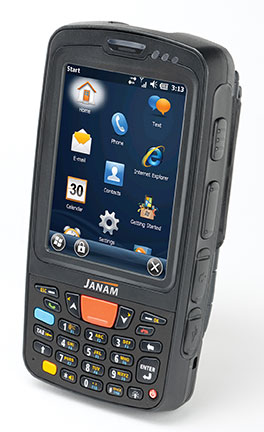

 The advanced features of the TurboRogue may well have been key in AOA receivers being used for a large number of ground reference applications, including Monitor Station Receivers for the U.S. Air Force GPS Operational Control Segment (OCS).