Category: Mobile

  • Android Beats iOS, Microsoft Handily in Smartphones, Tablets

    Three-fifths of all smartphones, tablets, and notebooks shipped worldwide during the first quarter of 2013 run Google’s Android mobile operating system, independent analyst firm Canalys reports.

    Manufacturers shipped 308.7 million smart mobile devices between January and March, Canalys states. Android powers 59.5 percent of all shipments. Apple’s iOS ranks a distant second at 19.3 percent, fueled by its strength in the smartphone and tablet markets, followed by Microsoft at 18.1 percent, buoyed by its relative strength in the notebook segment. Rival platforms including BlackBerry account for the remaining 3.1 percent.

    Among the three device categories under the microscope, the tablet market continues to experience the fastest growth: Worldwide tablet shipments grew 106.1 percent year-over-year to 41.9 million units. Apple continues to lead tablet shipments with a 46.4 percent share, but Android-based rivals narrowed the iPad’s lead for the third consecutive quarter.

    “Spearheaded by Google and Amazon, the commoditization of the tablet market has happened far quicker than that of the wider PC market,” said Tim Coulling of Canalys. “Profit margins are being squeezed and vendors without a low cost structure will find it hard to compete. A solid range of must-have accessories and a software and services strategy are vital as vendors will increasingly need to make revenue around their devices.”

    Smartphone shipments eclipsed 216.3 million during the first quarter, up 47.9 percent over year-ago totals. Android accounted for 75.6 percent of all smartphone shipments, led by Samsung Electronics, which increased its volume 64.3 percent year-over-year to capture 32 percent market share. Apple’s iPhone shipment volume grew just 6.7 percent over the first quarter of 2012, the smallest increase since the launch of the original iPhone back in mid-2007.

  • Audi Adds INRIX Park Service Globally

    Drivers looking for parking account for up to a third of all traffic in major cities, according to INRIX, a provider of traffic information, directions, driver services, apps, and tools to car makers and other businesses. The company’s proudct Park Service provides drivers with continuously updated pricing, hours, and availability information for participating off-street parking locations in North America and Europe.  The service will be available immediately with all active Audi connect accounts. In the U.S. market, the service brings new benefits to more than 100,000 Audi models on the road today.

    More than 18,000  parking locations in the U.S. and 42,000 more across Europe participate in the program. With the INRIX Park, Audi connect customers gain the ability to easily compare rates, gauge proximity to their destination and get turn-by-turn directions to parking entrances. The roster of available parking destinations will continue to grow as data on the locations and available spaces builds.

    “Together with Audi we’re making it easier to get new integrated navigation services in your vehicle than it is to update your smartphone,” said Bryan Mistele of INRIX. “With drivers looking for parking accounting for up to a third of all traffic in our cities, INRIX Park demonstrates how new data driven services can help drivers save time and frustration on the road.”

    RELATED LINKS: 

  • The Race to Own Mapping

    Mapping turned up the heat in June, becoming a hot topic across the board. Apple ended negotiations to buy Waze, a provider of crowd sourced mapping and traffic, reportedly because the company did not want to relocate from Israel. Google quickly took Apple’s place as Waze’s buyer. With almost 50 million drivers using Waze, many via Apple Maps, Google would get another leg up in the race to own mapping. The connected car industry, gathered in Detroit last week, discussed the need for intelligibility in the market, particularly more organized categories of offerings.  Also of interest this month is the backpack-mounted Google Trekker used to map the world where cars don’t go, as well as the LocationTech working group.

    Surprisingly, reaction to Google’s sweeping design of new personalized maps, now in limited release, has been muted.  The maps show landmarks, restaurants, and other details tailored to the user’s plans, habits, and interests that will become increasingly individualized with usage. One person’s map may include bars and public pools, another’s may include book stores and playgrounds. Google also introduced other map features like blending of Google’s place images, 360 degree views within retail shops, and 3-D satellite images of earth without a plug-in or download needed.

    Connected Car Gathering. At Telematics Detroit last week, the connected car industry tried to reach much-needed clarity on the state of the connected car, with attention to standardization, consolidation, increased collaboration, and partnership. Many are trying to build a smartphone experience in the car but, “compared to a mobile phone, you’re always going to lose,” said Robert Acker of Harman. “The car is another device on the ‘Internet of Things,’ and we need to optimize that thing for consuming content while driving. Don’t make it a bigger smartphone device. That’s all Google or Apple can do. Rather, completely change the paradigm. Make it totally seamless; introduce gesture, head-up displays, steering controls. Make it truly revolutionized for the customer.”

    Auto OEMs Are Changing Really. Smartphone-like capability in the vehicle is revitalizing the staid OEM industry and has encouraged car manufacturers to take more risk and speed up development time. It used to be de rigueur that a car maker would first pick a supplier like Denso to build a component, like a radio. “Now the automotive companies are first choosing a platform and layering on companies to build the solution. Tech companies are specialists,” says David Jumpa of Airbiquity. “We stand in the middle of the platform that makes it all work together.”  Jumpa expects connected car services to get bundled and consumers to pay a subscription fee.

    Freedom to Choose. To the unhappiness of wireless carriers, the automotive industry is planning on building cars with embedded subscriber identity module (SIM). Unlike current SIM cards that are carrier-specific, these are universal SIM cards that would enable customers to pick their vehicle’s wireless carrier and then change it at will. For OEMs, embedding SIM cards creates great efficiency. SIM cards can’t be easily replaced, as they must be soldered into vehicles because of vibration and shock. With OEMs shipping vehicles to multiple countries that have different carriers, a universal SIM card provides great flexibility and cost savings. Apple once tried to pursue an embedded SIM card and the carriers rose against it, but let’s see how the OEMs fare.

    Mapping the World on Your Back. You’ve probably seen cars loaded with GPS and cameras for mapping streets. It is less likely you’ve seen mapping trikes, carts, or new photo-mapping backpack. Google uses the Trekker, a 42-pound backpack equipped with GPS and 15 cameras. Every 2.5 seconds it takes a picture as a person lugs it along trails, narrow streets, alleys, and mountains. Photos are stitched together to create panoramic images for StreetView.

    Location Collaboration. A new initiative, LocationTech, has arrived on the location scene and is dedicated to individual and company collaboration on open-source software with an emphasis on location. The non-profit Eclipse Foundation, has created the working group LocationTech, led by Oracle, IBM, OpenGeo, and Actuate. LocationTech will allow companies to jointly develop and deploy components that bring location awareness to enterprise IT. “No single vendor can address the range of issues our LocationTech working group members are going to solve,” said Mike Milinkovich of Eclipse. “By creating a multi-vendor, open platform for location technologies, we intend to spur even broader adoption of location aware products, devices and services.” LocationTech might sound similar to the Open Geospatial Consortium (OGC) and the Open Source Geospatial Foundation (OSGeo); however, LocationTech offers full-service support and staffing for open-source location-aware technologies.


  • Optical Zonu Fiber Optic GPS Signal Distribution System

    The GPS Fiber Optic Distribution system from Optical Zonu connects up to 32 remote locations, transporting GPS signals from a single antenna to as many as 32 GPS receivers (or multiple antennas to multiple receivers). A common example of this application is a campus scenario where installing multiple GPS antennas is impractical. This particular system consists of the OZC JSeries 5Slot modular 1U chassis. The Master Unit is located within close proximity of the GPS antenna and it contains modular and hotswappable fiber optic transmitter, AC power supply and J Optical Splitter cards. The remote unit is a standalone (wall mountable) unit. It comes in a low profile semirugged package. A single 1U chassis at the master site is capable of supporting up to 32 remote locations.

    The optical transmitter module has builtin LNA for high sensitivity detection of low level GPS signals. The Master Unit also has a BiasT to provide DC power to the GPS Antenna. Local monitoring is also integrated into the Master Unit, which is accessible via a single computer interface terminal. The maximum RF input signal into the transmitter is 25 dBm and the RF interface is via a 50 Ohms SMA connector. The standard optical connector is SC/APC (FC/APC is also available upon request) for low back reflection applications. The system is designed to operate on single mode fiber but may be custom configured to work on multimode fiber. The system is configured for complete dual redundancy, including additional fiber optic Tx module for a second GPS antenna.

    Download the brochure and get more images and specs for the Optical Zonu Fiber Optic GPS Signal Distribution System.

  • GPS Tracking Used to Honor Storm Chasers

    The storm chasing and weather community is honoring three storm chasers killed in an Oklahoma tornado on Friday. Tim Samaras, his son Paul Samaras, and Samaras’s chase partner Carl Young are being honored via the Spotter Network, where their initials are being spelled out.

    The Spotter Network is a website used by storm chasers to follow weather movements. Users have been adding position locations to spell out the initials TS, PS, and CY, shown here in an image at sfgate.com.

    The Samarases were well known to TV viewers, having been prominent subjects of the Discovery Channel series “Storm Chasers” and frequent contributors to The Weather Channel. They weren’t working for either channel last week, both networks said.

  • ST-Ericsson Sells GPS Business to Intel

    ST-Ericsson, a joint venture of STMicroelectronics and Ericsson, has sold its mobile connectivity GNSS business to Intel.

    ST-Ericsson, which focuses on mobile and wireless chips, announced the sale on Tuesday without naming the buyer. An Intel spokesman later said the U.S. chipmaker bought the assets.

    According to ST-Ericsson, the sale “represents another step in the execution of Ericsson’s and ST’s announcement of March 18, 2013,” when the company announced it was winding down the joint venture. Ericsson will assume 1,800 employees and contractors, with the largest concentrations in Sweden, Germany, India and China. ST will assume 950 employees, primarily in France and in Italy.

    In addition to the assets and intellectual property rights associated with this business, 130 employees in Daventry, UK, Bangalore, India, and Singapore are anticipated to join Intel at closing of the transaction, and will be added to Intel’s already-existing GPS assets.

    The closing of the transaction is subject to regulatory approvals and standard conditions and is expected to be completed in August. ST-Ericsson estimates the proceeds from the sale, combined with the avoidance of employee restructuring charges and other related restructuring costs, will reduce the joint venture’s cash needs by approximately $90 million.

    “Today’s transaction validates the leading innovation developed by ST-Ericsson in mobile navigation systems and marks a further important step towards the execution of our shareholders’ decision to exit from ST-Ericsson” commented Carlo Ferro, President and CEO of ST-Ericsson. “I am pleased that this organization will continue to develop leading-edge technologies and delighted that the team found a new home at a leading player in the semiconductor industry.”

  • Google and Facebook Eye Waze as Potential Purchase

    waze_logoSince the recent CTIA conference wasn’t the buffet of location news, one potential deal could really set the industry on fire going into the summer months. Google and Facebook both are rumored to be in talks to purchase Waze. Some say this would mean Facebook would transform into a mobile advertising company, with local ads, if it were the winning bidder. Google’s rumored interest would block the social media giant’s momentum in that marketplace.

    by Kevin Dennehy

    In what could be one of biggest deals in the location industry, both Google and Facebook have been rumored to be interested in buying Israel-based mapping and navigation company Waze. Published reports indicate the deal could be worth $1 billion.

    Some industry analysts are skeptical that a deal could be valued that high, which would place it in the same realm as Facebook’s $1 billion purchase of photo-sharing service Instagram.

    “We really do not know if Facebook is willing to spend a billion dollars on Waze, but if the deal happens, (Facebook) must have considered its options. How could this be? First, I suspect that Facebook is certain it will grow beyond its current boundaries to become the world’s most valuable company,” said Mike Dobson, Telemapics president. “Operating under this mindset, a billion dollars is peanuts, and they will not care if everyone else thinks they overpaid. In other words, Facebook might not be basing its calculation on the same ‘time-value of money’ that the rest of us are using. Second, if the economics do not really matter to Facebook, the more important question is ‘What advantages would Facebook accrue by acquiring Waze?’”

    Dobson believes that Waze map databases are not competitive with Google or such commercial providers as Nokia or TomTom. “In essence, Waze does not offer competitive map coverage, competitive data quality, competitive data attributing, or a useful source of POI data. More importantly, I suspect that the Waze database will be a major league headache if Facebook plans to use it as the basis for its mapping activities supporting local search,” he said. “Further, I doubt that Waze understands enough about local advertising to help Facebook realize its most important goal of becoming a powerhouse ad agency capable of creating its own captive local search market, comparable or exceeding that enjoyed by Google.”

    Another industry insider, Marc Prioleau of Prioleau Advisors, said that quality and coverage of the maps would make the deal successful — if it really is going to happen. “The rumor mill on Waze seems to be quite active so it is hard to know if there is substance there. Waze has built a very innovative traffic application, and they use the user data to build a digital map data set,” he said. “The value of the company would be tied largely to the quality and coverage of that data set and the perceived ability of a big platform like Facebook to build that out into a truly serviceable worldwide map.”

    Waze is a mapping company built through crowdsourcing map and traffic data over mobile phones, which is the “magic” Dobson believes Facebook finds beguiling about the company.  While Waze claims 45 million users, its active base is more likely around 10-15 million, Dobson said. “Conversely, if you stop to consider the amount of data you could generate if all of Facebook’s mobile users were gathering mapping data through an app built on Waze, then the company might be willing to gamble on the acquisition,” he said. “Providing analytics on the behavior and location of its mobile users to advertisers and other interested parties could be a huge opportunity. On the other hand, there are numerous paths to this endpoint, not just Waze.”

    Dobson said if he were to advise Facebook on the acquisition, a suggested course of action would be that the company write their own crowdsourcing application and build a good quality map database through licensing and direct and indirect map compilation techniques.  “My off-the-cuff estimate is that this could be done for less than the cost of the Waze acquisition. Beating Waze into a quality map database is going to be an expensive — well beyond the acquisition cost — and time consuming effort. Perhaps the most glaring lack in the potential Waze acquisition is the absence of a suitable POI database, which, in my opinion, is the most critical need that Facebook will have in local search.”

    Dobson said he suspects that Facebook’s competitors are not concerned about the company’s potential acquisition of Waze. “Those who already in the mapping business — Google and Apple — will anticipate that it is likely that Waze could become a significant distraction for Facebook and delay the company effectively competing in the local search market. As far as the competitors are concerned, the longer it takes Facebook to mobilize its efforts in local search, the better,” he said. “In business, as in life, strange choices are made. Perhaps Facebook sees a future in Waze that depends on strategies being implemented by the company that we know nothing about. I hope so, as a good dose of innovation is just what the local search market needs.”

    Distinguishing itself is another reason Facebook may be interested in Waze. Providing mapping and traffic capabilities may bring more consumers to its mobile users.

    The company is also is redesigning its mobile pages platform to enable local merchant information, according to published reports. These new improvements may even challenge Foursquare and Yelp.

    There were questions whether the deal with Facebook will go through as published reports indicated that Waze’s research and development activities would remain in Israel rather than go to California, where Facebook’s headquarters are based.

    Google Interested in Waze to Cut off Facebook at the Location Pass?

    The rumor mill is heating up as Internet giant Google and Apple are said to also be interested in Waze.  “I saw a report indicating that Google was interested. If so, it would seem that this would be a move to deny Facebook access to Waze,” Dobson said.  “Google already derives a significant amount of information from passive crowdsourcing — recording the GPS traces of the devices of their users — and I am not sure that the acquisition would provide them any opportunities that they are not already exploiting. Of course, we might remember that Garmin, who had no intention of buying TeleAtlas, made a bid and significantly raised the price that TomTom paid for the mapping company.”

    Other analysts say while there have been several news articles on why Google should buy Waze, it all could be poorly informed speculation. Others say that the Israel tech press is quick to spread rumors. One analyst said, “I hear that the talks are legit, but my guess is that the deal in discussion is not $1 billion.”
  • TeleCommunication System Next Gen 911 First in Production with Carriers

    TeleCommunication Systems (TCS), a provider of mobile communication technology, announced that its TCS VoLTE9-1-1 service is first into production with Tier-1 wireless carriers, including two of the largest North American operators. The fully customizable solution enables 4G/LTE carriers to provide both 911 call routing and originating coarse/precise location information, including the 10-digit callback number, to public safety access points (PSAPs).

    Initially, wireless carriers deployed 4G/LTE solely for data use. Without VoLTE9-1-1 capabilities, carriers must process emergency calls over 3G networks (circuit-switched fallback), even in areas where LTE is deployed. However, with TCS’ VoLTE9-1-1 service, they can now process 911 calls in an all-LTE environment, enabling them to reclaim or reuse 3G spectrum.

    “As carriers increasingly move toward LTE networks, the ability to handle 911 emergency communications is critical,” said Thomas Ginter of TCS. “By leveraging VoLTE9-1-1, network operators are helping to ensure subscribers receive the responsiveness they need in an emergency situation, while expanding coverage to areas where 3G coverage is lacking.”

    TCS VoLTE9-1-1 features:

    • Call routing to the PSAP: The TCS VoLTE9-1-1 service routes a 4G/LTE-originated 911 call using coarse location via the route determination function component.
    • PSAP telecommunicators can call back if disconnected: The TCS VoLTE9-1-1 service remains fully backwards compatible, supporting necessary functions such as providing PSAPs with full 10-digit subscriber callback numbers.
    • Re-bid by a PSAP for precise location after call routing: The location retrieval function allows a wireless carrier complete flexibility in choosing its underlying high-accuracy location technology and supports updated/precise position requests.
    • Emergency voice call continuity for location service: Location continuity and location delivery to the PSAPs are supported in usage scenarios where the 911 call switches from 4G/LTE to 3G/2G networks.
    • Expansion beyond voice: As wireless networks advance, multimedia objects such as text, audio and video can be transferred to a compatible termination point with LTE IP networks, for example, an NG ESINet and i3 PSAP. Leveraging an all-IP network makes it easier and more cost effective to interconnect services.
    • Small cell support: The TCS VoLTE9-1-1 solution supports small cells, including femtocells, microcells, and picocells, which are now commonly used in dense urban, indoor areas and enterprise networks.

    TCS supports half of all U.S. wireless E911 calls, serving more than 140 million wireless and IP-enabled devices.  The company holds more than 280 patents, 43 of which relate to public safety, and more than 360 pending worldwide.

  • u-blox Introduces High-Performance Parallel GPS/GLONASS Module

    Swiss u-blox introduces the surface-mount MAX-M5Q, a compact satellite positioning module that supports GPS and GLONASS, as well as Japanese QZSS satellite GNSS systems. High-performance GPS/GLONASS parallel operation is also supported to enhance positioning speed and accuracy.

    Designed for use in rugged environments and wide temperature range, MAX-M5Q is intended for industrial machine-to-machine (M2M) applications as well as Russia’s ERA-GLONASS emergency call system. MAX-M5Q enhances positioning in poor GNSS satellite visibility conditions as well as in high latitude and polar regions, u-blox said.

    “With parallel GPS/GLONASS operation, MAX-M5Q is able to track all 50 and more U.S. and Russian satellites to deliver incomparable speed, accuracy, and positional availability,” said Thomas Nigg, vice president of Product Marketing at u-blox, “Its compact size and high-reliability makes it an ideal positioning solution for mobile resource management and ERA-GLONASS emergency call applications.”

    With dimensions of 9.7 x 10.1 x 2.5 mm, MAX-M5Q is the newest member of u-blox’ MAX GNSS LCC module series. Additional features include autonomous A-GPS that reduces warm start TTFF by as much as 90%, and an embedded data logger which can store location information to internal Flash memory for up to 16 hours at 15 second intervals.

  • skobbler Launches GPS Navigation & Maps for Android, Competes with Google Maps

    skobbler-map-T
    Skobbler app

    skobbler brings together hybrid online and offline worldwide maps and full turn-by-turn navigation in a low-priced app with the launch of GPS Navigation & Maps for Android.

    skobbler is looking to exploit the weaknesses of established Android navigation alternatives with the fully featured GPS Navigation & Maps, which offers an improved experience compared to both Google Maps and high-priced third-party alternatives, skobbler said. GPS Navigation & Maps is effectively two apps in one, with both online and offline turn-by-turn navigation and digital mapping for smartphones.

    Using open-source digital map OpenStreetMap and powered by the skobbler NGx map engine, GPS Navigation and Maps has full online and offline capability. The £1 price includes worldwide online functionality as well as an installable map of one country of choice for offline use. From here, users have the option to in-app purchase individual cities, states, countries and continents to use offline, and worldwide maps are available as standard for online use. Existing users of ForeverMap 2 will receive a free upgrade to GPS Navigation & Maps. New users can either purchase the full app or try GPS Navigation & Maps’ free app with unlimited online functionality and a 14-day navigation trial.

    While Google Maps is free to download and use, its offline functionality is restricted. Users cannot perform any searching or routing tasks without an Internet connection, which means that when abroad or in low signal areas they either have to pay expensive roaming costs or spend a significant time without map coverage, limiting its usability while traveling, skobbler said. Expensive alternatives such as Co-Pilot Live or TomTom UK & Ireland/Europe do offer premium features and offline navigation, yet none of them give users a choice of which areas they want to use online and which offline. Most premium sat nav apps generally cannot be used as travel apps at all, as their pure map functionalities are limited at best. GPS Navigation & Maps is the perfect blend. Offering the best of both worlds for a fraction of the price, it can be relied upon to deliver any place, at any time, and being two great apps in one offers a fantastic cost-to-benefit ratio and unbeatable flexibility for consumers, skobbler said. Individuals can build their own navigation and maps app depending on what resources they use the most, and more effectively manage the limited storage space on their devices, skobbler said.

    GPS Navigation and Maps has full turn-by-turn navigation, worldwide mapping and all features of the software accessible both online or offline. This unique move, and market first, is made possible thanks to skobbler’s NGx map engine, which delivers a seamless browsing experience with ultrafast real-time rendering and stunning map visuals, skobbler said. NGx also offers a range of unique map styles to, for example, accentuate color density for outdoor use to improve clarity. Maps are highly customizable with control over features such as online/offline functionality, map display (style and zoom), routing, map matching and more.

    “We’re very proud to launch the first navigation product utilising our powerful NGx mapping engine,” said skobbler CTO Philipp Kandal. “Being the first and only company on the Android platform to offer full online and offline capability for both mapping and navigation, we hope both new users and our existing customers will be won over by the high performance and flexibility GPS Navigation & Maps offers. We’re already working on future updates and have a few powerful additions lined up to improve the app’s functionality and flexibility even further in the coming months.”

    Additional maps beyond the free map provided will be available via in-app purchases for offline use. In keeping with the low price for the initial app purchase, add-ons are similary competitive and are priced at £0.77 for cities, £1.11 for states, £2.22 for a whole country, £4.44 for a continent and just £7.77 for the entire planet, so users can quickly and easily supplement their map coverage as they see fit.

    skobbler is committed to providing regular updates to users to keep maps fresh and accurate, and promises a range of new premium features in future updates. GPS Navigation & Maps is now available from the Google Play Store, with existing ForeverMap 2 users able to upgrade for free.

    The full version of GPS Navigation & Maps, including one free offline country map, can be downloaded.

  • Rohde & Schwarz, 7Layers Verify Improved Test Method for ECC

    Rohde & Schwarz and 7Layers have verified and validated the synchronized test approach to determine the Envelope Correlation Coefficient (ECC), a value characterizing the antenna subsystem of multiple-input and multiple-output (MIMO) LTE devices. The Synchronized ECC approach delivers significantly shorter test durations and repeatable results, ultimately resulting in reduced costs. Long term, this collaboration will also help product manufacturers develop devices that achieve greater data speeds over LTE by using highly optimized MIMO antenna configurations, the companies said.

    The Synchronized ECC approach involves over-the-air transfer of measured data between the test platform and a mobile device in a synchronized fashion. This method, proposed by a leading U.S. wireless carrier, does not require any overhead or user interaction to calculate the ECC, making it easier and faster to execute test versus other approaches. 7Layers test engineers used the Rohde & Schwarz TS8991 OTA Performance Test System and software option R&S AMS32-K30 as a test platform for validation.

    “”7Layers is excited to help bring an ecosystem of vendors together to advance testing of LTE enabled devices utilizing MIMO,”” commented Mahesh Kodukula, business development manager of 7Layers. “”As an accredited test laboratory, we provided a realistic test environment for our partners.””

    “”We are pleased to enable this type of testing on our R&S TS8991 OTA test platform and to offer this functionality to a variety of customers that have been waiting for this feature,”” said Thorsten Hertel, OTA product specialist at Rohde & Schwarz. “”We strive to meet the industry needs of the leading edge development of LTE devices.””

    Visit Rohde & Schwarz at CTIA 2013, May 21 – 23 at booth 4148 in the Sands Expo and Convention Center, Las Vegas, NV.

  • eTrak Launches GPS+ Line with Verizon-Powered Tracking System

    eTrak Launches GPS+ Line with Verizon-Powered Tracking System

    eTrak-opener
    eTrak

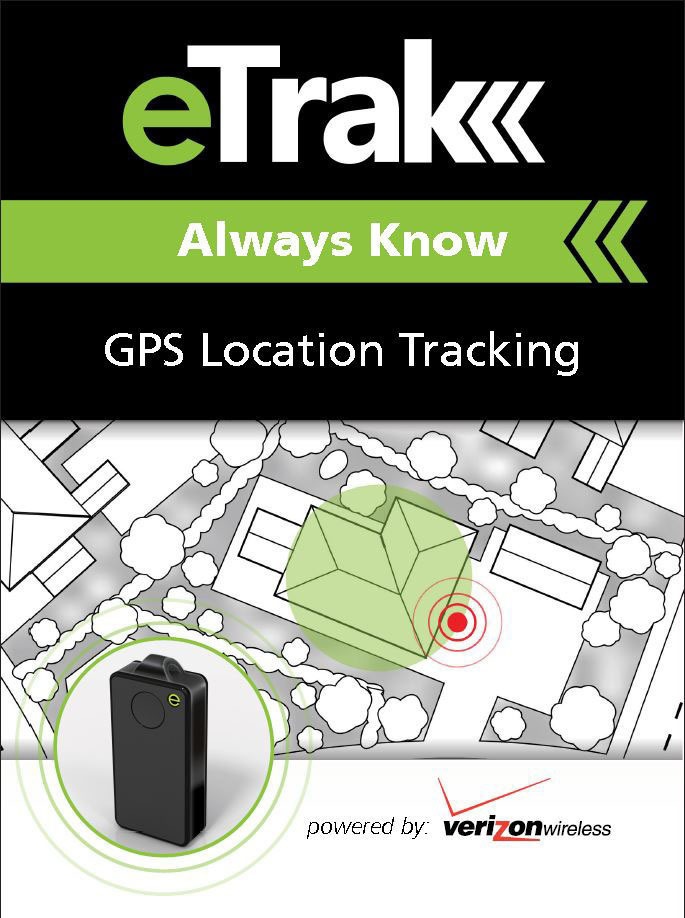
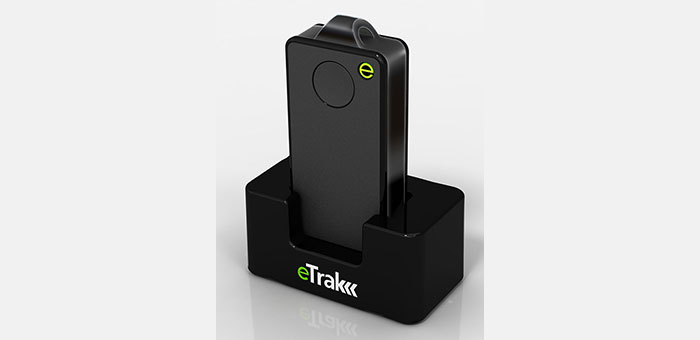
    eTrak has released its GPS+ line of consumer and commercial tracking products. GPS+ is eTrak’s patent-pending technology that integrates Wi-Fi, cellular triangulation and GPS to achieve the most accurate positioning possible, both indoors and out, eTrak said.

    GPS+ delivers accurate location in real time directly to a smartphone, tablet or computer. eTrak products also contain geofencing capability, which triggers notifications if the device goes beyond preset boundaries. Additionally, the notifications provide a map and address with the location of the device.

    “Small and large businesses will benefit from tracking their assets with loss prevention and cost savings,” said eTrak CEO, John Harris. “They will also be able to keep their employees safe and know if they are in danger or need assistance.”
    ETRAK CORP. GPS

    Set-up and the use of eTrak products is simple, the company said. Users can go to eTrak.com and start tracking from any smartphone, tablet or computer and instantly see the location of the eTrak device. The eTrak consumer device is also equipped with an emergency panic button that sends help requests to predetermined recipients in the event of an emergency.

    “eTrak is the size of a domino and weighs less than an ounce,” Harris said. “eTrak provides the longest battery life available, and is a low cost personal emergency-response product. And with Verizon’s industry-leading coverage map, it works almost anywhere.”

    The eTrak product line encompasses commercial applications, as well as consumer segments including health-impaired, special needs, teens and pets. eTrak also supplies custom design and development services.