Category: Lidar

  • The evolution of remote sensing platforms

    Drones and robots complement traditional platforms, delivering insights in unique use cases.

    Guest column by Mike Fuller

    Geographic surveys have changed in the last 150 years. What started with early film cameras strapped to hot air balloons, kites and homing pigeons has advanced — both in terms of sensors and the platforms on which they’re deployed. These innovations — which include drones and robots — are changing the way we can collect data, enabling us to gather greater detail and providing richer insights about the world around us.

    These nascent platforms are set to explode in popularity. The global market for remote sensing platforms will more than double in the next four years. It’s projected to reach more than $21 billion by 2022, driven in large part by use of drones, according to an October 2017 report from MarketsandMarkets.

    Despite the anticipated growth in drone and robot usage, they will not replace traditional remote sensing platforms such as airplanes, satellites and vehicles. The new technologies bring with them some limitations with regard to the number, size and weight of sensors they can carry, capture rates, area covered and and line-of-site restrictions.

    As a result, drones and robots will offer new capabilities that complement the traditional platforms and provide greater geographic detail, as well as the ability to be quickly deployed and constantly monitor areas where humans cannot routinely go.

    How far we’ve come

    To understand how far geographic information system (GIS) mapping and remote sensing technology has come, it’s important to consider how it started. Inventors in the 1800s relied on early film cameras and somewhat unreliable, imprecise airborne platforms — such as hot air balloons, pigeons and kites — to conduct land surveys and do surveillance.

    The introduction of a new kind of “bird” — the airplane — opened up new opportunities in the 1900s, supporting the use of more accurate aerial photography for reconnaissance and mapping.

    Satellite technology launched remote sensing into space in the 1970s, supporting the collection of detailed multispectral data that led to improved understanding of minerals, soils, urban growth, agriculture and other geographic features.

    Even though the technology has become more sophisticated, GIS professionals still leverage data from many of these historical platforms:

    • Manned aircraft – planes and helicopters
    • Satellites – high-resolution satellites and cubesats
    • Terrestrial – survey vehicles and handheld devices

    But — much like the impact of airplanes and satellites — we’re on the precipice of another significant milestone for remote sensing. Marked by use of burgeoning drone and robotic technology, this new technology will complement traditional platforms and deliver more insights than ever before possible.

    Rise of drones and robots

    Drones and robots are the newest remote sensing platforms catching the eye of the GIS community. Not only are they cool and cutting-edge, they open up a new class of use cases that were previously not possible with traditional aerial survey methods. They offer new opportunities to monitor remote areas, and their form factors and cost enables a higher frequency of data collection compared to aerial survey.

    Because of their unique features, users are envisioning how these platforms can be implemented for remote sensing in many fields, such as energy, oil and gas, aviation, forestry, transportation, emergency management, and natural resource preservation and restoration.

    When the frequency of data from these platforms is coupled with analytics and cloud infrastructure, it is possible to acquire, analyze and act in ways that were not possible before.

    Keep in mind, though, that each technology comes with trade-offs. Users should assess their goals, and weigh these factors, to determine if drones or robots will deliver the results they wish to achieve. Let’s take a closer look:

    Drones

    QuantumSpatial_sensor-uav-WDrones are capable of delivering ultra-high-resolution data, with ground sample distances (GSD) of 1 cm and accuracy of under 5 cm. However, accuracy is highly variable; it can vary based on the drone model, terrain and software used to process the collected data.

    The form factor of many drones also limits the ability to do multi-sensor flights. A drone typically can cover no more than a few square miles per day with a visible or multispectral camera, compared to manned aircraft that span hundred of thousands of acres a day carrying hyperspectral, lidar and orthophotography devices simultaneously.

    Because they can be deployed quickly, and on a daily basis, drones offer a cost-effective, practical approach for covering small areas compared to other aerial survey methods. But drone usage currently faces a significant impediment.

    Current regulations require operators to maintain sight of the devices during all flights. These line-of-site restrictions limit the distance a drone can go on each flight, and require operators to change locations multiple times for a single survey. As a result, frequent revisits can be labor intensive.

    Battery life also plays a role in the usability of drones. Most commercial drones can fly for only about 45 minutes, despite continued improvements in battery technology. Combined with the line-of-site restrictions, battery life impacts the amount of territory drones can cover. Most can handle only a few square or linear miles during each flight, making helicopters or airplanes better suited for projects that span hundred of miles or more.

    Despite some of the drawbacks, drones are proving ideal in many use cases — from damage assessment and power restoration after hurricanes to data collection for hydraulic modeling, stream restoration design and aquatic habitat assessment.

    For example, drones equipped with bathymetric and terrestrial laser scanning sensors are ideal for supporting riverine mapping applications. In these cases, drones offer an effective alternative when the waterway cannot be accessed, or it is too dangerous to use ground- or water-based survey methods for collecting channel geometry.

    Robots

    QuantumSpatial_sensor-lidar-robot-WRobotic platforms are flexible, enabling users to attach a variety of sensors, including thermal cameras, lidar and sniffers for natural gas or other hazardous material. They are rarely hampered by payload restrictions, like drones.

    And, with programming, robots can return to their chargers when their batteries dip below a certain threshold.

    Like drones, there are many potential applications for terrestrial remote sensing robots. One use is for precision agriculture to test soil, water and plant health.

    Many utilities are expressing serious interest, too, for robots. These robots can include onboard spectral, thermal and lidar sensors, precision navigation and hazard cameras to perform fine-scale spatial mapping and can acquire a wide array of data from electrical substations.

    In this scenario, the robotic platform could detect physical and spectral changes, identify objects, monitor corrosion, detect liquid and gas leaks, and conduct thermal monitoring. Using this model, utilities could track substation environments remotely, saving time associated with physical inspections and enabling earlier detection of potential problems.

    Systemwide approach required

    Traditional remote sensing platforms — airplanes, satellites and vehicles — will continue to play an important role in GIS mapping. Drones and robots give us new tools that will have a dramatic impact on the amount of detailed geographic information collected.

    For these new platforms to be used effectively as complements to traditional platforms, the industry must adopt a systems approach that takes into consideration a number of factors:

    • The end application
    • The sensors and acquisition protocol that will collect data at the precision required by the end application
    • The actionable analytics that need to be extracted from the data
    • How the data and insights integrate with the business processes used for decision making.

    By taking this approach, those who work in a variety of fields can gather the insights they need to do their jobs more effectively and efficiently, while leveraging the unique strengths offered by these emerging platforms.

  • NavVis launches 6D SLAM indoor mapper

    NavVis-M6-indoor-mapper-WMapping company NavVis has launched the M6, a next-generation indoor mobile-mapping system that the company says can overcome the scalability and data quality constraints of reality capture technology.

    Surveyors and architecture, engineering and construction (AEC) professionals can now use reality-capture technology for large-scale indoor mapping projects. The M6 can be used for factory planning and creating and updating as-built BIM (building information modeling) models and construction monitoring.

    The NavVis M6 is an all-in-one system that captures 360-degree immersive imagery, photorealistic point clouds, Bluetooth beacons, Wi-Fi signals and magnetic field data.

    The NavVis M6 features a mobile lidar system that lets it scan up to 30 times faster than stationary devices, letting users capture up to 30,000 square meters in a day.

    Cutting-edge 6D simultaneous localization and mapping (SLAM) technology significantly improves the quality of data captured. Thanks to 6D SLAM, M6 continuously scans even complex indoor environments, including uneven surfaces or changing elevations such as ramps, open spaces or long corridors without compromising the quality of the data.

    M6’s innovative software is complemented by hardware features designed to improve the quality of data and ease of capture: four laser scanners with a range of up to 100 meters are arranged to maximize scan coverage, while six cameras automatically take high-resolution images during mapping. The innovative design of the M6 includes camera placement that keeps the operator in a blind spot.

    NavVis IndoorViewer software gives stakeholders access to the scanned environment through an interactive virtual building in their browser.

    “The NavVis M6 marks a quantum leap in indoor mobile mapping,” Felix Reinshagen, CEO of NavVis. “Anyone who needs to scan large properties, run repeated scans or would like to move into the field of reality capture will profit from the groundbreaking data quality.

    “With M6, users can now quickly capture large, complex indoor environments for typical tasks such as updating floorplans, documenting construction progress or creating as-built BIM models. At the same time, M6 captures the data needed to provide customers with additional deliverables such as browser-based immersive walkthroughs and indoor navigation,” Reinshagen said.

  • Lidar and UAV reveal Mayan "megalopolis" below Guatemalan jungle

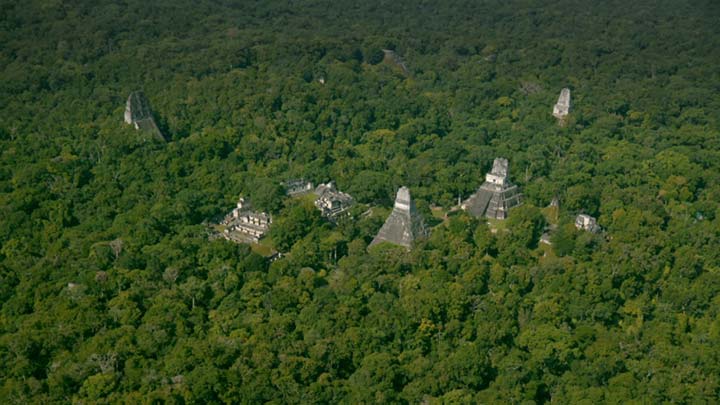
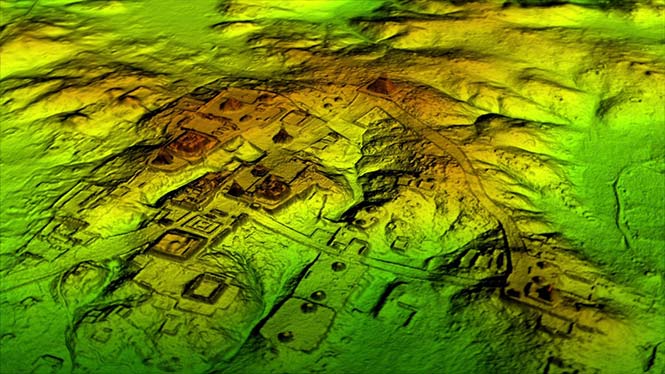
    Lidar and UAV technology has revealed hundreds of previously unknown Mayan ruins in the Guatemalan rainforest.

    The Optech Titan stripped away overlying vegetation to reveal extensive Mayan ruins in Guatemala’s rainforest. (Image:
    Teledyne Optech)

    In what is considered biggest aerial lidar survey in the history of archaeology, a vast and complex civilization has been discovered.

    The University of Houston’s National Center for Airborne Laser Mapping (NCALM) used Teledyne Optech’s Titan sensor to identify raised highways, and complex irrigation and terracing systems.

    The jungle of Central America is one of the last great frontiers of archaeology, according to National Geographic, which covered the new finds in a recent documentary, Lost Treasures of The Maya Snake Kings.

    After the collapse of the Mayan civilization, its cities and monuments were quickly covered by thick rainforest, hiding it from airborne observation and making it very difficult to survey on foot. Over decades of work, the ancient civilization has gradually been revealed. But now technology is set to change everything.

    Lidar digitally removes the forest canopy to reveal ancient ruins below, showing that Maya cities such as Tikal were much larger than ground-based research had suggested. (Photo: National Geographic)

    Flying high above the rainforest, the Titan’s lasers penetrated the canopy to collect almost a million data points per second from the forest floor, giving archaeologists a “bare earth” view of the structures underneath.

    Having covered 2,100 square kilometers, the Titan’s data revealed massive amounts of ruins hidden below the forest, showing that their urban centers were significantly larger than archaeologists had previously thought.

    “Lidar is revolutionising archaeology the way the Hubble Space Telescope revolutionised astronomy,” Francisco Estrada-Belli, a Tulane University archaeologist, told National Geographic. “We’ll need 100 years to go through all [the data] and really understand what we’re seeing.”

    (Image:
    Teledyne Optech)

    “We are incredibly proud and excited that our award winning Titan multispectral lidar sensor has contributed to this spectacular discovery,” said Michel Stanier, EVP and general manager of Teledyne Optech. “The Titan’s ability to strip away overlying vegetation and map wide areas very quickly and accurately makes it an important tool for archaeologists, and we expect to see many more discoveries coming from it and our other airborne laser terrain mappers.”

    The Optech Titan multi-spectral lidar sensor incorporates three independent laser wavelengths into a single sensor design, with beams at 532, 1064 and 1550 nanometers (0.5/1.0/1.5 microns) and a ground sampling rate of 300 kHz per beam.

    Because Titan uses both green and infrared channels, it is capable of simultaneous water-depth mapping and high-precision 900-kHz topography.

    Titan can also be used for purposes such as vegetative and forestry applications, which require multiple wavelengths for improved classification accuracy and carbon credit counting initiatives.

  • Velodyne LiDAR, Paracosm team up to capture environments in 3D

    Paracosm's PX-80 handheld 3D scanner has Velodyne lidar inside. (Photo: Paracosm)
    Paracosm’s PX-80 handheld 3D scanner has Velodyne lidar inside. (Photo: Paracosm)

    Paracosm’s PX-80 mobile 3D scanner leverages lightweight, powerful VLP-16 Puck for fast and accurate surveying of indoor and outdoor areas.

    Velodyne LiDAR Inc., which makes 3D vision systems for autonomous vehicles, and Paracosm, a division of Occipital, have integrated Velodyne’s VLP-16 Puck lidar sensors into Paracosm’s PX-80 handheld 3D scanner.

    The PX-80 3D scanner is commonly used for geospatial, construction and industrial applications to survey a wide array of spaces from large office buildings to thick forests.

    Paracosm’s PX-80 uses Velodyne’s VLP-16 Puck and its own proprietary SLAM technology — itself a fusion of lidar, color imagery and inertial measurement unit (IMU) data — to produce detailed three-dimensional documentation of complex environments and geometries in minutes.

    The resulting point clouds come in full color with corresponding spherical imagery that can provide virtual tours along with accurate 3D measurements. With the lightweight VLP-16 lidar sensor from Velodyne, Paracosm is able to offer a handheld scanner with unprecedented accuracy, range and detail.

    “When we first began our 3D mapping journey, we wanted to be able to capture huge environments as fast as possible, but were limited by the range and accuracy of available sensors,” said Amir Rubin, president of Paracosm. “After searching far and wide for a better solution, we found that the VLP-16 was the best combination of size, accuracy, and functionality to fit our needs.”

    “Paracosm has proven its ability to expand the application of lidar into handheld use cases, allowing the PX-80 to become one of the most accurate and versatile mobile 3D scanners on the market,” said Mike Jellen, president and chief commercial officer, Velodyne LiDAR. “We are thrilled to partner with Paracosm for their development of the PX-80 and look forward to working with them as they expand their footprint.”

    As the VLP-16 is the smallest commercially available sensor in Velodyne’s lidar portfolio, it is the easiest to embed in other products. “The performance of the VLP-16 is unrivaled in the marketplace. We remain deeply impressed with the range, acquisition rate, noise levels and accuracy it provides in such a compact form factor,” said Gannon Wilder, who leads business development in the Paracosm division.

    Both Velodyne LiDAR and Paracosm will be at the Consumer Electronics show (CES) providing product demonstrations. Velodyne LiDAR will be at Booth #3525 in the North Hall of the Las Vegas Convention Center, while Paracosm will be at Booth #21029 in South Hall 1.

  • Geologist uses lidar to monitor Greenland Glacier ice loss

    A Riegl VZ-6000 laser scanner, operating at 1064 um wavelength, serves as the backbone of the ATLAS system.
    A Riegl VZ-6000 laser scanner, operating at 1064 um wavelength, serves as the backbone of the ATLAS system.

    Leigh Stearns, a geologist with the University of Kansas, is working with a Riegl VZ-6000 ultra long range terrestrial laser scanner, incorporated into an ATLAS (Autonomous Terrestrial Laser Scanning) system, to monitor rates of ice loss on the Helheim Glacier, a tidewater glacier undergoing large-scale changes due to global climate change.

    “Lidar is an emerging technology for the earth sciences because it produces an incredibly detailed 3-D view of features,” said the KU researcher. “Repeat lidar scanning reveals small-scale changes with very high precision. These systems are now used to measure how bridges are sagging, how tectonic faults propagate and now how glaciers flow. The ATLAS systems are unique because they’re designed to scan the glacier terminus every six hours, year-round. That’s not a trivial task when there’s no sunlight in the winter, winds are high and it’s very cold.”

    The VZ-6000 high speed, high-resolution terrestrial 3D laser scanner offers an extremely long measurement range of more than 6000 meters for topographic (static) applications. Due to its laser wavelength, it is exceptionally well suited for measuring snowy and icy terrain in glacier mapping and monitoring applications in mountainous regions.

    Learn more about the project at the University of Kansas website.

  • Think 3D, Applanix combine on UAV-based airborne lidar mapping

    The Think 3D Stormbee multicopter integrated with Trimble’s AP15 provides efficiency, accuracy and performance for lidar surveys from unmanned vehicles.

    Historically, lidar-based aerial surveys were impractical for all but the largest unmanned systems. Because of Applanix’ development of small, lightweight and low-powered direct georeferencing solutions, airborne lidar scans from small drones are now practical, cost-effective, highly accurate and excellent options for lidar surveys, according to the company.

    The Stormbee is a directly georeferenced UAV lidar solution for 3D industrial mapping applications, designed to collect survey grade spatial data in a significantly more cost effective and efficient way than static lidar.

    Think3D-Stormee-UAV-lidar-O
    The Stormbee, a Faro Focus 130 laser scanner, and the AP15.

    Stormbee’s 3D mapping technologies include Faro’s Focus 130 laser scanner, Trimble’s AP15 high performance GNSS/inertial receiver, Applanix’s POSPac UAV GNSS/inertial post-processing software and Stormbee’s proprietary Beeflex software for lidar point cloud generation.

    Industrial applications (GNSS-denied environments) pose unique challenges for laser scanning using traditional static systems, due to obstructions and poor signal environments. These issues lead to increased costs and operational time.

    By using the high-performance Trimble AP15 with two antenna and the Applanix post-processing software (POSPac MMS) for georeferencing the lidar data, Stormbee provides an accurate real-time and post-mission solution for all motion variables.

    Applanix has brought together its decades of experience in multi-frequency, multi-constellation Differential GNSS and inertial based positioning and orientation with the best in small-form factor hardware and powerful software, to produce a DG solution for professional aerial mapping on UAVs.

    With a system delivering better than 5-cm accuracy (real mean squared) and high resolution, Stormbee and Applanix offer 3D detail from a platform moving at speeds up to 15 meters per second. The Stormbee leverages Applanix’s decades of experience in direct georeferencing of lidar systems to collect the most accurate 3D data.

    Benefits of the system:

    • compact, easy-to-operate and cost-effective
    • centimeter-level mobile positioning accuracy for 3D mapping products
    • improved productivity, with optimized workflow from data capture to georeferenced point cloud generation
    • superior visualization: Lidar scanners provide more accurate information of structures than camera technologies

    Think 3D, a Belgian company, is a 3D scanning company for many industrial applications including those in the beverage, steel, pharmaceuticals, chemicals and tank terminals industries. Think3D helps companies make changes to their installations by providing a full 3D CAD model of their installation.

    Stormbee to date has proven to be effective in many industries including mining, engineering, dredging, forensics, universities and survey.

  • Riegl launches three waveform lidar sensors

    Riegl has launched new waveform lidar sensors in all of its segments. It introduced the products at Intergeo 2017, held in September in Berlin.

    VQ-780i waveform processing airborne laser scanner.
    VQ-780i waveform processing airborne laser scanner.

    The Riegl VQ-780i waveform processing airborne laser scanner is a high-performance, rugged, lightweight and compact airborne mapping sensor designed for ultra-wide-area mapping and high productivity.

    The versatile system is designed for highly efficient data acquisition at low, mid and high altitudes, covering a variety of different airborne laser scanning applications from high-density to ultra-wide-area mapping.

    The system provides clutter-free point clouds with high accuracy, excellent vertical target resolution, calibrated reflectance readings and pulse shape deviation for unsurpassed information content on each single measurement.


    VQ-1560i waveform processing airborne laser scanner.
    VQ-1560i waveform processing airborne laser scanner.

    The Riegl VQ-1560i-DW dual wavelength waveform processing airborne lidar scanning system is for high-point-density mapping applications. The new airborne lidar scanning system offers two lidar channels of different wavelengths: green and infrared (IR).

    The two wavelengths allow the acquisition of scan data of complementary information content, delivering two independent reflectance distribution maps and enhanced target characterization, one per laser wavelength.


    VQ-880-GH topo-hydrographic airborne laser scanning system.
    VQ-880-GH topo-hydrographic airborne laser scanning system.


    The VQ-880-GH topo-hydrographic airborne laser scanning system has online waveform processing and full waveform recording. It is a fully integrated airborne laser scanning system for combined hydrographic and topographic surveying with an form factor with reduced height optimized for helicopter integrations.

    The system is offered with an integrated and factory-calibrated high-end GNSS/IMU system and up to two cameras. The design allows flexible application of these components to meet specific requirements.

  • LizardTech granted US patent for lidar point-cloud compression

    LizardTech, a provider of software solutions for managing and distributing geospatial content, has been awarded a U.S. patent for the compression of lidar point clouds (US 9753124).

    The patented technology provides lossless compression of point clouds captured by airborne lidar sensors or terrestrial laser scanners for easy and cost-effective processing, storage and transmission of data sets.

    Point cloud data goes from staggering to manageable when lidar files are compressed to the MrSID format.
    Point cloud data goes from staggering to manageable when lidar files are compressed to the MrSID format.

    “Lidar systems capture terabytes of data containing rich information that can be difficult to exploit due to the difficulty processing such massive files,” said John Hayes, the LizardTech senior engineer who received the patent. “Our lidar compression technique allows users to maximize their return on investment in point cloud data collection.”

    LizardTech developed the lidar compression technology in 2009 by leveraging the wavelet transformation algorithms used to compress satellite and aerial image data sets into MrSID formats. The point cloud compression technique was first released as a stand-alone LizardTech product called LiDAR Compressor and then integrated into GeoExpress in 2015.

    GeoExpress is LizardTech’s flagship software product originally created to enable geospatial professionals to manipulate digital satellite/aerial image and losslessly compress them to industry-standard MrSID or JPEG2000 files. The addition of lidar handling gave GeoExpress the ability to natively compress lidar data to MrSID and LAZ formats with no loss of data content, saving up to 75% on storage, and time in processing files.

    Lidar systems are flown extensively on aircraft and unmanned aerial vehicles to collect highly accurate measurements of terrain elevations for a variety of mapping applications.

    Another form of lidar, known as terrestrial laser scanning, captures point clouds at ground level — both inside and outside of building structures — for visualization of crime scenes, re-creation of accident sites, and 3D modeling of building interiors.

    “Lasers are even being mounted on earth-moving equipment at construction sites for real-time capture of grading progress so that engineering managers can make on-the-spot decisions,” said Toby Martin, vice president of development and strategy at Extensis. “Lidar compression makes this possible and is revolutionizing workflows in the architecture, engineering and construction (AEC) industry.”

    The lidar compression algorithms can be licensed via the LizardTech SDK to incorporate the technology into third-party geospatial software solutions. Already, LizardTech is seeing interest in this technology from hardware sensor developers who want to place data compression capabilities at the source of collection.

  • Teledyne Optech coastal and ocean monitoring helps with disasters

    Coastal Zone Mapping and Imaging Lidar System (CZMIL) to be shared at conferences as a critical rapid environmental assessment tool for both natural and manmade disasters

    Teledyne Optech’s Coastal Zone Mapping and Imaging Lidar (CZMIL) system is a critical rapid environmental assessment tool for monitoring natural and man-made disasters. From detecting sewage pipe leaks, mapping oil slicks and measuring coastline changes after hurricanes, to counting underwater debris in the Great Pacific Garbage Patch, CZMIL excels at identifying and monitoring oceanic environmental changes, especially in emergency scenarios.

    • At the Oceans ’17 MTS/IEEE conference in Aberdeen, Scotland, Senior Scientist Viktor Feygels will present “CZMIL as a Rapid Environmental Disaster Response Tool.” Using case studies from CZMIL and its predecessor systems, Feygels will describe four distinct applications of Teledyne Optech lidar bathymeters. Attendees can catch this presentation in Room 15 on June 21 at 12:10 p.m.
    • Research Scientist Hieu Duong and Marine Business Manager Bob Marthouse will present “Small-Object Detection using Coastal Zone Mapping and Imaging Lidar (CZMIL)” at the Teledyne CARIS International User Group Conference in Ottawa, Canada. Conference attendees can hear about these applications on Thursday, June 22, 10:05 am, in the Rideau Room.

    “CZMIL has proved to be ideally suited for rapid environmental assessment and small-object detection,” said Bob Marthouse. “Both the upcoming MTS/IEEE Oceans ‘17 conference and the recent United Nations Ocean Conference during the week of June 5 underline the urgent requirement to more critically monitor our oceans and coastlines. At Teledyne Optech, we were pleased to be part of this ongoing effort.”

  • Leica Geosystems’ 3D imaging laser scanner comes to Europe

    The BLK360 is now available for reservation in Europe.
    The BLK360 is now available for reservation in Europe.

    Leica Geosystems’ BLK360 miniaturized 3D imaging laser scanner is now available for reservation within Europe, for delivery in summer. The laser scanner simplifies the collection of as-built reality capture data for work in architecture, design, construction and engineering among other vertical markets.

    The Leica BLK360 is an easy-to-use and powerful reality-capture solution that enables professionals to capture 360-degree HDR spherical imagery within minutes. Users place the lightweight BLK360 on a level surface or tripod and, with the push of a button, it captures 360-degree HDR spherical imagery and takes a 360,000 point per second laser scan.

    The BLK360 features +-4 mm accuracy at 10 meters and an overall 0.6–60-meter range. Within three minutes, the spherical image and laser scan is completed and ready to view in the Autodesk ReCap Pro for mobile app, which runs on an iPad Pro. From there, users can take measurements, add markup and annotations or share onsite data with their colleagues back in the office.

    “If you’ve ever relied on pencil and paper, tape measures, or other laser measuring devices to capture a room’s dimensions and images, you know that there’s always redundancy and missed measurements,” said Steven Gross, architectural engineer, Valley Home Improvement. “With the BLK360 those issues disappear. Everything is captured on the first visit, which streamlines the process, saving us enormous amounts of time. Not to mention that it makes us look that much more professional to our clients.”

    “The BLK360 brings together exclusive technologies to deliver outstanding performance, all while simplifying the process of 3D image scanning and reality capture through the touch of a single button,” said Burkhard Boeckem, CTO, Leica Geosystems. “This has enabled us to create new opportunities for scanning experts and introduce entirely new audiences to laser scanning while uncovering possibilities that were previously unimaginable.”

    The BLK360 has already earned several prestigious industry awards including the PRISM Award for Photonics, iF Design Award, the Red Dot Design Award, and the Geospatial World Innovation Award, and was also a CES Innovation Award nominee.

  • Eyes in the Sky: Advanced survey technologies give 20/20 view of remote assets

    By Will Fellers

    Remote sensing technology has come a long way and is delivering serious benefits across a wide range of industries. Since the early 1970s, when the first LANDSAT satellites were launched, there has been rapid technological innovation in platform architecture and sensor technology used to collect both active and passive spectral information.

    These advancements have dramatically changed the way we collate, interpret and act on geographic information system (GIS) data in virtually every discipline and in our day-to-day lives. Efficiencies in data acquisition coupled with revolutionary improvements in analytic platforms have pushed remote sensing technology to the forefront of scientific and business-critical decision making, delivering insights not previously possible.

    Let’s examine how new sensor technologies, acquisition platforms and high-performance, cloud-based computing enable greater visibility and provide detailed data that enhances public safety, improves reliability of critical infrastructure and supports proactive planning.

    Time-lapse of fixed-wing aircraft collecting near-shore topobathy lidar after Superstorm Sandy near Holden Beach, North Carolina. (Photo: Brett Murphy)
    Figure 1. Time-lapse of fixed-wing aircraft collecting near-shore topobathy lidar after Superstorm Sandy near Holden Beach, North Carolina. (Photo: Brett Murphy)

    A Sample of the Latest Technologies

    Remote sensors work by recording the radiance of specific wavelengths of the electromagnetic (EM) spectrum tuned for particular applications. Today, sensors of all sizes, types and designs — accommodating an almost limitless variety of spectral bands and fusion of these bands — are being deployed for an array of remote sensing applications.

    There are two general types of sensors: active, which transmit and record their own light source; and passive, which measure reflected or emitted energy produced from an external source. Most modern sensors are integrated with inertial navigation systems (INS) and global navigation satellite systems (GNSS), which provide high-precision and spatially accurate data. Active sensors also can provide extremely accurate range information for detailed 3-D applications, while 2-D passive sensors, relying on relatively new techniques using structure from motion (SfM), can achieve similar ranging capabilities.

    Among the types of active and passive sensors in mainstream use today are:

    • Topographic lidar. Best known for producing highly accurate 3-D point cloud data, it is used for topographic and above ground analyses, 3-D reconstructions and advanced artificial intelligence applications.
    • Topobathy lidar. A specialized airborne sensor capable of penetrating water to map underwater surfaces. It also offers the potential to simultaneously map land and sea floor and reaches areas too shallow for survey boats.
    • Thermal Imaging. It records radiation emitted from objects and differences in temperature across a scene.
    • Multispectral Imaging. It measures energy within specific bands of the EM spectrum, most commonly visible blue, green and red, as well as near infrared.
    • Hyperspectral Imaging. Capable of collecting visible to long-wave reflected solar energy across more than 200 bands. With each additional band of information, the data dimensionality grows and increases the potential for discriminating specific materials based on diagnostic spectral features.

    When evaluating new remote sensing tools, sensor technology innovation is only one piece of the puzzle. The platforms that carry these sensors are also rapidly evolving. Manufacturers are producing cheaper and lightweight versions of sensors making it possible to mount them on compact satellites, unmanned aerial vehicles (UAVs), automobiles, handheld devices and autonomous robotic vehicles.

    How to Use and Interact with Remote Sensing Data

    Recent trends in data fusion and multitemporal data analysis are leading to new approaches and solutions to complex geospatial problems. We can now acquire, combine and analyze data in ways that allow us to do even more things. But, users also are faced with challenges in managing the ever-increasing data volumes, and associated storage and processing capabilities, that come with higher spatial resolution, increased point densities, collection of hundreds of spectral bands and fusion with other data sources.

    The rise of cloud-based and high-performance computing environments enable new rapid data processing and retrieval techniques. Historically, the volume of data from hyperspectral sensors made it difficult to quickly analyze and derive actionable information. Only recently has computing power caught up to sensor technology, enabling data analysis for vast areas in a reasonable time frame.

    Now that large amounts of data can be converted into high-quality analytics, consumers require an organized, intuitive and integrated delivery mechanism to fully leverage the intrinsic advantages of the extracted information. These needs are being addressed by integrated cloud-based platforms that rapidly update and distribute intelligence across organizations.

    Remote Sensing in Action

    Many applications, like the ones below, historically relied on antiquated collection platforms or time-consuming manual data collection and interpretation. Now, technological advancements in remote sensing are being leveraged to address diverse and complex problems.

    Hurricane Sandy: Near Shore, Post-Disaster Survey

    In 2012, Superstorm Sandy grew to the largest Atlantic hurricane on record, affecting the entire Eastern Seaboard from Florida to Maine and moving west across the Appalachian Mountains to Michigan and Wisconsin. Damage was estimated at more than $63 billion, the second costliest hurricane in United States history.

    Following the storm, the U.S. National Oceanic and Atmospheric Administration (NOAA) National Geodetic Survey required collection and processing of airborne topobathy lidar and multispectral imagery. The data collected would enable accurate and consistent measurement of the national shoreline for coastal zone management, inundation modeling, habitat mapping and restoration purposes. In less than six months, the NOAA project team, of which Quantum Spatial Inc. (QSI) and Dewberry were members, successfully mapped more than 2,772 square miles of shoreline encompassing the outer coastline from New York to South Carolina.

    The airborne topobathy lidar enabled the rapid survey of shallow water areas that are difficult, dangerous or impossible to reach using water-borne platforms. They also were able to collect topographic and hydrographic data concurrently to provide seamless data from land to water (see Figure 2).

    Lynnhaven Inlet, Virginia Beach: Lidar point cloud collected from a single topobathy acquisition flight. Topographic data shown in grayscale and subsurface water depth in bluescale.
    Figure 2. Lynnhaven Inlet, Virginia Beach: Lidar point cloud collected from a single topobathy acquisition flight. Topographic data shown in grayscale and subsurface water depth in bluescale.

    Water Infrastructure: Leak and Corrosion Detection

    In 2016, a municipal water district expressed interest in a technology that could help solve ongoing concerns about underground water leaks and infrastructure corrosion. QSI engineered a solution incorporating lightweight thermal and multispectral sensors mounted on a UAV operated by 5-D Robotics in a pilot program.

    The plan was to simulate a leak by pouring a bucket of water near the pipeline and image it over the course of a few hours to show the thermal response of soil moisture. The UAV also flew over the rest of the site to build a SfM 3­-D point cloud, identify signs of degradation and map leaks on the reservoir. Within 24 hours of data acquisition, not only was the simulated leak detected, but an actual leak was detected from an underground pipe 10 feet from the simulated leak (see Figure 3).

    The survey also revealed water leaking on the surface of a reservoir cover, rust on pipes and tanks, and identified a cracked cap on a tank pressure release valve. One limited drone operation generated the exact information that is supposed to be identified in monthly manual inspections, yet had not been noted by the professionals.

    Visible multispectral (left) and thermal imagery of active water leak collected from a UAV.
    Figure 3. Visible multispectral (left) and thermal imagery of active water leak collected from a UAV.

    Forest Assessment: Species and Tree Health

    Last year, QSI partnered with Davey Resource Group to classify individual tree types and health for a 2,500-acre area in the Louisville, Ky., metro area. Specifically they wanted to identify and assess ash trees because of damage caused by the emerald ash borer.

    Individual tree crowns were separated from one another with automated tools using lidar point-based segmentation routines. At the same time, powerful machine-learning algorithms were used on co-acquired hyperspectral data to both classify and assess canopy stress at the pixel scale (see Figure 4). Typically it would take foot patrols months or years to take only a partial sampling of a survey area this size. However, within a matter of weeks, QSI was able to detect individual trees across the entire area, and classify the dominant tree types with an overall accuracy of 83 percent.

    Figure 4. Lidar data from Louisville, Kentucky, colored by tree type (above) and health (below).
    Figure 4. Lidar data from Louisville, Kentucky, colored by tree type (above) and health (below).

    Railway Mapping: Asset Inventory & Change Detection

    Beginning in 2014, a leading transportation company began continually collecting 3-D data along along its railways using lidar sensors attached to specially equipped geometry cars. Last year, QSI was tasked with rapidly analyzing the raw data to develop a baseline asset inventory of important infrastructure, including signage, signals, track locations, vegetation encroachment and road crossings. Following the initial inventory, data from serial acquisitions were then leveraged to monitor changes along the railway corridor.

    Advanced machine learning algorithms were used in a parallel processing environment to rapidly ingest and classify the lidar point cloud for multiple time frames. Using the same cloud-based processing utilities, QSI provided automated difference reporting a few days after new point lidar data was collected. A web-based platform was then used to distribute and visualize the analytic results in an interactive 3-D environment (see Figure 5).

    Most rail companies lack an accurate spatial inventory of assets given the cost of ground-based surveys or methods requiring manual interpretation of imagery. Machine learning, parallel processing and automated 3D change detection offer new ways to catalog and track assets in near real-time to address maintenance and safety along entire corridor networks.

    Lidar point cloud viewer showing changes detected along a rail corridor between two years of acquisition flights.
    Figure 5. Lidar point cloud viewer showing changes detected along a rail corridor between two years of acquisition flights.

    Pipeline Monitoring: Integrity Analysis

    On the North Slope of Alaska, above-ground pipeline supports are subject to settlement and heave due to the yearly freeze/thaw cycle, loss of permafrost, as well as water movement and other terrain failures. Routine inspections of pipelines are required to identify areas of stress that exceed established tolerances. However, limited access and rugged terrain make it difficult to do ground surveys and manual inspections.

    Since 2014, QSI has conducted annual aerial patrols in Alaska utilizing high-density aerial lidar to map pipelines and support structures in detail. Precise pipeline elevation values at supports are automatically extracted and analyzed to find areas of stress and potential for failures. Recurring surveys monitor changes at specific structure over time, providing integrity managers powerful planning tools to identify risks before significant damage occurs (see Figure 6).

    Figure 6. Lidar point cloud of pipeline pumping station near Prudhoe Bay, Alaska.
    Figure 6. Lidar point cloud of pipeline pumping station near Prudhoe Bay, Alaska.

    Conclusion

    Innovations in remote sensing technology and platforms, such as UAVs and robots that can carry sensors, have coupled with cloud-based, high-performance computing environments to enable new applications for data collection and analysis. With these advancements, organizations of all types now can quickly access mission-critical, actionable information that enables them to protect critical infrastructure, ensure public safety and improve the reliability of their operations.


    Will Fellers is product manager for Quantum Spatial Inc. Since 2006, Will has spearheaded the technical development of a comprehensive set of innovative products utilized across technical platforms at Quantum Spatial. He and his team are focused on state-of-the-art solutions for remote sensing applications using machine learning/artificial intelligence systems, advanced data analytics, high-performance cluster computing, immersive 3-D environments and cloud-based data distribution models.

  • Mapping avalanches for safety

    A researcher prepares to use lidar to scan snow depth at Arapahoe Basin in Colorado. (Photo: Riegl)
    A researcher prepares to use lidar to scan snow depth at Arapahoe Basin in Colorado. (Photo: Riegl)

    In 2014, an avalanche injured two Colorado avalanche control workers. They had been using an “avalauncher” compressed gas cannon to shoot charges into slopes that posed a serious avalanche risk to motorists below, but the charge exploded too early, in the barrel of the launcher.

    The accident prompted a re-evaluation of the Colorado Department of Transportation’s avalanche control techniques.

    Now, transportation officials have brought in researchers who are applying lidar to safely map snow depth in steep terrain, making avalanche control safer and more efficient for safety teams.

    Jeffrey Deems, a researcher with the National Snow and Ice Data Center at the University of Colorado Boulder, and his colleagues developed the new application for lidar systems that map snow depth at high resolution. The researchers craft detailed maps of the slopes in summer, without snow, and then compare them to snow-covered slopes months later.

    The researchers have been testing the technique at Colorado’s Arapahoe Basin Ski Area, where they help snow safety teams target explosives placements. The snow-depth change maps help the safety teams look for old and new snow accumulation patterns.

    The data help the safety team refine their explosives targeting plans and guide them when they need to decide whether to shoot explosives into certain areas.

    Also, explosives delivery tram lines for a ski area expansion are being planned and refined with the aid of the lidar-derived snow depth maps, allowing more efficient and effective tram network design. The lidar snow depth maps revealed less-obvious accumulation spots and supported a redesign of the planned tram line network.