Tag: 5G networks

  • Smart infrastructure depends on GIS

    Get ready! Here comes the boom.

    The physical and digital world are integrating. We are nearing the edge of the analog universe. Physical immersion is giving way to virtual immersion. It is the virtualization of products and services in the evolution of technology. Michael Saylor calls it the sixth wave of software engineering. We are moving away from externally experiencing data and are moving towards actively interfacing with data directly in virtual space.


    “You can Zoom anywhere at the speed of light and bend time and space.” — Michael Saylor


    The world of tomorrow is already here. We are waking up to it. The blips of information at the fringes are coming nearer. The horizons of time are as far as one can see into the future and the past. How far can you see? From wherever you are there are others who can see a little further. Look forward. Look back. Others are ahead and behind. They exist where time is most comfortable for them. Some take up positions living in the past. Some stake their place as far into the future as they are able. Look towards those early adopters. Ask them what they think. They see more clearly the blips of information out on the horizon.

    What are those blips? How will they impact the geospatial community? How can you position yourself to take advantage of the coming trends?

    America needs to go back to work and America’s infrastructure is old and in disrepair. In 2019, Congress introduced H.R.4687, the SMART Infrastructure Act, a $2 trillion bill but it never made it out of the House. However, that bill is being reintroduced. This time it will become a bill putting America back to work and its price tag will likely eclipse the previous bill. It will address infrastructure — all types of infrastructure: physical, data, cybersecurity, health, financial, transportation, energy, and communications. It will be a primary theme for the next two decades. Get ready! Change can happen fast and it’s about to accelerate.


    “The future happens slowly and then all at once.” — Kevin Kelly


    Rebuilding this infrastructure will require geospatial technologies. STEM has been the siren call for the past 30 years and for good reason. Those who heeded the call and invested their education into coding, engineering, data science, geospatial technologies, mathematics, artificial intelligence, and other STEM related fields are going to lead the coming workforce. Now is the time to get certified and establish your credentials.

    Take the case of architectural design and construction. It used to be blueprints drawn on light tables. That is how I learned to do it back in the 1970s. Then it all moved to computer aided design (CAD) drawings. Now, urban planners and architects create immersive 3D virtual reality (VR) visualizations. That is becoming standard practice.

    Image: teekid/iStock / Getty Images Plus/Getty Images
    Image: teekid/iStock / Getty Images Plus/Getty Images

    Project managers used to spend their day making their rounds walking the site ensuring the project was being built to specifications. However, that is changing. Soon, each worker’s safety glasses will have built-in augmented reality (AR). They will build their portion of a project exactly to plan. Project managers will connect with workers in the field and see the project they are working on progress in real-time while in their office on 3D models.

    When the project manager does walk the site he or she will be wearing augmented reality (AR) head-up displays and able to compare the physical construction to the digital model in real-time. Backhoe and excavator operators will grade to exact precision. Robots will be common at construction sites assisting operations and enhancing current capabilities. Unmanned aerial vehicles (UAV) will fly regular patterns over construction sites. Heavy-lift UAVs will supplement cranes for some operations. Subsurface structures, whether buried beneath the ground or behind a wall will be digitized with precise location data making future replacements and repairs swift and easy. The uses of geospatially dependent technologies will continue to grow. The construction worker of tomorrow will be very different than the one of today.

    Photo: Trimble
    Photo: Trimble

    The new infrastructure will be built with smart technologies and incorporate renewables and “green energy” initiatives with a responsible approach to sustainability; for example, roadways will have embedded peizo-electric crystals in the asphalt to generate electricity from passing vehicles. The electricity will charge batteries that will power smart sensors embedded in the street and provide power to street lights with sensors and 5G networks along the roadways. Excess power will transfer to other microgrids for use elsewhere. Energy will also come from capturing wind on top and along the sides of buildings, along roadways, and at tunnel exits and entrances. Thermocouples will capture heat and generate electricity.

    Solar power will be generated from panels, windows, films, and even paint surfaces. All of these sources together will feed into microgrids. Some of this renewable energy will convert water to hydrogen for fuel cells, and some will power carbon dioxide (CO2) converters to extract CO2 from the atmosphere and create synthetic fuels. In 2010, Sunexus submitted a geospatial study of the solar reforming process to the Office of Scientific & Technical Information (OSTI). The study showed that nearly 58% of industrial CO2 waste from power plants, cement plants, ethanol production, and natural gas processing could be converted to synthetic diesel fuel.

    Image: U.S. Office of Energy Efficiency and Renewable Energy
    Image: U.S. Office of Energy Efficiency and Renewable Energy

    Besides energy, other smart materials will be used such as small sensors that are geospatially sensitive nanodevices embedded in roads, bridges, tunnels, buildings and other structures. They are wirelessly connected to one another creating a 3D mesh network. These nanodevices continuously report their structural health. This 3D mesh network can detect vibrations passing through it that cause distortions in the mesh framework.

    Geospatial artificial intelligence (GeoAI) will profile devices based on their normal statistical ranges. If any data such as location, temperature, humidity, pressure, acoustics or health status exceed the device’s standard deviation the GeoAI will analyze surrounding nodes in the mesh network to depict patterns. Suspect events will immediately come to the attention of emergency services. These microdevices can provide early detection of cracks in a structure or deterioration of a surface protection layer.

    The use of these devices extends beyond structural monitoring. More broadly, they have societal applications too, such as for security purposes. When fitted with acoustic sensors they can detect sounds, and by geospatially analyzing the data from many thousands of devices the epic center of a noise event can immediately be located. Take for example a gun shot, fireworks, an explosion, or a vehicle accident. The increased acoustic signal would trigger the GeoAI monitoring the devices to plot a spatial analysis of the acoustic report. The map would alert area would flash red on the monitor at the control center and nearby cameras would zoom in on the location providing images and live video feeds all within moments of the triggering event. The analysts at the control center could immediately assess the situation and dispatch the proper response units.

    Embedded devices also serve as seismic sensors blanketing broad areas and are able to record surface vibrations moving through the mesh network. An earthquake would appear as a moving wave field along the network.

    Additionally, data from the mesh network can integrate with other devices. It can provide smartphones with precise location data. Imagine no longer standing on a street corner turning in circles trying to figure out which way to go. When connected with the mesh network and looking through AR glasses or the smartphone view screen the path will be illuminated. Autonomous vehicles will connect with the mesh network and have absolute positional accuracy and have awareness of other vehicles, bikes, and pedestrians ensuring a more safe and efficient experience for everyone.

    The mesh network can be used as a base layer for georeferencing the world. Notifications, warnings and requests for information can be sent to smartphones within an exact georeferenced location. Imagine being in your third-floor apartment sitting in your chair, listening to music on your headphones and reading an ebook. You are oblivious to the noise outside. An audible alert is sent to your phone and calls your attention. You look at your phone and a message is requesting information related to a possible gunshot at DD°MM’SS.sss N, DD°MM’SS.sss W. You click on the notification and a map opens up. You see it is right outside your window. You go to the window, look outside and see two people duck into a car. You watch as red tail lights drive away. You look back at the location on the street where the vehicle had been and a person is slumped over leaning against a stairwell.

    On your phone you press the red alert button on the map application triggering a distress signal and confirming the incident may have been a gunshot and someone has possibly been injured. Emergency services immediately dispatch. Others nearby received the same alert message because it was automatically generated and sent out to all phone numbers within the area defined by the geospatial acoustic solution. Surveillance cameras on the corner of buildings were also triggered by the alert and automatically focused on the origin of the noise. Images of the assailants were captured along with the license plate of the vehicle. As the vehicle drove away a network of surveillance cameras continued following it turn by turn until it was finally intercepted and the occupants apprehended.

    This world is nearer than it seems. The technologies are already here. Once the infrastructure bill is passed construction projects will begin and our physical world will begin to integrate with the digital world. The engineers design it. The construction workers and robots will build it. And it will be geospatial technologies holding it all together.


    William Tewelow works for the Federal Aviation Administration. He is a graduate of the FAA management fellowship program. He served on special assignment to the U.S. Department of Transportation leading a national strategic geospatial initiative for the White House Open Data Partnership. He is a Geographic Information Systems Professional (GISP) and a speaker for the Maryland STEMnet Scholar program. He was among the first in the nation to earn a Geospatial Specialist Certification from the U.S. Department of Labor while working at NASA Stennis Space Center. He has degrees in Geographic Information Technology, Intelligence Studies, and is completing a masters degree in Organizational Management. William is a 23 year veteran for the U.S. Navy serving as a Geospatial Specialist, Imagery Intelligence Specialist, a Naval Aviator, a Meteorologist, and a Tactical Oceanographer. He is married, enjoys writing and traveling. His favorite quote is, “A man’s mind changed by a new idea can never go back to its original dimension.” — Oliver Wendell Holmes

  • U-blox presents ALEX-R5 miniature cellular module in SiP form factor

    U-blox presents ALEX-R5 miniature cellular module in SiP form factor

    Photo: u-blox
    Photo: u-blox

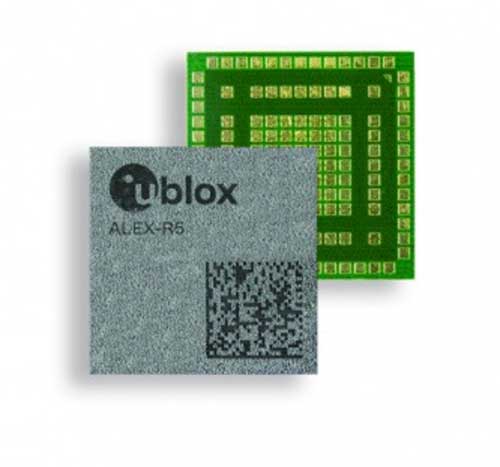
    U-blox has debuted the ALEX-R5, a miniature cellular module that integrates low power wide area connectivity and GNSS technology into an ultra-small system-in-package (SiP) form factor.

    According to u-blox, ALEX-R5 is based on the secure UBX-R5 LTE-M/NB-IoT chipset platform with out-of-the-box Secure Cloud functionality and the u‑blox M8 GNSS chip for world-class location accuracy.

    The ALEX-R5 features a 14 x 14-mm footprint, achieved as a result of its SiP design. Its 23-dBm cellular transmission power guarantees end devices operate effectively in all signal conditions and a dedicated GNSS antenna interface that enables fully independent, simultaneous operation of the u‑blox M8 GNSS chip.

    The ALEX-R5 is optimized for power-sensitive and battery-dependent applications, as well as size-constrained applications such as wearables and connected medical devices. It achieves this by leveraging the lower power modes of the u‑blox UBX-R5 and UBX-M8 chipsets and giving users options to further balance power consumption and performance using GNSS Super-E mode, u-blox said.

    Its rugged SiP construction makes it a perfect fit for harsh environments, where moisture or vibration would be a concern for conventional modules. ALEX-R5 is rated at moisture sensitivity level 3, offering reduced handling and device production complexity, u-blox added.

    Finally, the ALEX-R5 future-proofs IoT devices and solutions by enabling customers to software upgrade deployed devices for compatibility with 5G networks, u-blox said. This will offer a seamless transition to the next generation of cellular technology as 5G networks are rolled out by mobile operators.

    Engineering samples of the ALEX-R5 SiP will be available by the first quarter of 2021.

  • First Fix: New year, new opportunities for GNSS industry

    First Fix: New year, new opportunities for GNSS industry

    Headshot: J. David Grossman
    J. David Grossman

    By J. David Grossman
    Executive Director
    GPS Innovation Alliance

    As we embark on a new year, 2021 ushers in a new administration and the start of the 117th Congress. With these changes comes a litany of opportunities, as well as challenges, for the nearly four-decade-old GPS industry.

    Next month, the GPS Innovation Alliance (GPSIA) will mark its eighth anniversary as the voice of the GPS industry, educating policymakers and regulators about the GPS success story of innovation, economic growth and job creation. It is a uniquely American story made possible because of bipartisan support for protecting the spectrum used by GPS and maintaining funding to enable the modernization of the GPS constellation, ground control and military ground user equipment.

    Congressional Support. This commitment was evident in the last Congress through broad support from both parties for two Congressional resolutions, H.Res.219 and S.Res.216, that affirmed the importance of continuous availability, accuracy, efficiency, robustness, reliability and resiliency of the GPS constellation.

    Innovation and modernization of the GPS constellation are well underway. Last year, under the emerging leadership of the U.S. Space Force, two new Lockheed Martin-built GPS III satellites were launched into space. This new generation of GPS satellites offers three times greater accuracy, up to eight times improved anti-jamming capability for military users, and the addition of the L1C signal to enable interoperability with other navigation systems, such as Europe’s Galileo.

    GPS modernization also has led to the introduction of M-code, an advanced, new signal designed to improve anti-jamming and anti-spoofing, as well as to increase secure access to military GPS signals for U.S. and allied armed forces. In GPS-denied environments, M-code reduces the jamming radius, giving military planners and targeteers options to minimize or avoid collateral strike damage.

    With at least two additional GPS III satellites set to launch this year and a new ground control segment known as the Next Generation Operational Control System (OCX), the continued success of the GPS program remains bright.

    Ligado Still Looms

    As GPSIA continues to urge Congress to allocate the funding needed to support the modernization of GPS, we also are fighting to ensure uninterrupted operation of the estimated 900 million GPS devices in the United States ranging from precision agriculture to consumer gadgets.

    Last year, we were deeply disappointed by the Federal Communications Commission’s (FCC) decision approving the applications of Ligado Networks, despite the well-documented objections of the expert agencies charged with preserving the integrity of GPS, specifically, on the critical issue of what constitutes harmful interference to users of GNSS.

    Regrettably, the FCC chose to ignore the established “1-dB Standard,” which has a long history of protecting GPS operations from harmful interference in both international and domestic regulatory proceedings.


    “All Americans benefit from a competitive 5G landscape.”


    At the same time, Ligado and its supporters continue to argue that their proposal is the fastest way to bring 5G to all Americans. In actuality, millions of Americans already have access to 5G services and, thanks to the efforts of the FCC, hundreds of megahertz of 5G spectrum in low-, mid- and high-band frequencies have been or will soon be made available for commercial use. GPSIA believes all Americans benefit from a competitive 5G landscape.

    5G without compromise. However, that goal can be achieved without undermining GPS receivers and devices that are foundational to wireless technology in general, including 5G. We remain hopeful that a new administration and congress will commit to protecting GPS receivers from harmful interference using the appropriate standard for determining such interference to ensure that the more than $1 billion per day in U.S. economic impact created by GPS continues to flourish.

    2020 also brought the issue of GPS resiliency into the national forefront. In February, the president signed an Executive Order aimed at fostering greater resiliency for positioning, navigation and timing (PNT)-based systems, including GPS.

    GPSIA supported this order and outlined in subsequent regulatory filings why GPS remains the gold standard for delivering PNT functions to our military as well as a wide range of other sectors, including transportation, agriculture, electricity and finance.

    Complementing GPS. As the federal government considers alternative PNT solutions, it is critical that they be complementary to GPS, able to easily integrate into current or future devices, and based on a recognition that each PNT application has unique requirements driven by its intended function, environment and design factors. In sum, there is no one-size-fits-all solution.

    Protecting Consumer Privacy. Looking ahead, GPSIA expects 2021 will bring a robust discussion around consumer privacy protections. While GPS satellite broadcasts are one-directional and cannot track a user’s location, we recognize that GPS is one of many data points that can contribute to application-specific location tracking. As such, GPSIA would urge Congress to ensure that geolocation data is appropriately addressed as part of any U.S. federal privacy legislation. In doing so, we believe protections for precise geolocation information will empower consumer choice, enhance transparency, and strengthen security.

    On the surface, infrastructure modernization, protecting GPS spectrum, PNT resiliency, and consumer privacy may seem like distinctly different issues. What they have in common, though, is an ability to garner bipartisan support, deliver substantial consumer benefits, and strengthen our nation’s economy. GPSIA stands ready as a resource and looks forward to working with the Biden-Harris Administration and leaders in the House and Senate to promote, protect and enhance GPS.

  • ESA seeks proposals to demo 5G positioning, timing

    ESA seeks proposals to demo 5G positioning, timing

    Information webinar set for Oct. 21

    The European Space Agency (ESA) has launched a call for proposals to demonstrate the capabilities of new 5G cellular networks to support positioning and timing applications to complement satellite navigation.

    5G will bring higher speed, larger traffic capacity and ultra low-latency (or signal delay) communications. 5G will also usher in a range of new possibilities for positioning, navigation and timing (PNT).

    ESA is inviting proposals to implement pilot projects to demonstrate the viability of 5G PNT solutions in a number of use cases:

    • Indoor PNT for Industry 4.0, as needed to support the operations of smart warehouses and factories or smart city applications requiring transition from indoor to outdoor environments.
    • Outdoor applications where a robust back-up to satellite navigation is essential to meet safety requirements, such as autonomous driving or drone navigation.
    • Applications where robust time and frequency synchronization is necessary, both in outdoor as well as indoor environments, like smart energy grids or the 5G networks themselves.

    5G networks will allow new types of measurements made possible by advanced antennas and by new positioning signals at higher frequencies, at both base stations and the user receivers. 5G networks will also bring enhanced connectivity to improve cloud-based positioning applications and value-added services.

    Image: KENGKAT/iStock/Getty Images Plus/Getty Images
    Image: KENGKAT/iStock/Getty Images Plus/Getty Images

    While satellite navigation works optimally in outdoor environments with a wide view of the sky, 5G PNT has the potential to bring PNT to deep urban canyons in high-rise city centers and indoor warehouses, wherever 5G networks are deployed.

    The combination of satellite navigation and 5G brings the promise of high performance, secure and resilient PNT services, as well as a seamless application of PNT applications from outdoor to indoor environments and from rural to urban areas, ESA said.

    This call for ideas is supported through ESA’s Navigation Innovation and Support Programme (NAVISP), working with European industry and academia to develop innovative navigation technology.

    Webinar on PNT 5G

    To support the call, an information webinar is being held on 21 October, in which the various PNT 5G use cases will be presented by key speakers from each sector. Details of the call and how to apply will also be presented by ESA.

    A networking platform has also been established to allow webinar participants and general stakeholders interested in the call to get in touch and discuss possible cooperation. This platform will be kept open during the entire period of the call’s duration.

    For more information on the call and the agenda of the webinar visit ESA’s NAVISP website.

    To register for the webinar and the networking platform, click here.


    Feature image: metamorworks/iStock/Getty Images Plus/Getty Images

  • Microchip offers phase noise analyzer for precision oscillator characterization

    Microchip offers phase noise analyzer for precision oscillator characterization

    Next-generation phase noise instrument combines timing technologies in a smaller, higher performance measurement instrument

    Photo: Microchip Technology
    Photo: Microchip Technology

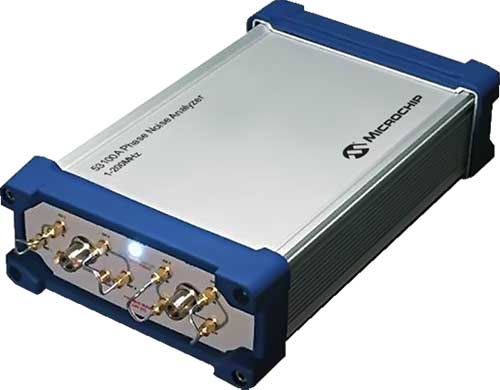
    To help research and manufacturing engineers make precise and accurate measurement of frequency signals, including those generated by atomic clocks and other high-performance frequency reference modules and subsystems, Microchip Technology Inc. has announced the availability of the new 53100A Phase Noise Analyzer, a next-generation phase noise test instrument.

    The 53100A Phase Noise Analyzer is designed for engineers and scientists who rely on precise and accurate measurement of frequency signals generated for 5G networks, data centers, commercial and military aircraft systems, space vehicles, communication satellites and metrology applications.

    Capable of measuring radio frequency (RF) signals up to 200 MHz, the new test instrument rapidly acquires frequency signals and characterizes the phase noise, jitter, Allan deviation (ADEV) and time deviation (TDEV) quickly and precisely. All attributes of a frequency reference can be completely characterized with a single instrument within minutes.

    The 53100A Phase Noise Analyzer enables a variety of configurations by allowing up to three separate devices to be tested simultaneously using a single reference, enabling higher capacity for stability measurements. At 344 x 215 x 91mm (13.5 x 8.5 x 3.6 inches), the phase noise test instrument is small enough for integration into manufacturing automated test equipment (ATE) systems, yet powerful enough for laboratory-grade metrology. Its interface provides backward compatibility with Microchip’s 51xxA test sets’ command and data stream, reducing the need to redesign existing ATE infrastructure.

    The 53100A Phase Noise Analyzer provides flexibility by allowing an input reference device to be connected through the front panel at a different nominal frequency than the device under test — allowing a single reference to characterize a variety of oscillator products. Rubidium frequency standards such as Microchip’s 8040C-LN or a quartz oscillator such as Microchip’s 1000C Ovenized Crystal Oscillator (OCXO) could be used as a reference as well as other manufacturers’ precise oscillators.

    The 53100A Phase Noise Analyzer is available now. Microchip supports the 53100A Phase Noise Analyzer with technical support services as well as an extended warranty.

  • Fibocom modules complete first data call on China’s 5G standalone network

    Fibocom modules complete first data call on China’s 5G standalone network

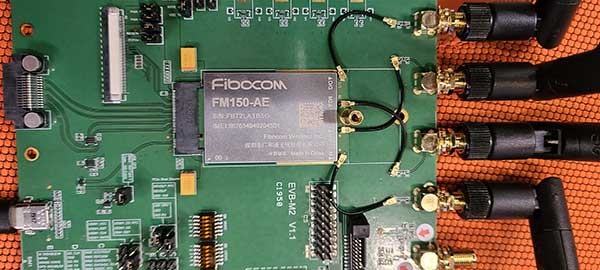
    Fibocom’s 5G modules FG150 and FM150 have completed the first data call and end-to-end data transmission services under China Mobile’s Standalone-Structured 5G network. The download rate exceeds 100 Mbps.

    Fibocom is a leading provider of cellular embedded wireless module solutions for the internet of things (IoT).

    Fibocom FG150 and FM150 5G modules are the first 5G modules based on the Qualcomm SDX55 platform to offer the data-transmission services under the SA-structured 5G network in China, Fibocom said. Its IoT wireless modules incorporate GNSS receivers that receive GPS, GLONASS, Galileo and Beidou signals.

    See a test video here:

    “Wireless modules are essential for communication between IoT terminals and the base stations. As the world’s leading IoT wireless module solution provider, we are proud that our 5G modules have achieved another R&D milestone in the industry,” said Tiger Ying, CEO of Fibocom. “The completion of the first data call under SA-Structured 5G network is a significant step towards realization of all the three 5G features (eMBB, uRLLC, mMTC) in IoT industry and helps our customers to accelerate the large-scale deployment of 5G industry applications.”

    The test was run on the Fibocom FM150 5G module with China Mobile’s 5G SIM card under the n41 network frequency band in the Shenzhen Mobile 5G Joint Innovation Center.

    The Fibocom FM150 5G module has been successfully registered on the 5G SA network and established the PDU session. In the 5G SA communication process, the establishment of the PDU session is a symbolic link for successful dialing.

    Photo: Fibocom
    Photo: Fibocom

    Fibocom FG150 and FM150 5G modules support both 5G SA and NSA network architectures, providing an integrated multi-network solution that is compatible with the global 5G Sub 6 and millimeter-wave bands. Fibocom 5G modules are compatible with both LTE and WCDMA standards, reducing customers’ investment in the early stages of 5G deployment and helping customers to switch their older product lines to 5G product lines quickly.

    Fibocom’s 5G modules have global coverage, accelerating scale deployment of the 5G IoT applications. Applications include: 4K/8K video live broadcast, cloud office (ACPC), drone, robot, AR/VR, 5G virtual dress mirror, 5G cloud game, 5G digital signature, 5G wireless gateway, 5G CPE, 5G SD-WAN, smart grid, telemedicine, connected cars, intelligent transportation system, autonomous driving, smart homes and smart cities.

  • Distributing high-precision time over optical networks in the 5G world

    Distributing high-precision time over optical networks in the 5G world

    Image: ChakisAtelier / iStock / Getty Images Plus / Getty Plus
    Image: ChakisAtelier / iStock /Getty Images Plus /Getty Images

    By Eric Colard
    Head of Emerging Products, Frequency & Time Systems
    Microchip Technology

    Mobile operators are investing heavily in the deployment of LTE-Advanced and 5G networks that will transform cellular communications and connectivity.

    They face big risks, though: the high-performance mobile services delivered over these networks are extremely dependent on precise time from GPS and other similar regional constellations broadly known as GNSS so they can synchronize radios, enable new applications and minimize interference.

    If GPS/GNSS becomes unavailable due to jamming, spoofing, failures or other events, the resulting service disruption would have a catastrophic impact on system performance.

    Just like the energy grid is extremely vulnerable to climate, heat, winds and dry vegetation that can lead to fires on a large scale as seen in California recently, 5G networks are vulnerable to disruptions in the distribution of precise time that can lead to total systems outage.

    New technologies enable mobile operators to protect their networks from these threats. These technologies make use of existing deployments while creating new architectures for distributing very high-precision time over long distances. They minimize additional costs while offering the necessary performance to meet the demanding requirements of 5G.

    Technology landscape

    The latest LTE-Advanced and 5G mobile networks bring tremendous capacity and bandwidth gains that are being used to deliver new services to consumers, industries, cities and specific market segments. From high-bandwidth video delivery for smartphones to autonomous vehicles, smart cities and the internet of things (IoT) for smart factories, these new services all rely on the synchronization of numerous sensors, base stations and other devices.

    Accomplishing this requires the delivery of very precise time over long distances. Without it, mobile operators cannot maximize deployment investments by minimizing disruptions and risk.

    They also must devise plans they can leverage in case of GPS/GNSS malfunction. At the same time, they need to take advantage of optical networks and other existing infrastructure so that they don’t require expensive new investment in dark fiber.

    Photo: iStock.com/NicoElNino
    Photo: iStock.com/NicoElNino

    Meeting stringent requirements

    Standards bodies have defined stringent requirements for precise time and synchronization such as Prime Reference Time Clock (PRTC), which includes 100-nanosecond (ns) PRTC Class A (PRTC-A), 40-ns PRTC Class B (PRTC-B) and 30-ns enhanced PRTC (ePRTC) performance specifications.

    To meet these requirements, a high-quality source of time is an absolute must and a very resilient, efficient and performant distribution mechanism is required to transport time from the source to the various devices consuming time (for example, base stations, sensors and vehicles).

    The problem with relying on GPS/GNSS for meeting these requirements is that its deployment can be expensive given the increasing densification of endpoints. There is also a technical vulnerability associated with GNSS receivers located at cell sites.

    If the GNSS receiver cannot track satellites properly for whatever reason, the radio must be removed from service quickly to avoid interference issues due to the short holdover period of the oscillator technologies used in the radios. Because of these technical and financial considerations, operators are very motivated to find solutions where GNSS dependency is reduced or even eliminated at many locations.

    Another set of considerations for operators includes:

    • the distribution of time from the source to the endpoints using the network;
    • the network nodes; and
    • the various synchronization capabilities these network nodes can support.

    Typically, a precision time protocol (PTP) grandmaster is located at the beginning of the timing chain and complies with 100ns PRTC-A or 40-ns PRTC-B so it can deliver precise time to the end of the chain within +/-1.5 microseconds. The network nodes on the path typically embed a Time Boundary Clock (T-BC) capability that meets either Class A (50-ns) or Class B (25-ns).

    A new type of time-distribution architecture is needed to address these requirements and considerations so operators can protect their mobile network against GNSS disruption and distribute precise time over long distances for national coverage. This architecture must also deliver the necessary performance to meet end-to-end budgets for 5G needs.

    A different time-distribution architecture

    There are multiple capabilities a high-precision time-distribution architecture should feature so that operators can most effectively mitigate GPS/GNSS vulnerabilities and solve other challenges in their 5G networks. The architecture should:

    • leverage the existing optical network (thus avoiding high cost dark fiber expenses)
    • use a dedicated lambda in order to transport time in the most rapid manner
    • protect, to the utmost level, a redundant source of time that meets the highest, 30ns ePRTC performance and uses a combination of Cesium and GNSS as the source of time
    • have two directions for the flow of time (East and West) so that a redundant path can be leveraged in case of any issues along the way from source to endpoint
    • have a chain of high-precision boundary clocks (HP BCs) that can meet the highest level of performance defined by today’s standards (T-BC Class D 5ns)

    A multi-domain architecture of this type offers the redundant, sub-microsecond end-to-end timing capabilities that are required to affordably deliver the high performance, 5-nanosecond per node distribution of precise time over hundreds of miles.

    An example of this type of solution is Microchip’s TimeProvider 4100, which can be configured as either an ePRTC at the source of the timing chain with PRTC-A and PRTC-B time-delivery capabilities to various end nodes, or an HP BC on the optical network path.

    This type of product can also be configured for application-specific requirements, end to end, with up to nanosecond precision time-delivery capabilities over long distance.

    Assuring precise timing

    The success of a coming generation of high-performance mobile services will depend on how well operators address today’s critical GPS/GNSS vulnerabilities. Jamming, spoofing, failures or other events can disrupt the precise GPS/GNSS timing that 5G networks need for synchronizing radios, enabling applications and minimizing interference.

    The latest high-precision time-distribution architectures mitigate these risks with minimal additional cost and give operators the performance they need to support demanding new 5G services ranging from IoT-based applications to receiving high-bandwidth video on smartphones.

    Microchip has released version 2.1 for its TimeProvider 4100 timing grandmaster.


    Eric Colard leads product line management for Microchip’s TimeProvider 4100 and Integrated GNSS Master solutions for the telecom, utility and other industries. Colard’s leadership includes product definition, customer interaction, outbound promotions and business development.

    He has held successive technical and leadership roles at technology companies in the U.S. and Europe. He began his career as an engineer in the networking arena on X.25, frame relay and other protocols at companies including Alcatel and Cap Sesa Telecom. He later held successive product management and business development leadership roles in networking, security, and other areas at Novell, Tumbleweed, FaceTime and Vernier Networks.

    As the industry rapidly progressed, Colard increasingly became involved in wireless data compression and TCP/IP optimization. In 2007 he joined Symmetricom and architected and built the SyncWorld ecosystem with partners Alcatel-Lucent, Ericsson, Nokia Siemens and Cisco. Through acquisition Symmetricom became part of Microsemi, which today is part of Microchip.

    Colard holds bachelor of science and master of science degrees in computer science, both from Ecole Nationale Superieure des Telecommunications (now Telecom ParisTech) in Paris, France. He is a member of the Metro Ethernet Forum (MEF), Open Compute, Telecom Infra Project and Small Cell Forum. He has received an award for his industry contributions from the Small Cell Forum.

  • Microchip releases version 2.1 of TimeProvider 4100 timing grandmaster

    Microchip releases version 2.1 of TimeProvider 4100 timing grandmaster

    Image: Microchip
    Image: Microchip

    Precise timing grandmaster with gateway clock and high-performance boundary clock enhances 5G mobile network phase protection

    To help 5G mobile providers, cable operators and utility providers ensure phase delivery, protection and synchronization even when GNSS is offline, jammed or spoofed, Microchip Technology Inc. has released software version 2.1 for its TimeProvider 4100 precision timing grandmaster.

    TimeProvider 4100 is a 1588 grandmaster including support for the latest ITU-T G.8275.1 and G.8275.2 1588 phase profiles, complemented by extensive port fan-out for PTP, Network Time Protocol (NTP), SyncE, and E1/T1.

    Software release 2.1 builds on earlier versions by adding key software enhancements providing a virtual Primary Reference Time Clock (vPRTC). Virtual PRTC provides the ability to design a redundant precise time distribution architecture for phase protection over an optical network.

    Until recently the main source of precise time has been GPS and other constellations that comprise GNSS. Deployment of GNSS, however, can be costly for service providers given the costs associated with upgrading to GNSS-capable receivers and antennae as well as increasing densification of end points.

    As a result, telecom, cable and utility operators deploying vPRTC benefit from solutions where GNSS dependency is reduced or eliminated. Following are key features of the new vPRTC functionality:

    • Leverages the existing optical network, avoiding high-cost dark fiber expenses
    • Uses a dedicated lambda to transport time precisely and securely
    • Provides a high-performance, redundant source of time through enhanced PRTC (ITU-T G.8272.1)
    • Allows bidirectional, precise time flows (east and west)
    • Chains together high-precision, multi-domain, high-performance boundary clocks that meet today’s standards (T-BC Class D, as defined by ITU-T G.8273.2)

    Microchip’s vPRTC multi-domain architecture is a cost-effective solution providing a high-performance, redundant, sub-5 nanosecond distribution of precise time over regional and national networks.

    In addition, Release 2.1 introduces Network Time Protocol daemon (NTPd) with Message Digest (MD5) security algorithm.

    TimeProvider 4100 2.1 meets PRTC-B performance standards (per ITU-T G.8272) and supports 1G and 10G, NTP and PTP in a single form-factor system. TimeProvider 4100 2.1 is available now for both new and already deployed systems.

  • ADVA introduces multi-band GNSS receiver for 5G timing accuracy

    ADVA introduces multi-band GNSS receiver for 5G timing accuracy

    Pluggable line card enables easy transition to precise ePRTC (enhanced primary reference time clock) and PRTC-B based synchronization

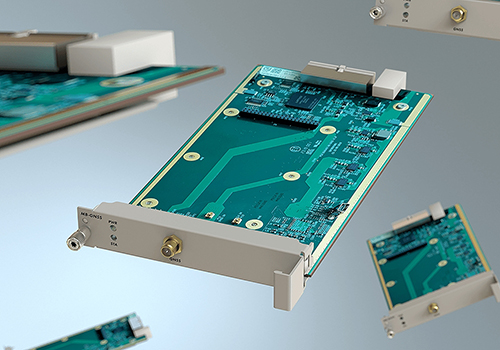
    Adva has launched a modular multi-band GNSS receiver for ePRTC and PRTC-B synchronization, bringing increased precision timing to 5G networks.

    The new solution is engineered to overcome ionospheric delay variation that causes timing inaccuracy, enabling communication service providers (CSPs) and enterprises to deliver nanosecond precision.

    Previously, this was achieved with expensive, rubidium clocks.

    Installed synchronization infrastructure can be installed to increase accuracy and reliability. The multi-band, multi-constellation GNSS receiver card plugs into Adva’s OSA 5430 and OSA 5440, advanced core grandmaster clocks able to support PTP, NTP and SyncE over multiple 1Gbit/s and 10Gbit/s Ethernet interfaces.

    This enables network operators to meet the requirements of the ITU’s stringent PRTC-B specifications and support advanced 5G applications.

    “What we’re offering the market is an entirely new route to high-precision UTC-traceable network timing that doesn’t require significant investment. Our future-proof technology gives businesses and CSPs a way to boost synchronization performance and meet the ITU’s tight PRTC-B specifications without resorting to expensive alternatives.”

    Photo: Adva
    Photo: Adva

    “Our new multi-band GNSS receiver is a major milestone for network synchronization. For the first time, operators can harness a solution with multi-band GNSS capabilities combined with our core devices, which can deliver line rates up to 10Gbit/s and support ePRTC levels of timing accuracy,” said Gil Biran, general manager, Oscilloquartz.

    “Our modular technology offers a way to enhance equipment in the field, achieve PRTC-B levels of timing and improve the timing accuracy of ePRTC. All that’s required is a simple antenna upgrade. Then our multi-band solution can be plugged into the available slot of our OSA 5430 or OSA 5440 for the nanosecond accuracy that will be key to the services of tomorrow. And, as enhanced availability is also essential for emerging applications, the new technology features unrivalled jamming and spoofing detection capabilities combined with our centralized AI-powered GNSS assurance suite.”

    Today’s launch answers the urgent demand for improved precision in GNSS-based timing. Currently, most synchronization networks rely on single-band receivers, which can only be accurate to a limited degree as delay between satellites and receivers is affected by space weather. This creates delay variations leading to time information being out of step by up to several tens of nanoseconds.

    Adva’s Oscilloquartz multi-band technology receives GNSS signals in several frequency bands, enabling it to use the delay differences between them to calculate delay variation and compensate for it. This method is more cost-effective than other techniques, such as deploying GNSS receivers with a filter implemented by a costly high-stability rubidium oscillator. The OSA 5440 can utilize two multi-band cards, providing ultimate hardware redundancy.

    “What we’re offering the market is an entirely new route to high-precision UTC-traceable network timing that doesn’t require significant investment. Our future-proof technology gives businesses and CSPs a way to boost synchronization performance and meet the ITU’s tight PRTC-B specifications without resorting to expensive alternatives,” commented Nir Laufer, senior director, product line management, Oscilloquartz. “Combined with our OSA 5430 and OSA 5440 core grandmasters, the technology creates a scalable, fully hardware-redundant solution. Its built-in security also guarantees the most sophisticated detection of malicious attacks. By supporting GPS, GLONASS, BeiDou and Galileo, our multi-band, multi-constellation line card offers a versatile and resilient solution for migrating from legacy to next-generation timing. Simply put, there’s no other technology available today that can match the accuracy, redundancy, capacity and price point of our core devices combined with our new multi-band GNSS cards.”

    The new multi-band GNSS receiver will be officially launched this week at ITSF and can be viewed on Oscilloquartz’s stand Nov. 4-7.

    A supporting solution brief is also available.

  • Peering behind the mapping curtain

    Peering behind the mapping curtain

    Photo: Mapbox
    Photo: Mapbox

    Location intelligence powers applications with data and “live maps” updated continuously.

    According to Forbes, 70 percent of telecommunications companies consider location intelligence critical to their success. The intelligence data is provided by specialists such as Google, Esri, Here and PlaceIQ.

    In January, Sprint and location intelligence startup Mapbox launched precision mapping technology with the Curiosity IoT network. The 5G network’s extreme bandwidth and low latency will allow Mapbox to collect higher volumes of richer data to create “live maps.” A live map is built not from traditional data surveys months or years before, but from data collected from hundreds of millions of location-enabled sensors that feed back information about the world in real time, including high-resolution video.

    Mapbox uses artificial intelligence (AI) to turn the massive data flows into a picture of real time transit paths that can be used for precise, up-to-date routing.

    Augmented Reality view from the Mapbox Vision SDK. (Image: Mapbox)
    Augmented Reality view from the Mapbox Vision SDK. (Image: Mapbox)

    According to Mapbox CEO Eric Gundersen, maps that constantly update are essential to the internet of things (IoT). “As maps guide new smart machines on IoT networks, you remove the human in the middle that used to compensate for differences between the map and the real world,” he said. “Precision mapping services need to reflect the world as it is, at that precise moment so that those smart machines can travel safely and efficiently.“

    According to Mapbox, smart machines such as drones and autonomous delivery carts will be able to make fast location and routing decisions using its detailed, updated maps.

    Other companies that use Mapbox’s location services include IBM, Lonely Planet, Square, Tableau and The Weather Channel.