Tag: airports

  • EU initiative achieves greater airport safety with 3D GNSS

    EU initiative achieves greater airport safety with 3D GNSS

    The European Union (EU) project BLUEGNSS has been developing GNSS applications in selected European airports to increase safety and airport accessibility, according to the European Commission’s Community Research and Development Information Service (CORDIS).

    BLUEGNSS’s focus has been on advancing the adoption of the Galileo system in Greece, Italy, Cyprus and Malta. The four countries together form the Blue Med functional airspace block (FAB): airspace in which air traffic is managed irrespective of national boundaries. Blue Med is one of the nine FABs formed in Europe to reduce the fragmentation of the European air traffic network.

    Three-dimensional GNSS approaches are being designed for 11 airports in the Blue Med FAB: four each in Greece and Italy, two in Cyprus and one in Malta.

    The primary aim is to harmonize the implementation of required navigation performance approaches among the four countries, CORDIS said. This will enable aircraft to fly along precise flight paths with greater accuracy, and will make it possible to pinpoint aircraft position with precision and integrity.

    Three new procedures. So far, substantial progress has been made towards safety and airport accessibility in the target countries. Since the beginning of 2018, three new GNSS procedures have been validated for Italian airports Cuneo, Lamezia and Parma, followed by another two for Larnaca and Paphos in Cyprus.

    The poor weather conditions under which the Cyprus GNSS approaches were validated served to demonstrate the benefits of GNSS vertical guidance. Since its launch in 2016, BLUEGNSS has designed and validated 14 GNSS procedures.

    Augmented performance of Galileo has been achieved through the European Geostationary Navigation Overlay Service (EGNOS). EGNOS is a satellite-based augmentation system that improves GNSS positioning. Its three satellites and network of more than 39 reference stations in 24 countries enable it to provide greater accuracy than Galileo alone.

    EGNOS’s safety advantages and lower investment costs greatly benefit small and regional airports, which usually can’t afford the high costs of installing and maintaining ground-based navigation aids.

    For this reason, BLUEGNSS has promoted its use in this geographically challenging Mediterranean region.

    “The southeast Mediterranean region lacks full EGNOS coverage,” said GNSS expert Patrizio Vanni of ENAV S.p.A., project coordinator and Italy’s air navigation service provider. “To make things even more challenging, each airport involved in the project presents a very different operational environment.”

    The project hasn’t only focused on designing and validating GNSS approaches at airports where no such procedures have been available up to now. It has also provided the necessary training and monitoring to support implementation by the Blue Med FAB countries.

    Now close to completion, BLUEGNSS (Promoting EGNSS Operational Adoption in Blue Med FAB) is the first project of its kind to be coordinated at FAB level. It may serve as a catalyst to spread required navigation performance approach know-how in the region and beyond, to the whole of Europe.

    (Photo: EU)

  • Honeywell offers modular, scalable smart airport technology

    Honeywell offers modular, scalable smart airport technology

    Honeywell has released new smart airport technology that is designed to enhance the safety and efficiency of airside operations.

    The Honeywell NAVITAS software suite intelligently integrates air and ground traffic control with maintenance operations so airports can more easily accommodate growing air traffic while promoting safety and on-time performance, the company said.

    NAVITAS was developed to comply with the latest industry standards, including those from the International Civil Aviation Organization (ICAO), European Aviation Safety Agency (EASA), International Electrotechnical Commission (IEC), Federal Aviation Administration (FAA) and European Organisation for Civil Aviation Equipment (EUROCAE).

    NAVITAS includes modular and scalable software components, combined with an intuitive user-friendly interface, providing real-time insights for air traffic controllers and maintenance operators.

    The components assist personnel in visualizing and routing aircraft movements despite the increasing complexity and stress associated with today’s airport operations. NAVITAS can enhance situational awareness about traffic conditions, more safely expedite aircraft turnaround times, and automate fault diagnostics for airside equipment, among other features.

    NAVITAS modules include Tower Manager, Engineering Manager, Surface Manager and Performance Manager.

    Tower Manager helps improve the productivity of air traffic controllers by enhancing situational awareness of airport surface operations. It gives controllers access to rich, real-time information on ground, air traffic and meteorological conditions, presenting the information in a single easy-to-use interface, and providing visibility into a multitude of traffic events while reducing the chance for error.

    The system helps manage the air traffic controller’s responsibilities, while making it easier to issue and track aircraft clearance information to keep landings and takeoffs safer and on time.

    Surface Manager helps airports get more out of their existing infrastructure by enhancing ground traffic safety, fluency and throughput in a wide range of weather conditions, while helping to reduce their fuel burn and carbon footprint.

    The module also provides the software necessary for airports to use all four levels of an Advanced-Surface Movement Guidance and Control System (A-SMGCS), including surveillance, routing, guidance and airport safety support, along with enhanced movement conflict detection and resolution, which can include “follow-the greens”-based guidance that automatically illuminates lighting on the tarmac to guide aircraft to clear taxiways.

    Engineering Manager helps engineers and technicians manage maintenance by enabling them to more effectively monitor system health, more easily perform fault diagnostics and to streamline workflows, which also often helps reduce operational costs.

    It features a mobile interface and automates the diagnostics and failure reporting, while simplifying manual tasks and reducing paperwork, giving personnel better visibility into the availability, reliability and performance of airside systems. Personnel can easily create, manage and issue work orders to expeditiously resolve issues and keep equipment up and running.

    Performance Manager features dashboards that allow airport staff to collaborate and analyze operations in line with key performance indicators. The module — accessible both on premise and remotely — provides access to a common base of holistic information and allows for the application of big-data analytics for real-time and predictive insights, often enabling more efficient and informed decision-making.

    “Airports around the globe are seeing dramatic increases in traffic, and while that makes the world more connected, it increases complexity to ensure safe and reliable operations,” said Sonja Strand, vice president and general manager for Honeywell’s Global Airports Business. “NAVITAS helps orchestrate these complex environments like never before through mobile applications, dashboards and heads-up displays that are intuitive. By harnessing the power of the internet of things, we’re making data user friendly, and making airports smarter in the process.”

  • Hoopo to provide low-power geolocation for IoT

    A new company, hoopo, has launched to supply an innovative, accurate geolocation solution for low-power wide area (LPWA) networks. The solution would improve precision for low-power Internet of Things (IoT) asset tracking.

    Hoopo’s geolocation enables companies to locate their valuable assets without the significant cost or battery consumption that can be associated with GPS. hoopo’s IoT solutions help companies precisely track specific assets in areas such as shipping ports, airports, car dealer lots, cattle ranches and other asset-dense areas.

    Hoopo has received $1.5 million in funding to further grow its business from a group of investors, including the initial investors in Mobileye; Israeli investor Zohar Gilon; and Ben Marcus, CEO of AirMap.

    The need to understand and quantify asset location is quickly becoming a requirement for the enterprise and industrial IoT. However, the accuracy of today’s low-power geolocation isn’t precise enough to deliver on the full promise of the IoT.

    LPWA networks are becoming the driving force behind smart city and other IoT applications because of their low-cost, low-power consumption, and high-coverage capabilities in rural and urban environments. The long battery life of LPWA devices allows businesses to deploy a maintenance-free device in the field for several years.

    “Hoopo is addressing a real business need of companies around the world: cost-effective, yet precise, tracking of their valuable assets with longevity of battery life up to 10 years in the field,” said Ittay Hayut, CEO of hoopo. “LPWA checks off all of the boxes companies need in terms of cost and coverage, and hoopo’s solutions work alongside these LPWA networks to help businesses keep their assets safe, anytime and anywhere.”

    Hoopo’s solutions are based on a patent-pending triangulation method that uses LPWA data transmissions to generate a precise location. The solutions suite includes low-cost LPWA gateways and devices, as well as a platform for management and real-time notifications. Companies can receive on-demand geolocation, establish geofences, receive movement alerts, and more, ensuring the protection of their valuable assets.

    “Hoopo’s geolocation technology reveals new business verticals that were limited or impossible when using existing technologies because of their high-cost and significant power consumption,” said Menashe Terem, CEO at Tri-logical, a provider of tracking and management solutions.

    “Early applications such as asset tracking are just the beginning of what advances in geolocation will enable,” said Eli Fogel, former CTO at Intel and hoopo investor. “Just as the advent of GPS launched a wealth of applications that no one ever thought of before, such as location-based advertising, there are future applications that this next generation of geolocation technology will enable. We’re excited to see what new applications emerge as customers embrace these new precision location capabilities.”

    Hoopo is displaying at Mobile World Congress in Barcelona Feb. 26-March 1 in Hall 5, Stand 5D81.

  • Drone-bird to scare away flocks tested at airport

    Drone operational rules have quite a few restrictions, largely aimed at keeping unmanned aircraft away from manned and commercial aircraft operations. The Federal Aviation Administration (FAA) has set a boundary limit for UAV operations to stay a minimum of 5 miles away from any airport. So it’s a little surprising that at least one airport is actually carrying on trials to fly drones within airport property.

    The reason is birds. Most airports are large, open spaces where birds love to land in large numbers to seek food and to rest, so airports and aircraft have to cope with the problem of avoiding bird-strikes in the critical phases of take-off and landing.

    Airports have used remotely compressed air cannons, and manually fired ordinance that “screams” or explodes making various forms of loud noise, or dogs or even hunting falcons of different species. Birds, however, become habituated to cannons and guns, and neither dogs nor hunting falcons can be relied on to actually herd birds away from runways.

    All this is in an effort to drive flocks of birds away from runways and low-altitude aircraft traffic corridors. At high altitude, a bird strike is usually survivable and an aircraft still has sufficient energy to be able to glide in the event of a complete engine-out situation, giving the pilot time to find a landing place. U.S. Air’s Chesley Sullenberger was a great airman to save his passengers and aircraft, but he was also lucky to have the Hudson right there to ditch into. He was some cool dude when he put his Airbus A320 down on the river, once losing both engines at low altitude on take-off after flying through a flock of Canada Geese.

    Enter Robird, a drone that looks — and behaves, in the right operator’s hands — like a female peregrine falcon, with flapping wing propulsion and attack moves emulating the predatory bird. Flown by a pilot and accompanied by an observer whose primary job is to ensure the UAV “bird” stays away from runways, the pair seeks resting flocks of birds that pose risk to aircraft within the boundaries of an operational airport.

    https://youtu.be/-gc8kBmzOOI

    Clear Flight Solutions in Holland has recently undertaken a trial at Edmonton airport in Alberta, Canada, where it obtained special flight clearance to fly within the airport grounds to demonstrate how its mechanical falcon could clear birds away from airport danger zones.

    Of course, drones and aircraft don’t mix either, so flight rules within the drone systems (GPS/autopilot?) apparently include geofenced no-go areas corresponding with runways and approach areas, and there is a shutdown mode in case of loss of signal or other failure — avoiding runway incursion is all important.

    Registration is back on

    Since U.S. Federal Aviation Administration (FAA) regulations requiring registration of small UAVs (sUAV) and model aircraft were struck down last spring by the appeals court, the need to register has been in abeyance. However, Congress has rolled a new requirement back into the recently signed $700 billion National Defense Authorization Act, making registration of any sUAS or recreational model aircraft a legal requirement, subject to fines for lack of compliance.

    The FAA has continued to advocate registration as a means to track wayward operators and to enforce separation of drones from manned aircraft. AUVSI has also continued to support the FAA position. A 2012 law, on the other hand, was said to prevent the FAA from making rules covering “model aircraft,” defined as “unmanned aircraft” flown for recreational purposes.

    The new regulation within the Defense Authorization Act has now apparently clarified and overcome any contradictions — recreational model aircraft and drones all have to be registered.

    DJI claims and counter-claims

    The U.S. Immigration and Customs Enforcement’s (ICE’s) recent claims that manufacturer DJI could be spying for the Chinese Government have been refuted by DJI.

    DJI has responded that allegations are wrong and that ICE should consider withdrawing or correcting unsupportable assertions. But claims persist that the Chinese government may be using information gathered by DJI UAVs to target potential assets for purchase.

    A large wine producer in California used DJI UAS to survey its vineyards and monitor grape production, but soon afterwards a number of Chinese companies apparently purchased vineyards in the same area. So it’s being alleged that the companies appear to somehow have used DJI data.

    DJI UAVs collects reflective images of leaves to calculate the nitrogen levels of plants using a specialized infrared scanner. The scanner enables growers to deduce how much nitrogen to add to the soil to optimize plant growth. Information on the location and stages of crop growth can also be collected. As of May, it’s been reported that DJI’s only customers using this particular scanner were wine producers along California’s Pacific Coast.

    Most UAVs would seem to be capable of collecting location and geographic information data; however, these claims are being leveled at manufacturer DJI. In a website statement, DJI denied any wrongdoing but hinted that some of its data storage may have been compromised.

    This story may be far from over.

    Potential new aircraft control systems?

    I recall climbing around in the fuselage of a Jet Provost training jet back in my apprenticeship years at BAE in the UK — I was wiring in auxiliary systems. But the thing I remember most was the mass of control cables running down the top center of the aircraft and winding their way to control surfaces via pulleys, with in-line tensioners and rubber lined holes to pass through bulkheads. I thought, How reliable could this be? Of course, it’s the way almost every aircraft control system has been constructed since Wilber, Orville and wing-warping. Up until we got fly-by wire and electrical actuators, that is — then mechanical cables became less prevalent, except for reversionary back-up.

    But making surfaces pop up into the airstream around an aircraft is how we’ve been able to take off, maneuver and land aircraft/UAVs — up to now. Elevators, rudders, ailerons, leading and trialling edge flaps, speed brakes — all of them control pitch (up and down), yaw (left to right), roll and manage lift. These mechanical control surfaces sprout out of the wings and horizontal and vertical stabilizers, and provide control for the pilot, autopilot or onboard flight computer.

    Now BAE Systems and Manchester University (MAN U) in the UK have come up with a different way to control a flying vehicle without using moving control surfaces. If the smooth surfaces of a stealth aircraft were to be never disturbed, the stealth radar signature of the vehicle would remain unchanged even during maneuvering — a handy enhancement to have to keep an aircraft as invisible as when it’s “clean” in level flight.

    The BAE/MAN U innovation, incorporated into a new MAGMA drone, uses internal, redirected air from the engine to “blow” the aircraft into a different direction. The small demonstration UAV has apparently completed a successful first flight.

    These innovations could both reduce mechanical complexity and improve the integrity of a stealth signature, by removing conventional control surfaces. Wing circulation control redirects supersonic air from the engine and blows it through the trailing edge of the wing. Thrust vectoring changes the direction of the aircraft’s exhaust.

    When used together, these control the direction of the aircraft by manipulating the air around it. Hydraulic and electrical actuators have been replaced by air redirecting ducts and air blowers, which may simplify build and flight controls without making the air vehicle more visible to radar. Of course, taking additional airflow from the engine means the engine has to be more powerful to provide the additional airflow, so this doesn’t come for free.

    The technologies being developed may enable cheaper, higher performance, next-generation aircraft. Its hoped that R&D will contribute towards technological improvements for advanced military aircraft. These trials are an important step forward in the exploration of adaptable airframes — along with other work to improve the performance of UAVs in collaboration with the University of Arizona and NATO Science and Technology Organization.

    MicroPilot adds sense and avoid

    MicroPilot in Manitoba, Canada, is a leading supplier of autoflight solutions for the UAS industry. The latest MicroPilot autopilots include integrated control datalinks, and they are small, lightweight and interface with a wide range of sensors. MicroPilot has now integrated its UAV autopilot with the FLARM sense and avoid system, adding an essential element for autonomous and beyond-visual-line-of-sight (BVLOS) operations.

    FLARM is a traffic awareness and collision avoidance technology used by light aircraft and UAVs. When integrated with MicroPilot’s autopilot, the system alerts the autopilot of any close-by, suitably equipped aircraft. FLARM outputs the velocity and altitude of these detected targets, and the autopilot then decides how to avoid them.

    FLARM collision avoidance systems, used by manned aircraft for more than a decade, now come with an ADS-B out option that broadcasts the UAV’s position to alert other aircraft to its location. Together, the MicroPilot autopilot and integrated FLARM system offer a unique combination of automated flight control and sense-and-avoid capability for UAS developers.

    Summary

    So bird-hunting, wing-flapping, bird-like UAVs being used to clear airports to prevent collisions between birds and aircraft; you will need to put down your $5 registration fee with the FAA if you want to fly your own UAV because new legislation has replaced that previously struck down in the courts; DJI and the U.S. ICE seem to be on some sort of a collision course; BAE and MAN U appear to be on the verge of a potentially revolutionary system with which to affect flight control of aircraft and a combined system for autoflight and collision avoidance — just a few of the many things happening this month in the UAV industry.

  • Firm’s UAS experts provide runway data to Atlanta Airport

    Consulting firm Michael Baker International has partnered with the Hartsfield-Jackson Atlanta International Airport (ATL) to use unmanned aerial systems (UAS) to inspect runway conditions.

    The mission’s use of drones on the airfield of an international airport in the United States during daily airport operations is a first, according to the company.

    Michael Baker is partnering with ATL on a pavement evaluation project and identified an opportunity for the innovative use of UAS to collect information on the condition of the runway pavement. This method provides a large amount of data for the teams to analyze and can help document the runway for future rehabilitation and improvement decisions.

    It also presents a time and cost savings for the airport as it would take less than half the time to complete compared to the traditional approach of manually photographing the physical condition of the runway, which can take more than four hours.

    The Michael Baker UAS team used a Topcon Falcon 8 aircraft to conduct the drone flight in mid-March and surveyed more than 3,000 linear feet of runway. The mission was conducted on the international Runway 9L/27R and was completed in less than 20 minutes, gathering approximately 630 photos of the airfield. This runway, the longest at the airport at 12,390 feet, typically carries the heaviest aircrafts, which cause the most pavement damage and safety concerns.

    “Michael Baker and the Hartsfield-Jackson Atlanta International Airport have had a strong relationship for more than 14 years, collaborating on innovative and effective projects,” said Quintin Watkins, aviation program manager in Michael Baker’s Norcross, Georgia, office. “This was a great opportunity for our experts in geographic information systems to assist the airport with a unique challenge. The information we successfully gathered during this flight will give the airport valuable insight on the ongoing safety and maintenance of the airfield. We hope to find ways to conduct similar missions with the airport in the future.”

    To plan for the project, Michael Baker obtained approval from the Federal Aviation Administration (FAA) to conduct UAS operations in Class B airspace at ATL. The FAA waiver is active for four months and requires the airport to be in a west flow condition, to establish two-way radio contact and to close the runway at the time of the flight.

    During this and future missions, the team can generate contours, orthomosiac imagery, RGB 3-D textured mesh and a digital terrain model (DTM). This data can then be analyzed by the Michael Baker and airport teams using engineering software such as Autodesk, Esri and Bentley, and can help determine future needs to improve and maintain the runway conditions.

    Earlier this year, ATL also conducted a drone flight over its parking deck to identify areas for reconstruction. ATL, known as the world’s busiest airport, serves more than 104 million passengers annually and offers nonstop service to more than 150 domestic and nearly 70 international destinations.

  • Panasonic showcases connected airport at Mobile World Congress

    Panasonic showcases connected airport at Mobile World Congress

    Panasonic Business introduced its connected airport concept at Mobile World Congress, which is taking place this week in Barcelona, Spain, and is showcasing a suite of intelligent technology solutions for the first time in Europe.

    Panasonic LinkRay.
    Panasonic LinkRay. Photo: Panasonic

    High-tech airports

    A key technology on display is LinkRay, a one-to-one customer engagement tool for public spaces. With LinkRay, dozens of people can simultaneously get native language information from display panels and LED lighting to their smartphone, so that display panels in an airport can contain links to transport information in multiple languages.

    Also on display is HD Beacon technology, which can assist localized mapping and wayfinding within the terminal buildings at an airport. So, for instance, airport staff or people with limited mobility could use their mobile device to find the nearest electric cart to get them quickly to their gate.

    At MWC, Panasonic is displaying at the 120m2 booth (Hall 6, Booth H31) with technology for retail, car rental, communications, security, logistics and ground handling.

    Car rentals

    In the car rental area of the booth, Ficosa, who has had a business alliance with Panasonic since 2015, will introduce the latest technologies in connected cars. These solutions will transform the in-vehicle experience, providing innovative vehicle services, enabling more autonomous driving with higher levels of safety and efficiency.

    Within the airport logistics hub area, Panasonic’s Parcel Picking Director uses barcode technology to project key parcel information onto parcels themselves, making it viewable by workers at a distance.

    Panasonic Media Track allows organizations to track and optimize the deployment of mobile assets such as baggage containers, trolleys and wagons, perfect for ground handling operations. While Intelligent Warehouse Software (iWS) use CCTV cameras and software to find lost parcels or luggage in minutes rather than hours spent manually searching through security footage.

    “We know that our connected, intelligent technology solutions are well matched for the transportation market,” said Tony O’Brien, managing director of Panasonic System Solutions in Europe. “Our research tells us that improving the passenger journey through better connectivity and information sharing is an important driver in this space and Mobile World Congress gives us the opportunity to showcase what Panasonic can do to innovate within transportation.”

  • FAA tests FBI drone detection system at JFK

    FAA tests FBI drone detection system at JFK

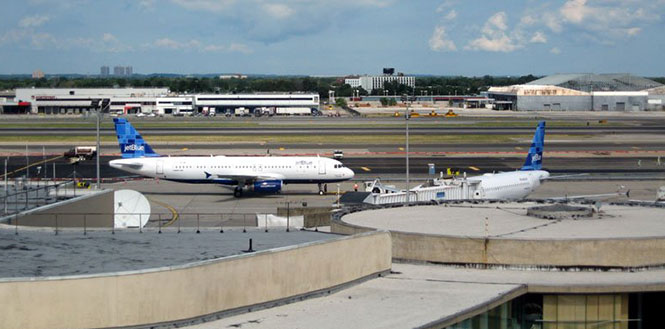
    The United States Federal Aviation Administration (FAA) and its government partners are expanding research on ways to detect “rogue” drones around airports. Together, they are evaluating drone detection technology at John F. Kennedy International Airport (JFK) in New York.

    Over the last two years, the FAA has received numerous reports from pilots and residents about unmanned aircraft systems — UAS, or “drones” — around some of the nation’s busiest airports, including JFK.

    “We face many difficult challenges as we integrate rapidly evolving UAS technology into our complex and highly regulated airspace,” said Marke “Hoot” Gibson, FAA senior advisor on UAS integration. “This effort at JFK reflects everyone’s commitment to safety.”

    Terminal 6 at JFK Airport. (Photo: New York Photo Gallery)
    Terminal 6 at JFK Airport. (Photo: New York Photo Gallery)

    Beginning May 2, the FAA conducted evaluations at JFK to study the effectiveness of a Federal Bureau of Investigation (FBI) UAS detection system in a commercial airport environment.  Five different rotorcraft and fixed-wing UAS participated in the evaluations, and about 40 separate tests took place.

    The JFK evaluation involved extensive government inter-agency collaboration, and cooperation from industry and academia. The tests expanded on research performed earlier this year at Atlantic City International Airport.

    In addition to the FAA and the FBI, the agencies combining forces in this research included the Department of Homeland Security (DHS), Department of Justice, Queens District Attorney’s Office and the Port Authority of New York and New Jersey. DHS and the FBI want to identify unauthorized UAS operators for law enforcement purposes, and the FAA’s mission is to provide a safe and efficient airport environment for both manned and unmanned air traffic.

    “We applaud the FBI and FAA for their efforts to detect and track unmanned aerial systems (UAS),” said Thomas Bosco, Port Authority aviation director.  “We look forward to supporting continued U.S. government efforts to identify and deploy countermeasures to neutralize the threat posed by rogue UASs.”

    The team evaluating the FBI’s detection system also included contributions from one of the six FAA-designated UAS test sites. The Griffiss International Airport test site in Rome, New York, provided expertise in planning the individual tests as well as the flight commander for the tests and two of the UAS used.

    The FY 2016 Appropriations law mandates that the FAA continue research into detection of UAS in airport environments. The agency is continuing to formulate an inter-agency strategy to evaluate detection systems in a variety of airport environments.

  • US airports take part in pilot program to enable safer UAS flights

    AirMap-2
    The AirMap Digital Notice and Awareness Dashboard(TM) airport manager view.

    AirMap and the American Association of Airport Executives (AAAE) have released the Digital Notice and Awareness System (D-NAS), created to allow UAS operators to provide airports with real-time digital information about the location of their flights.

    AirMap is a provider of airspace information and services for unmanned aircraft. On April 7, the company announced that it raised a $15 million Series A financing led by General Catalyst Partners to accelerate its global development airspace management tools for drones.

    D-NAS works by allowing a UAS operator to send an encrypted digital flight notice to a secure dashboard at an airport’s operations center. Flight information can be submitted through various UAS interfaces, including the flying apps provided by drone manufacturers DJI, Yuneec and 3DRobotics.

    These connections facilitate the transmission of important safety-critical information to airports, including the GPS location of the UAS flight. Participating airports will access this information through the AirMap D-NAS dashboard, which provides a map view of flights in proximity to the airport and the option to contact the UAS operator directly.

    “Safety has always been a priority for DJI,” said Brendan Schulman, DJI’s vice president of Policy and Legal Affairs. “Providing our customers the capability to easily notify nearby airports of their flights is a huge step forward in convenience and functionality.  A high-tech notification system complements the safety features DJI builds into every drone, as well as DJI’s close work with policymakers on practical approaches for drone technology.”

    More than 50 airports across America have already joined the D-NAS pilot program, including Houston’s George Bush Intercontinental and William P. Hobby airports, Denver International Airport, Columbus Air Force Base in Mississippi, Charlotte-Douglas Airport in North Carolina, Reno-Tahoe Airport in Nevada, New Castle Airport in Delaware, Cape May Airport in New Jersey, Fairbanks International Airport in Alaska, and the Oxnard and Camarillo Airports in Ventura County, California.

    AirMap-1
    The AirMap Digital Notice and Awareness Dashboard map view.

    “Participation in the D-NAS pilot was a no-brainer for us. In the face of growing concerns over UAS operations near airports, AirMap has developed an effective and unique solution,” said Steve Runge, Division Manager for the Houston Airport System. “D-NAS is a game changer for how we will manage low altitude air safety.”

    D-NAS not only provides heightened awareness to airports; it also makes it easier for UAS operators to comply with Section 336 of the FAA Modernization and Reform Act of 2012, which requires notice to be given to airports within five miles of a drone’s flight location.

    Ben Marcus, CEO of AirMap and an airline transport rated pilot and flight instructor, said, “Everyone involved in aviation sees the promise and potential of unmanned aircraft. However, we can’t reach the potential of this amazing technology unless we ensure that safety critical information keeps pace with innovation. We are focused on building the tools for unmanned aircraft to safely integrate into the national airspace system.”

    “We are excited to work with AirMap to improve the safety features of our products,” said Yuneec CEO Tian Yu. “As an airplane and helicopter pilot myself, I know first-hand how important it is to keep the national airspace system safe.” Yuneec is the manufacturer of the Typhoon and Tornado series of multirotor drones and recently announced a $60M investment from Intel.


  • SkyTracker Launched to Thwart Drone Threats in Protected Airspace

    CACI International has released SkyTracker, a precision system to protect high-value assets and support public safety against the escalating threat posed by the inadvertent or unlawful misuse of unmanned aircraft systems (UAS).

    SkyTracker’s UAS detection, identification, and tracking system uses the drone’s radio links to precisely identify and locate UAS flying in banned or protected airspace, and has the unique capability to locate UAS ground operators. This proprietary CACI technology has been demonstrated to address a variety of UAS threat scenarios. The system is widely applicable, from protecting airports to safeguarding critical infrastructure or events — anywhere UAS pose a potential risk to people or assets.

    On Oct. 7, the FAA announced a Pathfinder agreement with CACI to test SkyTracker in the airport environment to ensure successful operation without disruption of airport communications.

    SkyTracker accurately detects, identifies, and tracks UAS threats. The system’s mitigation capability provides responders with precise information in a defined geographic location in order to initiate countermeasures that, unlike other technologies, do not interfere with legitimate electronics or communications systems in the area, or with UAS that are being operated responsibly as determined by the U.S. government.

    SkyTracker_sensors_900pxThe SkyTracker system design is modular and scalable for application in different environments. It can protect high-value assets in geographically compact locations such as government buildings, embassies and stadiums, as well as provide wide-area defense of airports, military bases and areas under temporary flight bans such as locations experiencing forest fires. SkyTracker provides continuous, automated monitoring, day or night, in any weather condition.

    “CACI’s SkyTracker system provides our customers with the unique capability to precisely locate unmanned aircraft systems and their ground operators. Our system has been demonstrated to address a variety of UAS threat scenarios,” John Mengucci, CACI’s chief operating officer and president of U.S. Operations, said. “In addition to the protection of airports, an effort undertaken in our recently announced research and development agreement with the federal government, SkyTracker has broad applications in the protection of critical infrastructure, stadiums, events, or anywhere drones pose a potential risk to people or assets.”

    “CACI is proud to advance our SkyTracker solution to address the rapidly escalating threat posed by the misuse of unmanned aircraft systems,” said CACI President and CEO Ken Asbury. “The development of innovative technological solutions in response to complex security threats is in our DNA. We built SkyTracker to address one of the most complex challenges facing those responsible for protecting critical infrastructure.”

    CACI provides information solutions and services in support of national security missions and government transformation for intelligence, defense, and federal civilian customers. A Fortune magazine World’s Most Admired Company in the IT Services industry, CACI is a member of the Fortune 1000 Largest Companies, the Russell 2000 Index, and the S&P SmallCap600 Index. CACI provides dynamic careers for over 16,300 employees in 120 offices worldwide.

  • FAA Expands Unmanned Aircraft Pathfinder Efforts

    The Federal Aviation Administration (FAA) has entered into a Pathfinder agreement with CACI International Inc. to evaluate how the company’s technology can help detect Unmanned Aircraft Systems (UAS) in the vicinity of airports.

    In testimony today before the House Aviation Subcommittee, FAA Deputy Administrator Mike Whitaker said that flying an unmanned aircraft near a busy airfield poses an unacceptable safety hazard. During the hearing “Ensuring Aviation Safety in the Era of Unmanned Aircraft Systems,” Whitaker told the congressional panel the FAA signed an agreement this week to assess the safety and security capabilities of CACI’s product within a five-mile radius of airports, and the agency also will collaborate with its government partners.

    A steep increase in reports of small unmanned aircraft in close proximity to runways is presenting a new challenge for the FAA. It is the agency’s responsibility to identify possible gaps in safety and address them before an incident occurs.

    CACI’s prototype UAS sensor detection system will be evaluated at airports selected by the FAA. The agency and its federal government partners will work with the company to evaluate the effectiveness of the technology, while also ensuring that it does not interfere with the safety and security of normal airport operations.

    The CACI partnership is part of the larger UAS Pathfinder Program, which the FAA announced in May. Pathfinder is a framework for the agency to work closely with industry to explore the next steps in unmanned aircraft operations beyond those proposed in February in the draft small UAS rule.

    “Safety is always the FAA’s top priority, and we are concerned about the increasing number of instances where pilots have reported seeing unmanned aircraft flying nearby,” said Whitaker. “We are looking forward to working with CACI and our interagency partners to identify and evaluate new technologies that could enhance safety for all users of the nation’s airspace.”

    “CACI is proud to partner in the FAA’s Pathfinder cooperative research and development agreement to address the escalating Unmanned Aircraft Systems safety challenges that airports are facing nationwide,” said John Mengucci, CACI’s CEO and president of U.S. operations. “The agreement provides a proven way to passively detect, identify, and track UAS — or aerial drones — and their ground-based operators, in order to protect airspace from inadvertent or unlawful misuse of drones near U.S. airports. This CACI-built solution will help ensure a safe, shared airspace while supporting responsible UAS users’ right to operate their aircraft.”

  • UAV Interference with Aircraft Much Higher in 2015

    UAV Interference with Aircraft Much Higher in 2015

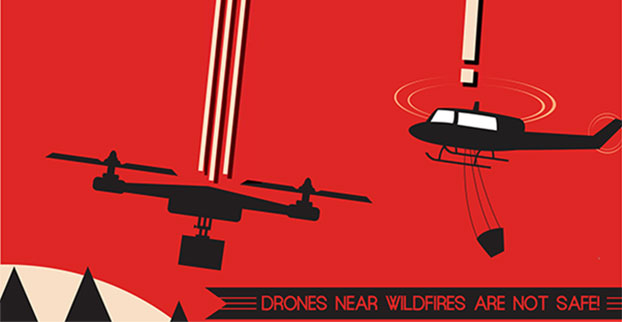
    Cover: National Interagency Fire CenterThe Federal Aviation Administration (FAA) wants to send out a clear message that operating drones around airplanes and helicopters is dangerous and illegal. Pilot reports of unmanned aircraft have increased dramatically over the past year, from a total of 238 sightings in all of 2014, to more than 650 by Aug. 9 of this year. Unauthorized operators may be subject to stiff fines and criminal charges, including possible jail time.

    Pilots of a variety of different types of aircraft — including many large, commercial air carriers — reported spotting 16 unmanned aircraft in June 2014, and 36 the following month. This year, 138 pilots reported seeing drones at altitudes of up to 10,000 feet during the month of June, and another 137 in July.

    Meanwhile, firefighters battling wildfire blazes in the western part of the country have been forced to ground their operations on several occasions for safety reasons when they spotted one or more unmanned aircraft in their immediate vicinity.

    The FAA says it will continue to work closely with industry partners through the “Know Before You Fly” campaign to educate unmanned aircraft users about where they can operate within the rules. The agency is also supporting the National Interagency Fire Center’s “If You Fly, We Can’t” efforts to help reduce interference with firefighting operations.

    However, the FAA also is working closely with the law enforcement community to identify and investigate unauthorized unmanned aircraft operations. The FAA has levied civil penalties for a number of unauthorized flights in various parts of the country, and has dozens of open enforcement cases.

    The FAA encourages the public to report unauthorized drone operations to local law enforcement and to help discourage this dangerous, illegal activity.

  • Troubleshoot Before Takeoff

    Modeling and simulation, two separate but related activities conducted prior to flight tests of high-performance military navigation systems, can reduce costs, shorten timelines, and remove some uncontrollable variables from the process, to deliver more accurate, verifiable results.

    Flight tests on an outdoor range provide engineers with an abundance of data to improve performance of weapon navigation systems. Whether the guidance package is hosted on a fighter jet, a cruise missile, an artillery shell, or a hypersonic kill vehicle, the navigation performance of a weapon during flight trials closely reflects its suitability for combat. The roar of jet engines, the percussion of a gun barrel, live video feeds, or a radio link to the cockpit can make live flight tests exciting — and sometimes unpredictable.

    While these activities are critical for weapon system qualification and validation, live tests nonetheless have significant limitations. Lengthy flight trials can be quite expensive. The rising price of aircraft fuel combined with test-range costs, travel expenses and data analysis can easily exceed millions of dollars for extended operational test and evaluation (OT&E). Also, test results can vary widely between trials due to a number of uncontrolled variables such as flight dynamics, RF interference, and atmospheric effects. Finally, the tests themselves often involve safety and technical risks and usually require careful planning and coordination, often months in advance.

    For these and other reasons, military navigation system flight tests are generally limited in number and are preceded by extensive modeling and simulation in the lab, where a methodical and disciplined test approach can produce substantial savings and more detailed insight. Successful completion of these activities provides system developers and integrators with the confidence required to proceed to the next stage of testing. This phased approach is useful for a broad range of weapon systems including GPS-guided ground-, sea- and air-launched munitions; high-performance aircraft; and long-range interceptors.

    Model, Then Simulate. Evaluating weapon navigation systems in the lab prior to outdoor testing usually consists of two sequential activities. First, performance of the GPS/inertial navigation system (INS) throughout the flight trajectory is modeled in software using representative data for the satellite constellation, RF signal environment, body masking, antenna pattern, receiver processing algorithms, and other parameters.

    Second, the GPS/INS flight hardware is exercised with controlled inputs to collect data relating to the operation of its code- and carrier-tracking loops, its susceptibility to interference, and the performance of the navigation filter under simulated highly dynamic conditions. Changes in vehicle velocity along its three axes are represented by inertial delta-V (ΔV) terms that are delivered to the INS navigation filter, while changes in attitude are delivered as delta-q (Δθ) terms. For normal flight operations, accelerometer and gyro sensors within the INS measure and report these forces, but in test mode the inertial simulator PC generates these terms based on translational and rotational motion described within the simulated trajectory. Computing these terms involves mathematical translation between the sensor frame and the vehicle body frame, and includes all errors due to sensor bias, drift, and misalignment. The inertial simulator PC delivers these terms to the INS via appropriate electrical interface.

    The fighter aircraft flight discussed here is based on a flight model overlaid on a map of the Fort Worth, Texas, area (FIGURE 1).

    Figure 1 Simulated tactical fighter aircraft flight trajectory over north Texas
    Figure 1 Simulated tactical fighter aircraft flight trajectory over north Texas

    Mod/Sim Process


    Before discussing the simulation results, it’s important to understand modeling and data analysis in its proper context. Disciplined performance analysis is like the scientific method — it begins before the test is initiated and concludes by validating preliminary assumptions using results of the experiment.

    Analysis of military navigation system performance begins with software modeling as shown in FIGURE 2, first panel. In this example, software tools predicted, among other things, SV carrier-to-noise values; azimuth and elevation angles; constellation dilution of precision (DOP) values; and GPS receiver acquisition/tracking performance. If required, software may also predict jammer-to-signal (J/S) ratios at the weapon GPS antenna.

    Figure 2 Navigation system performance analysis
    Figure 2 Navigation system performance analysis

    The next step (second panel in Figure 2) enhances software models with hardware-in-the-loop (HWIL) simulations, replacing predictions with actual performance data. Conclusions from RF and computer simulation stage will often aid significantly in field-test set-up. Benefits of simulation include isolating design flaws, validating algorithm performance, and exercising the GPS/INS system with realistic and stressful inputs. These activities may reduce the number of flight trials required, which in turn reduces the potential for program cost and schedule slips.

    Modeling Results


    FIGURES 3 AND 4 show predicted results from the commercially available Navigation Tool Kit (NavTK) regarding the navigation performance of the unaided GPS receiver within the fighter aircraft during its highly dynamic flight. STK generated the 6-degree-of-freedom (6-DOF) trajectory used in this test. This trajectory is based on the dynamic limits of the aircraft; representative roll/pitch/yaw rates; typical climbing; cruising and descent speeds; takeoff and landing distances, and so on. This data was subsequently passed to NavTK. Figure 3 shows number of satellites tracked throughout the flight while Figure 4 predicts East-North-Up errors given actual GPS performance (clock data, ephemeris data, and system performance) for July 1, 2005. This detail is possible because NavTK can accept archived GPS constellation data from the GPS Operations Center (GPSOC) to fully represent the effects of geometry, satellite health, ephemeris errors, and clock variations for individual SV signals.

    rder=”0″ align=”left” class=”content_image” src=”/files/gpsworld/nodes/2006/6535/i4_t.jpg” alt=”Figure 3 Number of signals tracked” />
    Figure 3 Number of signals tracked

    Figure 3 highlights flight portions when loss of lock is expected due to platform orientation and accelerations. When the aircraft initiates a steep turn, the accelerations cause cycle slips that result in loss of lock. These results are useful for isolating discrete periods of time during which performance of the INS-only solution can be scrutinized during hardware simulation. At these times the INS navigation filter relies exclusively on ΔV and Δθ terms from the inertial simulator to compute a fix.

    Figure 4 Predicted navigation errors
    Figure 4 Predicted navigation errors

    When PRN 25 disappears below the horizon approximately 25 minutes into the flight, we see a noticeable shift in predicted accuracy. This suggests that DOP values may worsen noticeably at this point, or that clock/ephemeris errors for this satellite had a noticeable effect on the GPS-only solution. These results depend on inputs provided for the receiver models, constellation behavior and tracking loop algorithms, and provide a start point for pre-HWIL evaluation. Again, results from this modeling exercise highlight a unique moment in time in which the performance of the GPS/INS navigation filter can be tested with a hardware simulator.

    Software modeling tools can also provide valuable inputs to the simulation process with trajectory modeling. STK can create flight simulations for military applications including missiles, rockets, spacecraft, and airborne platforms. In this example, software created a 6-DOF fighter trajectory which was stored as a file on a SimGEN PC.

    GPS/INS Simulation


    HWIL GPS/INS simulation of many military flight trajectories consists of generating a composite GPS RF signal synchronized with inertial ΔV and Δθ terms. Precise synchronization is achieved via a 1 PPS interface between the RF signal generator and the inertial simulator PC. Latency of the IMU motion data is also specified in microseconds. Together, these RF and inertial inputs are delivered to the navigation system under test.

    FIGURE 5 illustrates the GPS/INS test equipment in more detail. Platform dynamic motion (in this case from STK), GPS constellation data, signal parameters, and GPS/INS error sources are defined within the simulation application (SimGEN). Signal control commands are issued continually from the simulator PC to the RF signal generator via IEEE-488 (GPIB). The RF signal is typically connected to the GPS receiver antenna port via coaxial cable. INS ΔV and Δθ terms are calculated to the vehicle trajectory on a separate PC (SimINERTIAL) and are delivered to the GPS/INS device in test mode via the appropriate interface. The SimINERTIAL PC and signal generator are synchronized via a 1 PPS signal. Barometric altimeter aiding and instrumentation are achieved via MIL-STD-1553B.

    Figure 5 GPS/INS simulation block diagram
    Figure 5 GPS/INS simulation block diagram

    Realistic simulation requires many unique components of the navigation solution to be carefully specified in advance. These include but are not limited to:

    • 1. Trajectory
    • 2. Antenna pattern
    • 3. Constellation geometry
    • 4. Codes and frequencies
    • 5. G-sensitivity
    • 6. Gyro and accelerometer errors
    • 7. Atmospheric effects
    • 8. Multipath
    • 9. Interference


    Trajectory. As mentioned earlier, a flight trajectory is usually expressed as a series of time-stamped translational and rotational motion terms. Rotational motion is typically described by Euler angles or quaternions. The GPS/INS simulator uses this trajectory as the basis for calculating SV pseudoranges, Doppler values, and inertial delta-V and delta-q terms. This flight trajectory can be delivered to the simulator remotely via a high-bandwidth interface such as IEEE-488, SCRAMnet or TCP/IP, or, as in this example, may reside as a file on the simulator PC hard drive. Flight times may range from a few minutes to several hours or even days.

    For this simulation, the 45-minute flight over Fort Worth includes take-off, landing, and several steeply banked high-g turns. The airspeed for the majority of the flight is approximately 500 mph.

    Antenna Pattern. If the simulator’s RF signal is injected directly into the antenna port of the GPS/INS system under test, the gain and phase characteristics of the receive antenna must be modeled. For best results, the effects of the body on which the antenna is mounted must be included. Gain and phase pattern measurements are typically collected in an anechoic chamber or outdoor range and are generally available to test engineers evaluating GPS/INS system performance.

    Constellation Geometry. A simulated flight can occur at any time or location to test the effects of constellation geometry on the navigation solution. Historical GPS almanac information is available from the GPSOC and can be loaded into the simulation scenario. This example used historical almanac parameters from July 1, 2005.

    Codes and Frequencies. Most U.S. military GPS/INS systems operate at both L1 and L2 frequencies and track the encrypted P(Y) and unencrypted C/A codes. Future military receivers will also track the M-code on L1 and L2. To fully evaluate unique features of the weapon navigation system including direct-Y acquisition, SAASM functions, and resistance to interference, the simulator must support all modes of classified and unclassified operation.

    G-Sensitivity. Acceleration force can alter the performance of a crystal oscillator. Specifically, changes to the local acceleration vector stemming from high-g maneuvers will change the output frequency of the oscillator. Airframe vibrations may cause frequency modulations of the oscillator output that affect the performance of the tracking loops. To a certain extent, the effects of these forces on the code- and carrier-signal offsets can be modeled. For this scenario, the oscillator G-sensitivity is specified as 2 × 10-11 sec/sec/G per axis, typical for a military-grade oven-controlled crystal oscillator (OCXO).

    Gyro and Accelerometer Errors. Note that GPS/INS simulation does not test the performance of the sensor elements themselves; this exercise is generally conducted with mechanical spin tables or centrifuges. Rather, military INS manufacturers typically include a test interface that allows simulated motion terms to be directly injected into the navigation system. This allows test engineers to evaluate the performance of the Kalman filter during high-dynamic or stressed conditions. For one manufacturer’s system, this in
    terface is proprietary to the Inertial Sensor/Recorder Simulator (ISRS-2); another’s systems accept these test inputs via RS-422. A non-proprietary inertial interface known as NATO Standard Agreement (STANAG) 4572 also accepts simulated ΔV and Δθ terms via RS-422.

    Embedded gyro and accelerometer sensors are imperfect and are subject to a variety of errors. Stochastic errors may be modeled by random walk or by a Gauss-Markov noise estimator, while deterministic errors such as biasing, axis misalignment, and scale- factor errors should also be specified. For this simulation, a second-order Gauss-Markov model is used as described in STANAG 4572 for gyros and accelerometers with unique values for the natural frequency, damping factor, and power spectral density.

    Atmospheric Effects. After Selective Availability was set to zero in May 2000, the primary contributor to GPS ranging error remains ionospheric delay. Dual-frequency receivers can effectively eliminate this effect by processing both carriers, but range measurements at L1 and L2 are still subject to multipath errors. Furthermore, ionospheric scintillation is a complex phenomenon that can affect the tracking performance of dual-frequency receivers. This simulation specifies the historical broadcast Klobuchar coefficients for July 1, 2005, and modifies the SV code and carrier offsets to approximate the effects of the ionosphere for the time, date, and location of the scenario.

    Tropospheric delay varies by latitude and elevation angle and is a function of temperature, humidity, and atmospheric pressure. For more realistic results, the effects of this ranging error can also be simulated. For this simulated flight over Texas the surface refractivity index is set to 324.8.

    Multipath. While the aerial environment is generally free of the same satellite obscuration effects more common on the ground, signals may still be reflected off wings, stabilizers, and flight control surfaces. These path delays affect the performance of the GPS receiver correlators and may introduce position and velocity errors into the navigation solution. GPS simulation allows the tester to specify reflective effects including fixed-delay multipath, Doppler multipath, and vertical plane multipath on a per-satellite basis.

    Interference. Over the last 10 years a variety of techniques have been developed to mitigate the effects of intentional interference on military navigation systems. Adaptive antenna arrays may steer nulls in the direction of jammers or beams in the direction of satellites. Spectral filtering divides the L1 and L2 bandwidths into discrete bins in which interference can be excised using fast Fourier transform (FFT) techniques. Polarization filters attempt to reject interference from sources that are not right-hand circularly polarized (RCHP). Regardless of the mitigation technique, the performance of antijam GPS systems is generally evaluated in the lab prior to conducting flight tests.

    Simulation allows the tester to specify a variety of interference waveforms including broadband Gaussian noise, continuous wave (CW) and swept-CW, AM, FM, and coherent jammers. The relative signal strength of these sources will vary as a function of the distance between the navigation system under test and the jammer.

    HWIL Simulation Results


    Military navigation engineers are usually interested in the following performance characteristics:

    • 1. Accuracy
    • 2. Availability
    • 3. Resistance to interference


    FIGURE 6 shows example results that can be obtained using this equipment to test INS devices under these simulated highly dynamic test conditions. The results presented here are for illustrative purposes only and show the type of data obtainable to fully characterize the performance of a specific INS under all possible conditions. In this example, latitude (black), longitude (green), and height (blue) errors are plotted separately. Discontinuities in the calculation of latitude and longitude may be observed when high-g turns are initiated. Errors in the height component may correspond to rapid climbs and descents. RMS error for this entire illustrative mission was slightly higher than 16 meters. Again, these results are based on the specific inputs for this simulation. Navigation engineers would need to determine whether similar inputs represent their own flight environment and whether these results will satisfy their operational objectives. In practice, results will vary as a function of simulated gyro/accelerometer errors, oscillator g-sensitivity, pre-flight calibration time, flight dynamics, barometric aiding, and SV visibility.

    Figure 6a INS simulation results: latitude upper left, longitude upper right, height lower left
    Figure 6a INS simulation results: latitude upper left, longitude upper right, height lower left

    As expected, availability of the navigation solution was 100 percent. In contrast to the GPS-only performance modeled in Figure 3, the INS solution used ΔV and Δθ inertial inputs to compute a solution whenever a GPS fix was temporarily unavailable.

    Figure 6B Close-up look at latitude (black), longitude (green) and height errors (blue) from lower right panel
    Figure 6B Close-up look at latitude (black), longitude (green) and height errors (blue) from lower right panel

    Intentional RF interference was not created for this HWIL simulation. However, adding this component to the RF signal is possible with additional equipment, and a similar chart could be created to illustrate the effects of jamming on the INS solution.

    In addition to this simple error plot, truth data from the GPS/INS SimINERTIAL simulator were also delivered in WGS-84 ECEF coordinates to STK for graphical performance analysis. Time-stamped latitude, longitude, and height data extracted from the military GPS/INS MIL-STD-1553B interface were also provided to STK. Several key performance parameters were then analyzed including carrier-to-noise levels (C/N0), tracking states, pseudorange error per channel, and instantaneous position/velocity errors. FIGURE 7 and the opening graphic compare truth location at a single moment in time as prescribed by the simulator (gray aircraft) versus the actual GPS/INS computed location (color-coded per figure of merit, or FOM). STK can be used to visualize these outputs in real time. Instantaneous position error is projected on the red vector between the aircraft centers of gravity. Vectors pointing toward each SV tracked may be color-coded to J/S, while line type may be selected based on tracking state. Instantaneous pseudorange error for each channel is also provided. Many other data items can also be displayed graphically or in text.
    =”articlecaption”>
    Figure 7 INS simulation results
    Figure 7 INS simulation results


    Conclusion


    Field tests generally provide the most indisputable evidence of military navigation system performance. When a GPS/INS-guided gravity weapon is released above a test range and impacts the ground near its target, we may physically measure the miss distance. We may also assume a similar weapon released at a future time under similar conditions will achieve approximately the same results. But how can we be sure? One approach would be to perform hundreds of trials, if costs and schedules were of no concern.

    However, this is rarely the case. GPS receiver performance models used with the HWIL SimINERTIAL simulator allow the test engineer to minimize flight tests while achieving the same level of confidence. As we have shown, modeling and simulation activities may be tailored for a specific objective — for example, highly dynamic aircraft motion with a fixed satellite constellation geometry while using inertial sensors with known bias and drift characteristics. This simulation may be valuable in conducting analysis of alternatives for different user equipment mixes (receivers, antennas, inertial sensors, platforms, and so on) or to ensure the system meets requirements for all missions.

    Other modeling and simulation objectives may differ from those described in this article. FIGURE 8 enhances our aircraft flight test model to include intentional jamming, an advanced digital antenna, and future modernized GPS space capabilities. Similar enhancements can be added to the RF simulation.

    Figure 8 Real-time 4D data display
    Figure 8 Real-time 4D data display

    Whatever the application, a variety of commercial products allow navigation engineers to prepare for live flight trials on the test range. GPS receiver performance analysis models can be used to create specific GPS/INS simulations that focus on key performance characteristics and environmental challenges. Graphical analysis software can simplify the task of combing through thousands of data records to isolate specific periods during which performance is most important. With careful planning and a disciplined test approach, military and defense industry engineers can use these tools to ensure their weapon systems will deliver at the most critical times on the battlefield.

    Manufacturers


    Analytical Graphics, Inc. developed the Navigation Tool Kit and STK commercial software products used for this simulation. GPS/INS test results were collected using the Spirent GSS7700 simulator with SimINERTIAL.

    CURTIS HAY is director of GPS business development for Spirent Federal Systems. He has master’s degrees in electrical engineering and business administration and served eight years as an officer in the United States Air Force in a variety of GPS-related assignments.

    COLIN FORD is a senior software engineer at Spirent Communications and is the lead architect for the SimINERTIAL navigation test suite.

    GREG GERTEN supports satellite navigation and electronic warfare programs for Analytical Graphics, Inc. He received a master’s degree in electrical engineering from the University of Dayton and has completed graduate courses in GPS at the Air Force Institute of Technology.