Tag: Amazon

  • Launchpad: Timing antennas, UAV camera and smartwatch

    OEM

    The UB380 GPS/GLN/BDS tri-constellation octa-frequency high-precision board. Photo: Unicore
    The UB380 GPS/GLN/BDS
    tri-constellation octa-frequency high-precision board.

    High-end GNSS board

    For high-precision positioning, navigation and GBAS applications

    The UB380 multi-GNSS receiver has 384 channels, based on Unicore’s multi-GNSS system on a chip. It features Unicore’s latest real-time kinematic (RTK) engine, which can process triple-frequency BDS and GPS and dual-frequency GLONASS observation data. This can significantly reduce initialization time, improve position accuracy and enhance reliability in difficult environments such as city canyon and canopy, as well as make the long baseline RTK possible. The receiver board can support GPS L1, L2 and L5; GLONASS L1, L2; and BDS B1, B2 and B3. The support of GPS L2P and L2C can satisfy the high-precision requirements of GBAS reference station equipment. The UB380 is compatible with industry-standard GNSS boards in size, interfaces and electrical standards.

    Unicore, www.unicorecomm.com



    M12M Replacement Receiver GNSS module. Source: Jackson Labs Technologies
    M12M Replacement Receiver GNSS module. Photo: Jackson Labs Technologies

    Legacy receiver module

    Plug-and-play upgrade for xli server, fury GPSDO

    The M12M Replacement Receiver released is form, fit and function compatible to the legacy Motorola M12M and M12+ timing and navigation receivers. It uses an eighth-generation GNSS timing-enabled receiver, allowing 72 GNSS-channel reception with any two GNSS systems being received simultaneously. It adds configurability via USB ports and dual in-line package (DIP) switches and various status displays. GPS, GLONASS, BeiDou, QZSS and SBAS signals can be received. The module supports NMEA, Motorola binary and u-blox binary as well as SCPI (GPIB) communication protocols; is designed to allow plug-and-play retrofit of equipment designed for legacy Motorola receivers; and is certified as a plug-and-play upgrade to the Symmetricom/Microsemi XLI server and the Jackson Labs Technologies Fury GPSDO. It can be used to retrofit products for GLONASS/BeiDou compatibility. The module enhances performance parameters such as time to first fix; position, velocity and timing accuracy; tracking sensitivity; the addition of SBAS (differential compensation) capability; and the addition of external interfaces such as USB and a synthesized frequency output.

    Jackson Labs Technologies, jackson-labs.com


    Tallysman_timing_antenna Photo: Tallysman
    Photo: Tallysman

    Timing antennas

    High-gain, high-rejection family designed for cell and telecom

    The TW3150/52 antennas feature a 50-dB low-noise amplifier (LNA) gain to handle long cable runs often associated with installation on telecommunications towers. They cover the GPS L1 and SBAS (WAAS, EGNOS and MSAS) frequency bands and provide excellent cross-polarization rejection and enhanced multipath rejection.The TW3150 antenna features a four-stage dual-filtered LNA, while the TW3152 antenna includes an additional SAW pre-filter. This provides better than 80-dB of signal rejection above 1610 MHz and below 1545 MHz. The antennas are IP67 and MIL-STD-801F Section 509.4 compliant to withstand challenging environmental conditions.

    Tallysman, www.tallysman.com


    OriginGPS-Hornet-W

    10 x 10 mm module

    Provides support for GPS, GLONASS and BeiDou with MediaTek

    The ORG1510-MK Multi Micro Hornet is a fully integrated multi-GNSS (GPS, GLONASS and BeiDou) module. The miniature low-power architecture is designed to provide a GNSS component to devices that require fully featured components with small footprints, such as UAVs designed to follow action sports and other fast-moving activities or wearables. The ORG1510-MK contains the MediaTek MT3333 chip, which supports a fast update position calculation rate, and contains an onboard flash memory that does not erase when power is off. It consumes little power with the use of both standby mode and backup mode, and, in advanced applications, a periodic mode that can turn the device on and off when in backup or standby.

    OriginGPS, www.origingps.com


    UAV
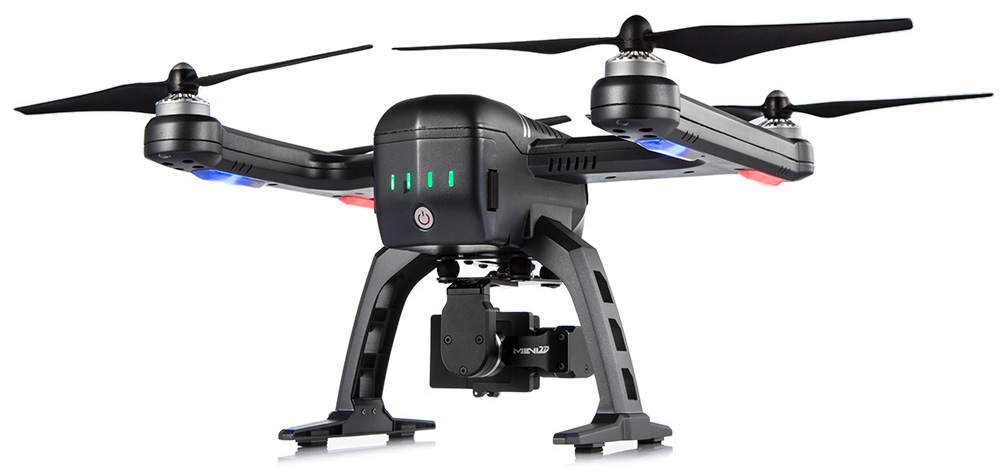
    FLYPRO-xeagle Source: Shenzhen FLYPRO Aerospace Tech
    Source: Shenzhen FLYPRO Aerospace Tech

    Smartwatch control

    Wrist and voice control enable UAVs

    Designed for recording sports activities, the FLYPRO XEagle UAV has replaced traditional UAV remote controllers with the XWatch, a smartwatch designed to control the XEagle. Users can control the devices to take off, land and follow, as well as adjust flight height with one click on the wrist within 300 meters. The smartwatch design enables users to fly the aerial vehicles to take high-definition pictures and videos while engaging in intense sports. A voice-control feature allows users to fly the XEagle without moving their hands using commands such as “FLYPRO, take off” and “FLYPRO, follow me”.

    Shenzhen FLYPRO Aerospace Tech, www.flyprouav.com


    Tau2-thermal-core-FLIR-W Photo:FLIR
    Photo: FLIR

    Infrared camera

    Thermal imaging camera core designed for integration

    FLIR Tau 2 thermal imaging cameras are suited for demanding applications like UAVs, thermal weapon sights and handheld imagers. Improved electronics now give Tau 2 even more capabilities, including radiometry, increased sensitivity (<30 mK), 640/60 Hz frame rates, and powerful image processing modes that dramatically improve detail and contrast. Since the electrical functions are common between the Tau 2 640, 336 and 324, integrators have direct compatibility between the different camera formats, and Tau camera versions share many of the same lens options.

    C, www.flir.com


    Delivery drone

    Amazon’s latest version is designed to deliver packages in 30 minutes

    amazon-prime-drone-4 Source: Amazon
    Source: Amazon

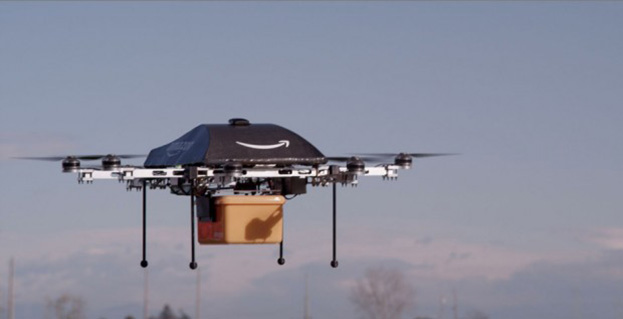
    A new drone design introduced by Amazon for its planned Prime Air Delivery service is larger than the previous quadcopter and has a more advanced design, including the ability to operate with an auto-loading system that sets the payload inside an internal carrier bay. The hybrid design combines vertical lift and horizontal flight capabilities using lift fans and a pusher prop. The drone is capable of flying at an altitude of about 400 feet (122 meters) at about 55 mph (88 km/h) for a range of 15 miles (24 kilometers). It has sense-and-avoid situational awareness technology and is designed to deliver small packages in under 30 minutes.

    Amazon, www.amazon.com


    Survey

    M300Pro Source: ComNav
    Source: ComNav

    Reference station receiver

    Surveying and geodetic network positioning

    The M300 Pro is a multi-purpose CORS GNSS receiver designed for applications such as positioning infrastructure, active geodetic network, deformation monitoring, machine guidance, harbor construction, land surveying and marine surveying. Designed for reference stations, the M300 Pro tracks GPS, GLONASS and BeiDou (B1, B2, B3), and will track Galileo, QZSS and other coming constellations. Its web server function enables remote control for access, configuration, programming, data download, reboot/restart, firmware update and code registration. It is compatible with many kinds of CORS software, using the standard data format RTCM and the various data transfer protocols such as UDP, TCP and NTRIP. Raw GNSS observation data can be saved in RINEX format and remotely downloaded. Multiple ports can be configured and connected with external sensors such as meteorological sensors, barographs and inclinometers. The PPS output function provides a guarantee for precision timing. It also has the functionality of event mark and external memory.

    ComNav, www.comnavtech.com


    Leica_VADASE.jpg
    Source: Leica Geosystems

    GNSS monitoring

    Autonomously detects fast movements in real time

    The Leica Velocity and Displacement Autonomous Solution Engine (VADASE) detects fast movements of man-made and natural structures in real time, running on board Leica reference stations and monitoring receivers. VADASE provides an in-depth look at accurate, high-rate velocity and displacement information of various activities and structures. It gives engineers and researchers complete, precise and reliable monitoring information. VADASE delivers actionable information independent of any GNSS real-time kinematic (RTK) correction service.

    Leica Geosystems, leica-geosystems.com
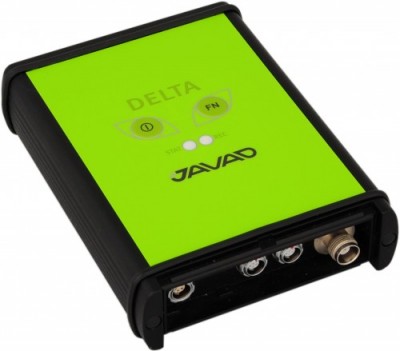

    Delta
    Source: JAVAD GNSS

    High-precision receiver

    GNSS receiver with onboard memory for data storage

    The DELTA-3 receiver has 864 GNSS channels, along with three powerful processors and program memory in a single chip, which uses less power and makes the total system less expensive. The 864 channels allow tracking of all current and future satellite signals. Delta-3 can track and decode the QZSS LEX signal messages. It is a powerful and reliable receiver for high-precision navigation systems, including high-dynamic systems, for machine and traffic control, high-precision surveying, and geodynamics and aerogeophysics applications. Delta-3 can operate as a receiver for post-processing, as a Continuously Operating Reference Station (CORS), or as a portable base station for real-time kinematic (RTK) applications, and as a scientific station collecting information for special studies such as ionosphere monitoring.

    JAVAD GNSS, www.javad.com


    Mapping

    esri-photo-survey-speeds-property-surveys-W
    Photo: Esri

    Property surveys

    A configuration of ArcGIS and a JavaScript application

    Photo Survey is designed for local governments to publish street-level photo collections and conduct focused property surveys that can identify blight, damaged structures or construction activity. It leverages location-enabled photos produced by many commercially available cameras and simplifies data processing so street-level photo collections can be gathered on a regular basis. Photo collections can then be combined with relevant survey questions in an ArcGIS Online map, and shared with the Photo Survey application. Once complete, the Photo Survey application can be used by the general public or local government staff to review street-level photos and complete property surveys.

    Esri, www.esri.com
  • Amazon Delivery Drone Plans Include Tiered Flight Zones

    Amazon has announced a plan for its package-delivery drones, according to NBC News.

    The proposal includes tiered flight zones that would limit small unmanned aircraft systems (sUAS) to slow speeds in airspace below 200 feet and allow them to fly faster for long-distance travel between 200 and 400 feet.


    Commercial aircraft are governed by the Federal Aviation Administration’s (FAA’s) Air Traffic Control, and in Amazon’s vision, there would be a similar central command and control network that takes in data about the position of each drone and shares it with every other vehicle connected to the network. The command and control network would also have vehicle-to-vehicle communication, similar to networks proposed for autonomous automobiles.

    Amazon’s plan would be to use the space below 500 feet — minus a 100-foot buffer — for small drones such as its Prime Air vehicles.

    Access to the various layers of the airspace would be governed by how well a drone can communicate with its pilot, the command and control network and other drone, according to The Verge website. “Everyone can have access to the airspace,” said Gur Kimchi, who heads up Amazon’s Prime Air program. “It doesn’t matter if you’re a hobbyist or a corporation. If you’ve got the right equipment, you can fly.”

    Someone operating a radio-controlled quadcopter with no Internet connection would be relegated to the area below 200 feet.

  • Encouraging Signs for Commercial UAVs

    Encouraging Signs for Commercial UAVs

    AUVSI-2015
    The Robotics in Action drone flying area at the AUVSI show.

    The AUVSI show in Atlanta, held May 4-7, drew significantly more attention from TV media this year, as several of the major networks provided live coverage from the show floor. NBC’s Today morning show opened with a live shot of a drone hovering in front of an opening house door, as if patiently waiting to deliver a package from Google or Amazon — the potential good side of drones for consumers.

    Then their coverage recalled the DJI drone crashing onto the White House front lawn in the early morning hours (perhaps an unfortunate loss of user control, but an odd time and place to be out flying a drone), and airline pilot reports of lighted drones appearing above nighttime final approach paths — the bad side of drones in common usage.

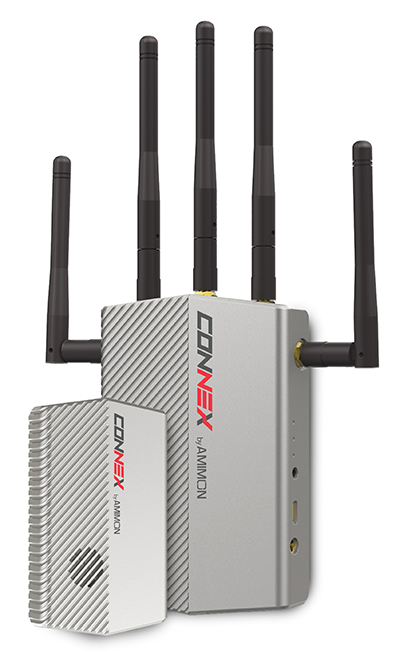
    Connex
    The Connex wireless system.

    Then Brian Wynne, president and CEO of AUVSI, provided a positive insight on the latest forecasts of UAV’s contributing $82 billion to the U.S. economy. Wynne’s estimates included the generation of more than 100,000 new high-paying technical jobs within 10 years’ time. But in an effort to urge faster progress towards regulations, Wynne also suggested that for every day of delay in Federal Aviation Administration (FAA) rulemaking to allow open use of drones, the U.S. loses $27 million daily in economic impact.

    There was similar encouraging coverage by Fox News from the Atlanta Convention Center show floor, followed by Brian Wynne again pitching for rapid introduction of commercial drone use in the U.S. Fox chose to broadcast from the Robotics in Action drone flying area, and to feature real-time, zero latency HD video transmitted via Amimon’s Connex wireless system. A good demo over live TV, and Amimon’s chance to tell the world about its wireless transmission system that can transmit HD video over up to half-a-mile away with zero latency — good news, incidentally, for Fox, NBC, CNN and other news gatherers.

    This year, it also seems that the terminology battle with the U.S. media over the common usage of the term drone or drones, rather than the more accurate UAV or UAV, has been conceded. So now we can talk about drones no matter how much it pains us to do so.

    But the FAA is not standing still. Well over 200 Section 333 exemptions have now been granted to allow commercial UAS applications to undertake or investigate revenue-generating business. FAA representatives came to the show to let people know they are working hard to progress towards the safe use of drones in U.S. airspace. Through a media-only press-conference, the FAA announced the B4UFly smartphone app to inform recreational drone operators if it’s safe to fly. Features include:

    • A clear “status” indicator that immediately informs operators about their current or planned location.
      Information on the parameters that drive the status indicator.
    • A “Planner Mode” for future flights in different locations.
    • Informative, interactive maps with filtering options.
    • Contact information for nearby airports.
    • Links to other FAA UAS resources and regulatory information.

    The app will access the user’s location to automatically generate this information. There is also a planning mode for what data could be available for a potential future location to which you may be preparing to go.

    But the main news from FAA Administrator Michael Huerta at the press conference was about the Pathfinder program, which involves three U.S. companies undertaking research with the FAA to expand unmanned aircraft operations in the United States. Each project has a key element where boundaries are being stretched to gain experience and to develop new capabilities to overcome restrictions for UAVs.

    CNN (Cable News Network) will use visual line-of-sight (LOS) drone newsgathering in urban areas. There have previously been heavy restrictions in most of the Section 333 exemptions on operating in populated areas. So, it would seem that care will be taken in how news coverage will be generated around and over people, but the news will still be working to get the live overhead video we are now seeing more often on TV.

    PrecisionHawk and BNSF Railway will investigate operations in rural areas, flying outside LOS. This is big news, as most UAV operators want to extend their areas of operation much further than visual LOS. In particular, Amazon has been most critical about LOS restrictions — the retailer wants package delivery to be virtually automated. But more on that later.

    Beyond visual LOS, investigations in largely unpopulated areas by PrecisionHawk and BNSF could result in safe technology and procedures that could be commonly used in populated area for other operators. This is clearly the FAA’s desire, and of course, its intent is also to deflect earlier criticism of lack of progress in this area.

    Onto Amazon. The company filed a UAV delivery patent with the U.S. Patent Office, where drone deliveries would be navigated by pulling location data from a customer’s smartphone — and real-time routes and directions would be constantly updated to guide the delivery process.

    Amazon’s Prime Air "Delivery Drone.”
    Amazon’s Prime Air “Delivery Drone.”

    Amazon smart aircraft could interact between each other, passing on traffic and weather conditions. Delivery options for the consumer include a tool to deliver packages to your home, workplace or even to vacation locations.

    Various safety precautions and caveats appear to have been appropriately addressed in the patent. Use of a number of sensors, including, radars, acoustic sensors and an infrared camera, are outlined in the patent to ensure safe navigation and landing. The patent also proposes a number of different types of unmanned aircraft with different shapes and weight for its delivery system.

    And then on Tuesday, May 12, just after the AUVSI convention had wound down and left Atlanta, two U.S. senators jointly proposed a new bill that could expedite the commercial introduction of drones.

    The senators believe the U.S. is falling behind other countries when it comes to creating rules for commercial drones. Sen. Cory Booker (D-N.J.) and Sen. John Hoeven (R-N.D.) introduced the Commercial UAS Modernization Act, which would set temporary rules for those who want to fly commercial unmanned aircraft systems before the FAA establishes permanent laws regarding drone use.

    Sen. Corey Booker
    Sen. Corey Booker

    The Commercial UAS Modernization Act outlines basic rules for commercial use around registration, certification, insurance, tests and safety. Operators would be required to keep the drones under 500 feet, fly only in daylight, and operate within visual line of sight (LOS). However, the proposal also creates a deputy administrator position that would be able to make an exemption for a commercial drone operator for beyond visual LOS and for “heavier unmanned vehicles.”

    Not later than 90 days after the date of the enactment of this Act, the Deputy Associate Administrator, in consultation with the Administrator, shall expedite and expand exemptions from the interim operating restrictions otherwise applicable to unmanned aircraft under section 337,” the act reads. 

    Sen. John Hoeven
    Sen. John Hoeven

    When I talked with Sen. Hoeven this week, he emphasized that this bill seeks to accelerate the commercial use of drones in the U.S. and to make more use of the UAV test centers that the FAA has set up. These centers are capable of doing more, and can be the points that prospective drone operators visit to register their craft and take knowledge and proficiency qualification tests.

    The bill gives tight timescales to the FAA to set up accessible locations to achieve registration and set up these operator qualification programs. In addition, the bill establishes a new deputy administrator position responsible for the safe integration of UAS in U.S. airspace, while also streamlining regulations that currently slow the industry’s ability to innovate new aircraft technologies.

    In essence, the bill takes the core elements of the FAA’s past Section 333 approvals — less the requirement for a private pilot’s license — and makes them law. Operators would no longer need to ask the FAA for an exemption.

    I asked Sen. Hoeven if the FAA has responded to the proposed bill, and he said he would be meeting with FAA Administrator Michael Huerta on May 14. “This follows their rules,” the senator said, so his message is let’s move forward together.

    So, it would seem that momentum is at last gathering to overcome what would seem to be a lengthy period of FAA intransigence, including new innovative efforts by the agency itself to find ways to move forward more rapidly. Innovation in UAV technology, products and applications has been going on at a rapid pace, and the pent-up demand seems to be spilling over.

    With more than 4,000 comments in hand for the FAA to deal with on its proposed rulemaking for small UAVs, it’s doubtful we’ll have any FAA regulations any time soon. So the Section 333 exemptions will probably continue, unless they are not totally overwhelmed by the new rules proposed by Senators Hoeven and Booker, who hope to see their bill approved sometime this year.

    Tony Murfin
    GNSS Aerospace

  • FAA Gives Amazon Go-Ahead for Delivery Drone Tests

    Amazon-drone-O

    The Federal Aviation Administration has issued an experimental airworthiness certificate to an Amazon Logistics, Inc. unmanned aircraft (UAS) design that Amazon will use for research and development and crew training. Amazon has said it wants to use drones for delivering packages to customers.

    The FAA typically issues experimental certificates to manufacturers and technology developers to operate a UAS that does not have a type certificate.

    Under the provisions of the certificate, all flight operations must be conducted at 400 feet or below during daylight hours in visual meteorological conditions. The UAS must always remain within visual line-of-sight of the pilot and observer. The pilot actually flying the aircraft must have at least a private pilot’s certificate and current medical certification.

    The certificate also requires Amazon to provide monthly data to the FAA. The company must report the number of flights conducted, pilot duty time per flight, unusual hardware or software malfunctions, any deviations from air traffic controllers’ instructions, and any unintended loss of communication links. The FAA includes these reporting requirements in all UAS experimental airworthiness certificates.


  • Google Maps Takes Street View Camera through Amazon Canopy

    Google Maps Takes Street View Camera through Amazon Canopy

    The Street View Trekker on a zipline in the Amazon Rainforest.
    The Street View Trekker on a zipline in the Amazon Rainforest. (Photo credit: Google Maps)

    New imagery of the highest canopy in the Amazon rainforest is now available on Google Maps. The Amazon rainforest is one of the most diverse ecosystems in the world, with many species high in the canopies of the forest still undiscovered.

    “Starting today, with the help of our partners at the Amazonas Sustainable Foundation (FAS), you can begin to unlock some of the wonders of the forest, by traveling from the upper canopy to the forest floor with Google Maps’ first zipline Street View collection,” wrote Karin Tuxen-Bettman, program manager, Google Earth Outreach on a March 1 blog.

    The project is part of Google’s partnership with FAS, who three years ago invited Google Maps to the Rio Negro Sustainable Development Reserve. “Their hope is that sharing the imagery of their local communities, rain forests and rivers with the world will raise awareness and support for their efforts to conserve these areas,” Tuxen-Bettman writes.

    The imagery was collected through Google Map’s Trekker Loan Program, which loans out the Street View camera and technology to tourism boards, non-profits, universities, and research organizations to help collect imagery of remote places.

    The Amazon map imagery was gathered through boat travels on 500 kilometers of rivers, hiking on 20 kilometers of forest trails and ziplining through forest canopies.

    “We hope it inspires you to embark on your own virtual expedition of the Amazon (you can leave the bug repellent at home!),” Tuxen-Bettman writes.

    The map on this page  shows where Google Maps has yet to collect Street View imagery.

    Rio Mariepauá, Brazil. (Photo credit: Google Maps)
    Rio Mariepauá, Brazil. (Photo credit: Google Maps)
  • Amazon to FAA: Loosen Laws or Moving Research Abroad

    Amazon.com is warning the Federal Aviation Administration (FAA) that it will move its drone research abroad if it doesn’t get permission soon to test-fly in the United States, reports The Wall Street Journal. Amazon has already begun researching drone flights in the United Kingdom.

    “Without the ability to test outdoors in the United States soon, we will have no choice but to divert even more of our [drone] research and development resources abroad,” wrote Amazon’s vice president of global public policy Paul Misener in a letter to the FAA, according to The Wall Street Journal. “I fear the FAA may be questioning the fundamental benefits of keeping [drone] technology innovation in the United States,” Misener wrote.

    Current laws restrict the commercial use of unmanned aircraft in the United States. Amazon announced its intention to develop a drone delivery service in 2013.

    The FAA is required by U.S. Congress to frame a “safe integration” plan for the commercial use of UAS by Sept. 30, 2015. Changes in the law could restrict users of commercial UAVs by requiring licenses, with licenses issued to users only after many hours in the cockpit of a manned aircraft, comparable to traditional pilot licenses. The new rules would also limit flights to under 400 feet and within sight of the person at the controls, which is the current rule for hobbyists.

    One of the FAA’s concerns is conflicts with manned aircraft. FAA data shows dozens of dangerous encounters around the country over the past six months, according to the Washington Post. Since June 1, commercial airlines, private pilots and air-traffic controllers have alerted the FAA to 25 episodes in which small drones came within a few seconds or a few feet of crashing into much larger aircraft. Many of the close calls occurred during takeoffs and landings at the nation’s busiest airports, presenting a new threat to aviation safety after decades of steady improvement in air travel.

    Read one blogger’s account of a close call using a drone, partly caused by loss of the GPS signal.


  • GPS Tracking, Robots Key in Heavy Retail Shopping Season

    GPS Tracking, Robots Key in Heavy Retail Shopping Season

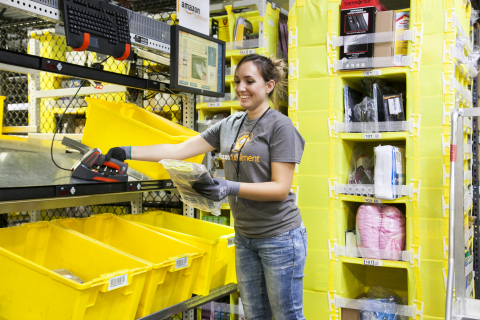
    An Amazon employee picks items in the company's newest generation fulfillment center. (Photo: Business Wire)
    An Amazon employee picks items in the company’s newest generation fulfillment center. (Photo: Business Wire)

    It used to be when you expected a home delivery, you could specify morning or afternoon, and hope you were there when the truck showed up. In today’s high-tech retail experience, van deliveries can be slotted specifically in two hour, or even one hour, windows. This is just one development in the battle for speed, as major retailers turn to technology to help Santa get presents under the tree on time.

    According to a feature at BBC News, automated route planning and GPS tracking of vans has greatly improved deliveries, along with better warehouse scanning technology, such as the intricate robotic system employed by Amazon in its warehouses.

    Last December, Amazon demonstrated its idea of a drone delivery service, but that technology has yet to launch. For now, the increase in speed it taking place on the warehouse floor, which has turned to robots guided by an intricate barcode system. In 10 of Amazon’s U.S. warehouses, an army of 15,000 robots are helping human employees pick, pack, and ship items.

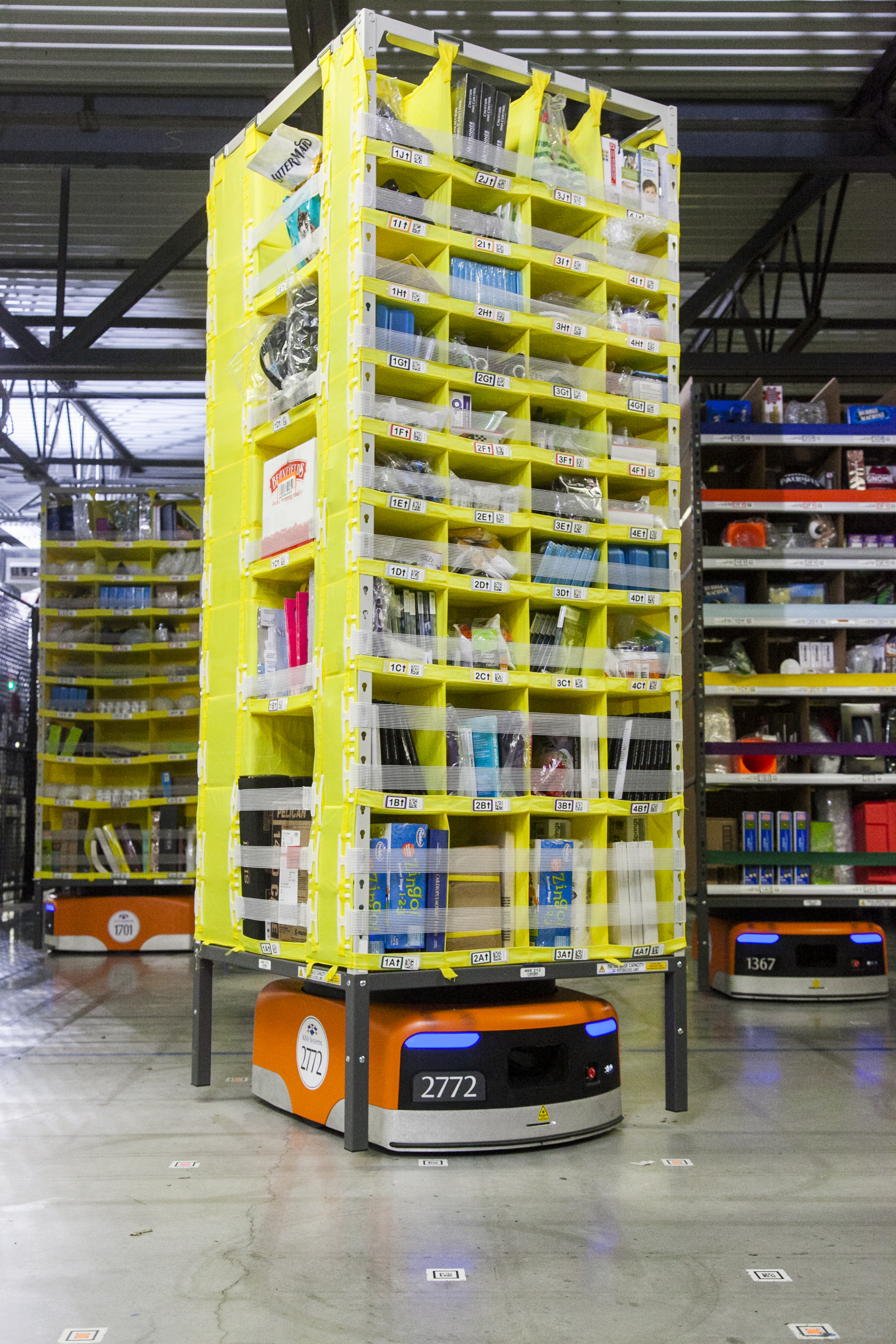
    A Kiva robot moves product in Amazon's eighth generation fulfillment center. (Photo: Business Wire)
    A Kiva robot moves product in Amazon’s eighth generation fulfillment center. (Photo: Business Wire)

    The system uses robotics, Kiva technology, vision systems and almost 20 years’ worth of software and mechanical innovations to fulfill holiday orders. Amazon purchased the system in 2012 and tested it in 2013, but this is its first year for full deployment. Instead of having employees go to the shelves to find the items for an order, robots automatically deliver the items to them, hauling seven-foot-tall shelving units on their backs.

    The robotic system has made picking products go two to three times faster, employees said.

    The need for speed presents is a huge challenge for retailers trying to offer their customers a seamless shopping experience in-store, online and via mobile, the BBC reports. “Speed is the new battleground,” said Craig Sears-Black, UK managing director of Manhattan Associates, a software company specializing in warehouse management systems. “These days orders have to be processed in two hours, not two days. The physical side of selling needs to be optimized.”

    In the UK, MetaPack handles the delivery of online transactions for 80 of the UK’s top 100 retailers, integrating about 240 delivery companies worldwide into its system. “These days competition amongst carriers is giving consumers a lot more choice over when and where their parcels are delivered,” said Patrick Wall, MetaPack founder and chief executive.

    When a customer selects delivery options, MetaPack works out which are available in which location for which goods. MetaPack then decides which carrier represents best value for the retailer and handles all the tracking data so everyone can know exactly where the parcel is on its journey at any time.

    In the U.S., FedEx is using enhanced visibility technology to help customers plan for package deliveries and pickups. At many FedEx ground facilities, high-speed six-sided camera tunnels with real-time package tracking updates scan every side of a package, enhancing the readability of a shipping label and providing visibility to a package’s location at all times.

    That tracking technology, coupled with network-wide improvements, will offer customers increased visibility this season, including clarification as to exactly when a package is available for pickup at FedEx locations, FedEx said. It also will offer increased visibility into a package’s journey, from the time FedEx takes possession of the package to its estimated delivery date.


  • Indoor Location Has Major Growing Pains, but Big Upside

    A number of factors are holding the proximity marketing/indoor positioning markets back: standardization issues, consumer acceptance/privacy, retailer awareness and the technology itself. However, as one location executive put it, it may be the one way that retailers with brick and mortar stores can compete with Amazon and other online giants. 

    Indoor location and proximity marketing may be the way large and small brick and mortar stores can compete with online retailers in the future, said panelists at the New York Place conference, held July 22. But all of this indoor location market talk doesn’t mean much if consumers don’t find a need for it.

    “I am in an aisle at a grocery store and you sent me a coupon for cat food, and I don’t have a cat, I am not going to be interested. The retailer gets to own the data by providing a great experience to the consumer, not the spontaneous ‘you are in a store — here’s some information,’” said John Dempsey, Datalogix head of mobile and video.

    While having a broad picture of a consumer’s “mobile moment” is important, there is something to be said about bombarding a consumer with too many location-based applications, said Doug Kilponen, Wanderful Media chief operating officer. “There are a limited number of apps consumers are willing to have, but not 200 different ones. It’s one thing to have an app for say, Target, but trying to find out what is broadly available during shopping makes shopping too much work,” he said. “Trying to find out what’s available becomes too much work as there are too many options [for the consumer].”

    From a retailer’s perspective, they want consumer’s data, and will share it with partners, but they also want control, said Catherine Lindner, Shelfbucks chief marketing and merchant officer, who was an executive at Walgreens.  “If you think about your own shopping behavior, there is only a few places you actually go to and spend money — a grocer, drug store.  That retailer wants your data, and it makes sense,” she said.  “How do we spend the money to grow the business?  The idea that there is one bucket of money to transfer is not going to happen.”

    One company says that consumers don’t want to be “advertazed” by retailers. “Their job is to show you Calvin Klein, but sometimes there is not enough information or context.  They hijack moments, rather than create them,” said Scott Townsend, Urban Airstrip director of agency programs.

    Still, retailers are increasingly using indoor location as part of their mobile strategies. Jewelry chain Alex and Ani has three beacons in their Boston and New York stores, said Ryan Bonifacino, Alex and Ani vice president, digital strategy. “We really want to prove that this [indoor location] can really work.  We really want to get in front of people who wouldn’t have discovered us,” he said.

    Indoor Location Standardization? What Standardization?

    Like any new technology and market, industry standardization will have growing pains, and a lot of the problem may be with the retailers, said panel members. “There are issues with standardization. If Walmart puts a [indoor positioning] in to its store — they don’t care if it works anywhere else,” said Don Dodge, Google developer advocate.

    Indoor location is the classic chicken-before-the-egg situation, said Chris Goodall, Trusted Positioning founder and CEO. “There currently are no standards for indoor [positioning], maybe we need it.  Databases are not standardized,” he said.

    A lot of the reason that standardization has not be resolved is that no big application, the old killer app, has appeared. “Indoor is something that has not emerged yet, it’s a long tail story,” said Dan Ryan, ByteLight co-founder and CEO.  “Every location company is trying to build a network — and naturally attract developers.”

    Making Proximity and Indoor Location Relevant to Retailers 

    Some retail chains like Walgreens have used indoor positioning technology for years and are considered some of the major early adopters. However, making consumer-purchasing behavior data relevant to retailers is the only way for indoor marketing to take off.

    The concept of geofencing each store has been tested in several locations. One company envisions an image of a celebrity greeting consumers in a store with an offer. “Walgreens focused on not invading people’s privacy. But they basically asked users, what’s important to them when they walk into a store,” said aisle411 founder and CEO Nathan Pettyjohn. “[Bluetooth Low Energy] beacons can do this very elegantly.  When a consumer walks through a store, perhaps they see a celebrity popping out to greet them.”

    In many successful mobile marketing campaigns, all have a common theme — proximity components always enhance sales, said James Smith, Verve chief revenue officer.  “Every one of our studies says it drives sales. Sometimes we hear that geofences don’t work — my answer to that is they are in the wrong places,” he said. “A person can go into a place 15 days later and a beacon locks on them — the retailer is happy because it works. Consumers are more empowered because they have a research device in their hand to go where they want to go.”

    Case Study: Walkbase

    A Finland-based company is delivering market research to retailers that examines consumers’ in-store shopping behavior and loyalty patterns. Walkbase, which signed a deal with Helsinki airport operator Finavia, started in 2007 when it spun off from an indoor location company.

    “It’s a retail tool that analyzes indoor performance of marketing campaigns and [sales] conversion. It measures when consumers come into a store — do they bounce out or are they engaged?” said Juha Mattsson, Walkbase vice president, sales and marketing.  “A retailer can launch a campaign that is affected by a consumer’s indoor journey. Whether that is through coupons, or not, as some retailers don’t want that.”

    Mattsson says that the company is operating primarily in Europe — and is waiting for what indoor technologies will win. “It is just a matter of time before the market takes off. Retailers are very interested in these types of consumer spending analytics,” he said. “We will be launching a U.S. white paper on in-store optimization as it’s all about education. We also are rolling out a version 2.0 of our product in the third quarter.”

    In other LBS news:

    • According to published reports, Michael Halbherr, CEO of Nokia’s HERE mapping unit, will be stepping down. Halbherr, who is based in Berlin, steps down after eight years at the company.  As recently as 2012, HERE, then called Navteq, had been losing money but had stabilized recently. Cliff Fox, HERE senior vice president, will be acting CEO until a replacement is found.
    • I will be covering CTIA’s Super Mobility Week in Las Vegas, Sept. 8-11.  To arrange an interview with me for Wireless LBS Insider, or to submit press releases, contact me at [email protected].


  • Amazon Demonstrates Drone Delivery Service


    Amazon has unveiled its plans for a new Prime Air service that uses drone helicopters to deliver customers’ orders in as little as 30 minutes.

    Amazon CEO Jeff Bezos said in an interview on 60 Minutes on Sunday that the drones would be ready to take flight in four to five years. But an Amazon spokesperson pointed to an updated post on the company’s website promising aerial deliveries as soon as federal rules change, which could be as soon as 2015.

    In his November column, Professional OEM Editor Tony Murfin discusses the need for FAA rule changes that would allow commercial use of drones. Survey Scene Editor Eric Gakstatter also discusses the issue here.