Tag: BAE Systems

  • Air-directed UAV completes first flight trials

    BAE Systems and the University of Manchester has successfully completed the first phase of flight trials with MAGMA — a small-scale unmanned aerial vehicle (UAV) that uses a blown-air system to maneuver. The UAV design paves the way for future stealthier aircraft designs, according to BAE Systems.

    The new concept for aircraft control removes the conventional need for complex, mechanical moving parts to move flaps that control the aircraft during flight. The new design could provide greater control as well as reduce weight and maintenance costs, allowing for lighter, stealthier, faster and more efficient military and civil aircraft.

    The two technologies to be trialed using the jet-powered MAGMA, are:

    • Wing Circulation Control, which takes air from the aircraft engine and blows it supersonically through the trailing edge of the wing to provide control for the aircraft.
    • Fluidic Thrust Vectoring, which uses blown air to deflect the exhaust, allowing for the direction of the aircraft to be changed.

    The flight trials are part of an ongoing project between the two organizations and wider long-term collaboration between industry, academia and government to explore and develop innovative flight-control technology.

    Further flight trials are planned for the coming months to demonstrate the flight control technologies with the ultimate aim of flying the aircraft without any moving control surfaces or fins. If successful, the tests will demonstrate the first use of such circulation control in flight on a gas turbine aircraft and from a single engine, BAE Systems said.

    “The technologies we are developing with the University of Manchester will make it possible to design cheaper, higher performance, next-generation aircraft,” said Clyde Warsop, engineering fellow, BAE Systems. “Our investment in research and development drives continued technological improvements in our advanced military aircraft, helping to ensure UK aerospace remains at the forefront of the industry and that we retain the right skills to design and build the aircraft of the future.”

    “These trials are an important step forward in our efforts to explore adaptable airframes. What we are seeking to do through this programme is truly ground-breaking,” said Bill Crowther, a senior academic and leader of the MAGMA project at The University of Manchester.

    Additional technologies to improve the performance of the UAV are being explored in collaboration with the University of Arizona and the NATO Science and Technology Organisation.

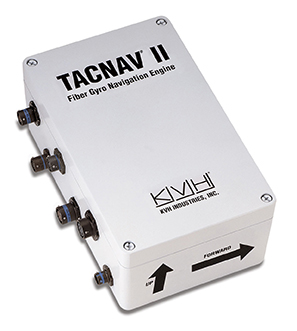
  • KVH delivers TACNAV systems for US Army’s new AMPV Fleet

    KVH delivers TACNAV systems for US Army’s new AMPV Fleet

    The KVH TACNAV II.
    The KVH TACNAV II.

    KVH Industries has begun shipping the first order of tactical navigation systems to BAE Systems for a prototype program designed to produce a new fleet of U.S. Army Armored Multi-Purpose Vehicles (AMPVs).

    KVH’s TACNAV systems are designed to provide the vehicles with such critical elements as continuous heading and pointing data output and extremely accurate navigation regardless of GPS availability.

    Deliveries of the tactical navigation systems are part of a recent purchase order that covers the life of the program, which is expected to run through 2020. The initial order of 34 TACNAV II systems is supporting prototype vehicles, and there is potential for an option for additional systems to support the low-rate initial production (LRIP) of the vehicles.

    According to BAE Systems, the $1.2 billion AMPV program is designed to replace the U.S. Army’s Vietnam-era M113s and provide a significant upgrade that increases the service’s survivability, force protection, and mobility while providing for future growth potential.

    M113 Armored personnel carrier n Vietnam, 1966. (Photo: U.S. Army)
    M113 Armored personnel carrier n Vietnam, 1966. (Photo: U.S. Army)

    “KVH is pleased to have been selected by BAE Systems for this important U.S. Army armored vehicle program,” says Dan Conway, executive vice president of KVH’s guidance and stabilization group. “KVH’s tactical navigation solution serves as a crucial resource for navigation and battle management, keeping soldiers safe and out of harm’s way wherever they travel.”

    KVH TACNAV is a proven solution that has been serving soldiers for years in numerous armored vehicle programs, with more than 19,000 units fielded worldwide.

    KVH’s TACNAV military vehicle navigation systems provide unjammable precision navigation, heading, and pointing data for vehicle drivers, crews, and commanders. KVH’s proprietary fiber optic gyro (FOG) technology is a differentiating factor in enabling the TACNAV systems to provide extremely accurate heading and pointing data, which is crucial for situational awareness.

    The Armored Multi-Purpose Vehicle (AMPV) is the U.S. Army’s program to replace the Vietnam-era M113 Family of Vehicles. (Photo: BAE Systems)
    The Armored Multi-Purpose Vehicle (AMPV) is the U.S. Army’s program to replace the Vietnam-era M113 Family of Vehicles. (Photo: BAE Systems)

    The systems feature a compact design and flexible architecture ideal for today’s digital military. In addition, TACNAV is designed to integrate easily with Battle Management Systems (BMS), providing a vital component for effective battlefield management.

    TACNAV systems are in use by the U.S. Army and Marine Corps, as well as many allied customers including Canada, Sweden, Great Britain, France, Germany, Spain, Egypt, Botswana, Australia, New Zealand, Saudi Arabia, Taiwan, Romania, Poland, Turkey, Malaysia, Switzerland, South Korea, Singapore, Brazil and Italy.

  • New Report on Global Military GPS/GNSS Market Looks at Next Decade

    Reportstack has announced a new report on The Global Military GPS/GNSS Market 2013-2023.  This report offers the reader detailed analysis of the global military GPS/GNSS  market over the next 10 years, alongside potential market opportunities to enter the industry, using detailed market size forecasts, Reportstack said.

    A satellite navigation system provides GPS positioning from a global perspective, and is therefore of utmost importance for modern-day military operations, which rely on accurate real-time data on hostile forces in order to carry out precision attacks, Reportstack said. It is here that GPS/GNSS devices assume an important role, as they are imperative to transfer signals from these satellites back to earth.

    The U.S. is the highest spender on military GPS/GNSS navigation, and is responsible for 42.9% of the global military GNSS devices market. Others major spenders in this sector include Russia, the UK, China and India. In July 2013, India launched the IRNSS-1A, the first of seven satellite constellation to be deployed under the Indian Regional Navigation Satellite System (IRNSS) program to be completed between 2015-2016. And China’s BeiDou is scheduled to be operational by 2020.

    Another factor driving the market is the integration of satellite navigation technology with other navigation systems, such as the inertial navigation system (INS) and gyro, as GPS devices are to be used in order to decipher data correctly, Reportstack said.

    The increasing demand for satellite navigation and communications is driven primarily by the desire of militaries to monitor more areas and derive accurate information by a range of GNSS receivers/sensors in the shortest time possible. Major military aircraft and helicopters are dependent on GPS embedded INS systems for effective navigation. Similarly, naval vessels and guided munitions are increasingly relying on the collaboration of laser, gyro, INS, and satellite navigation technologies to derive accurate real time data.

    Furthermore, it has been observed that the usage of standard positioning services/open service receivers, which use unencrypted signal for non-combat purposes has increased, and is expected to drive demand and encourage expenditure, Reportstack said. The military GPS/GNSS technology is expanding its horizon beyond the basic characteristics of navigation and tracking. The use of GPS, in conjunction with a number of software applications, has expanded its use in military operations. A number of new technologies are now embedded with GPS receivers to produce a more sophisticated military tool.

    Recently, a Swiss-based company developed a device called GPS Log Book based on u-blox technology. The new device has extended the scope of GPS technology to the administrative side of military operations. It provides an easy way for military drivers to automatically keep an accurate travel log book which can be securely accessed later from anywhere via a web interface. Information logged includes route, speed, and distance traveled. It also keeps a close record of fuel used by the vehicle, based on the distance traveled at various speed levels.

    The advent of Differential GPS (DGPS), an enhancement to GPS, which provides improved location accuracy, from the 15-meter nominal GPS accuracy to approximately 10 cm, has further expanded the scope of GPS in missile technology. The intercontinental ballistic missiles, which are capable of hitting targets across thousands of miles navigation, use inertial navigation with DGPS receivers. The advent of DGPS is expected to be one of the most significant steps in accurate missile targeting for militaries across regions.

    The companies mentioned in this report are Northrop Grumman, Raytheon, Rockwell Collins , Lockheed Martin, ITT Exelis, Thales, and BAE Systems. More details and table of contents about this report can be found by visiting The Global Military GPS/GNSS Market 2013-2023 report.