Tag: CGSIC

  • 2019 GPS Public Interface Control meeting set for Sept. 25

    2019 GPS Public Interface Control meeting set for Sept. 25

    CGSIC logo

    On Sept. 25, the GPS Directorate will host the 2019 Public Interface Control Working Group and Open Forum to update the public on GPS public document revisions.

    The meeting will collect issues and comments for analysis and possible integration into future GPS public document revisions.

    The 2019 Public Interface Control Working Group and Open Forum are open to the general public. It can be attended in person or by dial-in connection.

    Documents Affected

    • IS-GPS-200: Navigation User Interfaces
    • IS-GPS-705: User Segment L5 Interfaces
    • IS-GPS-800: User Segment L1C Interface
    • ICD-GPS-870: NAVSTAR GPS Control Segment to User Support Community Interface

    Meeting Address: SAIC, 100 N Sepulveda Blvd., El Segundo, CA 90245, The Great Room

    Meeting Dial-in Number: 310-653-2663 Meeting ID: 20190925 Password: 123456.

    Documents and proposed changes and the official meeting notice are posted on GPS.gov.

  • CGSIC updates Interface Control Documents, plans next meeting

    CGSIC updates Interface Control Documents, plans next meeting

    The GPS Directorate has released updates to the below Interface Control Documents (ICD). ICDs are the formal means of establishing, defining, and controlling interfaces and for documenting detailed interface design definitions for the GPS program.

    Updated Documents

    • IS-GPS-200: Navstar GPS Space Segment/Navigation User Interfaces
    • IS-GPS-705: Navstar GPS Space Segment/User Segment L5 Interface
    • IS-GPS-800: Navstar GPS Space Segment/User Segment L1C Interface
    • ICD-GPS-240: Navstar GPS Control Segment to User Support Community Interface
    • ICD-GPS-870: Navstar Next Generation GPS Control Segment (OCX) to User Support Community Interface

    Download or view the updated ICDs at GPS.gov or NAVCEN.

    59th CGSIC Meeting Set for September

    The U.S. Department of Transportation (DOT) and the Coast Guard Navigation Center (NAVCEN) have announced plans for the 59th meeting of the Civil GPS Service Interface Committee (CGSIC).

    The meeting will take place Sept. 16-17 at the Hyatt Regency Miami in Miami, Florida, in conjunction with the Institute of Navigation’s ION GNSS+ 2019 conference.

    CGSIC meetings are free and open to the public. Subcommittees of the CGSIC for Timing, International Information, and Survey, Mapping, and Geosciences will hold meetings Sept. 16, and a summary of these meetings will be presented to the CGSIC plenary session Sept. 17.

    The meeting will include important briefings on the status of ongoing GPS programs and a keynote address by Diana Furchtgott-Roth, deputy assistant secretary, Office of the Assistant Secretary for Research and Technology, U.S. Department of Transportation.

    The CGSIC agenda in development can be found in the CGSIC section of GPS.gov.

  • CGSIC issues notice to mariners on GPS Rollover Event

    Credit: Damen
    Photo: Damen

    The Coast Guard Navigation Center has published a special notice to mariners that use GPS equipment. The special notice outlines the details of the GPS Week Number Rollover that will occur April 6-7.

    To best prepare for the rollover event, users of GPS equipment who are concerned should update their firmware, or contact their equipment manufacturer to ensure their equipment is ready for this event.

    When the week number reaches 1024 at 18 seconds before midnight (UTC) on April 6, it will reset to zero as it keeps counting. This has happened once before, in August 1999.

    Recent devices have likely been designed to handle the rollover event.

    Older GPS receivers, however, or receivers that have not been provided manufacturer updates, may be affected by the rollover. The impact might occur in April, or could affect such equipment at a later date. The date might revert back to August 1999, or may revert to another date. Since this issue does not affect the other parts of the GPS navigation message (it only affects the date), the receiver’s ability to calculate the position and to display the exact time of day should not be impacted.

    Additional information about GPS and the GPS Week Number Rollover is available here:

    Civil GPS users are encouraged to report disruptions or anomalies to the U.S. Coast Guard Navigation Center or via phone at 703-313-5900, 24 hours a day.

  • GPS Week Number Rollover coming April 6

    GPS Week Number Rollover coming April 6

    In April 2018, the Civil GPS Service Interface Committee (CGSIC) announced the Department of Homeland Security release of the memorandum titled “U.S. Owners and Operators Using GPS to Obtain Time,” which is intended to provide an understanding of the possible effects of the April 6, 2019, GPS Week Number Rollover on Coordinated Universal Time derived from GPS devices.

    GPS users should review this memorandum and be aware of the potential impacts to their equipment when the GPS Week Number rolls over to 0 on April 6, 2019 / April 7, 2019.

    If you have questions about how your equipment may be impacted by the GPS Week Number rollover, we recommend you contact your equipment manufacturer.

    For more information, go to www.gps.gov.

  • 58th CGSIC meeting agenda features address by Brig. Gen. Shaw

    58th CGSIC meeting agenda features address by Brig. Gen. Shaw

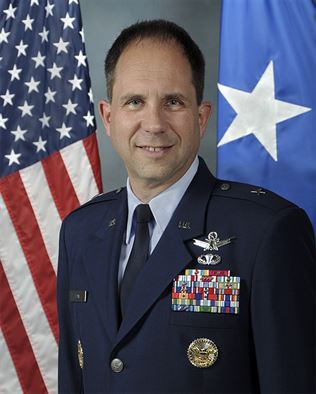
    Brig. Gen. John E. Shaw is Director of Strategic Plans, Programs, Requirements and Analysis, Headquarters Air Force Space Command, Peterson Air Force Base, Colorado. (Photo: USAF)
    Brig. Gen. John E. Shaw is Director of Strategic Plans, Programs, Requirements and Analysis, Headquarters Air Force Space Command, Peterson Air Force Base, Colorado. (Photo: USAF)

    The U.S. Department of Transportation and the Coast Guard Navigation Center are preparing for the 58th annual Civil GPS Service Interface Committee (CGSIC) meeting.

    The meeting will be conducted Sept. 24-25 at the Hyatt Regency Miami in Miami, Florida, in conjunction with the Institute of Navigation’s ION GNSS+ 2018 conference.

    CGSIC meetings are free and open to the public.

    Subcommittees of the CGSIC for Timing, International Information, and Survey, Mapping, and Geosciences will hold meetings Sept. 24, and a summary of these meetings will be presented to the CGSIC plenary session Sept. 25.

    The meeting includes important briefings on the status of ongoing GPS programs and a keynote address by Brig. Gen. John Shaw, director of strategic plans, programs, requirements and analysis for the Air Force Space Command.

    The CGSIC agenda in development can be found at gps.gov.

  • Agenda released for 57th meeting of US CGSIC

    The U.S. Department of Transportation (DOT) and the Coast Guard Navigation Center (NAVCEN) will host the 57th meeting of the Civil Global Positioning System Service Interface Committee (CGSIC) Sept. 25-26 at the Oregon Convention Center in Portland, Oregon.

    CGSIC meetings are free and open to the public.

    DOT serves as the civil lead for the GPS and chairs the CGSIC in this capacity. NAVCEN is assigned duties as deputy chair and executive secretariat for the CGSIC.

    Subcommittees of the CGSIC for Timing, State and Local Government, International Information, and Survey, Mapping and Geosciences will hold meetings Sept. 25, and a summary of these meetings will be presented to the CGSIC plenary session Sept. 26.

    The keynote speaker for this year’s plenary session will be Keith Conner, Ph.D., Senior Engineer, Science and Technology First Responders Group, U.S. Department of Homeland Security.

    Presentations include:

    • Operational status and modernization of the GPS constellation of satellites
    • U.S. Space-Based Position, Navigation and Timing policy
    • GPS augmentation systems
    • Briefings from the National Aeronautics and Space Administration (NASA) and the National Parks Service
    • Information related to U.S. engagement with other international Global Navigation Satellite Systems as well as a variety of applications of the use of GPS

    The full agenda is available. CGSIC presentations will be posted online shortly after the meeting ends.

  • State Department issues notice on North Korean jamming

    On April 7, the U.S. Department of State issued a notice about the recent jamming experienced in South Korea.

    Korean Peninsula GPS Jamming Notice

    A continuing series of incidents have been reported in the general location of Incheon, Republic of Korea and the surrounding Gyeonggi and Gangwon provinces out to approximately 100 nautical miles beginning on or about 0000Z31March16.

    The nature of the events appear to be Global Positioning System (GPS) jamming emanating from the Democratic People’s Republic of Korea causing signal disruptions to airplanes, ships, and buoys in the area.

    Exercise caution when transiting this area. If appropriate, further information may be forthcoming. Vessels experiencing disruptions in the area are urged to report them to the point of contact (POC) below.

    The notice was forwarded by the U.S. Coast Guard Navigation Center’s Civil GPS Service Interface Committee (CGSIC).

  • Field Technology Conference: The forest and the fish

    PORTLAND, Ore. — Two weeks ago, I attended (and hosted) the Field Technology Conference here in Portland, Oregon. This is the fifth year of the conference. In years past, it’s had a forestry emphasis primary because the Western Forestry and Conservation Association has been a major partner in organizing it.

    This year, the Pacific States Marine Fisheries Commission and Pacific Northwest Aquatic Monitoring Partnership joined the organizing committee. The result was a 50-percent increase in attendance and a more diverse audience.

    Another newcomer to the conference was a Civil GPS Service Interface Committee (CGSIC) U.S. State and Local Government Subcommittee meeting, which was co-located with the Field Technology Conference, offering a direct connection between civil GPS users and U.S. government representatives who are involved in GPS.

    The conference was a two-day event comprised of three technology tracks: a track for general field technology and two tracks for industry-specific (forestry and fisheries) subjects, hands-on technology demonstrations and a field trip. Although forestry and fisheries professionals were the featured user groups, nearly all of the subject matters — GPS, UAVs, smartphones, tablets, laser rangefinders, lidar, photogrammetry, and field data-collection software — is applicable for a wide range of natural resource users involved with GIS (geographic information systems) technology.

    As one of the hosts of the conference, I started out moderating the general session with all of the attendees in one room. This year, my general session topics include geospatial awareness and growth, GPS/GNSS technology, mobile devices (smartphones and tablets) and UAVs.

    Something new I tried this year, which worked out really well, was using audience response “clickers.” These small handheld devices were given to each audience member and allowed them to answer multiple choice questions that I posed in my Powerpoint presentation. I’ve always been a fan of audience input, and started polling the audience during webinars I conducted many years ago. For this conference, I used an audience polling system from Turning Technologies. I’d like to share with you the questions I asked the audience and the responses that I received.

    Question #1: Are you here?


    Comment: This was a test question to see if the audience response system was working properly. I’m still not sure if the audience just had a great sense of humor or a technical problem. I think the former was true. ☺

    Question #2: Have you attended this conference before?


    Comment: This was great news that the conference is attracting new attendees. It’s an annual event held in November, so keep your eyes on it for next year!

    Question #3: After a brief discussion about the availability of higher accuracy geospatial data (eg. GNSS, UAVs, etc.), I was curious about the level of accuracy the audience required in their typical tasks.

    What geospatial data accuracy do your typical tasks require?

    Microsoft PowerPoint - FTCGeneralPlenary2015 [Compatibility Mode

    Comment: I wasn’t sure what to expect with this question, but since I’ve polled a fisheries audience before, I had a feeling accuracy requirements would vary, and they did. Previously, a fisheries audience had told me that they were satisfied with 5-meter accuracy.

    Question #4: The last question leads to this one. I wondered if the audience accuracy requirement was driven by requirement or by availability.

    Are you satisfied with the accuracy of the geospatial data you use?

    Microsoft PowerPoint - FTCGeneralPlenary2015 [Compatibility Mode


    Comment: The answer is clear that, generally speaking, the audience would use higher accuracy geospatial data if it was available.

    Question #5: The next question was a pure technology one. In the day of BYOD (Bring Your Own Device), I’ve been very interested in monitoring the trends in mobile devices. The question about operating systems is relevant because it determines which data collection software you can use. For example, if a specific data-collection software is written only for Windows, it will not run on an Android or Apple (iOS) device.

    Which operating system do you use on your mobile device(s)?

    Microsoft PowerPoint - FTCGeneralPlenary2015 [Compatibility Mode

    Comment: These responses surprised me a bit. They certainly don’t match the global market share figures that I’ve read. Following are the latest mobile device operating system market share numbers reported by IDC and Statista.

    Microsoft PowerPoint - FTCGeneralPlenary2015 [Compatibility Mode


    Microsoft PowerPoint - FTCGeneralPlenary2015 [Compatibility Mode

    Question #6: The next part of my presentation discussed unmanned aerial vehicle (UAV, also known as UAS or drone) technology. UAVs were a significant part of the conference this year. We had many presentations and some static demonstrations on UAV technology. On this subject, I had several questions for the audience.

    Do you currently use a UAS?

    Microsoft PowerPoint - FTCGeneralPlenary2015 [Compatibility Mode

    Comment: These answers were not surprising. Flying UAVs commercially in the U.S. requires a special permission from the Federal Aviation Administration (FAA). To date, the FAA has only issued about 2,000 such exemptions.

    Question #7: Do you anticipate using a UAS?

    Microsoft PowerPoint - FTCGeneralPlenary2015 [Compatibility Mode

    Comment: These answers surprised me a bit. I had no idea the audience would be so interested in personally flying a UAV. This has me thinking about this the same way I think about GPS receivers — just another tool in the toolbox.

    Question #8: How much are you willing to spend on a UAS?

    Microsoft PowerPoint - FTCGeneralPlenary2015 [Compatibility Mode

    Comment: These responses don’t surprise me, although I polled another audience at a different venue that was more engineering-oriented, and the answers were a bit different. The engineering-oriented audience was willing to spend more for a UAV.

    Furthermore, in speaking with various attendees during the conference, there was quite a bit of interest in attaching different sensors to UAVs for various requirements. For example, lidar, multi-spectral and thermal (temperature) sensors were commonly mentioned as payloads they would like to see. The challenge is that the cost of a UAV rises sharply when these types of payloads are accommodated, and conflicts with the audience’s response about how much they are willing to pay for a UAV.

    UAV-tablet-W

    In next month’s column, I’ll post links to the papers presented at the Field Technology Conference as well as videos of papers presented by the CGSIC folks.

    See you next month.

    Follow me on Twitter at https://twitter.com/GPSGIS_Eric

    Source: FTC
  • CNAV Performance ‘Matches or Slightly Outperforms’ Legacy Signals

    CNAV_Performance Chart_10_Mar_2015_public

    A quarterly meeting of the U.S. GPS Program’s interagency Civil Navigation Signals (CNAV) Tiger Team on March 5 focused on the new L2C and L5 GPS civil signals. “CNAV Message Types 10, 11, 30 and 33 are currently transmitted on seven GPS IIR-M (L2C) and eight GPS IIF satellites (L2C and L5),” wrote Rick Hamilton, CGSIC Executive Secretariat, USCG Navigation Center, in a status email to the Civil Global Positioning System Service Interface Committee (CGSIC).

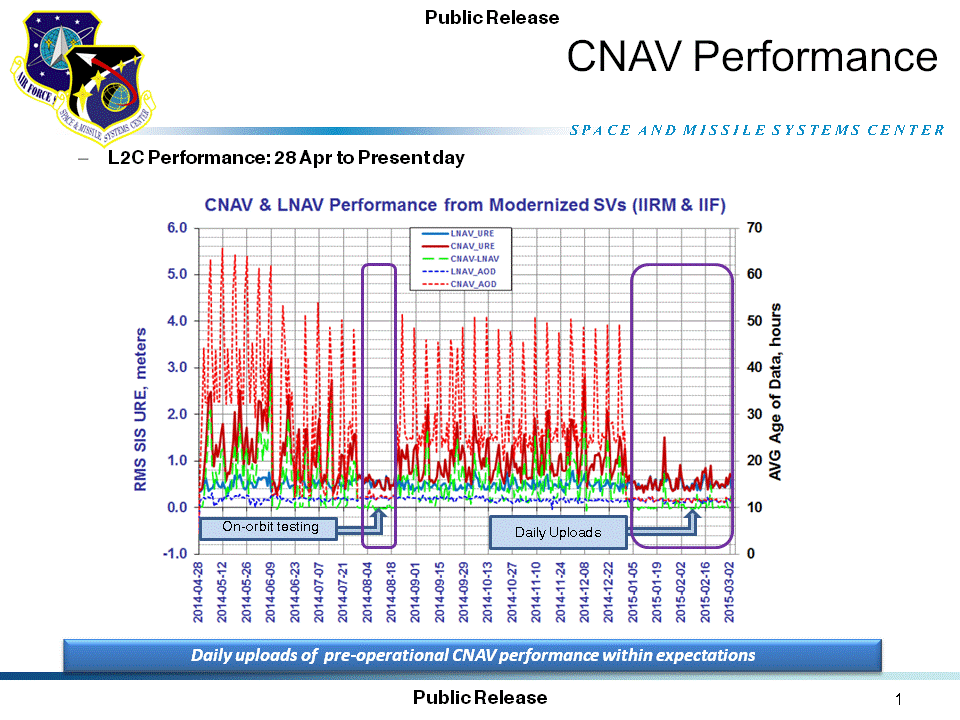
    “A Modernized Navigation (MODNAV) Tool integrated with the GPS ground control software (Architecture Evolution Plan or AEP) is generating the CNAV data messages,” Hamilton wrote. “Daily CNAV uploads began December 31, 2014, and the U.S. Air Force reports that signal performance of CNAV matches or slightly outperforms Legacy performance: average user range error (RMS URE) from 25 February – 3 March 2015 was 0.50 m for Legacy and 0.57 m for Modernized; best week for Modernized signals since the broadcast initiated April 2014 was 0.42 m for 6 – 13 January 2015.

    The graph above, from the Coast Guard Navigation Center website, illustrates the CNAV performance.

    Users are reminded that these CNAV signals are ‘pre-operational’ and should be used with discretion until they become fully operational; the L5 message is currently set unhealthy,” Hamilton concluded.

  • Leap Second Implementation Confuses Some Receivers

    The United States Civil GPS Service Interface Committee (CGSIC) has issued a notice about a problem some receivers are having implementing the correct time. The U.S. Coast Guard Navigation Center has received reports of synchronization issues since the implementation of a leap second on Jan. 21. Users experiencing this problem should contact the receiver manufacturer for a firmware or software update.

    Below is the text of the CGSIC notice:


    All CGSIC: 2015 GPS Future Leap Second Implementation

    The GPS 50 bit-per-second navigation message transmitted by each GPS satellite (specifically Page 18, subframe 4) includes the parameters needed to relate GPS time to UTC (Coordinated Universal Time).  That relationship is maintained through leap second implementation transitions by IS-GPS-200 compliant user equipment.  For leap second transition, user equipment must utilize the notice regarding a scheduled future delta time due to leap seconds (ÄtLSF), together with the week number (WNLSF) and the day number (DN), at the end of which the leap second becomes effective.

    On or about Jan. 21, 2015, those GPS navigation messages began to include future leap second data which indicates an increase in the leap second to become effective at the end of June 2015.  IS-GPS-200 revision H, dated 24 Sep 2013 paragraph 20.3.3.5.2.4 Coordinated Universal Time (UTC), documents the appropriate algorithm details to ensure correct utilization of the parameters above (including all potential truncated week number transitions and variations in time of processing relative to satellite upload timing near the future leap second effectivity).

    The data upload for the June 30 leap second, initiated with SVN48/PRN07 at 18:33:56z on Jan. 21, was correctly executed. However, there are several receivers brands/models that seem to be mishandling this information and applying the leap second now. This is creating a negative one-second offset in faulty receivers. The U.S. Coast Guard Navigation Center has reports of these receivers causing synchronization issues with radios, computer systems, and data logging equipment.

    Users experiencing issues with GPS receivers that began on Jan. 21 should contact the receiver manufacturer to determine if the latest firmware or software patch can correct the issue.

    V/R Rick Hamilton
    CGSIC Executive Secretariat GPS Information
    Analysis Team Lead USCG Navigation Center
    703-313-5930

  • Air Force Shares GPS Status at CGSIC at ION GNSS+

    News courtesy of CANSPACE Listserv.

    Two U.S. Air Force officers provided a GPS program update at Tuesday morning’s Civil GPS Service Interface Committee meeting plenary session at the ION GNSS+ 2014 conference in Tampa, Florida. Here are some key points from the presentations by Colonel Matthew Smitham, deputy director, GPS Directorate, and Lieutenant Colonel Todd Benson, Commander, Second Space Operations Squadron:

    • 31 primary satellites on orbit, 7 satellites in residual status, 1 satellite in test status
    • 1+ billion civil/commercial GPS users now; perhaps several billion GPS devices worldwide
    • recent performance of GPS (global averages):
      •    best daily URE of 46.6 cm on 8 June 2013
      •    best weekly URE of 58.7 cm during week of 18 August 2014
      •    newer satellites typically perform better than older ones
      •    anticipate URE dropping to about 30 cm in a few years as more modern satellites come on line
    • 60-70 navigation data uploads to the satellites are performed each day; average of about two per satellite per day
    • IIFs:
      •  SV 3 and SVs 5-12 have improved rubidium clocks; one of the IIFs is running on a cesium clock
    • 14 SVs are currently broadcasting L2C (set healthy); 7 SVs are broadcasting L5 (set unhealthy)
    • CNAV:
      • Data uploads are currently being done about twice per week to each satellite; daily updates expected by December 2014
      • average UREs currently about 1.4 m (data ages quickly with few uploads per week); expect CNAV URE to be marginally better than LNAV (Legacy NAV) when daily uploads begin
    • Continued progress in bringing M-code on line; expect early use by 2017
    • GPS III:
      • satellites will use three improved rubidium clocks
      • although the program is behind schedule, SV 1 will be available for launch starting in January 2016
      • the Block 0 version of the OCX (Next Generation Operational Control System), currently under test, will be needed to support the GPS III satellites
  • CGSIC Releases GPS Interface Documents, Opens Registration

    Three new GPS Interface Specification documents have been issued by the Civil Global Positioning System Service Interface Committee:

    • Navstar GPS Space Segment/Navigation User Interfaces (IS-GPS-200H, 24 Sep 2013)
    • Navstar GPS Space Segment/User Segment L5 Interfaces (IS-GPS-705D, 24 Sep 2013)
    • Navstar GPS Space Segment/User Segment L1C Interface (IS-GPS-800D, 24 Sp 2013)

    The new documents are posted on the NAVCEN GPS References page and at GPS.gov.

    Also, registration is now open for the 54th Meeting of the Civil GPS Service Interface Committee (CGSIC), to be held September 8-9, 2014, at the Tampa Convention Center in Tampa, Florida, in conjunction with the Institute of Navigation’s Global Navigation Satellite System conference (ION GNSS 2014).

    All CGSIC meetings are free and open at no charge to the public, but attendees pay their own travel, hotel and meal expenses. At the ION link, select “Register Online.” Once you create an ION account, necessary to gather information for badging, choose “I am Registering Myself.” Choose “Registration Type” from the blue banner across the top and then scroll down to the bottom of the next page to “View Other Options.” At the bottom of the next page you will find “Select” for “CGSIC Only” and then complete the registration. If you are registering and paying to attend the ION Conference, CGSIC registration will be included and nothing else is required.

    The meeting will contain important updates from GPS program officials and give attendees an opportunity to learn about the broad array of GPS-based applications that are available, according to Rick Hamilton, CGSIC Executive Secretariat.

    The draft agenda can be seen on the GPS.gov website. If you have any new suggestions for the agenda, would like to present a topic, or if you found certain information in past meetings useful and would like to hear more, contact the Navigation Center. Please be sure to select “Civil GPS Service Interface Committee (CGSIC)” from the pull-down menu. Or, send comments directly to the Executive Secretariat by e-mail at [email protected].