Tag: Connecticut

  • Seen & Heard: Invasive species vs. UAVs and protecting farms with GIS

    Seen & Heard: Invasive species vs. UAVs and protecting farms with GIS

    “Seen & Heard” is a monthly feature of GPS World magazine, traveling the world to capture interesting and unusual news stories involving the GNSS/PNT industry.


    I Wonder What’s Under There?
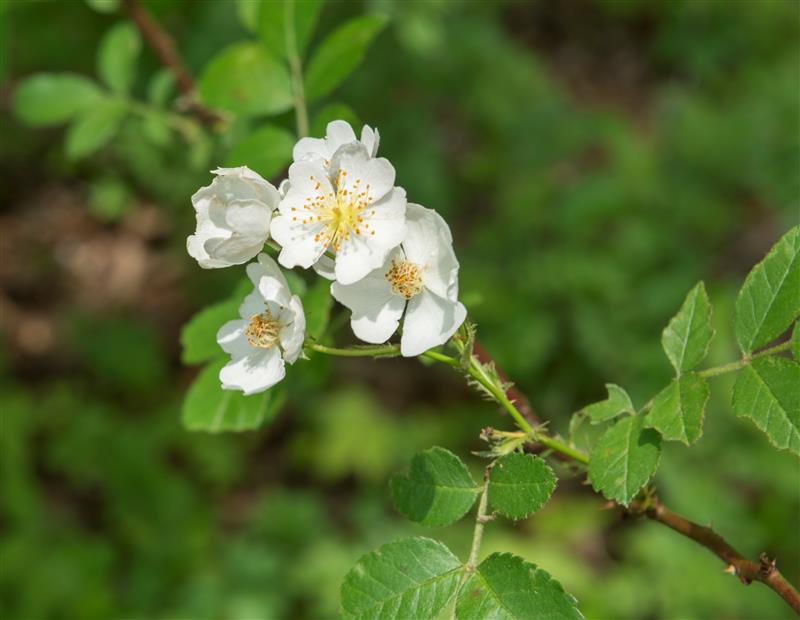
    Image: Lokibaho/iStock/Getty Images Plus/Getty Images
    Image: Lokibaho/iStock/Getty Images Plus/Getty Images

    Researchers at the University of Connecticut have conducted one of the largest understory species mapping projects using satellite data and have published the results of the study in the Remote Sensing of Environment journal. In this study, the researchers proposed an automated dense Sentinel-2 time series-based approach for understory plant communities and created maps of four understory classes that include native shrubs of greenbrier and mountain laurel, invasive shrubs of barberry, and the assemblage of mixed invasives at 10 m resolution in Connecticut’s deciduous forests. The researchers developed a strategy that distinguished plant species with an accuracy of 93% and determined that 53% of Connecticut’s understory is now comprised of invasive plant species such as barberry, bittersweet, winged euonymus (burning bush), and multi-flora rose.


    Invasive Species VS. UAVs
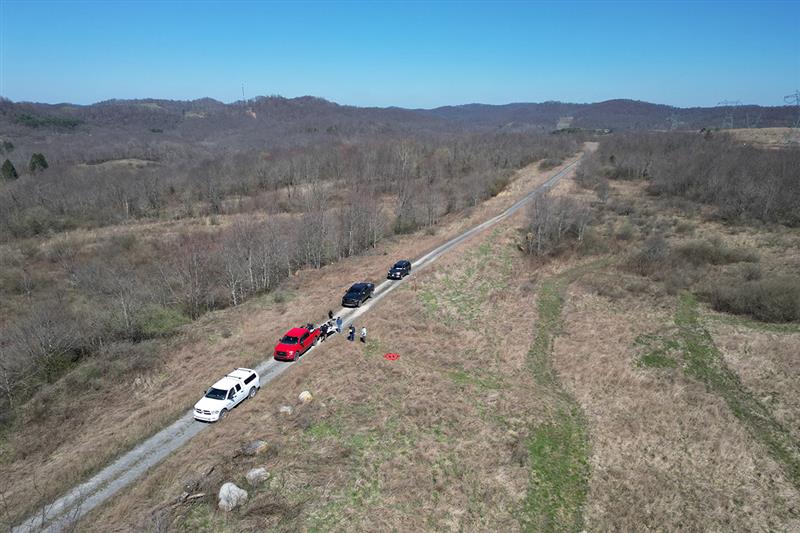
    Image: Donn Bartram
    Image: Donn Bartram

    Researchers at West Virginia University are using UAVs to develop tools to detect, map, treat and monitor invasive plant species with a grant from the Richard King Mellon Foundation. Multiflora rose is an invasive shrub that threatens native plants in more than 40 states, including West Virginia and Pennsylvania. This project aims to equip UAVs with sensors to collect environmental data in a designated area of southwestern Pennsylvania over multiple seasons. The research team will use that data, combined with machine learning technology, to develop software that can identify multiflora rose and, eventually, other invasive species.


    Protecting Farms with GIS
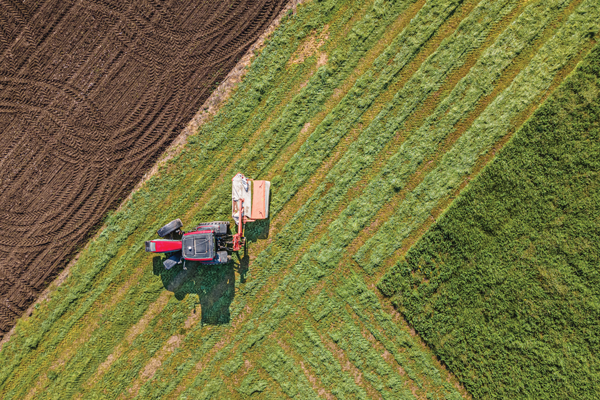
    For farmers, every centimeter counts. ComNav’s AG360 Pro autosteering system controls pass-to-pass accuracy within 2.5 cm. (Photo: Daniel Balakov/E+/Getty Images)
    Image: Daniel Balakov/E+/Getty Images

    American Farmland Trust (AFT) is partnering with government agencies and advocacy groups in South Carolina to deploy GIS mapping tools to predict areas at the highest risk of development in the state. Palmetto 2040: Visioning Alternative Futures, Launching Solutions is a geospatial modeling and policy analysis tool designed to identify and model future outcomes. This mapping tool will project what land in South Carolina is at highest risk of development by 2040. The analysis will consider both rapid population growth and climate change impact on settlement patterns and agriculture, according to AFT.


    USV Take Hurricanes
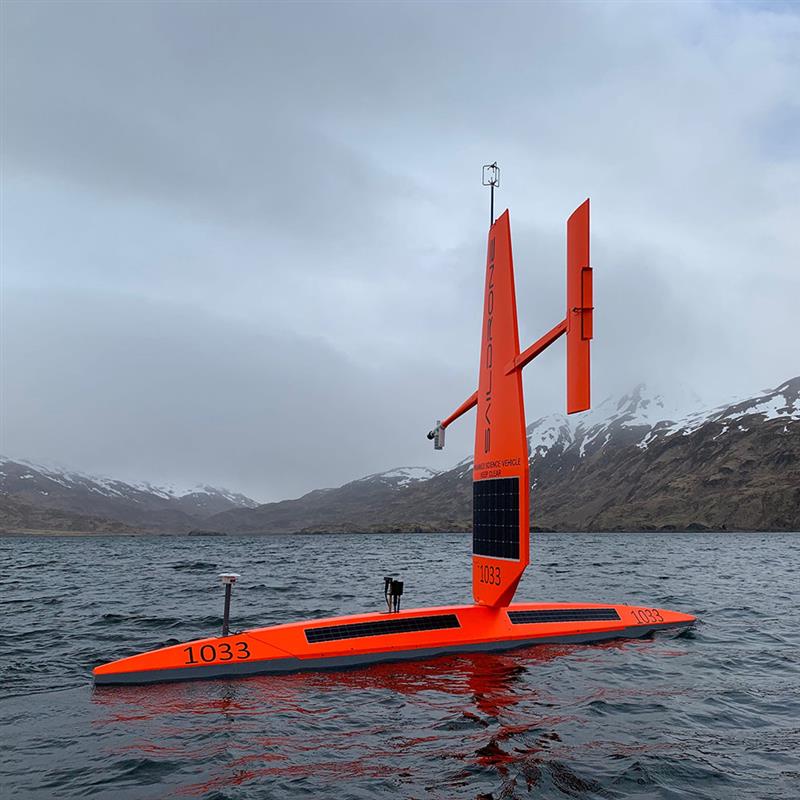
    Image: SailDrone
    Image: SailDrone

    Saildrone is deploying 12 uncrewed surface vehicles (USV) into the tropical Atlantic and Gulf of Mexico this summer, supporting research by the National Oceanic and Atmospheric Administration (NOAA) to advance hurricane forecasting. Ten USVs will be deployed from St. Thomas, U.S. Virgin Islands; St. Petersburg, Florida; and Charleston, South Carolina; to operate in areas with a high probability of intercepting a storm, as indicated by historical data. Two vehicles will remain on land, ready for quick deployment in the event of an approaching hurricane. NOAA will use the data collected by the USVs to improve hurricane forecast models.
  • Seen & Heard: Spotlight on UAVs

    Seen & Heard: Spotlight on UAVs

    “Seen & Heard” is a monthly feature of GPS World magazine, traveling the world to capture interesting and unusual news stories involving the GNSS/PNT industry. This month, we focus on UAVs.


    Screenshot: Quaternium video
    Screenshot: Quaternium video

    Non-stop flight in Valencia

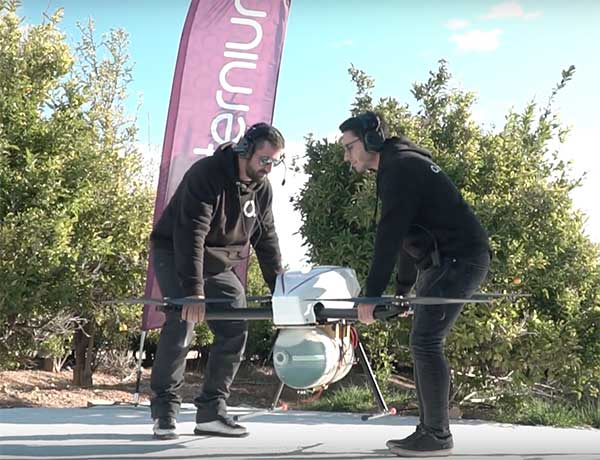
    On Feb. 3, drone company Quaternium broke its own record for long flight time with a hybrid-fuel electric drone. The Quaternium HYBRiX UAV took off at 08:52 a.m. in Valencia, Spain, and landed at 17:02 p.m., after performing a stationary flight of 8 hours and 10 minutes. The new endurance record for non-stop flight time was accomplished with an experimental version of the company’s HYBRiX 2.1 drone, which carries 25 kilograms of maximum take-off weight.


    Westpac Little Ripper. (Photo: The Ripper Group/SLSA)
    Westpac Little Ripper. (Photo: The Ripper Group/SLSA)

    Dye-dropping drones

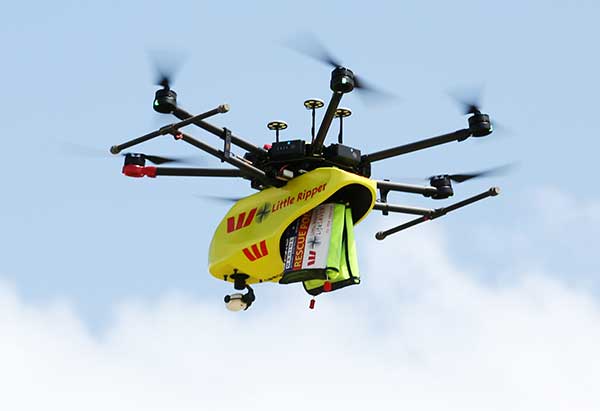
    A company is providing drones that can drop sea- marker dye into ocean surf, allowing lifeguards on shore to spot riptides. The drones have been developed by The Ripper Group, reports the Brisbane Times. A fleet of 51 drones is being deployed across 25 beaches on the Gold and Sunshine coasts in Australia, as well as farther north. The drones also could be used to rapidly assess situations such as people swimming or climbing on rocks. Plus, the company has deployed drones to detect sharks and crocodiles.


    Photo: pressdigital/iStock/Getty Images Plus/Getty Images
    Photo: pressdigital/iStock/Getty Images Plus/Getty Images

    Going bananas

    Agricultural diseases cause significant crop losses worldwide. One widespread disease is yellow Sigatoka, which limits banana cultivation. Scientists at Brazil’s Federal University of Ceara have used high-resolution aerial images from an Inspire 1 UAV and machine learning to monitor yellow Sigatoka in banana crops, identifying and classifying disease symptoms such as leaf spots. The system also provides humidity and temperature data that can help assess and manage the disease.


    Rescue from above

    A blind man who spent 33 hours lost in February in the freezing Connecticut woods was rescued thanks to a police drone. Richard Doty, 62, was trapped in the woods near his Enfield home after he became disoriented, Enfield police said on Facebook. Temperatures had dipped as low as 9° F. Officers borrowed a drone and a skilled pilot from police in neighboring Vernon. Within 30 minutes of lift-off, the drone spotted Doty about 100 yards into the woods, hidden from view down an embankment.