Tag: Pennsylvania

  • Seen & Heard: Invasive species vs. UAVs and protecting farms with GIS

    Seen & Heard: Invasive species vs. UAVs and protecting farms with GIS

    “Seen & Heard” is a monthly feature of GPS World magazine, traveling the world to capture interesting and unusual news stories involving the GNSS/PNT industry.


    I Wonder What’s Under There?

    Image: Lokibaho/iStock/Getty Images Plus/Getty Images
    Image: Lokibaho/iStock/Getty Images Plus/Getty Images

    Researchers at the University of Connecticut have conducted one of the largest understory species mapping projects using satellite data and have published the results of the study in the Remote Sensing of Environment journal. In this study, the researchers proposed an automated dense Sentinel-2 time series-based approach for understory plant communities and created maps of four understory classes that include native shrubs of greenbrier and mountain laurel, invasive shrubs of barberry, and the assemblage of mixed invasives at 10 m resolution in Connecticut’s deciduous forests. The researchers developed a strategy that distinguished plant species with an accuracy of 93% and determined that 53% of Connecticut’s understory is now comprised of invasive plant species such as barberry, bittersweet, winged euonymus (burning bush), and multi-flora rose.


    Invasive Species VS. UAVs
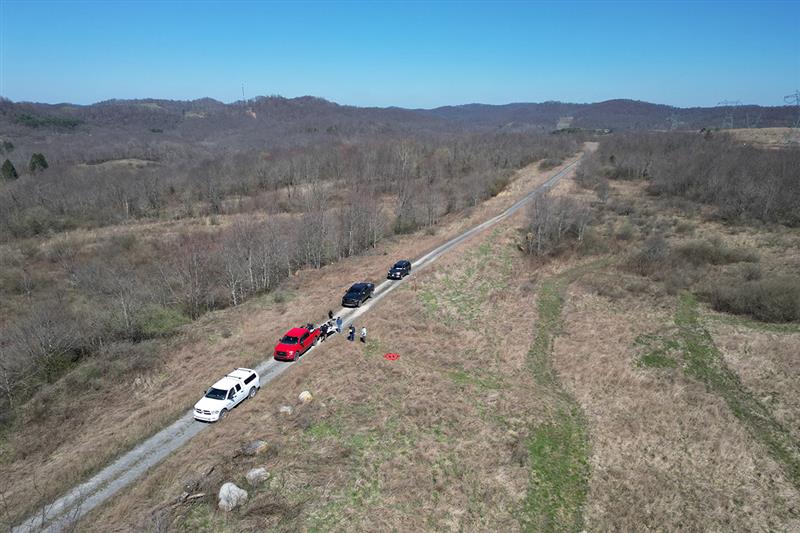
    Image: Donn Bartram
    Image: Donn Bartram

    Researchers at West Virginia University are using UAVs to develop tools to detect, map, treat and monitor invasive plant species with a grant from the Richard King Mellon Foundation. Multiflora rose is an invasive shrub that threatens native plants in more than 40 states, including West Virginia and Pennsylvania. This project aims to equip UAVs with sensors to collect environmental data in a designated area of southwestern Pennsylvania over multiple seasons. The research team will use that data, combined with machine learning technology, to develop software that can identify multiflora rose and, eventually, other invasive species.


    Protecting Farms with GIS

    For farmers, every centimeter counts. ComNav’s AG360 Pro autosteering system controls pass-to-pass accuracy within 2.5 cm. (Photo: Daniel Balakov/E+/Getty Images)
    Image: Daniel Balakov/E+/Getty Images

    American Farmland Trust (AFT) is partnering with government agencies and advocacy groups in South Carolina to deploy GIS mapping tools to predict areas at the highest risk of development in the state. Palmetto 2040: Visioning Alternative Futures, Launching Solutions is a geospatial modeling and policy analysis tool designed to identify and model future outcomes. This mapping tool will project what land in South Carolina is at highest risk of development by 2040. The analysis will consider both rapid population growth and climate change impact on settlement patterns and agriculture, according to AFT.


    USV Take Hurricanes

    Image: SailDrone
    Image: SailDrone

    Saildrone is deploying 12 uncrewed surface vehicles (USV) into the tropical Atlantic and Gulf of Mexico this summer, supporting research by the National Oceanic and Atmospheric Administration (NOAA) to advance hurricane forecasting. Ten USVs will be deployed from St. Thomas, U.S. Virgin Islands; St. Petersburg, Florida; and Charleston, South Carolina; to operate in areas with a high probability of intercepting a storm, as indicated by historical data. Two vehicles will remain on land, ready for quick deployment in the event of an approaching hurricane. NOAA will use the data collected by the USVs to improve hurricane forecast models.

  • UAVs and machine learning fight invasive species in WV/PA

    UAVs and machine learning fight invasive species in WV/PA

    Image: Donn Bartram
    Image: Donn Bartram

    Researchers at the West Virginia University Davis College of Agriculture, Natural Resources and Design are using UAVs to develop tools to detect, map, treat and monitor invasive plant species with a $175,000 grant from the Richard King Mellon Foundation.

    Multiflora rose is an invasive shrub that threatens native plants in more than 40 states, including West Virginia and Pennsylvania. This project aims to equip UAVs with sensors to collect environmental data in a designated area of southwestern Pennsylvania over multiple seasons. The research team will use that data, combined with machine learning technology, to develop software that can identify multiflora rose and, eventually, other invasive species. The software could then be used for targeted delivery of herbicides via UAVs.

    WVU is collaborating with two partners to help facilitate the project, including CNX — a natural gas company headquartered in Canonsburg, Pennsylvania that is offering the use of reclaimed mine land — and Resource Environmental Solutions — an ecological restoration company that is providing technical assistance with herbicide selection and deployment.

    This project builds upon ongoing UAV-based research conducted by the National Resource Analysis Center (NRAC) with the U.S. Office of Surface Mine Reclamation and Enforcement. The current study focuses on autumn olive, which is one of the most common invasive brush species in West Virginia.

    Most of the data collection and analysis focused on multiflora rose will begin in the 2024 spring growing season, but NRAC’s team of researchers is already using autumn olive data to see what information can be gathered about multiflora rose.

  • GeoDecisions Helps PennDOT Handle Millions of Traffic Records

    GeoDecisions-TMS
    The PennDOT TDS developed by GeoDecisions enables collection and processing of millions of data points.

    GeoDecisions, an information technology company specializing in geospatial solutions, has developed a new traffic data system (TDS) that processes more than 20 million new records per month for the Pennsylvania Department of Transportation (PennDOT).

    Built on the Esri platform, the TDS helps PennDOT’s Bureau of Planning and Research better manage the download of traffic data from collection sites throughout the commonwealth of Pennsylvania.

    “Built to Federal Highway Administration standards, GeoDecisions’ redesign of our TDS provides us a method to seamlessly introduce new counting devices, more efficiently verify our raw traffic data, and speed up our process for creating yearly traffic volume maps,” said Andrea Bahoric, planning division manager with PennDOT.

    The new TDS improves PennDOT supervision of 45,000 short-term or portable counters that classify vehicles, record traffic volume and weight, and determine driving speed. The system’s mobile Field Operations Module (FOM) also streamlines in-pavement counter inventory and maintenance activities.

    “FOM enables PennDOT field technicians to use smartphones or tablets to perform site reviews and document issues,” said Greg Ulp, senior project manager with GeoDecisions. “Convenience and efficiency are critical factors when enhancing technology and managing assets.”

    PennDOT’s predecessor traffic data management system contained nine applications with dated technology requiring manual intervention to collect and verify information. GeoDecisions’ TDS redesign features five modules streamlined for better performance and usability. The new automated system includes remote user access and cutting-edge GIS mapping, web service, database and coding technologies.

    “Our transportation system solutions provide a proven business model for analytics, reporting, reliability, and technology workflow management,” said Tom Saltzer, vice president of government delivery with GeoDecisions. “PennDOT’s redesigned TDS is a long-term collection, verification, and geospatial solution that reflects their ongoing enterprise GIS investment strategy.”